Canada May Soon Give a $15.3B ‘Carbon Bomb’ Subsidy to Big Oil, Experts Say

Spread the love

Original article by Geoff Dembicki republished from DeSmog

Business leader says government tax credit for oil and gas ‘extends the life of Canada’s largest industrial sector.’
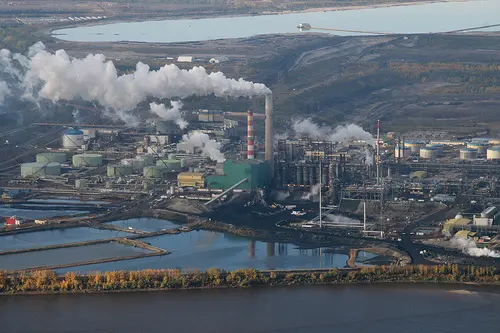
The government of Alberta, home to the tar sands pictured here, has announced taxpayer funding in the range of $3.5 billion to $5.3 billion for CCS projects. Credit: (CC BY-NC-ND 2.0)

As world leaders meet in Dubai for the COP28 climate negotiations, federal and provincial governments in Canada are preparing to give an estimated $15.3 billion in new subsidies to oil and gas companies, and other heavy emitters, for expanding the production of fossil fuels, according to climate experts. 

Those subsidies are taking the form of massive new tax credits for carbon capture and storage (CCS), which is a technology that companies use to grow their extraction of oil and gas while burying a fraction of their greenhouse gas emissions underground. 

“I completely agree that Canada’s tax credit for carbon capture and storage is a subsidy to the oil and gas industry,” Jason MacLean, an adjunct professor who studies climate policy at the University of Saskatchewan, told DeSmog in an email. 

The federal Canadian government is close to announcing details on a tax credit that will go to top oil and gas companies like Suncor, Cenovus, and Imperial Oil, along with other major industrial polluters. Policymakers previously estimated the value of these investment tax credits to be $10 billion. The government of Alberta, home to the tar sands, has meanwhile announced taxpayer funding in the range of $3.5 billion to $5.3 billion for CCS projects.

The Pathways Alliance, an industry lobbying and marketing group representing 95 percent of tar sands production, says these tax credits are essential for oil and gas producers to lower their emissions in line with achieving “net-zero emissions” by 2050. Reaching “net-zero” entails stabilizing global temperature rise at 1.5 degrees Celsius, a level beyond which scientists warn the impacts to humankind could be catastrophic. 

Yet, in submissions to the federal government, the Pathways Alliance explained that lowering a portion of oil sands emissions via carbon capture will create opportunities for the industry to expand globally — even as other countries move away from fossil fuels. “We believe Canada should seek to increase its market share for responsibly produced, lower emissions energy, even if global market demand, as a whole, begins to decline,” the group said in one submission. 

“We need to keep in mind that this is about reducing emissions and not reducing production,” the organization said last year in a separate submission, as revealed by DeSmog. 

Representatives of the Pathways Alliance are among the 35 people with ties to the fossil fuel sector who are part of Canada’s official delegation to COP28 this year. At the climate talks, they are pushing for policies supporting global deployment of carbon capture, which will allow companies to keep producing oil as countries get stricter about regulating emissions.   

“It is really important for the energy industry in Canada because it extends the life of Canada’s largest industrial sector and maintains our competitiveness over the long term,” Scott Crockatt of the Business Council of Alberta told the Calgary Herald last month.

However, tax credits supporting carbon capture risk accelerating already dangerous levels of global temperature rise, MacLean argues. Even if the technology can fully capture emissions from the production of oil and gas in Canada — which is an expensive and uncertain proposition — the vast majority of climate impacts occur when fossil fuels are burned in places like car and truck engines and house furnaces. 

“No possible innovation or improvement to [carbon capture technology] can change the fact that it applies only to the direct and upstream greenhouse gas emissions arising from the production of oil and gas, not the downstream emissions resulting from the combustion of oil and gas, which represent approximately 85 percent of the total emissions,” MacLean told DeSmog.  

Allowing oil and gas to expand while relying on carbon capture could result in the release of 86 billion additional tonnes of greenhouse gas emissions worldwide between 2020 and 2050, according to a new analysis from the organization Climate Analytics. This “86 billion tonne carbon bomb” could derail efforts to keep global warming from exceeding dangerous thresholds, the group argues. 

The Canadian government earlier this year unveiled detailed plans to remove “inefficient” oil and gas subsidies, with Environment and Climate Minister Steven Guilbeault saying at the time that “the simple reality is that it’s no longer free to pollute in Canada.” 

But climate campaigners say that promise risks being completely undermined by the new carbon capture tax credits. 

Original article by Geoff Dembicki republished from DeSmog
Continue ReadingCanada May Soon Give a $15.3B ‘Carbon Bomb’ Subsidy to Big Oil, Experts Say

Scientists Say Risk of 5 Climate Tipping Points Means ‘Business as Usual Is Now Over’

Spread the love

Original article by OLIVIA ROSANE republished from Common Dreams under Creative Commons (CC BY-NC-ND 3.0). 

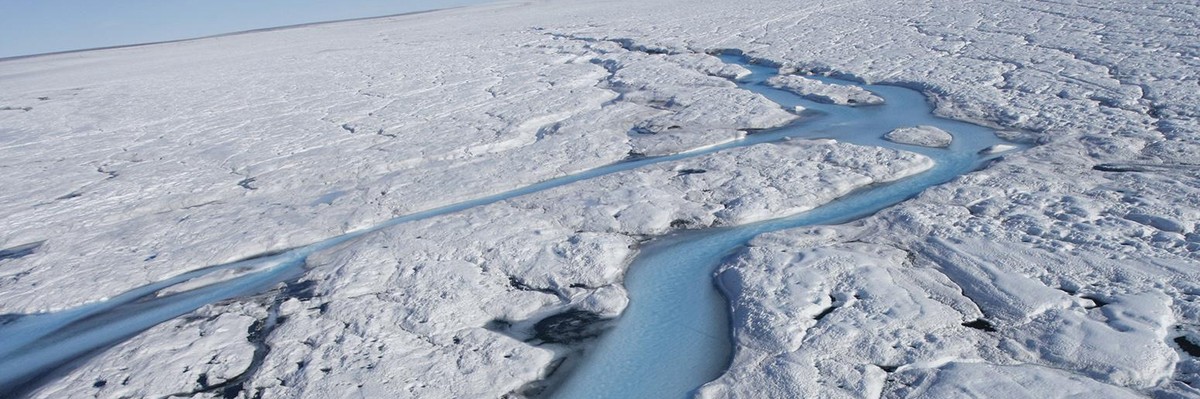
The collapse of the Greenland ice sheet, shown here, is one of five tipping points that could be triggered by current levels of warming. (Photo: Patrick Robert/Corbis)

“Averting this crisis—and doing so equitably—must be the core goal of COP28 and ongoing global cooperation,” one expert said.

An earlier version of this article said the sea levels could rise by 656 feet by 2100 if the Antarctic ice sheet started to melt. It has been corrected to reflect the fact that they would rise by 6.6 feet.

Current levels of global heating from the burning of fossil fuels and the destruction of nature risk triggering five tipping points that could throw Earth’s systems further out of balance, with three more at risk of toppling in the next decade.

The Global Tipping Points Report, released Wednesday at the United Nations Climate Change Conference (COP28) in the United Arab Emirates, argues that policymakers have delayed climate action long enough that “linear incremental change” will no longer be enough to protect ecosystems and communities from the worst impacts of the climate crisis. However, world leaders can still choose to take advantage of positive tipping points to drive transformative change.

“The existence of tipping points means that ‘business as usual’ is now over,” the report authors wrote. “Rapid changes to nature and society are occurring, and more are coming.”

“Crossing these thresholds may trigger fundamental and sometimes abrupt changes that could irreversibly determine the fate of essential parts of our Earth system for the coming hundreds or thousands of years.”

The report defines a “tipping point” as “occurring when change in part of a system becomes self-perpetuating beyond a threshold, leading to substantial, widespread, frequently abrupt and often irreversible impact.” A group of more than 200 researchers assessed 26 different potential tipping points in Earth’s systems that could be triggered by the climate crisis.

“Tipping points in the Earth system pose threats of a magnitude never faced by humanity,” report leader Tim Lenton of Exeter’s Global Systems Institute said in a statement. “They can trigger devastating domino effects, including the loss of whole ecosystems and capacity to grow staple crops, with societal impacts including mass displacement, political instability, and financial collapse.”

Because current emissions trajectories put the world on track for 1.5°C of warming, this is likely to trigger five tipping points, the report authors found. Those tipping points are the melting of the Greenland and Antarctic ice sheets, the mass die-off of warm-water coral reefs, the thawing of Arctic permafrost, and the collapse of the North Atlantic Subpolar Gyre circulation.

The melting of just the Antarctic ice sheet, for example, could raise global sea levels by 6.6 feet by 2100, Carbon Brief reported, meaning 480 million people would face yearly coastal flooding. Three more tipping points could be triggered in the 2030s if temperatures rise past 1.5°C. These include the mass death of seagrass meadows, mangroves, and boreal forests, according to The Guardian.

“Crossing these thresholds may trigger fundamental and sometimes abrupt changes that could irreversibly determine the fate of essential parts of our Earth system for the coming hundreds or thousands of years,” co-author Sina Loriani of the Potsdam Institute for Climate Impact Research told The Guardian.

Contributor Manjana Milkoreit of the University of Oslo said in a statement that “our global governance system is inadequate to deal with the coming threats and implement the solutions urgently required.”

But that doesn’t mean the report authors believe that hope is lost. Rather, they see it as a call to ambitious action at the current U.N. climate talks and beyond.

“Averting this crisis—and doing so equitably—must be the core goal of COP28 and ongoing global cooperation,” Milkoreit said.

One way to do this is to take advantage of positive tipping points.

“Concerted actions can create the enabling conditions for triggering rapid and large-scale transformation,” the report authors wrote. “Human history is flush with examples of abrupt social and technological change. Recent examples include the exponential increases in renewable electricity, the global reach of environmental justice movements, and the accelerating rollout of electric vehicles.”

The report authors made six recommendations based on their findings:

  1. Immediately phasing out fossil fuels and emissions from land use changes like deforestation;
  2. Strengthening plans for adaptation and loss and damage in the face of inevitable tipping points;
  3. Taking tipping points into account in Paris agreement mechanisms like the global stocktake and national climate pledges;
  4. Collaborating to trigger positive tipping points;
  5. Organizing a global summit on tipping points; and
  6. Increasing research on tipping points, including through a special report by the Intergovernmental Panel on Climate Change.

“Now is the moment to unleash a cascade of positive tipping points to ensure a safe, just, and sustainable future for humanity,” Lenton said.

Original article by OLIVIA ROSANE republished from Common Dreams under Creative Commons (CC BY-NC-ND 3.0). 

Continue ReadingScientists Say Risk of 5 Climate Tipping Points Means ‘Business as Usual Is Now Over’

Relying on Carbon Capture and Storage Could Unleash ‘Carbon Bomb’

Spread the love

Original article by JESSICA CORBETT republished from Common Dreams under Creative Commons (CC BY-NC-ND 3.0).

Activists protest against fossil fuels on the sidelines of the United Nations Climate Change Conference in Dubai, United Arab Emirates on December 5, 2023.  (Photo: by Karim Sahib/AFP via Getty Images)

“We need to cut through the smoke and mirrors of ‘abated’ fossil and keep our eyes fixed on the goal of 1.5°C,” said a co-author of a new analysis.

While the United Nations climate summit continued in the Middle East, researchers in Germany warned Tuesday that depending on technology to trap and sequester planet-heating pollution could unleash a “carbon bomb” in the decades ahead.

Specifically, the new briefing from the Berlin-based think thank Climate Analytics states that reliance on carbon capture and storage (CCS) could release an extra 86 billion metric tons of greenhouse gases into the atmosphere between 2020 and 2050.fcv

“The climate talks at COP28 have centered around the need for a fossil fuel phaseout,” the publication notes, referring to the United Arab Emirates-hosted U.N. conference. “But some are calling for this to be limited to ‘unabated’ fossil fuels.”

“The term ‘abated’ is being used as a Trojan horse to allow fossil fuels with dismal capture rates to count as climate action.”

Over 100 countries at COP28 support calling for “accelerating efforts toward phasing out unabated fossil fuels,” or operations that don’t involve technological interventions such as CCS,” as Common Dreamsreported earlier Tuesday.

The new briefing highlights the risks of targeting only unabated fossil fuels. Contrary to claims that significant oil and gas consumption can continue thanks to new tech, it says, “pathways that achieve the Paris agreement’s 1.5°C limit in a sustainable manner show a near complete phaseout of fossil fuels by around 2050 and rely to a very limited degree, if at all, on fossil CCS.”

Additionally, “there is no agreed definition of the concept of abatement,” and “a weak definition of ‘abated’—or even no definition at all—could allow poorly performing fossil CCS projects to be classed as abated,” the document explains. The report’s authors suggest that the focus on unabated fossil fuels is driven by polluters who want to keep cashing in on wrecking the planet.

“The term ‘abated’ is being used as a Trojan horse to allow fossil fuels with dismal capture rates to count as climate action,” declared report co-author Claire Fyson. “‘Abated’ may sound like harmless jargon, but it’s actually language deliberately engineered and heavily promoted by the oil and gas industry to create the illusion we can keep expanding fossil fuels.”

Climate Analytics CEO Bill Hare, who also contributed to the document, said that “the false promises of ‘abated’ fossil fuels risks climate finance being funneled to fossil projects, particularly oil and gas, and will greenwash the ‘unabatable’ emissions from their final use, which account for 90% of fossil oil and gas emissions.”

Report co-author Neil Grant stressed that “we need to cut through the smoke and mirrors of ‘abated’ fossil and keep our eyes fixed on the goal of 1.5°C. That means slashing fossil fuel production by around 40% this decade, and a near complete phaseout of fossil fuels by around 2050.”

As a Tuesday analysis from the Civil Society Equity Review details, a “fair” phaseout by mid-century would involve rich nations ditching oil and gas faster than poor countries, and the former pouring billions of dollars into helping the latter. The United States, for example, should end fossil fuel use by 2031 and contribute $97.1 billion per year toward the global energy transition.

The United States is putting money toward what critics call “false solutions” like carbon capture, and it is not alone. An Oil Change International (OCI) report from last week notes that “governments have spent over $20 billion—and have legislated or announced policies that could spend up to $200 billion more—of public money on CCS, providing a lifeline for the fossil fuel industry.”

OCI found that rather than permanently sequestering carbon dioxide, 79% of the global CCS capacity sends captured CO2 to stimulate oil production in aging wells, which is called “enhanced oil recovery.” The group also reviewed six leading plants in the United States, Australia, and the Middle East, and concluded that they “overpromise and underdeliver, operating far below capacity.”

Lorne Stockman, OCI’s research director, asserted last week that “governments need to stop pretending that fossil fuels aren’t the problem. Instead of throwing a multibillion-dollar lifeline to the fossil fuel industry with our tax dollars, they should fund real climate solutions, including renewable energy and energy efficiency. Fossil fuel phaseout must be the central theme of COP28, not dangerous distractions like CCS propped up with public money.”

Underscoring Stockman’s point that such projects are incredibly expensive, the University of Oxford’s Smith School of Enterprise and the Environment on Monday published research showing that a high carbon capture and storage pathway to net-zero emissions in 2050 could cost at least $30 trillion more than a low CCS pathway.

“Relying on mass deployment of CCS to facilitate high ongoing use of fossil fuels would cost society around a trillion dollars extra each year—it would be highly economically damaging,” said Rupert Way, an honorary research associate at the school.

“Any hopes that the cost of CCS will decline in a similar way to renewable technologies like solar and batteries appear misplaced,” he added. “Our findings indicate a lack of technological learning in any part of the process, from CO2 capture to burial, even though all elements of the chain have been in use for decades.”

Original article by JESSICA CORBETT republished from Common Dreams under Creative Commons (CC BY-NC-ND 3.0).

COP28 Stocktake Draft Reveals Vital Battle Over ‘Unabated’ Fossil Fuels

Big Oil Stifling Democracy to Keep Burning Fossil Fuels

​’Shameful’: Norwegian Government Backs Deep-Sea Mining

US Must Stop Extracting Fossil Fuels by 2031 for Fair Road to 1.5°C

Republicans Advance Boebert Plan Forcing Taxpayers to Foot Bill for Big Oil’s Mess

Continue ReadingRelying on Carbon Capture and Storage Could Unleash ‘Carbon Bomb’

Warning: the UK government’s hydrogen plan isn’t green at all, it’s another oil industry swindle

Spread the love

Kevin Anderson and Simon Oldridge

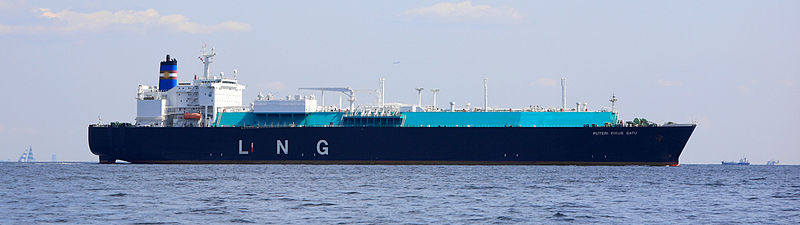
Membrane type LNG tanker Puteri Firus Satu in Tokyo Bay. Author Tennen-Gas shares under GNU Free Documentation License.

https://www.theguardian.com/commentisfree/2023/dec/04/uk-government-hydrogen-plan-oil-industry-taxpayer-blue-hydrogen-climate-crisis

A taxpayer-funded drive for ‘blue’ hydrogen is good news for fossil-fuel lobbyists, but bad news for the climate crisisMon 4 Dec 2023 12.25 CET

With the impacts of the climate crisis so apparent for all to see, it is becoming ever harder for governments to fob off voters with promises of action tomorrow. At Cop28 we’ll see increasingly overt action by fossil fuel companies and petrostates to preserve their traditional power. But it is just as important to scrutinise emerging so-called green or low-emission solutions, which sound plausible, but are often simply big oil’s business-as-usual in a new guise.

The UK’s much touted low carbon hydrogen standard (LCHS) is an example of this. While hydrogen can be a low-emission fuel, the UK’s plan is quite clearly a fig leaf for “blue” hydrogen – which is made from fossil fuels – and according to one study, is even more at odds with our commitment to limiting global temperature rises to 1.5C than burning coal.

Today, the vast majority of the UK’s hydrogen production is made from natural gas (the marketing term for methane) in a very carbon-intensive process. Blue hydrogen would also be produced from methane, but with promises that the resulting CO2 emissions would be captured and buried underground. But even if most of the CO2 can be safely captured (a very big “if”), blue hydrogen’s full life-cycle emissions are likely still to be high.

That is in part as a consequence of methane leaks across the vast North Sea supply chain. Methane is a very powerful warming gas, so even with relatively low leakage rates, blue hydrogen will be bad news for the climate. Currently, 84% of the UK’s misleadingly named “low carbon” hydrogen capacity under development is of this blue variety.

Companies will be awarded substantial taxpayer funding for blue hydrogen plants that are certified compliant with the new LCHS – and here, the hallmarks of lobbying are only too apparent. The LCHS method for calculating life-cycle greenhouse gas emissions appears rigged to greenwash blue hydrogen.

https://www.theguardian.com/commentisfree/2023/dec/04/uk-government-hydrogen-plan-oil-industry-taxpayer-blue-hydrogen-climate-crisis

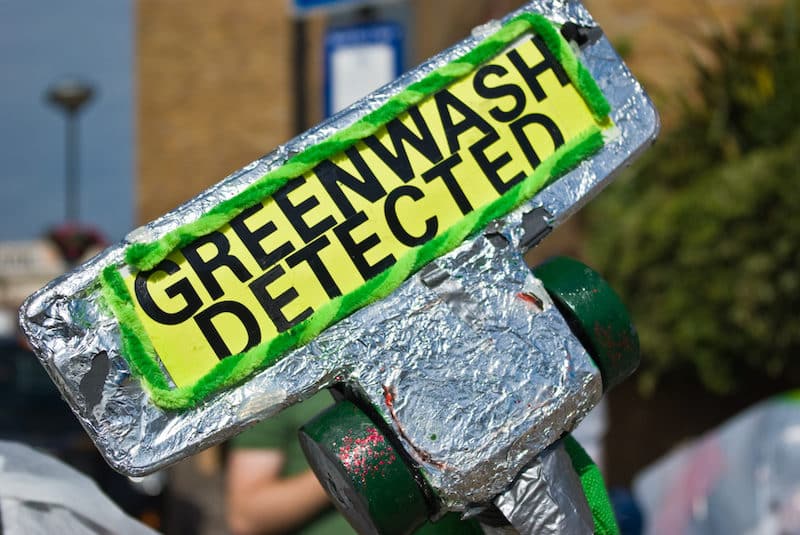
Protest placard reads Greenwash detected
Continue ReadingWarning: the UK government’s hydrogen plan isn’t green at all, it’s another oil industry swindle

UK likely to miss Paris climate targets by wide margin, analysis shows

Spread the love

https://www.theguardian.com/environment/2023/dec/05/uk-miss-paris-climate-targets-emissions

Exclusive: Under current policies, Britain could fall short of internationally agreed goal of 68% cut in emissions by 2030

The UK government is likely to miss its targets under the Paris climate agreement by a wide margin, analysis shows, dealing a devastating blow to Britain’s standing on the international stage.

Under current policies, the UK’s greenhouse gas emissions are likely to be 59% lower in 2030 than they were in 1990 – but the country’s internationally agreed target is for a 68% reduction by the end of this decade. The gap is likely to leave Britain in breach of these commitments.

The 2030 emissions goal was agreed at Cop26, the UN climate summit hosted by the UK in Glasgow in 2021, and has been reaffirmed at Cop28, taking place in Dubai this week.

Failure to meet the UK’s commitments would hinder international efforts to limit global temperature rises to 1.5C (2.7F) above pre-industrial levels.

The estimate comes from analysis of publicly available and government data carried out by Friends of the Earth. It found that current policies would achieve just over half the emissions cuts needed by 2030.

The gap had grown significantly under Rishi Sunak’s leadership, Friends of the Earth found.

https://www.theguardian.com/environment/2023/dec/05/uk-miss-paris-climate-targets-emissions

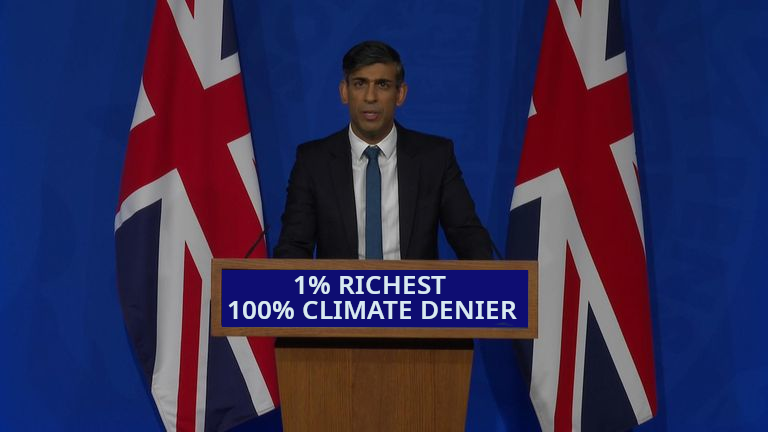
Image of UK Prime Minister Rishi Sunak reads 1% RICHEST 100% CLIMATE DENIER
Continue ReadingUK likely to miss Paris climate targets by wide margin, analysis shows