A large donation to the Labour Party from wood-burning giant Drax has raised concerns among campaigners over the sway of big carbon emitters over Parliament.
The payment from the former coal-fired power station was registered on September 12 last year, and published in December in the Electoral Commission register of political donations.
Labour has declined to comment on receipt of the donation.
Opposition leader Keir Starmer has yet to articulate his party’s position on burning wood for electricity – or to clarify whether [pretend] Labour accepts donations from polluting companies.
LABOUR leader Sir Keir Starmer is a “tool of the Establishment” who deliberately undermined Jeremy Corbyn’s leadership of the party, legendary film director Ken Loach has charged.
In excerpts from his interview in the upcoming documentary film Oh Jeremy Corbyn — The Big Lie, the award-winning film-maker said the ex-shadow Brexit secretary acted like an “undercover spy cop” at his predecessor’s top table.
…
In the film, due to receive its premiere in central London next month, Mr Loach says: “Every now and then, to show that we’re a democracy, there’s a change of government.
“The party changes, but it’s so important from the Establishment’s point of view that the alternative party won’t change anything — and that’s what Starmer is proving now.”
Yet another promise shredded as Starmer maintains 100% weasel record
Starmer and a starving child
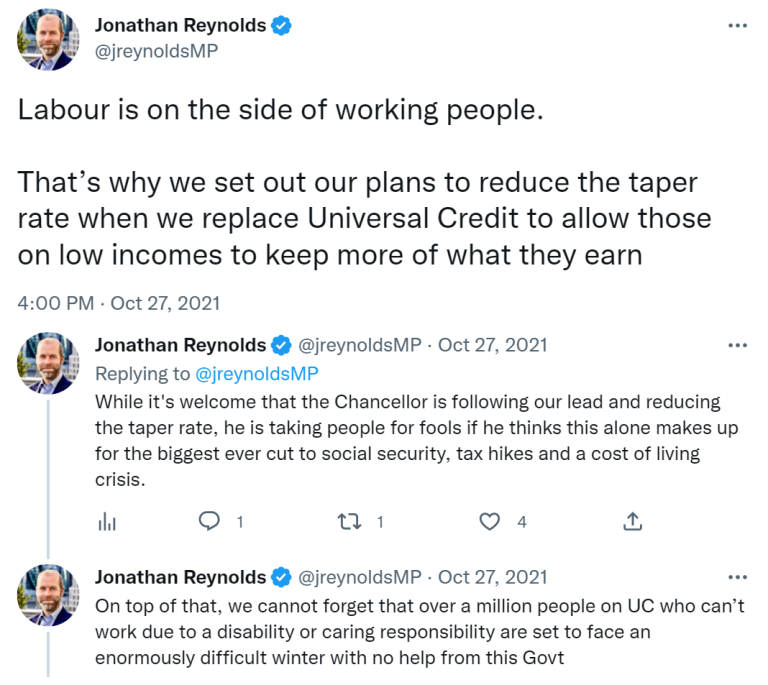
Keir Starmer has broken yet another promise – maintaining his perfect betrayal record – by abandoning his pledge to scrap the hateful and cruel Universal Credit system through which the Tories have inflicted years of misery and poverty on the UK’s lowest earning and most vulnerable.
Starmer’s Work and Pensions spokesman Jon Ashworth, challenged directly whether Starmer – who has already been mocked this week for claiming he will ‘renew’ the UK after thirteen years of Tory cuts without spending more – would honour his promise to scrap the system that has pushed huge numbers into abject poverty, responded that:
We’re going to reform universal credit … it’s a computer system. We’re not going to go back to the six different benefits that I think it brought together but we are going to reform it.
The lumping together of benefits that were previously tailored to the needs and circumstances of different types of claimant is one of the fundamentally damaging aspects of Universal Credit – and Labour had unequivocally promised to get rid of the whole system and ‘replace’ it with something fit for purpose, to show that ‘Labour is on the side of working people’, millions of whom rely on benefits to top up low pay they are forced to accept while employers fatten profits:
Starmer was asked this week by an interviewer what the point is of voting Labour when he will be no different to the Tories. If there is any difference, it’s an even lower level of trustworthiness. A Starmer promise is not fit to wipe your backside with.
LABOUR leader Sir Keir Starmer’s apparent U-turn on a commitment to end NHS outsourcing is “morally wrong and politically self-defeating,” campaigners said today.
The criticism from groups including Keep Our NHS Public and Momentum came after Mr Starmer told Sky News he would seek to use the private sector in the health service more “effectively” if elected prime minister.
The policy breaks a promise Mr Starmer made during his party leadership campaign in spring 2020 to abolish the use of external private providers.
The volte-face follows comments by shadow health secretary Wes Streeting urging Tory ministers to use private hospitals to help clear Covid pandemic-related treatment backlogs.
The Labour election victory in 1997 took place at a moment of great political opportunity. Thatcherism had been rejected by the electorate. But 18 years of Thatcherite rule had radically altered the social, economic and political terrain in British society. There was, therefore, a fundamental choice of direction for the incoming government.
One was to offer an alternative radical strategy to Thatcherism, attuned to the shifts that had occurred in the 1970s and 1980s; with equal social and political depth, but based on radically different principles. What Thatcherism seemed to have ruled out was another bout of Keynesian welfare-state social democracy. More significantly, Thatcherism had evolved a broad hegemonic basis for its authority, deep philosophical foundations, as well as an effective popular strategy. It was grounded in a radical remodelling of state and economy and a new neo-liberal common sense.
This was not likely to be reversed by a mere rotation of the electoral wheel of fortune. The historic opportunities for the left required imaginative thinking and decisive action in the early stages of taking power, signalling a new direction. The other choice was, of course, to adapt to Thatcherite, neo-liberal terrain. There were plenty of indications that this would be New Labour’s preferred direction. And so it turned out. In a profound sense, New Labour has adapted to neo-liberal terrain …