The climate is changing so fast that we haven’t seen how bad extreme weather could get
Spread the love
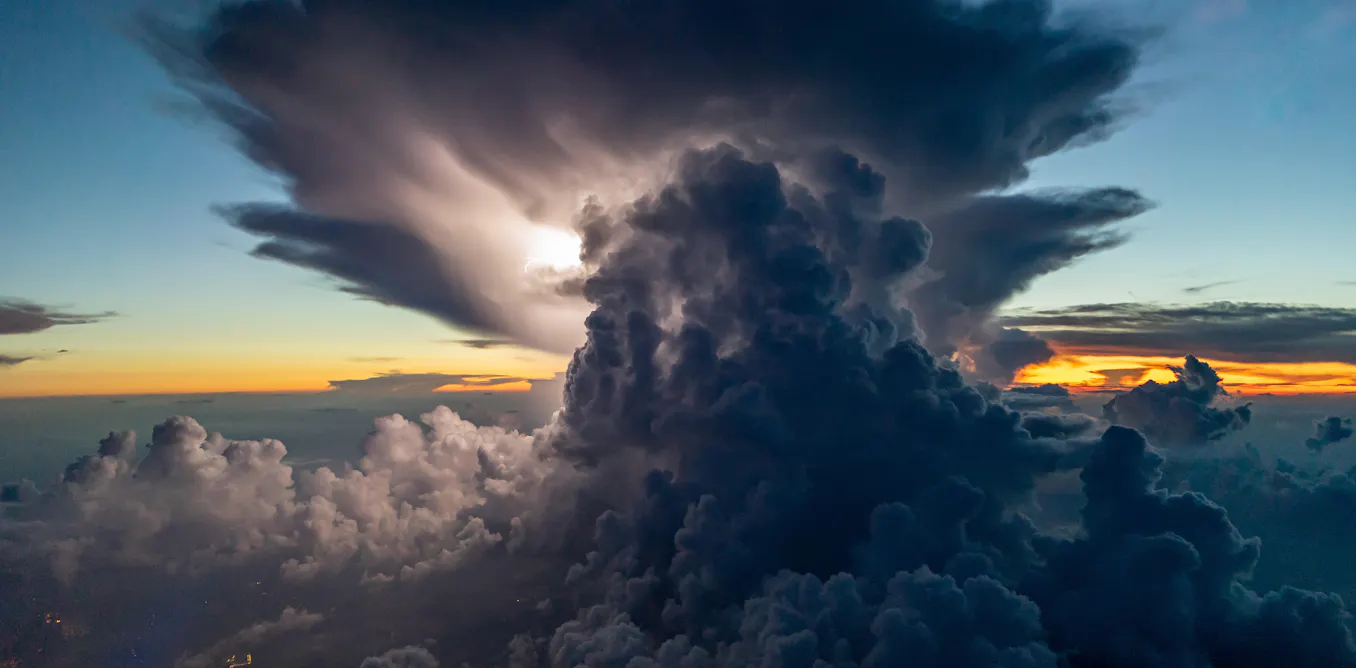
Andreas Thaller/Alamy Stock Photo

Simon H. Lee, University of St Andrews; Hayley J. Fowler, Newcastle University, and Paul Davies, Newcastle University

Extreme weather is by definition rare on our planet. Ferocious storms, searing heatwaves and biting cold snaps illustrate what the climate is capable of at its worst. However, since Earth’s climate is rapidly warming, predominantly due to fossil fuel burning, the range of possible weather conditions, including extremes, is changing.

Scientists define “climate” as the distribution of possible weather events observed over a length of time, such as the range of temperatures, rainfall totals or hours of sunshine. From this they construct statistical measures, such as the average (or normal) temperature. Weather varies on several timescales – from seconds to decades – so the longer the period over which the climate is analysed, the more accurately these analyses capture the infinite range of possible configurations of the atmosphere.

Typically, meteorologists and climate scientists use a 30-year period to represent the climate, which is updated every ten years. The most recent climate period is 1991-2020. The difference between each successive 30-year climate period serves as a very literal record of climate change.

This way of thinking about the climate falls short when the climate itself is rapidly changing. Global average temperatures have increased at around 0.2°C per decade over the past 30 years, meaning that the global climate of 1991 was around 0.6°C cooler than that in 2020 (when accounting for other year-to-year fluctuations), and even more so than the present day.

A moving target for climate modellers

If the climate is a range of possible weather events, then this rapid change has two implications. First, it means that part of the distribution of weather events comprising a 30-year climate period occurred in a very different background global climate: for example, northerly winds in the 1990s were much colder than those in the 2020s in north-west Europe, thanks to the Arctic warming nearly four times faster than the global average. Statistics from three decades ago no longer represent what is possible in the present day.

Second, the rapidly changing climate means we have not necessarily experienced the extremes that modern-day atmospheric and oceanic warmth can produce. In a stable climate, scientists would have multiple decades for the atmosphere to get into its various configurations and drive extreme events, such as heatwaves, floods or droughts. We could then use these observations to build up an understanding of what the climate is capable of. But in our rapidly changing climate, we effectively have only a few years – not enough to experience everything the climate has to offer.

Extreme weather events require what meteorologists might call a “perfect storm”. For example, extreme heat in the UK typically requires the northward movement of an air mass from Africa combined with clear skies, dry soils and a stable atmosphere to prevent thunderstorms forming which tend to dissipate heat.

Such “perfect” conditions are intrinsically unlikely, and many years can pass without them occurring – all while the climate continues to change in the background. Based on an understanding of observations alone, this can leave us woefully underprepared for what the climate can now do, should the right weather conditions all come together at once.

Startling recent examples include the extreme heatwave in the Pacific north-west of North America in 2021, in which temperatures exceeded the previous Canadian record maximum by 4.6°C. Another is the occurrence of 40°C in the UK in summer 2022, which exceeded the previous UK record maximum set only three years earlier by 1.6°C. This is part of the reason why the true impact of a fixed amount of global warming is only evident after several decades, but of course – since the climate is changing rapidly – we cannot use this method anymore.

Playing with fire

To better understand these extremes, scientists can use ensembles: many runs of the same weather or climate model that each slightly differ to show a range of plausible outcomes. Ensembles are routinely used in weather prediction, but can also be used to assess extreme events which could happen even if they do not actually happen at the time.

When 40°C first appeared in ensemble forecasts for the UK before the July 2022 heatwave, it revealed the kind of extreme weather that is possible in the current climate. Even if it had not come to fruition, its mere appearance in the models showed that the previously unthinkable was now possible. In the event, several naturally occurring atmospheric factors combined with background climate warming to generate the record-shattering heat on July 19 that year.

The highest observed temperature each year in the UK, from 1900 to 2023
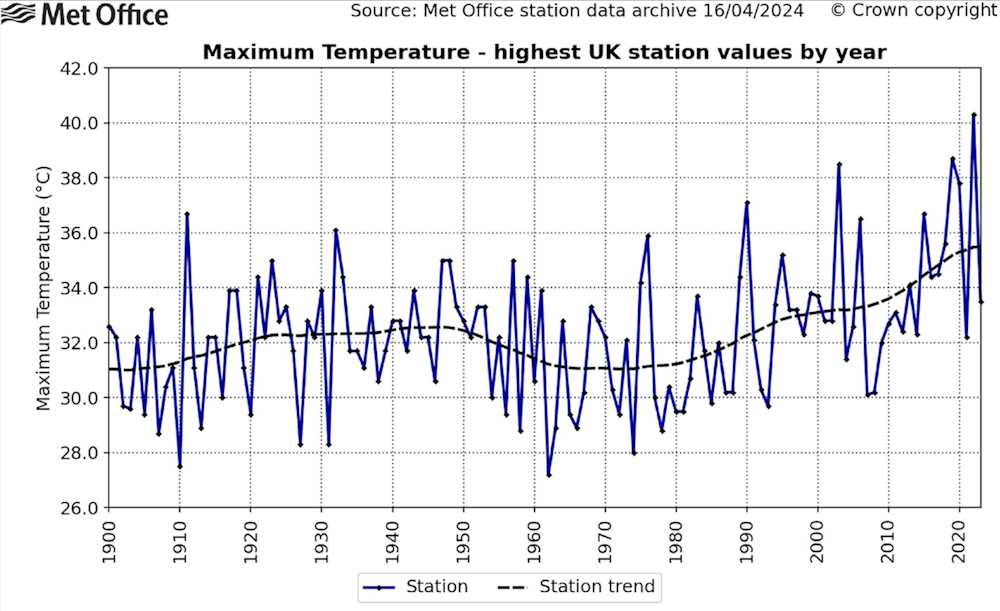
A graph showing the highest observed temperature in the UK between 1900 and 2023.
The hottest days are getting hotter in the UK. Met Office/Kendon et al. 2024

Later in summer 2022, after the first occurrence of 40°C, some ensemble weather forecasts for the UK showed a situation in which 40°C could be reached on multiple consecutive days. This would have posed an unprecedented threat to public health and infrastructure in the UK. Unlike the previous month, this event did not come to pass, and was quickly forgotten – but it shouldn’t have been.

It is not certain whether these model simulations correctly represent the processes involved in producing extreme heat. Even so, we must heed the warning signs.

Despite a record-warm planet, summer 2024 in the UK has been relatively cool so far. The past two years have seen global temperatures far above anything previously observed, and so potential extremes have probably shifted even further from what we have so far experienced.

Just as was the case in August 2022, we’ve got away with it for now – but we might not be so lucky next time.


Imagine weekly climate newsletter

Don’t have time to read about climate change as much as you’d like?
Get our award-winning weekly roundup in your inbox instead. Every Wednesday, The Conversation’s environment editor writes Imagine, a short email that goes a little deeper into just one climate issue. Join the 35,000+ readers who’ve subscribed so far.


Simon H. Lee, Lecturer in Atmospheric Science, University of St Andrews; Hayley J. Fowler, Professor of Climate Change Impacts, Newcastle University, and Paul Davies, Chief Meteorologist, Met Office and Visiting Professor, Newcastle University

This article is republished from The Conversation under a Creative Commons license. Read the original article.

Orcas discuss Donald Trump and the killer apes' concept of democracy. Front Orca warns that Trump is crashing his country's economy and that everything he does he does for the fantastically wealthy.
Orcas discuss Donald Trump and the killer apes’ concept of democracy. Front Orca warns that Trump is crashing his country’s economy and that everything he does he does for the fantastically wealthy.
Neo-Fascist Climate Science Denier Donald Trump says Burn, Baby, Burn.
Elon Musk urges you to be a Fascist like him, says that you can ignore facts and reality then.
Continue ReadingThe climate is changing so fast that we haven’t seen how bad extreme weather could get

Global temperatures could break heat record in next five years

Spread the love

https://www.theguardian.com/environment/2025/may/28/global-temperatures-break-annual-heat-record-next-five-years-world-meteorological-organization

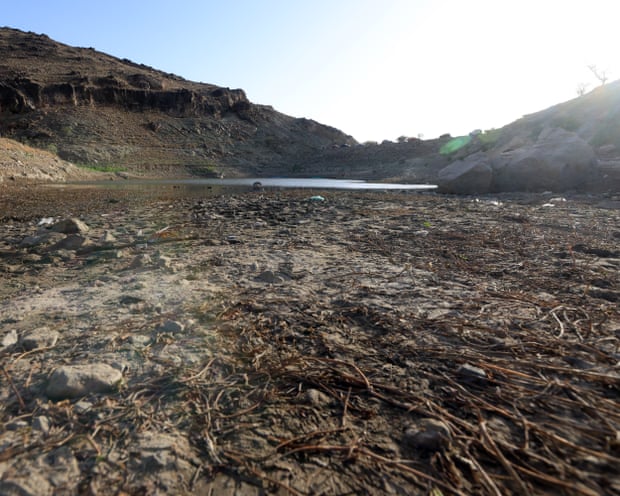
Rising temperatures will increase the risk of extreme droughts like the one currently affecting Yemen. Photograph: Yahya Arhab/EPA

Data also shows small but ‘shocking’ likelihood of year 2C hotter than preindustrial era before 2030

There is an 80% chance that global temperatures will break at least one annual heat record in the next five years, raising the risk of extreme droughts, floods and forest fires, a new report by the World Meteorological Organization (WMO) has shown.

For the first time, the data also indicated a small likelihood that before 2030, the world could experience a year that is 2C hotter than the preindustrial era, a possibility scientists described as “shocking”.

Coming after the hottest 10 years ever measured, the latest medium-term global climate update highlights the growing threat to human health, national economies and natural landscapes unless people stop burning oil, gas, coal and trees.

The update, which synthesises short-term weather observations and long-term climate projections, said there was a 70% chance that five-year average warming for 2025-2029 will be more than 1.5C above preindustrial levels.

The Met Office’s Leon Hermanson, who led the production of the report, said 2025 is likely to be one of the three warmest years on record.

Chris Hewitt, director of climate services at the WMO, described a “worrying picture” for heatwaves and human health. However, he said it was still not too late to limit warming if fossil fuel emissions are cut.

See the original article at https://www.theguardian.com/environment/2025/may/28/global-temperatures-break-annual-heat-record-next-five-years-world-meteorological-organization

Orcas comment on killer apes destroying the planet by continuing to burn fossil fuels.
Neo-Fascist Climate Science Denier Donald Trump says Burn, Baby, Burn.
Elon Musk urges you to be a Fascist like him, says that you can ignore facts and reality then.
Continue ReadingGlobal temperatures could break heat record in next five years

Tesla’s monthly sales in Europe down by half, signaling backlash against Musk

Spread the love
A parody ‘Tesla – The Swasticar’ advert posted at a London bus stop. Photograph: People vs Elon

https://abcnews.go.com/Business/wireStory/teslas-monthly-sales-europe-plunge-half-signaling-backlash-122218288

Tesla sales across Europe plunged by half last month even as growth in the electric car market picked up pace

LONDON — Tesla sales across Europe plunged by half last month even as growth in the electric car market picked up pace, according to data released Tuesday.

The numbers are the latest indication of how much the Tesla brand is suffering because of the backlash against billionaire CEO Elon Musk over his far-right views.

Sales of Tesla vehicles in 32 European countries tumbled 49% to 7,261 in April from 14,228 in the same month the previous year, according to the figures released by the European Automobile Manufacturers’ Association, or ACEA.

At the same time, sales of battery-electric vehicles by all manufacturers rose about 28%. Meanwhile, sales of gasoline and diesel powered cars slumped.

Article continues at https://abcnews.go.com/Business/wireStory/teslas-monthly-sales-europe-plunge-half-signaling-backlash-122218288

Elon Musk urges you to be a Fascist like him, says that you can ignore facts and reality then.
Neo-Fascist Climate Science Denier Donald Trump says Burn, Baby, Burn.
Continue ReadingTesla’s monthly sales in Europe down by half, signaling backlash against Musk

Israel receives 940 US arms shipments since Gaza war: Defense Ministry

Spread the love

This work by Middle East Monitor is licensed under a Creative Commons Attribution-NonCommercial-ShareAlike 4.0 International License.

A view of an Israeli military camp as Israel continues to deploy soldiers, tanks and armored vehicles near the Gaza border in Kibbutz Bar’am, Israel on October 14, 2023. [Mostafa Alkharouf – Anadolu Agency]

Israel has received 940 aircraft and vessels loaded with US weapons and military equipment since the start of the Gaza war in October 2023, the Defense Ministry said on Tuesday, Anadolu reports.

“The 800th aircraft in the comprehensive military equipment and weapons airlift operation that commenced immediately following the (Gaza) war has landed in Israel this morning,” the ministry said in a statement.

During the airlift, the ministry said, over 90,000 tons of military equipment have been delivered to Israel via 800 flights and approximately 140 maritime shipments.

The procured and transported equipment includes munitions, armored vehicles, individual protective equipment, and medical supplies, according to the ministry.

READ: Several injured by Israeli fire as starving Gazans storm US aid distribution facility in Rafah

The latest arrival of US weapons comes amid reports of strained relations between Israeli Prime Minister Benjamin Netanyahu and US President Donald Trump.

The Israeli army, rejecting international calls for a ceasefire, has pursued a brutal offensive against Gaza since October 2023, killing over 54,000 Palestinians, most of them women and children.

Last November, the International Criminal Court issued arrest warrants for Netanyahu and his former Defense Minister Yoav Gallant for war crimes and crimes against humanity in Gaza.

Israel also faces a genocide case at the International Court of Justice for its war crimes against defenseless civilians in the enclave.

BLOG: Humanitarian aid serves violent interests

This work by Middle East Monitor is licensed under a Creative Commons Attribution-NonCommercial-ShareAlike 4.0 International License.

Continue ReadingIsrael receives 940 US arms shipments since Gaza war: Defense Ministry

Staging for a Strike? US Quietly Moves Bombers as Israel Prepares to Hit Iran

Spread the love

Original article by Robert Inlakesh republished from Mint Press News under a Creative Commons Attribution-NonCommercial-ShareAlike 3.0 International License.

As threats of an Israeli strike on Iran grow louder, the United States is making quiet but unmistakable moves of its own. Over the past month, Washington has quietly repositioned strategic bombers and fighter squadrons to Diego Garcia, a remote U.S. military outpost in the Indian Ocean, squarely within striking distance of Tehran.

The official rationale is force protection. But the scale and nature of the deployments have sparked speculation that Washington is laying the groundwork for potential military involvement in an Israeli-led operation, or, at the very least, sending a message to Tehran that it won’t stand in the way.

Roughly a month ago, the U.S. Air Force deployed six B-2 Spirit bombers to Diego Garcia, a third of its active fleet of nuclear-capable stealth aircraft. These bombers, capable of flying directly from the U.S. to targets across the globe, don’t require forward deployment to be effective. Which is why their presence on a remote island in the Indian Ocean is raising eyebrows.

The B-2s have reportedly been used in prior strikes against Ansar Allah targets in Yemen, though with limited strategic effect. Following the declared conclusion of U.S. operations in Yemen, at least some of the B-2s were replaced by four B-52 strategic bombers, another long-range platform associated with show-of-force missions.

But then, additional firepower arrived. An entire squadron of F-15E Strike Eagle fighter jets was flown to the base. While these jets have strike capabilities, open-source intelligence analysts suggest they were likely deployed for base defense. That assessment, if correct, underscores that the Pentagon sees Diego Garcia not just as a staging ground, but as a potential target in a broader escalation.

Meanwhile, intelligence signals point to real movement on the Israeli side. A CNN report this Tuesday cited intercepted communications and activity on the ground indicating that Israel is preparing to strike Iranian nuclear facilities. U.S. officials reportedly believe the plans are active and serious.

In April, Donald Trump remarked that Israel would “lead” any such operation. That comment was interpreted by many as a nod of support, if not a green light, from Washington. Israeli Prime Minister Benjamin Netanyahu, for his part, has repeatedly warned that his government will not allow Iran to become a nuclear weapons state.

Yet even as diplomatic channels remained open, the introduction of new U.S. “red lines” appears to have derailed progress. U.S. Middle East envoy Steve Witkoff recently declared that Iran must halt all uranium enrichment, a demand not included in the original 2015 nuclear agreement, the Joint Comprehensive Plan of Action (JCPOA).

Iranian officials rejected the move outright. Foreign Minister Abbas Araghchi reiterated that enrichment is a sovereign right and a non-negotiable issue. Ayatollah Seyyed Ali Khamenei dismissed the new U.S. conditions as “nonsense.”

And on May 22, Araghchi issued a sharper warning: Iran, he said, would take “special measures to defend its nuclear facilities” if Israeli threats continued. The statement was deliberately vague, but left little doubt that Tehran is preparing for contingencies.

In Washington, meanwhile, influential think tanks are ratcheting up pressure for a hardline approach. The Washington Institute for Near East Policy (WINEP) has called for the complete dismantling of Iran’s enrichment infrastructure. The Foundation for Defense of Democracies (FDD) has urged more sanctions. The Atlantic Council argues the U.S. must avoid “reviving Obama’s Iran deal.”

Simultaneously, Dana Stroul, a former Biden official now at WINEP, has argued that Iran’s current weakness presents an opportunity for military action. Her view echoes a growing consensus across Washington’s think tank circuit: that Tehran is vulnerable, and now is the moment to strike.

These are the same voices that helped shape past U.S. interventions in the region. Their resurgence now, alongside tactical military deployments and rhetorical escalations, suggests a familiar pattern.

What’s missing from the conversation is any real public debate about the consequences. Not just for Iran, but for U.S. interests, regional stability, and the American public. A confrontation with Iran would carry significant consequences, yet few in Washington have publicly questioned whether such a conflict serves America’s national interest, save for outliers like Rep. Thomas Massie, who has drawn fire from powerful lobbies simply for asking whether this is our fight to begin with.

The buildup at Diego Garcia may be interpreted as precaution. But it’s also a reminder of how quickly precaution becomes policy, and policy becomes war, especially when shaped by proxies, pressure groups, and allies with very different interests.

Wars don’t always begin with votes. In fact, they often begin with quiet deployments far from view, and even farther from the American people they will ultimately affect.

Feature photo | This satellite image from Planet Labs PBC shows six U.S. B-2 stealth bombers parked at Camp Thunder Cove in Diego Garcia on April 2, 2025. Though officially deployed for operations in Yemen, the presence of these nuclear-capable aircraft in striking range of Iran has raised concerns that the U.S. is quietly preparing to support a potential Israeli attack. Photo | AP

Robert Inlakesh is a political analyst, journalist and documentary filmmaker currently based in London, UK. He has reported from and lived in the occupied Palestinian territories and hosts the show ‘Palestine Files’. Director of ‘Steal of the Century: Trump’s Palestine-Israel Catastrophe’. Follow him on Twitter @falasteen47

Original article by Robert Inlakesh republished from Mint Press News under a Creative Commons Attribution-NonCommercial-ShareAlike 3.0 International License.

Neo-Fascist Climate Science Denier Donald Trump says Burn, Baby, Burn.
Elon Musk urges you to be a Fascist like him, says that you can ignore facts and reality then.

Trump’s Break with Israel: Genuine Shift or Political Theater?

Continue ReadingStaging for a Strike? US Quietly Moves Bombers as Israel Prepares to Hit Iran