‘Free Speech Absolutist’ Elon Musk Says Teachers Should Be ‘Imprisoned’ for Accurate Lessons on US History

Spread the love

Original article by Stephen Prager republished from Common Dreams under Creative Commons (CC BY-NC-ND 3.0).

Elon Musk listens as reporters ask US President Donald Trump questions during a press availability in the Oval Office at the White House on May 21, 2025, in Washington, DC. (Photo by Chip Somodevilla/Getty Images)

The world’s richest man believes it is “treason” to teach students the plain fact that the United States was built on stolen Native American land.

Self-proclaimed “free speech absolutist” Elon Musk believes schoolteachers should be “imprisoned” for educating students on topics that portray America negatively—including the nation’s history of racism and the displacement of Native Americans.

The world’s richest man, who was a prolific donor to President Donald Trump and a member of his administration, expressed this desire in a post on his social media app X on Thursday in response to a survey of high school students from 2022 conducted by the right-wing Manhattan Institute, about whether they had been taught concepts labeled as part of “critical social justice.”

RECOMMENDED…

Green Deal: New EU Proposals To Make Sustainable Products The Norm

Trump Ban on European Disinformation Opponents Decried as ‘Authoritarian Attack on Free Speech’

Imran Ahmed, CEO of the Center for Countering Digital Hate

British Activist Blasts ‘Sociopathic Greed’ of Big Tech After US Judge Blocks His Detention

The post Musk replied to specifically emphasized that, according to the poll, 45% of students said they had been taught that “America was built on stolen land,” while another 22% said they’d heard it from an adult at school.

Any even cursory retelling of US history makes such a statement beyond dispute. Since the arrival of European settlers in what would become the United States, Native Americans have been subject to over 300 years of well-documented forced migration policieswars of extermination, and coercive treaties codifying their dispossession from lands they lived on for centuries.

In 2021, a year before the survey was conducted, researchers examined the first comprehensive dataset quantifying the forced removal of Native Americans and found that Indigenous people had lost approximately 99% of the lands they historically occupied.

The poll showed that students had also been taught other ideas about America that, while politically contentious, are also well-founded by US history and ongoing realities of legal and economic inequality—including that “America is a systemically racist country,” that “white people have white privilege,” and that “America is a patriarchal society.”

With state-level bans on what it calls “critical race theory,” “gender ideology,” and other supposedly “divisive concepts” in public education, the right has in recent years been systematically chipping away at classroom discussions related to the uglier parts of US history and resulting ongoing inequality. Meanwhile, the second Trump administration has sought to use federal funds to coerce public schools into adopting his standards for “patriotic education.”

But Musk, who donated an unprecedented $290 million to Trump to help him reclaim the presidency in 2024, thinks merely banning students from learning negative things about the country is not enough.

“Teaching people to hate America fundamentally destroys patriotism and the desire to defend our country,” he wrote. “Such teachings should be viewed as treason and those who do it imprisoned.”

The irony was immediately apparent to many. Musk’s call comes just days after he claimed that by pushing to ban his platform X over its proliferation of nonconsensual artificially generated pornography, including of children, the United Kingdom “want[s] to suppress free speech.”

Musk has on numerous previous occasions emphasized the importance of the First Amendment of the US Constitution, which guarantees the right to free expression.

“You can’t claim to care about the First Amendment if you believe this,” responded Billy Binion, a reporter for the libertarian news outlet Reason.“ Treason is a capital offense. Imprisoning or executing people for their words is impossible to reconcile with any understanding of free speech. Incoherent and un-American.”

The billionaire has long claimed to be one of free speech’s foremost defenders, but often only in cases involving his ideological allies.

Since he took over the social media platform formerly known as Twitter in 2022, those who have criticized himreported negative news stories about him, or promoted causes he disagrees with—particularly Palestinian or LGBTQ+ rights—have often had their accounts suspended or their content’s reach limited.

In recent weeks, echoing rhetoric from the Trump administration about deporting tens of millions of nonwhite American citizens, Musk has spiraled further into explicit calls for the ethnic cleansing of the United States, endorsing posts stating that white people must “reclaim our nations” or “be conquered, enslaved, raped, and genocided” and that “if white men become a minority, we will be slaughtered,” necessitating “white solidarity.”

“Obviously, the whole Elon-is-a-free-speech-absolutist thing is long dead,” wrote Alex Griswold, a spokesperson for the Foundation for Individual Rights and Expression, commonly known as FIRE. “But it goes beyond that to the point that he is significantly more censorial than the median American.”

Pam Fessler, a former news correspondent for NPR wrote that “People who call for the imprisonment of those who teach facts are the ones who ‘hate’ America.”

Original article by Stephen Prager republished from Common Dreams under Creative Commons (CC BY-NC-ND 3.0).

Elon Musk urges you to be a Fascist like him, says that you can ignore facts and reality then.
Donald Fuhrump says that Amerikkka doesn't bother with crimes or charges anymore, not being 100% Amerikkkan and opposing his real estate intentions is enough.
Donald Fuhrump says that Amerikkka doesn’t bother with crimes or charges anymore, not being 100% Amerikkkan and opposing his real estate intentions is enough.
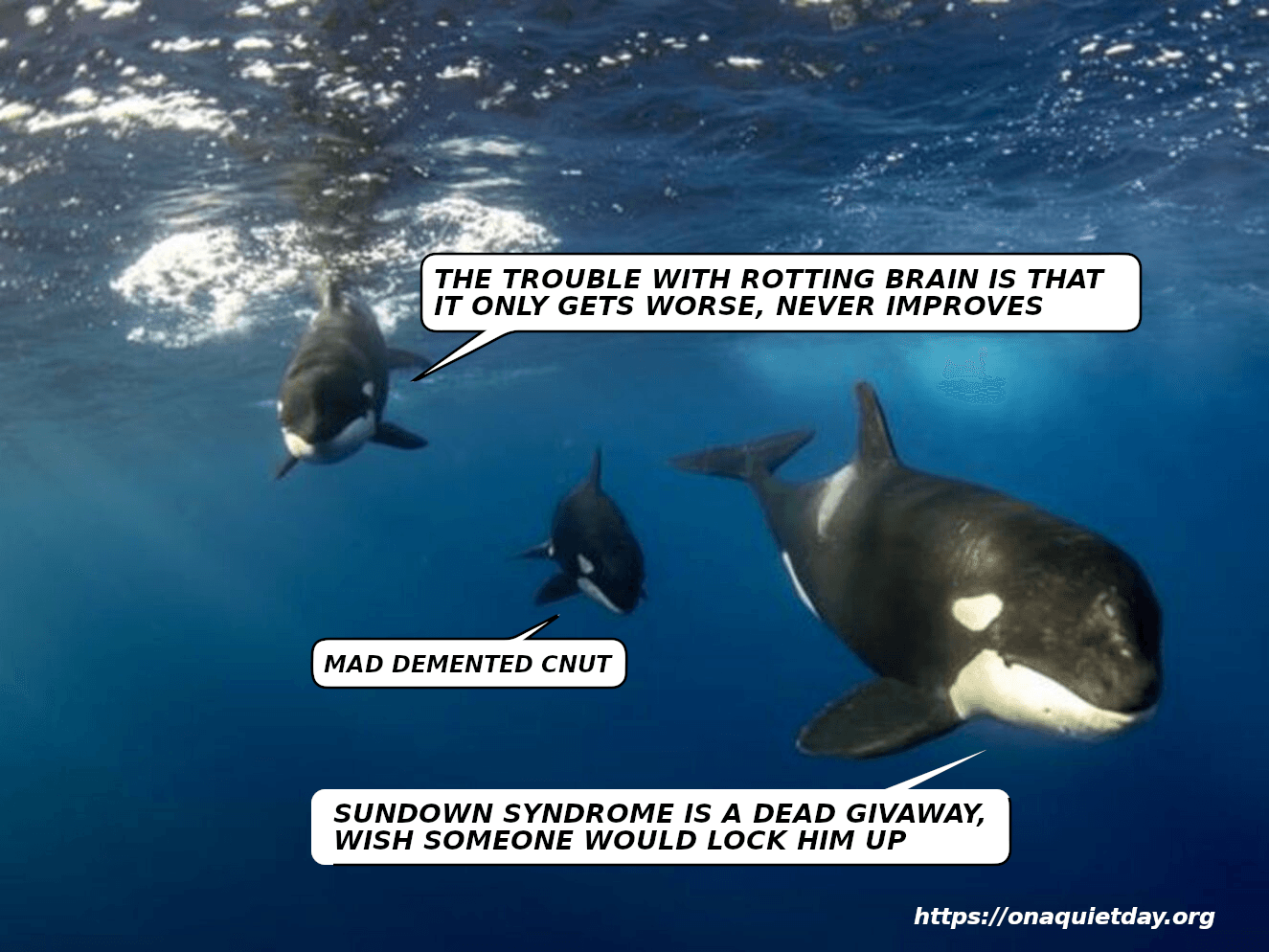
Orcas discuss how Trump was re-elected and him being an obviously insane, xenophobic Fascist.

Continue Reading‘Free Speech Absolutist’ Elon Musk Says Teachers Should Be ‘Imprisoned’ for Accurate Lessons on US History

Analysis: The climate papers most featured in the media in 2025

Spread the love

Original article republished from Carbon Brief under a CC license

The year 2025 saw the return to power of Donald Trump, a jewellery heist at the Louvre museum in Paris and an engagement that “broke the internet”.

Amid the biggest stories of the year, climate change research continued to feature prominently in news and social media feeds.

Using data from Altmetric, which scores research papers according to the attention they receive online, Carbon Brief has compiled its annual list of the 25 most talked-about climate-related studies of the past year. 

The top 10 – shown in the infographic above and list below – include research into declining butterflies, heat-related deaths, sugar intake and the massive loss of ice from the world’s glaciers:

  1. Indicators of Global Climate Change 2024: annual update of key indicators of the state of the climate system and human influence
  2. Rapid butterfly declines across the US during the 21st century
  3. Global warming has accelerated: Are the UN and the public well informed?
  4. Community estimate of global glacier mass changes from 2000 to 2023 
  5. The EAT-Lancet Commission on healthy, sustainable and just food systems 
  6. Carbon majors and the scientific case for climate liability 
  7. Estimating future heat-related and cold-related mortality under climate change, demographic and adaptation scenarios in 854 European cities 
  8. Systematic attribution of heatwaves to the emissions of carbon majors 
  9. Ambient outdoor heat and accelerated epigenetic aging among older adults in the US 
  10. Rising temperatures increase added sugar intake disproportionately in disadvantaged groups in the US

Later in this article, Carbon Brief looks at the rest of the top 25 and provides analysis of the most featured journals, as well as the gender diversity and country of origin of authors.

New for this year is the inclusion of Altmetric’s new “sentiment analysis”, which scores how positive or negative a paper’s social media attention has been.

(For Carbon Brief’s previous Altmetric articles, see the links for 202420232022202120202019201820172016 and 2015.) 

Global indicators

The top-scoring climate paper of 2025, ranking 24th of any research paper on any topic, is the annual update of the “Indicators of Global Climate Change” (IGCC) report.

The report was established in 2023 to help fill the gap in climate information between assessments of the Intergovernmental Panel on Climate Change (IPCC), which can take up to seven years to complete. It includes the latest data on global temperatures, the remaining carbon budget, greenhouse gas emissions and – for the first time – sea level rise. 

Ragout: Indicators of Global Climate Change 2024: annual update of key indicators of the state of the climate system and human influence

The paper, published in Earth System Science Data, has an Altmetric score of 4,099. This makes it the lowest top-scoring climate paper in Carbon Brief’s list since 2017.

(An Altmetric score combines the mentions that published peer-reviewed research has received from online news articles, blogs, Wikipedia and on social media platforms such as Facebook, Reddit, Twitter and Bluesky. See an earlier Carbon Brief article for more on how Altmetric’s scoring system works.)

Previous editions of the IGCC have also appeared in Carbon Brief’s list – the 2024 and 2023 iterations ranked 17th and 18th, respectively.

This year’s paper was mentioned 556 times in online news stories, including in the Associated PressGuardianIndependentHill and BBC News

Many outlets led their coverage with the study’s findings on the global “carbon budget”. This warned that the remaining carbon budget to limit warming to 1.5C will be exhausted in just three years if global emissions continue at their current rate.

Headline_Montage

In a Carbon Brief guest post about the study, authors Prof Piers Forster and Dr Debbie Rosen from the University of Leeds wrote:

“It is also now inevitable that global temperatures will reach 1.5C of long-term warming in the next few years unless society takes drastic, transformative action…Every year of delay brings reaching 1.5C – or even higher temperatures – closer.”

Forster, who was awarded a CBE in the 2026 new year honours list, tells Carbon Brief that media coverage of the study was “great” at “putting recent extreme weather in the context of rapid long-term rates of global warming”. 

However, he adds:

“Climate stories are not getting the coverage they deserve or need at the moment so the community needs to get all the help we can for getting clear consistent messages out there.”

The paper was tweeted more than 300 times and posted on Bluesky more than 950 times. It also appeared in 22 blogs. 

Using AI, Altmetric now analyses the “sentiment” of this social media attention. As the summary figure below shows, the posts about this paper were largely positive, with an approximate 3:1 split of positive and negative attention.

Altmetric’s AI-generated summary of the sentiment of social media posts regarding the Forster et al.
Altmetric’s AI-generated summary of the sentiment of social media posts regarding the Forster et al. (2025) paper. Totals may add up to more than 100% because of rounding. Source: Altmetric

Butterfly decline

With an Altmetric score of 3,828, the second-highest scoring climate paper warns of “widespread” declines in butterfly numbers across the US since the turn of the century.

The paper, titled “Rapid butterfly declines across the US during the 21st century” and published in Science, identifies a 22% fall in butterfly numbers across more than 500 species between 2000 and 2020.

(There is a higher-scoring paper, “The 2025 state of the climate report: a planet on the brink”, in the journal BioScience, but it is a “special report” and was not formally peer reviewed.)

Ragout: Rapid butterfly declines across the United States during the 21st
century

The scale of the decline suggests “multiple and broadly acting threats, including habitat loss, climate change and pesticide use”, the paper says. The authors find that “species generally had stronger declines in more southerly parts of their ranges”, with some of the most negative trends in the driest and “most rapidly warming” US states.

The research was covered in 560 news articles, including the New York TimesGuardianAssociated PressNPREl País and BBC News. Much of the news coverage led with the 22% decline figure.

The paper was also mentioned in 13 blogs, more than 750 Bluesky posts and more than 600 tweets.

The sentiment analysis reveals that social media posts about the paper were largely negative. However, closer inspection reveals that this negativity is predominantly towards the findings of the paper, not the research itself. 

For example, a Bluesky post on the “distressing” findings by one of the study’s authors is designated as “neutral negative” by Altmetric’s AI analysis.

In a response to a query from Carbon Brief, Altmetric explains that the “goal is to measure how people feel about the research paper itself, not the topic it discusses”. However, in some cases the line can be “blurred” as the AI “sometimes struggles to separate the subject matter from the critique”. The organisation adds that it is “continuously working on improving our models to better distinguish between the post’s content and the research output”. 

Altmetric’s AI-generated summary of the sentiment of social media posts regarding the Forster et al.
Altmetric’s AI-generated summary of the sentiment of social media posts regarding the Forster et al. (2025) paper. Totals may add up to more than 100% because of rounding. Source: Altmetric

On the attention that the paper received, lead author Dr Collin Edwards of the Washington Department of Fish & Wildlife says that “first and foremost, people care about butterflies and our results are broad-reaching, unequivocal and, unfortunately, very concerning”. 

Edwards tells Carbon Brief he hopes the clarity of the writing made the paper accessible to readers, noting that he and his co-authors “sweat[ed] over every word”. 

The resulting news coverage “accurately captured the science”, Edwards says: 

“Much as I wish our results were less consistently grim, the consistency and simplicity of our findings mean that even if a news story only provides the highest level summary, it isn’t misleading readers by skipping some key caveat or nuance that changes the interpretation.”

Warming ‘acceleration’

In third place in Carbon Brief’s list for 2025 is the latest scientific paper from veteran climatologist Dr James Hansen, former director of the NASA Goddard Institute for Space Studies and now adjunct professor at Columbia University’s Earth Institute.

The paper, titled “Global warming has accelerated: Are the UN and the public well-informed?” was published in the journal Environment: Science and Policy for Sustainable Development. It generated an Altmetric score of 3,474.

Ragout: Global Warming Has Accelerated: Are the United Nations and the Public Well-Informed

The study estimates that the record-high global temperatures in the last few years were caused by a combination of El Niño and a reduction in air pollution from international shipping

The findings suggest that the cooling effect of aerosols – tiny, light‑scattering particles produced mainly by burning fossil fuels – has masked more of the warming driven by greenhouse gases than previously estimated by the IPCC.

As efforts to tackle air pollution continue to reduce aerosol emissions, warming will accelerate further – reaching 2C by 2045, according to the research.

The paper was covered by almost 400 news stories – driven, in part, by Hansen’s comments in a press briefing that the Paris Agreement’s 2C warming limit was already “dead”. 

Hansen’s analysis received a sceptical response from some scientists. For example, Dr Valerie Masson-Delmotte, an IPCC co-chair for its most recent assessment report on climate science, told Agence France-Presse the research “is not published in a climate science journal and it formulates a certain number of hypotheses that are not consistent with all the available observations”.

In addition, other estimates, including by Carbon Brief, suggest new shipping regulations have made a smaller contribution to warming than estimated by Hansen.

Hansen tells Carbon Brief that the paper “did ok” in terms of media coverage, although notes “it’s on [scientists] to do a better job of making clear what the core issues are in the physics of climate change”.

With more than 1,000 tweets, the paper scored highest in the top 25 for posts on Twitter. It was also mentioned in more than 800 Bluesky posts and on 27 blogs. 

The sentiment analysis suggests that these posts were largely positive, with just a small percentage of negative comments.

Altmetric’s AI-generated summary of the sentiment of social media posts regarding the Hansen et al.
Altmetric’s AI-generated summary of the sentiment of social media posts regarding the Hansen et al. (2025) paper. Totals may add up to more than 100% because of rounding. Source: Altmetric

Making the top 10

Ranking fourth in Carbon Brief’s analysis is a Nature paper calculating changes in global glacier mass over 2000-23. The study finds glaciers worldwide lost 273bn tonnes of ice annually over that time – with losses increasing by 36% between 2000-11 and 2012-23.

The study has an Altmetric score of 3,199. It received more news coverage than any other paper in this year’s top 25, amassing 1,187 mentions. with outlets including the GuardianAssociated Press and Economic Times

At number five, with an Altmetric score of 2,860, is the EAT-Lancet Commission on healthy, sustainable and just food systems.

Carbon Brief’s coverage of the report highlights that “a global shift towards ‘healthier’ diets could cut non-CO2 greenhouse gas emissions, such as methane, from agriculture by 15% by 2050”. It adds:

“The findings build on the widely cited 2019 report from the EAT-Lancet Commission – a group of leading experts in nutrition, climate, economics, health, social sciences and agriculture from around the world.”

Also making the top 10 – ranking sixth and eighth – are a pair of papers published in Nature, which both link extreme heat to the emissions of specific “carbon majors” – large producers of fossil fuels, such as ExxonMobil, Shell and Saudi Aramco,.

The first is a perspective, titled “Carbon majors and the scientific case for climate liability”, published in April. It begins:

“Will it ever be possible to sue anyone for damaging the climate? Twenty years after this question was first posed, we argue that the scientific case for climate liability is closed. Here we detail the scientific and legal implications of an ‘end-to-end’ attribution that links fossil fuel producers to specific damages from warming.”

The authors find “trillions (of US$) in economic losses attributable to the extreme heat caused by emissions from individual companies”.

The paper was mentioned 1,329 times on Bluesky – the highest in this year’s top 25. It was also mentioned in around 270 news stories.

Published four months later, the second paper uses extreme event attribution to assess the impact of climate change on more than 200 heatwaves recorded since the year 2000.

The authors find one-quarter of the heatwaves would have been “virtually impossible” without human-caused global warming. They add that the heatwaves were, on average, 1.7C hotter due to climate change, with half of this increase due to emissions stemming from the operations and production of carbon majors. 

This study was mentioned in almost 300 news stories – including by Carbon Brief – as well as 222 tweets and 823 posts on Bluesky.

In seventh place is a Nature Medicine study, which quantifies how heat-related and cold-related deaths will change over the coming century as the climate warms. 

A related research briefing explains the main findings of the paper:

“Heat-related deaths are estimated to increase more rapidly than cold-related deaths are estimated to decrease under future climate change scenarios across European cities. An unrealistic degree of adaptation to heat would be required to revert this trend, indicating the need for strong policies to reduce greenhouse gases emissions.”

The paper was mentioned 345 times in the news, including in the Financial TimesNew ScientistGuardian and Bloomberg.

The paper in ninth place also analyses the health impacts of extreme heat. The study, published in Science Advances, finds that extreme heat can speed up biological ageing in older people. 

Rounding out the top 10 is a Nature Climate Change study, titled “Rising temperatures increase added sugar intake disproportionately in disadvantaged groups in the US”. 

The study finds that at higher temperatures, people in the US consume more sugar – mainly due to “higher consumption of sugar-sweetened beverages and frozen desserts”. The authors project that warming of 5C would drive additional sugar consumption of around 3 grams per day, “with vulnerable groups at an even higher risk”.

Elsewhere in the top 25

The rest of the top 25 includes a wide range of research, from “glacier extinction” and wildfires to Amazon drought and penguin guano.

In 13th place is a Nature Climate Change study that finds the wealthiest 10% of people – defined as those who earn at least €42,980 (£36,605) per year – contributed seven times more to the rise in monthly heat extremes around the world than the global average.

The authors also explore country-level emissions, finding that the wealthiest 10% in the US produced the emissions that caused a doubling in heat extremes across “vulnerable regions” globally. 

(See Carbon Brief’s coverage of the paper for more details.)

In 15th place is the annual Lancet Countdown on health and climate change – a lengthy report with more than 120 authors.

The study warns that “climate change is increasingly destabilising the planetary systems and environmental conditions on which human life depends”.

This annual analysis from the Lancet often features in Carbon Brief’s top 25 analysis. After three years in the Carbon Brief’s top 10 over 2020-23, the report landed in 20th place in 2023 and missed out on a spot in the top 25 altogether in 2024. 

In 16th place is a Science Advances study, titled “Increasing rat numbers in cities are linked to climate warming, urbanisation and human population”. The study uses public complaint and inspection data from 16 cities around the world to estimate changes in rat populations.

It finds that “warming temperatures and more people living in cities may be expanding the seasonal activity periods and food availability for urban rats”.

The study received 320 new mentions, including in the Washington PostNew Scientist and National Geographic.

In 21st place is a Nature Climate Change paper, titled “Peak glacier extinction in the mid-21st century”. The study authors “project a sharp rise in the number of glaciers disappearing worldwide, peaking between 2041 and 2055 with up to ~4,000 glaciers vanishing annually”.

Completing the top 25 is a Nature study on the “prudent planetary limit for geological carbon storage” – where captured CO2 is injected deep underground, where it can stay trapped for thousands of years. 

In a Carbon Brief guest post, study authors Dr Matthew Gidden and Prof Joeri Rogelj explain that carbon dioxide removal will only be effective at limiting global temperature rise if captured CO2 is injected “deep underground, where it can stay trapped for thousands of years”. 

The guest post warns that “geological carbon storage is not limitless”. It states that “if all available safe carbon storage capacity were used for CO2 removal, this would contribute to only a 0.7C reduction in global warming”. 

Top journals

The journal Nature dominates Carbon Brief’s top 25, with seven papers featured.

Many other journals in the Springer Nature stable also feature, including Nature Climate Change (three), Communications Earth & Environment (two), as well as Nature Ecology & Evolution, Nature Medicine and Nature Reviews Earth & Environment (one each).

Also appearing more than once in the top 25 are Science Advances (three), Science (two) and the Lancet (two). 

This is shown in the graphic below.

Graphic: Journals most frequently appearing in the top 25 climate papers in 2025

All the final scores for 2025 can be found in this spreadsheet.

Diversity in the top 25

The top 25 climate papers of 2025 cover a huge range of topics and scope. However, analysis of their authors reveals a distinct lack of diversity.

In total, the top 25 includes more than 650 authors – the highest number since Carbon Brief began this analysis in 2022.

This is largely due to a few publications with an exceptionally high number of authors. For example, the 2025 report of the Lancet Countdown on health and climate change has almost 130 authors alone, accounting for almost one-fifth of authors in this analysis. 

Carbon Brief recorded the gender and country of affiliation for each of these authors. (The methodology used was developed by Carbon Brief for analysis presented in a special 2021 series on climate justice.)

The analysis reveals that 88% of the authors of the climate papers most featured in the media in 2025 are from institutions in the global north. 

Global South: The “global south” is a term used to broadly describe lower-income countries in regions such as Africa, Asia and Latin America. It is often used to denote nations that are either in… Read More

Carbon Brief defines the global north as North America, Europe, Japan, Australia and New Zealand. It defines the global south as Asia (excluding Japan), Africa, Oceania (excluding Australia and New Zealand), Latin America and the Caribbean.

The analysis shows that 53% of authors are from European institutions, while only 1% of authors are from institutions in Africa.

Further data analysis shows that there are also inequalities within continents. The map below shows the percentage of authors from each country, where dark blue indicates a higher percentage. Countries that are not represented by any authors in the analysis are shown in grey.

The number of all authors from the climate papers most featured in the media in 2025.
The number of all authors from the climate papers most featured in the media in 2025. The designations employed and the presentation of the material on this map do not imply the expression of any opinion whatsoever on the part of Carbon Brief concerning the legal status of any country, territory, city or area or of its authorities, or concerning the delimitation of its frontiers or boundaries. Map by Carbon Brief using Datawrapper.

The top-ranking countries on this map are the US and the UK, which account for 26% and 16% of the authors, respectively.

Carbon Brief also analysed the gender of the authors. 

Only one-third of authors from the top 25 climate papers of 2025 are women and only five of the 25 papers list a woman as lead author.

The plot below shows the number of authors from each continent, separated into men (dark blue) and women (light blue).

The number of men (dark blue) and women (light blue) listed as authors in the climate papers most featured in the media in 2025, shown by continent.
The number of men (dark blue) and women (light blue) listed as authors in the climate papers most featured in the media in 2025, shown by continent. Chart by Carbon Brief using Datawrapper.

The full spreadsheet showing the results of this data analysis can be found here. For more on the biases in climate publishing, see Carbon Brief’s article on the lack of diversity in climate-science research.

Elon Musk urges you to be a Fascist like him, says that you can ignore facts and reality then.
Donald Trump urges you to be a Climate Science denier like him. He says that he makes millions and millions for destroying the planet, Burn, Baby, Burn and Flood, Baby, Flood.
Orcas discuss Donald Trump and the killer apes' concept of democracy. Front Orca warns that Trump is crashing his country's economy and that everything he does he does for the fantastically wealthy.
Orcas discuss Donald Trump and the killer apes’ concept of democracy. Front Orca warns that Trump is crashing his country’s economy and that everything he does he does for the fantastically wealthy.

Original article republished from Carbon Brief under a CC license

Continue ReadingAnalysis: The climate papers most featured in the media in 2025

How worried should we be that political leaders keep making oblique Nazi references?

Spread the love
A protester holds up a sign making fun of Elon Musk. Alamy/John Lazenby

David L Collinson, Lancaster University and Keith Grint, Warwick Business School, University of Warwick

Several high-profile political leaders have in recent months been seen apparently dabbling in Nazi allusions. In many cases, dog whistle messages send oblique signals to supporters. These are pitched at a frequency that most listeners can’t hear but are meaningful to those seeking confirmation of their own views.

When challenged, the people using these tactics often respond with strong and furious rebuttals. After emphasising their shock that they would be associated with Nazi imagery or ideas, they typically go on the offensive. They express indignation and moral outrage. Then, they demand an apology.

These hostile counterattacks often place their critics on the defensive. If the allusion to the Nazis becomes too obvious to deny, perpetrators typically claim they weren’t aware of the historical association and insist it was all an innocent mistake.

This is the dog whistle playbook: strategic ambiguity followed by belligerent counterattack, and then, if needed, plausible deniability.

Of the many recent cases of Nazi allusions, Elon Musk’s straight-arm salute – a gesture he performed twice at a rally celebrating Donald Trump’s second inauguration – is one of the most notorious.

Far from denying he’d made the gestures, Musk went on the attack dismissing criticisms as “pure propaganda”. He argued that critics in the Democratic party were conducting “ideological witchhunts” and needed “better dirty tricks” because Adolf Hitler references are “sooo tired”. Musk also made a series of Nazi-themed puns on social media.

One month later, Steve Bannon, Donald Trump’s one-time chief strategist and key figure in the Maga movement, also made a straight-arm salute at the conservative political action conference. Unlike Musk, Bannon denied any Nazi intent, describing the gesture as a “wave”. While Bannon was able to insist this wasn’t a Nazi salute, his critics’ outrage might have helped send a signal to Nazi sympathisers, reinforcing their loyalty and support.

Within the space of a few weeks in 2025, two senior figures in the Maga movement had been engulfed in controversies surrounding alleged Nazi salutes. For years, Trump has flirted with Nazi imagery, given comfort and even pardons to far-right extremists and been reluctant to criticise white supremacists. In November 2025 Trump reposted an AI-generated image of himself in front of what looked a lot like a Nazi eagle emblem (but without the swastika).

He has called political opponents “vermin” and argued that immigrants are “poisoning the blood of our country”. These words are associated with Hitler. Trump has also been quoted as saying “Hitler did some good things” and for asking US generals to be more like those of the Third Reich.

The dictator’s playbook

In Germany, dog whistles are a particularly sinister aspect of far-right politics, communicating coded signals that appear to convey a secret admiration for the Nazis. Such messages are often innocent enough to pass over the heads of the masses, yet iconic enough to resonate with others.

In 2024 Björn Höcke, one of the leading figures of the Alternative for Germany (AfD) party, was found guilty of knowingly using a Nazi slogan “Alles für Deutschland” at a rally. This slogan is forbidden under German law. It was the central slogan of the SA or Storm Troopers, Hitler’s paramilitary group from the Weimar years. Höcke insisted he was innocent because he was unaware of the Nazi links.

And if we reexamine Hitler’s own playbook, his speech to workers at the Siemens Dynamo Works factory in November 1933 never mentioned the word “Jews”. When Hitler talked of a “small rootless international clique” his supporters knew exactly to whom he was referring. Once Hitler had consolidated the power of the Nazis, this gave them, and many others, permission to vilify and scapegoat Jews more explicitly. In effect, the permission-giving facilitated the incremental usurpation of power.

While substantial differences clearly exist between the Third Reich and contemporary politics, there also seem to be disturbing overlaps. Rather than ensuring their messages could never be confused with Nazi references, some leaders seem comfortable using dog whistle signals and strategic ambiguity, hostile counterattacks and plausible deniability.

Some Nazi allusions might be viewed as innocent mistakes or as historical accident but their continued prevalence is starting to look like more than a coincidence.

David L Collinson, Distinguished Professor of Leadership and Organisation, Lancaster University and Keith Grint, Emeritus professor, Warwick Business School, University of Warwick

This article is republished from The Conversation under a Creative Commons license. Read the original article.

A parody ‘Tesla – The Swasticar’ advert posted at a London bus stop. Photograph: People vs Elon
Elon Musk urges you to be a Fascist like him, says that you can ignore facts and reality then.
Orcas discuss how Trump was re-elected and him being an obviously insane, xenophobic Fascist.

Continue ReadingHow worried should we be that political leaders keep making oblique Nazi references?

US Billionaire Wealth Surges to $8.1 Trillion as Affordability Crisis Hammers Working Class

Spread the love

Original article by Jake Johnson republished from Common Dreams under Creative Commons (CC BY-NC-ND 3.0). 

Elon Musk looks on as US President Donald Trump speaks at the US-Saudi Investment Forum in Washington, DC on November 19, 2025. (Photo by Brendan Smialowski/AFP via Getty Images)

“Billionaires are raking in staggering profits off the backs of ordinary workers,” said Chuck Collins of the Institute for Policy Studies.

The collective wealth of US billionaires surged to $8.1 trillion in 2025 as working-class Americans faced a cost-of-living crisis made worse by President Donald Trump’s tariff regime and unprecedented assault on the social safety net.

An analysis released Friday by the Institute for Policy Studies (IPS) found that the top 15 US billionaires saw the largest wealth gains last year, with their collective fortune growing from $2.4 trillion to $3.2 trillion. That 33% gain was more than double the S&P 500’s 16% increase in 2025.

RECOMMENDED…

Protesters march in New York during a protest against MAGA billionaires

500 Richest People Gained Record $2.2 Trillion in 2025, Fueling Calls for Wealth Tax

People attend a demonstration in support of taxing the super-rich

Richest 0.001% Now Own Three Times More Wealth Than Poorest Half of Humanity Combined

What IPS describes as the “elite group” of US billionaires includes Tesla CEO Elon Musk, the richest man in the world; Google co-founder Larry Page; Amazon founder Jeff Bezos; and Oracle executive chairman Larry Ellison.

IPS emphasized that “these staggering combined billionaire wealth totals come as the Trump-GOP budget bill passed in 2025 defunded health insurance, food stamps, and other vital anti-poverty safety net programs, in order to pay for tax cuts for the wealthy and budget increases for militarism and mass deportations.”

“The affordability crisis is hitting ordinary Americans particularly hard as we head into the new year, but not everyone is feeling the pain: Billionaires are raking in staggering profits off the backs of ordinary workers,” Chuck Collins, director of the Program on Inequality and the Common Good at IPS, said in a statement.

“These extreme concentrations of wealth and power,” Collins added, “undermine our daily lives and further rig our economy in favor of the ultra-rich and corporations, while ordinary Americans get a raw deal once again.”

IPS released its analysis days after Bloomberg reported, based on its Billionaires Index, that the world’s 500 richest people gained a record $2.2 trillion in wealth last year.

Omar Ocampo, an IPS researcher, said that in the US, billionaires are “paying far less in taxes compared to the huge amount of wealth they amass,” allowing them to continue accumulating vast fortunes, supercharging inequality, and using their wealth and influence to subvert reform efforts.

“Not only are a small number of Americans holding more wealth than the rest of America, but they’re also not paying their fair share in taxes,” said Ocampo.

The new report comes as families across the US struggle to make ends meet amid high and still-rising prices for groceries, housing, and other necessities. A Century Foundation survey released last month found that “roughly three in 10 voters delayed or skipped medical care in the past year due to cost, while nearly two-thirds switched to cheaper groceries or bought less food altogether.”

Original article by Jake Johnson republished from Common Dreams under Creative Commons (CC BY-NC-ND 3.0). 

Orcas discuss Donald Trump and the killer apes' concept of democracy. Front Orca warns that Trump is crashing his country's economy and that everything he does he does for the fantastically wealthy.
Orcas discuss Donald Trump and the killer apes’ concept of democracy. Front Orca warns that Trump is crashing his country’s economy and that everything he does he does for the fantastically wealthy.
Continue ReadingUS Billionaire Wealth Surges to $8.1 Trillion as Affordability Crisis Hammers Working Class

Trump DHS Post Calling for ‘100 Million Deportations’ Suggests Intent to Kick Out Nonwhite Citizens

Spread the love

Original article by Stephen Prager republished from Common Dreams under Creative Commons (CC BY-NC-ND 3.0).

A post by the official X account of the US Department of Homeland Security portraying “America After 100 Million Deportations” as a paradise, on December 31, 2025. (Artwork by Hiroshi Nagai, modified and posted by the Department of Homeland Security on X)

One journalist called it “absolutely insane Nazi propaganda, posted by the US government.”

The Trump administration provoked horror this week with the suggestion that the United States could be turned into a paradise if over a quarter of the people in the country were deported.

On Wednesday, the official social media account for the Department of Homeland Security posted a piece of artwork depicting a pink late-1960s Cadillac Eldorado parked on a bright, idyllic beach. Over the clear blue sky are the words “America after 100 million deportations.”

RECOMMENDED…

ICE Patrols Chicago Neighborhoods For Undocumented Immigrants

‘Straight-Up Nazi Stuff’: Trump Admin Plans to Strip More Naturalized Americans of Citizenship

Demonstrators protest immigration raids

Trump’s Mass Deportation Agenda Could Kill 400,000 Direct Care Jobs in US: Report

The post was captioned by the agency: “The peace of a nation no longer besieged by the third world.”

Social media users later discovered that DHS had, ironically, stolen the image from the Japanese pop artist Hiroshi Nagai without giving credit.

It is hardly the first time the administration has used edgy and inflammatory social media posts to promote its agenda. But DHS has come under particular scrutiny for its style of communication, which often evokes white nationalist rhetoric and symbolism.

Posts by the agency have cheered “remigration,” a term that far-right parties in Europe have often used to describe the forced repatriation of nonwhite populations, including citizens. Other posts have referred to President Donald Trump’s “mass deportation” campaign as part of an effort to defend American “heritage” and “culture.”

The agency frequently evokes images of the American frontier and references “Manifest Destiny,” at times explicitly posting artwork glorifying the forced displacement of Native American populations.

An image by the agency, featuring a chiseled Uncle Sam calling on Americans to “REPORT ALL FOREIGN INVADERS,” was even directly sourced from an overt neo-Nazi account.

The agency has only continued to double down in the face of criticism this week. On Friday, it posted that “2026 will be the year of American Supremacy” over an image of then-Gen. George Washington crossing the Delaware River, which was emblazoned with the words “Return this Land,” a possible reference to a recently-founded “whites-only” town in rural Arkansas known as “Return to the Land.”

But Wednesday’s post calling for “100 million deportations” specifically was perhaps the most direct nod yet to those who believe the United States must be reconstituted as a white nation. As social media users were quick to point out, only about 47 million people living in America are foreign-born, according to the US Census Bureau.

Even if the administration kicked out every single immigrant—including legal residents and naturalized citizens—meeting such a goal would mean deporting 53 million people who were born in the US and are legally entitled to citizenship under the 14th Amendment.

If the use of the phrase “third world” did not make it obvious enough, the specific number—100 million—seems to betray the racial motivation behind the message.

Citing 2020 census data on the Wikipedia page for “Demographics of the United States,” one social media user pointed out that approximately 100 million people in the US identified as nonwhite.

The DHS post drew comparisons to one made earlier this year by the close Trump ally and unofficial White House operative Laura Loomer, who suggested that thanks to “Alligator Alcatraz,” the massive internment camp in Florida for those arrested by immigration agents, “the alligators are guaranteed at least 65 million meals,” which referenced the total number of Hispanic people in the United States.

While it’s almost certainly not possible for the administration to conduct a deportation campaign of such a staggering scale within Trump’s term of office, the administration’s latest post was frightening to many observers, even as they acknowledged that it was a “troll post” meant to rile people up.

It is still reflective of the Trump administration’s ideology with respect to immigration. Leaders of Trump’s deportation effort have acknowledged that they target people based on their appearance, and many nonwhite US citizens have been caught in the dragnet. Meanwhile, its refugee policy has welcomed only white South Africans, as Trump has enacted what he says is a “permanent pause on migration from all Third World Countries.”

During 2026, the administration has said it plans to target hundreds of US citizens each month for “denaturalization,” and Trump has called for it to be used against his most prominent critics, including the Somali-American Rep. Ilhan Omar (D-Minn.) and New York’s first Muslim mayor, Zohran Mamdani.

“This is absolutely insane Nazi propaganda, posted by the US government,” said Ben Norton, editor of the Geopolitical Economy Report in response to DHS’s call for“100 million deportations.”

“It makes it clear that the Trump administration’s mass deportation drive is not actually about ‘illegal immigration.’ There are estimated to be 14 million undocumented immigrants in the US. But the fascist DHS wants to deport 100 million people,” Norton continued. “This is a call by the US regime for ethnic cleansing of racial minorities, to create a white-supremacist regime without anyone with ‘third world’ heritage.”

Original article by Stephen Prager republished from Common Dreams under Creative Commons (CC BY-NC-ND 3.0).

Donald Fuhrump says that Amerikkka doesn't bother with crimes or charges anymore, not being 100% Amerikkkan and opposing his real estate intentions is enough.
Donald Fuhrump says that Amerikkka doesn’t bother with crimes or charges anymore, not being 100% Amerikkkan and opposing his real estate intentions is enough.
Elon Musk urges you to be a Fascist like him, says that you can ignore facts and reality then.
Image of the original Fascists Mussolini and Hitler.
The original Fascists Mussolini and Hitler

Continue ReadingTrump DHS Post Calling for ‘100 Million Deportations’ Suggests Intent to Kick Out Nonwhite Citizens