“Not only are these killings illegal, they are immoral. People of good conscience cannot allow this to continue.”
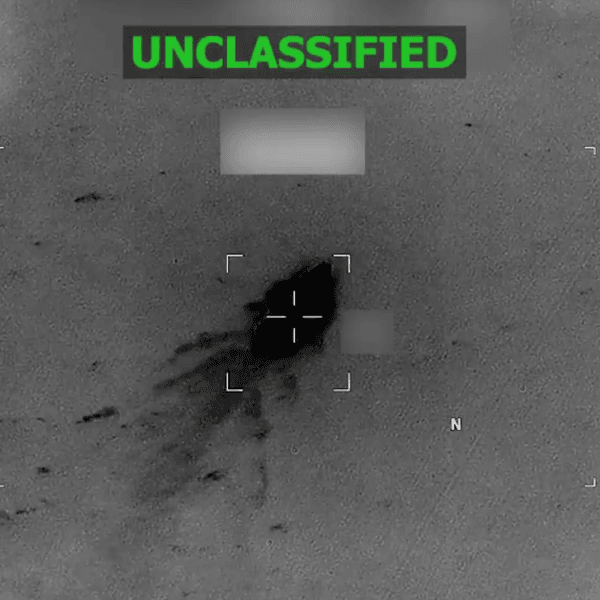
The Trump administration on Wednesday killed two more people in the eastern Pacific by bombing a vessel accused—without evidence—of trafficking drugs, bringing the death toll from the US military’s illegal campaign of boat attacks in international waters closer to 200.
Amnesty International, which has spoken out forcefully against the boat strikes since they began in September 2025, warned in a statement Wednesday that “these extrajudicial killings are becoming normalized” as they fade from the headlines and lawmakers do nothing to stop the administration.
“Not only are these killings illegal, they are immoral,” said Amanda Klasing, Amnesty’s national director for government relations. “People of good conscience cannot allow this to continue, yet Congress has so far failed to halt, or even slow down, this lethal and unlawful campaign.”
The US Southern Command announced strikes in the eastern Pacific Ocean on Tuesday and Wednesday, attacks that killed three people total.
SOUTHCOM called the victims “narco-terrorists” without any evidence. According to a tracker maintained by The Intercept’s Nick Turse, the Trump administration’s boat bombing campaign has killed 197 people since September 2025.
On May 27, at the direction of #SOUTHCOM commander Gen. Francis L. Donovan, Joint Task Force Southern Spear conducted a lethal kinetic strike on a vessel operated by Designated Terrorist Organizations. Intelligence confirmed the vessel was transiting along known narco-trafficking… pic.twitter.com/qKvSjxpk3P
“Numbers alone cannot capture the unimaginable human toll of this horrific campaign of murder at sea,” Klasing said Wednesday. “Every single person that the U.S. has killed at sea was arbitrarily deprived of their right to life, and they and their families have a right to justice. Lawmakers must do everything in their power to halt this campaign and hold everyone responsible accountable for their role in these extrajudicial killings.”
“We are witnessing the height of lawlessness—a government taking military action to kill people who it unilaterally deems ‘criminals’ or ‘terrorists’ and then bragging about it on social media and stonewalling members of Congress demanding explanations,” Klasing added. “Regardless of whether the victims committed crimes or not, killing them is completely illegal under both US and international law. Alleged criminal suspects should be dealt with by law enforcement who are bound by international human rights law, which prohibits using lethal force unless absolutely necessary based on an imminent threat to life.”
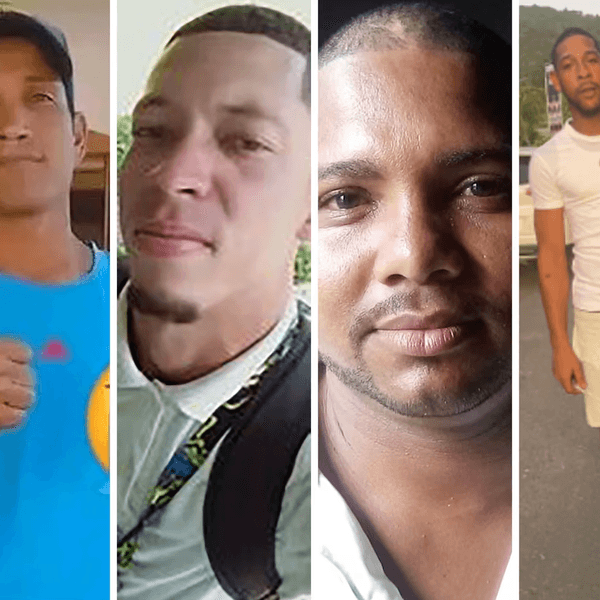
Few of the nearly 200 victims of the US military’s assault on vessels in the Caribbean and eastern Pacific have been publicly identified. Earlier this year, family members of two Trinidadian men—Chad Joseph and Rishi Samaroo—killed by a US strike in October filed a wrongful death lawsuit against the Trump administration.
“Rishi was a hardworking man who paid his debt to society and was just trying to get back on his feet again and to make a decent living in Venezuela to help provide for his family,” said Sallycar Korasingh, Samaroo’s sister. “If the US government believed Rishi had done anything wrong, it should have arrested, charged, and detained him, not murdered him. They must be held accountable.”
Ana Piquer, Amnesty’s Americas director, called for urgent action from the international community to rein in the lawless Trump administration.
“Beyond US authorities, we need to see leadership from other governments in the region, as well as the Organization of American States,” said Piquer. “The international community must speak out firmly against these murders, which constitute a serious threat to human rights and respect for international law. Governments must immediately suspend intelligence sharing that may contribute to these operations. They further should suspend export licenses to any defense material that could be used to perpetuate these murders.”
Donald Trump sings and dances, says that it’s fun to kill everyone …Climate science denier Donald Trump confirms that he knows nothing about democracy and that more liquid gold is being secured according to his policy of global privateering.
HOUSEHOLDS must not bear the brunt of US President Donald Trump’s illegal war, campaigners warned today, as energy bills are set to rise by 13 per cent.
Ofgem’s new price cap from July 1 will see the typical household face an annual energy cost of £1,862 — up £221 on current levels, or £18 a month.
The regulator said higher wholesale gas prices, “driven by ongoing conflict in the Middle East,” were behind the increase.
Energy costs have soared since the US and Israel began their war on Iran and the subsequent blocking of the Strait of Hormuz.
Calls have mounted for the government to set out action to support the most vulnerable with bills, but Chancellor Rachel Reeves has refused any immediate energy measures in her cost-of-living plan.
TUC general secretary Paul Nowak said the government must “go further and faster to protect households from punishing energy price rises in the coming months.”
“Households must not bear the brunt of costs from Trump’s illegal war,” he said.
“Painful energy price rises are coming down the track — and working people are already feeling the pinch with fuel costs rising because of Trumpflation.
…
Eva Watkinson of Debt Justice called it a “scandal” that the cap was rising while energy companies continued to post enormous profits, saying the government must “immediately act to write off debts that have built up during the cost-of-living crisis.”
Green MP Hannah Spencer demanded immediate government intervention, telling Ms Reeves to freeze the cap before bills go up.
“And if she’s wondering how to pay for it, there are some people doing very well out of this crisis,” she said.
“The government should start by taxing 100 per cent of the huge windfall profits oil and gas giants have made since the start of the illegal war on Iran.”
Metropolitan Police Commissioner Sir Mark Rowley gives a statement outside Charing Cross police station, London, after a High Court challenge over the Met Police’s use of live facial recognition (LFR) technology was dismissed, April 21, 2026
ANTI-WAR groups have launched a letter campaign for the resignation of Metropolitan Police Commissioner Sir Mark Rowley after “openly lying” about Palestine protesters.
Signed by more than 1,300, the letter to London Mayor Sadiq Khan, Home Secretary Shabana Mahmood, and Mayor’s Office for Policing and Crime chief executive Rena Laigie, warned that “Rowley must go.”
Sir Mark claimed that the pro-Palestine march on May 16, which coincided with a far-right demonstration, posed a threat to the public and that it deliberately marched past synagogues.
Stop the War Coalition and other organisers quickly debunked the statements and demanded corrections.
“On 16 May, Mark Rowley allowed a far-right hate march led by known fascist Stephen Yaxley-Lennon to go to Parliament while barring the Palestine movement from the political centre of London,” the letter reads.
“The Metropolitan Police has failed to act on incidents of Islamophobia and incitement to violence on the far-right demo, while downplaying the size of the Palestine mobilisation.
“Commissioner Rowley’s role as a politically neutral head of the Metropolitan Police has become untenable. We call on Rowley to resign his post immediately.”
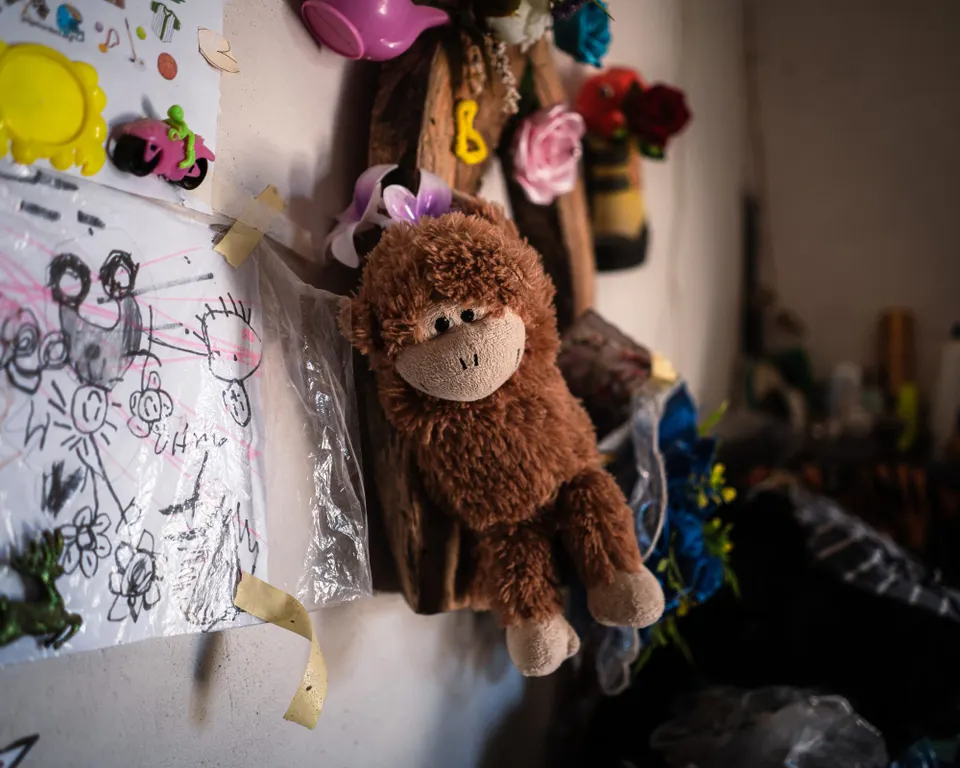
In the bedroom of Rosalina González’s youngest son, detained in February 2025, a toy monkey hangs next to a drawing made by his six-year-old daughter | Euan Wallace/openDemocracy
Pregnant women, babies and children are being swept up in the mass arrests ordered under Bukele’s ‘state of emergency’
Rosalina González’s granddaughter is nine months old. Every day of her short life has been spent in Izalco penitentiary in Sonsonate, the maximum-security prison in western El Salvador notorious for its documented history of torture and abuse.
The child was born in the prison after her already pregnant mother was detained on 19 February 2025, alongside her father and uncle, González’s sons. That night, González remembers being awoken at her home in Chilamates, in rural north-west El Salvador, by police who accused her family of unlawful association with gang members and took them away.
The charge is often used to imprison people under the state of emergency introduced in March 2022 by Salvadoran president Nayib Bukele, who once described himself as the “world’s coolest dictator”.
The state of emergency has suspended key constitutional rights in a purported effort to dismantle the criminal networks that wielded substantial power in El Salvador at the time. Human rights organisations say it has fuelled a startling democratic backslide, as well as arbitrary detentions and deaths in custody. Yet Bukele has an approval rating of 94%, which he attributes to the country’s falling homicide rate, which has gone from one of the highest in Latin America to the lowest in the region amid draconian policies and pacts his government has quietly made with gang leaders.
After more than a year in detention, González’s sons and daughter-in-law have still not been convicted of any crime. Yet like many of the more than 90,000 people who have been imprisoned under the state of emergency, they have been denied all contact with the outside world.
Today, González fiercely defends her family’s innocence. “My sons were working men,” the 59-year-old told openDemocracy. “My kids are honest… I could leave money here on this table and they would not touch it.”
Although she has reported their detention to the Public Prosecutor for Human Rights, no progress has been made on their case.
“I ask myself: what did the baby do?” says Sylvia Portillo, the mother-in-law of Gonzalez’s youngest son, the uncle of the child born in prison. “The babies have nothing to do with anything.”
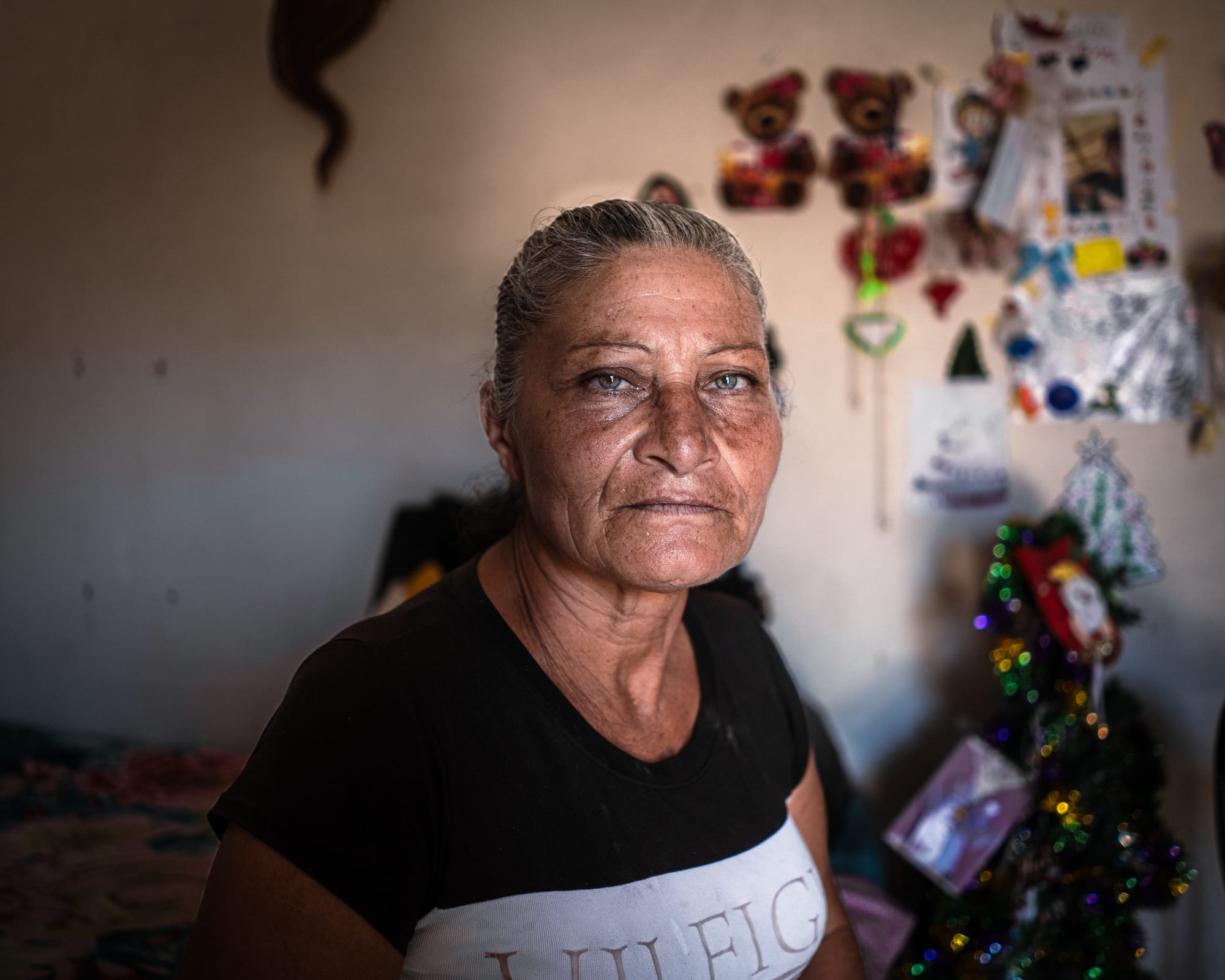
Rosalina González, 59, whose 9-month-old granddaughter was born in Izalco prison and remains in custody to this day. Her two sons and daughter-in-law (the baby’s mother) are also in prison | Euan Wallace/openDemocracy
Children with life sentences
It is not just those born behind bars who are growing up in El Salvador’s prisons.
More than 3,000 under-18s were detained between March 2022 and July 2024, according to a Human Rights Watch report. Some of those children have described being tortured and abused whilst in custody.
Last month, new reforms came into effect that give judges the power to hand out life sentences to children as young as 12 who are convicted of crimes including homicide, femicide, rape and gang membership. Gang association sentences were previously capped at ten years for children aged 15 and under, and 20 years for adolescents aged 16 to 18.
The reforms have sparked “deep concern” from UNICEF and the UN Committee on the Rights of the Child, which, in a joint statement, accused El Salvador of “a contradiction of the standards enshrined in the Convention on the Rights of the Child”.
Defence lawyer Lucrecia Landaverde believes many of the children being arrested were never involved with gangs. “It is very likely that innocent children will end up with life sentences,” she said, explaining that El Salvador’s judicial system is heavily stacked against defendants.
Many people are found guilty based only on the testimony of a police officer or “co-operating witness” – a convicted gang member offered a reduced sentence for testifying for the prosecution. “The reward consists of reducing their sentence or even pardoning their crimes in exchange for helping to testify and point the finger at everyone, regardless of whether they are making it all up,” Landaverde said. “The criminal protects himself and his own family, and starts accusing people he doesn’t even know.”
This testimony is rarely scrutinised adequately, she added, saying a judge once called for her arrest in open court for cross-examining a prosecution witness.
Landaverde vividly remembers the early days of the state of emergency, when “mass arrests were carried out without any oversight”, she said. “[Our office] looked like a health clinic, packed around the clock with people crying in the waiting room because their young children had been arrested.”
She told openDemocracy how a 13-year-old boy was detained after refusing to share his fried chicken with police officers. “They arrested him, took the chicken, put him in prison and charged him with unlawful association,” she said, “then they ate the chicken.”
Some in El Salvador view the reforms that hand life sentences to children as part of Bukele’s continued crackdown on freedom of expression. “This is a message to young people that no one can oppose the regime, that no one can speak out here,” Samuel Ramírez, the founder of Salvadoran human rights organisation MOVIR, told openDemocracy.
Meanwhile, it is not known how many infants and young children are living in prisons after being born there.
“We have cases of children who have been born in prison, whose mothers were arrested while pregnant. There are other children who have died from a lack of medical care in prison,” Ramírez said. “No matter how much the family or the grandmother asked for them to be returned, they were never returned.”
At least four babies who were born in prisons in the country were confirmed to have died due to poor conditions and limited medical care last year, with causes of death including pneumonia and liver failure. There are also “reports of additional deaths of pregnant women and newborns, including stillbirths resulting from the denial of care”, according to the UN Committee on the Elimination of Discrimination against Women.
In February, the committee expressed grave concern over the conditions for pregnant women in El Salvador’s prison system, highlighting a lack of adequate prenatal and postnatal care, as well as an environment unfit for detained children.
openDemocracy asked the Salvadoran presidency about abuses of rights under the state of emergency, criticism of the detention of babies and children, and the imposition of life imprisonment on children as young as 12. The government did not respond.
‘We’re dying inside’
Today, Rosalina González lives in the shell of the home that her sons were building for the family when they were arrested. With no one to continue construction, the front room is still without a roof.
Standing in the bedroom of her youngest son, she carefully removes a few of his belongings from a plastic bag and lines them up on the bed. His photograph is pinned on one wall, alongside a collection of children’s toys and drawings made by his six-year-old daughter, who lives with her other grandma, Sylvia Portillo, and has never met her baby cousin.
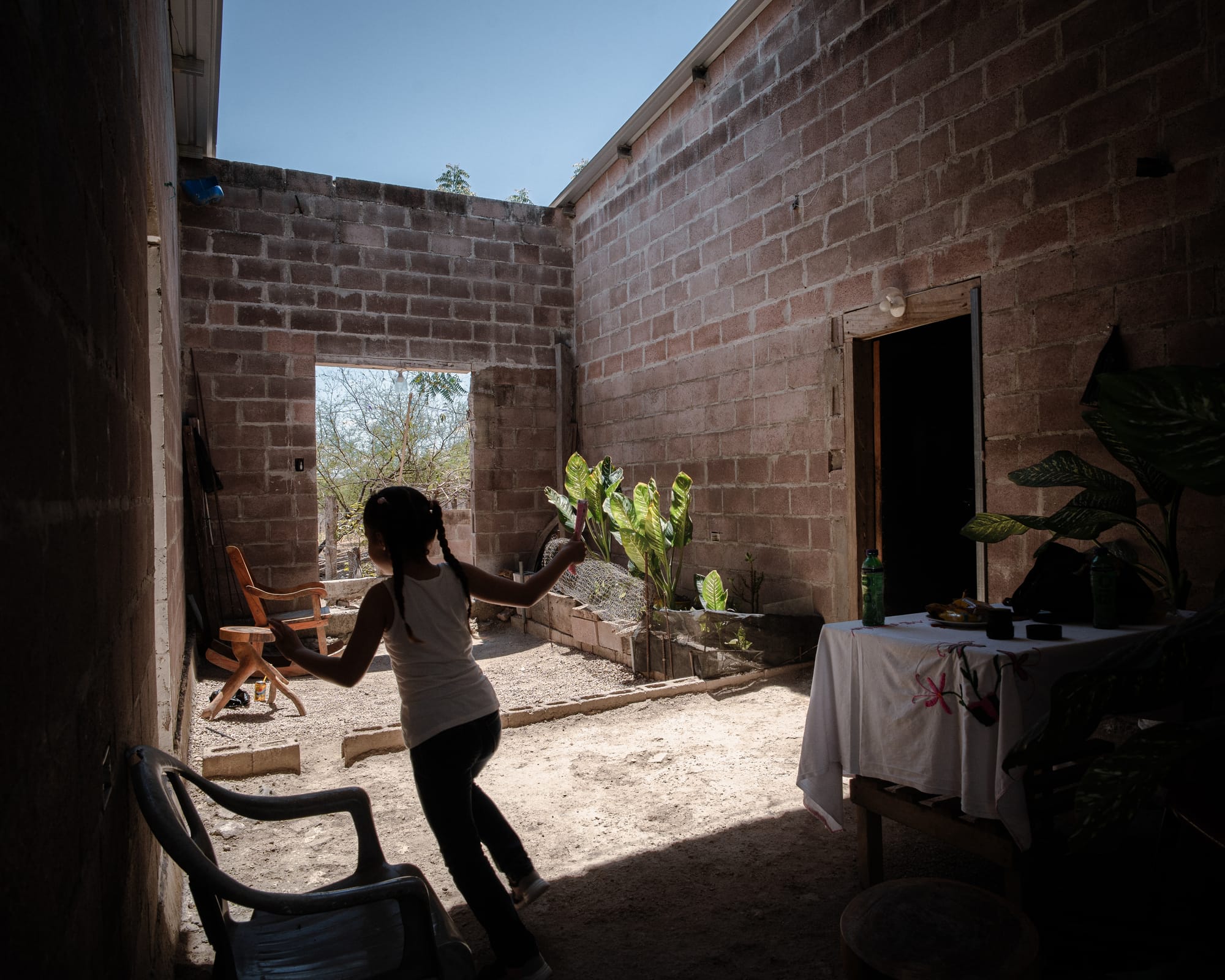
Rosalina’s 6-year-old granddaughter runs through her grandmother’s house. Her two sons were still building the house when they were arrested | Euan Wallace/openDemocracy
“Every time I’d put my hat on, he would take it off me again,” says the child, laughing as she remembers her father. “It was like a game.”
She skids across the dirt floor of the roofless main room, skipping giddily between stripes of shade and sunlight. A pink folding fan flashes in one hand. Dancing tip-toe across the dust, she uses it to conceal her face from an imagined audience.
Inside, her grandmother repacks her father’s belongings and places them out of sight. González spends much of her time alone these days, denied contact with her detained sons and daughter-in-law. “You feel like you’re dying inside,” she says. “They destroyed my life. They destroyed my children’s lives.”
Euan Wallace is a freelance journalist and photographer. His work focuses on human rights and the climate crisis across Latin America. He is currently based in Bogotá, Colombia.
Martina Mariano is a freelance journalist and aspiring anthropologist, based in Bogotá, Colombia. Her work focuses on human rights and migration.
This work by Middle East Monitor is licensed under a Creative Commons Attribution-NonCommercial-ShareAlike 4.0 International License.
US President Donald Trump attends the Board of Peace session held as part of the 56th World Economic Forum (WEF) in Davos, Switzerland on January 22, 2026. [Harun Özalp – Anadolu Agency]
Donald Trump’s self-styled Board of Peace for Gaza is facing a deepening crisis after its official reconstruction fund failed to receive any donor money, despite $17 billion in pledged support, raising fresh questions over whether the US-backed body is little more than a hollow political project.
According to the Financial Times, the World Bank-administered fund established for the board has received no donor contributions four months after its creation. One person familiar with the matter said: “Zero dollars have been deposited.” The failure comes despite member states pledging $7 billion for a Gaza “relief package”, while Trump promised a further $10 billion in US funding.
Instead of using the World Bank mechanism, which is endorsed by the UN and subject to reporting requirements, donations have reportedly been directed through a JPMorgan account. The arrangement has raised serious concerns, as no independent disclosure rules appear to apply to the private account.
A Board of Peace official told the Financial Times that “a number of options were established to receive funding” and that contributors had chosen “other options”. The official added that the board would report its finances to its own executive board, made up of Trump administration officials and advisers, “at a time deemed appropriate”.
The limited funds that have been provided appear to have done little to address Gaza’s devastation. Morocco’s $20 million contribution has reportedly helped fund the office of Nickolay Mladenov, the board’s “high representative” for post-war Gaza, and salaries for the Palestinian technocratic committee formed to govern the Strip. A separate $100 million UAE contribution intended to train a new Gaza police force has not been used, with the programme yet to begin and the funds frozen.
Nor has promised US funding materialised on the ground. The US State Department intends to redirect around $1.2 billion in aid spending towards projects linked to the board’s agenda, but the money has not yet been spent and would not be managed directly by the board.
A senior congressional aide said none of the money had gone to the board and that “there’s no intent” for it to be managed by the body. A further $50 million intended to fund board operations has also not been distributed, pending financial controls and systems required to receive US funds.
Revelations in the FT is likely to be seen as further evidence of a bankrupt Trump policy. The president had presented the board as one of the “most consequential” international organisations ever created, while his son-in-law, Jared Kushner, promoted glossy visions of a futuristic, AI-powered Gaza with luxury developments. Yet an EU, UN and World Bank survey estimated that Gaza’s reconstruction will require more than $70 billion over the next decade.
The board has also failed to move beyond planning. Although it has begun tendering for security and reconstruction work, no contracts have been awarded.
The legal basis of the board remains equally unclear. US lawmakers have pressed the Trump administration for answers about its status and operations, including whether it qualifies as an international organisation eligible to receive US funds.
The uncertainty has also alarmed would-be contractors. One would be contractor reported in the FT asked: “Who is responsible for Gaza? What law is applicable in Gaza?” Others involved in planning questioned what happens when the board’s supposed role as a “transitional administration” expires.
This work by Middle East Monitor is licensed under a Creative Commons Attribution-NonCommercial-ShareAlike 4.0 International License.
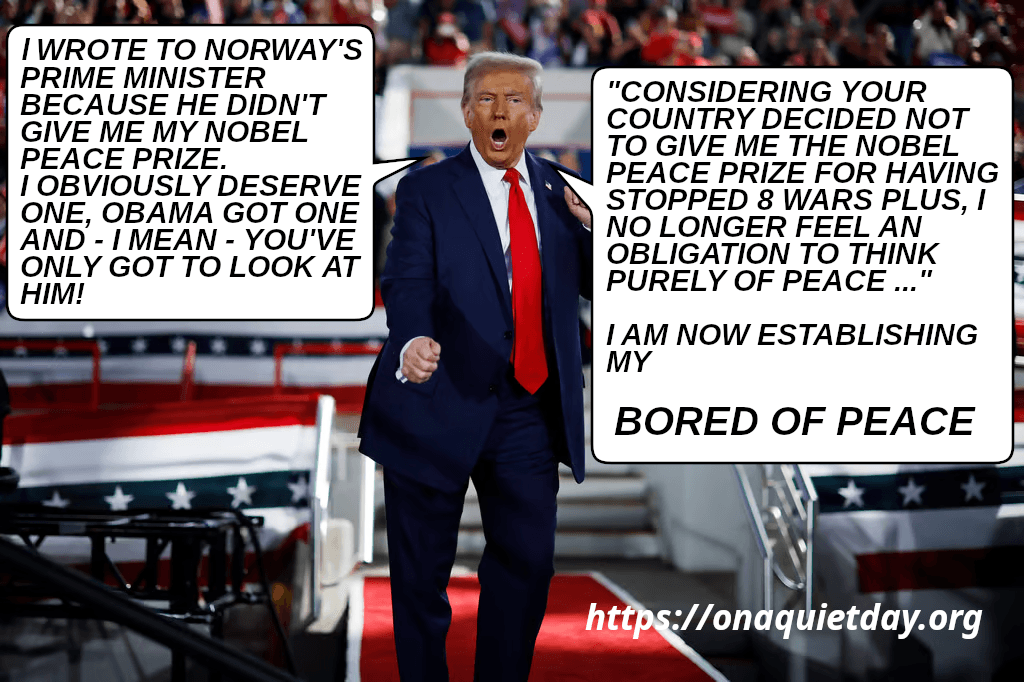
Donald Trump explains why he established his Bored of PeaceOrcas discuss how Trump was re-elected and him being an obviously insane, xenophobic Fascist.



 Go further, faster: Paul Nowak