Sanders Rips ‘Absurd’ US Claim That Israel Is Not Violating International Law

Spread the love

Original article by JAKE JOHNSON republished from Common Dreams under Creative Commons (CC BY-NC-ND 3.0).

Children in Rafah, Gaza gather to receive food distributed by aid organizations on March 15, 2024.
 (Photo: Jehad Alshrafi/Anadolu via Getty Images

“The State Department’s position makes a mockery of U.S. law and assurances provided to Congress,” said Sen. Bernie Sanders.

Sen. Bernie Sanders on Monday said the U.S. State Department’s determination that Israel is not violating international law with its assault on the Gaza Strip is “absurd on its face,” pointing to the mass death, destruction, and starvation that Israeli forces have inflicted on the territory’s population over the past six months.

“Thirty-two thousand Palestinians in Gaza have been killed and almost 75,000 injured, two-thirds of whom are women and children,” Sanders (I-Vt.) said in a statement. “Some 60% of the housing units have been damaged or destroyed, and almost all medical facilities have been made inoperable. Today, hundreds of thousands of Palestinian children are facing starvation because [Israeli Prime Minister Benjamin] Netanyahu won’t let in sufficient humanitarian aid, while thousands of trucks are waiting to get into Gaza.”

“The State Department’s position,” said Sanders, “makes a mockery of U.S. law and assurances provided to Congress.”

The senator’s statement came after State Department spokesperson Matthew Miller told reporters during a press briefing earlier Monday that the Biden administration has not found Israel “to be in violation of international humanitarian law, either when it comes to the conduct of the war or when it comes to the provision of humanitarian assistance.”

Miller was responding to a question about assurances the administration has received from the Israeli government that its use of American weaponry has complied with international law and that it has permitted U.S. humanitarian aid to enter Gaza, where the entire population is facing acute hunger.

Under a new Biden administration policy known as NSM-20, recipients of American military aid are required to provide the U.S. government with “credible and reliable” written assurances that they are using such assistance “in a manner consistent with all applicable international and domestic law and policy.”

Late last week, a group of U.S. senators—including Sanders—warned the Biden administration that deeming Israeli assurances credible would “be inconsistent with the letter and spirit of NSM-20” and “establish an unacceptable precedent” for the application of the policy “in other situations around the world.”

“Until Biden is ready to impose real policy consequences on Netanyahu’s government, the famine will continue.”

It is a violation of U.S. law to continue sending military assistance to a country that is obstructing the delivery of American humanitarian aid. Last month, far-right Israeli Finance Minister Bezalel Smotrich blocked a U.S.-funded flour shipment from entering the Gaza Strip, and Israeli forces have repeatedly fired on convoys attempting to deliver aid to desperate Gazans.

Prominent human rights groups have been calling on the U.S. to impose an arms embargo on Israel for months, pointing to documented examples of the Israeli military using American weaponry to commit atrocities in Gaza.

But the Biden administration has refused to even apply concrete restrictions on American military aid. Over the weekend, U.S. President Joe Biden signed into law a measure that approves $3.8 billion in unconditional military assistance for the Israeli government and imposes a one-year ban on funding for the primary humanitarian aid organization in Gaza.

Jeremy Konyndyk, the president of Refugees International and a former USAID official, said Monday that Israel’s assurances to the U.S. are “not remotely credible” and argued the Biden administration is undermining efforts to combat the worsening humanitarian crisis in Gaza by accepting the Israeli government’s claims.

The U.S., he said, is “talking a big game about fighting the famine that its bombs and diplomatic cover have helped create.” Resorting to “gimmicky” efforts such as airdrops and temporary ports while a U.S. ally obstructs humanitarian aid “is not how you fight a famine,” Konyndyk argued.

“Fundamentally Biden must choose: between continuing to enable Netanyahu, or ending the famine. There’s no way to split the difference,” said Konyndyk. “Until Biden is ready to impose real policy consequences on Netanyahu’s government, the famine will continue.”

Original article by JAKE JOHNSON republished from Common Dreams under Creative Commons (CC BY-NC-ND 3.0).

‘Crucial’ UN Report on Gaza Genocide Must Spur Global Action, Says Amnesty

US Under Fire for Downplaying Security Council Resolution as ‘Nonbinding’

‘Outrageous’: US Accepts Israeli Assurances on Legal Use of Weapons in Gaza
Draft UN Report Finds Israel Has Met Threshold for Genocide

Continue ReadingSanders Rips ‘Absurd’ US Claim That Israel Is Not Violating International Law

Julian Assange’s extradition appeal hangs in the balance as UK court seeks US “assurances”

Spread the love

Original article by Tanupriya Singh republished from peoples dispatch under a Creative Commons Attribution-ShareAlike 4.0 (CC BY-SA) license.

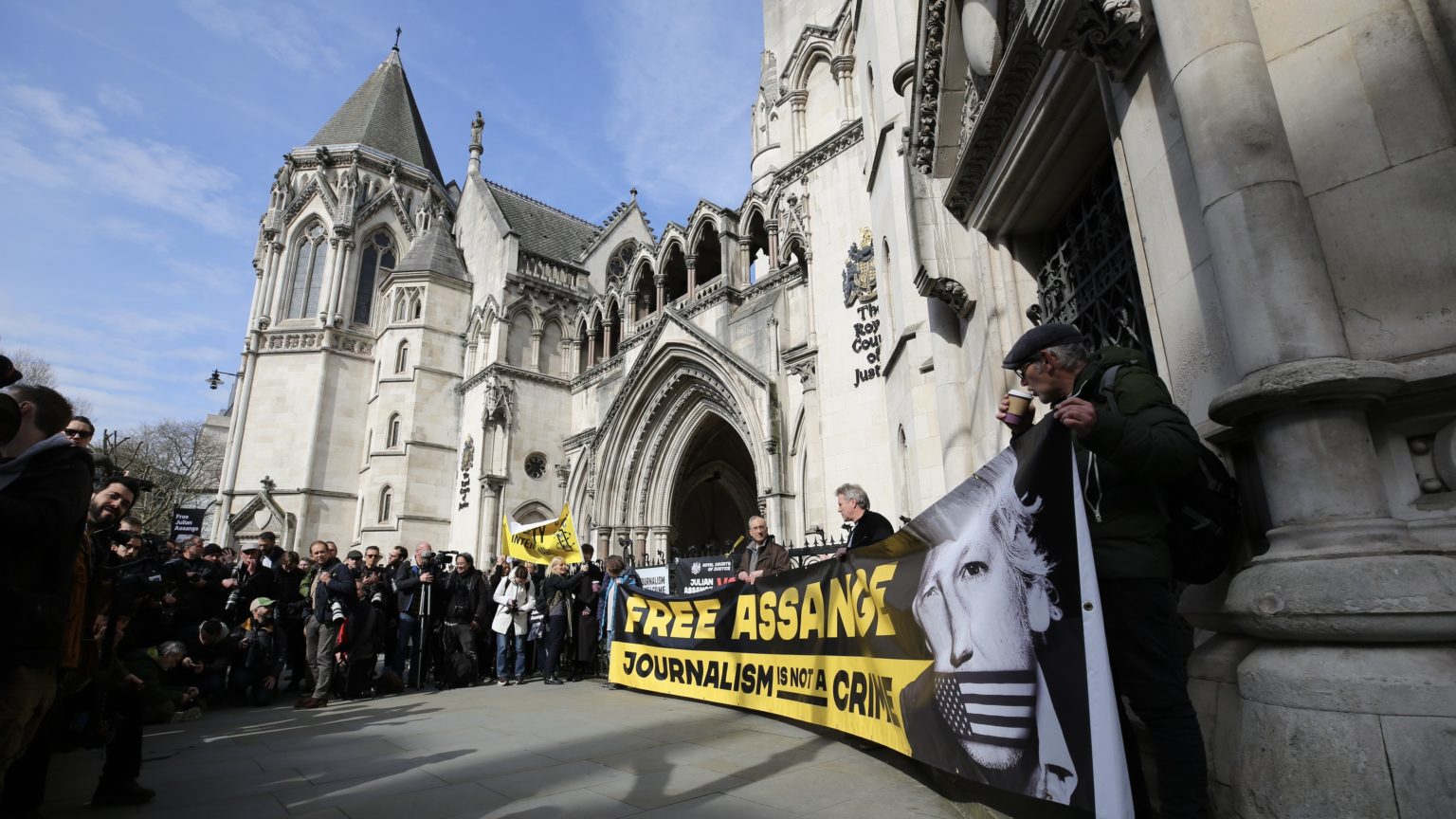
Protesters gathered outside the Royal Courts of Justice in London on Tuesday. Photo: Free Assange UK Campaign/X

The UK High Court has granted WikiLeaks founder Julian Assange provisional permission to appeal his extradition to the US, on grounds including the risk of the death penalty.

The UK High Court has granted provisional permission to journalist and WikiLeaks founder Julian Assange to appeal his extradition to the US. The ruling was handed down by judges Dame Victoria Sharp and Justice Jeremy Johnson in London on March 26, as supporters of Assange gathered outside the court to demand his freedom.

The US has sought to extradite Assange to prosecute him on 18 charges, 17 of which are under the draconian Espionage Act, for the publication of classified documents on WikiLeaks exposing war crimes and human rights abuses committed by US forces, including in Iraq and Afghanistan.

The extradition was approved by the UK Home Office in 2022, protracting an already difficult legal battle for the imprisoned journalist. Assange has been held at the Belmarsh high security prison for five years without a trial or conviction.

In its decision, the Court has granted Assange permission to appeal against his extradition, with the matter adjourned till May 20. However, the appeal will proceed only if the US and the UK are unable to provide the Court with assurances regarding Assange’s treatment following an extradition.

The US and the UK have until April 16 to file these assurances. This will also pave the way for further submissions to be made before a final decision is reached.

In the meantime, the temporary permission to appeal has been granted on three out of nine grounds including: a) that extradition may be “incompatible with the right of freedom of expression” under the European Convention on Human Rights; and b) that the applicant (Assange) might be “prejudiced on grounds of nationality” which is related to whether or not he will be protected under the First Amendment of the US Constitution given that Assange is not a citizen.

The third ground of appeal upheld by the Court for now is “inadequate speciality protection/death penalty protection”, which bars extradition under the UK’s 2003 Extradition Act.

In the application, Assange’s legal team noted that despite the fact that none of the charges leveled by the US as part of the extradition request carry the death penalty, the accusations made against him could lead to additional charges of aiding and abetting treason, which would be capital offenses.

They further highlighted statements made by US officials, including by Donald Trump, former president and potential Republican candidate for the upcoming US election, calling for the death penalty for Assange.

During the two-day “permission hearing” held in February ahead of the March 26 decision, the US prosecution admitted that there were no assurances that Assange would not be handed the death penalty.

Read more: US obfuscates and misrepresents on second day of Assange hearings

The US now has three weeks to provide the Court with “satisfactory assurances” that Assange will be permitted to rely on the First Amendment (protecting free speech), that he will not be prejudiced at trial (including sentence) because of nationality (his status as non- US citizen), that he will be afford the same protections under the First Amendment as a US citizen, and that the death penalty will not be imposed.

This is not the first time that such proposals have been made in Assange’s case. In fact, despite a lower court acknowledging Assange’s risk of suicide in 2021, his extradition was approved based on “diplomatic assurances” given by the US.

These included that Assange would not be subject to brutal Special Administrative Measures (SAMs), that he would not be kept at the ADX Florence maximum security prison, and that he could serve a custodial sentence in Australia, his country of origin. However, these protections would not apply if Assange was deemed to have committed a “future act” that could necessitate SAMs.

The entirely unilateral nature of these assurances raised alarm, especially given that these actions would be at the discretion of US prison authorities and not subject to judicial review.

“The UK remains intent on extraditing Assange despite the grave risk that he will be subjected to torture or ill-treatment in the US,” Simon Crowther, Legal Adviser at Amnesty International, said in response to Tuesday’s ruling.

“While the US has allegedly assured the UK that it will not violate Assange’s rights, we know from past cases that such ‘guarantees’ are deeply flawed — and the diplomatic assurances so far in the Assange case are riddled with loopholes.”

Meanwhile, the Court dismissed critical grounds for appeal raised by Assange’s team, in particular that the extradition was for a political offense, and as such prohibited under the UK-US Extradition Treaty. Assange’s lawyers had argued in February that espionage was universally accepted as a political offense, given that it was an offense directed at the state.

“These were the most important revelations of criminal US state behavior in history,” Assange’s lawyer, Mark Summers, had told the Court regarding the materials published by WikiLeaks. This included the “Collateral Murder Video” in which a US Army Apache helicopter had killed 11 unarmed civilians in Baghdad in 2007.

Read more: Assange’s Last Stand

Addressing the press outside the court, Assange’s wife, Stella, stated that the decision was “astounding”. She pointed out that though the Court had recognized the violation of Julian Assange’s rights, “what the Courts have done have done [is] to invite a political intervention from the United States to send a letter saying ‘it’s all okay’. Five years into this case, the US has managed to show the Court that their case remains an attack on press freedom, an attack on Julian’s life.”

“What the Courts have not agreed to look at is the evidence that the US has plotted to assassinate Julian, to kidnap him, because if it acknowledged that then of course he cannot be sent to the US.”

The Court astonishingly justified its refusal to admit this new evidence, of a plot by the US’ Central Intelligence Agency (CIA) to kidnap and assassinate Assange, stating that “on the face of the allegations…the contemplation of extreme measures against the applicant (whether poisoning for example or rendition) were a response to the fear that the applicant might flee to Russia”.

“The rationale for such conduct is removed if the applicant is extradited. Extradition would result in him being lawfully in the custody of the US authorities, and the reasons (if they can be called that) for rendition or kidnap or assassination then fall away”.

Meanwhile, Assange’s brother, Gabriel Shipton, reiterated that the fact that the Court had sought political assurances from the US revealed the political nature of the case itself.

Stella Assange added, “Julian is a political prisoner, he is a journalist, and he is being persecuted because he exposed the true cost of war in human lives. This case is a retribution, it is a signal to all of you, that if you expose the interests that are driving war they will come after you, they will put you in prison and they will try to kill you.”

“The Biden administration should not issue assurances, they should drop this shameful case that should have never been brought,” she said, calling people to pressure the US government and to support House Resolution 934.

The text, which is in the US Congress, states that “regular journalistic activities, including the obtainment and publication of information, are protected under the First Amendment and that the federal government should drop all charges against and attempts to extradite Julian Assange.”

“If Julian goes down for this, every serious journalist around the world is going to be slightly more cautious about exposing war crimes, corporate greed…We need the maximum pressure all across the US on the Biden administration, on the candidates in the forthcoming election, to say ‘Drop the charges against Julian Assange,’” MP and former Labor Party leader Jeremy Corbyn told Democracy Now.

If the UK High Court does not grant Assange the permission to appeal, he will have exhausted his options within the country’s legal system, and will have to approach the European Court of Human Rights (ECHR), immediately seeking an interim measure against the extradition under Rule 39 (“risk of irreparable harm”) pending a full hearing of the case. The ECHR’s verdict will be binding on the UK.

Original article by Tanupriya Singh republished from peoples dispatch under a Creative Commons Attribution-ShareAlike 4.0 (CC BY-SA) license.

Continue ReadingJulian Assange’s extradition appeal hangs in the balance as UK court seeks US “assurances”

Protesters across Arab countries call for immediate ceasefire in Gaza

Spread the love

Original article by Peoples Dispatch republished from peoples dispatch under a Creative Commons Attribution-ShareAlike 4.0 (CC BY-SA) license.

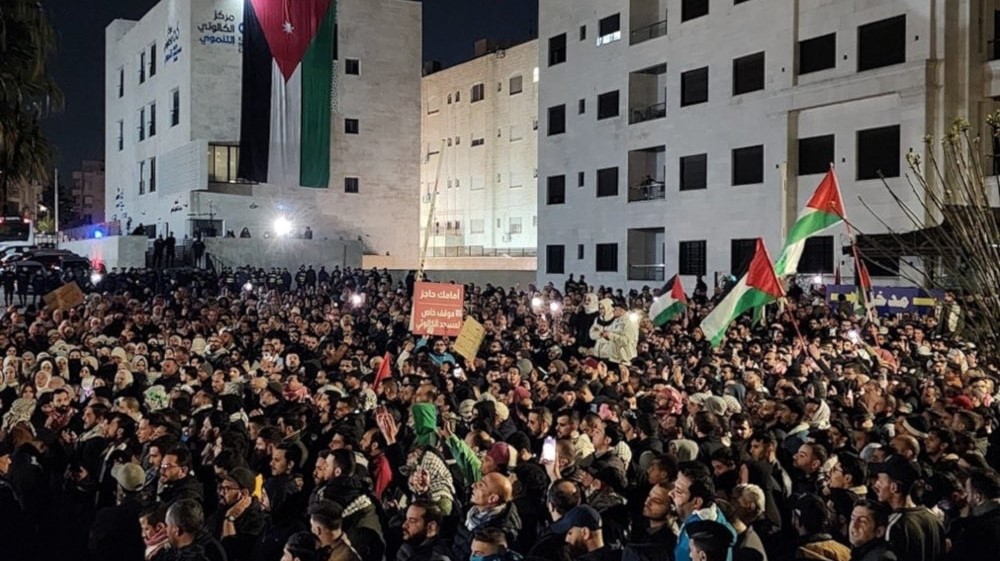
Protesters gather in Amman in Jordan demanding an immediate ceasefire in Gaza. Photo: Al Mayadeen

People took to the streets in a number of countries across West Asia and North Africa after the UN Security Council resolution calling for a ceasefire. However, Israel refused to heed the call and continued its attacks on Gaza on Tuesday

Large-scale protests broke out in different parts of West Asia and North Africa on Monday, March 25 in support of Palestine with people chanting slogans against the Israeli war in Gaza and demanding an immediate ceasefire. People took to the streets in a number of countries in the aftermath of the UN Security Council resolution that called for a ceasefire.

Jordanian security forces fired tear gas shells to disperse protesters who tried to storm the Israeli embassy in Amman. Thousands of these protestors chanted slogans in solidarity with the people in Gaza and in support of the Al-Aqsa mosque. Many of them carried Palestinian flags which they hoisted in nearby buildings.

Similar protests took place in other parts of the country. A day before, Jordanian forces had prevented a large group of people from marching to the Israeli embassy.

Protests were also organized in the Iraqi capital Baghdad and Cairo in Egypt as well on Monday where hundreds gathered to chant slogans in support of Palestine and demand an immediate ceasefire.

Hundreds also gathered in Tangiers in Morocco to demonstrate against the continued Israeli genocide of Palestinians in Gaza.

Protests were also organized in the Nur Shams refugee camp in Tulkarem and in Ramallah in the occupied West Bank on Tuesday. Hundreds of Palestinians, defying Israeli dictates and ongoing attacks, took to the streets in the morning to call for a ceasefire.

The protests followed the UNSC resolution demanding an immediate ceasefire. The resolution was adopted after the US, which had blocked three similar previous resolutions, decided to abstain. All the other members of the Security Council supported the resolution.

The resolution called for an immediate ceasefire during the month of Ramadan and for working towards a permanent cessation of hostilities and the release of all hostages. It was welcomed by the Palestinian resistance group Hamas and most of the countries in the region.

Hamas reiterated its demand for a permanent ceasefire that would lead to the complete withdrawal of all Israeli forces from Gaza and the return of all Palestinians displaced due to the war over five months.

Nearly the entire population of Gaza, around 2.3 million, has been displaced due to the Israeli war which has killed more than 32,000 and wounded close to 74,000 Palestinians.

The Iranian foreign ministry welcomed the UNSC resolution, calling it a positive step and demanded its immediate implementation. It also demanded the lifting of all blockades on the supply of aid to Gaza and the opening of all border crossings to the besieged territory and immediate resumption of reconstruction.

Israel has however rejected the resolution. It carried out fresh attacks on Gaza on Tuesday, killing dozens of Palestinians.

The resolution accepted by the Security Council is binding on all members of the UN. However, only a fresh vote in the Security Council can decide the future course of action in case one particular party chooses not to implement it.

Original article by Peoples Dispatch republished from peoples dispatch under a Creative Commons Attribution-ShareAlike 4.0 (CC BY-SA) license.

Continue ReadingProtesters across Arab countries call for immediate ceasefire in Gaza

UN Security Council’s Gaza Cease-Fire Resolution Is Not Enough—But It’s a Start

Spread the love

Original article by PHYLLIS BENNIS republished from Common Dreams under Creative Commons (CC BY-NC-ND 3.0). 

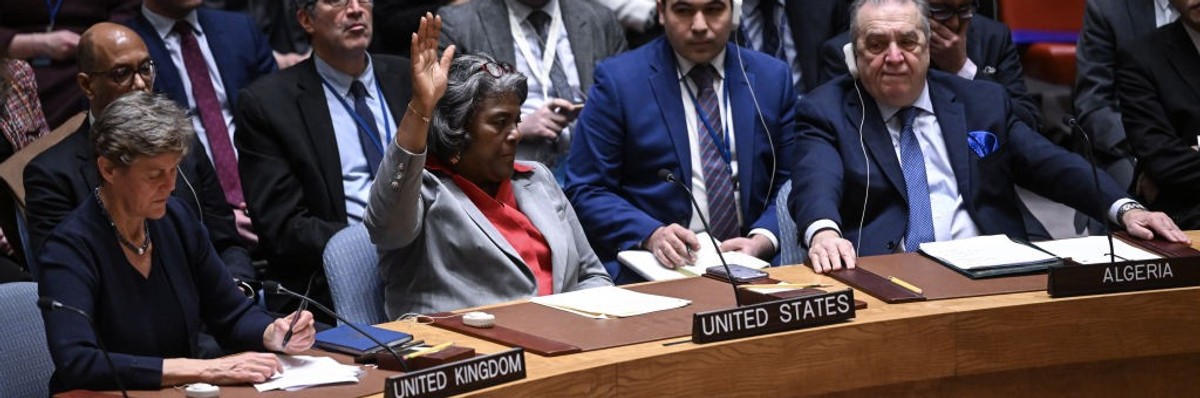
US Ambassador to the United Nations Linda Thomas-Greenfield raises her hand during the UN Security Council meeting which adopted a resolution demanding an immediate cease-fire in Gaza Strip for the month of Ramada on March 25, 2024. As many as 14 countries voted in favor of the resolution, presented by 10 elected members of the Council, while the US abstained from voting.  (Photo by Fatih Aktas/Anadolu via Getty Images

Despite weaknesses and false U.S. claims that the resolution is nonbinding, it demands an end to the bombing and a massive influx of humanitarian aid. And that means the possibility of saving lives.

Five and half months into Israel’s genocidal assault on Gaza with more than 32,000 Palestinians already killed, six weeks after the International Court of Justice found Israel plausibly committing genocide and ordered it to stop, and after four earlier tries, the UN Security Council on Monday finally passed a resolution submitted by all ten elected members aiming to stop the slaughter. The resolution has lots of weaknesses and shows the effects of U.S. pressure—but it demands an end to the bombing and a massive influx of food and medicine. And that means the possibility of saving lives.

The resolution demanded an immediate ceasefire leading to a lasting and sustainable ceasefire, the release of all hostages, and compliance with international law in treatment of all those detained. The Council also demanded “the lifting of all barriers to the provision of humanitarian assistance at scale,” reminding the world of the need for massive expansion of that aid and for protection of Palestinian civilians across the entire Gaza Strip.

The resolution’s passage was uncertain until the very last moment. An hour before the vote, U.S. diplomats won a final concession—replacing the original demand for a “permanent” ceasefire” to the squishier, less clear “lasting.” And there are significant other weaknesses in the resolution.

When U.S. Ambassador Linda Thomas-Greenfield claimed that the Council vote was “nonbinding,” she was setting the stage for the U.S. government to violate the UN Charter by refusing to be bound by the resolution’s terms.

The most important flaw in the Council’s text is that it calls for a ceasefire only “for the month of Ramadan.” This most important of Muslim holidays began on March 11, so the demand for a ceasefire is only for about two weeks. And while it does demand that the immediate halt lead to a lasting ceasefire, two weeks is still a much too-short time.

Other problems reflect deliberate obfuscation of language. The demand that all parties treat “all persons they detain” in compliance with international law clearly refers to the thousands of Palestinian detainees Israel is holding, many in administration detention without even the pretense of legitimate legal procedures, whom international law requires to be immediately released. Their detention violates a host of those laws, but by not naming them directly, diplomatic wrangling always threatens to deny them their rights.

And in the paragraph focusing on the catastrophic humanitarian situation across Gaza, the Council’s demand for “lifting all barriers to provision of humanitarian aid at scale” should be a clear and straightforward message to Israel that it must open the gates, end its rejection of goods on the spurious grounds of potential “dual use,” replace its deliberately complex and time-consuming inspection processes and more. But that reference to “lifting all barriers” is hidden in a long sentence within a reference to an earlier resolution. The first part of the sentence merely “emphasizes” the need for more humanitarian aid and protection for Palestinian civilians. And in UN diplo-speak, especially in the Security Council that actually has the right to enforce its resolutions, “emphasizing” something ain’t even close to “demanding” that it happen.

Israel was still not pleased, of course. Prime Minister Benjamin Netanyahu immediately announced his delegation, expected in Washington tomorrow to discuss Tel Aviv’s planned escalation against Rafah, will stay home instead.

But even if the resolution is not all it should be, its passage (14 in favor, the U.S. abstained) still represents a powerful global rejection of the U.S.-backed Israeli assault against Palestinians in Gaza, and an important expression of support for the South African-led intervention at the International Court of Justice designed to prevent or stop Israeli genocide and to hold Israel accountable for its crimes. Importantly, and despite U.S. Ambassador Linda Thomas-Greenfield’s false claim following the vote, all decisions of the Council, as stated in Article 25 of the UN Charter, are binding on Member States.

That puts a big obligation on the U.S. and global movements for ceasefire, massive escalation of humanitarian aid, and resumption of funding UNRWA. Left to its own devices, the Council will almost never move to enforce its own decisions. That responsibility, that obligation, lies with our movements—and, in the UN context, with the General Assembly. The legacy of the South Africa anti-apartheid movement, especially through the 1970s and 80s, and into the early 1990s, shows that model. The U.S. and Britain over and over again vetoed resolutions in the Security Council for sanctions against apartheid South Africa. Over and over again the General Assembly passed the resolutions—for banking, trade, and other sanctions, for arms embargoes and much more. Eventually, public pressure against Washington and London forced a pull-back, and eventually, reluctantly and grudgingly, those governments gave in, stopped vetoing the Council resolutions and started abiding by the calls of the Assembly. It all played a huge role in ending South African apartheid.

Left to its own devices, the Council will almost never move to enforce its own decisions. That responsibility, that obligation, lies with our movements—and, in the UN context, with the General Assembly.

When U.S. Ambassador Linda Thomas-Greenfield claimed that the Council vote was “nonbinding,” she was setting the stage for the U.S. government to violate the UN Charter by refusing to be bound by the resolution’s terms. But enforcement of Council decisions can take shape in many forms—protest movements around the world can demand their governments move to pressure Israel to abide by the Council’s demands. The General Assembly can urge Member States to impose some of those same sanctions it used so successfully against apartheid South Africa. Maybe the Assembly and global movements together can escalate the call urging boycotts of Israeli products, divestment from companies profiting from Israel’s occupation or apartheid, and sanctions on banking transactions or trade, and the imposition of arms embargoes.

First things, of course, an immediate ceasefire, release of hostages and Palestinian detainees, and a flood of emergency humanitarian aid. Then maybe, just maybe, we’ll see this Security Council resolution lead to the United Nations joining the global BDS movement. It’s never too late.


Phyllis Bennis

Phyllis Bennis is a fellow of the Institute for Policy Studies and serves on the national board of Jewish Voice for Peace. Her most recent book is the 7th updated edition of “Understanding the Palestinian-Israeli Conflict: A Primer” (2018). Her other books include: “Understanding the US-Iran Crisis: A Primer” (2008) and “Challenging Empire: How People, Governments, and the UN Defy US Power” (2005).

Original article by PHYLLIS BENNIS republished from Common Dreams under Creative Commons (CC BY-NC-ND 3.0). 

Continue ReadingUN Security Council’s Gaza Cease-Fire Resolution Is Not Enough—But It’s a Start

Sanders: ‘The Netanyahu Gov’t Should Not Receive Another Penny from US’

Spread the love

Original article by COMMON DREAMS STAFF republished from Common Dreams under Creative Commons (CC BY-NC-ND 3.0). 

U.S. Sen. Bernie Sanders (I-VT) walks toward the Senate Chambers early on Saturday March 23, 2024 in Washington, DC. The Senate passed a $1.2 trillion spending bill to fund the government through September and avert a partial shutdown. President Biden signed the bill into law later in the day.  (Photo by Nathan Howard/Getty Images

The bill passed the Senate in a 74-24 vote at 2:03AM

Following the passing of the U.S. government appropriations bill early Saturday morning, Senator Bernie Sanders said:

I voted NO on the appropriations bill that the Senate passed last night. While hundreds of thousands of Palestinian children face starvation in Gaza, this bill actually prohibits funding to UNWRA, the key United Nations aid agency delivering life-saving humanitarian support. This will only intensify the already horrific situation in Gaza. This bill also provides another $3.3 billion in U.S. military aid for Netanyahu’s right-wing government to continue this barbaric war. The Netanyahu government should not receive another penny from U.S. taxpayers.

The bill passed the Senate in a 74-24 vote at 2:03AM Saturday morning following hours of intense negotiations.

Later on Saturday, President Biden signed the $1.2 trillion government funding bill to stave off a government shutdown.

Original article by COMMON DREAMS STAFF republished from Common Dreams under Creative Commons (CC BY-NC-ND 3.0). 

Draft UN Report Finds Israel Has Met Threshold for Genocide

‘Death Sentence for Thousands’: Israel Bars UNRWA Food Aid to Northern Gaza

‘Beyond Comprehension’: Medical Team Reports Starvation, Infections at Gaza Hospital

US Abstains as UN Security Council Demands ‘Immediate Cease-Fire’ in Gaza

Continue ReadingSanders: ‘The Netanyahu Gov’t Should Not Receive Another Penny from US’