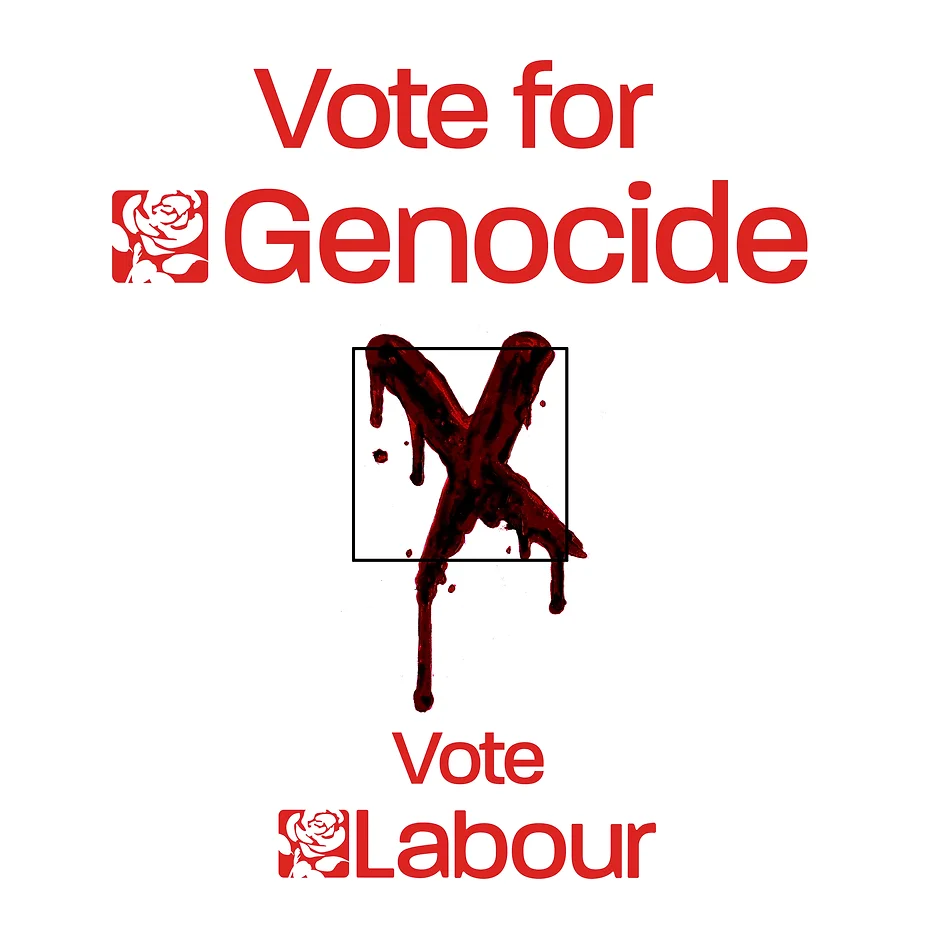
Robbing welfare to pay for military expansion
https://morningstaronline.co.uk/article/robbing-welfare-pay-military-expansion

While promising massive housebuilding with ‘no fiscal cost,’ DIANE ABBOTT MP reveals the government relies on planning reforms alone rather than public investment, as military expansion becomes the only significant investment
IN POLITICS, one should never over-promise and then under-deliver. At the same time, overall policy should be grounded in something more than wishful thinking. It is highly regrettable that the Chancellor made both these errors in delivering her Spring Statement.
Before the statement, all the talk was of enormous sums that would become available for desperately needed investment. At the same time, there was a strong campaign to refute any idea that the government was pursuing yet another round in the failed austerity experiment of its predecessors.
In the event, both were untrue. The actual new investment is extremely small and is mostly directed towards military and security investment, which is a completely wasteful and dangerous diversion of resources. A somewhat larger sum is planned to be “saved” by yet further attacks on welfare.
In effect, more spending on the military is being paid for by more attacks on the vulnerable, the sick and disabled people.
The Treasury has itemised the sums which illustrate these dangerously wrong priorities. By 2029-30, they project that the annual total of capital investment will have increased by £4.6 billion. But most of this does not properly fall into the category of investment at all, because it is military spending. You cannot produce something else from bombs, bullets and missiles.
Once military and security funding are excluded, real new productive investment amounts to less than £1.9bn at the end of this parliament. It does not qualify as investment. In terms of impact on the economy or living standards, it is a trivial amount.
…
Military spending is the only significant area of government spending which is seeing any significant rise in government capital spending. It aligns with Trump’s policy and begins to meet his demands. But we know that he will come back for more. There is already talk of doubling military spending as a proportion of GDP to 5 per cent.
Now, and in the future, that can only come from cutting spending elsewhere. Of course, if the economy were booming, then increases in welfare, in spending on public services, in genuine public investment and even increases in military spending could all take place simultaneously. But no-one is suggesting a boom is likely or even possible.
In reality, the rise in military spending is only possible by restraining spending on public services and cutting welfare. This increased military budget is being paid for by sick and disabled people. The economy will not get the public investment it needs and living standards and public services will both remain constrained. These choices are morally, politically and economically wrong.
Diane Abbott is Labour MP for Hackney North and Stoke Newington.
Original article at https://morningstaronline.co.uk/article/robbing-welfare-pay-military-expansion


dizzy: UK corporate media is currently in full propaganda mode fully supporting Israel’s unlawful attack on Iran as it has supported genocidal war crimes in Gaza and the West Bank.


Morning Star Editorial: Ever wider war is now the logic of the Israeli state. It must be stopped
https://morningstaronline.co.uk/article/ever-wider-war-now-logic-israeli-state-it-must-be-stopped

ISRAEL’S illegal and unprovoked bombing of Iran, killing military leaders, scientists and numerous other civilians, puts us on the brink of catastrophic conflict.
An attack on this scale would be treated as an act of war by any country. Nor is the Israeli strike a one-off: besides its long record of murdering scientists and bombing diplomatic premises, its strikes on Iranian territory are ongoing, with the overnight bombing of Tehran being followed up by daytime strikes on Tabriz, Shiraz and other cities.
The British government’s calls for restraint are grossly inadequate. The aggressor is Israel and its conduct puts us all at risk. Its attack on Iran must not just be unequivocally condemned: the already overwhelming case for a halt to military co-operation and arms supplies has become more urgent.
Its formal excuse for attacking Iran is illegitimate. Suspicion that Iran might be close to developing nuclear weapons is not grounds for attacking it. Only an imperialist mindset can hold the possession of such weapons by some states acceptable and by others not: and Iran has nothing like Israel’s record of routine attacks on its neighbours. The dangerous and destabilising power in the Middle East is Israel. Besides, those in Iran who say nuclear weapons are their only safeguard against attack will be strengthened today.
Could we be drawn in? Easily. Britain is already directly involved in Israel’s wars. It has bombed Yemen and conducted intelligence-sharing RAF flights over Gaza. It supplies a military committing genocide. It is not illogical for actors in the region to see Israeli allies like Britain and the US as directly culpable for its actions, especially given US President Donald Trump’s hints he is behind the attack.
…
Article continues at https://morningstaronline.co.uk/article/ever-wider-war-now-logic-israeli-state-it-must-be-stopped


We are Nobel laureates, scientists, writers and artists. The threat of fascism is back
Article republished from the Guardian. The text of the letter is © 2025 Stop Return Fascism.
Open letter

As in 1925, when Mussolini was in power, we must openly defy the brutal imposition of the fascist ideology
On 1 May 1925, with Benito Mussolini already in power, a group of Italian intellectuals publicly denounced his fascist regime in an open letter. The signatories – scientists, philosophers, writers and artists – took a stand in support of the essential tenets of a free society: the rule of law, personal liberty and independent thinking, culture, art and science. Their open defiance against the brutal imposition of the fascist ideology – at great personal risk – proved that opposition was not only possible, but necessary. Today, 100 years later, the threat of fascism is back – and so we must summon that courage and defy it again.
Fascism emerged in Italy a century ago, marking the advent of modern dictatorship. Within a few years, it spread across Europe and the world, taking different names but maintaining similar forms. Wherever it seized power, it undermined the separation of powers in the service of autocracy, silenced opposition through violence, took control of the press, halted the advancement of women’s rights and crushed workers’ struggles for economic justice. Inevitably, it permeated and distorted all institutions devoted to scientific, academic and cultural activities. Its cult of death exalted imperial aggression and genocidal racism, triggering the second world war, the Holocaust, the death of tens of millions of people and crimes against humanity.
At the same time, the resistance to fascism and the many other fascist ideologies became a fertile ground for imagining alternative ways of organising societies and international relations. The world that emerged from the second world war – with the charter of the United Nations, the Universal Declaration of Human Rights, the theoretical foundations of the EU and the legal arguments against colonialism – remained marked by deep inequalities. Yet, it represented a decisive attempt to establish an international legal order: an aspiration toward global democracy and peace, grounded in the protection of universal human rights, including not only civil and political, but also economic, social and cultural rights.
Fascism never vanished, but for a time it was held at bay. However, in the past two decades, we have witnessed a renewed wave of far-right movements, often bearing unmistakably fascist traits: attacks on democratic norms and institutions, a reinvigorated nationalism laced with racist rhetoric, authoritarian impulses and systematic assaults on the rights of those who do not fit a manufactured traditional authority, rooted in religious, sexual and gender normativity. These movements have re-emerged across the globe, including in long-standing democracies, where widespread dissatisfaction with political failure to address mounting inequalities and social exclusion has once again been exploited by new authoritarian figures. True to the old fascist script, under the guise of an unlimited popular mandate, these figures undermine national and international rule of law, targeting the independence of the judiciary, the press, institutions of culture, higher education and science, even attempting to destroy essential data and scientific information. They fabricate “alternative facts” and invent “enemies within”; they weaponise security concerns to entrench their authority and that of the ultra-wealthy 1%, offering privileges in exchange for loyalty.
This process is now accelerating, as dissent is increasingly suppressed through arbitrary detentions, threats of violence, deportations and an unrelenting campaign of disinformation and propaganda, operated with the support of traditional and social media barons – some merely complacent, others openly techno-fascist enthusiasts.
Democracies are not flawless: they are vulnerable to misinformation and they are not yet sufficiently inclusive. However, democracies by their nature provide fertile ground for intellectual and cultural progress and therefore always have the potential to improve. In democratic societies, human rights and freedoms can expand, the arts flourish, scientific discoveries thrive and knowledge grow. They grant the freedom to challenge ideas and question power structures, propose new theories even when culturally uncomfortable, which is essential to human advancement. Democratic institutions offer the best framework for addressing social injustices, and the best hope to fulfil the post-war promises of the rights to work, education, health, social security, participation in cultural and scientific life, and the collective right of peoples to development, self-determination and peace. Without this, humanity faces stagnation, growing inequality, injustice and catastrophe, not least from the existential threat caused by the climate emergency that the new fascist wave negates.
In our hyper-connected world, democracy cannot exist in isolation. As national democracies require strong institutions, international cooperation relies on the effective implementation of democratic principles and multilateralism to regulate relations among nations, and on multistakeholder processes to engage a healthy society. The rule of law must extend beyond borders, ensuring that international treaties, human rights conventions and peace agreements are respected. While existing global governance and international institutions require improvement, their erosion in favor of a world governed by raw power, transactional logic and military might is a regression to an era of colonialism, suffering and destruction.
As in 1925, we scientists, philosophers, writers, artists and citizens of the world have a responsibility to denounce and resist the resurgence of fascism in all its forms. We call on all those who value democracy to act:
- Defend democratic, cultural and educational institutions. Call out abuses of democratic principles and human rights. Refuse pre-emptive compliance.
- Join collective actions, locally and internationally. Boycott and strike when possible. Make resistance impossible to ignore and costly to repress.
- Uphold facts and evidence. Foster critical thinking and engage with your communities on these grounds.
This is an ongoing struggle. Let our voices, our work and our principles be a bulwark against authoritarianism. Let this message be a renewed declaration of defiance.
- Nobel laureates: Eric Maskin, Roger B Myerson, Alvin E Roth, Lars Peter Hansen, Oliver Hart, Daron Acemoglu, Wolfgang Ketterle, John C Mather, Brian P Schmidt, Michel Mayor, Takaaki Kajita, Giorgio Parisi, Pierre Agostini, Joachim Frank, Richard J Roberts, Leland Hartwell, Paul Nurse, Jack W Szostak, Edvard I Moser, May-Britt Moser, Harvey James Alter, Victor Ambros, Gary Ruvkun, Barry James Marshall, Craig Mello, Charles Rice
- Leading scholars on fascism and democracy: Ruth Ben-Ghiat, Timothy Snyder, Jason Stanley, Claudia Koonz, Mia Fuller, Giovanni De Luna and Andrea Mammone
- The full list of signatories can be found here
Article republished from the Guardian. The text of the letter is © 2025 Stop Return Fascism.