This work by Middle East Monitor is licensed under a Creative Commons Attribution-NonCommercial-ShareAlike 4.0 International License.
Tens of thousands of displaced Lebanese have started returning to their homes after being forced to flee due to Israeli strikes, following the implementation of a 10-day temporary ceasefire between Israel and Lebanon announced by U.S. President Donald Trump in April 18, 2026. [Elif Öztürk – Anadolu Agency]
Following damage caused by weeks of Israeli strikes, the Lebanese army said its specialized units have fully reopened the Khardali–Nabatieh road in southern Lebanon and partially restored access to the Burj Rahal–Tyre bridge, Anadolu reports.
Restoration work on the Tayr Falsah–Tyre bridge is also ongoing in coordination with the National Litani River Authority, the army said in a statement carried by Lebanon’s state-run National News Agency.
It added that efforts to reopen roads, dismantle barriers, and uphold internal security are continuing.
Since March 2, Israel has waged an offensive on Lebanon that has killed some 2,300 people, wounded over 7,500, and displaced over 1 million, according to the latest official figures from Lebanon.
A 10-day temporary ceasefire between Israel and Lebanon that took effect last Thursday has been followed by reported violations.
This work by Middle East Monitor is licensed under a Creative Commons Attribution-NonCommercial-ShareAlike 4.0 International License.
Donald Trump calls for help from NATO allies in securing the Straight of Hormuz despite saying on 7 March 2026 that they don’t need people to join wars after they’ve already won. He’s challenged with the claim that he lies as much as the IDF.Keir Starmer explains that UK is actively supporting Israel’s genocidal expansion and repeats his previous quotation that he supports Zionism “without qualification”. Keir Starmer said “I said it loud and clear – and meant it – that I support Zionism without qualification.” here: https://www.jewishnews.co.uk/keir-starmer-interview-i-will-work-to-eradicate-antisemitism-from-day-one/
This work by Middle East Monitor is licensed under a Creative Commons Attribution-NonCommercial-ShareAlike 4.0 International License.
A view of the destruction after a missile debris from Iran’s retaliation attack hits Ramat Gan, Israel on April 06, 2026. [ Gideon Markowicz – Anadolu Agency]
More than 1,000 homes in Tel Aviv have been left uninhabitable by the recent war with Iran, the city’s mayor said Saturday, Anadolu reports.
Israeli Channel 12 quoted Ron Huldai, who said that “more than 1,000 apartments in Tel Aviv are no longer fit for living” because of damage caused by Iranian missiles and drones.
During the US-Israeli war on Iran, which began Feb. 28, Tehran launched repeated missile and drone attacks on major Israeli cities in response to large-scale strikes on Iranian territory.
Some missiles and shrapnel from interception attempts struck buildings in Tel Aviv, Ramat Gan and Bnei Brak, killing and injuring dozens, and causing extensive damage to homes, vehicles and infrastructure.
Channel 12 reported earlier this week that Israeli officials estimate the cost of 40 days of war with Iran and Lebanon at around $17.5 billion.
The figure does not include reconstruction costs or losses from the partial shutdown of the Israeli economy during the fighting.
According to Israeli media, nearly 30,000 Israelis have filed claims with the Israeli Tax Authority’s compensation fund for direct property damage, including 18,408 claims related to buildings, 2,594 to equipment and 6,617 to vehicles.
The Israeli economic website, Calcalist, reported last week that the 12-day war against Iran last June cost around 3 billion shekels ($1 billion) in compensation for businesses.
The Finance Ministry estimates that compensation costs from the war fought between Feb. 28 and April 8 will reach 6.5 billion shekels.
The ceasefire took effect April 8 after talks between the US and Iran, hosted in the Pakistani capital, failed to produce a final agreement to end the war.
This work by Middle East Monitor is licensed under a Creative Commons Attribution-NonCommercial-ShareAlike 4.0 International License.
Donald Trump calls for help from NATO allies in securing the Straight of Hormuz despite saying on 7 March 2026 that they don’t need people to join wars after they’ve already won. He’s challenged with the claim that he lies as much as the IDF.Keir Starmer explains that UK is actively supporting Israel’s genocidal expansion and repeats his previous quotation that he supports Zionism “without qualification”. Keir Starmer said “I said it loud and clear – and meant it – that I support Zionism without qualification.” here: https://www.jewishnews.co.uk/keir-starmer-interview-i-will-work-to-eradicate-antisemitism-from-day-one/
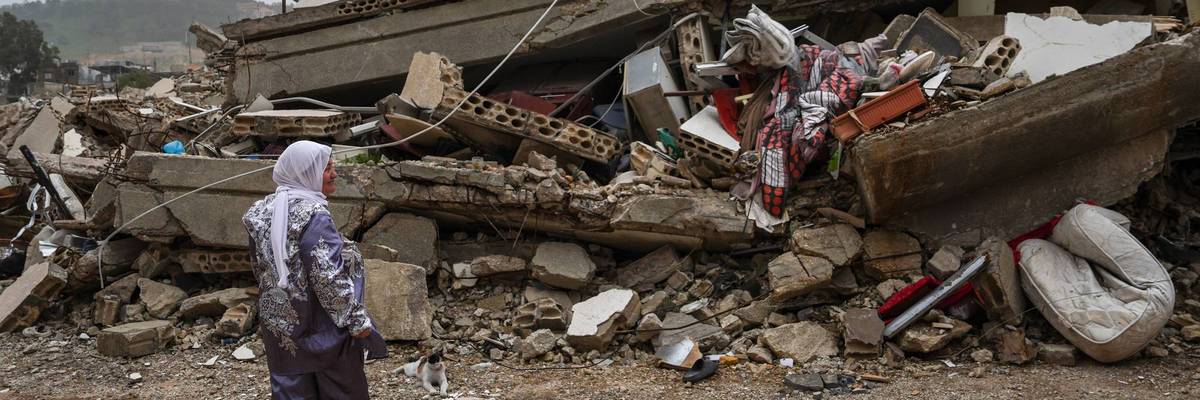
A woman surveys the damage to her home that was destroyed by an Israeli air-strike that killed seven of her neighbors in Nabatieh on the second day of a cease-fire between Israel and Lebanon, on April 18, 2026, in Nabatieh, Lebanon. (Photo by Ryan Murphy/Getty Images)
UN experts have said Israel’s “destruction of urban and village housing that displaced persons would have returned to, is consistent with the pattern of domicide that was initiated during the genocide in Gaza.”
Despite a ceasefire announced Friday, after US President Donald Trump said Israel was “PROHIBITED” from continuing to strike Lebanon, Israel continued to level villages and homes across southern Lebanon from Friday into Saturday in what has been described as a continuation of its “Gaza tactics.”
Just as it did in Gaza, Israeli Army Radio announced Friday night that Israel had established a “yellow line” in southern Lebanon about 10 kilometers north of the Israeli border, effectively allowing Israel to occupy about 10% of Lebanese territory and maintain control of 55 towns and villages.
According to a report by Lebanon’s National Council for Scientific Research, Israeli forces have been destroying more than 1,000 homes per day since March 2, sometimes wiping out entire villages across southern Lebanon.
The campaign escalated later in the month after Israeli Defense Minister Israel Katz ordered the military to “accelerate the destruction of Lebanese homes” near the Israeli border based on the “model in Gaza,” where Israel has destroyed around 90% of all infrastructure and left most of the population sheltering in tents.
The Israeli army announced on Saturday the establishment of a “yellow line” in South Lebanon, in replication of the Gaza model.
The line separates 55 occupied southern villages from the rest of Lebanon, and stretches from Naqoura to eastern Lebanon, at 8 to 10 kilometers deep… pic.twitter.com/R38rhcCitr
— Megaphone News English (@MegaphoneNewsEN) April 18, 2026
Israel has described this as an effort to destroy Hezbollah infrastructure. But the razing of entire villages has often appeared indiscriminate, and numerous attacks have targeted or damaged schools, hospitals, and other nonmilitary infrastructure. More than 40,000 homes have reportedly been destroyed or damaged.
Demolitions and land-clearing operations have continued after Friday’s ceasefire, according to reporters on the ground in Lebanon for Al Jazeera. Israeli artillery also reportedly shelled areas around Beit Lif, al-Qantara, and Toul.
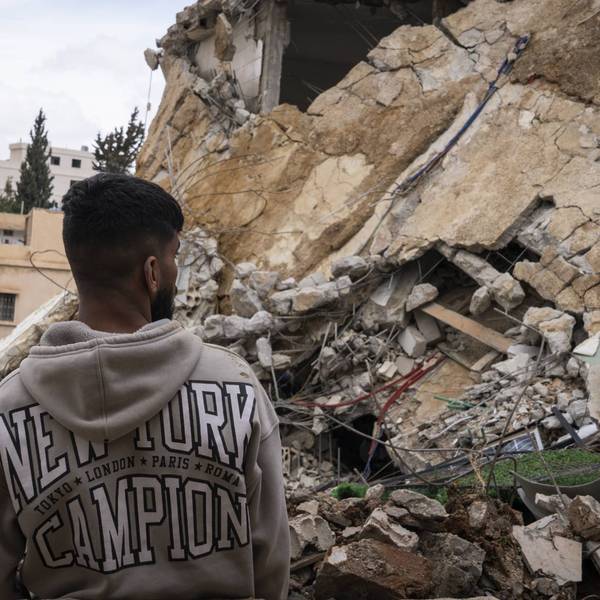
On Friday, Israel warned tens of thousands of displaced Lebanese civilians in southern Lebanon not to return to their homes despite the ceasefire, although some have begun to make the trek anyway. Many have found their former homes reduced to rubble.
“There’s destruction, and it’s unlivable,” said one resident who was displaced from his home in Nabatieh. “We’re taking our things and leaving again.”
IDF: Since the ceasefire came into effect, IDF soldiers south of the Yellow Line in southern Lebanon have identified in several incidents in which terrorists violated the ceasefire understandings by approaching from north of the Yellow Line toward IDF soldiers, posing an…
Israel said Saturday that it had also carried out new airstrikes in southern Lebanon against people who approached the newly established yellow line. The Israeli military claimed that individuals crossed from north of the line toward Israeli troops, prompting “precise strikes” by air and ground forces against them.
An Israeli military statement described those approaching as “terrorists” who violated the ceasefire and said it carried out the strikes in “self-defense against threats.” However, it did not specify what threat those approaching the line posed.
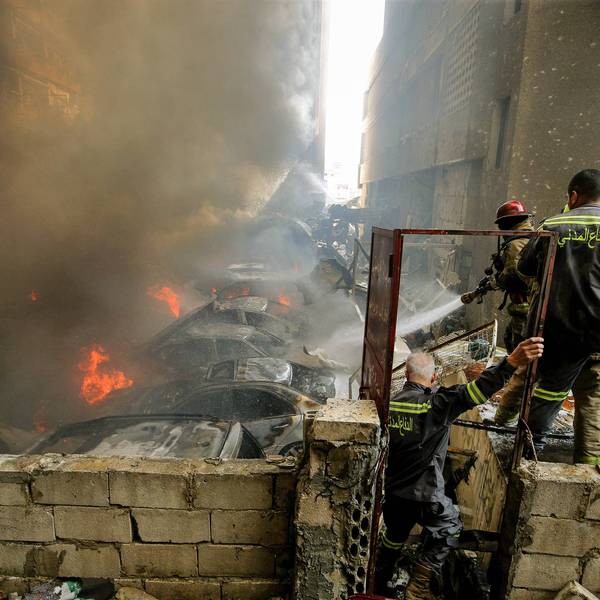
Previous attacks that Israel has said were directed at Hezbollah fighters have devastated civilian areas in southern Lebanon, as well as Beirut and its surrounding suburbs.
According to Lebanon’s Health Ministry, which does not distinguish between military and civilian casualties, more than 2,167 people have been killed since Israel renewed its attacks in Lebanon on March 2.
In Gaza, despite a ceasefire, nearly 100 Palestinians have been killed near the yellow line since it was established in October 2025. Those killed have included at least 36 women, children, and elderly people, according to TRT World.
Displaced Lebanese residents make their way home, passing ongoing repair work at the Qasmiyeh Bridge over the Litani River in southern Lebanon, after it was damaged in previous Israeli strikes, on April 17, 2026.
On Wednesday, a group of United Nations experts denounced what they called Israel’s “illegal aggression and indiscriminate bombing campaign” aimed at occupying land in violation of the UN Charter.
“The issuance of blanket evacuation orders, combined with the destruction of urban and village housing that displaced persons would have returned to, is consistent with the pattern of domicide that was initiated during the genocide in Gaza,” they warned.
On Saturday, a group of peacekeepers with the United Nations Interim Force in Lebanon also came under attack, resulting in the death of a French soldier. Lebanon’s Foreign Ministry condemned the attack and pledged to identify the “perpetrators.”
UN peacekeepers and French officials have said the attack was most likely carried out by Hezbollah, but Hezbollah has denied responsibility.
Israel’s continued attacks on Lebanon also threaten to derail not only its ceasefire with Lebanon but also the US ceasefire with Iran.
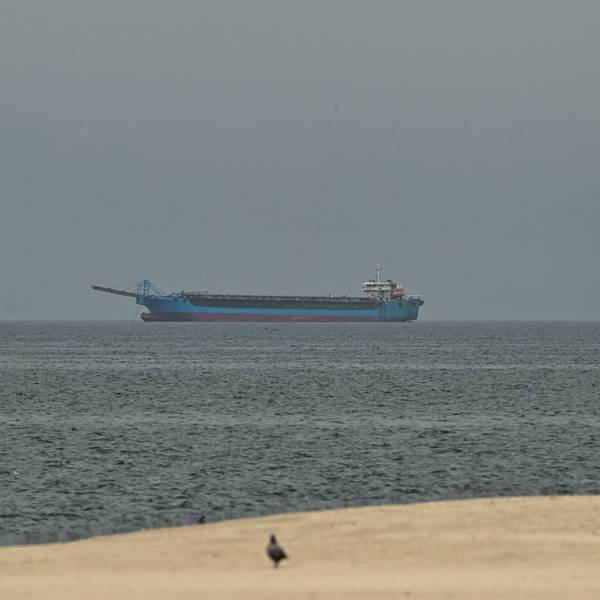
After the announcement of a ceasefire between Israel and Lebanon on Friday, Iran briefly reopened the Strait of Hormuz to unrestricted travel. But on Saturday, following reports of Israel’s violations of the ceasefire, it was once again closed.
While Iranian officials said the proximate reason for the closure was the continuation of US President Donald Trump’s blockade of the strait, they have also indicated that they want Israel to stop attacking Lebanon as part of the ceasefire.
Keir Starmer explains that UK is actively supporting Israel’s genocidal expansion and repeats his previous quotation that he supports Zionism “without qualification”. Keir Starmer said “I said it loud and clear – and meant it – that I support Zionism without qualification.” here: https://www.jewishnews.co.uk/keir-starmer-interview-i-will-work-to-eradicate-antisemitism-from-day-one/UK Labour Party government ministers Keir Starmer, Angela Rayner and Rachel Reeves explain that they are partners complicit in Israel’s Gaza genocide. The UK has provided Israel with arms, military and air force support. They explain that they don’t do gas chambers but do do forced marches, starvation, destroy hospitals, mass-murders of journalists and healthcare workers.Orcas discuss Genocide-supporting and complicit Zionists. Donald Trump, Keith Starmer, David Lammy, Rachel Reeves, Angela Rayner and Wes Streeting are acknowledged as evil genocide-complicit and supporting cnuts.
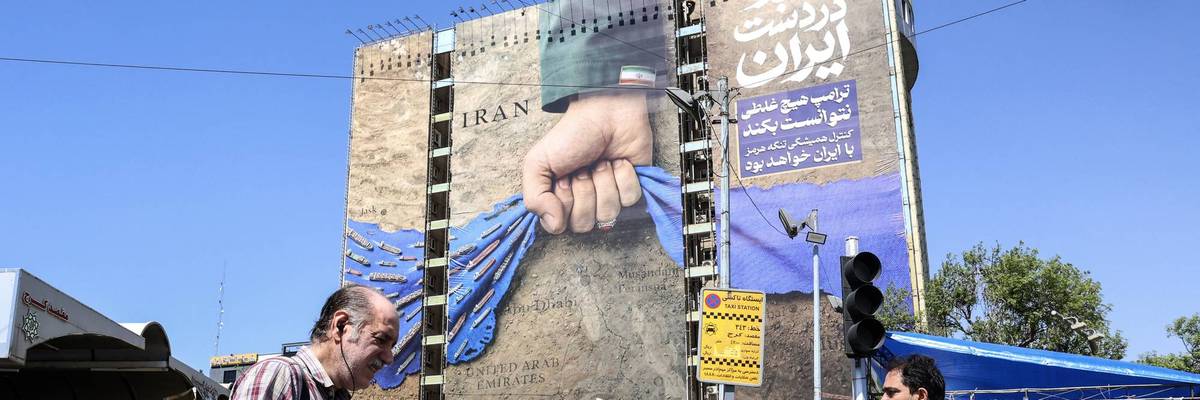
Iranians walk past a large billboard referring to the Strait of Hormuz in Tehran’s Vanak Square on April 15, 2026. (Photo by AFP via Getty Images)
Trump’s recent actions have convinced Tehran that the US is not “a trustworthy partner for any kind of deal,” according to one Iranian professor.
The ceasefire between the US and Iran is in grave peril after Iran announced on Saturday that, in response to the continued US blockade, it would once again impose travel restrictions on the Strait of Hormuz after briefly reopening it on Friday.
Iran has used the strait—through which about 20% of the world’s oil passes—as a chokepoint on Western commerce in response to the illegal US-Israeli war launched in February, and it has been the linchpin of the two-week ceasefire between the two sides, which is scheduled to end Wednesday.
Tehranannounced Friday that the strait was “completely open” again in response to a ceasefire between Israel and Lebanon, which had taken effect. That agreement is also already falling apart following a slew of apparent violations by Israel, which has continued shelling southern Lebanon and demolishing homes even as displaced civilians return.
BREAKING: Iran has announced it is again closing the Strait of Hormuz. The military says the US must lift its blockade of Iranian ports before the Strait is opened again. pic.twitter.com/Gm8bNIfmwo
Iranian officials said they opted to reimpose their blockade of the strait because they believe that by continuing its own naval blockade of Iranian ports and vessels, which began over the past weekend, the US is not upholding its end of the deal.
According to a social mediapost from US Central Command on Saturday, the US military has already turned around at least 23 ships near the strait since its blockade began on April 13.
US President Donald Trumpclaimed Friday that Iran had agreed to reopen the strait without conditions, but that the US blockade would “remain in full force” until a broader deal was reached surrounding Iran’s nuclear program.
But Iranian Deputy Foreign Minister Saeed Khatibzadeh said during a panel Saturday that “That is not the term we agreed on.”
A bit of chaos in Hormuz this morning as nearly all of the outbound tankers have abruptly turned around.
Follows an announcement by Iranian military leadership that the Strait has "reverted to its previous state of strict military control." pic.twitter.com/XSc6lvxwJo
Iran’s military headquarters later issued a formal statement declaring that it would begin limiting travel through the strait.
“The Islamic Republic of Iran, following previous agreements met in the negotiations conducted in good faith, agreed to manage the passage of a limited number of oil and commercial ships through the Strait of Hormuz,” the statement said. “Unfortunately, the Americans, with their repeated breaches of trust that are part of their history, continue their acts of piracy and maritime theft under the pretext of a so-called blockade.”
“This strategic waterway is under strict management and control by the armed forces,” it continued. “As long as the United States does not end the complete freedom of movement for vessels from Iran to their destinations and back, the situation in the Strait of Hormuz will remain under strict control and will remain as it was before.”
Islamic Revolutionary Guard Corps (IRGC) gunboats later opened fire on an oil tanker traveling through the strait on Saturday. No injuries were reported.
As Al Jazeera reporter Ali Hashem described, talks between the US and Iran have been brought “back to square one.”
The gap appears increasingly unlikely to be bridged by Wednesday, as Trump continues to demand that Iran allow the US to remove all its enriched uranium, which Iran has said is a nonstarter.
Before Iran announced it was closing the Strait of Hormuz again, President Trump told reporters on Friday that "the blockade is going to remain, but maybe I won't extend" the ceasefire, which is set to expire on Wednesday. He told reporters, "Unfortunately, we'll have to start… pic.twitter.com/fDplC9Zm1Z
US and Israeli strikes in Iran have already killed more than 1,700 civilians, according to the US-based Human Rights Activist News Agency, and more than 3 million Iranians have been displaced since the war began, according to the United Nations Refugee Agency.
Trump said Friday that perhaps he “won’t extend” the ceasefire and that “the blockade is going to remain. If an agreement is not reached by Wednesday, he said, ”unfortunately, we’ll have to start dropping bombs again.“
The president said that Iran “got a little cute” on Saturday by closing the strait again, but said Iran “can’t blackmail us.”
Shutting the waterway has, however, proven to be one of Iran’s most effective points of leverage against the US. It has caused gas prices to soar above $4 and inflation to ripple through the entire Western economy, further tanking Trump’s already grim approval ratings as the US midterm elections approach.
Jennifer Parker, an adjunct fellow in naval studies at the University of New South Wales, told Al Jazeera that the US blockade of the strait does not have the ability to cripple Iran in the same way Iran can cripple the US.
“It is not the US blockade on Iranian ports that is impacting the majority of shipping going through that strait. It is the attacks the Iranian navy and IRGC have undertaken on civilian ships,” she said. “To solve the problem in the Strait of Hormuz, there either needs to be an agreement for Iran to stop attacking vessels, or a forcible military intervention that stops them from attacking vessels, and then general reassurance across the strait that it is clear of mines and that if the IRGC start trying to attack merchant ships, they will be defended… We are a long way from all of that.”
Iranian professor Mostafa Khoshcheshm said that Trump’s contradictory statements surrounding the ceasefire have convinced Tehran that the United States is not “a trustworthy partner for any kind of deal,” and that, as Trump continues to behave erratically, “Iran will continue the war.”
He told Al Jazeera: “Iran believes it has the upper hand and that this must be established in any future confrontation.”
Keir Starmer explains that UK is actively supporting Israel’s genocidal expansion and repeats his previous quotation that he supports Zionism “without qualification”. Keir Starmer said “I said it loud and clear – and meant it – that I support Zionism without qualification.” here: https://www.jewishnews.co.uk/keir-starmer-interview-i-will-work-to-eradicate-antisemitism-from-day-one/UK Labour Party government ministers Keir Starmer, Angela Rayner and Rachel Reeves explain that they are partners complicit in Israel’s Gaza genocide. The UK has provided Israel with arms, military and air force support. They explain that they don’t do gas chambers but do do forced marches, starvation, destroy hospitals, mass-murders of journalists and healthcare workers.Orcas discuss Genocide-supporting and complicit Zionists. Donald Trump, Keith Starmer, David Lammy, Rachel Reeves, Angela Rayner and Wes Streeting are acknowledged as evil genocide-complicit and supporting cnuts.
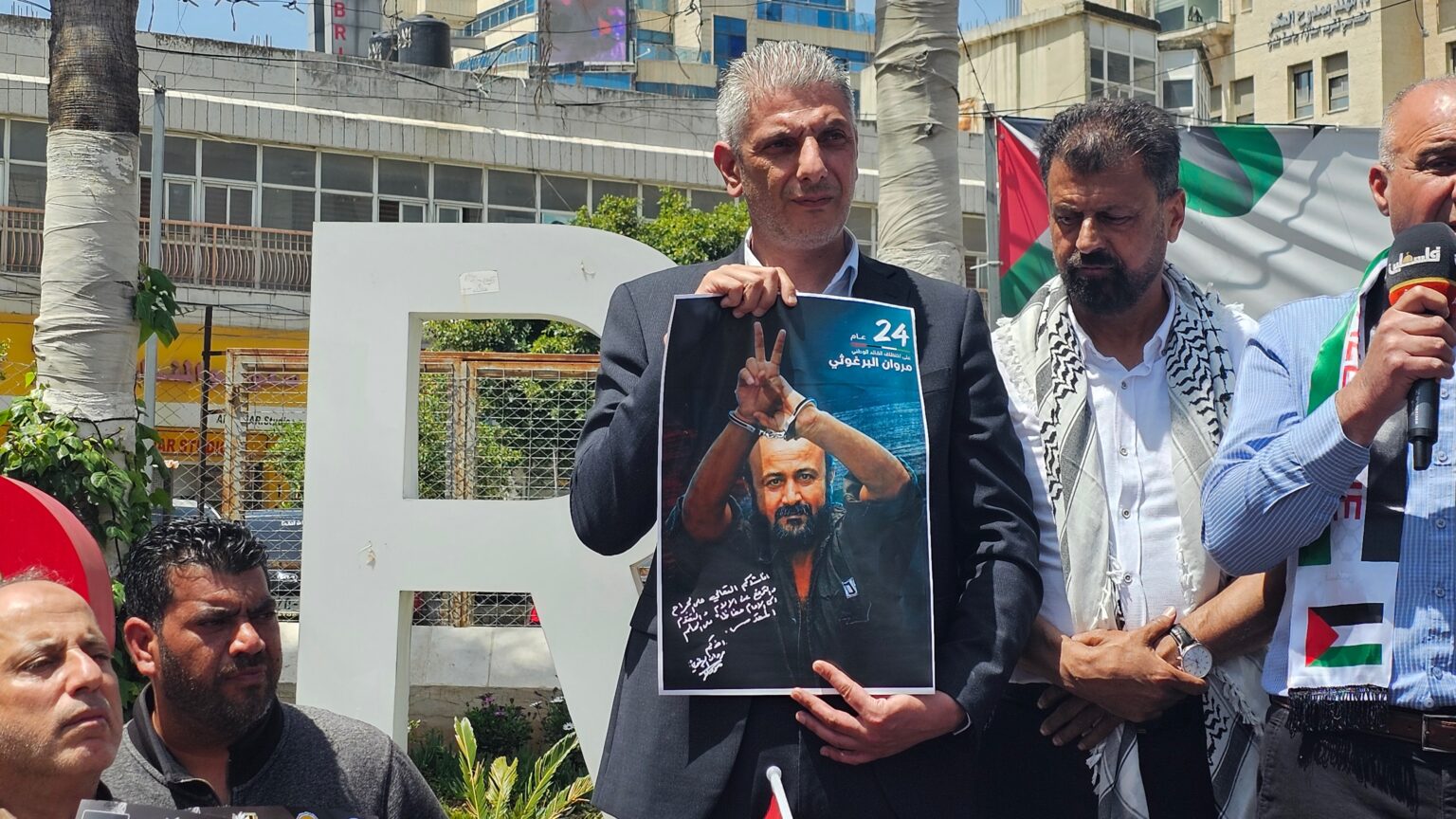
Raed Abu al-Hummus, head of the Palestinian Commission of Detainees and Ex-Detainees Affairs. Photo: Aseel Saleh
The prominent Palestinian official underlined the role of popular movements over the globe in mobilizing support to Palestinian prisoners within an internationalist framework.
For over five decades, Palestinians have observed Palestinian Prisoner’s Day on April 17 as a national day to honor the thousands of Palestinian political detainees held in Israeli occupation prisons, highlight their struggle, and demand their freedom.
In commemoration of the day, which is considered by Palestinians as a sacred occasion of patriotism and loyalty, Peoples Dispatch spoke to Mr. Raed Abu al-Hummus, head of the Palestinian Commission of Detainees and Ex-Detainees Affairs.
Abu al-Hummus, who is also a freed Palestinian prisoner, assumed his new position in the commission with the rank of minister in February 2025, amid highly challenging political and security circumstances.
On the one hand, the restrictions imposed by the Israeli occupation authorities as part of the crackdown on the Palestinian Prisoners’ Movement has made the work of the commission formidable.
On the other hand, the appointment of Abu al-Hummus came immediately following the Palestinian Authority’s decision to cut the stipends of many Palestinian prisoners, under pressure by the United States and the European Union. This in turn, has further burdened the commission, while dealing with the prisoners and their families.
Moreover, the commission has been abandoned by the concerned international human rights organizations, above all the International Committee of the Red Cross (ICRC), which seem to have complied with Israel’s arbitrary measures.
Abu al-Hummus, however, confirmed that the staff of the commission work with a high level of dedication and devotion, and deal with prisoners and their families with great protectiveness and understanding.
“Most of our staff are freed prisoners, who consider the issue of prisoners a personal humanitarian concern not a career,” he argued.
A silent genocide
Underscoring the intense suffering of Palestinian political detainees held in Israeli prisons after October 7, Abu al-Hummus said that while the Israeli genocide was in full swing and live-streamed in Gaza, another silent genocide began inside Israeli prisons and has continued till the moment.
The senior Palestinian official noted that severe torture, deliberate medical neglect, and starvation led to the death of at least 89 Palestinian prisoners inside Israeli jails since October, 2023.
“This is a record-breaking toll in the history of the Palestinian Prisoners’ Movement,” he asserted, adding that the commission also received information about other unidentified fatalities among the detainees, who are kept inside morgues under the administration of the Israel Prisons Service (known as Shabas).
The tally also reveals that the Shabas has already begun to execute Palestinian prisoners by implementing slow killing methods, even before the unlawful bill that mandates the execution of Palestinian prisoners by hanging was endorsed by the Israeli Knesset last month.
Israeli rights groups and lawmakers file petition to overturn the death penalty bill
Regarding the death penalty bill, Abu al-Hummus clarified that it has not entered into force yet, because it is still under review by Israel’s Supreme Court, after a number of Arab lawmakers in the Israeli Knesset and legal rights group Adalah had filed petitions to overturn the law.
The law targets up to 117 prisoners, serving life sentences, but it would not be applied retroactively to Palestinian prisoners currently held in Israeli jails, according to Adalah Director Hassan Jabareen
Yet, Abu al-Hummus speculates that the Israeli government is pushing towards making the law applicable to the special forces of Al-Qassam’s Brigades (known as Al-Nukba), for their role in the October 7 attacks, maybe through legal loopholes.
Challenges facing the Palestinian Commission of Detainees and ex-Detainees affairs
The Palestinian minister explained how the mechanisms and dynamics of the commission’s work after October 7, are different from what was in place prior to that.
Before becoming the head of the Palestinian Commission of Detainees and Ex-Detainees Affairs, Abu al-Hummus was the liaison officer in charge of coordinating the communications between the commission and the prisons, as well as with the ICRC. From his unique vantage point, he has seen how the situation has transformed since October 7.
After October 7, the commission has faced numerous difficulties while attempting to get information about the conditions of the prisoners, particularly those who died inside the prison.
The commission has 65 lawyers who handle their responsibilities in all Israeli military courts and prisons, and submit requests to visit prisoners continuously. Yet, the sheer number of Palestinian prisoners held in Israeli jails and the heavy restrictions imposed by the Israeli authorities, have made these fundamental tasks next to impossible.
Many of the commission’s lawyers were banned from conducting visits on the pretext that they had obtained details from some prisoners more than they were allowed to, or for writing down notes on their hands during the visits.
Moreover, the lawyers were not allowed to conduct any visit for over five and a half months following October 7, because Israel had declared a state of emergency that included detention facilities.
The lawyers were later given the permission for visits, but the challenges have not stopped there as the earliest appointment for each visit was one month and a half after the request was submitted.
When the lawyers arrive at the gates of the prisons, a state of emergency is declared until the prisoners reach the room, where they would meet their lawyers.
In many cases, lawyers are kept for two or three hours without being able to see the prisoners, whom they are supposed to meet. In this case, the Shabas record the visits as if they were conducted, so the prisoners lose the opportunity of meeting their lawyers till the next visit.
The Shabas have used another pressure method when it comes to lawyers’ visits. When prisoners are allowed to have visits, they are tortured from the moment they are taken out from their prison cell until they reach the visiting room.
During the harrowing journey, they are blindfolded, restrained with legcuffs and handcuffs, and dragged in the passageways in spaces where cameras are not installed.
As a result, some prisoners have passed on a message to their lawyers not to return in order to avoid being tortured.
The international community proved to be a facade for the global imperialist capitalist system, says Abu al-Hummus
Abu al-Hummus slammed the international community for its inaction and complete silence towards the Israeli occupation’s flagrant violations against the Palestinian people, in general, and the prisoners, in particular, which have become more evident in the aftermath of Israel’s genocidal aggression on Gaza.
“The last couple of years have exposed the international community and its organizations that proved to be a facade for capitalism and imperialism. They only serve this system, which the United States has led through a unipolar world order,” he asserted.
“These organizations that pretend to be advocating and safeguarding human rights, only serve the global imperialist capitalist system from which they have basically emanated,” the prominent Palestinian official added.
Abu al-Hummus revealed that the ICRC has not paid the needed efforts to locate Palestinians, who were kidnapped by the Israeli Occupation Forces (IOF) from Gaza and subjected to forced disappearance.
“The Palestinian Commission for Detainees and Ex-Detainees Affairs has taken this task upon itself, and used untraditional methods such as reaching out to Israeli sources of information to locate the whereabouts of the Palestinian hostages, and get as much information as possible about their conditions,” he stated.
Abu al-Hummus counts on popular movements across the globe to save Palestinian prisoners
In spite of his deep disappointment in these organizations, Abu al-Hummus counts on the influence of popular solidarity movements across the globe to bring about change and hopefully liberation for the Palestinian people.
“When we read the history of other peoples, we remember that the demonstrations, which swept through the streets of France, contributed to the liberation of Algeria, while mass protests in the United States pushed towards ending the US war on Vietnam,” he maintained.
“It is now the time for the Palestinian people to be liberated with the support of people of conscience around the globe, by bolstering cooperation within an internationalist framework,” Abu al-Hummus continued.
It is a heavy price that we will pay while standing tall, Abu al-Hummus affirms
Abu al-Hummus concluded with a tone of defiance and pride, saying: “The brutality the Palestinian Prisoners’ Movement has endured at the hands of the Israeli occupation, is a heavy price that our people have paid for choosing resistance.”
“Despite all the atrocities, we will pay this price while standing tall. We will never bow, and we will never abandon our prisoners alone in their struggle. We will spare no effort to improve their conditions, until we free them all,” Abu al-Hummus reaffirmed.
Keir Starmer explains that UK is actively supporting Israel’s genocidal expansion and repeats his previous quotation that he supports Zionism “without qualification”. Keir Starmer said “I said it loud and clear – and meant it – that I support Zionism without qualification.” here: https://www.jewishnews.co.uk/keir-starmer-interview-i-will-work-to-eradicate-antisemitism-from-day-one/Keir Starmer objects to criticism of the IDF. He asks how could anyone object to them starving people to death, forced marches like the Nazis did, bombing Gaza’s hospitals and universities, mass-murdering journalists, healthworkers and starving people queuing for food, killing and raping prisoners and murdering children. He calls for people to stop obstructing his genocide for Israel.Orcas discuss Genocide-supporting and complicit Zionists. Donald Trump, Keith Starmer, David Lammy, Rachel Reeves, Angela Rayner and Wes Streeting are acknowledged as evil genocide-complicit and supporting cnuts.