Category: Neo-liberalism

  • Even ‘weak’ cyclones are being turned into deadly rainmakers by fast-warming oceans

    Spread the love
    Thomas Wyness / Alamy

    Ligin Joseph, University of Southampton

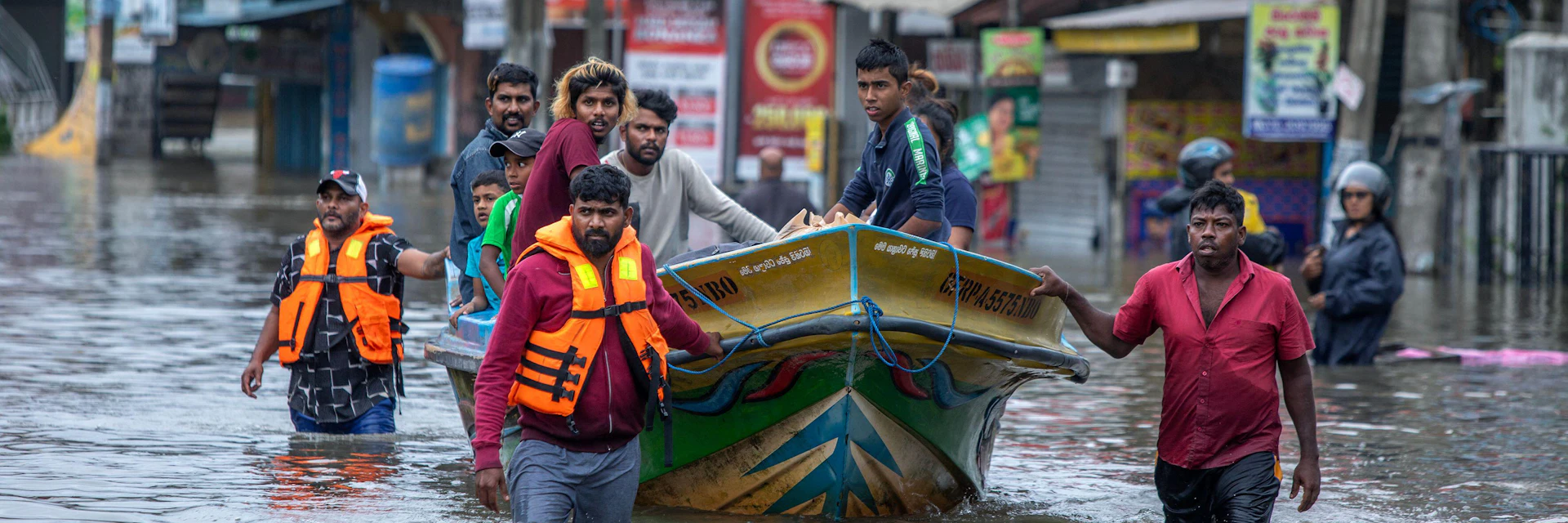
    The final week of November was devastating for several South Asian countries. Communities in Sri Lanka, Indonesia and Thailand were inundated as Cyclones Ditwah and Senyar unleashed days of relentless rain. Millions were affected, more than 1,500 people lost their lives, hundreds are still missing, and damages ran into multiple millions of US dollars. Sri Lanka’s president even described it as the most challenging natural disaster the island has ever seen.

    When disasters like this happen, the blame often falls on a failure in early warnings or poor preparedness. This was the case with major floods in Kerala, south India, in 2018, which devastated my hometown.

    But this time, the forecasts were largely accurate; the authorities knew the storms were coming, yet the devastation was still immense.

    So, if the forecasts were good enough, why were the impacts still so severe?

    Weak winds, extreme rain

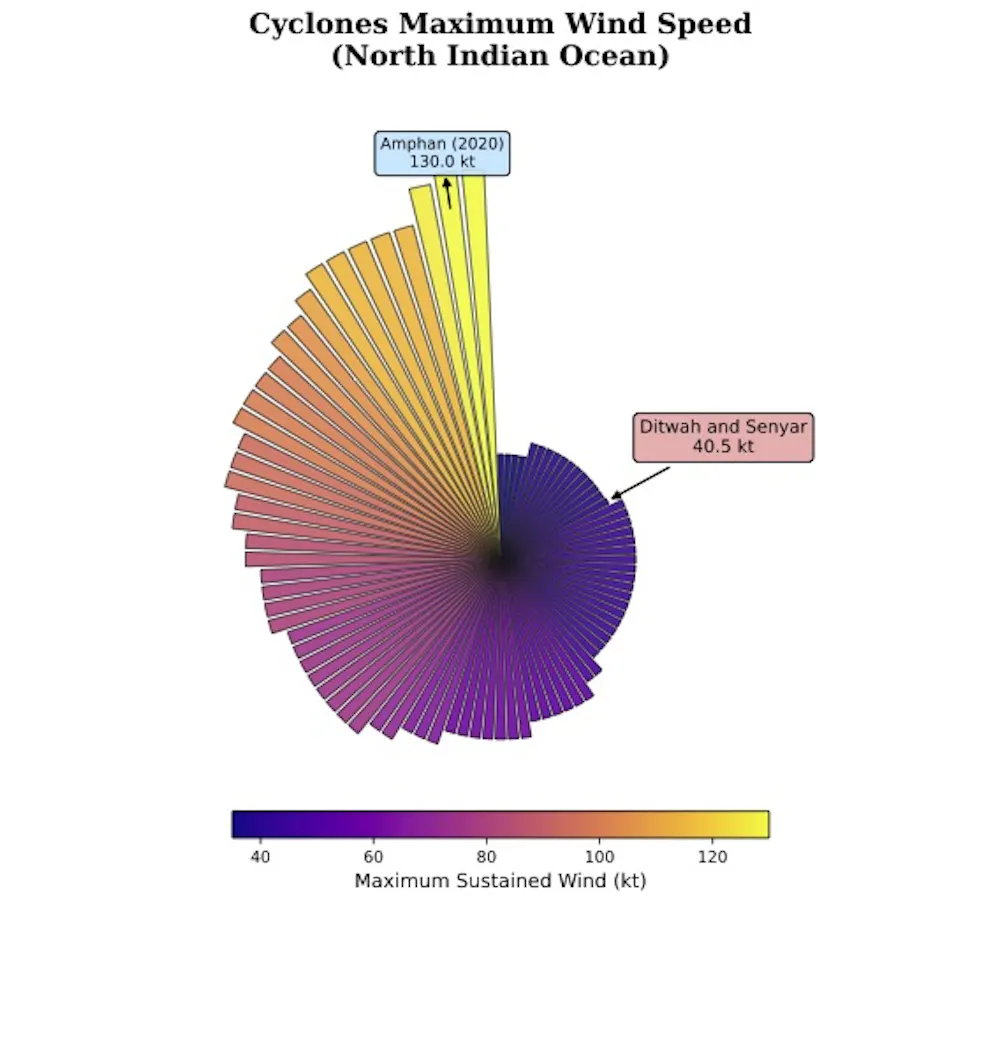
    One emerging explanation is that these storms were not dangerous because of their winds, but because they produced unusually intense rainfall.
    Graph of wind speeds
    This graph of all cyclonic storms over the north Indian Ocean since 2001 shows Ditwah and Senyar weren’t particularly windy. (Wind speed measured in knots. 1 knot is about 1.15 mph or 1.85 kph) Ligin Joseph (data: IBTrACS), CC BY-SA

    Consider Cyclone Ditwah. Its peak winds were around 75 km/h (47 mph). That’s windy, but nothing special. In the UK, it would be classified merely as a “gale” rather than a “storm”. It was far weaker than the 220 km/h winds of the powerful 1978 cyclone that also struck Sri Lanka. Yet Ditwah still caused massive devastation.

    What explains this apparent contradiction? It’s too early to say definitively, but climate change is likely a part of the story. Even when storms are not especially strong in wind terms, the amount of rain they carry is increasing.

    A warmer atmosphere holds more water

    A well established meteorological rule helps explain why. For every degree of global warming, the atmosphere can hold about 7% more moisture.

    As the planet warms, the air above us becomes a larger reservoir, waiting to dump more water on us. When storms form, they can tap into this expanded supply, often in extremely short bursts. Even if wind speeds are modest, the rainfall alone can be catastrophic.

    The oceans matter even more

    Warming oceans play an even more powerful role, as cyclones draw their energy from warm ocean waters. Satellite data from late November shows just how warm the eastern Indian Ocean was, with large areas more than 1°C above normal during Ditwah and Senyar.

    Coloured map of Indian Ocean and SE Asian seas
    In the days before the cyclones formed (20–24 November), the oceans were even warmer than usual, creating conditions that could have fuelled and intensified the rainfall. Ligin Joseph (Data: OISST; track positions are approximate), CC BY-SA

    Such warm anomalies are no longer unusual. The oceans have absorbed more than 90% of the excess heat trapped by greenhouse gases, and long-term observations show a clear upward trend in ocean temperatures.

    That doesn’t necessarily mean cyclones are becoming more frequent – their formation still depends on other ingredients, such as low wind shear (small differences in wind speed and direction with height) and the right atmospheric structure.

    What warmer oceans do change, however, is the amount of energy available to any storm that does manage to form. When the ocean is warmer, cyclones have more fuel and evaporation increases, loading the atmosphere with moisture that can fall as intense rain once a storm develops. Even weak cyclones can therefore hold exceptional amounts of rain.

    Coloured map of Indian Ocean and SE Asian seas
    Evaporation averaged for 26–27 November. Ditwah especially travelled over warm waters supplying large amounts of moisture to the atmosphere. Ligin Joseph (Data: ERA5), CC BY-SA

    The winds near the surface help this process along. As they move across the ocean, they sweep away the moisture-filled air just above the water and replace it with drier air, allowing evaporation to continue. Put together, warmer oceans, higher evaporation, and an atmosphere that can store more moisture, these factors can significantly intensify the rainfall associated with cyclones.

    Coastline hugging makes flooding worse

    Local geography amplified these effects. Both Ditwah and Senyar formed unusually close to land and travelled along the coastline for an extended period. This meant they stayed over warm waters long enough to continuously draw moisture, but remained close enough to land to dump that moisture as intense rainfall almost immediately.

    Cyclone Ditwah, in particular, moved slowly as it approached Sri Lanka. Slow-moving storms can be especially dangerous as they repeatedly dump rain over the same area. Even if winds are weak, this combination of warm seas, coastal proximity and slow forward speed can be devastating.

    A new threat

    These storms suggest that climate change – especially ocean warming – is reshaping the risks posed by cyclones. The most dangerous storms may no longer simply be the ones with the strongest winds, but also the ones with the most moisture.

    Forecasting systems, including new AI-powered weather models, are getting better at predicting cyclone tracks and wind speeds. Yet rainfall-driven flooding remains far harder to forecast. As oceans continue to warm, governments and disaster agencies will need to prepare for storms that may be weak in wind but extreme in rain.

    These insights are based on preliminary analysis and emerging scientific understanding. More detailed peer-reviewed studies will be needed to pinpoint exactly why Ditwah and Senyar produced such extreme rainfall. But the pattern that is emerging – weak cyclones delivering outsized floods in a warming world – must not be ignored.

    Ligin Joseph, PhD Candidate, Oceanography, University of Southampton

    This article is republished from The Conversation under a Creative Commons license. Read the original article.

    Donald Trump urges you to be a Climate Science denier like him. He says that he makes millions and millions for destroying the planet, Burn, Baby, Burn and Flood, Baby, Flood.
    Donald Trump urges you to be a Climate Science denier like him. He says that he makes millions and millions for destroying the planet, Burn, Baby, Burn and Flood, Baby, Flood.
    Nigel Farage urges you to ignore facts and reality and be a climate science denier like him and his Deputy Richard Tice. He says that Reform UK has received £Millions and £Millions from the fossil fuel industry to promote climate denial and destroy the planet.
    Nigel Farage urges you to ignore facts and reality and be a climate science denier like him and his Deputy Richard Tice. He says that Reform UK has received £Millions and £Millions from the fossil fuel industry to promote climate denial and destroy the planet.
  • Has Reform Hit Their Polling Ceiling?

    Spread the love

    Suggest you skip over the adverts in there …

  • UN Experts Say Those Ordering and Carrying Out US Boat Strikes Should Be ‘Prosecuted for Homicide’

    Spread the love

    Original article by Julia Conley republished from Common Dreams under Creative Commons (CC BY-NC-ND 3.0).

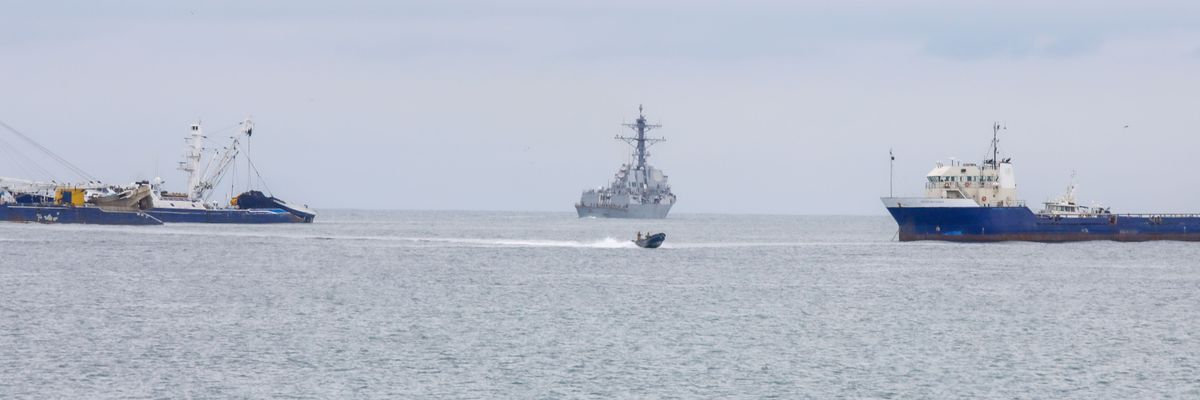
    A small boat is seen near the USS Sampson, a US Navy missile destroyer, off the coast of Panama City, Panama, on September 2, 2025. 
    (Photo by Daniel Gonzalez/Anadolu via Getty Images)

    “US military attacks on alleged drug traffickers at sea,” said two human rights experts, “are grave violations of the right to life and the international law of the sea.”

    Two United Nations rights experts warned that in numerous ways in recent weeks, the Trump administration’s escalation toward Venezuela has violated international law—most recently when President Donald Trump said he had ordered the South American country’s airspace closed following a military buildup in the Caribbean Sea.

    But the two officials, independent expert on democratic and international order George Katrougalos and Ben Saul, the UN special rapporteur on protecting human rights while countering terrorism, reserved their strongest condemnation and warning to the US for the administration’s repeated bombings of boats in the Caribbean and the Pacific, which have targeted at least 22 boats and killed 83 people since September as the White House has claimed without evidence it is combating drug traffickers.

    RECOMMENDED…

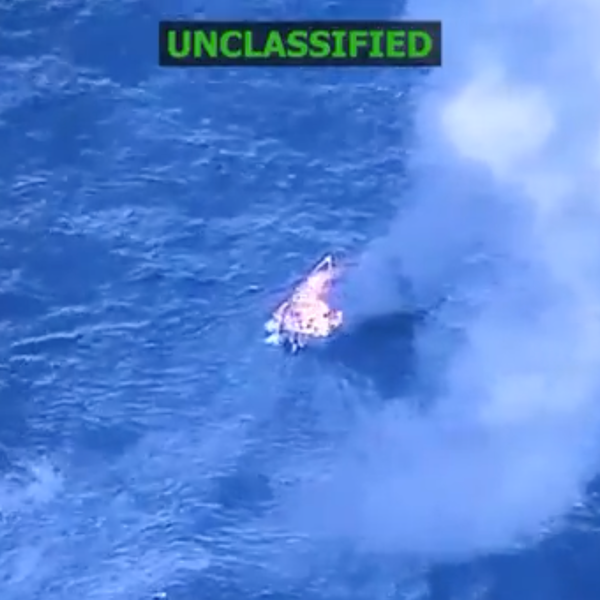
    Bombed boat

    Second US Strike on Boat Attack Survivors Was Illegal—But Experts Stress That the Rest Were, Too

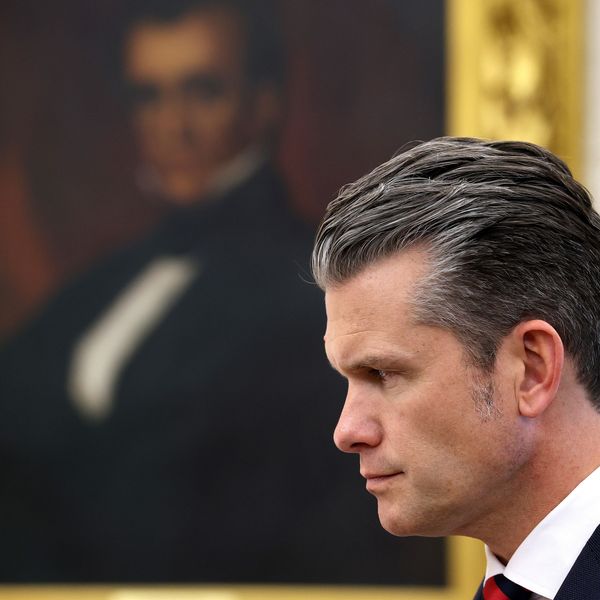
    Pete Hegseth

    Legal Experts Accuse Hegseth of ‘War Crimes, Murder, or Both’ After New Reporting on Boat Strike Order

    The strikes, said Katrougalos and Saul, “are grave violations of the right to life and the international law of the sea. Those involved in ordering and carrying out these extrajudicial killings must be investigated and prosecuted for homicide.”

    Human rights advocates have warned for months that the strikes are extrajudicial killings. Trump has claimed the US is in an “armed conflict” with drug cartels in Venezuela—even though the country is not significantly involved in drug trafficking—but Congress has not authorized any military action in the Caribbean.

    Typically, the US has approached drug trafficking in the region as a criminal issue, with the Coast Guard and other agencies intercepting boats suspected of carrying illegal substances, arresting those on board, and ensuring they receive due process in accordance with the Constitution.

    The Trump administration instead has bombed the boats, with the first operation on September 2 recently the subject of particular concern due to reports that Defense Secretary Pete Hegseth issued an order for military officers to “kill everybody” on board a vessel, leading a commander to direct a second “double-tap” strike to kill two survivors of the initial blast.

    Hegseth and Trump have sought to shift responsibility for the second strike onto Adm. Frank “Mitch” Bradley, the commander who oversaw the attack under Hegseth’s orders. Bradley was scheduled to brief lawmakers Thursday on the incident.

    The White House has maintained Bradley had the authority to kill the survivors of the strike and to carry out all the other bombings of boats, even as reporting on the identities of the victims has shown the US has killed civilians including an out-of-work bus driver and a fisherman, and the family of one Colombian man killed in a strike filed a formal complaint accusing Hegseth himself of murder.

    The UN experts suggested that everyone involved in ordering the nearly two dozen boat strikes, from Trump and Hegseth to any of the service members who have helped carry out the operations, should be investigated for alleged murder.

    After Hegseth defended the September 2 strike earlier this week, Saul emphasized in a social media post that contrary to the defense secretary’s rhetoric about how the boat attacks are “protecting” Americans, he is carrying out “state murder of civilians in peacetime, like executing alleged drug traffickers on the streets of New York or DC.”

    As Common Dreams reported last month, a top military lawyer advised the White House against beginning the boat bombings weeks before the September 2 attack, saying they could expose service members involved in the strikes to legal challenges.

    Katrougalos and Saul urged the administration to “refrain from actions that could further aggravate the situation and ensure that any measures taken fully comply with the UN Charter, the Chicago Convention, and relevant rules of customary international law.”

    They also emphasized that Trump had no authority to declare that Venezuela’s airspace was closed last week—an action that many experts feared could portend imminent US strikes in the South American country.

    “International law is clear: States have complete and exclusive sovereignty over the airspace above their territory. Any measures that seek to regulate, restrict, or ‘close’ another state’s airspace are in blatant violation of the Chicago Convention,” said the experts. “Unilateral measures that interfere with a state’s territorial domain, including its airspace, risk fully undermining the stability of the region and are seriously undermining Venezuela’s economy.”

    Saul and Katrougalos further called on the White House not to repeat “the long history of external interventions in Latin America.”

    “Respect for sovereignty, nonintervention, and the peaceful settlement of disputes,” they said, “are essential to preserving international stability and preventing further deterioration of the situation.”

    Original article by Julia Conley republished from Common Dreams under Creative Commons (CC BY-NC-ND 3.0).

    Orcas discuss Donald Trump and the killer apes' concept of democracy. Front Orca warns that Trump is crashing his country's economy and that everything he does he does for the fantastically wealthy.
    Orcas discuss Donald Trump and the killer apes’ concept of democracy. Front Orca warns that Trump is crashing his country’s economy and that everything he does he does for the fantastically wealthy.
    Donald Fuhrump says that Amerikkka doesn't bother with crimes or charges anymore, not being 100% Amerikkkan and opposing his real estate intentions is enough.
    Donald Fuhrump says that Amerikkka doesn’t bother with crimes or charges anymore, not being 100% Amerikkkan and opposing his real estate intentions is enough.

  • Top Dem Says Video of Military ‘Attacking Shipwrecked Sailors’ Among ‘Most Troubling Things’ He Has Ever Seen

    Spread the love

    Original article by Brad Reed republished from Common Dreams under Creative Commons (CC BY-NC-ND 3.0).

    US Rep. Jim Himes (D-Conn.) speaks to members of the press after a briefing at the US Capitol on February 14, 2024 in Washington, DC. 
    (Photo by Alex Wong/Getty Images)

    “Two individuals in clear distress, without any means of locomotion, with a destroyed vessel, were killed by the United States.”

    US Rep. Jim Himes, the ranking member of the House Permanent Select Committee on Intelligence, expressed horror on Thursday after watching a video of the September 2 double-tap strike on a suspected drug trafficking vessel off the coast of Trinidad and Tobago.

    Speaking to reporters after a briefing on the strike delivered by Adm. Frank Bradley, Himes (D-Conn.) called the video he saw of the attack “one of the most troubling things I’ve seen in my time in public service.”

    Himes proceeded to describe the video, which showed the US military firing missiles at two men who had survived an initial attack on their vessel and who were floating in the water while clinging to debris.

    “You have two individuals in clear distress, without any means of locomotion, with a destroyed vessel, [who] were killed by the United States,” he said.

    Himes then started to walk away before a reporter asked him to describe more of what he saw in the video. The Connecticut Democrat then said the video showed a clear “impermissible action,” according to the laws of armed conflict.

    “Any American who sees the video that I saw will see its military attacking shipwrecked sailors,” he said. “Now, there’s a whole set of contextual items that the admiral explained. Yes, they were carrying drugs. They were not in position to continue their mission in any way… People will someday see this video and they will see that that video shows, if you don’t have the broader context, an attack on shipwrecked sailors.”

    Himes finished his talk with reporters by saying that Bradley told lawmakers there had not been a “kill them all” or “no quarter” order given to him by higher-ups. Asked by a reporter if he thought the full video should be released to the public, Himes said, “I do.”

    Himes’ reaction to the video stood in stark contrast to the reaction of Sen. Tom Cotton (R-Ark.), the chairman of the Senate Intelligence Committee, who praised the military for its actions.

    According to HuffPost reporter Jen Bendery, Cotton described the strikes on the two survivors as “righteous strikes” that were “entirely lawful.”

    Cotton also claimed that the video showed “two survivors trying to flip a boat, loaded with drugs, bound for the United States, back over, so they could stay in the fight.”

    Reports from the US government and the United Nations have not identified Venezuela as a significant source of drugs that enter the United States, and the country plays virtually no role in the trafficking of fentanyl, the primary cause of drug overdoses in the US.

    Additionally, many legal scholars have said that a strike on the two men who survived the initial attack on the boat is very likely either an act of murder or a war crime, regardless of whether they were intending to traffic illegal drugs in the US.

    Original article by Brad Reed republished from Common Dreams under Creative Commons (CC BY-NC-ND 3.0).

    Donald Fuhrump says that Amerikkka doesn't bother with crimes or charges anymore, not being 100% Amerikkkan and opposing his real estate intentions is enough.
    Donald Fuhrump says that Amerikkka doesn’t bother with crimes or charges anymore, not being 100% Amerikkkan and opposing his real estate intentions is enough.
  • Global System ‘Rigged for the Wealthy’ Delivers World With ‘More Billionaires Than Ever’

    Spread the love

    Original article by Jon Queally republished from Common Dreams under Creative Commons (CC BY-NC-ND 3.0).

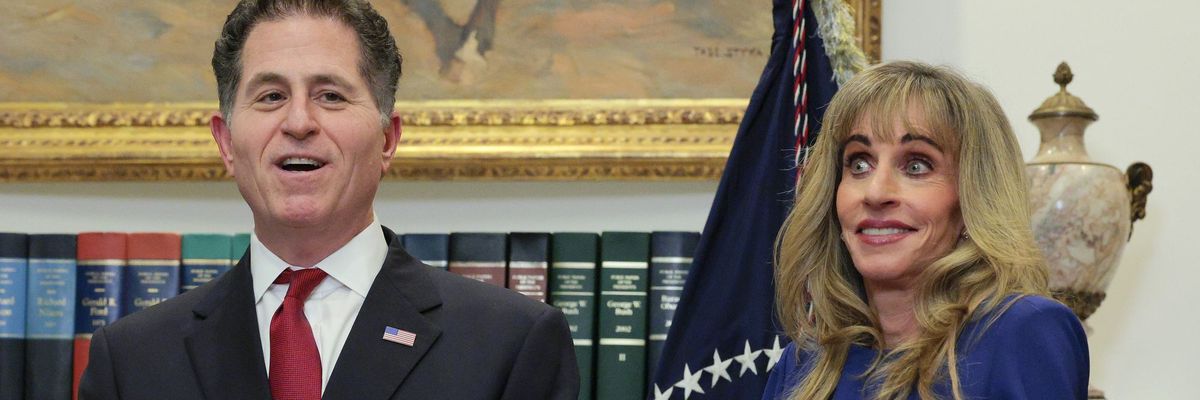
    Tech billionaires Susan Dell and Michael Dell speak as US President Donald Trump makes an announcement about “Trump accounts” in the Roosevelt Room at the White House on December 02, 2025 in Washington, DC. (Photo by Chip Somodevilla/Getty Images)

    New annual report on “ambitions” of billionaires by wealth management giant UBS shows just 2,919 individuals have a combined wealth of $15.8 trillion.

    A new assessment by the international wealth management giant UBS this week shows that the number of billionaires in the world has reached new heights and that the acceleration of inherited wealth represents a new chapter for the ultra-rich in the 21st Century.

    The latest UBS Billionaire Ambitions Report, unveiled Thursday, details how just 2,919 individual billionaires have a combined wealth of $15.8 trillion. The number of billionaires in the world is up nearly 9 percent from the previous year. In the United States—where nearly a third of those on the list reside—924 billionaires hold a collective $6.9 trillion in wealth.

    The assessment by UBS—which surveyed its own billionaire clients as part of the survey, now its eleventh edition—emphasizes a surge of inherited wealth among the billionaire class. According to the report:

    In 2025, 91 heirs (64 of them male and 27 female) inherited a record USD 297.8 billion. That’s 36% more than in 2024, despite fewer people inheriting overall. Globally, inheritance bolstered the number of multigenerational billionaires, with some 860 multi-generational billionaires now overseeing total assets of USD 4.7 trillion. That’s up from 805 with USD 4.2 trillion in 2024.

    Across the world, multi-generational billionaires are slowly extending down the generations, with the number of second-generation billionaires growing by 4.6% in the 2025 report, the number of third generation
    by 12.3%, and the number of fourth generation and beyond by 10%.

    The growing number of billionaires, including a rapidly increasing share who inherited their wealth rather than generating it themselves, says UBS, “heralds a new era” for the ultra-rich as “the great wealth transfer is intensifying as heirs inherit more than ever before.

    The coming decades, the report notes, “will see growing numbers of billionaires and centi-millionaires as the Great Wealth Transfer continues to accelerate. Billionaires are estimated to transfer approximately USD 6.9 trillion of wealth globally by 2040, with at least USD 5.9 trillion set to be passed to children—either directly or indirectly through spouses.”

    Of the $6.9 trillion currently held by US billionaires, the report estimates that $2.8 trillion of that wealth will be passed down to heirs over the next 15 years.

    “The world has more billionaires than ever because of a system that’s broken for workers and rigged for the wealthy and CEOs who already make 285 times what workers do,” said the AFL-CIO in response to the report.

    The union federation says that organized workers winning better collective bargaining is the first step needed to “level the playing field” for working people, while others see the surging fortunes of the ultra-wealthy as just more evidence that taxing the rich must remain at the top of the economic and political agenda both at the national level and internationally.

    With the UBS report showing that 91 of the new billionaires created this year arrived at their financial status through inheritance, Hal Singer, economics professor at the University of Utah, said, “That’s 91 additional reasons for a wealth tax.”

    Original article by Jon Queally republished from Common Dreams under Creative Commons (CC BY-NC-ND 3.0).

    Orcas discuss Donald Trump and the killer apes' concept of democracy. Front Orca warns that Trump is crashing his country's economy and that everything he does he does for the fantastically wealthy.
    Orcas discuss Donald Trump and the killer apes’ concept of democracy. Front Orca warns that Trump is crashing his country’s economy and that everything he does he does for the fantastically wealthy.