These measures will not affect current claimants, but they will impact those applying for the first time from next year, and anyone who comes off the benefit and then later reapplies for it or whose circumstances change
Hundreds of thousands of people with health conditions could miss out on financial support after the chancellor confirmed plans to tighten the disability benefits system.
This is an assessment which people with health conditions and disabilities undergo to determine their capability for work and if they will get an extra amount of universal credit.
…
Previous figures from the Department for Work and Pensions (DWP) showed that 457,000 people will face lower benefits or higher work search conditions by 2028/2029 as a result of the reforms, which are expected to save the government around £3bn.
Disability charities have called the plans “devastating”. Richard Kramer, chief executive of Sense, said: “The government’s decision today is deeply disturbing for disabled people. They have chosen to continue the previous government’s harmful plans to reduce access to benefits.
“This risks undermining the wellbeing of disabled people, and the consequences could be devastating. Disabled households are living in crisis, their current welfare benefits barely cover the essentials and spiralling food and energy costs have pushed many into debt and despair.
“But instead of choosing to give disabled people proper financial support and beginning to transform lives, the government has played into the dangerous narrative that disabled people should be forced to work and tightened the work capability assessment. They did this knowing that not all disabled people can work.”
The DWP previously confirmed that the reforms will cut the number of people due to be put onto the highest tier of incapacity benefits by more than 424,000 people, equating to a loss of almost £400 every month per person.
“This contemptible measure is purely about saving money at disabled people’s expense. It will force still more disabled people into poverty,” Kramer said. “We are demanding that this dismal decision is urgently reversed. We need the government to realise that benefits are a lifeline and disabled people need more financial support not less.
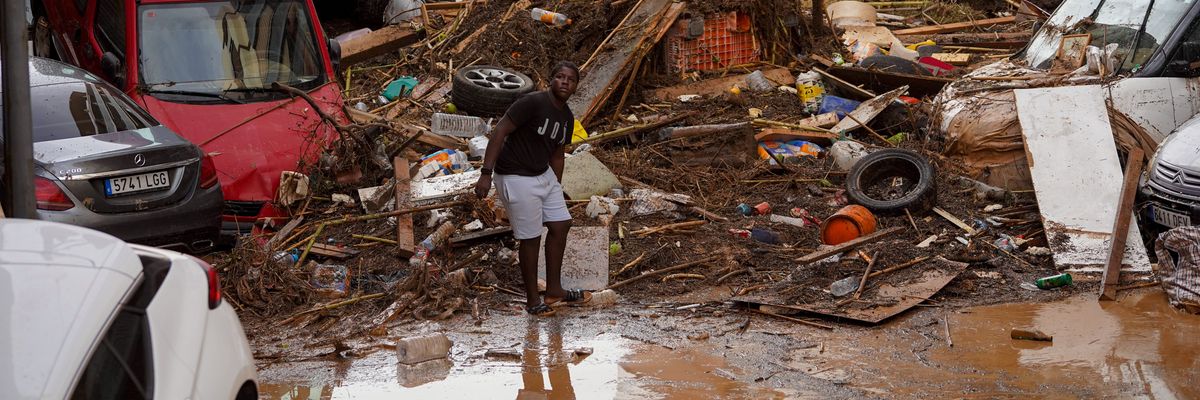
A view of the damaged area after a deluge brought up to 200 liters of rain per square meter (50 gallons per square yard) in hours in towns across the region of Valencia, Spain on October 30, 2024. (Photo: Alex Juarez/Anadolu via Getty Images)
“These disasters are only getting worse, and stopping the industries and systems driving climate collapse is the only rational response,” one climate group said.
Spain’s deadliest flooding in 30 years killed at least 72 people as torrential rain slammed the eastern region of Valencia on Tuesday, with some towns recording a year’s worth of rain in a single day.
The flooding sent churning muddy water down narrow streets, tossing cars, downing trees, bulldozing bridges and buildings, and trapping people in rising flood waters.
“The neighborhood is destroyed, all the cars are on top of each other, it’s literally smashed up,” Christian Viena, who owns a bar in Valencia’s Barrio de la Torre, told The Associated Press. “Everything is a total wreck, everything is ready to be thrown away. The mud is almost 30 centimeters (11 inches) deep.”
As of Wednesday morning, officials reported 70 deaths in Valencia and two in the bordering region of Castilla La Mancha. However, the death toll could rise as search and rescue operations continue amid difficult conditions, such as power outages and blocked roadways. Many people remain missing with their fates uncertain.
This includes residents of Utiel in Valencia, whose mayor, Ricardo Gabaldón, told Spanish broadcaster RTVE that Tuesday was the “worst day of my life.”
“We were trapped like rats,” Gabaldón said. “Cars and trash containers were flowing down the streets. The water was rising to 3 meters (9.8 feet).”
One person who was rescued was Denis Hlavaty, who spent the night perched on the edge of the roof of a gas station where he works.
“It’s a river that came through,” Hlavaty told Reuters, adding, “The doors were torn away and I spent the night there, surrounded by water that was 2 metres (6.5-feet) deep.”
“The fossil fuel industry increases the climate emergency, destroys the balance of critical ecosystems, and puts people’s lives in danger.”
The storm also canceled high-speed rail travel between Valencia and Madrid and Barcelona, and derailed one high-speed train near Malaga, though no one was injured.
While the rains had tapered off in Valencia by Wednesday morning, the rest of the country is not out of danger, as the storm is projected to move northeast.
“We mustn’t let our guard down because the weather front is still wreaking havoc and we can’t say that this devastating episode is over,” Spanish Prime Minister Pedro Sánchez told the nation on television Wednesday.
Even if the death toll does not rise, Tuesday’s floods are already the deadliest in Spain since 1996, when a flood near the Pyrenees killed 87. They are also the deadliest in Europe since floods in 2021 that killed at least 185.
In the immediate term, Tuesday’s deluge was caused by a phenomenon called a gota fría, or “cold drop,” a storm formed as cold air moves over the warm Mediterranean. In Spain, these kinds of storms are also commonly referred to with the acronym DANA—for Depresión Aislada en Niveles Altos, or isolated high-level depression.
However, scientists observe that the climate crisis is making rainstorms like this one more extreme, as warmer air can hold more moisture to dump when conditions are right. For Europe specifically, the warming of the Mediterranean causes more water to evaporate from its surface, super-charging rainstorms.
“Events of this type, which used to occur many decades apart, are now becoming more frequent and their destructive capacity is greater,” Ernesto Rodriguez Camino, senior state meteorologist and a member of the Spanish Meteorological Association, told Reuters.
The Spanish flooding comes a little more than a month after record rainfall swamped Central Europe and Eastern Europe, in an event that scientists concluded was made approximately twice as likely and 7% more severe by the climate crisis fueled primarily by the burning of fossil fuels.
“When we talk about climate change and climate emergency, it’s often perceived as an abstract concept far from our daily reality,” Eva Saldaña, the executive director of Greenpeace Spain, said in a statement. “Unfortunately, this is climate change: the intensification of extreme weather phenomenons like what happened tonight, with the level of destruction greater each time. Ignoring it causes deaths that we cannot allow.”
In a post on social media, Greenpeace Spain said that fossil fuel companies including the Spanish Repsol should pay for the damages.
“DANAS are more intense every time due to climate change,” the group wrote. “The fossil fuel industry increases the climate emergency, destroys the balance of critical ecosystems, and puts people’s lives in danger.”
⛈️Las DANAS son cada vez más intensas por el cambio climático. La industria fósil aumenta la emergencia climática, destruye el equilibrio de ecosistemas críticos del planeta y pone en peligro la vida de las personas.
Extinction Rebellion Global agreed. “These disasters are only getting worse, and stopping the industries and systems driving climate collapse is the only rational response,” the group wrote on social media.
The U.S.-based Climate Defiance, meanwhile, shared images of flood-ravaged streets with dismissals often leveled at climate activists.
Yellow Dot Studios, Don’t Look Up director Adam McKay’s climate-focused media studio, also shared an image of cars dropped in piles in the street by the flood waters to call out the double-standard in how direct-action climate protests and the corporate crimes of the fossil fuel industry are punished.
Friends of the Earth Spain focused on the human impacts, arguing that urgent climate action meant “putting people’s lives, and not economic models, at the center.”
“Don’t prioritize sending people to work in extreme and dangerous conditions,” the group wrote. “It is a priority to take effective, ambitious, and urgent measures in response to the climate crisis we are living through.”
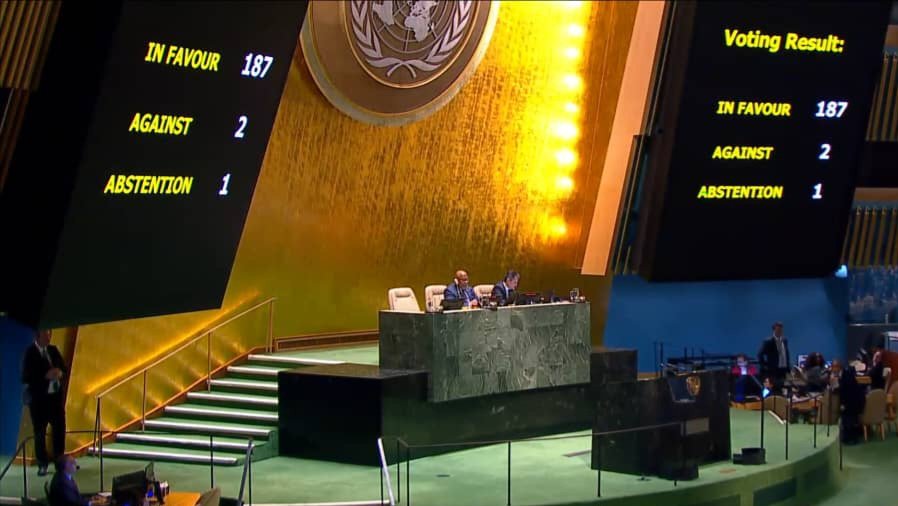
In 2023, 187 nations voted in favor of lifting the US blockade against Cuba (Photo: Bruno Rodríguez Padilla via X)
The US blockade on Cuba has been widely condemned by the majority of the world, yet in recent years, instead of lifting it, successive US administrations have made it worse.
On October 29, the United Nations General Assembly began a series of debates to discuss the resolution on the long-standing economic blockade applied by the United States against the island of Cuba. Since the 1960s, the United States has systematically punished the Cuban people through a stringent blockade on its economy for having declared and built a political and economic model different from the one advocated and directed by the United States. The vote on the resolution will take place on Wednesday, October 30.
On more than 30 occasions, the United Nations Assembly has discussed the blockade against Cuba, which costs the island 5 billion dollars annually, according to some estimates. Every year the resolution is proposed and the whole world, through the vote of the absolute majority of the member countries of the United Nations General Assembly, has condemned the imperialist attitude of the United States towards Cuba.
This year, several regional platforms including, the Community of Latin American and Caribbean States (CELAC), the Association of Southeast Asian Nations, the Organization of Islamic Cooperation (OIC), the Non-Aligned Movement (NAM), the Caribbean Community (CARICOM), among others, announced their support for Cuba at the United Nations General Assembly in the face of the criminal blockade.
In this regard, the Russian delegate Vasily Alekseyevich Nebenzya said at the UN Assembly on Tuesday, “We continue to strongly advocate for the immediate lifting of the illegal embargo that has been imposed by the United States against Cuba for more than 62 years.”
The Mexican representative to the UN, Héctor Vasconcelos, stated in the session that he categorically rejects the blockade against Cuba and that it is in direct violation of international law. “It is time to open a new chapter and allow Cuba to participate fully in the global community without the restrictions imposed by this unjust and inhumane blockade,” Vasconcelos declared.
Almost all countries, except the United States, Israel, and one or two other governments allied with Washington’s policy, vote against the blockade and request the elimination of the sanctions against the socialist country. This, for many, reflects the anti-democratic attitude of the US government, which claims to represent the highest values of human rights and global cooperation, although, in this type of case, it scandalously ignores the demands of the vast majority of countries in the world.
For his part, the Cuban Secretary of State, Bruno Rodríguez, expressed his gratitude for the support given on October 29 by more than 30 delegations that expressed their desire for the United States to lift the blockade against Cuba: “We are grateful for the statements made by the 31 delegations that took the floor at the United Nations General Assembly, demanding the end of the US blockade against Cuba. Tomorrow [October 30] we will continue the debate and the vote against this genocidal policy will take place.”
The blockade tightens
Despite this enormous show of support for Cuba, the United States insists on the economic measure. It has even gone so far as to radicalize it, as happened during the administration of Donald Trump, who applied 243 new sanctions, including the removal of certain travel categories which allowed individual US citizens to visit the island, and included Cuba in the list of state sponsors of terrorism, which further hindered the development of the Cuban economy.
Instead of reversing the measures of his predecessor and returning to the opening policy started by Barack Obama, Biden maintained the more stringent measures against Cuba. In 2023, the US Department of Homeland Security added an additional coercive measure, stating that the ESTA visa waiver program, used largely by citizens of Europe, would be denied to anyone from eligible countries if they had traveled to Cuba anytime after July 2021. In essence, a direct punishment to anyone, even beyond US borders, who dares to visit the Caribbean nation.
A history of systematic political-economic punishment
The first time the US government applied an economic embargo on Cuba was in 1958, during the dictatorship of Fulgencio Batista. Although the Cuban Revolution overthrew that military government, the US government punished the Caribbean Island again in 1960.
In the beginning, the restrictions did not include food and medicine, but from 1962, during the radicalization of the Cuban Revolution, the embargo became almost absolute. Cuba’s natural and historical trading partner, both because of its large territorial extension and its purchasing power, had been the United States.
In 1959, 73% of Cuban exports were destined for the United States, which shows the enormous impact that the decision had on the island, aimed at promoting the fall of the government led by Fidel Castro. Nevertheless, the USSR and Cuba reached several economic agreements that allowed the island to somehow withstand (never easily) the portentous US punishment.
However, after the dissolution of the USSR, the blockade began to acquire increasingly challenging characteristics. This is even more so if one takes into account that since 1992, through the Cuban Democracy Act, the US government has not only prohibited US companies from trading with Cuba but also sanctioned any third party that does business with Cuba.
This makes any attempt to overcome the economic crisis induced by outside powers even more difficult. In addition, the US government in 2021 decided, without adequate technical justification, to include Cuba among the countries sponsoring terrorism.
It is foreseeable that Cuba will again feel the backing of international solidarity in the coming days, although the US government will ignore the request of the international community and continue to punish a small country that did not accept to be dominated and undertook a socialist revolution just a couple hundred miles south of the most powerful capitalist country in history.
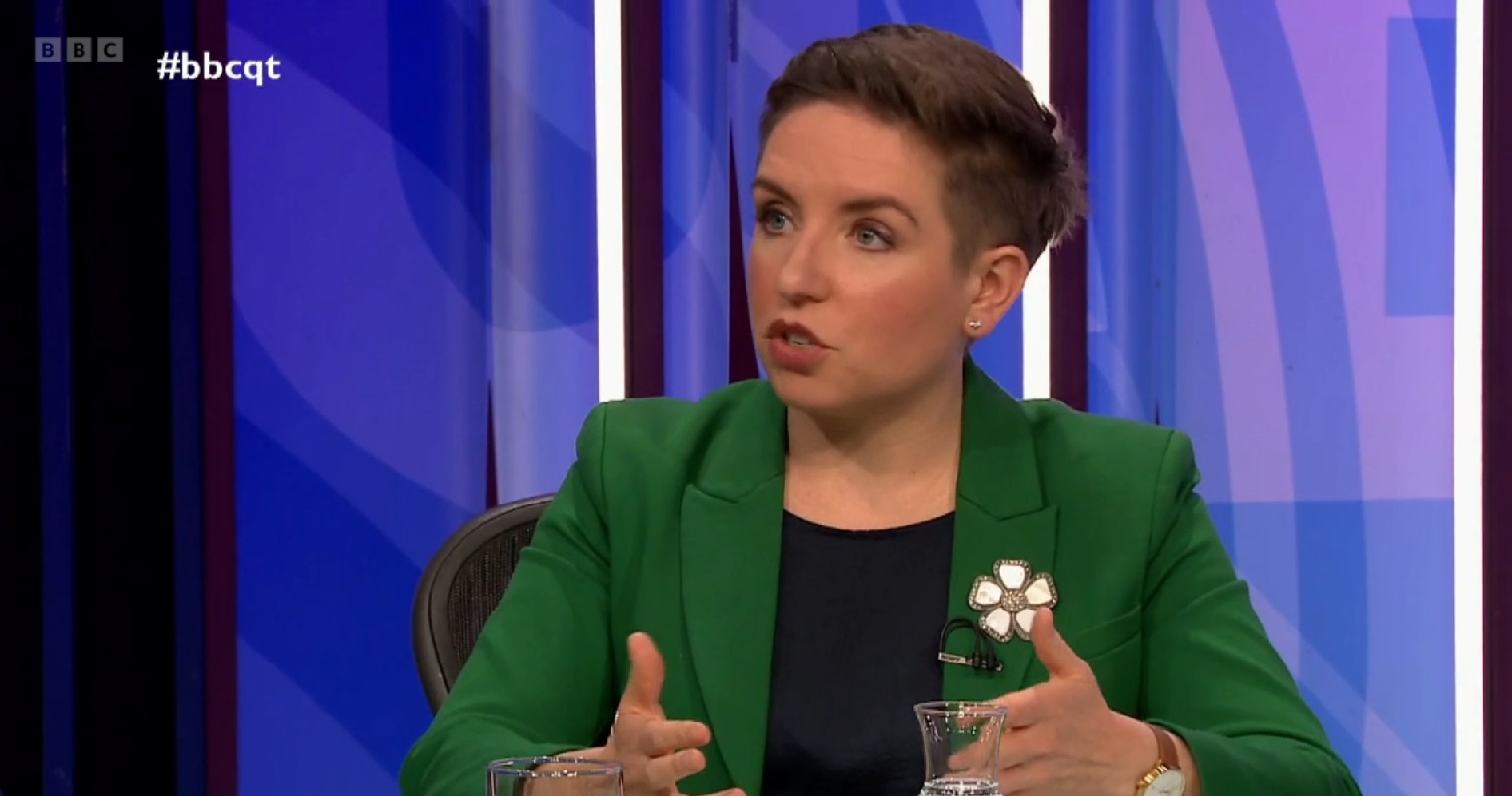
Image of the Green Party’s Carla Denyer on BBC Question Time.
Responding to the news that a new independent commission will soon launch the largest review of the water industry since privatisation in the 1980s, Green Party Co-Leader, Carla Denyer said,
“Water is a basic human need. It should be in public hands run for people, not profit. I don’t know why Labour won’t even consider this.”
Original article by Brett Wilkins republished from Common Dreams under Creative Commons (CC BY-NC-ND 3.0).
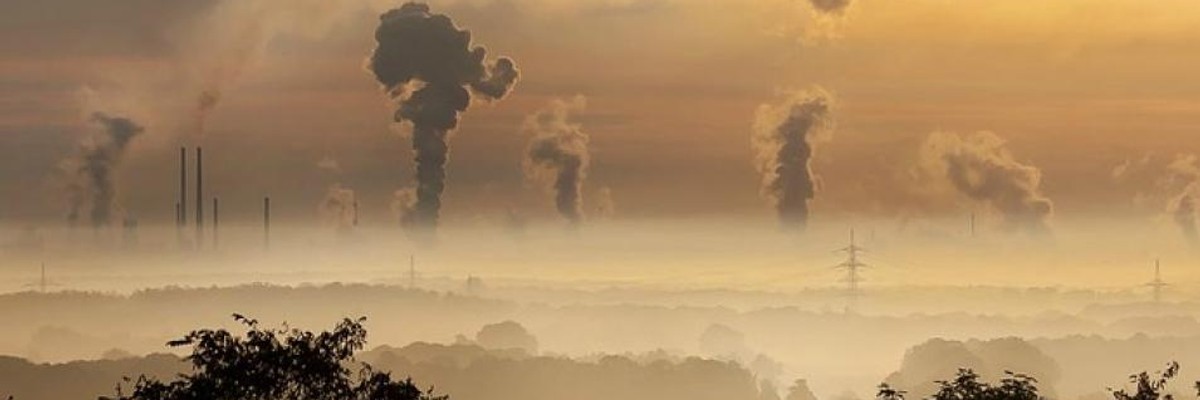
Carbon emissions and haze are seen near factories and a power plant. (Photo: Pixabay/Creative Commons)
“Closing the emissions gap means closing the ambition gap, the implementation gap, and the finance gap,” said U.N. Secretary-General António Guterres. “Starting at COP29.”
The world’s nations must commit to dramatically slashing greenhouse gas emissions in the near future or risk a “catastrophic” rise in global average temperatures, a key United Nations climate report published Thursday warned.
“It is still technically possible to meet the 1.5°C goal” set out in the Paris agreement, “but only with a G20-led massive global mobilization to cut all greenhouse gas emissions, starting today,” the United Nations Environmental Program (UNEP) said in a summary of its annual Emissions Gap Report.
“Nations must collectively commit to cutting 42% off annual greenhouse gas emissions by 2030 and 57% by 2035 in the next round of Nationally Determined Contributions (NDCs)—and back this up with rapid action—or the Paris agreement’s 1.5°C goal will be gone within a few years,” UNEP warned.
“Failure to increase ambition in these new NDCs and start delivering immediately would put the world on course for a temperature increase of 2.6-3.1°C over this century,” the agency said. “This would bring debilitating impacts to people, planet, and economies.”
New UNEP emissions gap report highlights a "massive gap between rhetoric and reality" and calls for a "quantum leap" in ambition to deliver Paris goals, as the world is way off-track today.
UNEP said “solar, wind, and forests” have the potential to help the world “get on a 1.5°C pathway.” However, “sufficiently strong NDCs would need to be backed urgently by a whole-of-government approach, measures that maximize socioeconomic and environmental co-benefits, enhanced international collaboration that includes reform of the global financial architecture, strong private sector action, and a minimum six-fold increase in mitigation investment.”
“G20 nations, particularly the largest-emitting members, would need to do the heavy lifting,” the agency added.
The task is daunting—according to the report, human emissions of greenhouse gases—CO2, methane, nitrous oxide, and fluorinated gases—reached a record 57.1bn tons of CO2 equivalent (GtCO2e) last year.
“The emissions gap is not an abstract notion,” U.N. Secretary-General António Guterres stressed in a video message on the UNEP report. “There is a direct link between increasing emissions and increasingly frequent and intense climate disasters.”
“Around the world, people are paying a terrible price,” he continued. “Record emissions mean record sea temperatures supercharging monster hurricanes; record heat is turning forests into tinder boxes and cities into saunas; record rains are resulting in biblical floods.”
“Today’s Emissions Gap report is clear: We’re playing with fire; but there can be no more playing for time,” Guterres added. “We’re out of time. Closing the emissions gap means closing the ambition gap, the implementation gap, and the finance gap. Starting at COP29.”
Annual greenhouse gas emissions reached an all-time high last year.
The U.N. chief was referring to the United Nations Climate Change Conference, which is set to take place next month in Baku, Azerbaijan—a nation that is “aggressively” expanding fossil fuel production.
UNEP Executive Director Inger Andersen said in a statement:
Climate crunch time is here. We need global mobilization on a scale and pace never seen before—starting right now, before the next round of climate pledges—or the 1.5°C goal will soon be dead and well below 2°C will take its place in the intensive care unit. I urge every nation: No more hot air, please. Use the upcoming COP29 talks in Baku, Azerbaijan, to increase action now, set the stage for stronger NDCs, and then go all-out to get on a 1.5°C pathway.
Even if the world overshoots 1.5°C—and the chances of this happening are increasing every day—we must keep striving for a net-zero, sustainable, and prosperous world. Every fraction of a degree avoided counts in terms of lives saved, economies protected, damages avoided, biodiversity conserved, and the ability to rapidly bring down any temperature overshoot.
Climate scientists and green groups expressed alarm over the UNEP report.
“The Emissions Gap Report is yet another clear warning about what needs to be done and fast,” Andreas Sieber, associate director of policy and campaigns at 350.org, said in a statement. “Last year at COP28, nations agreed to transition away from fossil fuels. The report makes it crystal clear that governments must translate this decision into action in their national climate pledges if they are serious about the just energy transition.”
Greenpeace International climate politics expert Tracy Carty said that “for 15 years, the UNEP has been sounding the alarm on the great chasm between political will for climate action and the worsening emissions trajectory fuelling rising temperatures.”
“These reports are a historical litany of negligence from the world’s leaders to tackle the climate crisis with the urgency it demands, but it’s not too late to take corrective action,” Carty continued. “We challenge leaders to embark on wholesale change in their 2035 climate plans, to come to COP29 prepared to finance climate action and to make up for lost time.”
The UNEP Emissions Gap Report 2024 is out, and it highlights the urgency for countries to raise their 2030 climate targets and act swiftly.
Rachel Cleetus, policy director and a lead economist in the Climate and Energy Program at the Union of Concerned Scientists, issued a statement arguing that the new UNEP report “forcefully confirms that nations’ efforts to cut heat-trapping emissions have been grossly insufficient to date.”
“Global heating records are being topped year after year, and people and ecosystems worldwide are suffering the devastation of unrelenting climate change disasters and increasingly irreversible impacts,” she noted. “To put it bluntly, decades of inadequate action have put the 1.5°C goal further out of reach and world leaders are failing their people. The consequences are profound—but the policy choices decided now are as crucial as ever to limit future harm.”
Cleetus continued:
The best way forward is to implement sweeping changes to the global energy system by phasing out the destructive products fossil fuel companies are peddling and investing big in renewable energy solutions to sharply curtail heat-trapping emissions. Also urgent are scaled-up investments in climate resilience to cope with impacts already locked in. Rich, high-emitting nations—including the United States—are most responsible for these calamitous circumstances. Those living in climate-vulnerable, low-income countries that contributed very little to the fossil fuel pollution driving this crisis need more than hollow words; they need wealthy countries and other major emitters to live up to their responsibilities.
“At the upcoming U.N. climate talks, wealthy nations must significantly grow the amount of climate financing available to ensure all countries can slash their global warming emissions and prepare for the more frequent and severe climate impacts that are the punishing consequence of a warming world,” Cleetus added.
Original article by Brett Wilkins republished from Common Dreams under Creative Commons (CC BY-NC-ND 3.0).