NHS news review

Spread the love

There seeems to be very little NHS news today. The news is instead dominated by the results of yesterday’s local and devolved assemblies elections and the vote on adopting the alternative vote voting system. I can’t say that I’m not pleased that the Liberal-Democrats did very poorly.
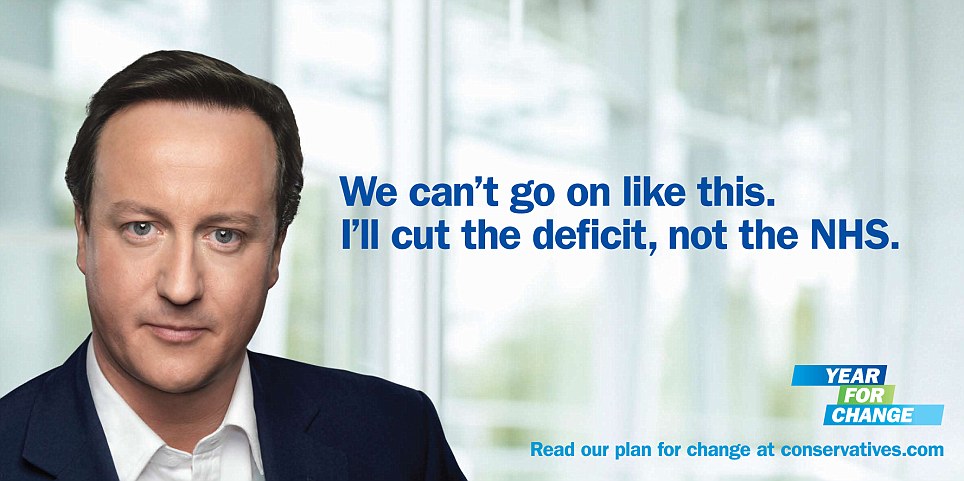
Conservative election poster 2010

A few recent news articles concerning the UK’s Conservative and Liberal-Democrat coalition government – the ConDem’s – brutal attack on the National Health Service.

Four in ten people cannot afford the dentist – Telegraph

Increased NHS charges and the rising cost of living have forced almost 40pc of people to skip routine visits to the dentist, according to new research.

Higher dental costs have meant that one in five people now pay for this treatment on credit card, potentially incurring interest charges – according to research from insurers Simplyhealth.

But avoiding check ups can prove to be a false economy. The British Dental Association (BDA) said those who cancel appointments and defer treatments often wind up needing emergency treatment which can result in bigger bill – particularly as they may then end up paying for private treatment.

The “free” NHS does not extend to dental charges. In England most adults can expect to pay up to £17 for treatments such as scaling and polishing; £47 for procedures such as fillings or extractions and £204 for crowns, bridges and dentures.

Those who don’t have access to an NHS dentist face even steeper charges, and with latest figures suggesting that one in seven NHS dentist’s lists is now closed to adults – and a further one in 10 refusing children – it is not hard to see why many people have little option but to pay expensive private dental fees.

Fat cats fail to convince over NHS / Britain / Home – Morning Star

Health activists accuse privateers of creating ‘PR puff’ over break-up

Campaigners accused private health companies today of creating “PR puff” to downplay plans to break up the NHS.

An alliance of five leading private health firms dubbed H5 accused unions of “scaremongering” over the shake-up of the NHS under the Health and Social Care Bill, which they stand to rake in massive profits from.

H5 chief executive Matt James said: “Unions have whipped up accusations of privatisation but that is not going to happen. I cannot see the amount of NHS work the private sector does increasing by that much.”

But he neglected to mention the full scale of increasing privatisation in the NHS already taking place, with Cambridgeshire’s Hinchingbrooke Hospital being the first NHS hospital set to be run by a private health firm, Circle.

The future of St Helens and Knowsley NHS Trust in Liverpool was also questioned after Health Minister Simon Burns failed to confirm whether the hospital rejected a government-proposed option for it to be privately managed.

POORLY children in North East Lincolnshire will suffer the most if a heart surgery unit at Leeds Royal Infirmary is forced to close as part of an NHS review, according to health bosses.

POORLY children in North East Lincolnshire will suffer the most if a heart surgery unit at Leeds Royal Infirmary is forced to close as part of an NHS review, according to health bosses.

If the unit closes, children will be forced to travel to Newcastle for treatment – putting local youngsters at the biggest disadvantage because of poor transport links.

Council health bosses claim consultants at the hospital have said the distance children are forced to travel for treatment is crucial and lives could be lost of the closure goes ahead.

It comes as staff at the unit revealed that 11 per cent of all the patients they treat come from the DN postcode area – which covers Grimsby, Cleethorpes, Barton, Barrow, Scunthorpe, Gainsborough and Doncaster.

As reported, the unit is being threatened with closure because of controversial NHS reforms, which will see the number of specialist heart units for children cut from 11 to six or seven.

A petition set up to demonstrate support for the Leeds unit currently has 31,000 signatures.


27/11/13 Having received a takedown notice from the Independent newspaper for a different posting, I have reviewed this article which links to an article at the Independent’s website in order to attempt to ensure conformance with copyright laws.

I consider this posting to comply with copyright laws since
a. Only a small portion of the original article has been quoted satisfying the fair use criteria, and / or
b. This posting satisfies the requirements of a derivative work.

Please be assured that this blog is a non-commercial blog (weblog) which does not feature advertising and has not ever produced any income.

dizzy
Continue ReadingNHS news review

NHS news review

Spread the love

A report by the Public Accounts Committee has generated a lot of news. The report raises concerns that there is no healthcare provision in the case of (financial) failure, that ‘reforms’ risk demanded ‘savings’ (cuts) and that they risk patient care. The British Medical Association (BMA) comments on the report.

Conservative election poster 2010

A few recent news articles concerning the UK’s Conservative and Liberal-Democrat coalition government – the ConDem’s – brutal attack on the National Health Service.

GPs ‘may exploit health reforms to boost pay’ – Health News, Health & Families – The Independent

GPs may demand more money before they agree to participate in the Government’s health reforms, ministers have been warned.

Under plans to alter the way the NHS is run, family doctors, many of whom are already earning over £100,000 a year, will be required to form “consortiums” to commission care for their patients.

But ministers have yet to reach agreement with the doctors’ union, the British Medical Association, on making the necessary changes to GPs’ contracts to allow the reforms to go ahead. NHS employers have warned this could cost the Government millions of pounds more in unbudgeted costs.

The last time the government renegotiated the GP contract in 2004, it cost £1.76 billion more than was predicted in its first three years while GP productivity fell. “The last time the government negotiated with the GPs it was quite a horrendous exercise,” said David Stout, deputy chief executive of the NHS Confederation.

“What you have to remember is the GPs are very good at negotiation and the Government’s problem is this: the legislation says that all GPs have to be in these new GP consortiums – but it is not in their contracts. Either the Government chooses to impose this on them or they have to renegotiate and that could be very tricky.”

Fears for NHS services if providers go bust | Society | The Guardian

MPs are demanding that the government urgently put in place plans to ensure vital health services continue if a hospital or other provider goes bust under its NHS reforms.

In a report published on Wednesday, the public accounts committee says the proposals for the NHS do not include details of what will happen if providers fail in the new market model of healthcare provision.

Members of the committee dismissed claims by the most senior civil servant in the Department of Health, Una O’Brien, that the government was “not planning for failure”, and condemned the lack of contingency planning, suggesting that the proposals now pose an intolerable risk to value for money and quality of services.

Richard Bacon, the Conservative MP for South Norfolk, said: “In any organisation as large and complex as the NHS, things can and do go wrong, and the Department of Health has yet to establish a robust framework for dealing with failure in the system. The department must not only understand the danger of either a provider or a commissioner going ‘belly up’, but also toughen up its contingency plans, drawing upon strong, effective and clear chains of governance and accountability throughout the new NHS model.”

NHS Restucturing At Time Of Financial Crisis Is Risky – British Medical Association Comment On PAC Report

In a report published on today, the Committee of Public Accounts has warned that the reorganisation of the NHS in England could “make the challenge of achieving savings for reinvestment even tougher.”

Commenting on the report, Dr Hamish Meldrum, Chairman of Council at the BMA, said:

“Having already been set the massive challenge of cutting costs by £20 billion, the NHS in England is now facing the most fundamental reorganisation in its history. The Public Accounts Committee is right to highlight the risks posed by such a massive restructuring at a time of financial crisis.

“However, it is not just the timing, but also the direction of travel of these reforms that will cause problems. We share the concerns of the PAC that the consequences of increasing competition in the NHS have not been fully addressed. ‘Market failures’ in healthcare have far more serious consequences than in other industries – and may have little connection with quality of care, or even patient demand.”

BBC News – ‘Radical’ NHS shake-up may jeopardise patient care

The planned shake-up of the NHS in England that will put GPs in charge of buying in services could risk patient care, warns a group of influential MPs.

The Public Accounts Committee says pushing through the changes while seeking £20bn in efficiency savings may damage front-line services.

The concerns follow those of others, including Deputy Prime Minister Nick Clegg’s close adviser Norman Lamb.

BBC News – Berkshire mental health beds move to be investigated

A council is to investigate a provisional decision by the NHS to leave east Berkshire without mental health in-patient services.

It would mean patients from Slough and Maidenhead having to travel up to 20 miles for beds at Reading’s purpose-built Prospect Park Hospital.

Three ideas were consulted on but the NHS trust said a plan to build a new facility in Slough was too expensive.

Slough council has set up a working group to look into the decision.

Berkshire Healthcare NHS Foundation Trust, which is trying to save £12m over the next three years, said it was working on a plan to put aside £100,000 a year for travel costs.

Permanent Revolution – MARCH TO SAVE THE NHS

Kill Lansley’s Bill

OUR HEALTH SERVICE NOT FOR SALE

Tuesday 17 May

5.30pm Assemble UCH Gower St

6pm March to Whitehall

Andrew Lansley’s Health and Social Care Bill threatens to break up our health service and hand it to private healthcare companies.

The Bill would open up the entire health service to the private sector and as private companies calculate how much profit is to be made, 50000 NHS jobs are being cut and front line services are under threat.

The government has now been forced to retreat in the face of a huge groundswell of nationwide opposition. Cameron and Clegg had to intervene to “pause, listen, reflect and improve” the plans, but it is clear they only plan minor cosmetic changes.

We have to seize this opportunity to step up public opposition to demand the Bill is dropped and to force the government to really listen. Our NHS is precious and these plans will destroy it. We appeal to everyone to join us on 17 May and to speak out against these threats in what ever way they can.


27/11/13 Having received a takedown notice from the Independent newspaper for a different posting, I have reviewed this article which links to an article at the Independent’s website in order to attempt to ensure conformance with copyright laws.

I consider this posting to comply with copyright laws since
a. Only a small portion of the original article has been quoted satisfying the fair use criteria, and / or
b. This posting satisfies the requirements of a derivative work.

Please be assured that this blog is a non-commercial blog (weblog) which does not feature advertising and has not ever produced any income.

dizzy

Continue ReadingNHS news review

The Plot Against the NHS #1

Spread the love
The plot against the NHS

Selected excerpts from ‘The Plot Against the NHS’ by Colin Leys and Stewart Player. Chapter One is available here. I highly recommend this book available from Merlin Press for £10.

I got my copy yesterday so I have yet to complete it. The book identifies intense lobbying by commercial interests resulting in the privatisation of ancilliary NHS services under Thatcher, covert privatisation of the NHS under Blair’s New Labour administration and Andrew Lansley’s overt privatisation under the current Conservative and Liberal-Democrat coalition government. It draws a picture of the private sector unable to compete with the NHS in terms of cost or quality and the private sector being given excessive, hugely favourable terms. Patricia Hewitt, Alan Milburn and John Reid are identified as covert privateers ‘marketers’ under the Blair administration.

p51

By late 2008 the crisis was at it’s height. Lehmann Brothers was history, Northern Rock had been nationalized along with Lloyds and the Royal Bank of Scotland, and the government’s debt was on course to reach 70 per cent of national income, up from around 40 per cent for most of the decade. In this situation it was obvious that public spending was going to suffer. How would this affect the NHS?

According to the Department of Health, the management consultants McKinsley (where Dr Dash was by now a partner in the company’s London office) were instructed in February 2009 ‘to provide advice on how commissioners might achieve world class NHS productivity to inform the second year of the world class commissioning assurance system and future commissioner development. The advice from McKinsley … was provided in March 2009.’ But the advice McKinsley gave actually tells a different story.

We don’t know what assumptions they were told to make but it looks as if they were told or at least encouraged to assume that NHS spending would remain constant for the next five years, and asked how productivity could be increased to cope with the rise in demand over that time. Their conclusion was that in order to find enough savings to meet the rising cost of providing health care over those years the NHS might have to shed ten per cent of it’s staff. When the press got  hold of the  report in September 2009 there was a furious reaction from the NHS workforce.

Health ministers then said that the report had been rejected, and even then it had been commissioned without their authority.

p54

In October 2010 the coalition government announced that it would continue to raise NHS spending in real terms (based on the general consumer price index) over the next four years – the figure actually claimed was an annual rise of 0.1 per cent. As a result most people outside the NHS assumed that the cuts would now stop. But the reality was different. For one thing, the NHS was told to transfer £2.1 billion to local authorities over the next five years as part of a drive to move patients out of hospitals and into more ‘cost-effective’ social or community care. So the NHS budget was actually being cut. And the NHS’s costs (for drugs, equipment, electricity, etc) would go on rising faster than the general cost of living, so that even if its budget stayed more or less constant it would soon be too small to cover all the bills.

On top of this, people’s healthcare needs (or ‘patient demand’, as today’s policy-makers call patients’ needs) would also go on rising as  people got older, or more obese, or more depressed – and as more of them became unemployed. The economic crisis was thus also a healthcare crisis, in which drastic measures could be presented as being unavoidable, measures of ‘last-resort’ – even if they implied the end of a high-quality health service equally available to all.

Which was pretty much what the new Secretary of State for Health, Andrew Lansley, decided to do, with proposals for yet another NHS reorganization – a reorganization not only un-mentioned in the election campaign, but one that flatly contradicted David Cameron’s pledge not to undertake any more ‘top-down reorganizations’ in the NHS. Everyone noticed, of course: but the coalition’s argument that the financial crisis meant that all previous bets were off proved effective – even if at first most people couldn’t quite see what Lansley was driving at. All comentators agreed in calling his proposals the most important changes in the NHS since it was set up – but what exactly did the changes mean? And were they really so different from what had been covertly planned for ten years or more under New Labour?

p68

By the time of the 2010 election a fairly clear picture of what the future NHS market would be like had emerged amoung health policy insiders. Influenced by a decade of exposure to US policy advice, and especially by the link with Kaiser Permanente, they envisaged an NHS that was already much closer to being a kitemark attached to a wide variety of provider organizations and systems than people outside the policy-making circle realized.

They imagined a radically reduced NHS hospital sector, with the surviving NHS foundation trusts focused intently on financial success. They envisaged the bulk of outpatient care being transferred out of hospitals into local, cheaper settings, which would be privately built and owned (as so many NHS hospitals already were, through PFI), or jointly owned with ‘entrepreneurial’ clinicians. They envisaged a growing number of the remaining NHS hospitals being run by private companies. They imagined specialist clinicians becoming increasingly self-employed, rather than working on a salary for a single foundation trust, and selling their services to a mix of public and private organizations.

They expected a growing proportion of patients with chronic illnesses to have fixed budgets for their care, and they accepted that top-ups, for which insurance companies would provide insurance plans, would become a normal form of co-payment, as they already were for some life-prolonging cancer drugs. They expected PCTs to be using private healthcare corporations to help them commission services in a more sophisticated way, or doing it for them, and so driving foundation trusts to become more focused on economy and driving more work to private providers. Fundamentally, they anticipated a replication of many of the structures and values of US managed care.

No one who was familiar with this imagined future could have been surprised by the contents of Lansley’s White Paper of July 2010, or the Health and Social Care Bill of January 2011. The only people likely to be surprised were the public, with whom the marketizers had chosen not to share their vision.

Continue ReadingThe Plot Against the NHS #1

NHS news review

Spread the love

NHS news: PM Cameron takes responsibility, unpersuasive claims that Clegg is demanding reforms and that “substantive” reforms will be made, a report on Dept of Health publishing misleading and biased figures to persuade of the need for reform, opposition to privatisation of the blood service and nurses are backing strikes over further errorsion of their wages. There is also a strange story about Lansley that I haven’t linked to. I can’t see the logic of the argument but the argument is

  1. Lansley suffered a stroke
  2. His wife – a trained medical practitioner demanded further tests
  3. As a result of the demanded further tests, it was recognised that Lansley had suffered a stroke
  4. [Here’s the really strange abandoning of logic] It was only because of the intervention of his wife that his stroke was recognised “My case illustrates a problem with the NHS. If you are articulate and know what you want you can argue your way through to it.”If you’re not, then you just get what you’re given.”so control of a large part of the NHS should be given over to GPs – the very people that did not identify the stroke without the insistence of the wife that further tests were needed?

Conservative election poster 2010

A few recent news articles concerning the UK’s Conservative and Liberal-Democrat coalition government – the ConDem’s – brutal attack on the National Health Service.

Nurses vote for strike ballot over pay freeze – Health News, Health & Families – The Independent

Nursing leaders dealt another blow to ministers yesterday by voting overwhelmingly to ballot for industrial action if the Government attempted to freeze their pay.

Delegates at the Royal College of Nursing (RCN) conference also voted massively in favour of a motion saying Health Secretary Andrew Lansley’s reforms of the NHS would not benefit patient care.

Health minister Anne Milton infuriated nurses earlier in the week when she said an offer was still on the table for no compulsory redundancies in return for nurses accepting a two-year pay freeze when they move up pay bands.

The proposal, made by NHS Employers last year, was rejected by all major health unions including Unison, the British Medical Association and the RCN.

The Operating Theatre Journal : Independent poll shows massive opposition to privatisation of the NHS blood service

Unite, Britain’s biggest union, will meet with Linda Hamlyn, chief executive, of the NHS Blood Service today (Friday 15 April), as the union releases an independent poll of 18,000 people showing that 74 per cent oppose the privatisation of any part of the blood service.

Unite will tell Linda Hamlyn that: “Whether it is the frontline or the back office, privatisation of any part of the blood service contaminates the whole of the blood service.”

The union will demand that the chief executive gives a ‘copper bottomed’ guarantee that there will be no further privatisation of the service. The poll also showed that 70 per cent of those who opposed privatisation had either given blood or had considered giving blood.

The Department of Health is currently leading a review into ways the NHS Blood Service could cut costs. As part of the review the DoH are talking to private providers. Unite has repeatedly asked for clarity on the future of the blood service, but both the National Blood Service and the Department of Health have failed to rule-out privatisation of parts of the blood service despite massive public opposition.

NHS leaflet mixes past and present | Ben Goldacre | Comment is free | The Guardian

HM Government has issued a new leaflet to justify its NHS reforms: Working Together for a Stronger NHS. It was produced by No 10, appears on the Department of Health website, and many of the figures it contains are misleading, out of date or flatly incorrect.

It begins, like much pseudoscience, with uncontroversial truths: the number of people over 85 will double, and the cost of drugs is rising.

Then the trouble starts. In large letters, alone on one entire page, you see: “If the NHS was performing at truly world-class levels we would save an extra 5,000 lives from cancer every year.” The reference for this is a paper in the British Journal of Cancer called “What if cancer survival in Britain were the same as in Europe: how many deaths are avoidable?”

This study does not aim to predict the future: in fact, it looks at data from 1985 to 1999 (seriously), which is a very long time ago. It finds that if we’d had the mean EU cancer survival rates in the 80s and 90s, we’d have had 7,000 fewer deaths then. Not 5,000 fewer. And to put the big number in context, by this study’s calculation 6%-7% of UK cancer deaths were avoidable in the 1990s. Since then, we’ve seen the massive 2000 NHS Cancer Plan, a new decade and a new century. This paper says nothing about the number of lives we “would save” now, and citing it in that context is bizarre.

BBC News – NHS bill to ‘substantively’ change, says Oliver Letwin

“Substantive” changes are to be made to the controversial NHS bill which is going through parliament, Cabinet Office minister Oliver Letwin says.

The amendments would be a result of discussions being held as part of the consultation, the Conservative MP said.

The government recently announced that ministers would take a “pause” to allow further talks to take place.

Labour wants the plans for the NHS in England, which encourage more private sector competition, to be scrapped.

Clegg to Lansley: Change NHS reforms or lose our support – Health News, Health & Families – The Independent

Nick Clegg issued a stark warning yesterday that the Liberal Democrats will not back Andrew Lansley’s controversial health shake-up without “substantial changes” to stamp out the threat of NHS privatisation.

In the clearest sign yet of a major coalition schism over the reforms, Mr Clegg set out five key demands which he insists are “non-negotiable”. They include blocking attempts by big business to “cherry-pick” services, giving doctors and nurses a greater say in contracting care, and delaying the handover of £60bn of health spending to groups of GPs beyond the planned 2013 deadline.

With the Lib Dems’ poll ratings dropping three points to 10 per cent in the latest Independent on Sunday/ComRes survey, Mr Clegg needs to prove his party is able to influence coalition policy ahead of elections on 5 May. The poll also reveals 41 per cent of people believe the Lib Dems should leave the coalition if they fail to secure changes on the health reforms.

The Deputy Prime Minister wrote to all 56 Lib Dem MPs in an attempt to counter claims that the Government’s decision to “pause” the progress of the Health and Social Care Bill was simply a PR stunt.

BBC News – NHS shake-up: I take responsibility, says David Cameron

Prime Minister David Cameron has said he takes “absolute responsibility” for a shake-up of the NHS in England.

He said Health Secretary Andrew Lansley was doing “an excellent job” but the government was considering “real changes” to the plans.

Last week a nurses’ union delivered an overwhelming vote of no confidence in Mr Lansley’s management of the plans.

Dr Grumble: The Plot Against the NHS

The plot against the NHS

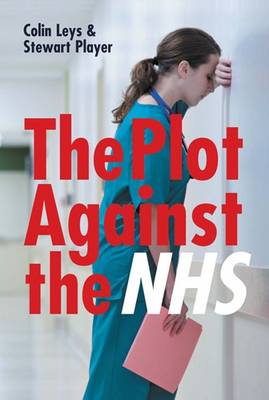
If you detected an element of despair in Dr Grumble’s last post you would be right. Dr Grumble has just read The Plot Against the NHS. To be frank the picture on the cover says it all.

For years now poor old Grumble has been banging on about what he has seen being planned for the NHS. For years he has been incredulous at the disparity between the official position on the health service and what is clearly the intended direction of a multitude of policy documents that have emerged from our political masters. For years he has been wrestling to understand the real meanings of deliberately vague words such as contestability and plurality.

Grumble likes evidence. When data are massaged and the whole truth is kept secret, you do begin to wonder if perhaps you have misunderstood or are a victim of a pathological obsession. Can it really be that successive governments have deliberately kept their intentions for the health service a tight secret? Can it really be that the staff in the Department of Health no longer have the ethos of traditional British civil servants and do not ensure that the public know what is going on? Can it really be that we have a government that promises no top-down reorganisation of the NHS but is actually hell-bent on privatisation of our NHS?


27/11/13 Having received a takedown notice from the Independent newspaper for a different posting, I have reviewed this article which links to an article at the Independent’s website in order to attempt to ensure conformance with copyright laws.

I consider this posting to comply with copyright laws since
a. Only a small portion of the original article has been quoted satisfying the fair use criteria, and / or
b. This posting satisfies the requirements of a derivative work.

Please be assured that this blog is a non-commercial blog (weblog) which does not feature advertising and has not ever produced any income.

dizzy

Continue ReadingNHS news review

NHS news review

Spread the love

The Royal College of Nursing (RCN) has voted overwhelmingly that they have no confidence in Health Secretary Andrew Lansley’s proposed ‘reforms’ of the National Health Service.

Leader of the Opposition and Labour Party leader Ed Miliband has made a speech calling for the bill to destroy the NHS to be abandoned.

Conservative election poster 2010

A few recent news articles concerning the UK’s Conservative and Liberal-Democrat coalition government – the ConDem’s – brutal attack on the National Health Service.

Nurses ‘no confidence’ in Andrew Lansley – Health News, Health & Families – The Independent

Nurses today voted overwhelmingly in favour of a motion of “no confidence” in the Health Secretary Andrew Lansley and his management of NHS reforms.

Delegates at the Royal College of Nursing conference in Liverpool voted 99 per cent in favour of the motion, to 1 per cent against.

The RCN’s leadership had attempted to amend the motion to delay any no confidence vote until after the conclusion of the Government’s listening exercise.

But amid angry and passionate scenes on the conference floor the amendment was dropped when nurse after nurse took to the stage to condemn the Government.

Royal College of Nursing passes vote of no confidence in Andrew Lansley | Society | guardian.co.uk

Conference delegates vote 99% in favour of motion as health secretary struggles to persuade public of merits of NHS reforms

The Royal College of Nursing has overwhelmingly backed a motion of no confidence in Andrew Lansley’s handling of the NHS reforms.

Delegates at the RCN conference in Liverpool voted 99% in favour of the motion as the beleaguered health secretary struggles to persuade the public of the merits of his health reforms.

Nurses are angry that Lansley refused to deliver a keynote speech to the conference, opting instead to meet a group of around 60 nurses in Liverpool as part of the government’s “listening exercise” on the controversial reforms.

NHS reforms: Miliband urges government to scrap health bill | Society | guardian.co.uk

The Labour leader, Ed Miliband, has urged the government to “junk” its health bill, identifying five “largely concealed aspects” of the proposed reforms which he said undermined NHS principles.

“The answer to a bad bill is not to slow it down but it is to junk it,” Miliband said at a press conference on the NHS.

“He appears to believe that people don’t like his bill because his government haven’t explained it properly.

“But the opposite is true. The more people understand and hear about these proposals, the less they like them. It’s not a problem of public relations, it’s a problem of principle.

“The bill is actually a pandora’s box. The more people look at the detail, the more profound and worrying the implication appear to be for the NHS.


27/11/13 Having received a takedown notice from the Independent newspaper for a different posting, I have reviewed this article which links to an article at the Independent’s website in order to attempt to ensure conformance with copyright laws.

I consider this posting to comply with copyright laws since
a. Only a small portion of the original article has been quoted satisfying the fair use criteria, and / or
b. This posting satisfies the requirements of a derivative work.

Please be assured that this blog is a non-commercial blog (weblog) which does not feature advertising and has not ever produced any income.

dizzy

Continue ReadingNHS news review