Abramovich may owe UK £1bn in unpaid tax

Spread the love

Original article by Simon Lock Eleanor Rose William Dahlgreen Harriet Agerholm Rob Davies James Oliver republished from The Bureau of Investigative Journalism under Creative Commons Attribution-NonCommercial-NoDerivs 3.0 Unported License.

Leaked documents suggest oligarch’s billions were managed from UK, undermining offshore tax avoidance plan

Roman Abramovich may owe as much as a billion pounds in UK tax and potential penalties on profits made through a vast offshore hedge fund operation, the Bureau of Investigative Journalism can reveal after an analysis of leaked documents.

If HMRC found wrongdoing and levied the maximum penalties available, this would surpass former F1 boss Bernie Ecclestone’s £653m record tax settlement last year.

Between the late 1990s and early 2022, the billionaire – who is now sanctioned in the UK and EU – held as much as $6bn in a global network of hundreds of hedge funds. The sums totalled nearly half his estimated fortune.

These generated huge returns, which were then used to bankroll other parts of his business empire – including his financing of Chelsea Football Club.

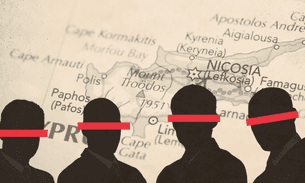
Now a joint investigation with the BBC and the Guardian based on documents from Cyprus Confidential, the project led by the International Consortium of Investigative Journalists and Paper Trail Media, reveals evidence that Abramovich may have avoided huge amounts of UK tax on the profits by skirting “corporate residency” rules.

The investments were structured through a series of British Virgin Island companies, which ultimately belonged to a Cypriot trust of which Abramovich was sole beneficiary. A so-called tax haven, the BVI does not levy taxes on profits generated by businesses registered there.

Cyprus Confidential

Cyprus Confidential is a joint reporting project digging through a massive leak of financial information from Cyprus.

However, leaked documents and filings from the US financial regulator suggest that investment decisions were not really taking place in the BVI. Instead, one of Abramovich’s closest associates appears to have been controlling the companies from the UK.

UK tax laws state that a company’s residence – and therefore its tax jurisdiction – is based on where it is centrally managed and controlled. In other words, it’s about where the business decisions take place.

In simple terms, Abramovich’s companies were registered offshore but were apparently being run from the UK. That would mean they should have been paying UK taxes. The data is not always complete – and it’s possible some key elements were missing from the files reviewed by reporters. But, according to experts, the evidence is enough to raise serious questions.

While an exact figure is impossible to calculate, the total sums potentially owed are enormous. The Cyprus Confidential cache contains thousands of corporate documents laying out how Abramovich managed his enormous wealth. There is a window of time between 2013 and 2018 for which reporters were able to review a full set of financial accounts. Abramovich’s hedge fund investment companies recorded profits of $1.4bn in this period. Had a flat rate of UK corporation tax been levied, this alone would amount to over £200m.

Since the hedge fund operation lasted for over two decades, the real figure is likely to be much higher. Between 1999 and 2018, it’s possible to see the relevant companies made – at the very minimum – $3.8bn in profits.

Calculations based on UK corporation tax rates during that period give a minimum figure of £536m in unpaid tax.

On top of that, if HMRC were to deem the tax avoided or evaded, there could be penalties as well as interest. These could amount to about £1bn.

Representatives for Abramovich said he obtained independent professional tax and legal advice and acted in accordance with it. He denied knowledge of any unlawful tax avoidance or evasion scheme and said he was not liable for any scheme.

Offshore Network

Documents show Abramovich’s huge hedge fund investments date back to the late 90s, when he owned and managed the Russian oil giant Sibneft. The company’s 2005 sale to Russian state-backed oil company, Gazprom, netted Abramovich over $13bn, making him one of the world’s wealthiest men.

It was around the time of this sale that he began channelling billions of dollars into a BVI company he owned called Keygrove Holdings Ltd.

Keygrove lay at the centre of a complex web of investment holding companies. It owned more than a dozen other BVI companies, all set up to invest in hedge funds and other financial products. Sibneft money flowed into Keygrove, which injected the funds into these subsidiaries.

Huge profits accumulated in Keygrove, which then loaned the money out to other entities within Abramovich’s corporate network. Over $2bn went to a BVI company called Sonora Capital Holdings Ltd, which in turn lent money onwards to another offshore entity, Camberley International Investments Ltd.

Recommended Articles

Camberley itself was set up for one purpose: bankrolling Chelsea Football Club, which it did through loans to Chelsea’s parent company, Fordstam Ltd.

By 2021 – the same year Chelsea won the Champions League, Club World Cup and UEFA Super Cup – Camberley had loaned a massive $1.9bn to Chelsea via Fordstam. Of that, over a quarter (nearly $500m) came from Sonora, backed by its loans from Keygrove.

The leaked documents mean we can follow the meandering route of the money, showing that at least some of the untaxed profits from Abramovich’s hedge fund investments ended up on the balance sheet of Chelsea.

‘Sweeping’ Powers of Attorney

The key to how Abramovich managed his vast hedge fund investments came through a series of leaked documents from the early 2000s.

Labelled “general powers of attorney”, these agreements handed huge effective decision-making powers over Keygrove’s subsidiaries – the companies investing in hedge funds – to one of Abramovich’s oldest and closest associates, Eugene Shvidler.
Under the terms of the agreement, Shvidler had the power to buy assets with the companies’ money, manage their bank accounts and enter deals on their behalf. It effectively gave him carte blanche to run the companies as he saw fit.

The documents are hugely significant because there is a longstanding precedent in UK tax law that a company is deemed tax resident based on where its centre of operations is located, regardless of where in the world it might be registered. In corporate terms, this is known as the management and control of a company.

The on-paper directors of these BVI companies were based across the world in Austria, Germany, Russia and the UK. That alone could have presented its own tax implications. But documents seen by TBIJ suggest these people were simply nominees who signed the documentation on the company’s behalf.

The general power of attorney documents seem to indicate the real control lay with Shvidler – who was a UK resident.

Like Abramovich, he was placed under UK sanctions following Russia’s invasion of Ukraine in 2022. In 2023, he brought a legal case against the UK government over his sanctions designation.

In his sworn testimony, Shvidler stated that he was a dual US-UK citizen who had been a UK resident since 2004 and a naturalised citizen from 2010, having been granted a visa under the Highly Skilled Migrant Programme – known as the “golden visa” because wealth was the determining factor in a successful application.

The general powers of attorney were in place for the hedge fund companies until at least 2009. Alongside them, the same companies entered into “investment advisory” agreements with a BVI company called Millennium Capital Ventures Ltd (owned by Shvidler’s then-wife and controlled by him), which again delegated huge powers to make investment decisions.

After 2009, there are no further records for powers of attorney, but it appears that a new “investment management” arrangement between Millennium and Keygrove had been set up.

Once again, Millennium was granted similar powers to the general powers of attorney, as well as compensation of $12m a year. Experts spoken to by TBIJ said this means Keygrove would likely have also been tax-resident in the UK.

However, the new arrangement appears to have left Shvidler’s central role unchanged: he made all the key decisions.

Lawyers for Shvidler said he denied knowingly or negligently being involved in an unlawful scheme to avoid paying tax. They said that the investments uncovered by TBIJ were the subject of very careful and detailed tax planning, undertaken and advised on by leading tax advisors.

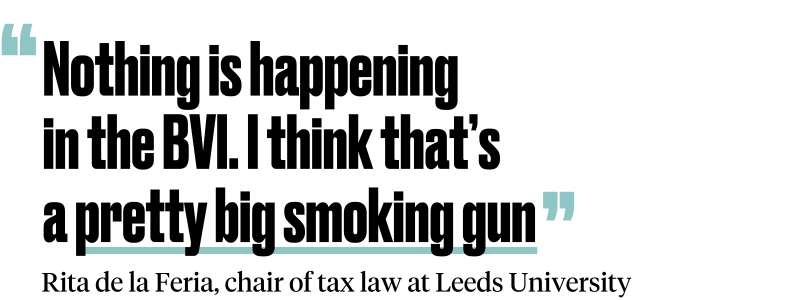
But Professor Rita De La Feria, chair of tax law at Leeds University, said: “Nothing is happening in the BVI. I think this is a pretty big smoking gun. That would be … strong evidence that the effective management of the company was not taking place in the BVI.”

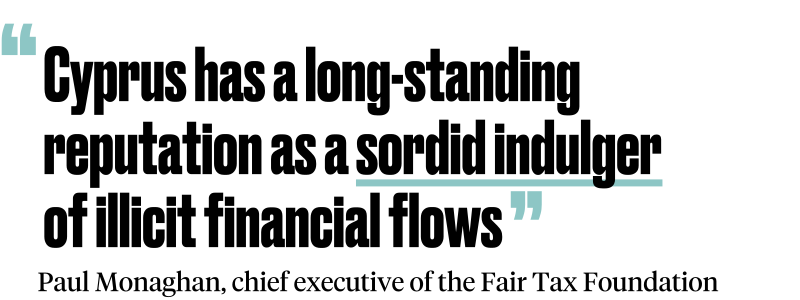
Paul Monaghan, chief executive of the Fair Tax Foundation, said: “There appears to be an entire swarm of red flags surrounding the tax arrangements of Roman Abramovich.

“The combined use of Cyprus and the British Virgin Islands alone presents a massive cause for concern, given both are among the world’s worst enablers of tax avoidance. Cyprus has a long-standing reputation as a preferred tax haven for Russian oligarchs and as a sordid indulger of illicit financial flows more generally. The British Virgin Islands is a go-to destination for those wishing to ensure that their financial conduct is hidden away and that their activities are rendered anonymous.
“If it transpires that the central management and control of the investment decision making took place in the UK, with the board effectively rubber-stamping decisions up the chain, then there could be a sizeable tax liability in the UK [and] further investigation by HMRC would seem to be warranted.”

Across the Pond

Court records filed in the US shed further light on Shvidler’s continued central role in managing the hedge fund investments.

They detail that from the outset, Abramovich and his associates worked closely with a small financial advisory business in the suburbs of New York called Concord Management.

Run by Michael Matlin, another Russian emigre and former classmate of Shvidler, its role was to recommend hundreds of hedge funds for Abramovich to invest in.

Concord was rewarded handsomely for its work – $300,000 a month including expenses, plus a yearly bonus, according to a 2012 consulting agreement. Abramovich and his associates were Concord’s only clients.

After the Russian invasion of Ukraine, the Securities and Exchange Commission (SEC), a US regulatory body, brought legal action against Concord, claiming it had failed to register as an investment adviser and so avoided regulatory scrutiny.

The SEC’s filings spell out how it believed the operation worked. Throughout the filings, Abramovich is referred to as “UBO A” and Shvidler as “Person B”.

According to the SEC, Shvidler was “the point of contact for receiving investment advice from Matlin and Concord and for either deciding or communicating the decision whether to go forward with recommended transactions”.

The SEC complaint goes into granular detail about Shvidler’s work. According to the regulator, each month he would be sent a “short list” of hedge funds by Matlin, containing key details about the funds. Shvidler would then communicate which investments were approved – often in one-on-one telephone calls with Matlin. He also received regular updates on existing investments.

How did we decode the SEC filings?

UBO A is described as a “former Russian political official widely regarded as having political connections to the Russian Federation and vast wealth from the privatisation of state-run industries after the collapse of the former Soviet Union.”

The filing goes on to say that since March 2022, the United Kingdom and the European Union “designated UBO A as a sanctioned individual, and in April 2022, the Royal Court of Jersey issued an order freezing his assets.”

All this tallies perfectly with Abramovich, a former Russian state governor for the icy northern region of Chukotka. He was among the first of the prominent Russian oligarchs to be sanctioned following the outbreak of the war in 2022, while Jersey courts said they froze $7bn (£5.4bn) of assets linked to him not long after.

Person B meanwhile is described as “reportedly a citizen of both the United States and the United Kingdom” as well as a “longtime close associate of UBO A” who was placed on the UK sanctions list on 24 March 2022. Again, this matches perfectly with Shvidler.

Much of the description of the investing process accords with what we know from the leaked documents. A ‘Company 1’ is described as the parent company of over a dozen ‘Investing Entities’ which held the assets, while a ‘Company 2’ was a UK-registered company affiliated to UBO A providing “back-office administrative support”.

Company 1 is Keygrove, the central node in the hedge fund strategy, whose BVI subsidiaries invested in hedge funds, while Company 2 is Millhouse Capital, which operated out of offices at Stamford Bridge, Chelsea’s stadium, and whose administrative work appears frequently in the leaked cache.

Throughout this process, Shvidler, Matlin and another senior Concord employee would share confidential information about the recommendations, decisions and cash positions by phone, text messages, or messaging applications like WhatsApp and Telegram.

Through the Looking Glass

The scale of the investments were staggering. Each year between 2013 and 2018, on average, $6bn was invested across 140 hedge funds.

It was also very profitable. Over the same time period, the value of Abramovich’s investments increased by over $1.4bn – and this was just a five-year window within an operation that lasted over two decades.

But along with the total size of Abramovich’s investments and the scale of annual profits, another figure stands out: “Revenue Reserve”. This is an accounting term used to describe the portion of a company’s profits that are kept in the business instead of being paid out to shareholders.

In Abramovich’s hedge fund companies, these figures were colossal. By the end of 2016, over $3.2bn in profit had been kept on the company balance sheet. In the following two years, the dozen companies were merged into just three giant holding companies. Collectively they retained another $600m in profits by 2018.

How did we calculate the £1bn tax bill?

An HMRC tax bill consists of three elements: the unpaid tax bill; interest; and a penalty when rules have been breached.

The unpaid bill

To estimate the penalty, we needed to know how profitable the companies were. Fortunately we had complete accounts for all the companies involved in the scheme from 2013 to 2018.

These accounts were audited, and provide profit totals based on how much the underlying investments increased in value. So there’s the first caveat: the estimate is only as good as the source data.

The accounts show total profits of $1.4bn. To get an estimate for unpaid tax, we took the UK corporation tax rates for each of the years 2013-2018, and worked out the corresponding tax liability based on the profits.

We then converted the total from dollars into pounds using the exchange rates for the end of each year. This gave an estimated liability of £212m.

However, the scheme had been operating since the late 1990s, and we also wanted to estimate the profits before 2013. To do that, we looked at the “revenue reserve”, a figure that shows the total profit that has remained in a business since it was founded. It effectively describes profits that have been re-invested, rather than paid out to shareholders.

So, a second caveat. The revenue reserve figure represents the minimum possible profit the company made. It’s possible that money was taken out of these businesses prior to 2013 that we simply don’t know about. However, between 2013 and 2018, accounts show that didn’t happen: the company did not pay out dividends.

By the end of 2012, the companies had amassed – at the very least – $2.3bn in profit.

We don’t know when the profits were truly made, and if it were early on they would be subject to higher tax rates. In order to be completely fair, we applied the lowest level of corporation tax during the 1999-2012 period. We then converted this figure into pounds using the average dollar-to-pound exchange rate for the same period.

Our estimate for pre-2012 tax therefore was £325m, giving us a total bill of £537m.

The interest

All unpaid tax is subject to interest repayments. Late repayments use simple interest, not compound. Once again, we were conservative. Technically the interest would kick in from the moment the tax was due, but instead we took the total that could be owed from the end of 2018 and calculated the interest payments from then to the present day. Based on those rates, £537m owed at the end of 2018 would generate a further £145m in interest. This would keep rising until paid off.

Combined with the tax penalty, this gives a figure of just over £680m.

The penalty

Unpaid tax bills are based on estimations of past profits. Tax penalties, however, work on a sliding scale and balance lots of factors, including how companies and people respond when they are being investigated. At the lower end, HMRC could simply attempt to recoup the tax – this would be the £680m figure.

However, they could apply penalties under rules to punish taxpayers who should have declared tax. The “failure to notify” penalties range from 0% to 100% and factor in whether the avoidance was deliberate, whether the taxpayer declared it, and if they tried to hide it.

Based on TBIJ’s evidence, this case could fall under “deliberate” and “prompted” – meaning Abramovich or his agents should have known that HMRC would need to be told and chose not to. The upper range for this is 70% of the tax bill.

Apply that the unpaid bill of £537m, combined with interest, and the total tax liability would be £1.06bn.

This means that from the point they were registered up to December 2018, the companies had made, at the very minimum, $3.8bn in profits. But it could be higher still if any of that profit had previously been extracted.

If Abramovich’s associate played this central role in managing these investments on his behalf, this should all have been subject to UK corporation tax, according to experts consulted during this investigation.

Between 1999 and 2015, UK corporation tax averaged about 25%. Abramovich’s $3.8bn would therefore leave a potential approximate unpaid tax figure of £536m based on historic exchange rates. With interest, the figure rises to almost £700m.

On top of that, if HMRC were to deem the tax avoided or evaded, there could be penalties as well as interest. These could amount to as much as double the unpaid tax bill – about £1bn.

The figure alone is bigger than the UK’s entire budget for rebuilding the 500 schools in England “in the greatest need”.

It also accounts for well over half the funds sitting in a frozen Barclays bank account following Abramovich’s sale of Chelsea to a consortium led by Tood Boehly in May 2022, and which had been earmarked “for the benefit of all victims of the war in Ukraine”.

HMRC told TBIJ it couldn’t comment on individual taxpayers, nor confirm or deny an investigation. A spokesperson said: “We’re continuing to lead international efforts to improve global transparency and are committed to ensuring everyone pays the right tax under the law, regardless of wealth or status.”

Concord Management, Michael Matlin, Keygrove Holdings and representatives for Millhouse Capital didn’t respond to requests for comment. Chelsea Football Club declined to comment.

Original article by Simon Lock Eleanor Rose William Dahlgreen Harriet Agerholm Rob Davies James Oliver republished from The Bureau of Investigative Journalism under Creative Commons Attribution-NonCommercial-NoDerivs 3.0 Unported License.
Continue ReadingAbramovich may owe UK £1bn in unpaid tax

It’s Been Just 11 Days, But 100,000 Have Already Signed Petition to ‘Impeach Trump Again’

Spread the love

Original article by Eloise Goldsmith republished from Common Dreams under Creative Commons (CC BY-NC-ND 3.0). 

U.S. President Donald Trump addresses the 2025 Republican Issues Conference at the Trump National Doral Miami on January 27, 2025 in Doral, Florida. The three-day planning session was expected to lay out Trump’s ambitious legislative agenda. (Photo: Joe Raedle/Getty Images)

“The overwhelming support for impeachment shows that the American public is not willing to accept King Trump,” said Alexandra Flores-Quilty, Free Speech for People campaign director.

The nonprofit Free Speech for People is leading a new nonpartisan campaign to drum up support for U.S. President Donald Trump’s removal—“Impeach Trump Again”—and reported Thursday that the effort has already garnered over 100,000 petition signatures.

The campaign is calling on Congress to launch an impeachment investigation into Trump and says that the signature numbers signal “widespread support” for a probe.

“The overwhelming support for impeachment shows that the American public is not willing to accept King Trump,” said Alexandra Flores-Quilty, Free Speech for People campaign director, in a Thursday statement. “We need bold leaders in Congress willing to stand up and hold Trump accountable for his abuses of power and initiate an impeachment inquiry.”

The petition, which was launched on Inauguration Day, calls on Congress to initiate an impeachment investigation into Trump based on potential violations of the U.S. Constitution’s emoluments clauses, his pardoning of insurrectionists who took part in the January 6, 2021 riot at the Capitol, and his “unlawful” and “corrupt” campaign practices.

Free Speech for People also launched a campaign to build public support for Trump’s impeachment on the day of his inauguration back in 2017.

The emoluments clauses require that Trump “fully divest himself from any businesses receiving profits, gains, or advantages, beyond his official compensation, from the federal government or the individual states,” according to the watchdog group Citizens for Responsibility and Ethics in Washington. Trump’s business empire—which, as far as the public knows, he has not divested from—now includes not only real estate, but also a social media platform and a cryptocurrency token.

The campaign also lists other alleged impeachable offenses.

Trump was impeached twice by the House of Representatives during his first term, but in both cases he was acquitted by the Senate. Both chambers of Congress are now controlled by Trump’s Republican Party.

Original article by Eloise Goldsmith republished from Common Dreams under Creative Commons (CC BY-NC-ND 3.0). 

Continue ReadingIt’s Been Just 11 Days, But 100,000 Have Already Signed Petition to ‘Impeach Trump Again’

Trump Signs Sweeping Xenophobic Bill, Rescinding Due Process for Millions

Spread the love

Original article by Brett Wilkins republished from Common Dreams under Creative Commons (CC BY-NC-ND 3.0).

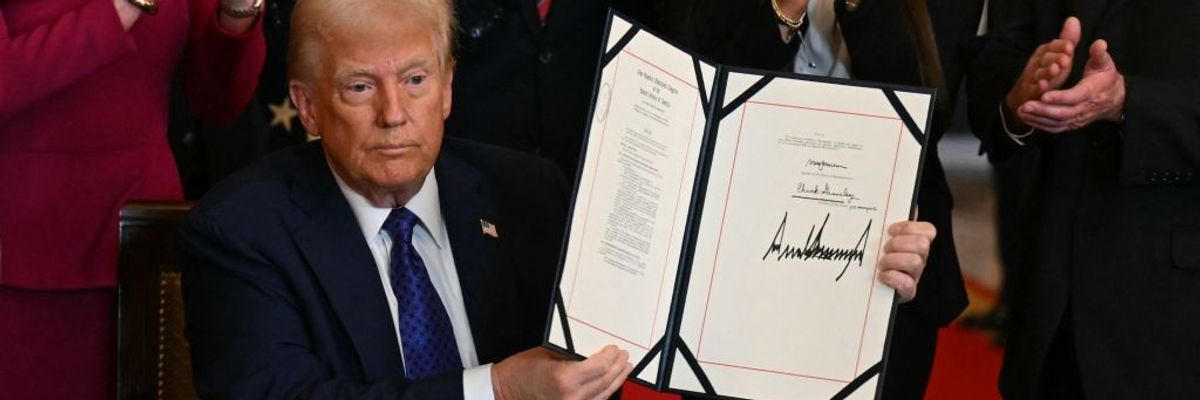
U.S. President Donald Trump holds up a signed copy of the Laken Riley Act in Washington, D.C. on January 29, 2025. (Photo: Pedro Ugarte/AFP via Getty Images)

“The Laken Riley Act capitalizes on a horrible tragedy in order to advance President Trump’s anti-immigrant agenda by scapegoating people seeking safety,” said one campaigner.

Human rights defenders decried U.S. President Donald Trump’s signing of legislation Wednesday that critics warn will strip due process rights from millions of people while harming some of the most vulnerable members of society, including migrant children, victims of sexual violence, and survivors of domestic abuse.

Trump signed the Laken Riley Act—named after a young woman murdered last year by a Venezuelan man who, according to U.S. Immigration and Customs Enforcement (ICE), entered the United States illegally—calling it a “landmark law” that “will save countless innocent American lives.”

“The Laken Riley Act is based upon false, xenophobic narratives that dehumanize and criminalize an entire group of people due to the actions of one person.”

However, Amy Fischer, director of the ACLU’s Refugee and Migrant Rights Program, said in a statement Wednesday that “the Laken Riley Act capitalizes on a horrible tragedy in order to advance President Trump’s anti-immigrant agenda by scapegoating people seeking safety and stripping away their right to due process.”

“This legislation mandates the arrest and detention of our undocumented neighbors for being convicted or charged of any theft, shoplifting, burglary, or larceny offense,” Fischer noted. “Mandatory detention solely for being accused of theft strips people of their right to due process and constitutes arbitrary detention under international human rights law.”

“The Laken Riley Act is based upon false, xenophobic narratives that dehumanize and criminalize an entire group of people due to the actions of one person,” Fischer added. “It will separate families and make our communities less safe. It is simply unconscionable for Congress to create a new mechanism that gives people the power to falsely accuse immigrants of theft knowing their detention is mandatory.”

As the Lawyers’ Committee for Civil Rights of the Bay Area, which called the law “shameful and unconstitutional,” noted Wednesday: “This bill does not require a conviction—simply being accused of a crime is enough to force individuals into mandatory detention without review by any judge. In doing so, the law strips due process protections and allows for discrimination against vulnerable immigrant communities.”

The group continued:

The federal government already has the power to detain and deport individuals who commit criminal acts. But in our legal system, judges act as a constitutionally required check on police actions. This new law removes that check. It is a direct attack on the constitutional rights of immigrants and communities of color, and it erodes the civil liberties of American society at large. It will incentivize racial profiling and divert law enforcement resources away from real threats, making our communities less safe.

“Lawyers’ Committee and our partners vow to challenge this unconstitutional law in court,” Bianca Sierra Wolff, the group’s executive director, said in a statement. “We will not stand by while the rights of immigrants and communities of color are trampled for political gain.”

Writing for Common Dreams Wednesday, National Center for Youth Law senior director Neha Desai and NCYL attorney Melissa Adamson lamented the Laken Riley Act’s passage and urged Congress, both chambers of which passed the law with bipartisan support, to “do the right thing” by introducing “new legislation to protect children from this draconian law.”

“Policymakers on both sides of the political aisle seem all too eager to support legislation that ignores that immigrant children are human beings, worthy of the same care and protections that their own children enjoy,” Desai and Adamson contended. “It is deeply disheartening to see lawmakers shift with the political winds rather than hold true to fundamental values. Congress must not acquiesce to a country in which the rejection of children’s rights is the norm.”

Shares in private prison companies have skyrocketed since Trump won last November’s election, partly in anticipation of a boom in business due to the Laken Riley Act and the broader campaign of mass deportations now underway.

On Wednesday, Trump also said he would instruct the Pentagon and Department of Homeland Security to prepare a detention facility—some critics called it a “concentration camp“—capable of holding 30,000 migrants at the notorious offshore Guantánamo Bay prison run by the U.S. military in Cuba.

Original article by Brett Wilkins republished from Common Dreams under Creative Commons (CC BY-NC-ND 3.0).

Continue ReadingTrump Signs Sweeping Xenophobic Bill, Rescinding Due Process for Millions

Trump 2.0: the rise of an ‘anti-elite’ elite in US politics

Spread the love
Elon Musk urges you to be a Fascist like him, says that you can ignore facts and reality then.

William Genieys, Sciences Po and Mohammad-Saïd Darviche, Université de Montpellier

US president Donald Trump is surrounded by a new cohort of politicians and officials. While one of his campaign promises was to overthrow the “corrupt elites” he accuses of flooding the American political arena, his second term in office has elevated elites chosen, above all, for their political loyalty to him.

The media’s focus on Trump’s comments on making Canada the 51st US state and annexing Greenland and billionaire Elon Musk’s support for some far-right parties in Europe has obscured the ambitious programme to transform the federal government that the new political elite intends to implement.

In the wake of Trump’s inauguration on January 20, the Republican elites most loyal to the MAGA (“Make America Great Again”) leader, who staunchly oppose Democratic elites and their policies, are operating amid their party’s control over the executive and legislative branches (at least until the midterm elections in 2026), a conservative-dominated Supreme Court that includes three Trump-appointed justices, and a federal judiciary that shifted right during his first term.

However, the political project of the Trumpist camp consists less of challenging elitism in general than attacking a specific elite: one particular to liberal democracies.

Castigating democratic elitism

Typical anti-elite political propaganda, along the lines of “I speak for you, the people, against the elites who betray and deceive you,” claims that a populist leader would be able to exercise power for and on behalf of the people without the mediation of an elite disconnected from their needs.

Political theorist John Higley sees behind this form of anti-elite discourse an association between so-called “forceful leaders” and “leonine elites” (who take advantage of the former and their political success): a phenomenon that threatens the future of Western democracies.

Since the Second World War, there has been a consensus in US politics on the idea of democratic elitism. According to this principle, elitist mediation is inevitable in mass democracies and must be based on two criteria: respect for the results of elections (which must be free and competitive); and the relative autonomy of political institutions.

The challenge to this consensus has been growing since the 1990s with the increased polarization of American politics. It gained new momentum during and after the 2016 presidential campaign, which was marked by anti-elite rhetoric from both Republicans and Democrats (such as senators Bernie Sanders and Elizabeth Warren). At the heart of some of their diatribes was an aversion to “the Establishment” on the east and west coasts of the United States, where many prestigious financial, political and academic institutions are based, and the conspiracy notion of the “deep state”.

The re-election of Trump, who has never admitted defeat in the 2020 presidential vote, growing political hostility and the direct involvement of tech tycoons in political communication –especially on the Republican side– further reinforce the denial of democratic elitism.

Trump’s populism from above: a revolt of the elites

The idea that democracy could be betrayed by “the revolt of the elites”, put forward by the US historian Christopher Lasch (1932-1994), is not new. For the anthropologist Arjun Appadurai, it is a particular feature of contemporary populism, which comes “from above.” Indeed, if the 20th century was the era of the “revolt of the masses”, the 21st century, according to Appadurai, “is characterized by the ‘revolt of the elites’.” This would explain the rise of populist autocracies (such as those currently led by Viktor Orban in Hungary, Recep Tayyip Erdogan in Turkey and Narendra Modi in India, and formerly led by Jair Bolsonaro in Brazil), but also the election successes of populist leaders in consolidated democracies (including those of Trump in the US, Giorgia Meloni in Italy, and Geert Wilders in the Netherlands, for example).

As Appadurai explains, the success of Trumpian populism, which represents a revolt by ordinary Americans against the elites, casts a veil over the fact that, following Trump’s victory in November, “it is a new elite that has ousted from power the despised Democratic elite that had occupied the White House for nearly four years.”

The aim of this “alter elite” is to replace the “regular” Democrat elites, but also the moderate Republicans, by deeply discrediting their values (such as liberalism and so-called “wokeism”) and their supposedly corrupt political practices. As a result, this populism “from above” carried out by the President’s supporters constitutes an alternative elite configuration, the effects of which on American democratic life could be more significant than those observed during Trump’s first term.

Beyond the idea of a ‘Muskoligarchy’

The idea that we are witnessing the formation of a “Muskoligarchy” –in other words, an economic elite (including tech barons such as Jeff Bezos, Mark Zuckerberg and Marc Andreessen) rallying around the figurehead of Elon Musk, whom Trump asked to lead what the president has called a “Department of Government Efficiency” (DOGE) –is seductive. It perfectly combines the vision of an alliance between a “conspiratorial, coherent, conscious” ruling class and an oligarchy made up of the “ultra-rich”. For the Financial Times columnist Martin Wolf, it is even a sign of the development of “pluto-populism”. (It is also worth noting that former president Joe Biden, in his farewell speech, referred to “an oligarchy… of extreme wealth” and “the potential rise of a tech-industrial complex.”)

However, some observers are cautious about the advent of a “Muskoligarchy.” They point to the sociological eclecticism of the new Trumpian elite, whose facade of unity is held together above all by a political loyalty, for the time being unfailing, to the MAGA leader. The fact remains, however, that the various factions of this new “anti-elite” elite are converging around a common agenda: to rid the federal government of the supposed stranglehold of Democratic “insiders.”

An ‘anti-elite’ elite against the ‘deep state’

In his presidential inauguration speech in 1981, Ronald Reagan said: “Government is not the solution to our problem; government is the problem.” The anti-elitism of the Trump elite is inspired by this diagnosis, and defends a simple political programme: rid democracy of the “deep state.”

Although the idea that the US is “beleaguered” by an “unelected and unaccountable elite” and “insiders” who subvert the general interest has been shown to be unfounded, it is nonetheless predominant in the new Trump Administration.

This conspiracy theory has been taken to the extreme by Kash Patel, the candidate being considered to head the FBI. In his book, Government Gangsters, a veritable manifesto against the federal administration, the former lawyer writes about the need to resort to “purges” in order to bring elite Democrats to justice. He lists around 60 people, including Biden, ex-secretary of state Hillary Clinton and ex-vice president Kamala Harris.

Government Gangsters, Kash Patel’s controversial book. Google Books

The appointment of Russell Vought as head of the Office of Management and Budget at the White House, a person who is known for having sought to obstruct the transition to the Biden Administration in 2021, also highlights the hard turn that the Trump administration is likely to take.

Reshaping the state around political loyalty

To “deconstruct the administrative state”, the “anti-elite” elites are relying on Project 2025, a 900-plus page programme report that the conservative think-tank The Heritage Foundation, which published it, says was produced by “more than 400 scholars and policy experts.” According to former Project 2025 director Paul Dans, “never before has the entire movement… banded together to construct a comprehensive plan” for this purpose. On this basis, the “anti-elite” elite want to impose loyalty to Project 2025 on federal civil servants.

But this idea is not new. At the end of his first term, Trump issued an executive order facilitating the dismissal of statutory federal civil servants occupying “policy-related positions” and considered to be “disloyal”. The decree was rescinded by president Biden, but Trump on his first day back in office signed an executive order that seeks to void Biden’s rescindment. As President, Trump is also able to allocate senior positions within the federal administration to his supporters.

The “anti-elite” elite not only want to reduce the size of the state, as was the case under Reagan’s “neoliberalism”, but to deconstruct and rebuild it in their own image. Their real aim is a more lasting victory: the transformation of democratic elitism into populist elitism.

William Genieys, Directeur de recherche CNRS au CEE, Sciences Po and Mohammad-Saïd Darviche, Maître de conférences, Université de Montpellier

This article is republished from The Conversation under a Creative Commons license. Read the original article.

Continue ReadingTrump 2.0: the rise of an ‘anti-elite’ elite in US politics

European Leaders Condemn Musk’s ‘Ominous’ Push for Germany to ‘Forget’ Holocaust

Spread the love

Original article by Julia Conley republished from Common Dreams under Creative Commons (CC BY-NC-ND 3.0). 

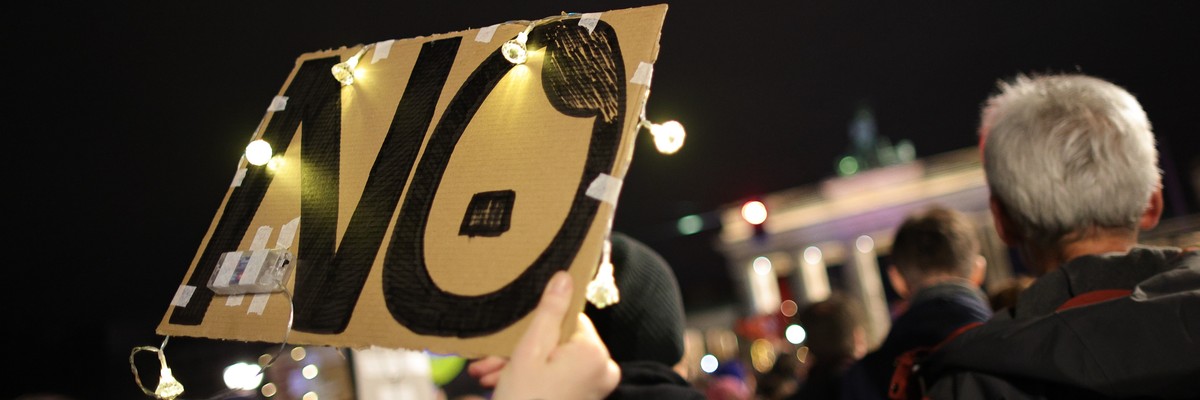
Protesters hold up a banner reading “NO” with the O shaped like an Adolf Hitler caricature during a demonstration against right-wing extremism, U.S. President Donald Trump, and right-wing billionaire Elon Musk on January 25, 2025 in Berlin, Germany. (Photo: Omer Messinger/Getty Images)

“We must not forget the tragic lesson of our past,” said Polish Prime Minister Donald Tusk. “Evil, violence and contempt cannot triumph anew.”

Billionaire enterpreneur Elon Musk insisted at a far-right rally in Germany over the weekend that the European country must move “beyond the past” and leave behind the memory of one of the deadliest genocides in history—but as leaders on the continent marked the 80th anniversary of the Auschwitz concentration camp liberation on Monday, several made clear that Musk’s advice was not welcome.

Musk’s comments on “‘the need to forget German guilt for Nazi crimes’ sounded all too familiar and ominous,” said Polish Prime Minister Donald Tusk on Sunday. “Especially only hours before the anniversary of the liberation of Auschwitz.”

German Chancellor Olaf Scholz said on the social media platform X, “I couldn’t agree more.”

The country’s ambassador to Israel said that while Musk claimed German children are treated as “guilty of the sins” of the Nazis during World War II, the government simply wants “them to grow up informed and responsible and to apply the lessons of Germany’s past.”

As Common Dreams reported, the Tesla CEO and key adviser to U.S. President Donald Trump made the remarks at a rally for Alternative for Germany (AfD) on Saturday, five weeks before Germans are set to vote in federal elections.

AfD is currently polling at 19%, trailing the center-right Christian Democratic Union (CDU), which is in first place at 28%. But leaders across Europe, including Spanish Prime Minister Pedro Sánchez, French President Emmanuel Macron, and Scholz have warned that Musk appears to be angling for the spread of far-right ideologies—including neo-Nazism—in European countries.

The AfD has been designated a “suspected extremist” group by Germany’s domestic intelligence agency, and one of its candidates for public office last year said that “not all” Nazis who worked for Adolf Hitler’s government were criminals.

The party has been ostracized in Germany, with other political groups including the CDU ruling out the formation of a coalition government with the AfD, but last week CDU leader Friedrich Merz said he would push for tougher anti-immigration proposals even if they were submitted by the AfD.

Scholz, who represents the Social Democrats, toldStuttgarter Zeitung in response to Merz’s comments that “the firewall to the AfD must not crumble.”

As Tusk oversaw the liberation of Auschwitz anniversary on Monday, International Holocaust Remembrance Day, he alluded to Musk’s comments at the AfD rally.

https://twitter.com/donaldtusk/status/1883818460054163902?ref_src=twsrc%5Etfw%7Ctwcamp%5Etweetembed%7Ctwterm%5E1883818460054163902%7Ctwgr%5Ecf2d7f515151e94748916bbf163a93631d35079a%7Ctwcon%5Es1_c10&ref_url=https%3A%2F%2Fwww.commondreams.org%2Fnews%2Felon-musk-europe

Sorry, this content could not be embedded.

X

“We must not forget the tragic lesson of our past,” he said on X, which is owned by Musk. “Evil, violence, and contempt cannot triumph anew.”

Musk’s comments came days after he appeared to flash a Nazi salute twice at an event for Trump’s inauguration.

In the U.S. on Sunday, Illinois Gov. JB Pritzker addressed Musk’s remarks at the AfD rally on CNN, asking why Trump hadn’t spoken out against them.

“President Trump ought to be calling that out,” said the Democratic governor. “If he doesn’t agree with Elon Musk, if he doesn’t agree with two Sieg Heils at his own rally, and backing a party that backs Nazis, then he ought to say so. Why isn’t Donald Trump speaking out?”

Original article by Julia Conley republished from Common Dreams under Creative Commons (CC BY-NC-ND 3.0). 

Elon Musk urges you to be a Fascist like him, says that you can ignore facts and reality then.
Continue ReadingEuropean Leaders Condemn Musk’s ‘Ominous’ Push for Germany to ‘Forget’ Holocaust