“In most countries, most people now have immunity to SARS-CoV-2. Depending on their degree of previously acquired cross-immunity, they will have had no symptoms, mild and uncharacteristic symptoms, or more severe symptoms, possibly including anosmia (loss of sense of smell) or other somewhat characteristic signs of the COVID-19 disease. Regardless of disease severity, they will now have sufficient immunity to be protected from severe disease in the event of renewed exposure. This majority of the population will not benefit at all from being vaccinated.”
And the group was at pains to stress their main message – “these vaccines are dangerous”.
The statement continued: “Population survival of COVID-19 exceeds 99.8 per cent globally. In countries that have been intensely infected over several months, less than 0.2 per cent of the population have died and had their deaths classified as ‘with covid19’
…
“With the mRNA vaccines, the risk of severe adverse events is virtually guaranteed to increase with every successive injection. In the long term, they are therefore even more dangerous than the vector vaccines. Their apparent preference over the latter is concerning in the highest degree; these vaccines are not safe.”
OpenDemocracy is taking legal action over the Cabinet Office’s ‘Orwellian’ Clearing House that vets FOI requests and could breach data protection law
openDemocracy is going to court to force the British government to release full details about its controversial ‘Clearing House’– a secretive unit inside Michael Gove’s Cabinet Office, which is accused of blocking sensitive Freedom of Information (FOI) requests.
In November, openDemocracy revealed that the ‘Orwellian’ unit in the Cabinet Office was vetting FOI requests and sharing personal information about journalists across Whitehall in ways that experts believe could be in breach of the law.
The Cabinet Office has refused to disclose full details about the Clearing House operation under the Freedom of Information Act – despite the FOI watchdog, the Information Commissioner’s Office, ordering it to do so in July 2020.
…
Now openDemocracy is going to an information tribunal in a bid to force transparency on the Clearing House.
On Thursday 29 April, a first-tier tribunal will hear the case. openDemocracy has instructed Leigh Day, a firm of public law specialists, to argue its case and has received support from across the British media.
( Middle East Monitor ) – The Encyclopaedia Britannica defines a pogrom as “a mob attack, either approved or condoned by authorities, against the persons and property of a religious, racial, or national minority”.That is exactly what is happening today against the Palestinian people in Jerusalem.
Palestinians are not a minority in Palestine – the country that lies between the Jordan River and the Mediterranean Sea. But due to Israel’s apartheid regime that has ruled the country since 1948, the majority of Palestinians were expelled from the areas that today form so-called “Israel proper”, and which many Palestinians term “1948 Palestine”.
Due to a slow process of Israeli ethnic cleansing since then, Palestinians are no longer the majority in Jerusalem. But in recent weeks that process has sped up in that city, the historic capital of Palestine.
Some truly terrifying clips have been circulated online – including by credible journalists – showing rampaging mobs of mostly young Israeli men attacking Palestinians in Jerusalem and chanting “Death to the Arabs” (while being incited and led by mainstream Israeli political and religious leaders).
Hundreds of Jewish supremacists descend upon Palestinian East Jerusalem, chanting “Death to the Arabs!” https://t.co/zQvQttn2Rv
This is not a new phenomenon, but it has increased in recent weeks, partly due to a ruling by an Israeli court demanding new expulsions of Palestinian families from the Jerusalem neighbourhood of Sheikh Jarrah.
The families have been until the start of May to leave their homes and hand them over to Israeli settlers.
These actions by the apartheid state of Israel have only encouraged the “Death to the Arabs” hate mobs. And therein lies the key to understating the essence of a pogrom.
A pogrom is carried out by violent mobs, who are deemed in the discourse of the government and of the corporate media to be “extremists”. There is no doubt that these mobs are far-right Jewish-supremacist extremists by any objective definition.
The clip was from a 2009 film about Sheikh Jarrah. But as JVP notes, it could easily have been filmed today. Expulsions of Palestinians by mobs of highly ideological religious Zionist fanatics are still frequently carried out, in the same way seen in the clip.
But the most telling part of the video is perhaps not so much the actions of the mob itself, but how they are endorsed and backed by the racist state.
You see the thugs of Israel’s highly-armed military “Border Police” force standing by and watching the takeover, making sure that the Palestinians are not able to defend themselves or their homes.
This is the very definition of a pogrom.
In the clip posted by JVP, Israeli settler leader Jonathan Yosef is shamelessly explicit about all this, saying: “We take house after house. All this area will be a Jewish neighbourhood … We are going to the next neighbourhood and after that we’ll go [to] more. Our dream [is] that all East Jerusalem will be like West Jerusalem. [A] Jewish capital of Israel.”
He then gives a far clearer, far more honest – and frankly more accurate – definition of Zionism than the lying dissimulators of liberal and “left-wing” Zionism ever could (with their nonsense about “Jewish self-determination” in a country which has never been exclusively Jewish):
“I see this as a continuation of the Zionist project. The return to Zion. Is it at the Arabs’ expense? Yes. But our government institutions were also built at the expense of Arabs who lived here. And so was the state itself,” he says.”
Everything Yosef said in this definition of Zionism is objectively true. The difference though, is that he thinks that such violent, racist extremism is good and praiseworthy, while I (and the vast majority of people around the world) reject it as a horrifying injustice.
Yosef is no marginal figure or merely some obscure wild-eyed extremist. As my colleague David Sheen reports, he sits on Jerusalem’s city council for Shas – a religious extremist party which also happens to have won the third highest number of seats in Israel’s parliament in the election last month.
Despite the ongoing Israeli crackdown, thousands of #Palestinian worshipers performed the weekly Friday prayer today at the Al-Aqsa Mosque compound in occupied Jerusalem. pic.twitter.com/S4e24X4t25
But the Palestinians show no sign of backing down, lying down, giving up, or, – in the words of Zionism’s racist founder Theodor Herzl – allowing Israel to “spirit the penniless population across the border” of Palestine.
The views expressed in this article belong to the author and do not necessarily reflect the editorial policy of Middle East Monitor or Informed Comment.
This work by Middle East Monitor is licensed under a Creative Commons Attribution-NonCommercial-ShareAlike 4.0 International License.
But how did we get this system in the first place? Our ongoing historical research project investigates the relationship between the press and convict labor. While that story is still unfolding, we have learned what few Americans, especially white Americans, know: the dark history that produced our current criminal justice system.
If anything is to change – if we are ever to “end this racial nightmare, and achieve our country,” as James Baldwin put it – we must confront this system and the blighted history that created it.
During Reconstruction, the 12 years following the end of the Civil War and the abolition of slavery, former slaves made meaningful political, social and economic gains. Black men voted and even held public office across the South. Biracial experiments in governance flowered. Black literacy surged, surpassing those of whites in some cities. Black schools, churches and social institutions thrived.
As the prominent historian Eric Foner writes in his masterwork on Reconstruction, “Black participation in Southern public life after 1867 was the most radical development of the Reconstruction years, a massive experiment in interracial democracy without precedent in the history of this or any other country that abolished slavery in the nineteenth century.”
But this moment was short-lived.
As W.E.B. Du Bois wrote, the “slave went free; stood a brief moment in the sun; then moved back again toward slavery.”
History is made by human actors and the choices they make.
According to Douglas Blackmon, author of “Slavery by Another Name,” the choices made by Southern white supremacists after abolition, and the rest of the country’s accommodation, “explain more about the current state of American life, black and white, than the antebellum slavery that preceded.”
Designed to reverse black advances, Redemption was an organized effort by white merchants, planters, businessmen and politicians that followed Reconstruction. “Redeemers” employed vicious racial violence and state legislation as tools to prevent black citizenship and equality promised under the 14th and 15th amendments.
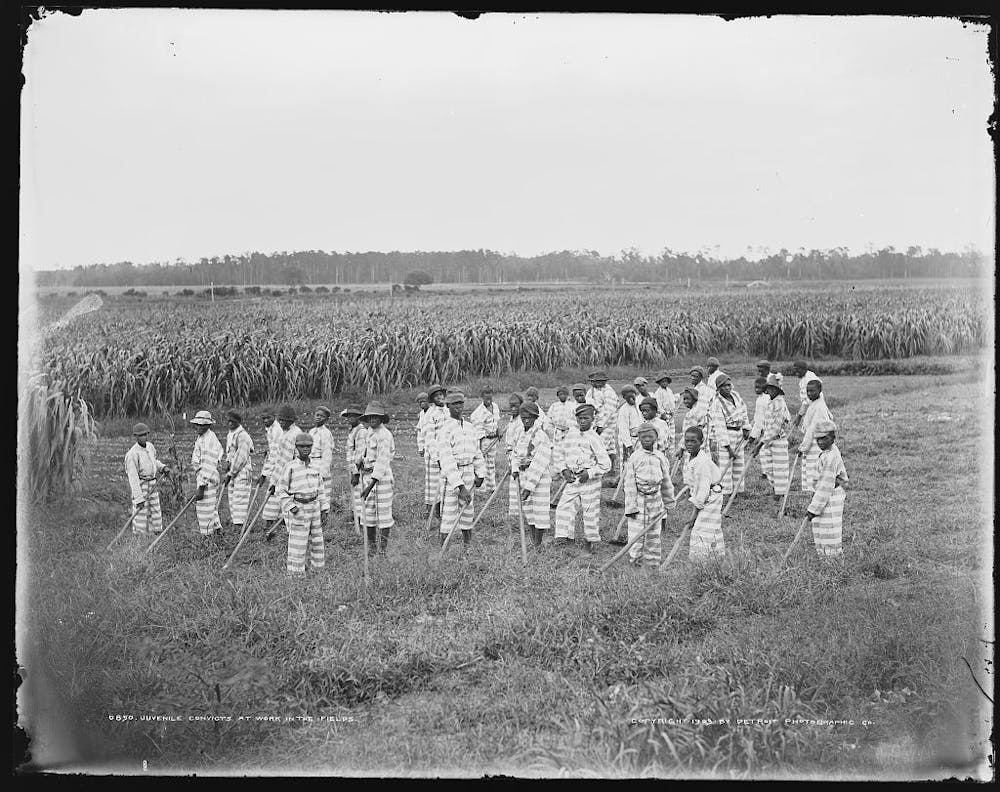
Juvenile convicts at work in the fields, 1903. Library of Congress/John L. Spivak
By the early 1900s, nearly every southern state had barred black citizens not only from voting but also from serving in public office, on juries and in the administration of the justice system.
The South’s new racial caste system was not merely political and social. It was thoroughly economic. Slavery had made the South’s agriculture-based economy the most powerful force in the global cotton market, but the Civil War devastated this economy.
How to build a new one?
Ironically, white leaders found a solution in the 13th Amendment, which ended slavery in the United States in 1865. By exploiting the provision allowing “slavery” and “involuntary servitude” to continue as “a punishment for crime,” they took advantage of a penal system predating the Civil War and used even during Reconstruction.
A new form of control
With the help of profiteering industrialists they found yet a new way to build wealth on the bound labor of black Americans: the convict lease system.
Here’s how it worked. Black men – and sometimes women and children – were arrested and convicted for crimes enumerated in the Black Codes, state laws criminalizing petty offenses and aimed at keeping freed people tied to their former owners’ plantations and farms. The most sinister crime was vagrancy – the “crime” of being unemployed – which brought a large fine that few blacks could afford to pay.
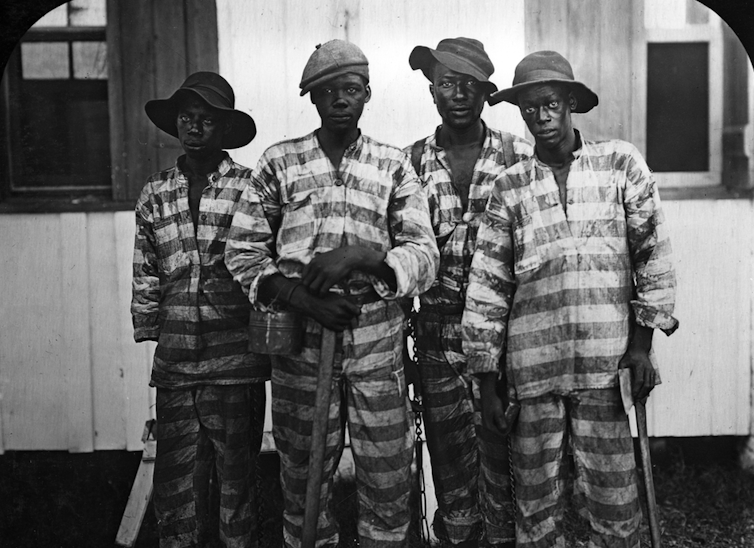
Black convicts were leased to private companies, typically industries profiteering from the region’s untapped natural resources. As many as 200,000 black Americans were forced into back-breaking labor in coal mines, turpentine factories and lumber camps. They lived in squalid conditions, chained, starved, beaten, flogged and sexually violated. They died by the thousands from injury, disease and torture.
For both the state and private corporations, the opportunities for profit were enormous. For the state, convict lease generated revenue and provided a powerful tool to subjugate African-Americans and intimidate them into behaving in accordance with the new social order. It also greatly reduced state expenses in housing and caring for convicts. For the corporations, convict lease provided droves of cheap, disposable laborers who could be worked to the extremes of human cruelty.
Every southern state leased convicts, and at least nine-tenths of all leased convicts were black. In reports of the period, the terms “convicts” and “negroes” are used interchangeably.
Of those black Americans caught in the convict lease system, a few were men like Henry Nisbet, who murdered nine other black men in Georgia. But the vast majority were like Green Cottenham, the central figure in Blackmon’s book, who was snatched into the system after being charged with vagrancy.
A principal difference between antebellum slavery and convict leasing was that, in the latter, the laborers were only the temporary property of their “masters.” On one hand, this meant that after their fines had been paid off, they would potentially be let free. On the other, it meant the companies leasing convicts often absolved themselves of concerns about workers’ longevity. Such convicts were viewed as disposable and frequently worked beyond human endurance.
The living conditions of leased convicts are documented in dozens of detailed, firsthand reports spanning decades and covering many states. In 1883, Blackmon writes, Alabama prison inspector Reginald Dawson described leased convicts in one mine being held on trivial charges, in “desperate,” “miserable” conditions, poorly fed, clothed, and “unnecessarily chained and shackled.” He described the “appalling number of deaths” and “appalling numbers of maimed and disabled men” held by various forced-labor entrepreneurs spanning the entire state.
Dawson’s reports had no perceptible impact on Alabama’s convict leasing system.
The exploitation of black convict labor by the penal system and industrialists was central to southern politics and economics of the era. It was a carefully crafted answer to black progress during Reconstruction – highly visible and widely known. The system benefited the national economy, too. The federal government passed up one opportunity after another to intervene.
Convict lease ended at different times across the early 20th century, only to be replaced in many states by another racialized and brutal method of convict labor: the chain gang.
Convict labor, debt peonage, lynching – and the white supremacist ideologies of Jim Crow that supported them all – produced a bleak social landscape across the South for African-Americans.
Black Americans developed multiple resistance strategies and gained major victories through the civil rights movement, including Brown v. Board of Education, the Civil Rights Act and the Voting Rights Act. Jim Crow fell, and America moved closer than ever to fulfilling its democratic promise of equality and opportunity for all.
But in the decades that followed, a “tough on crime” politics with racist undertones produced, among other things, harsh drug and mandatory minimum sentencing laws that were applied in racially disparate ways. The mass incarceration system exploded, with the rate of imprisonment quadrupling between the 1970s and today.
Michelle Alexander famously calls it “The New Jim Crow” in her book of the same name.
Today, the U.S. has the highest incarceration rate of any country in the world, with 2.2 million behind bars, even though crime has decreased significantly since the early 1990s. And while black Americans make up only 13 percent of the U.S. population, they make up 37 percent of the incarcerated population. Forty percent of police killings of unarmed people are black men, who make up merely 6 percent of the population, according to a 2015 Washington Post report.
It doesn’t have to be this way. We can choose otherwise.
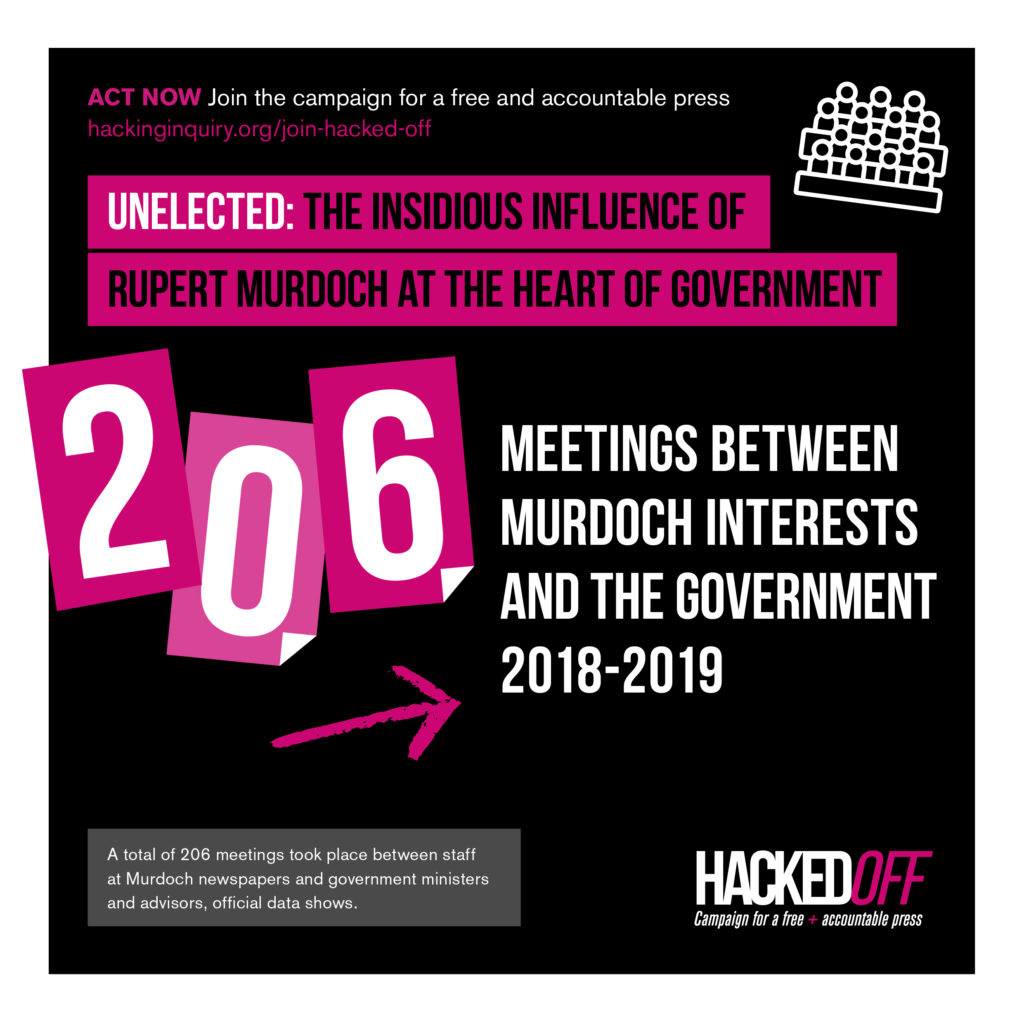
I am likely to revise this article but I want to get it out. It’s about the historical and continuing malign and corrosive influence of the Australian-American press baron Rupert Murdoch on UK politics. The article starts by looking at Murdoch’s influence over Tony Blair’s government before looking at how he still wields influence over Boris Johnson’s current government (and needs expanding there). I’m only searching the web so you can do this for yourselves.
Former Sun deputy editor Neil Wallis was in charge during the 1997 election campaign when then-Sun editor Stuart Higgins was on holiday.
The paper made shockwaves when it published a “Sun backs Blair” front page after declaring “it was the Sun wot won it” for the Conservatives in the previous election.
…
He said he asked for a first-person piece from Blair on his party’s “cut and dried position” on Europe but it was “a piece of PR flim-flam that actually said nothing”.
“I said ‘I’m not running this Alistair [Campbell, Blair’s spin doctor] because it’s just saying nothing’. But I said ‘for this to be coherent, for this to have an impact, this needs to say you will not go into the Euro without a referendum’.
“And I duly got the piece under Tony Blair’s name committing them to a referendum on the Euro if it was ever considered that they would go into it.”
Former UK Independence Party leader Nigel Farage directly linked this Sun column with the eventual vote to leave the European Union 19 years later.
He told the documentary: “The price of Rupert Murdoch’s support for Tony Blair was that Blair promised he would not take us into the European currency without first having a referendum, and if Rupert Murdoch had not done that we would have joined the Euro in 1999 and I doubt Brexit would have happened.
“So I think when we look at the long history of Britain’s relationship with the European project that led ultimately to the Brexit vote, I think that was a decisive intervention from Rupert Murdoch.”
TONY Blair spoke to media mogul Rupert Murdoch three times in the 10 days before the Iraq war – once on the eve of the invasion – it was disclosed yesterday.
Details were released by the Cabinet Office the day after Mr Blair stepped down as Prime Minister. …
So much falls into place with the revelation that Tony Blair became godfather to one of Rupert Murdoch’s two young daughters and attended their baptism on the banks of the river Jordan last year. True, it isn’t yet clear whether Blair had agreed to become a godparent while he was prime minister [see footnote], and the ceremony did take place after he had left office, but the important point is that the relationship underlines Murdoch’s deep entrenchment in British political life.
Murdoch’s third wife, Wendi Deng, who let slip the information in an interview with Vogue, described Blair as one of Rupert’s closest friends. Blair’s account of the relationship in his memoirs is somewhat different, portraying Murdoch as the big bad beast, who won his grudging respect. That is clearly disingenuous. As other memoirs and diaries from the Blair period are published, we see how close Murdoch was to the prime minister and the centre of power when really important decisions, such as the Iraq invasion, were being made.
Blair and Murdoch didn’t have to be bosom buddies for the relationship to be counter to the interests of a healthy national life and politics. As Lance Price, the former Blair spin doctor, has said, Murdoch was one of four people in Britain whose reaction was considered when any important decision was made during the Blair years.
Rupert Murdoch launched an “over-crude” campaign to force Tony Blair to speed up Britain’s entry into the Iraq war, according to the final volume of [total cnut] Alastair Campbell’s diaries.
Mr Blair’s former communications director accuses the media mogul of being part of a drive by American Republicans to drag Britain into the controversial war a week before the House of Commons even voted to approve the intervention in 2003.
The claim is explosive because it appears to contradict Mr Murdoch’s evidence to the Leveson Inquiry. The News Corp chief told Lord Justice Leveson in April: “I’ve never asked a prime minister for anything.”
It is the second time that claim has been contested. Sir John Major, the former Prime Minister, told the inquiry this week that Mr Murdoch threatened to withdraw the support of his newspapers for his Government unless it took a tougher stance on Europe. …
Liverpool MP Andy Burnham has suggested that Tony Blair did not order a full enquiry into the Hillsborough disaster because he did not want to offend Rupert Murdoch.
Mr Burnham, a Labour leader hopeful said he was told not to pursue his demand for an official investigation when serving under Mr Blair.
As a result a “major injustice” was allowed to remain in place for more than a decade, he said.
Mr Burnham was the driving force behind Gordon Brown’s decision to set up the Hillsborough Independent Panel into the deaths of 96 Liverpool fans. … The Sun caused lasting outrage after publishing a report following the 1989 tragedy accusing “drunken” Liverpool fans of attacking rescue workers. …
Former Prime Minister Tony has always adamantly denied allegations he had an affair with Wendi, who was married to the News UK magnate from 1999 to 2013. However, the new BBC show spoke about Wendi’s affection towards him, including an unearthed diary entry in which she spoke about his ‘good body and legs’ before adding: ‘And what else and what else and what else…’.
…
But it was a series of emails, allegedly from Wendi about Blair, that effectively caused their divorce. ‘She made a bad mistake,’ journalist Ken Auletta explained. ‘She was sending emails on Newscorp email, so it’s easy for one of Murdoch’s minions, or lawyers, to extract those emails and see what they said – and they did. …
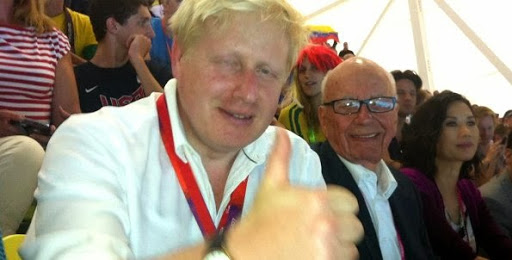
dizzy: At Rupert Murdoch and Jerry Hall’s wedding in March 2016 Boris Johnson, Michael Gove and Priti Patel were invited – three prominent members of the current UK government. David Cameron and George Osborne – anti-Brexiteers – were not invited. Tony Blair was not invited – he’s been dropped by Murdoch after not having an affair with Wendi Deng.