Previous blog: Richmal Marie Oates-Whiteheadt

Spread the love

An article from my previous ‘On a quiet day, I can hear her breathing’ blog that ceased on 31 May 2011.

Thursday, December 18, 2008 – Richmal Marie Oates-Whitehead

� November 9, 2007 – Richmal Marie Oates-Whitehead


Richmal Marie Oates-Whitehead

http://www.thinkbabynames.com/meaning/0/Richmal

The girl’s name Richmal (i)-ch-mal is a variant of Ricarda.

http://www.thinkbabynames.com/meaning/0/Ricarda

The girl’s name Ricarda (i)-car-daric(a)-rda is of Old German origin, and its meaning is “powerful leader“. Feminine form of Richard.

http://www.parenthood.com/babynames_searchresults.html?searchName=Richmal

RichmalFemaleGermanFeminine form of Richard: Hard ruler.

http://www.thinkbabynames.com/meaning/0/Marie

The boy’s and girl’s name Marie m(a)-rie is of French origin. Variant of Mary (Latin) “star of the sea“. Earliest English form of the name which was revived in the 19thcentury.

http://www.babynames.com/name/MARIE

The meaning of the name Marie is Sea Of Bitterness.


The origin of the name Marie is French.


http://genealogy.familyeducation.com/surname-origin/oates


Last name origin & meaning:

English: patronymic from the Middle English personal name Ode (see Ott).
http://genealogy.familyeducation.com/surname-origin/ott
Last name origin & meaning:

English and German: from a Middle English personal name, Ode, in which personal names of several different origins have coalesced: principally Old English Od(d)a, Old Norse Od(d)a and Continental Germanic OdoOtto. The first two are short forms of names with the first element Old English ord, Old Norse odd ‘point of a weapon’. The Continental Germanic names are from a short form of compound names with the first element od- ‘possessions’, ‘riches’. The situation is further confused by the fact that all of these names were Latinized as Odo. Odo was the name of the half-brother of the Conqueror, archbishop of Bayeux, who accompanied the Norman expedition to England and was rewarded with 439 confiscated manors. The German name Odo or Otto was a hereditary name in the Saxon ruling house, as well as being borne by Otto von Wittelsbach, who founded the Bavarian ruling dynasty in the 11th century, and the 12th-century Otto of Bamberg, apostle of Pomerania.
http://www.surnamedb.com/surname.aspx?name=Whitehead

Surname: Whitehead

Recorded in a number of spellings including Whithead, Whitehed, Whithed, and Whitsed, this surname is of English origins. It usually derives from the Olde English pre 7th Century word “hwit” meaning white, plus “heafod”, a head, combined to form a descriptive nickname for someone with white hair. Many early surnames originate from medieval nicknames, and this is one of them. With men generally dying at about age forty, and women even younger, people with white hair were quite rare. Early recordings of the surname include Roger Witheved, who appeared in the Hundred Rolls of Huntingdonshire, dated 1273, and Adam Whytehevde of Hoton, who was a juror on an inquisition before the sheriff of Berwick in 1300. In 1338 Robert Whitede was recorded in the Manorial Records of Sheffield, Yorkshire. Occasionally, the name may derive from “Hwithod”, meaning white hood, and an occupational name for one who made white hoods for use in monasteries. An early example is that of Agnes Wythod recorded in the Hundred Rolls of Oxfordshire, for 1279.

Kether, the white head

The name of this point is I AM, called by the Hebrews Eheieh. The Qabbalists gave many names to this dot. On this subject Christian D. Ginsberg writes, in substance: The dot is called the first crown, because it occupies the highest position. It is called the aged, because it is the first emanation. It is called the primordial or smooth point. It is called the white head, the Long Face–Macroprosophus–and the inscrutable height, because it controls and governs all the other emanations.

Dr. Oates-Whitehead. Do I have to spell it out for you? Do the math.

18/12/08: Surname & Official title.

28/12/12 edit: Try it hyphonated on both it’s sides

Richmal-Marie Oates-Whitehead

Ii

Continue ReadingPrevious blog: Richmal Marie Oates-Whiteheadt

NHS news review

Spread the love

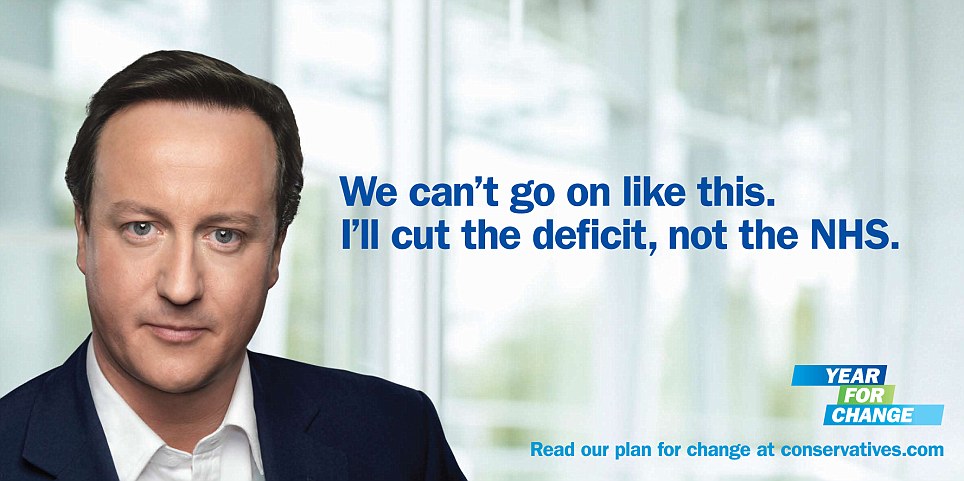
Conservative election poster 2010

A recent news article about the UK’s Conservative and Liberal-Democrat coalition government – the ConDem’s – brutal attack on the National Health Service.

‘Wake up’ to risks of NHS reforms before too late, says Lib Dem MP | GPonline.com

A Liberal Democrat member of the health select committee has called for MPs and the public to ‘wake up’ to the risks of Health Bill reforms before it’s too late.

Andrew George (St Ives, Cornwall) refused to support the Health and Social Care Bill during its progress through parliament, and has strongly attacked the proposed reforms.

He argued that the Bill would ‘damage the NHS more than it will help it in spite of the ‘pause’ and changes’.

Mr George has called a public meeting in his constituency of St Ives the week before the Bill goes through the Commons in early September.

National and local speakers will be invited to take part in the event and debate the future of the NHS.

Mr George said: ‘I’m pleased that earlier protests resulted in some improvements to the Bill following the ‘pause’ and ‘listening exercise’.

‘However, it has still not dealt with some of the major risks the Bill represents – particularly the creation of an NHS independent of government and the future role of the private sector in running great swathes of much of our public health services.’

Continue ReadingNHS news review

NHS news review

Spread the love

Conservative election poster 2010

An article about big protests in September against the UK’s Conservative and Liberal-Democrat coalition government – the ConDem’s – brutal attack on the National Health Service.

Campaigners to step up protests over ‘doomsday’ NHS reforms – newsarticle-content – Pulse

Campaign groups are organising protests around the country to coincide with the final reading of the health bill in the House of Commons – including holding a fake funeral for the NHS.

The Health and Social Care Bill is scheduled be debated in Parliament for the first time since the revisions made from the Government’s ‘listening exercise’. It will have its third reading in the House of Commons in early September and, if passed, will then be debated in the House of Lords.

One group in Sheffield will be building an air raid shelter in a bank to go with the theme of ‘NHS Doomsday’ and balloons will be released in Norfolk to satirise the Government’s claim the reforms will ‘liberate’ the NHS.

In Bournemouth a Victorian fancy dress funeral will be held in a bid to lay the NHS to rest – a vicar will even be on hand to offer pastoral support.

Continue ReadingNHS news review

NHS news review

Spread the love

The Lancet on the failed NHS records IT project.

Corporate Watch investigates the Co-operation and Competition Panel (CCP) quango that supports privatisation and the abolition of public sector NHS provision.

Waiting times for Accident and Emergency treatment increase.

Conservative election poster 2010

A few recent news articles about the UK’s Conservative and Liberal-Democrat coalition government – the ConDem’s – brutal attack on the National Health Service.

Winner of world’s most mismanaged health project » Hospital Dr

This is an editorial from The Lancet.

If there were an award for the world’s most mismanaged national health project, England’s National Programme for IT in the NHS would be a strong contender, if not outright winner. Started in 2002, Tony Blair’s brainchild has, like the computer in 2001: A Space Odyssey, gone badly wrong.

The main aim of the project was to create a fully integrated centralised electronic care records system to improve services and patient care by 2007. The budget for the undertaking was a substantial £11·4 billion. Nine years on, the Department of Health has spent £6·4 billion on the project so far, failed to meet its initial deadline, and has had to abandon the central goal of the project because it is unable to deliver a universal system.

Given the ineptitude that has characterised this project, disaster was almost certain. According to a new report by the Public Accounts Committee (PAC), the Department has failed to get value for the vast sums of money that it has paid contractors. Of the two companies that are still involved in the project, one has yet to deliver the bulk of the systems that it was contracted to supply despite being paid £1·8 billion since 2002, and the other is being paid £9 million to implement systems at each NHS site that have cost other organisations outside the programme £2 million.

The Department seems to have been foolishly duped by commercial companies that promised the sun, cost the earth, and delivered not much more than hot air. Damningly, PAC’s report states: “The Department could have avoided some of the pitfalls and waste if they had consulted at the start of the process with health professionals.”

Corporate Watch : LATEST NEWS : Co-operating and competing to privatise the NHS

“NHS delays operations ‘as it waits for patients to die or go private’” thundered the front page of the Daily Telegraph after the release of the Co-operation and Competition Panel (CCP)’s report on choice and competition in elective care late last month. Most of the major papers and news broadcasters jumped on board, the majority repeating that Primary Care Trusts (PCTs), in an attempt to cut costs, are setting minimum waiting times for patients, who then either “die or go private.” A Daily Mail leader declared: “it’s hard to conceive of a more barbaric tactic than making patients wait so long for surgery that they either go private or die.”

But reading the report, it turns out they were getting all worked up for nothing. For a start, the report is looking into elective care. Elective care includes things like hip replacements, knee replacements, foot surgery, tinnitus, varicose veins and so on: “pre-arranged, non-emergency care that includes scheduled operations,” in the words of the Department of Health. Serious, painful conditions of course, but not ones that will kill you if you have to wait a couple more weeks for an operation. As a weary David Stout, director of the Primary Care Trust Network, told the Today programme: “the suggestion people are dying waiting for routine elective care doesn’t make sense.”

So what’s this “waiting for patient to die” claim? It comes from paragraph 131 of the report, in which the writers explain they were told: “increasing waiting times for patients did have the potential to save money overall” and then they quote someone who says: “Experience suggests that if patients wait longer then some will remove themselves from the list or will no longer require treatment when it is finally offered.”

This is footnoted, but not to explain who is being quoted.* Instead, the note says:

“We understand that patients will ‘remove themselves from the waiting list’ either by dying or by paying for their own treatment at private sector providers.”

And that’s what the fuss is about. One unsubstantiated footnote. We asked the CCP if they had based this on any evidence but they didn’t reply. So the Co-operation and Competition Panel – which, if the government’s reforms go through, will become a decision-making body within the NHS – is saying that if someone’s knee replacement is delayed by an extra two weeks they may choose to die rather than wait. As the Daily Mail put it: that is sickening.


We are told early on that it is based on “around 80 submissions from NHS providers, GPs, Primary Care Trusts, Strategic Health Authorities, independent and third sector providers, representative organisations and others,” but that those submissions made by the independent sector providers – i.e. private companies – will not be disclosed due to: “concerns that publication of these submissions would be likely to prejudice the commercial interests of the organisation which had made the submission.” This makes things difficult, because the report is based on the companies’ allegations that PCTs are unfairly denying them work by encouraging patients to use public healthcare providers. Quotes of no more than a couple of sentences are pulled out of the companies’ submissions, but we are never told which company made them or what context they were made in.

Reading through the submissions made by the PCTs which we are allowed to read, it seems they were kept in the dark too. Many seem confused because the CCP has told them they have been accused of something but they haven’t been told what. NHS Somerset, among others, says it is “difficult to comment directly on the points raised without sight of the specific allegations raised.” NHS North Yorkshire and York note: “without further detail or specific examples it is difficult to respond to this allegation.”

Recommendations for the whole NHS are conjured up from a combination of accusations from a few un-named companies, explanations from a few PCTs and the panel’s “understanding” of the issue, which, as we have seen, isn’t exactly foolproof. To show PCTs are encouraging GPs to restrict patients’ ability to choose which provider they go to for their treatment, for example, we are given two, single sentence quotes from un-named PCTs and three unsubstantiated allegations made by unnamed providers. There is no thorough analysis of all the evidence taken together and no suggestion of exactly how widespread this so-called anti-competitive behaviour is. Early on they say they saw “many” examples of PCTs “excessively constraining patients’ ability to choose” and then, later on: “a significant number of PCTs are restricting patient choice and competition in routine elective care,” but that’s about it.

If the Health and Social Care bill goes through the CCP’s remit will only widen. The Department of Health has already announced that the “any qualified provider” policy will be extended into community and mental health services and it will not stop there. David Cameron and his health secretary Andrew Lansley are always keen to say how their reforms will bring an end to the reign of pen-pushing bureaucrats in the NHS but they are quietly loading an unelected body run by bureaucrats (albeit pro-market bureaucrats) with the power to censure and overrule any doctors, managers or staff that try to keep healthcare public.

Number of NHS patients waiting more than four hours in A&E doubles | Society | The Guardian

The number of patients waiting more than four hours for treatment in accident and emergency departments has almost doubled in the space of a year, the latest statistics reveal.

Figures show 161,422 patients were left waiting over four hours for “major A&E” treatment between April and June 2011 – 91% more than during the same period in 2010.

A broader measure including minor injuries units and walk-in centres was also up 90%, to 165,279.

The increases come despite a slight fall in the number of patients using A&E services, from 3.6 million to 3.58 million, scotching past Department of Health assertions that the longer waits were down to increased pressure on services.

Continue ReadingNHS news review

NHS news review

Spread the love

Conservative election poster 2010

A few recent news articles about the UK’s Conservative and Liberal-Democrat coalition government – the ConDem’s – brutal attack on the National Health Service.

Unison: Why we worry about social enterprises in the NHS | Social enterprise network | Guardian Professional


A quick look at the Right to Request scheme set up by the last Labour government, giving staff the right to ask to form a social enterprise, led to just 20 being established. Very few existing social enterprises were driven by bottom-up demand from staff and in most cases they have voted overwhelmingly to stay in the NHS. The majority of requests were management led, top-down initiatives, where employee engagement was little more than an afterthought. So much so, that Unison called for a free and fair ballot of staff before any new social enterprises were set up.

So how have these existing social enterprises worked out? There’s very little hard evidence of the benefits cited by the government of greater patient choice or more innovation. This pours cold water on government attempts to expand social enterprises, to create in its words, “the largest social enterprise sector in the world’.

The recent Kings Fund report on social enterprises was the result of a survey of a small number of directors and chief executives of social enterprises and foundation trusts rather than staff, as was acknowledged in the report. This also found that some of the aims of social enterprise such as greater staff and client engagement, less bureaucracy and more innovation can be achieved without the upheaval of structural change. Indeed these advantages can be and are demonstrated in many types of organisations and services – public, private and not for profit. They are much more dependent on a culture that promotes and rewards motivated staff, collaborative management and the active involvement of service users.

Even if there was clear evidence that existing social enterprises delivered improvements for patients, the conditions in which they will have to operate in the future have changed dramatically. The first generation of NHS social enterprises were set up when competition was at a minimum. The new breed will be forced to compete in an open market with private companies, under the government’s “any qualified provider” plans. Social enterprises are just another vehicle for the government to drive more competition into the NHS – a move that will ultimately mean patient care will suffer as the race to provide the cheapest service will damage the quality of care.

Service users doubtful over NHS personal budgets – 8/12/2011 – Community Care

“Deeply engrained clinical, organisational and managerial cultures” needed to change to make mental health services less medicalised and more person-centred if personal health budgets were to work, found a report today by the NHS Confederation’s Mental Health Network, based on a survey of users.

The report follows a poll of professionals by the network, which found social workers and other mental health practitioners were unconvinced that personal health budgets would deliver improvements for service users.

Only a minority of service users surveyed said they would take up a budget, many saying they were confused about what a personal health budget was and were unclear about how it would integrate with similar social care budgets.

This comes with the government planning to roll out personal health budgets from October 2012 following pilots in 68 areas.

The Mental Health Network has urged the government to postpone the roll out, extend the pilot schemes and begin an extensive programme of professional engagement as soon as possible.

Warnings over staff cuts after negligence costs rise | News | Nursing Times

Cuts to staffing and training budgets have been described as a “false economy” and “short sighted” after new figures showed the spiralling cost of lawsuits against the NHS.

The NHS Litigation Authority’s annual report showed that the number of clinical negligence claims brought against the NHS rose by 32 per cent in 2010-11, to 8,655. The NHS paid out £863m to claimants last year, up from £787m the year before.

Chris Cox, legal director at the Royal College of Nursing, said the figures were no reflection on the safety of NHS care, and warned that there would be a rise in clinical negligence cases if staffing numbers and skill levels were cut back. “It’s short-sighted to think it is too costly an exercise to maintain this level of staffing”, he told Nursing Times.

Continue ReadingNHS news review