AS FRUSTRATION grows over failure to tackle pollution, new research revealed yesterday that over a quarter of adults in England have considered withholding water bill payments.
A new report from Surfers Against Sewage (SAS) has accused the water industry of falling short of the Environment Agency’s target to reduce pollution incidents by 40 per cent.
Instead, they recorded a 30 per cent increase to 2,487 incidents, the highest in a decade.
Polling 2,000 adults, SAS found that 27 per cent of people in England have considered not paying their bill due to the actions of their water supplier.
Water bills surged by 47 per cent this month and are expected to keep rising, with customers projected to pay £160 more in 2030 compared with 2024.
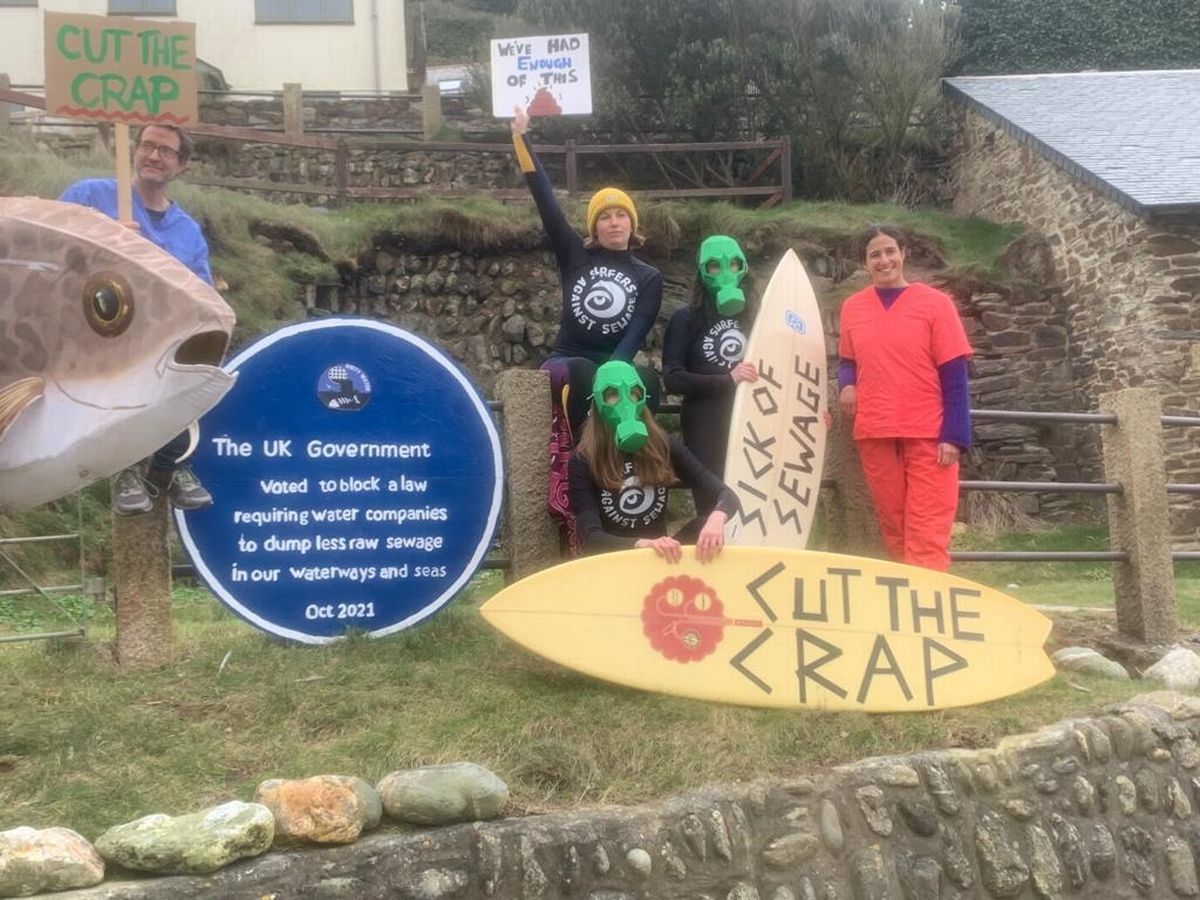
April 2023 Surfers Against Sewage and Extinction Rebellion protests in St Agnes, Perranporth, Truro and Charlestown which unveiled spoof Blue Plaques to the MPs and Conservative Government who allowed raw sewage to be dumped in the sea (Image: Surfers Against Sewage)
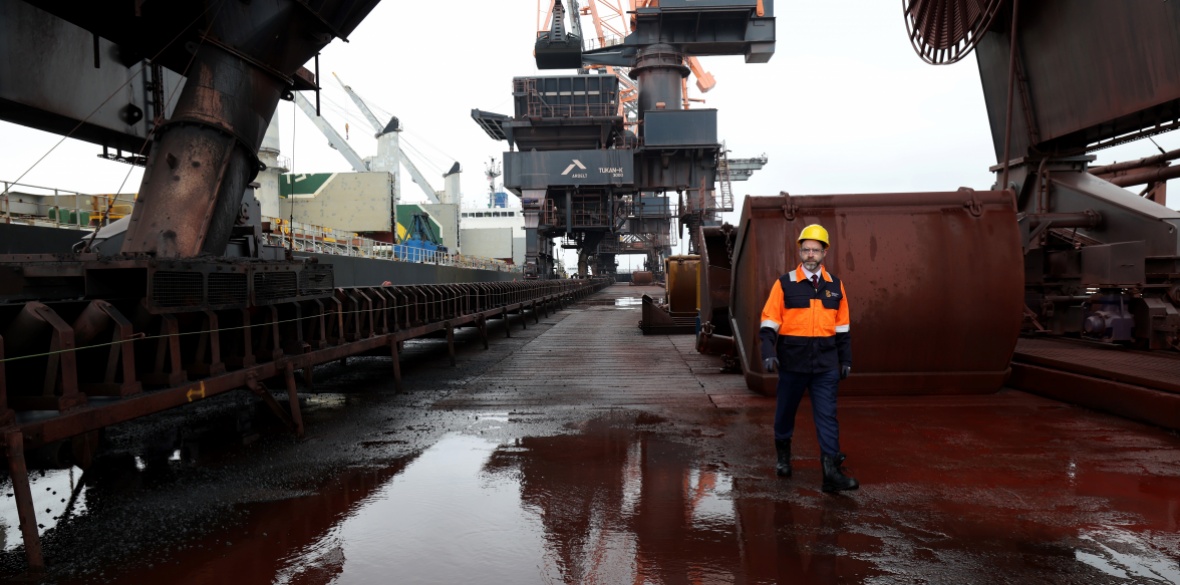
Business Secretary Jonathan Reynolds arrives as coking coal is unloaded at Immingham Port, northern England, as he visits the site in Lincolnshire to view raw materials destined for British Steel at Scunthorpe, being off-loaded, April 15, 2025
THE CRISIS at Scunthorpe steelworks, rightly if belatedly being addressed in the immediate term by state intervention, is the consequence of privatising critical national infrastructure so decisions on its future rest on the profit-and-loss calculations of private companies.
Right-wing media and parliamentarians, who are pro-privatisation and pro-war, want to avoid this conclusion. So we are seeing a propaganda campaign to blame it on other causes, each of which advances the right’s agenda.
One is that it is the result of pursuing “net zero” policies aimed at reducing greenhouse gas emissions. In fact, a planned and publicly directed green transition is essential to Britain’s industrial future: it is leaving it to the market which places jobs and industry at risk.
Turning our backs on the climate crisis cannot be an option as extreme weather events and crop failures grow more serious with each passing year. Labour should face pressure not to drop its already much reduced climate commitments, but to invest in measures that directly help people — restoring its original ambitious plans to insulate 19 million homes in a decade, cutting emissions and lowering household energy bills, for example — to stop the climate-denialist right claiming green policies lower living standards.
The other is to turn Jingye’s record at British Steel into a “security risk” because the company is Chinese, scaremongering over other Chinese investments in Britain and calling for trade decoupling in line with the new cold war being pushed from Washington.
Here, socialists must take a clear position that distinguishes our opposition to any company not accountable to the British people controlling assets of strategic importance from a China-bashing narrative that raises international tensions and risks advancing the US-led war drive.
That doesn’t mean defending the behaviour of a firm like Jingye, which seemed designed to force the closure of the Scunthorpe blast furnaces and whose negotiations with government involved demanding huge sums of money while offering little in return.
But it does mean identifying the parallels between its conduct and, say, that of the Indian conglomerate Tata, which has also taken hundreds of millions in public money while refusing to save the blast furnaces at Port Talbot, a move set to cost thousands of jobs. The common factor is not the country of origin, but the lack of democratic accountability of companies not owned by the British public.
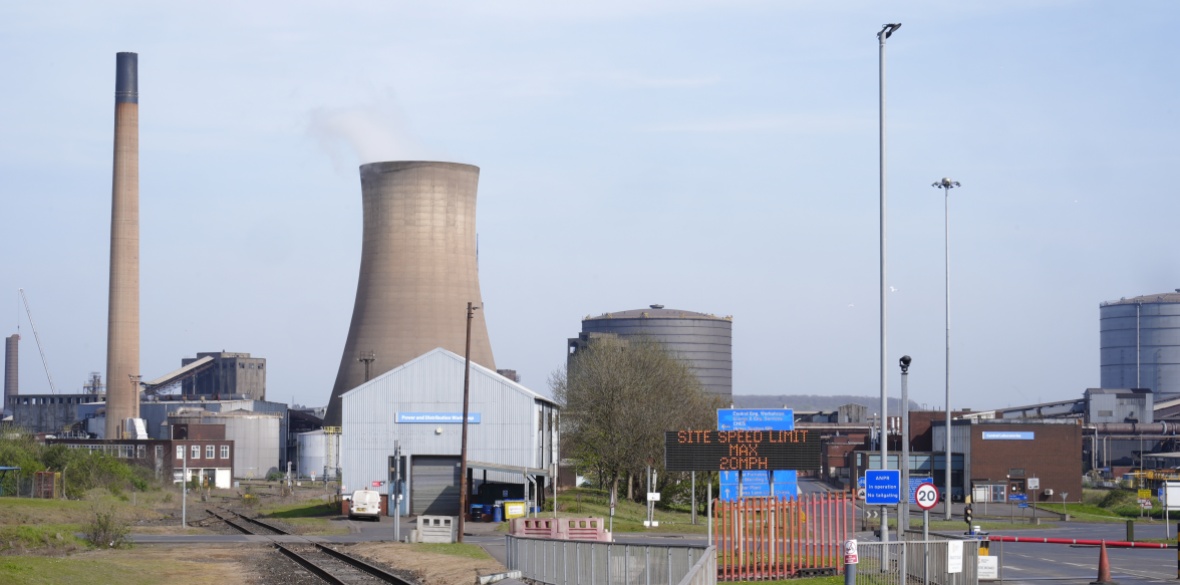
A general view of British Steel in Scunthorpe, Lincolnshire, April 12, 2025
LABOUR has been urged to catch up with public support for nationalising services “just as strategically important” as British Steel.
Campaigners and unions have continued to call for the full nationalisation of the company after the government passed an emergency law on Saturday to seize control of its Scunthorpe plant.
The legislation was passed in a single day, empowering ministers to save the last plant making “virgin steel” direct from raw materials from imminent closure, as well as thousands of jobs.
But Labour’s action was likened to an expensive public bailout today amid growing calls for the government to stop the private sector from running other services into the ground.
We Own It founder and director Cat Hobbs said: “The government has sprung into action to protect British Steel as a strategically important industry, with nationalisation on the table.
“In 2020, Keir Starmer promised public ownership of rail, mail, energy and water — as well as ending outsourcing in our NHS and local government.
“These public services are just as strategically important as steel, as drivers of economic and social development.
“Since Thatcher’s sell off, many of our key public services have been handed over to foreign states, offshore funds and billionaires.
“If Starmer is looking to take back control of our economy, this would be a good place to start.
“The UK public overwhelmingly supports public ownership and it’s high time our government caught up.”
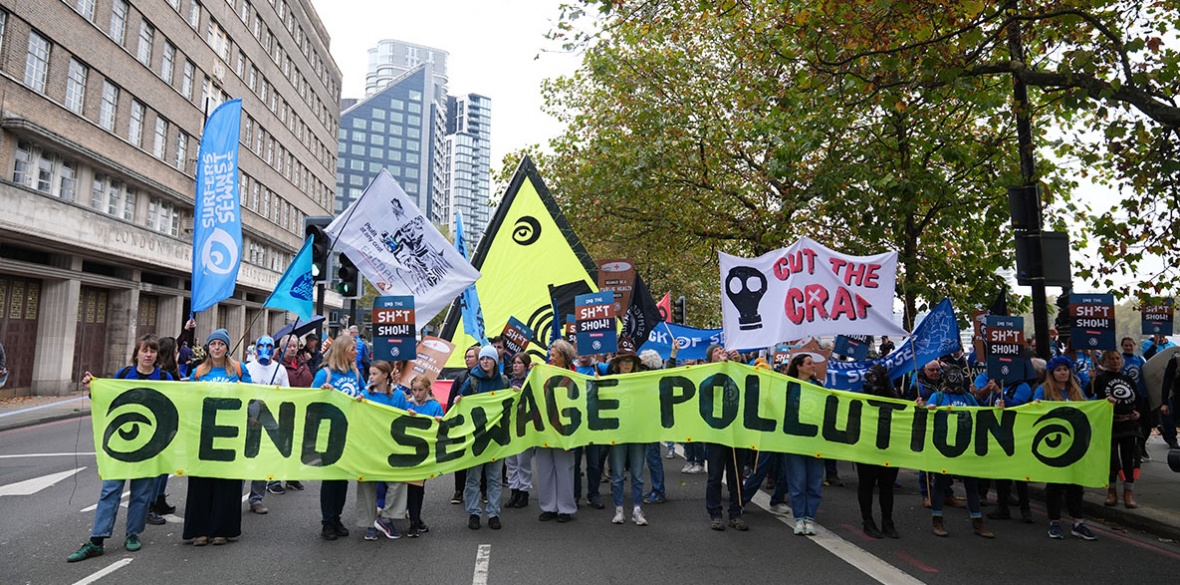
People take part in the Clean Water march in central London, to demand tougher action on keeping Britain’s rivers and seas clean, November 3, 2024
CAMPAIGNERS launched a legal challenge against Ofwat today, accusing the water regulator of unlawfully forcing customers to foot the bill for decades of neglect by the industry.
River Action launched the challenge on the same day water bills per year in England and Wales increased by an average of £123.
The challenge centres on Ofwat’s 2024 price review, which granted “enhanced funding” to United Utilities.
Campaigners say that the regulator failed to ensure the extra funds would be spent on new water and sewage projects instead of fixing historic issues.
River Action argues that such decisions mean that customers could be forced to pay twice for failing infrastructure: once through previous water bills and again through upcoming charges.
Alarmingly, campaigners warned that Ofwat relies on using simulation modelling to forecast sewage infrastructure capacity rather than real-world data when making its funding decisions.
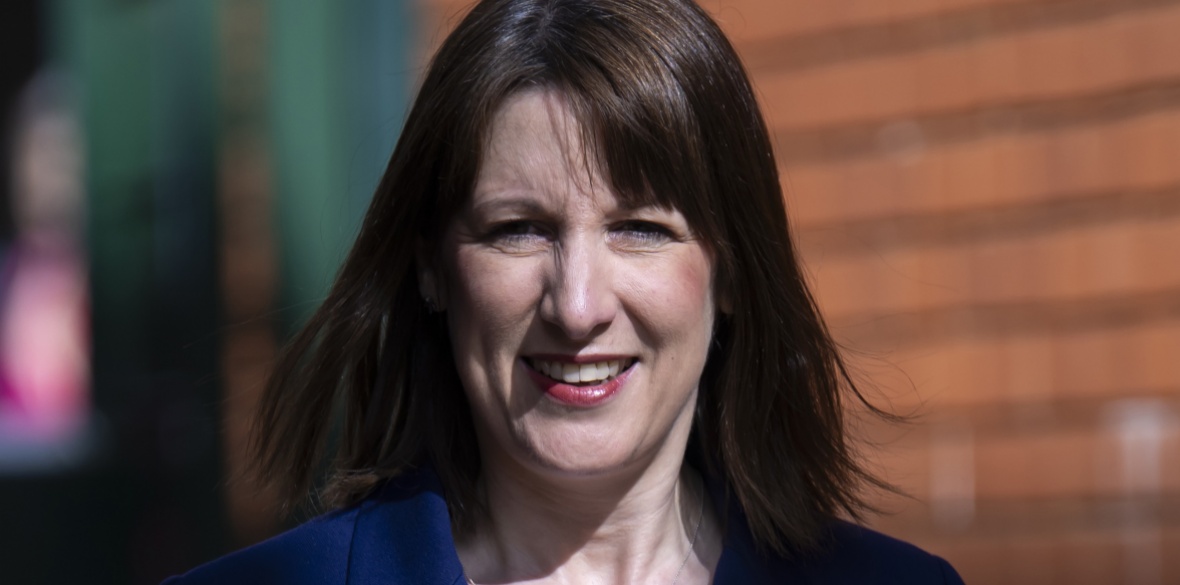
Chancellor of the Exchequer Rachel Reeves arrives to meet students on the carpentry course during a visit to Bury College in Greater Manchester, March 20, 2025
…
Fourteen years of Tory rule have cut services to the bone. The notion that “efficiency savings” can slice off further billions without worsening already degraded services is absurd.
Ironically, the cuts are intended to fund increased military spending — though if there is a department renowned for waste it is the Ministry of Defence. The MoD is repeatedly excoriated by the public accounts committee for the huge sums squandered on projects that end up delayed by years or not delivered at all.
Current Defence Secretary John Healey, when in the shadow cabinet, published a report identifying billions it had overspent on projects and billions more paid for cancelled contracts with its often extortionate suppliers. The report noted that the MoD had even been fined £32.6 million by the Treasury for its “poor accounting practices.” Yet it is this department which is having more billions thrown its way.
As for extortionate suppliers, the evidence is plain that besides tying institutions from hospitals to schools into contracts forcing them to repay PFI debts worth multiples of the original loans, many such agreements also tie them into inflexible and costly servicing contracts.
Outsourcing services is massively inefficient, yet remains the norm, despite Reeves’s one-time promise to deliver “the biggest wave of insourcing in a generation.”
As the Prison Officers Association (POA) points out of outsourced prison maintenance, we end up paying through the nose for “crumbling cells, compromised safety and rodent-infested jails.”
“We do not for one minute accept that the privatised model of prison maintenance is more cost effective than insourcing … it is completely delusional to claim it provides best value for the taxpayer,” POA general secretary Steve Gillan observes.
Clearly value for money is not Reeves’s priority — corporate profits are, including at the Treasury’s expense.
Keir Starmer commits to play the caretaker role for Capitalism through the “hard times”.Keir Starmer explains the moral case for cutting disability benefits. He says work will set you free.