Lack of planning has hit Labour’s efforts to fix public services, says thinktank

Keir Starmer accused of failing to adequately strategise while in opposition, leading to uncoordinated policymaking
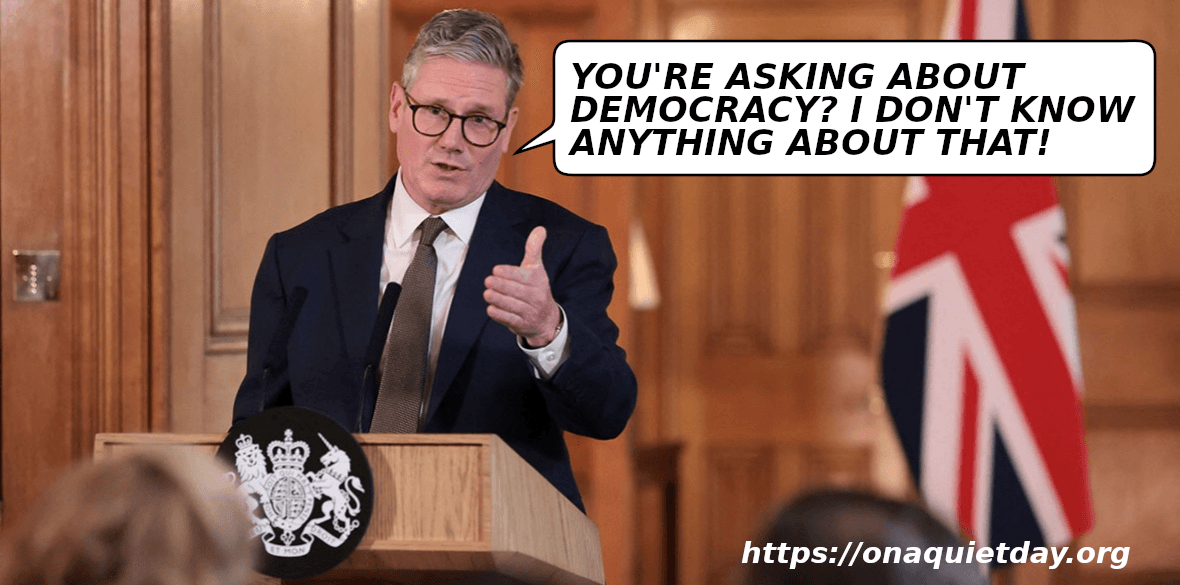
Keir Starmer is failing to make major improvements to public services partly because he did not plan properly while in opposition, according to a report from the Institute for Government (IfG).
The prime minister went into government without a clear idea about how to achieve his targets, the IfG found, resulting in haphazard attempts to reform various sectors, from the health service to the courts.
The annual report provides a damaging overview of an occasionally chaotic first year in government for Labour, during which the party and Starmer have slumped in the polls.
Nick Davies, a programme director at the IfG and one of the authors of the report, said: “Starmer went into government with a set of missions, but no clear idea about how to achieve them or how those targets fit together in any meaningful way.
“He has not been properly engaged with this process. In opposition he should have been the one to say: ‘This is my view of what public sector reform looks like’, whether that’s on devolution, or the health service, or anything else.
“But there has been a void at the heart of government when it comes to public services.”
…
Continues at https://www.theguardian.com/society/2025/nov/19/starmer-struggling-overhaul-services-lack-of-planning-says-thinktank

Mali defends sovereignty against a Western-backed “proxy war” by terror groups
Original article by Pavan Kulkarni republished from peoples dispatch under a Creative Commons Attribution-ShareAlike 4.0 (CC BY-SA) license.

As panic-inducing travel advisories and doomsaying media reports prophesy the fall of Mali to an Al Qaeda affiliate attacking fuel convoys, the government has re-secured supply routes and hosted Mali’s first international defense expo in a supposedly besieged capital.
Amid a barrage of media reports prophesying the fall of Mali to an Al Qaeda affiliate disrupting its fuel supply by attacking tankers, delegates from ten African countries, Iran, and Turkey attended a defense expo in the capital Bamako from November 11 to 14.
The city was reported to be “under siege”, encircled by jihadists closing in on power. Some version of “Is Mali about to fall?” was a rhetorical question across headlines, while the Atlantic Council declared the country was “unraveling”.
Dismissing this portrayal as a scenario “concocted in the office of foreign intelligence services”, Foreign Minister Abdoulaye Diop insisted that “the fate of Mali, and the destiny of the people in the West African region will not be decided” by the media.
He made these remarks on November 12, addressing a press conference on the sidelines of BAMEX 25, Mali’s first international defense expo, aimed at building “an autonomous security architecture” for Africa in the face of “unprecedented security and geopolitical challenges”.
This expo, he said, is yet another indication of the Malian government’s priority to strengthen its defense and security to combat the threat of terror groups that were spawned across the Sahel by NATO’s destruction of Libya in 2011.
French-spawned terror groups
Mali was among the first and worst affected by these terror groups. Its former colonizer, France, which was a key participant in Libya’s destruction, then deployed its troops, ostensibly to protect Mali. Over the years, its military presence expanded across the Sahel. Alongside, the armed groups also grew in strength, increasing attacks and the area under their control.
This led to a growing perception that French troops in the region were not fighting the terror groups it helped create but guarding its own economic and political interests in maintaining its neocolonial grip over the troubled former colonies.
Amid mass protests against the French troop deployment, Mali’s France-backed regime of the then-president Ibrahim Boubacar Keïta was removed in a popular military coup in 2020. A military government replaced the regime with the support of the protest movement, trade unions, and other progressive formations.
In 2021, then-prime minister Choguel Kokalla Maïga recalled in an interview the active role played by France in handing over Mali’s territory to terror groups.
“Upon arriving in” the northern town of Kidal in 2013, “France forbade the Malian army from entering. It created an enclave,” and handed it over to Al-Qaeda affiliate Ansar al Dine and Tuareg separatists brought together, he said. Later in 2017, Ansar al Dine coalesced with other terrorist groups to form the Jama’at Nusrat al-Islam wal-Muslimin (JNIM), which became one of the most dangerous groups in the Sahel.
“It’s an enclave controlled by France. They have armed groups trained by French officers. And we have evidence of this,” Maiga added in his 2021 interview. “Mali has no access to Kidal.”
However, the new government retook Kidal in November 2023, less than a year and a half after expelling the French troops.
Read More: Withdrawal of French troops from Mali is a historic, anti-imperialist victory
“On the ground today, terrorist groups are no match for Mali’s defense and security forces,” Diop told reporters at the press conference. “There have been enormous efforts to equip Mali’s defense and security forces, which have achieved resounding successes” against the terror groups, he said, adding that this has “forced them to change their strategy and now attack softer targets.”
Attacks on fuel convoys
Early this September, the JNIM started attacks on drivers and their tankers carrying fuel from the Ivory Coast in the Sikasso region of southern Mali. “Due to disruptions in fuel supplies that are affecting the movement of school staff,” the Education Ministry suspended classes for two weeks on October 26.
“Do Not Travel to Mali for any reason due to crime, terrorism, kidnapping, unrest, and health,” the US State Department said in a travel advisory on October 25. Three days later, the department issued a second alert, insisting that its citizens in Mali “should” leave the country “using commercial aviation, as overland routes to neighboring countries may not be safe for travel due to terrorist attacks along national highways.”
Australia followed suit on October 29, warning, “If you’re in Mali, you should depart immediately using commercial means while the international airport in Bamako remains open and flights are available. If you decide to remain in Mali, be prepared to shelter in place for an extended period.” Italy and Germany also asked their citizens to leave the country.
Amid the panic-inducing travel advisories and doomsaying media reports, Mali’s president, Col. Assimi Goïta, inaugurated the country’s second Lithium mine on November 3, setting Mali en route to becoming Africa’s leading Lithium producer by 2026.
The mine is located in Bougouni, about 170km south of Bamako in the Sikasso region, where the JNIM had attacked fuel convoys in September.
Government restores fuel supply
Two days later, on November 5, residents of Bamako cheered on the streets as large convoys of fuel tankers entered the city under the protection of the armed forces. Nevertheless, France 24 persisted with headlines like “Jihadists threaten to overrun Mali as blockades continue“, “fuel blockade squeezes Mali’s military rulers“, etc.
“There have been disruptions in the supply system,” but “the state organized itself, put in place a strategic plan to resume supplies, to ensure the security of convoys … And gradually, you see that hundreds of trucks are arriving every day to resume supplies to Bamako and other localities,” Diop added in his press conference. “As I speak, Mali is able to ensure the supply of hydrocarbons and petroleum products to its population.”
However, two days after the fuel convoys started arriving, France “advised” its citizens on October 7 to leave Mali “as soon as possible using the remaining available commercial flights” because the “security situation has been deteriorating.”
Mali’s first-ever National Electronic Payments Exhibition was organized in the capital that day by the Professional Association of Banks and Financial Institutions of Mali (APBEF-Mali) and the West African Economic and Monetary Union’s Interbank Electronic Payment Group (GIM-UEMOA).
Schools reopened on schedule on November 10. That day, President Goïta inaugurated the Presidential Emergency Hospital Project to upgrade six existing health centers in Bamako to district hospitals by the end of 2026, for which a health budget of USD 349.2 million has been allocated. The inauguration also marked the start of construction of nine new hospitals, including in Bougouni, Bandiagara, and Nioro, where attacks had been reported in the recent past.
Despite these indications of improving security, the UK government claimed on November 13 that “Terrorist group Jama’a Nusrat ul-Islam wa al-Muslimin (JNIM) has implemented blockades on key routes throughout Southern and Western Mali, including the capital city of Bamako,” where the international defense expo was underway.
“These blockades are targeting fuel trucks and are enforcing checkpoints for individuals attempting to pass through them. Attacks can occur at any time,” added its travel advisory.
A proxy war
“We must not think we are simply facing terrorist groups,” Diop maintains. “No, this is a proxy war, where certain powers, cowardly and unable to confront us directly, are using terrorist groups and asymmetric forces to fight us … These terrorist groups have drones. Where do they come from? Who manufactures them? Who provides them in areas where people cannot even eat?”
Le Monde had reported last year that Ukrainian authorities are training an armed group to use drones. Spokesperson of Ukraine’s military intelligence, Andriy Yusov, had said in an interview that it provided “information, and not only information,” to armed groups fighting the state in Mali.
Earlier in 2022, Diop had written a letter to the UN Security Council, saying Mali had evidence that France was flying missions in Malian airspace to collect intelligence and airdrop arms and ammunition to terror groups.
Mali’s southern neighbor, Burkina Faso, and eastern neighbor, Niger, have also since accused France of supporting terror groups to destabilize their countries after its troops were expelled following a similar sequence of anti-France protests and popular coups.
“Africa is now the epicenter of terrorism,” Nicolas Lerner, head of France’s General Directorate for External Security (DGSE), told France Inter radio on November 10. Calling it a threat to Europe, he insisted it “directly threatens our interests,” effectively trying to set up the case for another military intervention.
Curiously, he went on to add that while the “JNIM wants the fall of the junta and the installation of authorities who back the establishment of a caliphate,” the group itself “is not necessarily capable of controlling Mali, nor does it actually want to.”
Lerner is “saying … it is not even their intention to take Bamako … How [does he] know their intention? Is it you who gives them this intention? Is it you who commands them? Is it you who decides,” questioned Diop.
“This should help us understand how deep the collusion is today between hybrid forces. These are not terrorists – it is a proxy war. But I can assure you that Mali will endure.”
He reiterated that Mali, Burkina Faso, and Niger, which have formed the Alliance of Sahel States (AES), are fighting together, convinced that this proxy war is waged on them because they “chose to break the chain of dependency, to break the chain of subjugation to colonial domination.”
He added, “Our countries are being attacked first to break this dynamic and then to prevent other African countries from following this path. And we have understood the political message behind this.” The African Union (AU), however, has not.
“We are not reaching out to the so-called international community to come to our aid”
Amid the chorus by Western countries, the AU’s chairperson, Mahamoud Ali Youssouf, called for “a robust, coordinated, and coherent international response to counter terrorism and violent extremism in the Sahel.”
“No action can be … taken in Mali without Malians, without the consent of the Malian state, without the Malian state requesting it,” Diop retorted, affirming, “we are not reaching out to the so-called international community to come to our aid.”
“This call for international action is all the more worrying since Mali has emerged from this type of paradigm,” he added. Having expelled the French troops and asserted sovereignty, “the new paradigm [in the AES] is to trust ourselves and take charge … to ensure the security of our countries rests first and foremost on the shoulders of the people and leaders of our countries.”
Original article by Pavan Kulkarni republished from peoples dispatch under a Creative Commons Attribution-ShareAlike 4.0 (CC BY-SA) license.
Cloudflare Outage Ruin Your Morning? Consumer Groups Say Blame Profit-Hungry Big Tech Monopolists
Original article by Jessica Corbett republished from Common Dreams under Creative Commons (CC BY-NC-ND 3.0).

“Congress and regulators must finally step in and crack down on anticompetitive behavior, opening markets, requiring interoperability, and ensuring smaller tech firms can compete,” said one advocate.
Just weeks after major Amazon Web Services and Microsoft Azure outages, Cloudflare on Tuesday became the latest company to “break the internet,” prompting consumer watchdogs to take aim at Big Tech and call out industry consolidation.
“This outage is another brutal reminder that the internet is far too dependent on a tiny handful of tech giants,” said Public Citizen’s Big Tech accountability advocate, J.B. Branch, in a statement. “For years, industry lobbyists have insisted that deregulation would spark innovation from smaller companies. Instead, we got the opposite: mass consolidation of data, compute, and infrastructure into the hands of a few dominant firms whose failures now cascade across the globe.”
“Governments and companies continuing to contract with the same handful of companies are increasing the fragility of both the internet and entire economies,” Branch continued. “Congress and regulators must finally step in and crack down on anticompetitive behavior, opening markets, requiring interoperability, and ensuring smaller tech firms can compete so the entire digital economy isn’t held hostage by the failures of a few dominant companies.”
After Amazon’s outage last month, Public Citizen and other groups—including the American Economic Liberties Project, Demand Progress Education Fund, and Tech Oversight Project—called on Federal Trade Commission Chair Andrew Ferguson “to swiftly conduct a market structure review of leading cloud services providers, including but not limited to Amazon, to assess how their market dominance and use of monopoly power to stifle competition is creating systemic fragility across industries.”
“Big Tech is clearly creating systemic dangers that warrant proactive oversight and aggressive intervention by the FTC, on behalf of the American people and as soon as possible.”
“This probe should also examine dependencies of key sectors (such as financial services, telecommunications, and government services) on any single cloud provider and the extent to which those dependencies pose systemic risks to data security and privacy and consumer protection, as well as to our open markets and the resilience of our national and global infrastructure systems,” the coalition argued. “We urge you to then take robust agency action to counter these systemic dangers, particularly to bring diversification to the cloud industry.”
“Given the enormous stakes, the FTC should not defer action until the next crisis—the FTC has the mandate, the requisite knowledge, and the legal authorities to tackle this challenge now,” the coalition concluded. “Big Tech is clearly creating systemic dangers that warrant proactive oversight and aggressive intervention by the FTC, on behalf of the American people and as soon as possible.”
Just a few weeks later, the Cloudflare outage on Tuesday impacted websites including ChatGPT, Coinbase, Dropbox, X, Shopify, Spotify, Zoom, the Moody credit ratings service, and many more. According to Cloudflare, the San Francisco-based company offers over 60 cloud services globally, and it protects “20% of all websites.”
“Sorry, this content could not be embedded.”
In a statement to Forbes, a company spokesperson said that “the root cause of the outage was a configuration file that is automatically generated to manage threat traffic. The file grew beyond an expected size of entries and triggered a crash in the software system that handles traffic for a number of Cloudflare’s services.”
Stressing that there is “no evidence that this was the result of an attack or caused by malicious activity,” the spokesperson added that “we expect that some Cloudflare services will be briefly degraded as traffic naturally spikes post incident but we expect all services to return to normal in the next few hours.”
Cloudflare also said on X—which is now working again—that “we always strive to be as transparent as possible in these types of situations, and we will be publishing an in-depth blog shortly.”
Meanwhile, Demand Progress Education Fund highlighted the coalition’s recent letter to the FTC, and Emily Peterson-Cassin, the group’s policy director, said that “yet again, a failure at one company disrupted the lives of people all around the globe.”
“Big Tech’s relentless drive to become the only fish in the pond and centralize the internet in their hands threatens our economy and our national security,” she added. “The FTC has the knowledge and the power to help prevent this from happening again. For all our sakes, the agency must take action immediately.”
Original article by Jessica Corbett republished from Common Dreams under Creative Commons (CC BY-NC-ND 3.0).
Germany lifts restrictions on arms exports to Israel: Spokesman
This work by Middle East Monitor is licensed under a Creative Commons Attribution-NonCommercial-ShareAlike 4.0 International License.

Germany announced Monday it will lift restrictions on arms exports to Israel, citing a “stabilized ceasefire” in Gaza and recent diplomatic progress in the region, Anadolu reports.
The decision takes effect on Nov. 24 and returns the country to case-by-case review of arms export applications to Israel, government spokesman Stefan Kornelius told the German press agency DPA.
Kornelius said the government based its decision on the ceasefire between Israel and Hamas that has held since Oct. 10 and has stabilized in recent weeks. He also pointed to efforts toward a sustainable peace and increased humanitarian aid in Gaza.
Chancellor Friedrich Merz ordered the restrictions on Aug. 8, halting approval of arms exports that could be used in the Gaza war. The decision came in response to Israel’s announcement of a full-scale ground offensive and the stopping of aid deliveries into Gaza.
Germany’s arms exports to Israel have long been contentious and the subject of legal challenges by rights groups and Gaza residents. The European Center for Constitutional and Human Rights (ECCHR), which supported plaintiffs in their legal action, has repeatedly said that Berlin’s authorization of weapons exports to Israel violated international agreements Germany signed, including the Geneva Convention on the prevention and punishment of the crime of genocide.
READ: Activists climb iconic Brandenburg Gate to protest Germany’s ‘complicity’ in Gaza genocide
This work by Middle East Monitor is licensed under a Creative Commons Attribution-NonCommercial-ShareAlike 4.0 International License.