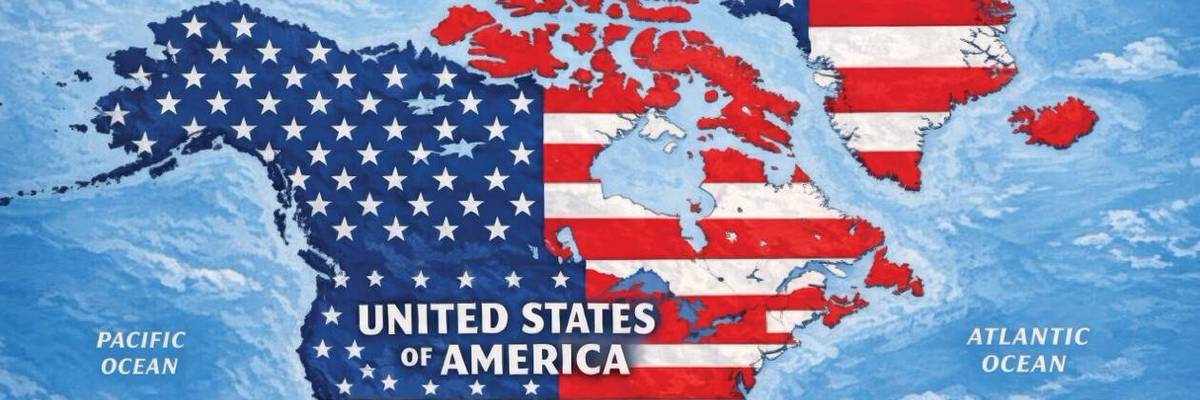
President Donald Trump posted on his Truth Social platform a map showing the US flag over not only the United States but also Canada, Greenland, Iceland, the Caribbean, Mexico, and multiple countries in Central America. (Image via President Donald Trump/Truth Social)
“As always, he is telling us what the plan is,” said one critic. “We must take it seriously.”
The map on Trump’s Truth Social platform shows the US flag over not only the United States but also Canada, Greenland, Iceland, Mexico, and multiple countries in Central America and the Caribbean.
Journalist Stephen Robinson wrote on X that “another world leader posting something like this would have to apologize before their immediate removal.”
Amy McGrath, a retired Marine fighter pilot and former Democratic US Senate candidate from Kentucky, wondered, “What would we do and say if the Chinese president posted a map of China taking over the Western Pacific?”
Carl Bildt, co-chair of the European Council on Foreign Relations and former prime minister of Sweden, similarly said: “What would happen if Xi Jinping posted a map where [China] has taken over all of East Asia, and [President Vladimir] Putin one of [Russia] having absorbed all of Western Europe? It would have been seen as either insane or dangerous—or both.”
While some critics called Trump “absolutely bonkers” and “f*cking insane,” Dr. Brian Goldman, a Canadian emergency physician who’s also an author and broadcaster, asserted: “That’s not insanity. That’s intention.”
Democratic strategist Michelle Kinney agreed, saying: “As always, he is telling us what the plan is. We must take it seriously.”
Melanie D’Arrigo, executive director of the Campaign for New York Health, suggested that “the reason why Republicans attack education is so that people don’t recognize the history that repeats itself.”
Without directly mentioning Trump or his map, Mexican President Sheinbaum said in Spanish on Monday, “We reaffirm that Mexico is neither nor will be a colony or protectorate of any foreign country. Proudly we are a free, independent, and sovereign nation.”
While Trump is a prolific poster, the map followed a series of posts from Sunday—including other maps and images produced with artificial intelligence—that led progressive influencer Harry Sisson to conclude that the president was “having a mental health episode online” and call for his removal from office.
Donald Trump is having a mental health episode online, posting nonstop AI photos and videos:
11:54 AM – AI image of Robert De Niro holding a “Trump is my president” shirt 1:47 PM – AI image of him and George Washington riding horses 1:47 PM – AI image of him meeting with George…
“This man is unwell. 25th Amendment NOW,” Sisson said, cataloging posts on a range of topics, from Trump’s recent renaming of Lake Ontario amid toughtrade talks with Canada, to the suggestion that New Mexico should be dubbed “New America.”
The latter was ripped by several Democratic officials, including New Mexico’s governor, Michelle Lujan Grisham, who responded that her state’s name “isn’t up for debate—it’s been ours since before the United States existed.”
“What is up for debate? Who’s showing up for working families,” she continued. “While the president tries to distract Americans from his disastrous war in Iran, gas prices keep soaring. Americans are also spending more at the grocery store, losing access to healthcare and wondering if they’ll ever be able to afford a home. Under Democratic leadership here in New Mexico, we’re providing families with free childcare and college, protecting access to healthcare, and investing in housing. While the White House wastes time coloring on maps, Nuevo México is busy doing the work.”
In addition to waging an illegal war on Iran, Trump this term has invaded Venezuela to abduct President Nicolás Maduro and take control of the country’s oil reserves, become the US commander-in-chief to bomb the most countries, and killed over 225 people by blowing up boats allegedly smuggling drugs through international waters. He’s also threatened to seize the Panama Canal and possibly attack nations including Colombia and Mexico.
As Iran has responded to Trump’s war by restricting traffic through the Strait of Hormuz, the president has teased declaring the key waterway a US territory and naming it after himself. He’s also dubbed the Gulf of Mexico “the Gulf of America” and fought to put his name on the John F. Kennedy Center for the Performing Arts in Washington, DC.
With the US midterm elections less than two months away, some Democrats in Congress have stepped up their critiques of Trump’s foreign policy—including a delegation of progressive congressional lawmakers and candidates who headed to Uruguay last month for the third Pan-American Congress.
Shortly after that gathering, delegation member Congressman Jesús “Chuy” García (D-Ill.) stressed that “progressives reject the violent, imperialistic Donroe Doctrine, and believe in a foreign policy rooted in cooperation, diplomacy, and sovereign equality.”
This work by Middle East Monitor is licensed under a Creative Commons Attribution-NonCommercial-ShareAlike 4.0 International License.
Israeli far-right Finance Minister Bezalel Smotrich displays a map of an area near the settlement of Maale Adumim, a land corridor known as E1, outside Jerusalem in the occupied West Bank, on August 14, 2025. [Photo by MENAHEM KAHANA/AFP via Getty Images]
Far-right Israeli Finance Minister Bezalel Smotrich on Wednesday announced plans for 1,000 new settlement housing units in the northern occupied West Bank, a day after 12 Western countries said they intended to impose trade restrictions on goods from illegal Israeli settlements, Anadolu reports.
Smotrich said on US social media company X that 1,665 dunams (411.5 acres) had been added to the Kida and Havat settlements, allowing for the construction of 1,000 new housing units.
The leader of the Religious Zionism party described the move as “another historic step in the settlement revolution.”
Israel has occupied the West Bank, including East Jerusalem, since 1967. The international community considers Israeli settlements built on occupied Palestinian territory illegal under international law, a position rejected by Tel Aviv.
“After more than 25 years, the Kida and Havat settlements have finally reached the moment when the government is advancing procedures to legalize their status,” Smotrich said.
Kida and Havat were established in 2003 and 2001, respectively. The Israeli government decided to convert them into recognized settlements in December and March, respectively.
The government of Prime Minister Benjamin Netanyahu has touted that since taking office in late 2022, it has approved the establishment of 104 new settlements and established 160 agricultural settlement outposts in the occupied West Bank.
Around 750,000 Israeli occupiers live in 156 settlements and 360 outposts across the occupied West Bank, including occupied East Jerusalem, according to Palestinian figures.
On Tuesday, the UK, Canada, Denmark, Finland, France, Iceland, Ireland, Norway, Poland, Portugal, Spain and Sweden announced plans to impose trade restrictions on goods originating from the Israeli settlements.
This work by Middle East Monitor is licensed under a Creative Commons Attribution-NonCommercial-ShareAlike 4.0 International License.
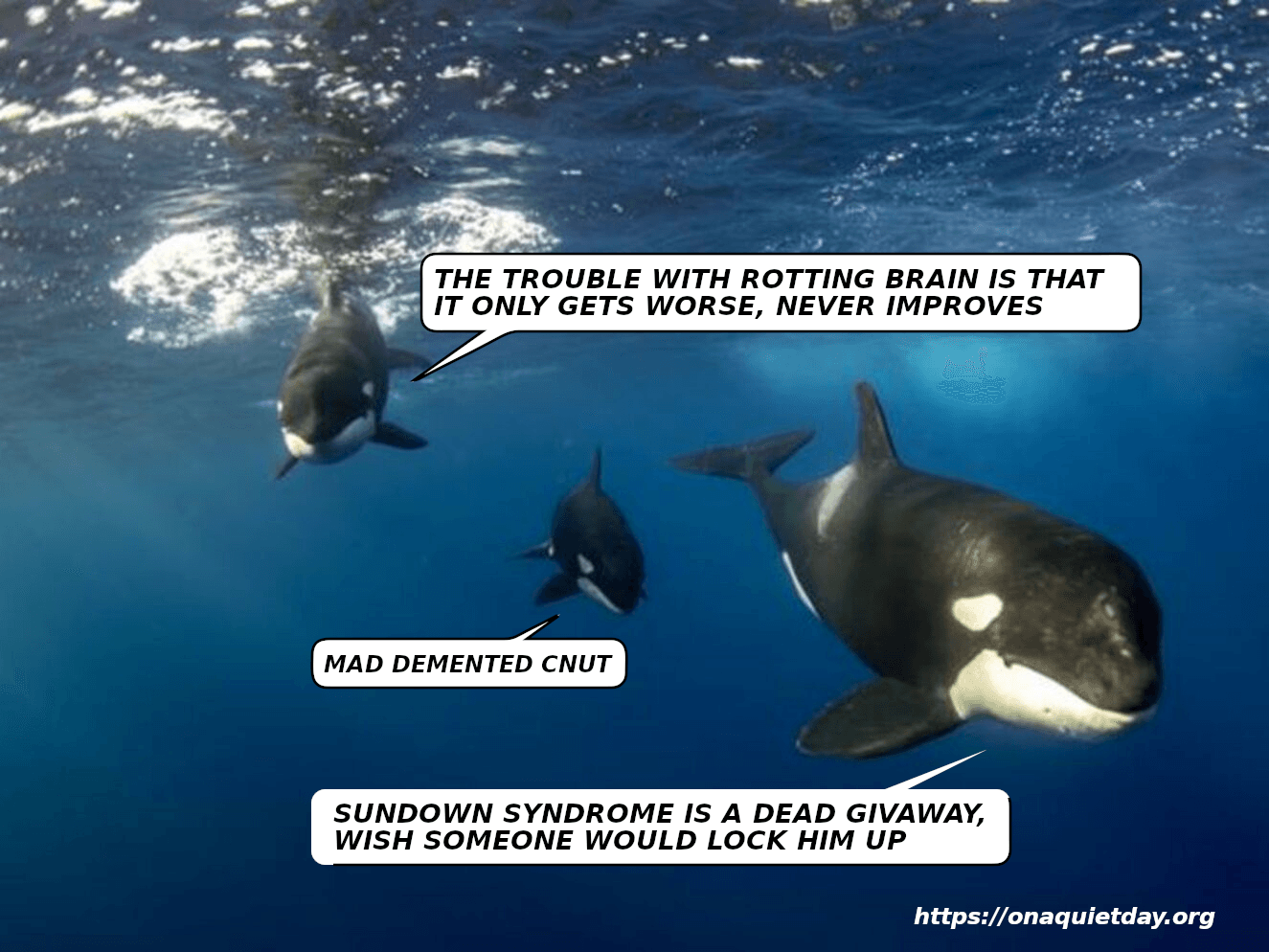
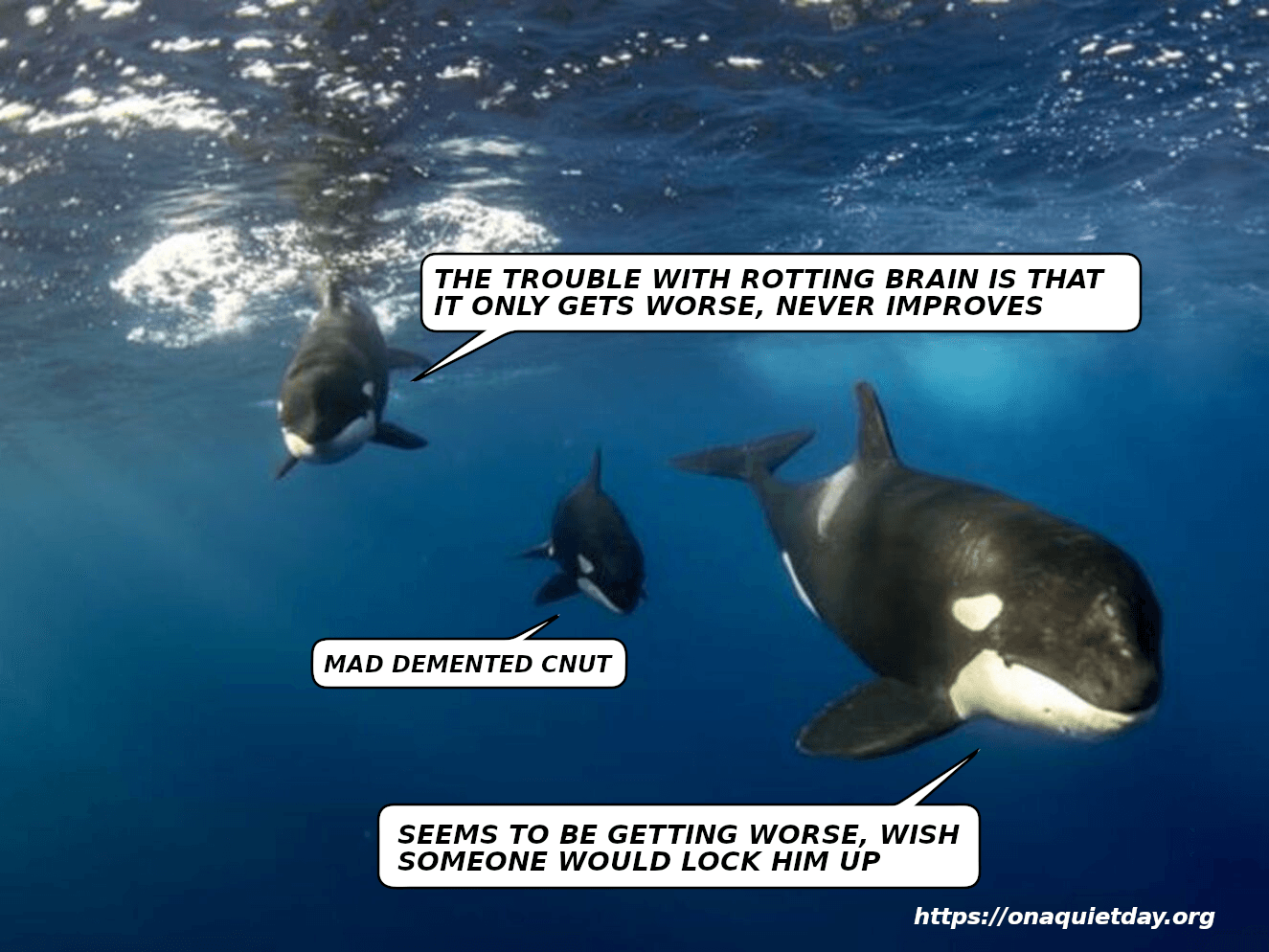
Orcas discuss rotting brain, front Orca says Sundown Syndrome is a dead givaway and he wishes someone would Lock Him Up
Donald Trump calls for help from NATO allies in securing the Strait of Hormuz despite saying on 7 March 2026 that they don’t need people to join wars after they’ve already won. He’s challenged with the claim that he lies as much as the IDF.Climate science denier Donald Trump confirms that he knows nothing about democracy and that more liquid gold is being secured according to his policy of policy of global privateering.
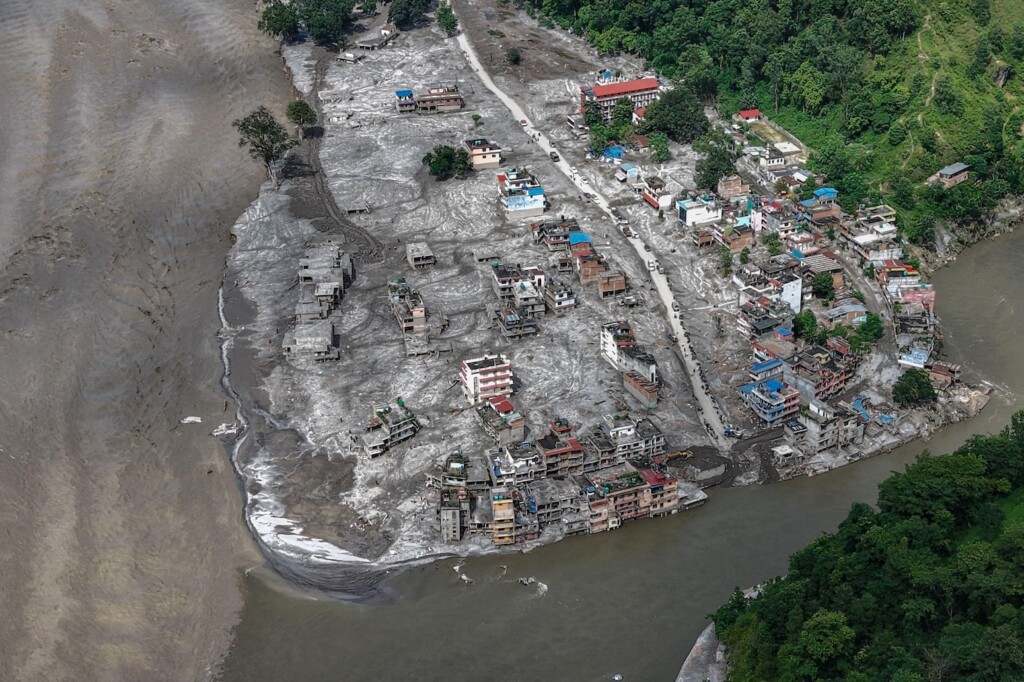
An aerial view of Devighat Bazaar in Nuwakot, Nepal, following the floods of 26 August 2026. Credit: ZUMA Press / Alamy Stock Photo
Can the event be attributed to climate change?
On the morning of 26 August, flash floods surged through a Himalayan border region of Nepal and the Chinese region of Tibet, killing more than 1,300 people, with thousands still missing.
In the days since the floods, scientists have examined satellite imagery, drone footage and seismic data in order to understand and explain the forces behind the event.
While initial theories pinned the flood on a glacial collapse, scientists now understand the event as a “multi-hazard cascade”, which began with a bedrock collapse.
Some climate sceptics have tried to use this to falsely claim that human-caused climate change had no impact on the event.
Yet, scientists havenoted that, while no formal attribution study has been carried out thus far, warming is making such ice-rock avalanches in the region more likely.
Researchers have highlighted how rapid warming is dramatically reshaping Asia’s high-mountain region – and identified rising temperatures, glacier retreat and permafrost thaw as factors that may have all contributed to the disaster.
Balendra Shah, Nepal’s prime minister, has called the floods a “serious signal that…the risks we must bear in the Himalayan region are increasing” due to climate change.
Here, Carbon Brief unpacks what scientists currently know about the causes of the catastrophic event and what they can – and cannot – say about the role of climate change.
A report published on 28 August by the HiRisk scientific consortium of high mountain experts detailed the events that led to the flash floods.
It said that events were set in motion on 26 August when a mass of bedrock, as well as the glacier ice on top of it, broke off a slope of Langtang-Lirung mountain in the Nepalese Himalaya, plunging from approximately 5,200 metres above sea level to the valley floor at 3,000 metres.
The landslide shook the ground hard enough that, at 8:37am Nepal local time, the US Geological Survey (USGS) initially reported a magnitude 4.4 earthquake. Later that day, it clarified the shaking was caused by glacier collapse and debris flow, equivalent to a magnitude 5.2 earthquake.
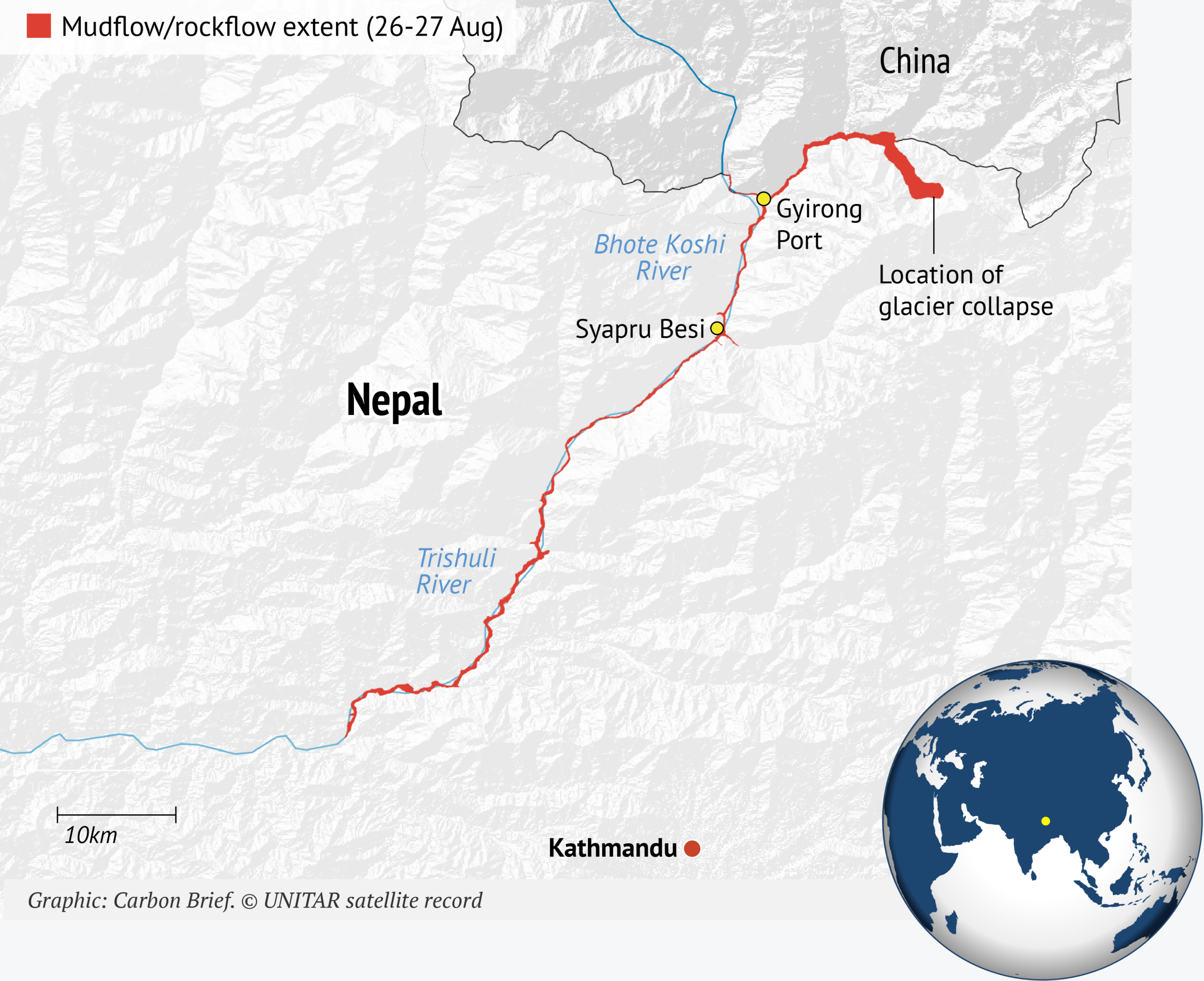
On the valley floor, the melting ice, water and debris slammed into the Lhende Khola river, a high-altitude river that runs along Nepal’s border with China.
Known downstream as the Bhote Koshi river in Nepal and the Poiqu or Poqu in China, the Lhende Khole feeds a network of rivers across Nepal and the Chinese region of Tibet, including the Trishuli river. (In China, the Lhende Khola is known as the Donglin Tsangpo.)
The designations employed and the presentation of the material on this map do not imply the expression of any opinion whatsoever on the part of Carbon Brief concerning the legal status of any country, territory, city or area or of its authorities, or concerning the delimitation of its frontiers or boundaries. Credit: Carbon Brief.
A large “debris” lake was briefly formed on the valley floor. When this lake burst, a wall of water and rock travelled downstream, killing more than a thousand people and destroying settlements, roads, bridges, hydropower plants and border posts across Nepal and Tibet.
HiRisk said that the floodwave travelled down rivers as fast as 30km an hour (around 19 miles per hour) and reached Mugling – a Nepalese town more than 130km downstream – at around 1pm local time.
A separate report from the Center for Land Surface Hazards in the US noted that the flood moved “exceptionally fast, was sediment-laden and extreme in scale”. For example, in the Nepalese municipality of Galchhi, the Trishuli river rose by nine metres in 30 minutes, it said.
He continued that a new “barrier lake” – estimated to hold a few million cubic metres of water – had developed in a location where two rivers meet in Tibet before crossing into Nepal. This lake burst on 28 August and the river rose again, he said.
On 4 September, the chief of Nepal’s National Disaster Risk Reduction and Management Authority, told Reuters that property and infrastructure worth “at least” $2.5bn (£1.9bn) had been lost. Dharma Raj Upreti estimated the cost to build roads and temporary shelters, provide drinking water and restore power would be around $53m (£39m).
How did bedrock collapse trigger the flash floods?
In the immediate aftermath of the floods, initial reports suggested that the trigger was a collapsing glacier or earthquake in the high mountains of Nepal.
After confirming that a seismic tremor was as a result of falling rock and ice, the USGS said the trigger was likely a “glacial collapse and debris flow”. This was widelypickedupby the media.
Subsequently, satellite imagery revealed that an “enormous chunk of the mountainous bedrock” beneath the glacier had also given way, reported the New York Times.
“It was not a glacier that collapsed. It was the mountain below the glacier that collapsed and the glacier had no other chance but to go with it because it was sitting on top of it.
“The trigger for that is something that we are not 100% certain about, but, in the end, it very much looks like simply a mechanical failure of the rock material because of stressors that have built up over a long period of time.”
Failures of “bedrock” – the hard, solid rock that sits below looser rocks and soil – are an “increasingly common occurrence”, says Prof Bethan Davies, a professor of glaciology at Newcastle University. She tells Carbon Brief:
“These massive landslides occur in mountain regions, commonly following rapid deglacierisation [the melting away of a glacier]. Similar events happened in the Chamoli event in 2021 [in the Indian Himalaya] and in the Blatten landslide last year in Switzerland. They’ve also occurredrecently in Alaska.”
With a shift in focus from the failure of a glacier to the bedrock underneath, some climatescepticsseized on the development to falsely claim that climate change had not played any role in the disaster.
However, scientists have highlighted the likely contribution of rapid warming in the region. These factors include the thawing of permafrost and glacier retreat. (For more, seesectionsbelow).
Fundamentally, “this would have been a much less significant tragedy if it had been just a rock-slope failure”, notes Davies.
The initial landslide took a mixture of rock and ice into a valley that “contains buried ice” as well, she says, providing the water that “resulted in the hyperconcentrated flow, which took so many lives”.
How have temperatures risen in the affected region?
Global temperatures have risen by roughly 1.4C since the pre-industrial period. However, this increase is not uniform across the planet, with some regions warming faster than others.
A study published in Global and Planetary Change in June 2026 investigated changes in the Langtang catchment – a river basin in central Nepal, in which the Langtang-Lirung mountain is located, which eventually drains into the Ganges. Around one-quarter of the area is made up of glaciers.
The paper found that glacial areas of the catchment – found at 4,000 metres above sea level – warmed at 0.31C per decade over 1960-2023. This was “more than three times” the rate observed at a lower elevation weather station, the authors said.
Looking in more detail at the site of the glacial collapse, Dr Robert Rohde, chief scientist for Berkeley Earth, used ERA5 reanalysis data to show how temperature has changed at the 5,200-metre elevation site where the mass of ice and rock broke loose.
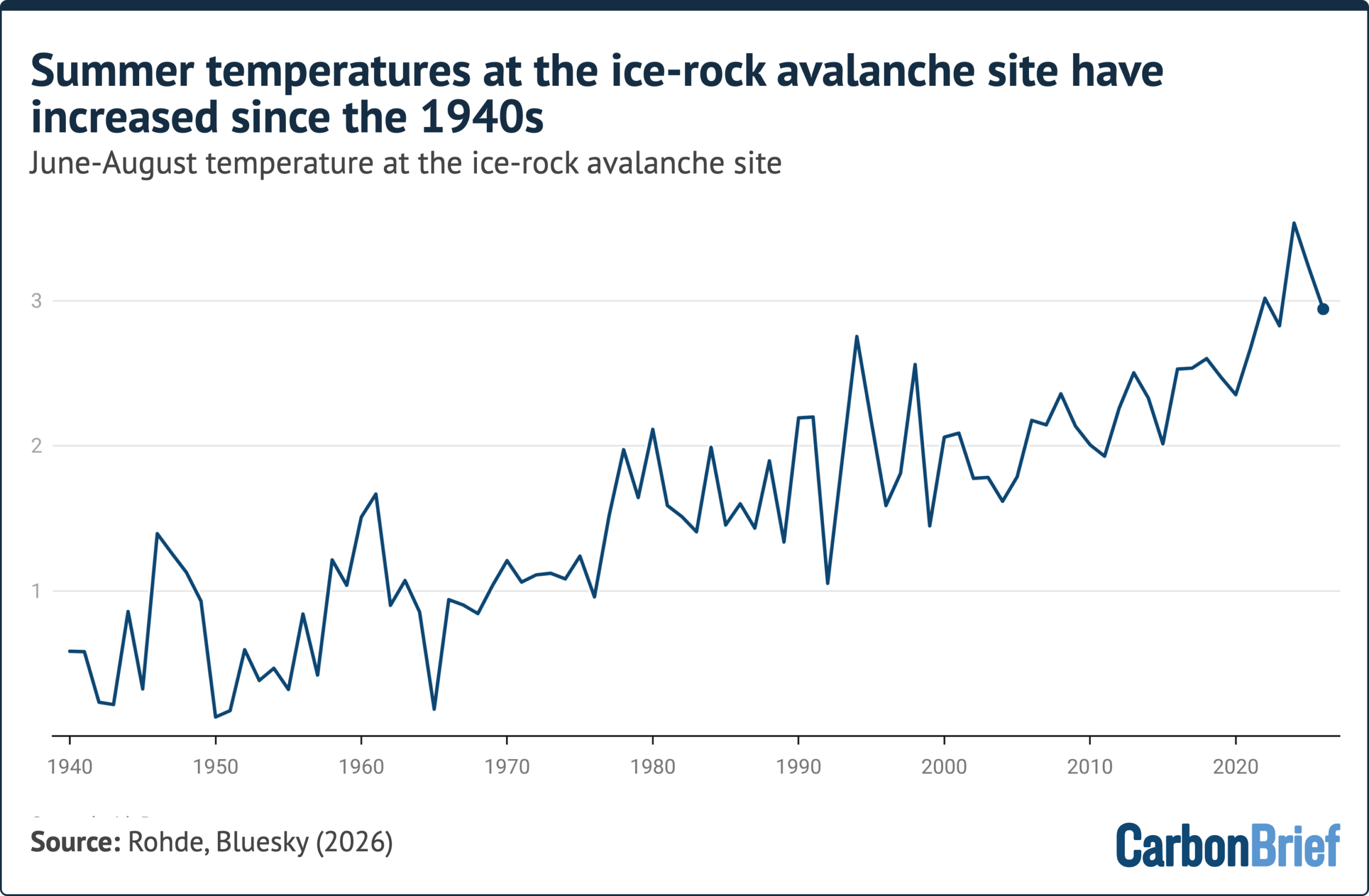
Rohde’s analysis found that June-to-August temperatures have been rising at the site of the glacier collapse since the year 1940, with 2026’s summer the fourth warmest on record, behind 2024, 2025 and 2022. This is shown in the graph below.
Average summer (June-August) temperature at the ice-rock avalanche site over 1940-2026. Data source: Rohde, Bluesky (2026)
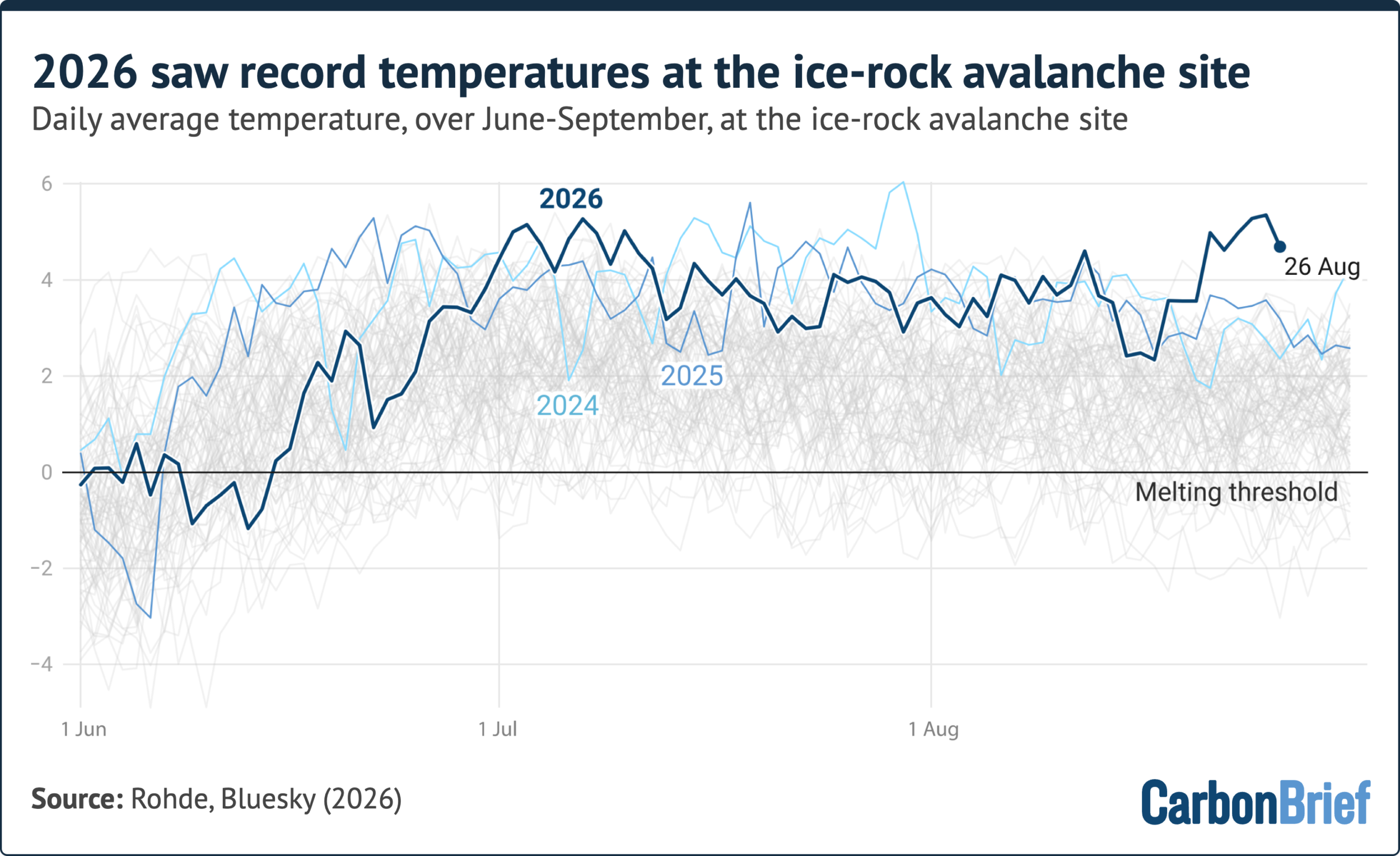
Rohde also found that the days leading up to the disaster recorded the hottest August temperatures ever experienced at the site. This is shown in the graph below.
Daily average temperature, from 1 June-1 September, at the ice-rock avalanche site. 2026, 2025 and 2024 are shown in dark, mid and light blue. All other years from 1940-2023 are shown in grey. Source: Rohde, Bluesky (2026)
“Given the warming trend, this Nepali glacier had probably been thinning and weakening for years, or even decades. But it ultimately failed during the warmest week in one of its warmest years on record. It would be a hell of a coincidence if global warming wasn’t at least partially to blame.”
How have rising temperatures affected mountain stability?
Many experts have linked warming temperatures in the region to thawing permafrost – ground that has been frozen for at least two consecutive years, whose thickness ranges from less than one metre to more than a kilometre.
Steiner is part of a research team that has been using sensors to monitor permafrost in the region since 2014. He tells Carbon Brief that it is “pretty clear” the permafrost has been thawing “very actively” at elevations as high as 5,200 metres above sea level “for many years”. He adds:
“This means that the ground has, over the last decades, moved from being in a solid state into – at least, periodically during the warm season – patchy ground where some is frozen and some isn’t…
“If you have frozen ground next to non-frozen ground, you have dynamics happening between that because there are different densities and there’s movement happening, which is conducive to interventional failure – and that we know from many other cases.”
Davies also points to the “degradation” of perennially frozen ground as a factor in the disaster:
“This permafrost acts as a glue to hold together the rocks and, as it melts, the rock can become weakened.”
Permafrost thaw can also result in saturated ground, says Davies, which adds “pressure in the joints” of rock and can “facilitate” failure. She continues:
“Sources of the water include melting permafrost and meltwater from the overlying glacier. We know that this event happened during a period of warmth, but in the absence of heavy precipitation, pointing to ice melt as the source of water.”
A 2025 study of rock and ice avalanches in High Mountain Asia found that more than two-thirds started in areas “where permafrost is probable”.
How have glaciers retreated in the affected region?
Glaciers – frozen rivers of ice holding three-quarters of the global freshwater supply – are extremely vulnerable to climate change.
In the Himalaya, the rate of glacier retreat has doubled since the late 20th century, according to a 2019 study in Science Advances.
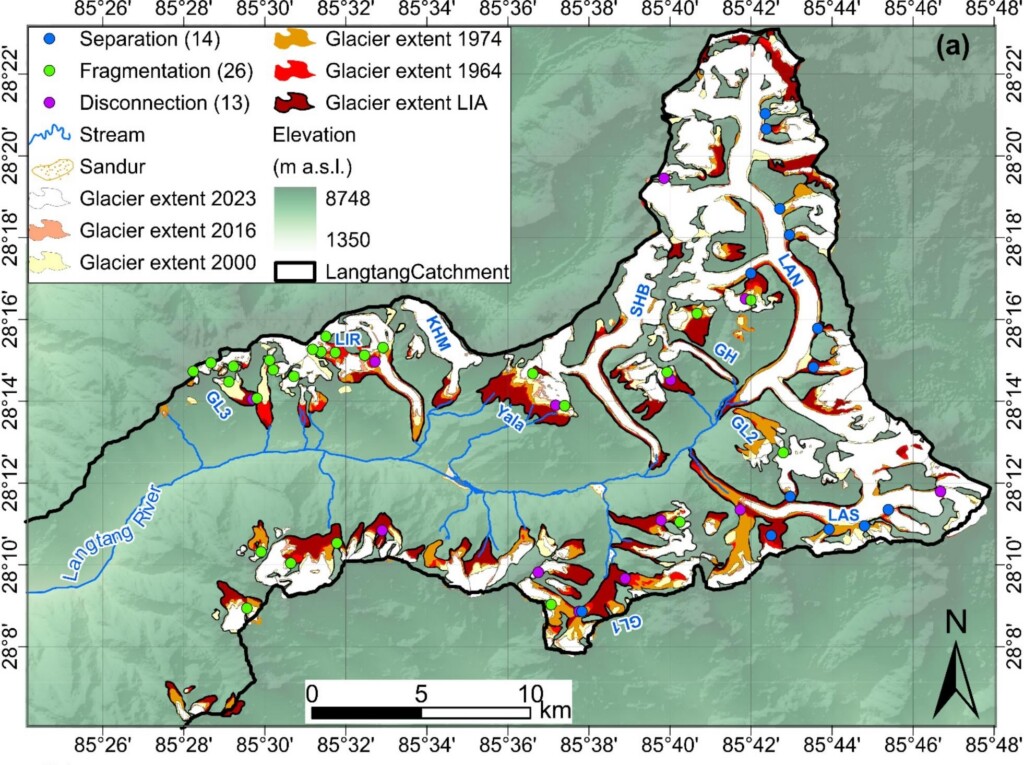
The Global and Planetary Change study found that glacier area loss rates in the Langtang catchment increased more than fourfold from 1964 to 2023 – with melting accelerating after 2000.
It added that glaciers in the region also experienced “fragmentation” and “widespread thinning” over this period.
The study noted that this loss “coincided with elevation dependent warming”.
The figure below provides an overview of glacier loss in the Langtang catchment over 1964-2023, with orange, red and dark red indicating areas of retreat.
In addition, green dots note points of glacier fragmentation, while blue dots show separation and pink show disconnection.
Glacier loss in the Langtang catchment over 1964-2023. Orange, red and dark red indicate areas of retreat. Green dots note points of glacier fragmentation, while blue dots show separation and pink show disconnection. Credit: Silwal et al. (2026)
In comments released by the University of Reading, Prof Maria Shahgedanova, a climate scientist researching climate impacts on mountain glaciers, said that the glacier involved in the floods had “retreated by approximately 450 metres between 1990 and 2020”.
She adds that this “potentially reduce[d] the mechanical support provided by the glacier to the underlying rock slope”.
Speaking to Carbon Brief, Davies reiterates that the retreat of the glacier is “potentially a contributing factor” to the bedrock collapse and subsequent disaster.
This is because the removal of the glacier from the lower slopes leaves the “upper rock slopes less stable”, she says.
The most recent assessment by the International Centre for Integrated Mountain Development said that glaciers in the Hindu Kush Himalaya region are “rapidly shrinking” as a result of climate change. (This region extends 3,500km over Afghanistan, Bangladesh, Bhutan, China, India, Myanmar, Nepal and Pakistan.)
It said this loss is threatening the safety of the nearly two billion people, including by increasing the risk of “glacial lake outburst floods” (GLOFs). A GLOF is a sudden and catastrophic release of meltwater from a glacial lake.
Although this disaster was not caused by a GLOF, it is known that climate change is making such events more likely.
However, many climate scientists have cautioned that it is too early to say precisely how climate change impacted the disaster.
Davies tells Carbon Brief:
“These events happen so quickly that the exact causes and drivers can take a little time to uncover, especially if the event was a surprise and there had been no monitoring system in place.”
When trying to determine the role human-caused climate change played in the intensity or likelihood of extreme weather, scientists turn to the field of “attribution science”.
To date, no formal rapid attribution study has been produced that attempts to quantify whether – and how – climate change contributed to the event.
Scientists have noted that climate attribution of ice-rock avalanches – which are typically driven by a variety of factors – remains limited, in part because of the lack of a long-term observational record of previous collapses in high mountain areas.
Meanwhile, the studies that do exist stop short of directly linking such disasters to climate change. For example, the authors of a 2021 study into the Chamoli ice-rock avalanche concluded that “we cannot attribute this individual disaster specifically to climate change”.
However, they added, the “possibly increasing frequency of high-mountain slope instabilities can likely be related to observed atmospheric warming and corresponding long-term changes in cryospheric conditions (glaciers and permafrost)”.
In the aftermath of the disaster, many researchers have similarly highlighted that climate change could not be singled out as the cause of the disaster, even if warming likely increased the probability of its occurrence.
On the Climate Brink substack, Carbon Brief’s climate science contributor Dr Zeke Hausfather noted that a “definitive single-event attribution” of the more recent disaster “may never be possible” due to the “messy causality of rock-ice avalanches”.
However, he added that both the existing scientific literature and “essentially every scientist working on these hazards point in the same direction” – namely, that warming is making such events more likely in the Himalaya.
Steiner tells Carbon Brief it might be possible to attribute different factors that played a role in the disasters to climate change – for instance, the recession of the glacier – but it would be more difficult to do so for the event as a whole.
Part of the reason for this, he says, is that rock failures in this region of the Himalaya have occurred for millennia, well before humans started altering the climate.
However, he continues:
“The physics of it is not something that has been made possible by climate change. This could have happened without it. But the chance of it happening – and the likelihood of it happening five years after a previous, similar event [in Chamoli] – we, as the scientific community, can be pretty confident about that [being increased because of a changing climate].
“This is because so many of the changes that we know are related to climate change can potentially drive the build-up to eventual failure.”
Ultimately, says Davies, a “careful attribution study is needed, but it is hard to argue that the rapidly warming climate is not having an effect in these regions”. She adds:
“A single event may have multiple drivers, but we are seeing an increase in these events and are likely to see more as the permafrost and glacier melt continues.”
This work by Middle East Monitor is licensed under a Creative Commons Attribution-NonCommercial-ShareAlike 4.0 International License.
U.S. Ambassador to Israel Mike Huckabee delivers a press statement during his visit to the town of Turmus Ayya, northeast of Ramallah in West Bank, Palestine, on September 5, 2026. [Issam Rimawi – Anadolu Agency]
US Ambassador to Israel Mike Huckabee, an evangelical Christian and one of Washington’s most outspoken supporters of Zionism and Israel’s settlement project, has accused the British government of “Jew hate” in an extraordinary attack prompted by comments from Foreign Secretary Ed Miliband, who is himself Jewish.
Huckabee launched the attack after Miliband published a video describing a meeting with people who had been in Gaza and were working on the ground there. The foreign secretary said what he had heard about the humanitarian and medical situation was “horrific”, including accounts of medicines being blocked from entering the enclave and children dying while waiting for life-saving treatment.
Miliband said the accounts reinforced the need for Britain to take stronger action. He said the government had to “act more decisively” than it had until now.
UK Foreign Secretary Ed Miliband:
I just came out of this meeting talking about Gaza to people who've been there and are there on the ground.
And frankly, it was horrific what is unfolding. You know, the stories that people were telling me of medicines being blocked, children… pic.twitter.com/UCq8ChMHD0
Israel’s foreign ministry had earlier attacked Miliband’s account, insisting there were “no restrictions whatsoever” on medicines entering Gaza and citing the quantity of medical supplies admitted since the October 2025 ceasefire.
The British Foreign Secretary @Ed_Miliband posts a video recounting “stories” he was told about Gaza.
If the Foreign Secretary were interested in facts rather than stories, he would know that there are no restrictions whatsoever on the entry of medicines into the Gaza Strip, and… https://t.co/JuPUpyhPLM
However, recent assessments by international humanitarian agencies contradicted the Israeli claim. On 2 September, the World Health Organisation (WHO) said critical laboratory and diagnostic supplies “remain restricted” and that it had not been permitted to bring prosthetic and rehabilitation equipment into Gaza for more than two years.
“WHO has not been allowed to send prosthetic and rehabilitation equipment into Gaza for more than two years.”
OCHA, the United Nations Office for the Coordination of Humanitarian Affairs, has similarly reported restrictions and delays affecting the entry of health commodities, alongside critical shortages of medicines and medical supplies.
The diplomatic confrontation comes as the new government of Prime Minister Andy Burnham prepares what Miliband has called a “comprehensive” response to Israel’s accelerating settlement expansion in the occupied West Bank.
Measures under consideration reportedly include a ban on trade in goods produced in illegal Israeli settlements, alongside targeted sanctions against individuals and entities involved in settlement expansion.
Miliband has said Britain does not want UK companies “financing, constructing, or advertising” new Israeli settlements. The proposed measures follow Israel’s decision to advance the E1 settlement project occupied East of Jerusalem. London says E1 would cut through the occupied West Bank, separate it further from East Jerusalem and jeopardise the territorial viability of a Palestinian state.
The government has already said it intends to target sanctions at those involved in illegal settlement expansion. Earlier measures introduced by Britain and international partners targeted networks accused of financing and enabling settler violence, while British businesses were advised against economic and financial activity in illegal settlements.
The proposed settlement trade ban, which legal analysts say is the least Britain must do to meet its obligations under the 2024 International Court of Justice ruling, has sparked harsh criticism from Britains pro-Israeli lobby.
Huckabee’s accusation of anti-Semitism comes against the background of his own longstanding commitment to Christian Zionism and Israeli territorial claims. He is the first evangelical Christian to serve as US ambassador to Israel and has repeatedly referred to the occupied West Bank by the biblical term “Judea and Samaria”. He has previously rejected the description of the territory as occupied and has preferred to call Israeli settlements “communities”.
The Foreign Office did not respond directly to Huckabee’s accusation, but pointed to nearly £318 million ($430 million)in government spending over three years to protect Jewish communities and combat what it called anti-Semitism.
Donald Trump sings and dances, says that it’s fun to kill everyone … unless he gets distracted or falls asleep.Orcas discuss rotting brain, front Orca says he wishes someone would lock him up, small Orca speaks bluntly.Climate science denier Donald Trump confirms that he knows nothing about democracy and that more liquid gold is being secured according to his policy of global privateering.
From banned reporters to love-ins with business, the scandal-hit event offers troubling glimpse into a Farage government
You look like a man in the market for some gold bullion?” My first interaction at last year’s Reform conference was an unconventional one. By the end of the day I’d been treated to a fevered performance by two of the original members of the Jackson Five – ushered onto the stage by an ebullient Nigel Farage – and witnessed a man being forcibly ejected after a fracas in the foyer of a gaudy rooftop bar concerning former Conservative MP Gary Sambrook – he of ‘big dinners’ fame.
In between, I’d attended a seminar hosted by the Antisemitism Policy Trust about the dangers of conspiracy theories, before having a long conversation with a woman who explained that she has long campaigned for Faragist parties and has a particular interest in banning non-stun slaughter, but that her campaigning efforts had always been hampered by “Nigel’s Jewish donors”.
Who knows what I missed out on this time around: openDemocracy’s application for media accreditation to this year’s conference was denied, along with those of dozens of other journalists. They include Anna Isaac, the Guardian’s City editor who broke the story of Farage’s undeclared £5m donation, veteran broadcaster Michael Crick, and Peter ‘formerly-of-this-parish’ Geoghegan – all of whom have reported critically, but not inaccurately, on Reform, and none of whom could reasonably be accused of partisanship.
So, too, for us. Last year I was among the first reporters to raise concerns about convicted fraudster George Cottrell’s relationship to Nigel Farage after he set up a financially opaque company, and I’ve covered the party’s fruitful attempts to forge ties with big business. Yet I suspect I was ultimately ‘punished’ for my intrepid colleague Sian Norris’ reporting on Cottrell and the network of Montenegro-based companies connecting him and several leading figures in the party.
Reform has said it approved the vast majority of media applications. Still, it is not generally the done thing for mainstream political parties in the UK to bar even perceivedly hostile journalists from their annual conferences. And despite its recent polling dip, Reform is very much still a mainstream political party in terms of support. The party was higher in the polls this time last year, but has fallen behind Labour only in the last few months; a collated ‘poll of polls’ conducted throughout August suggests that a minority Reform administration is the second most likely outcome at the next election (17%), after a Labour minority (46%), but marginally ahead of a Labour majority (16%).
To my mind, barring journalists feels like an easy way to guarantee negative headlines that detract from your party’s talking points on the first day of conference, and for very little upside. My confusion over why Reform had even bothered with this was assuaged on Thursday evening by the airing of a bombshell undercover investigation into the party’s fundraising operations on Channel 4 – it became clear the party had much more pressing concerns.
While Reform has issued denials and attempted to smear the journalists involved in the sting operation as partisan activists, two of the party’s senior aides have fallen on their swords, including a longtime close confidant of Farage, Dan Jukes. Party outriders are desperately trying to present a united front and say they believe the documentary won’t register much with the public outside SW1, but there are signs – including calls for change from longtime Reform allies – that this latest scandal in a long line of them may do significant damage.
Of course, refusing to a few dozen journalists access to your conference is not an especially egregious attack on press freedoms, even if it does signal a worrying attitude toward scrutiny – albeit not an entirely surprising one; the project has long aped that aspect of Trumpism. The allegations broadcast to the nation on Thursday evening, on the other hand, do qualify as egregious. But history suggests a political party can survive after being caught taking money it perhaps shouldn’t have or seeking to hide donations from public scrutiny. Of more concern should be the hundreds of lobbyists who arrived in Birmingham on Thursday morning for the party’s inaugural business day, where they hosted policy discussions and drinks receptions and client roundtables, all aimed at shaping the agenda of a potential government-in-waiting.
Their presence makes clear that businesses that initially maintained a cautious distance from Reform now clearly see it as a potential partner. This has not happened by accident. The party has put significant resources into its courtship of the business community, and has sanded off the economically populist edges of its platform in order to win over this key constituency.
Even when Reform acts out, there is a sense that its rhetoric is largely for show or that any dispute can at least be quite easily ironed out. Why else would Vodafone – whose executives the party’s spokesperson for home affairs, Zia Yusuf, threatened to hold “criminally liable” for “helping to facilitate the invasion of Britain” after the company donated SIM cards to a refugee charity – be sponsoring a panel discussion at the conference? Deliveroo, too, another company picked on by Yusuf, is dispatching a team of senior lobbyists to the conference to smooth things over.
The business community’s willingness to go along with the unconventional, the repressive and the dangerous aspects of Reform’s agenda – just as they have done on the other side of the Atlantic with Donald Trump – in exchange for a seat at the table should worry us all.
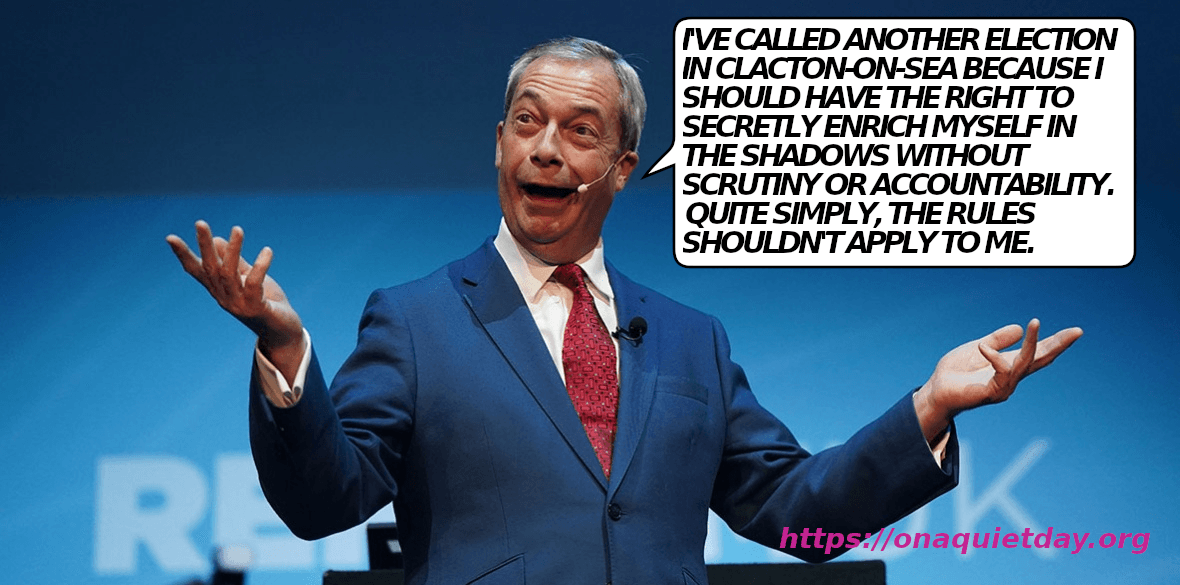
Orcas discuss how Trump was re-elected and him being an obviously insane, xenophobic Fascist.Nigel Farage explains that he’s called another byelection in Clacton-on-Sea because he should be able to secretly enrich himself without scrutiny and accountabilty and that the rules shouldn’t apply to him.Nigel Farage says he’s too stupid to answer questions about the hit to the UK economy of his plans to suck up to the uber-rich.