‘We’ll Come for You Next’: Israel Threatened to Kill Teen Journalist in Gaza—Then Did

Spread the love

Original article by Brett Wilkins republished from Common Dreams under Creative Commons (CC BY-NC-ND 3.0). 
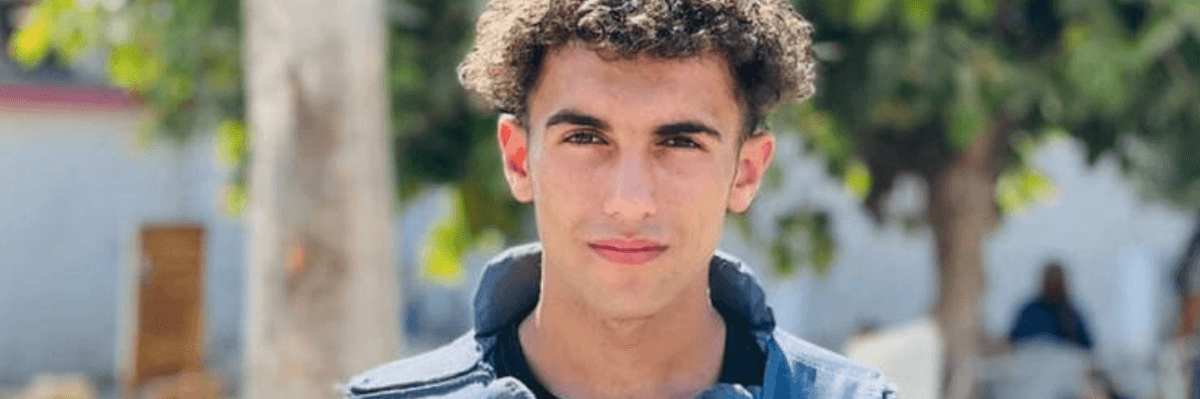
Journalist Hassan Hamad holds a photo of Ismael al-Ghoul and Rami al-Rifi, Palestinian reporters also killed by Israel in Gaza. (Photo: Maha Hussaini/X)

“Western journalists and editors should hang their heads in shame for their outrageous silence in the face of these crimes,” said one professor.

Journalists around the world expressed outrage Monday over the Israeli military’s killing of a teenage Palestinian reporter who continued showing the world the destruction of Gaza despite threats to his life—and at the Western media’s silence on the story.

Hassan Hamad, 19, whose work appeared on Al Jazeera and other outlets, was killed Sunday in an Israeli drone strike on his home in the Jabaliya refugee camp in northern Gaza, The Palestine Chronicle reported. The bombing followed multiple text messages warning Hamad to stop recording images of Israel’s assault on Gaza, which has killed or injured nearly 150,000 Palestinians and for which the close U.S. ally is on trial for genocide at the International Court of Justice.

Palestinian journalist Maha Hussaini posted a photo of one threatening WhatsApp message sent to Hamad. It read, “Listen, if you continue spreading lies about Israel, we’ll come for you next and turn your family into… This is your last warning.”

Hussaini said that Hamad also received “several calls from an Israeli officer ordering him to stop filming in Gaza.”

“He didn’t comply,” she wrote. “He was killed today.”

A colleague of Hamad’s wrote on the slain journalist’s X account:

With great sadness and pain, I mourn the journalist Hassan Hamad… Hamad, the journalist who is not yet 20 years old, resisted for a whole year in his own special way. He resisted when he was away from his family so that they would not be targeted. He resisted when he was suffering to find an internet signal and would sit for an hour or two on the roof of the house to send videos that reach you in seconds. Yesterday, since 10:00, he was moving between the bombed areas and returning to search for an internet signal, then returning to cover the places of the remains, suffering from an injury he sustained in his leg. Nevertheless, he completed filming. At 6:00 am, he called me to send me the last video. After a call that did not exceed a few seconds, he was saying, “Hey, hey, it’s done,” and he hung up. This is a feeling that no human being can bear. Hassan also resisted the occupation and left a mark and left a message that we will complete after him.

Journalists and others posted graphic video footage of pieces of Hamad’s remains being collected and placed in a shoebox.

“I will never forget the silence of the media industry about this,” Al Jazeera executive producer Laila Al-Arian wrote in a social media post containing the video.

Thomson Reuters Foundation deputy editor-in-chief Barry Malone responded to Hassan’s killing by asking, “If you’re a journalist and you’re not speaking out in solidarity… why?”

Anthropology professor Jason Hickel said that “we can never unsee the images of journalist Hassan Hamad’s remains, after he was assassinated by Israeli forces.”

“Western journalists and editors should hang their heads in shame for their outrageous silence in the face of these crimes,” he added.

The New York-based Committee to Protect Journalists says that “at least 128 journalists and media workers, all but five of them Palestinian, have been killed—more journalists than have died in the course of any year since CPJ began documenting journalist killings in 1992.”

“All of the killings, except two Israeli journalists killed in the October 7, 2023 attack by Hamas on Israel, were carried out by Israeli forces,” the group added. “CPJ has found that at least five journalists were specifically targeted by Israel for their work.”

Gaza’s Government Media Office (GMO) said Sunday that 175 media workers have been killed in the embattled enclave over the past year.

The press freedom group Reporters Without Borders (RSF) has filed multiple complaints at the International Criminal Court—whose chief prosecutor is seeking arrest warrants for Israeli Prime Minister Benjamin Netanyahu, Defense Minister Yoav Gallant, and Hamas leaders—alleging “war crimes against journalists in Gaza.”

Responding to Hamad’s killing, RSF said that Israel’s “impunity must end.”

Original article by Brett Wilkins republished from Common Dreams under Creative Commons (CC BY-NC-ND 3.0). 

Continue Reading‘We’ll Come for You Next’: Israel Threatened to Kill Teen Journalist in Gaza—Then Did

‘Increasing Destruction’: Israel Continues Bombing Campaign Across Lebanon

Spread the love

Original article by Common Dreams Staff republished from Common Dreams under Creative Commons (CC BY-NC-ND 3.0).

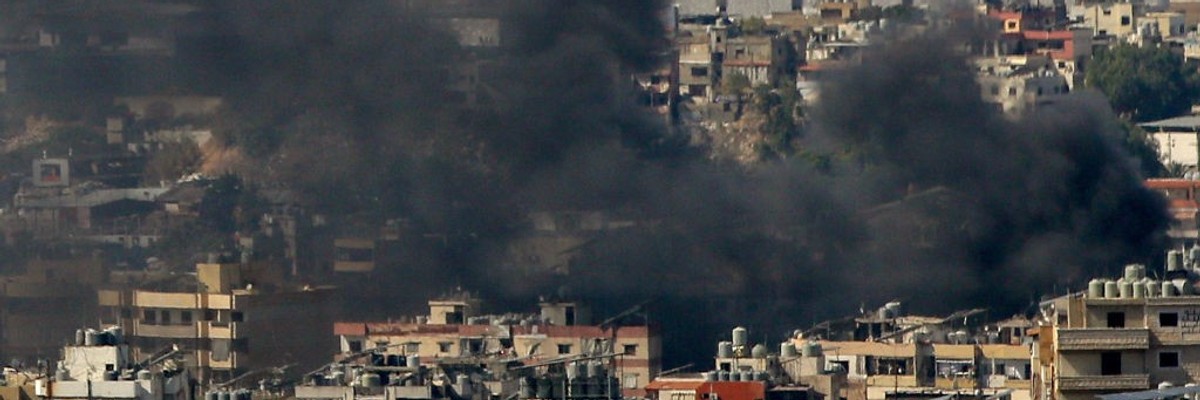
Heavy black smoke billows from the site of an Israeli air raid that targeted an area in a Beirut suburb on October 5, 2024. (Photo: Marwan Naamani/picture alliance via Getty Images)

“Complete blocks are being destroyed one after another,” Al Jazeera reported.

Israeli forces continued attacks on the outskirts of Beirut and in southern Lebanon on Saturday.

There were 13 Israeli strikes on the southern suburbs of Beirut overnight and another five on Saturday, one of which may have been targeted at paramedics, according toAl Jazeera. The number of casualties is not yet clear.

“There is increasing destruction and it’s clear that complete blocks are being destroyed one after another,” Al Jazeera‘s Ali Hashem reported from Beirut.

“One strike hit near the airport, and we understand another missile hit near a paramedic team to prevent them from getting to the scene of the bigger strike,” he reported.

The Israeli military issued evacuation warnings for certain suburban areas south of Beirut on Friday night, indicating attacks would follow, The New York Times reported.

Israeli forces unleashed a “huge strike” on the same area earlier Friday in an attempt to kill Hashem Safieddine, the presumed successor to recently assassinated Hezbollah leader Hassan Nasrallah, according to the TimesAl Jazeera reported that “bunker buster” bombs were believed to be used in the Friday attack, as they were in Nasrallah’s killing. It’s not clear if Safieddine was killed, though media reports indicate that he likely was.

Israel’s military also continued attacks in southern Lebanon on Saturday.

“From northern Israel, I can see dark gray clouds of dust and smoke rising above two [Lebanese] villages as warplanes zoom overhead and the sound of artillery echoes through the area,” the Times‘ Natan Odenheimer reported Saturday.

An Israeli strike in northern Lebanon killed Hamas commander Saeed Ali on Saturday, the armed Palestinian group said. Hamas has a longstanding presence in Lebanon.

According to Al Jazeera, which cited Israeli media reports, the Israeli military is planning to expand its ground incursion into southern Lebanon, which began earlier this week, and to conduct “large-scale assaults” on Lebanon, Iran, and Gaza. The media outlet didn’t provide details.

Iran fired nearly 200 ballistic missiles at Israel on Tuesday, principally targeting military facilities. Iran said the strikes were retaliation for Israeli assassinations of Hezbollah and Hamas leaders. Most of the strikes were intercepted by Israeli and U.S. forces.

Observers are now watching closely to see how Israel responds, and what role the U.S.—Israel’s chief diplomatic ally and military supplier—might play. President Joe Biden said Friday that he’d advise Israel to consider “alternatives” to striking Iranian oilfields.

Original article by Common Dreams Staff republished from Common Dreams under Creative Commons (CC BY-NC-ND 3.0).

Continue Reading‘Increasing Destruction’: Israel Continues Bombing Campaign Across Lebanon

Israel Steps Up Attacks in Gaza and Lebanon

Spread the love

Original article by Common Dreams Staff republished from Common Dreams under Creative Commons (CC BY-NC-ND 3.0).

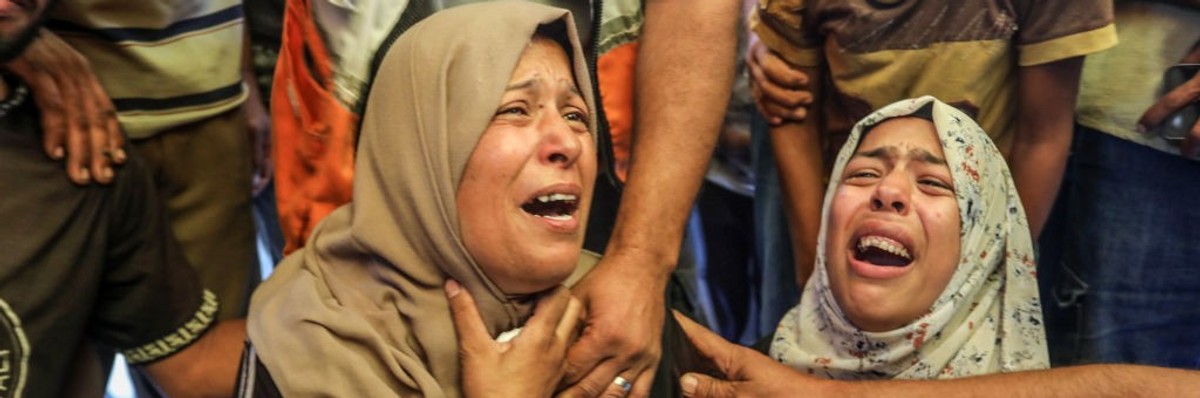
Palestinians mourn the loss of loved ones in Israeli attacks in Khan Younis, Gaza on October 6, 2024. (Photo: Abed Rahim Khatib/Anadolu via Getty Images)

The Israeli military announced a “new phase” of the war in Gaza while conducting its most severe airstrikes so far in Beirut.

Israeli forces stepped up attacks in both the Gaza Strip and Lebanon overnight and into Sunday.

Israeli forces bombed a mosque and a school-turned-shelter in Gaza, killing 26 and injuring dozens more, according to the Palestinian health ministry; the Israeli military described the two sites as Hamas “command and control centers” but provided no evidence.

The Israeli military also on Sunday announced a “new phase” of the war in Gaza, issuing new evacuation orders that cover most of the northern part of the enclave, The New York Timesreported. The military said it would send more soldiers and weapons to Gaza to “destroy terrorist infrastructures and undermine Hamas’ capabilities until all the war’s goals are achieved.”

Al Jazeera‘s Moath al-Kahlout reported that “the situation here in northern Gaza is deteriorating as the Israeli army intensifies its bombing.” He said that children, women, and journalists were among the victims.

“An entire family was killed by the Israeli army in the overnight attacks,” he added.

Meanwhile, Israel conducted the “most severe” airstrikes so far on Beirut, “pounding” the city overnight, according toThe Guardian. The strikes were in southern Beirut and its suburban outskirts, which are seen as a Hezbollah stronghold and have been heavily targeted by Israeli forces for the past two weeks.

Al Jazeera journalist Ali Hashem, reporting from Beirut, described a “massive air strike” on Sunday near the city’s international airport—an area that Israel has been bombarding for days. He said that daytime strikes are particularly harrowing.

“During the nights there are warnings,” Hashem reported. “During the days there are no warnings.”

Hashem said that emergency services have been prevented from getting into the suburban area where many of the strikes are taking place.

The Lebanese health ministry said Sunday that 23 people were killed and 93 injured in Israeli strikes on Saturday.

The Israeli military continues to advance its ground incursion in southern Lebanon. On Sunday, it ordered people in 25 villages to evacuate immediately, “signaling it’s expanding its ground offensive,” Al Jazeera reported

Filippo Grandi, the United Nations’ high commissioner for refugees, visited Beirut on Sunday and called for a cease-fire—saying it was “desperately needed”—and international humanitarian aid.

Original article by Common Dreams Staff republished from Common Dreams under Creative Commons (CC BY-NC-ND 3.0).

Continue ReadingIsrael Steps Up Attacks in Gaza and Lebanon

Israel Killed 28 Lebanese Medical Workers in 24 Hours, 73 Since War’s Start: WHO

Spread the love

Original article by Brett Wilkins republished from Common Dreams under Creative Commons (CC BY-NC-ND 3.0). 

A broken stethoscope and surgical glove are seen after Israeli warplanes bombed a building in the Bachoura area of Beirut, Lebanon on October 3, 2024. (Photo: Murat Sengul/Anadolu via Getty Images)

“I’m afraid first about my safety and about my family’s safety because there’s no safe place in Lebanon now,” said one physician.

The head of the United Nations World Health Organization said Thursday that Israeli forces killed 28 healthcare workers in Lebanon over the previous 24 hours, and that 73 medical personnel are among the nearly 2,000 Lebanese killed during Israel’s bombing and invasion of its northern neighbor.

“In southern Lebanon, 37 health facilities have been closed, while in Beirut, three hospitals have been forced to fully evacuate staff and patients, and another two were partially evacuated,” WHO Director-General Tedros Adhanom Ghebreyesus said during a press conference in Geneva. “And yet healthcare continues to come under attack. In Lebanon alone, 28 health workers have been killed in the last 24 hours.”

Tedros said the WHO “calls on urgent facilitation of flights to deliver health supplies to Lebanon,” adding, “Lives depend on it!”

Lebanese Health Minister Firas Al-Abiad said separately Thursday that more than 40 paramedics and firefighters have been killed by Israeli forces over the previous three days.

Dr. Abdinasir Abubakar, the acting WHO representative in Lebanon, said that “most of those healthcare workers killed in the last 24 hours, most of them—actually, all of them—were on duty.”

“Some of them were in the ambulances, some of them were in the health facilities,” Abubakar added. “They were on duty trying to help civilians who have been wounded in the conflict.”

Dr. Fathalla Fattouh, the head cardiovascular and thoracic surgeon at Rafik Hariri University Hospital (RHUH) in Jnah, just outside Beirut, described the chaos he witnessed firsthand, including “a surge of nearly identical injuries—amputations, eye trauma, and shattered hip and femur bones—straining the hospital’s capacity to a near-breaking point.”

“We were forced to make difficult decisions,” he added. “I believe that we did our best relying on available capacities, but with the escalation of events we need to plan for the worst.”

Sara, a surgeon at the hospital, said that “there are only two hospitals in Lebanon prepared to treat burn patients, and once they were at capacity, we were left with nowhere to send the patients we received.”

“It was a feeling of helplessness that we had never experienced before,” she added.

Some doctors admitted fearing for their lives.

“It’s hard to work in fear,” Dr. Mohammad Taoube, who heads the emergency room at an undisclosed hospital in southern Lebanon, told Sky News on Wednesday. “I’m afraid first about my safety and about my family’s safety because there’s no safe place in Lebanon now.”

According to figures provided by the WHO Regional Office for the Eastern Mediterranean, Israeli forces have killed 1,974 people in Lebanon—including at least 127 children—while wounding 9,384 others in recent weeks.

At least one American has been killed by Israeli bombing of Lebanon this week. Hajj Kamel Ahmad Jawad, 56, of Dearborn, Michigan was killed Tuesday while in Nabatieth in southern Lebanon caring for his sick mother and volunteering to help elderly, disabled, and injured patients at a local hospital.

The Nabatieth area has come under heavy Israeli bombardment. Local journalists said the city’s main hospital “came under direct Israeli fire” on Friday and that two nurses were killed.

Lebanese officials said Friday that more than 1.2 million people have been forcibly displaced amid Israel’s recent bombing and invasion of their country. The Israeli campaign comes amid attacks by the political and paramilitary group Hezbollah, whose rockets and other projectiles have killed or wounded scores of Israelis and forced tens of thousands from their homes.

Residents of southern Lebanon described the terror of coming under Israeli bombardment and having to flee for their lives. One woman, Fatima, and her 14-year-old daughter Zeinab said they were in their home preparing for a school exam when the shelling started.

“My mother told us to pack our things quickly, and we left in a rush,” Zeinab told the U.N. Children’s Fund on Thursday. “My siblings were crying. The journey was terrifying.”

“The shelling was all around us, and the sound of explosions echoed everywhere,” she said while crying. “We miss home dearly and yearn to return.”

Tedros noted that since last October, when Hezbollah began launching rockets at Israel in solidarity with Gaza after Hamas-led militants attacked Israel, over 1 million Lebanese have been displaced, with many seeking refuge in neighboring Syria.

He also said that “since the 7th of October last year, more than 1,500 people have been killed in Israel, almost 42,000 in Gaza, and more than 700 in the West Bank.”

“In addition,” Tedros added, “more than 10,000 people are missing in Gaza, and 1.9 million people are displaced, while 101 hostages taken from Israel remain in Gaza.”

Hundreds of Palestinians working in the health sector have been killed in Gaza by Israeli forces, who have deliberately targeted medical workers. Israeli troops have also allegedly tortured doctors and other medical workers after kidnapping them from the coastal enclave.

Tedros on Thursday stressed the need for “deescalation of the conflict; for healthcare to be protected and not attacked; for access routes to be secured and supplies delivered; and for a cease-fire, a political solution, and peace.”

“The best medicine,” he said, “is peace.”

Original article by Brett Wilkins republished from Common Dreams under Creative Commons (CC BY-NC-ND 3.0). 

Continue ReadingIsrael Killed 28 Lebanese Medical Workers in 24 Hours, 73 Since War’s Start: WHO

Cable Street 88 years on: battling fascists then and now

Spread the love

https://morningstaronline.co.uk/article/cable-street-88-years-battling-fascists-then-and-now Many articles from the Morning Star today

A mural depicting the Battle of Cable Street Photo: Maggie Jones / Creative Commons

DAVID ROSENBERG assesses the far-right threat in the wake of the summer’s Islamophobic pogroms and asks what lessons we can learn from the 1930s

Labour Prime Minister Keir Starmer spoke of “thuggery” and was especially concerned that police were attacked, though the main targets of what anti-fascist activists prefer to label “pogroms” by an insurgent far-right were long-settled Muslim communities and current asylum-seekers, including many Muslims. Yet Starmer would not let the word “Islamophobia” cross his lips.

There were attempts to set fire to hotels temporarily housing refugees, and threats made against law firms and advice centres that support asylum-seekers.

The state’s law and order-centred response to far-right pogroms in 2024 mirrors its responses to Cable Street. For several months in 1936, Jews experienced repeated street violence from Oswald Mosley’s fascists, culminating in Mosley’s threat to march thousands of Blackshirted fascists through the East End’s most heavily Jewish-populated streets on Sunday October 4.

Grassroots Labour members and trade unionists wanted to confront them, but Labour’s aloof hierarchy colluded with Tory and Liberal leaders to denounce plans for a counter-demonstration. From the relative comfort of the West End, the Jewish Board of Deputies made the same call.

Thankfully, many Jews completely ignored them, following the lead instead of the Jewish People’s Council against Fascism and Antisemitism (JPC), formed in the East End, and the Communist Party which had many local Jewish members. Trade unionists and Labour members, especially from the Labour League of Youth, joined the mass blockade at Gardiner’s Corner, and dockers from Irish Catholic families whom Mosley had tried to woo helped reinforce the barricades in Cable Street.

https://morningstaronline.co.uk/article/cable-street-88-years-battling-fascists-then-and-now Many articles from the Morning Star today

Zionist Keir Starmer is quoted "I support Zionism without qualification." He's asked whether that means that he supports Zionism under all circumstances, whatever Zionists do.
Zionist Keir Starmer is quoted “I support Zionism without qualification.” He’s asked whether that means that he supports Zionism under all circumstances, whatever Zionists do.
Continue ReadingCable Street 88 years on: battling fascists then and now