The Direct Links Between Southern Brazil’s Massive Flooding and Climate Denial

Original article by Lucas Araldi republished from DeSmog.
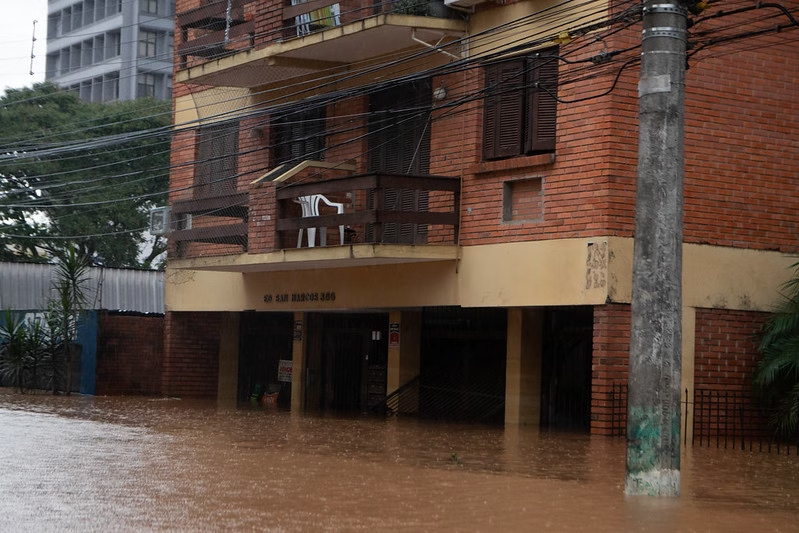
Flooding in Rio Grande do Sul on May 8. Credit: Thales Renato/Flickr (CC BY-NC-ND 2.0)

Right-wing groups are peddling false claims that the heavy rainfall that led to the region’s disastrous flooding in May is not related to climate change.

On May 9, volunteers and emergency workers were still rescuing people and animals who remained stranded on the sixth day of flooding on the streets of Rio Grande do Sul’s capital, Porto Alegre. Social media images of the rooftop rescue of a horse named Caramelo shocked the world. 

A day before the dramatic rescue, Porto Alegre’s deputy mayor, Ricardo Gomes, appeared on a livestream wearing a cap with the Brasil Paralelo logo. Brasil Paralelo is a far-right media company with a streaming platform focusing on “journalism, entertainment, and education,” as its website states. The company was founded in Porto Alegre in 2016 and serves as a main channel of climate denialism among right-wing groups in Brazil. By wearing the Brasil Paralelo logo, Gomes associated himself with an institution that experts say is a purveyor of climate denialism, at the height of a climate-related disaster. 

Some days later, Ricardo Felício, a professor of Brasil Paralelo’s education wing who has also appeared on many of the platform’s documentaries, wrote that climate change did not cause the extreme rainfall in South Brazil. He published his opinions in the Revista Oeste (West Magazine), a print and online publication that caters to far-right followers of former President Jair Bolsonaro, saying “CO2 has nothing to do with it!” 

Southern Brazil was under water for the entire month of May, and two months later, it’s still facing the consequences of the worst flood in its history. Hundreds of thousands have been displaced – 180 have died, and 32 are still missing. 

Flooded rivers swept away entire communities in a disaster on par with 2005’s Hurricane Katrina. The town of Estrela, located on the banks of Taquari River, was more than 70 percent submerged. In recent years, the region has experienced more and more extreme rainfall. Residents of towns on the Taquari River are still feeling the impacts of their third consecutive flood in a six-month period.

Porto Alegre, with 1.4 million inhabitants, was flooded for four weeks between May and June due to swelling water from the Guaiba River and failures of the city’s anti-flood system. The region’s main airport, Salgado Filho International Airport, is not expected to operate again until December.

Porto Alegre’s mayor, Sebastião Melo, and Deputy Mayor Gomes have led its city council since 2021. Both were elected in the wake of Bolsonarism and won decisive victories. And both have faced media criticism for failures in managing the city’s emergency responses to the flood and for failing to update its anti-flood system.

Gomes has participated in events run by Atlas Network, an extensive global collective of more than 500 think tanks, many known to have a history of working against climate action. He attended Atlas Network’s 2019 CEO Summit of the Americas, where leaders of right-wing think tanks gathered to exchange ideas. He appeared at the summit as president of RELIAL, a network of right-wing Latin American research organizations. He is a member of Atlas Network’s Global Council of CEOs team.

Gomes also participated in Atlas Network’s 2020 Latin America Liberty Forum online, again representing RELIAL. The politician is also a long-standing ally, teacher, and host of a political series on Brasil Paralelo’s YouTube channel. His political connections reveal an intricate network that links Brazilian far-right organizations that deny climate change with international think tanks.

Brasil Paralelo’s Roots

In the months after the center-left Brazilian president Dilma Rousseff was impeached in 2016, far-right proponents established Brasil Paralelo, which arose from the growth of far-right ideas that gained ground in the country at the time. Its five founders, who were students, claimed that mass media was overwhelmingly left-wing, and they wanted to challenge mainstream public opinion about the nation’s political crisis after Rouseff’s impeachment.

Three of the original founders, Lucas Ferrugem, Henrique Viana, and Filipe Valerim, now run the company. Experts interviewed for the platform’s first documentaries included names from Instituto Millenium, Instituto Liberal, and Instituto Mises, partner think tanks of Atlas Network in Brazil in 2016.

Inside Brasil Paralelo’s studios. Credit: Brasil Paralelo/Wikimedia Commons.

A panel titled “Entrepreneurship for Common Good” by Atlas Network partner Acton Institute used Brasil Paralelo’s founding and development as a case study in 2021. The panel explored how “entertainment can shape a society’s culture,” and Brasil Paralelo’s role within the “prevailing cultural winds to point Brazil towards pillars of freedom and virtue through a holistic approach to education and entrepreneurship,” as the video states. 

Alejandro Chafuenpresident of Atlas Network between 1991 and 2018 and a Mont Pelerin Society member, taught a Brasil Paralelo course about faith and free-market ideas in 2019. Chafuen also mentioned the media company in his Forbes magazine column in 2023, in which he compared the Brazilian organization to the U.S. nonprofit conservative media group PragerU. He made the same comparison to his YouTube subscribers (over 3.38 million) and Instagram followers (2.5 million), indicating that Brasil Paralelo surpassed PragerU’s audience levels with more than 300,000 subscribers on YouTube and around 400,000 on Instagram. 

Chafuen compares the popularity of Brasil Paralelo to widespread support for Olavo de Carvalho, the deceased influential far-right philosopher who was also known for his strident scientific denialism, including climate denialism. Chafuen also wrote in Forbes that “Brasil Paralelo is planning to land in the United States and replicate its success with U.S.-focused topics, teams, and profiles.”

In August 2023, Brasil Paralelo ran an article raising doubts about the effects of climate change stemming from a speech by UN Secretary Antonio Guiterrez claiming that “the era of global boiling has arrived”. According to the article,”It is not a question of denying climate change, but of discussing whether or not humankind influences this process and to what degree the planet will warm up (or cool down).” 

Chafuen’s article promoted a 2021 Brasil Paralelo documentary called “Cortina de Fumaça” (“Smoke Screen”). It stated that the documentary seeks to answer questions such as, “How does the environmental movement affect the economy in Brazil and other countries? What lies behind some of the main environmentalist misinformation?”

Patrick Moore, a known climate science denier, is presented in the documentary as a co-founder of Greenpeace. Years before, DeSmog had reported that this claim was false. Moore stated in the documentary that Greenpeace is “a conspiracy organization, spreading junk science around the world.” 

One of the sections in “Smoke Screen,” which is available on YouTube, is titled “Environmental apocalyptic predictions that are false.” The journalist Augusto Nunes, one of the founders of Revista Oeste, said in the segment that the Amazon rainforest is not being destroyed, contradicting official data from 2021. Other sources in Brazil, including Aldo Rebelo, former minister of defense during Rousseff’s government, supported the same argument. 

According to the documentary, environmental campaigners’ criticisms and so-called “lies” about the Amazon rainforest’s deforestation are attempts to protect the U.S. and European agricultural markets. 

In another article in September 2023, Brasil Paralelo defended the idea that global warming legitimizes NGOs’ actions pushing international actions such as the Paris Agreement, which the platform claims keeps developing countries producing less while first-world countries maintain their production. 

In an interview with The Intercept Brasil, researcher Renata Nagamine from the Brazilian Center of Analysis and Planning (Cebrap) said Brasil Paralelo’s “Smoke Screen” uses a “scientific repertoire on the margins of climate science.” 

When contacted by DeSmog, representatives for Brasil Paralelo did not respond to requests for comment.

“CO2 Has Nothing to Do With It!”

Climate change boosted the rainfall volume in Rio Grande do Sul by 15 percent, according to a study by the website Clima Meter, which confirmed the influence of climate change on the recent  flooding disaster in the region. 

Clima Meter is “an experimental rapid framework for understanding extreme weather events in a changing climate based on looking at similar past weather situations.” From the analysis of the patterns of local precipitation and the ElNiño-Southern Oscillation, the researchers interpreted the “Brazil floods as an event whose local characteristics can mostly be ascribed to human driven climate change.”
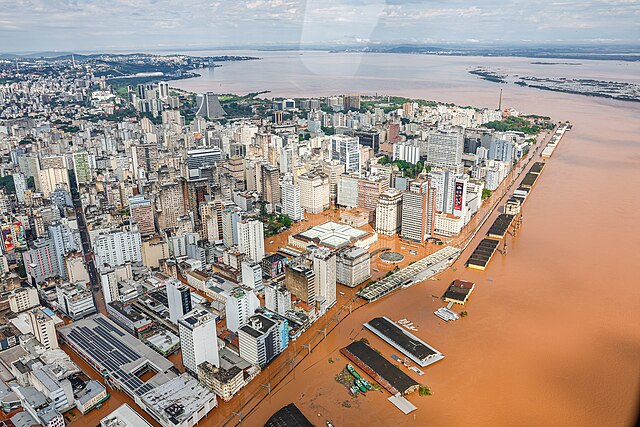
Flooding in South Brazil on May 5. Credit: Ricardo Stuckert/Wikimedia Commons

Davide Faranda, a researcher of the Laboratory for Sciences of Climate and Environment at the Institute Pierre Simon Laplace and coauthor of Clima Meter’s study on Brazil’s flooding, said in an interview with the local newspaper, GaúchaZH, that floods have been intensified by the burning of fossil fuels and have a major impact on vulnerable communities, which bear the brunt of climate change.

However, Ricardo Felício, who teaches courses at Brasil Paralelo and is a professor of geography at the University of São Paulo (USP), offered a contradictory explanation for the disaster.

“It is confusing to relate the climate to a meteorological scenario of large dimensions, which is the case here,” wrote Felício in his May 12 weekly column in Revista Oeste. “CO2 has nothing to do with it!” 

In addition to writing for Revista Oeste, Felício is a well-known climate denier in Brazilian politics. DeSmog uncovered an interview with Felício on a once-popular Brazilian TV show, where Felício stated in 2012, “There is no scientific proof of global warming.” Brazil’s ex-president Bolsonaro tweeted an interview between Nando Moura, a well-known right-wing influencer, and Felicio in 2017.

Between 2017 and 2021, Felício gave several lectures at universities and trade associations across the country denying climate change after the Aprosoja Mato Grosso (an association of soybean growers) sponsored his talks, according to a BBC investigation.

Journalists and media executives founded Revista Oeste in 2020. It is a self-proclaimed conservative outlet and claims the problems of capitalism should be solved with more capitalism.

The magazine’s print cover in June 2024, a month after the tragedy in Rio Grande do Sul, showed the planet resting on a palm, followed by the headline “The global warming hoax.” The periodical also published other articles on the floods in Rio Grande do Sul, denying climate change had a part in the disaster.

“Historically, apocalyptic predictions about the climate have not come close to coming true. Now, activists are blaming climate change for the floods in Rio Grande do Sul,” wrote the journalist Myllena Valença. The piece claimed that “facts overturn the delirious prophecies of environmental activists, who for decades have been announcing disasters caused by global warming.” Felício is a leading source in the report. 

Revista Oeste’s June 2024 cover. Credit: The Wayback Machine

The June print edition also featured an interview with the president of Environmental Progress, Michael Shellenberger, a well-known nuclear energy enthusiast and a Republican witness in climate hearings in the U.S. Congress. In the interview, he pointed out he is optimistic about the environment and pessimistic about civilization. “I’m worried about the hysteria around global warming,” Shellenberger said. 

When contacted by DeSmog, representatives for Revista Oeste did not respond to requests for comment.

A Well-Connected Deputy Mayor 

Donations poured into Rio Grande do Sul in the aftermath of the flooding disaster to help people who had lost everything. Brasil Paralelo asked for donations for an organization called Instituto Cultural Floresta (ICF). 

Porto Alegre’s Deputy Mayor Gomes also requested donations to the same organization, even though his City Hall made its own donation channel available, an Agência Pública investigation revealed last month. 

The ICF is a nonprofit organization based in Porto Alegre, and according to its website, it focuses on providing security forces with military equipment. Leaders and members of the organization are connected to the Instituto de Estudos Empresariais (IEE), an Atlas Network think tank partner in Brazil that promotes the right-wing annual meeting, Liberty Forum, which is sponsored directly by Atlas Network, and boosts right-wing political candidates. 

Leonardo Fração is president of the ICF and a former IEE president. He spoke at the Liberty Forum in 2018 and in 2010.

Other ICF members are affiliated with IEE, including Bruno Zaffari, the owner of real estate and supermarket companies, and Wilson Ling, the director of the plastic packaging and forestry company Évora S.A. 

Gomes held various positions, including president of the IEE from 2009 to 2012. But his relations with right-wing think tanks stretch much further. Between 2016 and 2020, he served as the president of RELIAL, and he also is a member of the Mont Pelerin Society. DeSmog research found that Mont Pelerin Society members are affiliated with over 100 organizations that also appear on the membership list of the Atlas Network.

Atlas Network also quoted Gomes in a report about the Latin America Liberty Forum in 2021.

RELIAL presents itself as a network of brain trusts that “disseminate and implement liberal principles as their flag.” Agustín Etchebarne, a member and a former director of  RELIAL, is also the general director of the Fundación Libertad y Progreso, an Argentinian Atlas-affiliated think tank that supported the election of far-right Argentinian President Javier Gerardo Milei.   

Atlas Network awarded Fundación Libertad y Progresoa a grant in 2024. The organization spent the money to promote an international summit in partnership with the Cato Institute for the six-month anniversary of the inauguration of Milei. The event took place June 11-12 in Buenos Aires, and Milei attended.
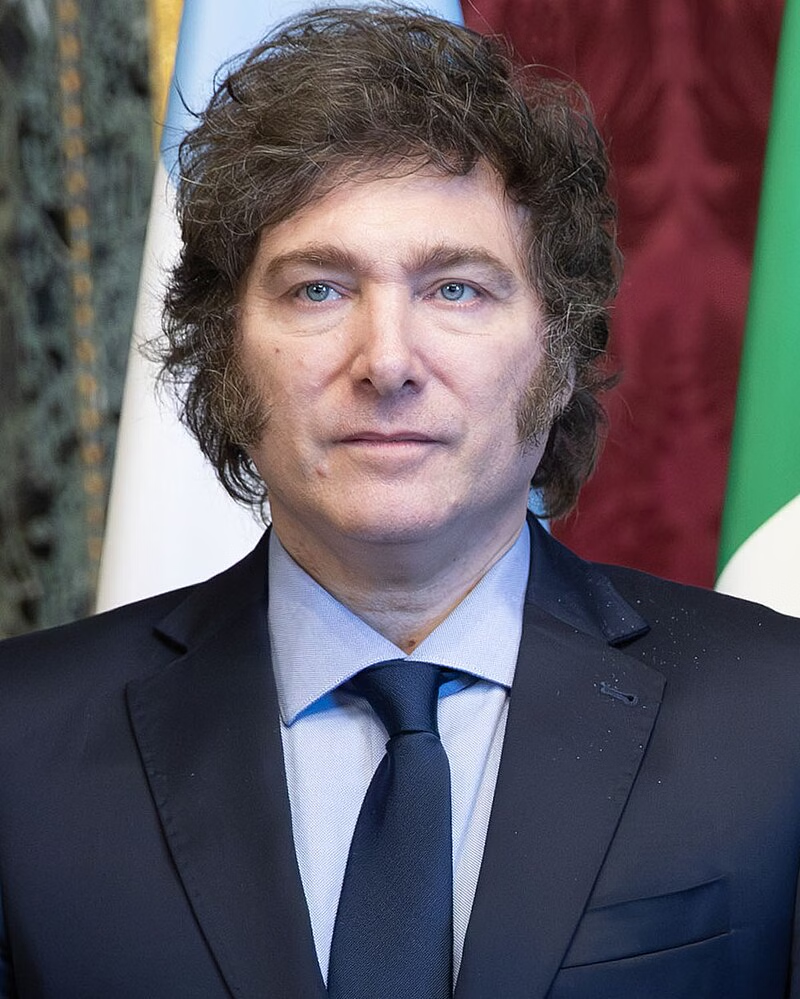
Fundación Libertad y Progresoa promoted an international summit in partnership with the Cato Institute for the six-month anniversary of the inauguration of Argentininan President Javier Milei. Credit: Wikipedia

When contacted for comment,  Atlas Network said in a statement that the organization “has no grant programs related to climate change and makes no policy prescriptions to its partners on the subject of climate change.” It also stated that it “does not fund initiatives advocating against the existence of climate change.”

The organization stated that it “has no partnerships with candidates, parties, or government officials,” and that its “partners are independent, nonprofit organizations engaged in public policy issues.”  

Atlas also asserted that “there are no ‘Atlas Network groups’ in Brazil,” but instead “independent partner organizations that apply to receive training, grants, and networking opportunities from Atlas Network.”  The think tank network also stated that its partners are “each governed independently and are not managed by our organization.” 

Political Negligence and Climate Denialism

The media has widely criticized Porto Alegre’s Mayor Melo for his crisis management issues and his administration’s low budget for flood prevention. To defend against the criticism, Melo claimed online that, “I’m not a denialist on anything, much less on the climate issue.”

Porto Alegre suffered two severe floods in 2023, including its biggest flood since 1941. However, since 2021, the city council reduced its investment in flood protection, and added no additional protection in 2023. 

Experts also condemned the city’s failure to maintain its anti-flooding system, which was designed in the 1970s. The Municipal Department of Water and Sewage, which operates the system, has laid off more than half of its employees since 2013. In addition, Melo’s term in office has included environmental scandals and conflicts with environmentalists and indigenous people. 

When contacted by DeSmog, Porto Alegre’s City Hall Press Office, which represents Melo and Gomes, did not respond to requests for comment.

When the flooding crisis deepened in Porto Alegre, Melo used a Bolsonarist style, applying the motto that every person looks out for his own, which summarizes his way of doing politics. “If you have a house on the beach and can afford to leave, I recommend that you leave and go to the beach,” he said, talking about wealthier families who have second homes at the beach. This comes from the mayor of a city where inequality is so entrenched that many people don’t have one home, let alone a second beach house. 

Gomes has said he will not seek reelection with Melo this year, but that he will continue supporting Melo against “the radical left.” Everything suggests, however, that the Brasil Paralelo cap will officially be part of his uniform. 

Original article by Lucas Araldi republished from DeSmog.

Continue ReadingThe Direct Links Between Southern Brazil’s Massive Flooding and Climate Denial

Legal pressures mount for Cargill over River Wye pollution

Original article by Andrew Wasley republished from TBIJ under a Creative Commons Attribution-NonCommercial-NoDerivs 3.0 Unported License.

The river Wye.

The case will argue the meat giant knew of the potential environmental consequences of industrial-scale chicken farming

The US meat and grain giant Cargill must compensate those affected by pollution in the River Wye or face court proceedings, lawyers preparing to sue the company have warned.

Legal papers served to the company by the law firm Leigh Day say hundreds of people have suffered loss and damage because of pollution linked to growing industrial chicken farming in the region. The firm also demands that Cargill cleans up the river.

Leigh Day’s letter to the company, seen by the Bureau of Investigative Journalism (TBIJ), also accuses two of Cargill’s UK entities – Avara Foods and Freemans of Newent – of jointly polluting the river with phosphorus. The companies have two months to respond to the allegations.

Natural England downgraded the river’s health rating last year, citing higher phosphorus levels and increased eutrophication – a phenomenon where a build-up of nutrients prompts some plants to grow excessively, depleting oxygen levels.

Fields of filth Factory farms committing thousands of environmental breaches

“Chicken manure is high in phosphorus, having a concentration four to five times higher than other forms of manure,” Leigh Day’s letter states.

Pollution of the Wye has become a national issue as the number of chicken farms nearby has grown. Today, Avara Foods is responsible for more than four fifths of the 20 million birds reared in the region, according to Leigh Day.

Until recently, waste from the farms was frequently spread on nearby land as a fertiliser, where it would run into adjacent waterways, including the Wye and its tributaries.

In the legal papers, Leigh Day accuses Cargill, Avara and Freemans of being responsible for “substantial water quality degradation and widespread algal blooms”, as well as “species decline [and] a loss of income from tourism, water sports, fishing, hospitality and other local businesses”.

Local house prices have also been affected, the letter notes, along with the quality of life for residents living next to industrial-scale farms.

Initially, Leigh Day only named Avara as a defendant, but in May it announced that Cargill would also face action. Avara is a joint venture between Cargill and Faccenda Foods – a major UK poultry processor. There are more than 100 intensive poultry farms in the Wye Valley over which Avara, and thus Cargill, “has significant legal and factual control”, Leigh Day claims.

Avara has previously said it is “confident that there is no case to defend” and that Leigh Day’s civil claim is “a year-old, opportunistic attempt to profit from a serious environmental issue”.

“It has no merit and is not supported by evidence or expert opinion,” the company said in March. “It ignores the long-standing use of phosphate-rich fertiliser by arable farms as well as the clear scientific data showing the issue of excess phosphorus considerably pre-dates the growth of poultry farms in the Wye catchment.”

The letter also notes that Avara supplies 4 million chickens to the UK retail, hospitality and food service sectors, and is a supermarket poultry supplier.

The case will argue that Cargill, which is headquartered in Minnesota but operates around the world, must share responsibility for the pollution of the Wye and related waterways.

Cargill knew of the potential consequences of industrial-scale chicken farming because of similar legal challenges in the US, Leigh Day argues. There, waste from poultry farms from a number of companies – including Cargill – was found to have contributed to historic river pollution in Oklahoma.

Leigh Day’s letter adds that Cargill’s importing of phosphorus-rich soy, which is then used to make poultry feed, has also contributed to the problem. TBIJ previously uncovered how Cargill soy from Brazil is shipped to Liverpool, where it is processed for use in animal feed at farms that supply Avara.

Leigh Day partner Oliver Holland told TBIJ: “We hope that Avara and Cargill will take this opportunity to engage constructively with the substance of the claim and work with us to avoid court proceedings being issued. However, if they do not, our clients will be issuing court proceedings and looking to proceed with this claim through the high court.”

Original article by Andrew Wasley republished from TBIJ under a Creative Commons Attribution-NonCommercial-NoDerivs 3.0 Unported License.

Continue ReadingLegal pressures mount for Cargill over River Wye pollution

Jury out in historic Just Stop Oil conspiracy case

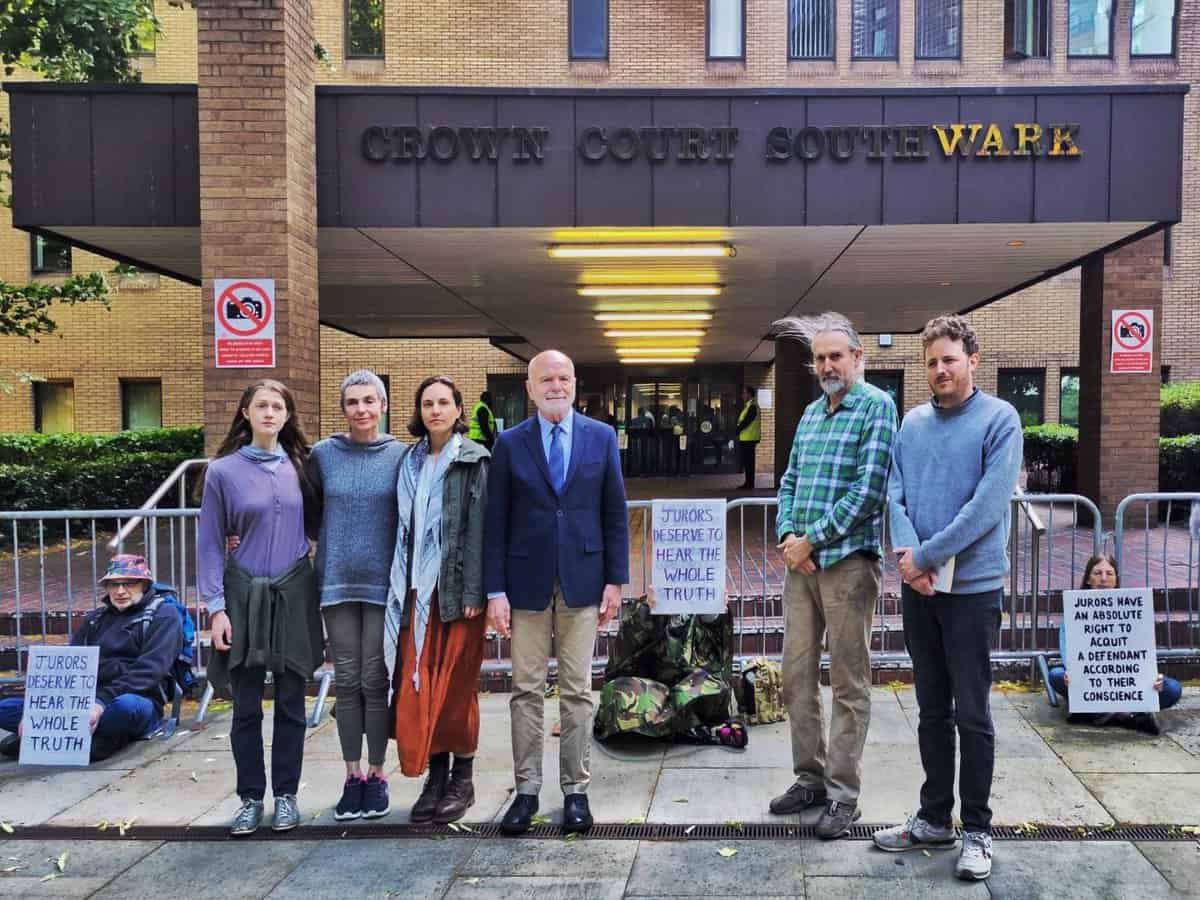
UN Special Rapporteur on Environmental Defenders under the Aarhus Convention Michel Forst attended the trial of five Just Stop Oil supporters at Southwark Crown Court. He attended as an observer because of his serious concerns.

The jury is now deliberating the verdict in a case involving Just Stop Oil supporters Daniel Shaw, Cressie Gethin, Lucia De-Abreu-Whittaker, Louise Lancaster, and Roger Hallam. The five are currently on trial at Southwark Crown Court. They are charged with conspiracy to cause a public nuisance in connection with the M25 gantry actions in November 2022.

They were first arrested in 2022 either pre-emptively in police raids at their homes after attending a Zoom call (in which a Sun journalist was present), or travelling near the M25. The Sun alleged it had ‘infiltrated’ the meeting, tipping off the police and enabling National Highways to secure a public injunction. Some of the five defendants were imprisoned for up to 113 days without trial. They were released subject to stringent conditions including a 10pm to 7am house curfew, stipulations not to be within a one-mile radius of the M25, no contact with other defendants, and not to participate in any climate change demonstration. 

The trial began on 24th June, presided over by Crown Court Judge Hehir. 

At the start of the trial, the office of the UN Special Rapporteur on Environmental Defenders released a statement expressing its views on the criminal prosecution of Daniel Shaw. Due to his “grave concerns” about the criminalisation of UK environmental defenders, Special Rapporteur Michel Forst attended the trial in person on 4th and 5th July. [1]

During the trial so far, Judge Hehir has ordered nine separate arrests from the courtroom: three times each for Roger Hallam and Daniel Shaw, twice for Louise Lancaster, and once for Cressie Gethin. Additionally, the defendants have collectively spent seven nights in remand since the trial began, with Daniel, Roger, and Louise each spending two nights, and Cressie spending one night. 

On the 4th of July, the prosecution made a historic concession by admitting to the following, in the list of agreed facts to be presented for the jury’s consideration:

“1. On 17 December 2020, Her Majesty’s Treasury published the New Zero Interim Report which states, ‘Climate change is an existential threat to humanity. Without global action to limit greenhouse gas emissions, the climate will change catastrophically with almost unimaginable consequences for societies across the world.’ In recognition of the risks, the UK became, in 2019, the first major economy to implement a legally binding net zero target.

2. Scientific consensus is that beyond 1.5 degrees Celsius warming above pre-industrial levels risks catastrophic and irreversible consequences for humanity, which will be irreversible.

3. Over the past five years, the global average temperature rise since pre-industrial times has averaged just under 1.3 degrees Celsius. For the 12 months to June 2024, it averaged 1.63 degrees Celsius and is estimated to top 1.5 degrees Celsius permanently before 2030.

4. In October 2022, the UK Government opened the 33rd licensing round to allow oil and gas companies to explore for more fossil fuels in the North Sea.”


Despite the presence of these agreed facts and the explicit provision for the defence of ‘reasonable excuse’ under section 78 of the Police, Crime, Sentencing and Courts Act 2022, Judge Hehir ruled that the defendants would not be allowed any defence under law, repeating at various points in the trial as well as in his written directions to the jury that any facts pertaining to “man-made climate change” were “entirely irrelevant” to the defendants’ charges. 

Continue ReadingJury out in historic Just Stop Oil conspiracy case

Lovebombed by lobbyists: How Labour became the party of Big Business

Original article by Ethan Shone republished from Open Democracy under a Creative Commons Attribution-NonCommercial 4.0 International licence.

Senior Labour figures have met hundreds of times with lobbyists for big business, banks and arms firms in the last year
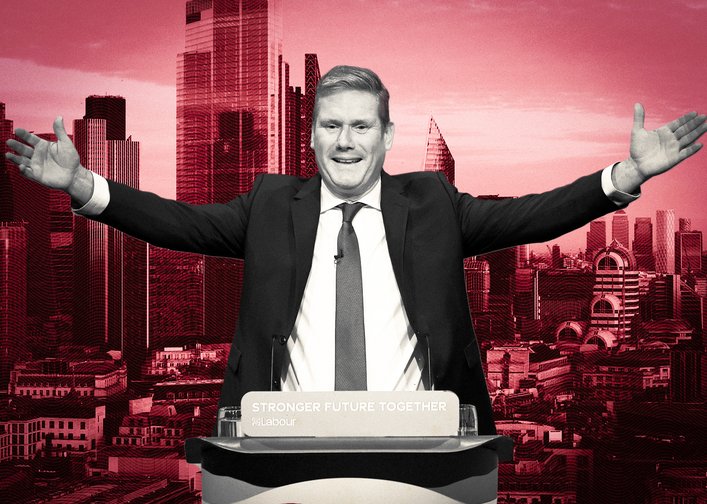
 | Tim Grist Photography/Dan Kitwood/Getty / Composition by James Battershill

An openDemocracy investigation reveals the secretive mass lobbying campaign that shaped Starmer’s policies

Twelve months before seizing power in last week’s historic election victory, Keir Starmer and the Labour Party welcomed with open arms an unprecedented lobbying campaign by the UK’s most powerful corporations.

Weapons manufacturers implicated in human rights abuses in Gaza bent the ears of would-be defence secretaries. Incoming climate change ministers met with oil companies. Labour ministers who will now be responsible for curbing the excesses of the City of London were wined and dined by financial services executives. Public affairs firms representing asset managers, the tobacco industry, gig economy firms and tax-avoiding mega corporations secured meeting after meeting after meeting with future ministers.

In a high-voltage campaign that was simultaneously secretive yet enacted in plain sight, lobbyists worked hard to ensure the policies of the UK’s first ostensibly progressive government in 14 years reflected the interests of their influential clients. And Labour was only too happy to engage.

Westminster’s lax transparency rules mean there is no official record of this mammoth public affairs offensive. The rulebook says the public has no right to know which companies lobby the opposition – a position shared by Starmer’s Labour. In every instance, the party has refused to disclose what was discussed, what promises were made, and even who was at its meetings, saying: “We should not be treated as the government.”

Now, an investigation by openDemocracy lays bare the astonishing access that Big Business had to Starmer and his frontbench team.

openDemocracy spent months gathering information about lobbying meetings from a variety of open sources, including parliamentary meeting rooms’ booking logs, social media posts and events publicised by lobbying firms. These meetings, spanning the past 18 months, have included private meetings, exclusive Q&A sessions, dinners, mixers, briefings, client roundtables, overseas visits and seminars.

We have identified hundreds of meetings that senior figures in the party held with corporate lobbyists, financial institutions and business groups. On average, they met with influential business leaders every single working day of the past year.

This is about more than private dinners and smoked salmon breakfasts. Starmer’s cabinet is about to begin implementing the programme for government laid out in Labour’s manifesto. As Rachel Reeves, his new chancellor, said last month, the “fingerprints” of business are all over Labour’s policies, shaped as they were through an unprecedented level of engagement with corporate lobbyists, financial institutions and business groups.

Experts warn the consequences of the party effectively outsourcing its policy-making to private corporations will be far-reaching for British society. Labour has pledged to build new towns, to increase green investment, to reform health and social care and to launch major infrastructure projects. Mick McAteer, a former director of the UK’s financial services regulator has warned that the much-vaunted partnership with private finance which lies at the heart of all these plans “will result in a massive transfer of wealth from local communities to the City of London and global financial institutions over the next decade”.

The corporate lobbyists

Lobbying is a huge business in the UK. Dozens of agencies make millions every year advising clients on how to influence policy to their benefit and get their messages heard by the politicians who write laws, set regulations and sign off on public sector contracts. The last decent estimate of the industry’s size is from 2007, when Gordon Brown was still the prime minister. A study by the Hansard Society then put it at around £1.9bn. Insiders suggest it has certainly grown in the nearly two decades since.

A big part of a lobbyist’s work is getting their clients access to the right people, which often relies on the lobbyist themself knowing the right people – or having contacts who do. Around 18 months ago, after the spectacular implosion of the Liz Truss regime meant the chances of Labour taking power started to look more likely, the public affairs industry began to reorient en masse.

To prepare for a Labour government, lobby firms began establishing dedicated ‘Labour Units’. They hired former Labour MPs and staffers to make use of their contact networks, with a few even snapping up prospective candidates or seconding staff members directly into the offices of senior party figures. Lobbying firms Global Counsel, Lowick Group, FGS Global and Weber Shandwick have all sent members of staff to work in the offices of senior Labour figures in the past two years – at a combined cost to the firms of more than £100,000.

Other lobbying companies have given donations in cash or in-kind to influential MPs, despite industry rules seeming to bar this practice. New deputy prime minister Angela Rayner alone has received donations from two lobbyists – Sovereign Strategy and Pentland Communications – in the past year.

openDemocracy reached out to each of the firms mentioned above to ask whether they expect to receive anything in exchange for seconding members of staff at their own cost or donating to MPs, but received no response.

The lobbyists’ efforts bore fruit: in the twelve months leading up to the election, not a week went by without a member of Labour’s frontbench team attending a private client roundtable organised by a lobbying firm. These meetings, industry insiders say, represent only a fraction of the work a firm does in connecting its clients with politicians. They often serve merely as an introduction, with clients then able to follow up on issues discussed at the meetings or raise more sensitive matters, either through the agency or in some cases directly with politicians.

One firm, Arden Strategies, was able to secure more private client roundtables with Labour than any other, as far as openDemocracy can establish. The lobby shop, run by former Labour minister Jim Murphy, put its clients in a room with senior Labour figures on at least nine occasions – with politicians lobbied including Reeves, business and trade secretary Jonathan Reynolds and Starmer’s head of business engagement.

Unlike many firms, Arden doesn’t publish a general client list on the Public Relations and Communications Association register. But openDemocracy can reveal that the firm’s major clients include leading arms manufacturer Northrop Grumman and two of the UK’s largest power distribution companies, UK Power Networks and SGN.

Labour needs to take on the vested interests of big corporations, not give them the pen to write policy

Unlike in many other democracies, such as Canada, Germany and Scotland, voters have no right to know who is lobbying opposition politicians in Westminster. Only government ministers are required to regularly publish a list of any meetings they have with businesses, charities, think tanks and corporate lobbyists, along with a brief description of what was discussed. Details of government politicians’ meetings are not disclosed unless a specific Freedom of Information request is made asking about them, and the government may well decide to refuse to answer such requests.

This heavily flawed system is a major issue in a year such as this one, when the opposition’s election victory was almost a foregone conclusion and interest groups have been queuing up to influence its plans for government.

While firms do not need to declare which opposition politicians they’ve lobbied, many advertise their ability to secure access to the shadow frontbench. openDemocracy monitored the leading lobbying firms and found dozens of public references to meetings involving senior Labour politicians. In every instance where openDemocracy asked the lobbying firms and Labour which clients were present at these meetings, neither would provide any details.

Tim Bierley, campaigner at Global Justice Now, warned that Labour may be treating lobbyists as “independent experts” rather than people “responsible primarily for boosting their shareholders’ income”.

Bierley added: “On climate, trade and the economy, the interests of giant corporations are extremely different from the public’s – their outsized influence would blur any visions of progress under Labour.

“To provide a remotely adequate response to crises on multiple fronts, Labour needs to take on the vested interests of big corporations, not give them the pen to write policy.”

The City

Few interest groups carry as much sway with Labour as the representatives of the City of London – and the wider financial services sector that the City rests at the heart of. In recent years, no other industry has more effectively forged ties with the party.

In the weeks before polling day, Labour’s shadow City minister Tulip Siddiq – who is expected to keep the post in government – took to LinkedIn to share manifesto documents on three occasions. Tellingly, it wasn’t her party’s manifesto she was sharing, but those of three major financial services industry representative bodies, UK Finance, TheCityUK and the Association of British Insurers.

“I have worked closely with TheCityUK and its members in recent years,” wrote Siddiq in one of the posts, “to formulate the Labour Party’s policies for the financial and professional services sector.”

Her other two posts are seemingly copy-and-paste jobs, with near-identical wording. In both, Siddiq told of how “delighted” she had been to “work closely” with the Association of British Insurers and UK Finance “to inform Labour’s plans for the sector”.

All three posts suggest that the lobbyists for the City of London and the financial institutions were directly involved in shaping the policies and regulatory approach that will apply to their own industry.

When Labour published a policy document earlier this year laying out its plans for the financial services sector, the party held a no-press-allowed soiree in the City of London’s Guildhall, sponsored by the City of London Corporation, to thank the industry for its contributions. The plans were criticised for committing the party to the same lax regulatory approach taken by the Conservatives, with campaigners describing the document as “a love letter to the city”.

Labour’s frontbench team, including Siddiq, has met with City lobbyists on more than 20 occasions in the past year – not counting its significant engagement with the British Private Equity and Venture Capital Association, which openDemocracy revealed last month. BlackRock, Macquarie, HSBC, Bloomberg, Lloyds, Brookfield Asset Management and Blackstone are among firms to have secured access to leading members of the new government, including Starmer, Reeves, Reynolds and the chancellor of the Duchy of Lancaster, Pat McFadden.

Mick McAteer, a former board member at the Financial Conduct Authority and a campaigner for economic social justice at the Financial Inclusion Centre, told openDemocracy that the close relationship between incoming ministers and the Labour Party can essentially be seen as a kind of quid-pro-quo.

Lobbyists for financial institutions push Labour to commit to a favourable regulatory environment while dangling the promise of vast amounts of private capital. McAteer is increasingly concerned this relationship will amount to a rehashed form of the Private Finance Initiatives (PFI) favoured by New Labour, in which private firms provide all or most of the investment to build infrastructure such as hospitals and schools, and generate profits from lucrative contracts to maintain the infrastructure long after it has been built.

These public-private partnerships, McAteer warns, will shape almost every aspect of Labour’s agenda in government – from its plans for house-building to energy generation and distribution – and will represent a bad deal for the public.

“Private investment is by definition more expensive than public investment, because of the high returns that financial institutions expect to make for their shareholders,” MacAteer said. “These returns have to be paid for in some way, so ultimately, the costs get passed on to households through higher bills.”

The financial services sector has consolidated its relationship with Labour in different ways. HSBC has had a staffer in Reynolds’ office for almost a year, for example, and NatWest had a similar arrangement with the new business secretary for a few months prior to that. Staffers seconded from the firms have been involved in policy development and business engagement – but because they are still paid by their employers while working for Labour, the Electoral Commission classes the arrangements as political donations.

Then there are two advisory panels made up of executives from major financial institutions, which Labour set up while in opposition but that will continue to advise it on where and how to deploy billions worth of private sector investment in government. One board, the National Wealth Fund Taskforce, is headed by Mark Carney, the former Bank of England director general who now works for Brookfield Asset Management. The other, the British Infrastructure Council, includes senior figures from investment firms such as M&G and BlackRock.

McAteer warns these advisory panels constitute a major conflict of interest. “The British Infrastructure Council is full of representatives from firms that stand to financially benefit, who will not just be determining where the money goes, but in what form does the money go, what are the terms of the deals, and that the capital is de-risked before they’ll commit the finance.

“There’s a reason why they want to be on this infrastructure council, they’re not charities. This is not a criticism, it’s just how finance institutions work, and how markets work. They exist to get the best deal for their shareholders and their owners.

“This thing has been sold as a win-win for the economy and for the investors, but somebody pays for that. Ordinary households pay for it, and more importantly, because they don’t have a say in this, it will be future generations who will pay for this.”

He added: “Because these firms will have ownership of the economy and they’ll be able to extract value for as long as that infrastructure lasts. Ordinary people are really going to end up on the wrong side of some very, very badly designed transactions here, shaped by the financial institutions in the City of London.

“They’ve been lobbying for this for a couple of years – and they’ve got what they wanted.”

openDemocracy reached out to each of the firms mentioned above, but only HSBC provided a response. A spokesperson said: “HSBC regularly engages with the major political parties in the UK on issues facing our customers and the wider financial services industry.”

The consultants

If the City of London’s financial institutions stand to win big from Labour’s PFI 2.0, then so, too, do the City management consultancies and accountancies that work so closely with them.

Firms such as the ‘Big Four’ consultancies – Deloitte, KPMG, Ernst and Young (EY) and PriceWaterhouseCoopers (PwC) – and the industry lobbying body, the Management Consultants Association, have met with senior Labour figures at least 13 times since March last year.

Lord Sikka, a Labour peer and Emeritus professor of accounting at the University of Essex, said his party should not be working so closely with management consultancies.

“I think this new form of PFI would be disastrous, it would be a continuation of what we’ve seen in the UK since the late 1970s, a kind of right-wing coup which has seen a restructuring of the state so that it has become a guarantor of corporate profits, rather than an entrepreneurial state which invests,” Sikka said.

“PFI, privatisation and outsourcing – the very things these companies advise on and profit from – are all examples of that.”

Though Starmer doesn’t appear to have attended many of the meetings openDemocracy has uncovered, he was present at a day of business roundtable events at EY’s London offices in March 2023. There, the Labour leader, along with Reeves and Reynolds, heard from business leaders about “the potential value of public and private sector collaboration”, according to a LinkedIn post by EY’s managing partner. The trio returned to EY in November, along with the now chief secretary to the Treasury, Darren Jones, for similar discussions with a few dozen business leaders.

Jones has also attended secretive meetings with elusive consultant Hakluyt, which was founded by former MI6 operatives in 1995 and claims to work with “at least one of the world’s top five corporations in every major sector globally” and “three-quarters of the top 20 private equity firms in the world”. The firm also organised a dinner with Labour MP Peter Kyle, then the shadow secretary for science, innovation and technology, while he was in the US earlier this year.

Hakluyt counts among its advisory board former executives from Rolls Royce and Coca-Cola, as well as former senior civil servants and politicians. It has previously been linked with large oil and gas interests, having been accused by The Sunday Times in 2001 of deploying an agent to spy on Greenpeace campaigners on behalf of oil companies. In recent years Hakluyt has sought to “demystify” and says it now has “no relationship with the spooky world”. A spokesperson said Hakluyt is not a lobbying organisation and does not advise political parties.

Speaking at last year’s Labour Party Conference, Reeves pledged to slash public spending on consultants if elected. This promise also made it into the party’s manifesto. But as economists and authors Mariana Mazzucato and Rosie Collington highlight in their book, The Big Con, the industry has been known to offer its services pro-bono during times of austerity, in hopes of securing lucrative paid contracts in future. In 2011, the then head of public sector at KPMG described the strategy to the Guardian, in the context of working with David Cameron’s coalition government: “We can’t afford to [work pro bono] indefinitely, but we can in the short-term. We’re hoping to position ourselves well when the government decides it is willing to pay.”

In a similar vein, when Labour’s shadow Treasury team was working on its aforementioned plan for financial services, City consultancy Oliver Wyman donated a staff member to help out – at a cost of more than £58,000 for the past year, according to Electoral Commission data. Senior staffers at leading consultancies Grant Thornton and EY have held parliamentary passes as members of Starmer’s team for the past year or so, according to the register of MPs’ staff interests. Since 2021, firms including PwC and Baringa have provided combined pro-bono services to the party worth more than £650,000.

“There are huge questions about why these firms have been providing free staff,” Lord Sikka said, “because obviously that has a cost to them and they would expect a return because they’ve made an investment.”

None of the firms mentioned above responded to openDemocracy’s request for comment.

Labour is sending a clear message to arms dealers – that it will be business as usual

The arms dealers

In March last year, Labour’s then shadow defence secretary, John Healey, and minister for defence procurement, Chris Evans, filed into a function room in the Churchill War Rooms along with executives from 20 of the world’s biggest arms manufacturers, including BAE Systems, Leonardo, Lockheed Martin, RTX, Rheinmetall and Rolls Royce.

The private event at the historical attraction in Westminster was arranged by public affairs firm Rud Pedersen. The firm’s head of defence and security is a former Labour staffer who worked in the party’s shadow defence team between December 2018 and September 2020.

Since last March, party figures have met with representatives from defence firms on at least 13 occasions, including two visits to sites run by BAE Systems and German defence contractor Rheinmetall. Labour’s then shadow science minister Chi Onwurah and armed forces minister Luke Pollard attended a private meeting – hosted by the industry lobbying body, ADS Group – with BAE Systems, Rolls-Royce and Thales at the Labour Party Conference.

A BAE Systems spokesperson said: “As the UK’s largest defence company, employing more than 45,000 people in the UK with thousands more in the supply chain, we regularly engage with political representatives to increase awareness and understanding of the significant contribution our industry makes to the UK’s security and prosperity.”

Most recently, Reeves attended a private client roundtable event hosted by lobbying firm Headland in March this year. The CEO of German AI defence startup Helsing was also present, as was Headland staffer and new Labour MP, Gregor Poynton.

While Labour has consistently ruled out progressive policies such as scrapping the two-child benefit cap or boosting local government funding, it has committed to increasing defence spending to 2.5% of GDP, up from 2.3% last year. Despite a YouGov poll from April indicating that the majority of the public backs a ban on exporting arms to Israel, the party has declined to call for an end to arms sales to the country.

Emily Apple from the Campaign Against the Arms Trade described arms trade lobbyists’ access to the upper echelons of the Labour Party as “hugely alarming”.

She said: “These meetings give [some of] the companies profiting from Israel’s genocide in Gaza a huge amount of influence over Labour’s future defence and foreign policy. This rings alarm bells over whether a future Labour government will uphold international law and impose an arms embargo on Israel or any other human rights-abusing regime.

“These companies profit from death and destruction. Labour should be taking a stand and reducing the influence of these death merchants on political policy. Instead, these meetings mean Labour is sending a clear message to arms dealers – that it will be business as usual for them to continue boosting their share prices through perpetuating conflict and misery across the world.”

openDemocracy reached out to each of the firms mentioned above, but only BAE Systems responded. A spokesperson said: “As the UK’s largest defence company, employing more than 45,000 people in the UK with thousands more in the supply chain, we regularly engage with political representatives to increase awareness and understanding of the significant contribution our industry makes to the UK’s security and prosperity.”

If business wins, who loses?

On Friday morning, during his first address to the nation as prime minister, Starmer said voters had given him a mandate “to do politics differently”. But the representatives of big business, finance and the arms trade, which have worked hard to influence his party, will hope it plans to continue the status quo: prioritising their interests over those of working people.

One week earlier, as now-chancellor Rachel Reeves prepared for a Monday morning sit-down with the heads of financial firms, the couriers’ branch of the IWGB trade union held its annual group meeting in a sunny courtyard in east London. There, some of the most marginalised workers in the UK reflected on the struggles and victories of the past year and looked ahead to the future.

The IWGB, one of many smaller independent trade unions with no affiliation to the Labour Party, works across a number of sectors where the power gap between workers and employers is most acute. From Hartlepool to Hackney, its members are outsourced security guards and cleaners, foster carers, receptionists and couriers.

Many of the corporations that have spent the past 18 months wooing Labour are the same firms severely exploiting these workers, the IWGB’s general secretary, Henry Chango Lopez, told openDemocracy.

“These huge corporations,” Chango Lopez said, “have access to vast sums of money to lobby governments – a method of policy influence that is simply not available to working people. That many senior members of the Labour Party have allowed those employers to get anywhere near influencing policy is indicative of where the government’s priorities lie.”

Original article by Ethan Shone republished from Open Democracy under a Creative Commons Attribution-NonCommercial 4.0 International licence.

Continue ReadingLovebombed by lobbyists: How Labour became the party of Big Business

Morning Star Editorial: Starmer remains deaf to Muslim concerns

https://morningstaronline.co.uk/article/editorial-starmer-deaf-muslim-concerns

Prime Minister Keir Starmer speaks during an interview at the Senedd, in Cardiff, Wales, during his tour of the UK following Labour’s victory in the 2024 General Election, July 8, 2024

ONE of the clearest messages from last week’s general election was the disillusionment very many British Muslims feel with the Labour Party.

Labour’s vote fell far further in constituencies with a large Muslim electorate, confirming the antipathy expressed in May’s local election results.

After that poll, the party claimed that it was ready to listen to the community’s concerns. Yet just a few weeks later, it axed Faiza Shaheen, a Muslim, as a party candidate in a brutal and unjustifiable fashion.

The core concerns of Muslims, who are in the great majority working-class, about Labour come under two well-understood headings.

First, there has been the persistent willingness of Starmer and his party apparatus to ignore or downplay evidence of Islamophobia. It is simply not taken as seriously as other forms of racism by Labour.

Indeed, Starmer has not seemed averse to consciously indulging in it, as when he made dog-whistle remarks about deporting Bangladeshis in the last week of the campaign.

Second, of course, is the party’s position on the genocide in Gaza, which it gave full-throated support to at the outset. For week after murderous week it refused to call for a ceasefire and only eventually did so when Washington had given permission to shift line.

The slaughter of Palestinians has aroused revulsion in all parts of the community. But there is no doubt that this indifference to the lives of Israel’s victims is particularly keenly felt in Muslim communities.

https://morningstaronline.co.uk/article/editorial-starmer-deaf-muslim-concerns

Zionist Keir Starmer is quoted "I support Zionism without qualification." He's asked whether that means that he supports Zionism under all circumstances, whatever Zionists do.
Zionist Keir Starmer is quoted “I support Zionism without qualification.” He’s asked whether that means that he supports Zionism under all circumstances, whatever Zionists do.
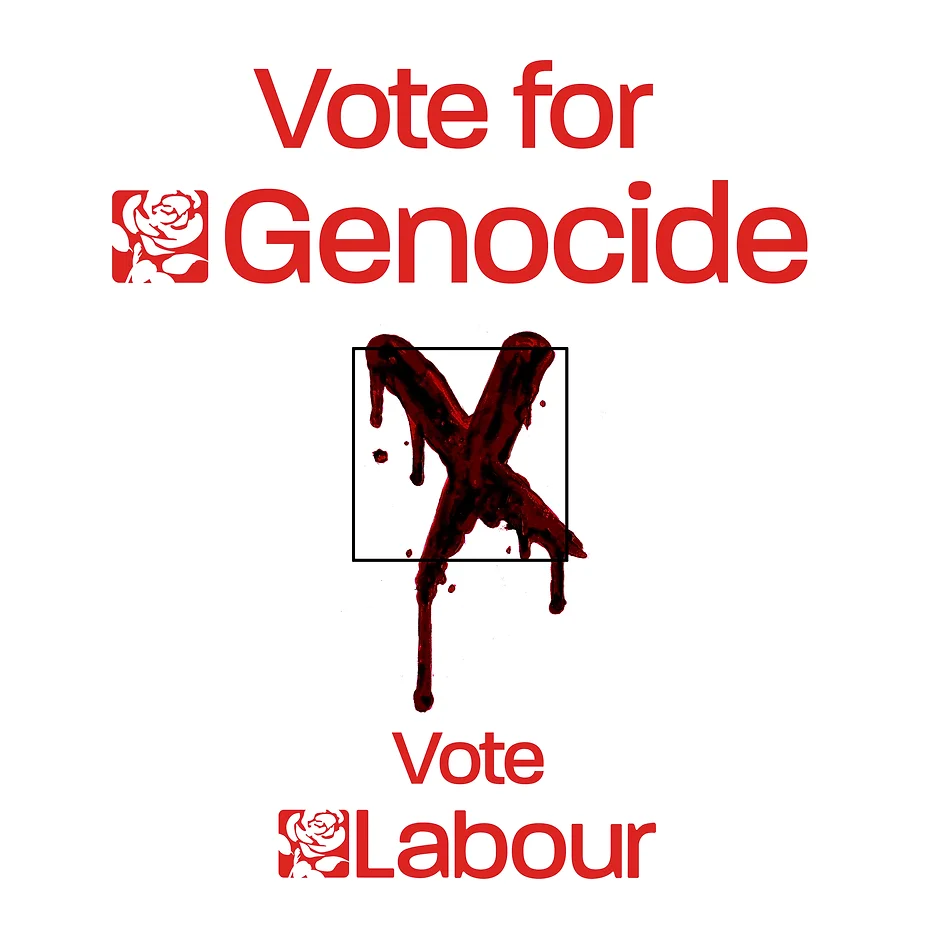
Vote For Genocide Vote Labour.

Continue ReadingMorning Star Editorial: Starmer remains deaf to Muslim concerns