As Corals Bleach Worldwide, Some Outlets Are Willing to Name the Cause: Fossil Fuels

Original article by OLIVIA RIGGIO republished from FAIR under a Creative Commons Attribution-NonCommercial-NoDerivs 3.0 Unported License.

NOAA (4/15/24) found temperature levels in every ocean high enough to cause coral bleaching.

Record levels of heat in the ocean are causing once-colorful coral reefs around the world to bleach a ghostly white. In April, the National Oceanic and Atmospheric Administration (NOAA) announced the planet’s fourth mass coral-bleaching event on record—the second in the last decade.

While they might look like plants, corals are actually invertebrate animals related to jellyfish. They get their vibrant colors from tiny algae that live on them and provide them with food. But when ocean temperatures become too hot, corals get stressed and expel the algae, losing their food source and color. Starving coral can recover if their environments improve, but the International Panel on Climate Change (IPCC) predicts that even with the Paris Agreement’s allotted warming of 1.5°C over pre-industrial levels, 70–90% of the world’s coral reefs will still die.

Because coral reefs provide such vibrant ecosystems for sea life, mass coral death will impact economies and food security for humans as well. By protecting coasts, sustaining fisheries, generating tourism and creating jobs, it is estimated that coral reefs provide ecosystem services worth trillions of dollars each year (MIT Science Policy Review8/20/20; GCRMN, 10/5/21).

ABC News (7/25/23) reported last year that “ocean temperatures have a strong connection to climate change”—but didn’t mention what climate change is connected to.

In the past year alone, we’ve seen staggering and unprecedented ocean temperatures amid widespread heatwaves. Last summer, water temperatures of more than 100°F were recorded off the coast of Florida (ABC7/25/23). Scientists say the El Niño weather phenomenon, solar activity and a massive underwater volcanic eruption have played a role in recent supercharged ocean temperatures, but the biggest cause of this coral crisis is undisputed: climate change. The IPCC reports that it’s “virtually certain” ocean temperatures have risen unabated since 1970, absorbing more than 90% of excess heat from the climate system. We also know that the burning of fossil fuels changes the climate more than any other human activity does.

Therefore, in order to give the public the most complete understanding of what’s going on—and how we can fix it—reporting on coral bleaching should not only link the phenomenon to climate change, but link climate change to its main culprit: the fossil fuel industry. While much reporting deserves credit for clearly making this connection, some reports from major outlets were still behind, implying the climate crisis might be some sort of act of God, rather than something humans have caused—and have the power to mitigate.

Good news about bad news

Coral bleaching is bad news, but I’d like to take a rare moment to highlight the good news, too: A lot of reporting on this crisis was thorough, setting a solid example of how the increasing number of climate change-related phenomena should be reported on.

Vox (4/26/24) spells it out: “Ultimately, the only real solution is reducing carbon emissions. Period.”

Vox (4/26/24) dedicated a whole piece to climate change’s effects on coral, making that fossil fuel connection. Senior environmental reporter Benji Jones wrote:

Ultimately, the only real solution is reducing carbon emissions. Period. Pretty much every marine scientist I’ve talked to agrees. “Without international cooperation to break our dependence on fossil fuels, coral bleaching events are only going to continue to increase in severity and frequency,” [NOAA marine scientist Derek] Manzello said.

The New York Times (4/15/24) made the fossil fuel connection, too, in an article by Catrin Einhorn: “Despite decades of warnings from scientists and pledges from leaders, nations are burning more fossil fuels than ever and greenhouse gas emissions continue to rise.”

NPR dedicated an episode of All Things Considered (4/17/24) to scientists’ work to breed heat-tolerant corals and algae, in hopes that they can help restore reefs. The piece, by Lauren Sommer and Ryan Kellman, outlined this work’s promise—and its limitations. Heat-tolerant algae may not share as many nutrients with the coral, potentially causing the coral to grow more slowly and reproduce later. Regulators will need to assess whether these lab-grown corals are safe for wild populations and their ecosystems as a whole. Logistically, the sheer amount of heat-tolerant coral needed to replace affected reefs is vast, and it’s only a temporary solution.

“It’s not our ‘get out of jail free’ card,” said Australian coral biologist Kate Quigley:

Maybe that gets us to 2030, 2050, for a very few number of species that we can work with. If we don’t have an ocean to put them back in that’s healthy, no amount of incredible technology or money is worth it.

The episode ended with an acknowledgment that these scientific mitigations are meant only to buy time while humans work to halt climate change, which will require “cutting heat-trapping emissions from the largest source—burning fossil fuels—and switching to alternative energy sources like solar and wind.”

All Things Considered’s coverage of the scientists’ work was impactful because it took time to explain that creating these heat-tolerant corals was an important mitigation, but that the ultimate solution is to cut fossil fuels. Without the latter, the former would be in vain.

Capable of accountability

As a media critic for an organization that’s been at this since 1986, to me it’s heartening when news outlets’ work actually improves. It’s definitely not yet time to pop the champagne—there’s still a chronic lack of clear reporting linking climate disasters to fossil fuels, as FAIR has noted in coverage of last year’s wildfires (7/18/238/25/23), climate protests (9/29/23), the potential breakdown of a crucial Atlantic current (7/31/23), overstating the potential of new carbon-capture technology (1/4/24) and more. But these few coral-focused pieces offer hope that some outlets might be improving their climate reporting practices to include accountability. At the very least, it proves they are certainly capable.

Aside from the effects of the climate crisis becoming harder and harder to ignore each year, there is a commendable movement to train journalists on how best to report on climate through a number of initiatives and organizations. There’s a lot of work to do, but these stories indicate progress since Big Media was applauding Big Oil’s efforts to clean up the Exxon Valdez oil spill in 1989 (Extra!3–4/90) and giving platforms to “scientists” on Big Oil’s payroll who asserted climate change was not occurring (Extra!11–12/045–6/07).

The new denial

CNN (5/9/24) waited until the the 24th paragraph (out of 24) to tell readers that we “need to curb climate-warming carbon emissions.”

Climate denial today is more nefarious. Due to the unanimity and widespread knowledge of the scientific consensus, respectable outlets can no longer parrot views that the Earth isn’t warming. What they can do is bury or gloss over information on its primary cause, who profits off of it, and what needs to be done to prevent it from getting much worse.

In a piece on the potential of artificial reefs to mitigate this crisis that linked coral bleaching to climate change, CNN‘s Michelle Cohan (5/9/24) waited until the very last paragraph to mention the need to “curb climate-warming carbon emissions.” There’s nothing untrue about that statement, but it doesn’t tell you where those emissions come from, and leaves open the interpretation that “curbing” emissions can come from carbon capture and storage—a strategy that is largely industry greenwashing (FAIR.org1/4/24).

Despite likely short-form word limits, a solutions-oriented piece like this does a disservice to readers—and the scientists working on saving corals—by giving such an incomplete sketch of the necessary long-term change. It would benefit from a clear explanation that a) we need to phase out fossil fuels and b) alternative energy sources already exist, are reliable, and are more affordable than fossil fuels already. It’s not arduous or wordy to do so. All Things Considered did most of it in one sentence.

An ABC piece (4/15/24) by Leah Sarnoff and Daniel Manzo covered the coral-bleaching event, but only mentioned climate change in passing toward the end. Otherwise, “warming oceans” were just depicted as something that happened, with no clear connection or cause.

In an article expressing the dire condition of the reefs, the Washington Post‘s Rachel Pannett (4/18/24) likewise made the link to climate change only once: “Climate change is the greatest threat to the Great Barrier Reef, and coral reefs globally,” said Roger Beeden, the chief scientist of the Great Barrier Reef Marine Park Authority.  There was another quote from a research director with the Australian nonprofit Climate Council, who merely noted that the bleaching of the Great Barrier Reef is “a disaster at our doorstep.”

It’s important to express the dire condition the reefs are in, and the devastating risks it poses to ocean and human life. But by only mentioning “climate change” in passing, and not discussing its causes, it comes across as a natural but unfortunate phenomenon. Not highlighting its causes means not highlighting its solutions, either. The result is a potentially paralyzing doomsday narrative that is more likely to dampen than galvanize necessary climate action—especially against fossil fuels.

‘Heat stress’

The word “climate” never appears in this Washington Post piece (4/15/24).

Another Washington Post piece (4/15/24), by Amudalat Ajasa, mentioned the “heat stress” on corals, but not even climate change, let alone the culpability of fossil fuels. This piece quoted NOAA’s Manzello, saying that this global event should be a wake-up call, but didn’t elaborate on what that wake-up call would be for. Wake up to do what? This piece didn’t explain.

The piece also took a grave tone, describing the ghastly reefs off the coast of Florida, Australia and the Caribbean island of Bonaire. It quoted Francesca Virdis, a chief operating officer at Reef Renewal Bonaire: “It’s hard to find a silver lining or a positive note with everything happening.”

The article explained the role of El Niño—a naturally occurring climate pattern that warms areas of the Pacific every 2–7 years—and the hope that it will soon let up and give way to La Niña, its cooler counterpart, but did not explain that the phenomenon plays a smaller role than ongoing, human-caused warming. The aforementioned Vox piece also discussed the role of El Niño, but was sure to specify that reefs have been collapsing long before this current crisis.

The feeling of alarm is justified, but journalists should remind readers that the coral bleaching crisis—and climate change as a whole—are not totally uncontrollable acts of nature. We know what is to blame. While it may be too late to avoid breaching the 1.5°C limit even if we cut emissions tomorrow, the sooner we cease burning fossil fuels, the more catastrophic impacts we’ll avoid.

The message is urgent and dire, but there’s plenty that humans—especially those in power—can do, and there’s plenty journalists can do to make the public aware.


FEATURED IMAGE: NOAA photos of a coral before and after bleaching. (This particular coral recovered from the event.)

FAIR’s work is sustained by our generous contributors, who allow us to remain independent. Donate today to be a part of this important mission.

Original article by OLIVIA RIGGIO republished from FAIR under a Creative Commons Attribution-NonCommercial-NoDerivs 3.0 Unported License.

Continue ReadingAs Corals Bleach Worldwide, Some Outlets Are Willing to Name the Cause: Fossil Fuels

Climate change made UK’s waterlogged winter worse

https://www.bbc.co.uk/news/articles/cp992nxxe7do

Brussel sprout crops have been hit by the wet weather. Joe Gidden/PA

Climate change is a major reason the UK suffered such a waterlogged winter, scientists have confirmed.

It was the country’s second wettest October to March period on record and a disaster for farmers, who faced flooded fields during a key planting period.

Global warming due to humans burning fossil fuels made this level of rainfall at least four times more likely, according to the World Weather Attribution group.

One farmer in Lincolnshire told the BBC that a third of his farm could not be planted in time this year.

Colin Chappell, a fourth generation farmer on the banks of the River Ancholme in Lincolnshire, who produces food including peas, oil and wheat, says he will only produce half what he would usually expect.

“There are some farms in the valley that will not see a harvest at all this year. That hasn’t happened here since 1948,” he says.

He believes the future for many farmers is bleak.

Article continues at https://www.bbc.co.uk/news/articles/cp992nxxe7do

Continue ReadingClimate change made UK’s waterlogged winter worse

‘Higher prices here to stay’: Reactions to latest UK inflation figures

Image of cash and pre-payment meter key

https://leftfootforward.org/2024/05/higher-prices-here-to-stay-reactions-to-latest-uk-inflation-figures/

‘’The cost of living crisis is not over – no matter how much ministers pretend it is’

UK inflation fell from 3.2% to 2.3% in April, its lowest level in three years – having hit its highest rate for 40 years of 11.1% in October 2022. Nonetheless Tory MPs are taking the opportunity to bask in the news as Rishi Sunak said “today marks a major moment for the economy, with inflation back to normal”.

However, for the millions affected by a continued cost-of-living crisis, it is not the time for Tory Ministers “to be popping champagne corks”, shadow Chancellor Rachel Reeves said, as many have been are quick to highlight the bigger picture on the state of the UK economy.

Shadow Chief Secretary to the Treasury Darren Jones MP pointed out that inflation is still higher than the Bank of England’s 2% target, as he slammed the Tories for “years of chaos” that “people have already paid the price” for, telling Conservatives to “get off the victory lap”. 

Trade union leaders have accused the Tories of presiding over the worst living standards for generations, as Paul Nowak, General Secretary of the Trades Union Congress (TUC) said the cost of living crisis “is not over – no matter how much ministers pretend it is.”

Soaring mortgage repayments and increased food and energy bills are still affecting many people, Nowak has stressed, in light of the recent inflation figures. 

Article continues at https://leftfootforward.org/2024/05/higher-prices-here-to-stay-reactions-to-latest-uk-inflation-figures/

Continue Reading‘Higher prices here to stay’: Reactions to latest UK inflation figures

ANDREW FEINSTEIN: WHY I AM STANDING AGAINST KEIR STARMER

https://www.declassifieduk.org/andrew-feinstein-why-i-am-standing-against-keir-starmer/

Zionist Keir Starmer supports Israel's Gaza genocide.
Zionist Keir Starmer supports Israel’s Gaza genocide. He needs to hold his seat to become prime minister.

Labour’s leader thinks he can get away with supporting genocide in Gaza. It’s time to teach him a lesson in his own backyard.

Our democracy is in crisis. The two main parties are virtually indistinguishable in their offers of permanent austerity, forever wars and environmental degradation. 

Keir Starmer, the MP for Holborn and St. Pancras where my family and I have lived for around 22 years, is emblematic of this crisis. His politics are mendacious, unprincipled and in the interests of his billionaire donors rather than the constituents he was elected to serve.

I have seen real leadership in action: I was privileged to serve under Nelson Mandela as an MP in South Africa. His leadership was selfless, principled, accountable, transparent and honest. Everything that Keir Starmer is not.

His almost immediate abandonment of many of the ten progressive pledges on which he was elected to lead the Labour Party is a clear sign he cannot be trusted. 

Starmer has now gone a step too far by refusing to support an unqualified ceasefire and a halt to arms sales to Israel amid the greatest human tragedy since World War Two: the genocide being committed in Gaza. 

How is it possible that a former human rights lawyer, who must see the horrific images that we all view on our screens every day, has not even commented on the highest court in the world’s interim ruling that Israel is likely committing genocide and ethnic cleansing? 

Article continues at https://www.declassifieduk.org/andrew-feinstein-why-i-am-standing-against-keir-starmer/

Continue ReadingANDREW FEINSTEIN: WHY I AM STANDING AGAINST KEIR STARMER

‘Climate Arsonists’: 8 Major Oil Companies Fail to Align With Paris Agreement

Original article by OLIVIA ROSANE republished from Common Dreams under Creative Commons (CC BY-NC-ND 3.0).

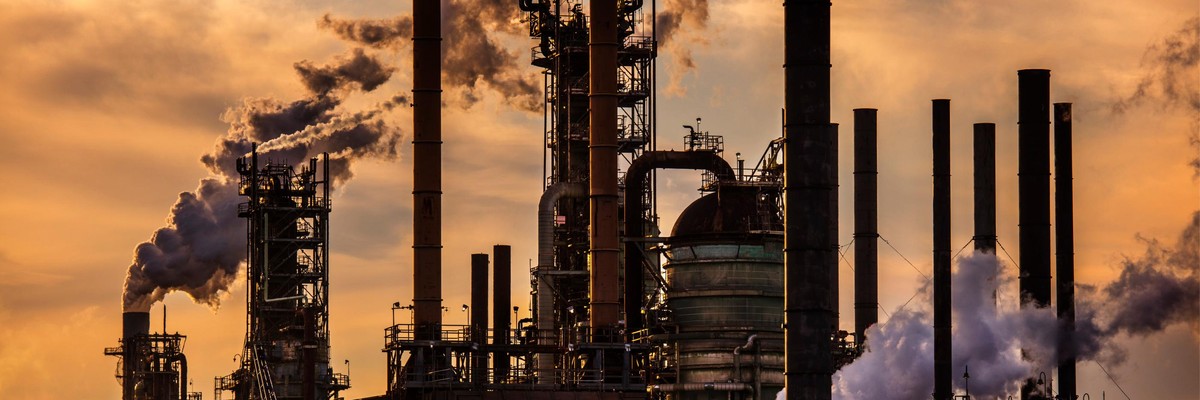
An ExxonMobil oil refinery is pictured in Baton Rouge, Louisiana. (Photo: Barry Lewis/InPictures via Getty Images)

“We cannot trust fossil fuel corporations to do anything but line the pockets of their CEOs and investors at the cost of our climate and communities,” one campaigner said.

The eight largest U.S. and Europe-based oil and gas producing companies are failing to align their plans with the Paris agreement goal of limiting global heating to 1.5°C above preindustrial levels and avoiding ever more catastrophic climate impacts.

Oil Change International’s Big Oil Reality Check report, released Tuesday, concludes that the plans of BP, Chevron, ConocoPhillips, Eni, Equinor, ExxonMobil, Shell, and TotalEnergies would actually put the world on track for more than 2.4°C of warming and burn through nearly one-third of the global carbon budget for hitting the 1.5°C target.

“It’s clearer than ever that oil and gas companies—the climate arsonists fueling climate chaos—cannot be trusted to put out the fire,” David Tong, report author and global industry campaign manager at Oil Change Internationalsaid in a statement. “There is no evidence that big oil and gas companies are acting seriously to be part of the energy transition.”

The Big Oil Reality Check report reveals that oil and gas corporations are more interested in looking like they are acting on climate change than actually acting on climate change.”

For its fourth annual Big Oil Reality Check, Oil Change International judged the oil companies’ climate plans and pledges against a set of minimum standards for alignment with the Paris agreement. The standards were divided into three main categories: ambition, integrity, and people-centered transitions.

Under ambition, the companies were assessed on whether they had plans to stop oil and gas exploration, stop approving new extraction projects, decrease production every year through 2030, and stop extraction on a certain date while outlining a long-term plan to end production.

Under integrity, the companies were assessed on whether their emissions-reduction plans included their entire supply chain, whether they relied on carbon capture or offsets, whether their methane-reduction plans were really in line with climate goals, and whether they lobbied or advertised against climate action.

For people-centered transitions, they were assessed on whether they had just transition plans for employees and members of frontline communities and whether they respected human rights overall and the rights of Indigenous peoples, including to free, prior, or informed consent to any fossil fuel activities.

The companies were then rated from “fully aligned” to “grossly insufficient” for how well their plans complied with the Paris goals within the assessment’s framework, but all eight companies scored “insufficient” or “grossly insufficient” for a majority of the criteria.

Only one company—Eni—scored above “insufficient” in any category, earning a ranking of “partially aligned” for having greenhouse gas-reduction plans that included its supply chains. The three U.S.-based companies—Chevron, ConocoPhillips, and ExxonMobil—scored “grossly insufficient” for all 10 criteria.

“American fossil fuel corporations are the worst of the worst,” Oil Change International’s U.S. program manager Allie Rosenbluth said. “Chevron, ExxonMobil, and ConocoPhillips perpetuate harm in frontline communities not only across the U.S. but worldwide.”

Oil Change found that six out of the eight companies have official plans to increase oil and gas production. The only two that did not were BP and Shell; however, these companies employ a misleading strategy. They compensate for new oil and gas projects by selling off polluting assets. While the emissions from the sold operations no longer count toward company emissions, they still count toward the planet’s total. This practice is out of line with the GHG Protocol on corporate emissions accounting and may violate the United Nations Guiding Principles on Business and Human Rights.

Four of the companies assessed in the report—BP, Shell, Exxon, and Chevron—were also the subject of a recent U.S. House investigation and Senate hearing detailing how the fossil fuel industry playbook has shifted from outright denial of climate science to greenwashing its activities by presenting itself as part of the solution to the climate crisis while its day-to-day operations continue to raise global temperatures.

“The efforts of climate and social movements have forced oil and gas companies to acknowledge that fossil fuels are dirty and dangerous, leading to a variety of climate pledges and ‘plans,'” said Oil Change campaigner Myriam Douo. The Big Oil Reality Check report reveals that oil and gas corporations are more interested in looking like they are acting on climate change than actually acting on climate change.”

“They spend billions on smoke and mirrors to try to fool us into believing they have solutions for a livable planet when, in reality, they are perpetuating harm to the climate and local communities while trying to suck every last ounce of profit out of their dirty fossil fuel business,” Douo concluded.

All told, Rystand energy data suggests that the combined production of the eight companies will be 17% by 2030 than they were last year.

“Such an increase in production on a global scale would put the world on a path towards global heating well beyond 2°C, locking in destruction of vulnerable communities and ecosystems,” the report authors wrote.

The report finds that all of the companies intend to rely on unproven carbon capture technology or offsets schemes to meet their claimed emission-reduction goals and have continued to spend money on lobbying against climate action and greenwashing their own activities since the agreement in Paris.

Further, no company has plans consistent with ensuring a just transition or protecting human rights. In one recent and urgent example, ExxonMobil, Chevron, TotalEnergies, BP, Shell, and Eni all continue to provide Israel with crude oil despite “the Israeli military’s ongoing assault on Palestinian civilians, ecosystems, and infrastructure in Gaza and mounting evidence of war crimes,” a March Oil Change investigation found.

The report comes nearly half a year after world leaders agreed to contribute to “transitioning away from fossil fuels” at the COP28 U.N. climate change conference in Dubai. In light of its conclusions, Oil Change called on governments to take action to further a just transition:

  1. Stop permitting or approving new fossil fuel projects or infrastructure;
  2. Set a Paris-aligned date for phasing out fossil fuel production;
  3. End subsidies and financing for fossil fuels and false solutions like carbon capture;
  4. Use tax policy to incentivize against investing in fossil fuels;
  5. Craft a just transition, including by making polluters pay for cleanup and reparations; and
  6. Passing laws to protect human rights and Indigenous rights and giving communities a legal mechanism to seek redress from corporate polluters.

Oil Change also argued that governments in the Global North should hold companies headquartered within their borders accountable for harm abroad and put money into funds to enable the Global South to transition to renewable energy, adapt to climate change, and pay for inevitable loss and damage.

“This year’s Big Oil Reality Check makes it clearer than ever—we cannot trust fossil fuel corporations to do anything but line the pockets of their CEOs and investors at the cost of our climate and communities,” Rosenbluth said. “People around the world are rising up to end the era of fossil fuels and build a just energy system that puts climate and communities first.”

Original article by OLIVIA ROSANE republished from Common Dreams under Creative Commons (CC BY-NC-ND 3.0).

Continue Reading‘Climate Arsonists’: 8 Major Oil Companies Fail to Align With Paris Agreement