China cancels line of credit, pulling the plug on Argentina’s ‘anarcho-capitalist’ president

Original article by JAMES MEADWAY republished from People’s World under http://creativecommons.org/licenses/by-nc-nd/3.0/us/.

Dollarization: Javier Milei holds up a giant cardboard sign depicting a U.S. $100 banknote emblazoned with an image of his face during a rally in La Plata, Sept. 12, 2023. Milei wants to replace the peso with the U.S. dollar as Argentina’s currency and says that the country’s Central Bank should be abolished. He’s got a new financial challenge, though: China just cut his line of credit. | Natacha Pisarenko / AP

The Chinese government may have pulled the plug on far-right “anarcho-capitalist” President of Argentina Javier Milei, just weeks after his shock election win.

In a spectacular demonstration of how the lines of geopolitical power are shifting, the People’s Bank of China has withdrawn its “swapline” to the Argentinian central bank, depriving it of a vital source of cheap funding.

This leaves debt-ridden Argentina without ready access to funding to meet its promises to pay creditors. These international creditors include the IMF, to whom Argentina owes a world-record $43 billion. China provided the Argentinian government with funds for its $2.7 billion IMF repayment over the summer, lending it ultra-cheap foreign currency through its swapline arrangement.

Milei, a fanatical free marketeer, was elected with 55% of the vote in November from a population desperate for a break with the failed political Establishment. Developing his public profile through TV appearances and his 1.4 million followers on TikTok, Milei was able to present his program of ferocious spending cuts and the abolition of the Argentinian currency, the peso, as the bitter medicine the country needed to end its economic crisis. Younger voters, in particular, flocked to him in droves.

This was a product of desperation. Two-fifths of Argentinians live below the poverty line, and close to 60% of children. Inflation was over 140% when the election campaign ended, meaning prices doubling roughly every six months.

Since the government defaulted—halted payments—on its debts at the end of 2001, the two decades since have seen governments both pro and anti-neoliberal attempts to negotiate agreements with Argentina’s creditors and break the cycle of crises.

The latest round of these was a colossal 2018 loan from the IMF, attached to conditions on cutting government spending over the following three years.

But what tipped the country over the edge into its latest round of crisis has been the catastrophic drought that began in 2019. This ongoing drought is the worst for over 60 years, hammering farmers and severely cutting harvests—soybean production fell to its lowest level for a century.

For a country dependent on agricultural exports for foreign exchange earnings, it has been a disaster. Its trade deficit ballooned, taxes fell and government spending mushroomed. Government borrowing swelled and the Argentina central bank resorted to issuing more money to cover spending costs. Climate change almost certainly worsened the drought.

Milei’s program offered nothing on this—he is a climate change denier, claiming that those who “blame the human race” for climate change are “fake…only looking to raise funds for socialist bums who write for fourth-rate newspapers.”

The colorful language is very much part of his appeal, along with waving a chainsaw at his public appearances, to symbolize what he planned for government spending, and smashing a piñata of the central bank on live TV.

But cartoonish posing shouldn’t kid us: Milei’s program is neoliberalism on steroids. He campaigned on a promise to cut government spending by 15% of Argentina’s GDP.

His plan to abolish the peso and “dollarize” the economy was arguably even more radical, claiming this would prevent Argentinian bureaucrats and politicians from printing money. Although two other Latin American countries, Ecuador and Panama, use the dollar as their official currency, neither is the size of Argentina, the continent’s second-largest economy.

And while many Argentinians already use the dollar, with $246 billion in dollar savings, the government has no dollars to hand, and would have to either buy them to replace pesos, or perhaps seize them from those mostly middle-class savings.

The plan is a non-starter. Confronted with the economic realities, Milei has rapidly defaulted to conservative type, appointing a former president of the central bank, Luis Caputo, as his economy minister, and appointing a close associate of Caputo as the new central bank head. So much for “burning it down.”

The ferocious spending cuts are still planned, along with a 54% devaluation of the peso as part of a program approved by the IMF.

Far from a radical break, Milei is a stooge for the maintenance of Argentina’s failed elite—including even the rehabilitation of the dictatorship, with his running mate for Vice President, Victoria Villaruel, claiming the figure of 30,000 “disappearances” under the regime is a “myth.”

This is a familiar pattern. Across the world, supposed populists from the radical right have taken power, often with the promise of taking on corrupt local elites. They don’t follow through.

Italy’s radical right government, for example, in August threatened a windfall tax on banks that were profiteering from interest rate rises. But they rapidly backed down after howls of protests from the banks themselves.

Milei has almost certainly bitten off more than he can chew. Expecting protests, harsh new guidelines for police and military, including the criminalization of the parents of younger protests have been rushed through—“prison or bullet,” as one pro-government MP described them. Inflation has accelerated, to 3,678% a year, which the government are now using to justify their “shock therapy.”

However, it is anti-China posturing that could prove his undoing. China is Argentina’s second-biggest market for exports, and loans from China make up over 42 per cent of Argentina’s foreign exchange reserves.

Yet Milei called China an “assassin” during his election campaign, promising to sever ties and instead reorienting Argentina towards full-throated support for Israel and the U.S. Argentina’s foreign minister has confirmed that the country would not be joining the China-led BRICS coalition, as pledged by the last government.

This was treated as a “slap in the face” by China: Cutting loan support to Argentina is the inevitable response. As Milei himself might put it: Fuck around and find out.

Morning Star

Original article by JAMES MEADWAY republished from People’s World under http://creativecommons.org/licenses/by-nc-nd/3.0/us/.

Continue ReadingChina cancels line of credit, pulling the plug on Argentina’s ‘anarcho-capitalist’ president

UK ministers asked to explain fourth delay to Covid wine cellar report

https://www.theguardian.com/politics/2023/dec/29/uk-ministers-asked-to-explain-fourth-delay-to-covid-wine-cellar-report

Labour accuses government of holding back data on use of official alcohol stock between March 2020 and 2022

Crates of wine being delivered to No 10 in January 2020. The last official statement on the ‘usage, value, costs and stock levels of the wine cellar’ was made in July 2021. Photograph: Leon Neal/Getty Images

Ministers have been asked to explain why a report on the UK government’s consumption of wine during the Covid pandemic has been delayed four times over the last year.

Labour said the Foreign Office, which holds the government’s wine collection, should publish the data on its stocks for 2020 to 2022 immediately, as the delay was causing suspicion about how much had been used.

The stock list was originally meant to be published in “early 2023”, was subsequently scheduled for July and then ministers later said it would appear in the autumn.

The last update was from Andrew Mitchell, a Foreign Office minister, who answered a parliamentary question saying it would be published “before the Christmas recess” – but it never materialised by the end of the parliamentary term.

The delays mean it is now two and a half years since the last official statement on the “usage, value, costs and stock levels of the wine cellar” was made in July 2021.

The yet-to-be-published data should cover the period March 2020 to March 2022 – the whole course of the pandemic. Given the cellar is supposed to be used only “to provide guests of the government, from home and overseas, with wines of appropriate quality at reasonable cost”, the report would be expected to show a decline in consumption, given the curbs on indoor gatherings and international travel caused by the Covid pandemic.

https://www.theguardian.com/politics/2023/dec/29/uk-ministers-asked-to-explain-fourth-delay-to-covid-wine-cellar-report

dizzy: It’s tempting to imagine a cover-up of that pisshead Boris raiding the wine cellar.

Continue ReadingUK ministers asked to explain fourth delay to Covid wine cellar report

Climate scientists hail 2023 as ‘beginning of the end’ for fossil fuel era

https://www.theguardian.com/environment/2023/dec/30/climate-scientists-hail-2023-as-beginning-of-the-end-for-fossil-fuel-era

Cautious optimism among experts that emissions from energy use may have peaked as net zero mission intensifies

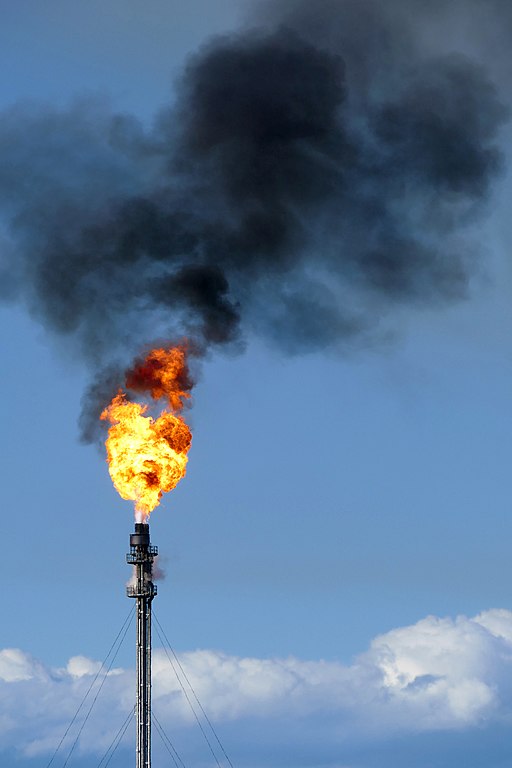
Image of gas flaring. CC.
Fossil fuel emissions from gas, oil and coal plants will have peaked by 2030, according to the International Energy Agency. Image of gas flaring. CC.

https://www.theguardian.com/environment/2023/dec/30/climate-scientists-hail-2023-as-beginning-of-the-end-for-fossil-fuel-era

Global efforts to slow a runaway climate catastrophe may have reached a critical milestone in the last year with the peak of global carbon emissions from energy use, according to experts.

A growing number of climate analysts believe that 2023 may be recorded as the year in which annual emissions reached a pinnacle before the global fossil fuel economy begins a terminal decline.

The milestone is considered a crucial tipping point in the race to drive emissions to net zero. But for many climate experts it’s an inflexion point that was due years ago and which, although encouraging, falls far short of the rapid reduction the world needs.

The world’s leading climate scientists have consistently warned that the buildup of carbon dioxide in the Earth’s atmosphere means it is critical to drive down emissions before 2030 if leaders hope to keep global heating to a maximum of 1.5C above pre-industrialised levels. The rate at which emissions would need to be reduced will require, most experts agree, global transformation on a scale not yet in the pipeline.

“We can take a small pause to celebrate this tipping point,” said Dave Jones, a director at the climate thinktank Ember. “But in a way it’s worrying that we are still talking about when emissions might peak. The reality of the situation is that we need deep and fast reductions in emissions if we hope to stay within the vanishingly small budget for carbon which remains.”

The International Energy Agency (IEA) raised hopes earlier this year of an end to the fossil fuel era when it predicted for the first time that the consumption of oil, gas and coal would peak before 2030 and begin to fall as climate policies took effect.

“It’s not a question of ‘if’, it’s just a matter of ‘how soon’ – and the sooner the better for all of us,” said Fatih Birol, the head of the IEA.

https://www.theguardian.com/environment/2023/dec/30/climate-scientists-hail-2023-as-beginning-of-the-end-for-fossil-fuel-era

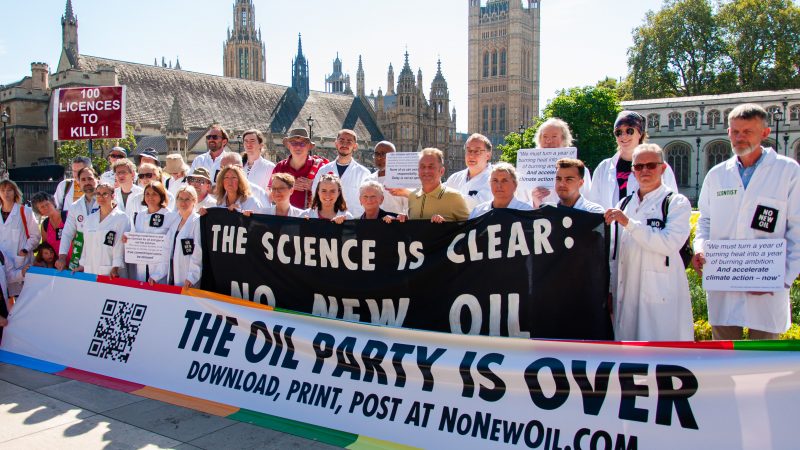
Scientists protest at UK Parliament 5 September 2023.

dizzy: I’m expecting huge disinvestment and consequent disempowerment of the fossil fuel sector. The longer investors stay in fossil fuels, the larger their lossses will be. later elaboration: Plutocrats are losing control of the narrative, activists are aware of and highlighting huge fossil fuel subsidies and fossil fuel lies like CCS, renewables becoming much cheaper, court cases, greater acceptance and recognition of role of fossil fuels in destroying the planet, green parties achieving much higher vote share, it’ll hit the fan. later still elaboration: All the increasingly extreme and more often weather events that we’re experiencing attributed to fossil fuels caused climate crisis.

Continue ReadingClimate scientists hail 2023 as ‘beginning of the end’ for fossil fuel era

Beyond a ceasefire: The Palestinian Youth Movement’s demands for liberation

Original article republished from peoples dispatch under a Creative Commons Attribution-ShareAlike 4.0 (CC BY-SA) license.

Peoples Dispatch speaks to Munir Marwan, a longtime Palestine solidarity organizer and PYM member about PYM’s latest demands, which include an end to occupation, the release of all Palestinian political prisoners, and ending Western complicity in Zionism

The entire Palestine solidarity movement in North America has united behind the demand of a ceasefire in Gaza. For the first time in years, organizations of the working class such as labor unions have been united against the status quo of Western foreign policy and taken an unprecedented stance against Israeli violence.

At the same time, important sectors in the movement have been trying to push the demands even further. The Palestinian Youth Movement, a major international formation of Palestinian youth with significant presence across North America, has been working to push the movement beyond dreaming of an end to current aggression, and into demanding full liberation from Israeli occupation.

To talk about PYM’s latest demands, which include an end to occupation, the release of all Palestinian political prisoners, and ending Western complicity in Zionism, Peoples Dispatch speaks to Munir Marwan, a longtime Palestine solidarity organizer and PYM member.

Original article republished from peoples dispatch under a Creative Commons Attribution-ShareAlike 4.0 (CC BY-SA) license.

Continue ReadingBeyond a ceasefire: The Palestinian Youth Movement’s demands for liberation

Pressure rises for Biden to drop military aid to Israel

Original article republished from Peoples Dispatch under a Creative Commons Attribution-ShareAlike 4.0 (CC BY-SA) license.

After over two months of genocide, support for the US’s usual policy of unconditional aid to the Zionist state is dwindling

Image from demonstration outside of Secretary of Defense Lloyd Austin’s house on Christmas morning, protesting US policy in Israel

Since October 7, Biden has added to Israel’s massive US-made military arsenal and sent more weapons to Israel as it carries out its genocide in the Gaza Strip, even bypassing Congressional review to do so. After nearly three months of war, however, support for the US’s usual policy of unconditional aid to the Zionist state is dwindling.

Some of the most bloody attacks against Palestinian civilians have been made possible with US-made bombs, such as the attack that leveled an apartment block in the Jabalya refugee camp, killing over 100 people.

Many of the atrocities perpetrated by Israel with US-made weaponry and funded by US money have been broadcast internationally across communications channels for even the people of the US to see. As a result, mass protests have erupted in the streets for months, often disrupting major commercial centers and events throughout the busy holiday season

A recent poll shows that popular support for US aid to Israel has dropped since November. According to a poll from Quinnipiac University released on December 20, less than half (45%) of registered voters support sending “military aid to Israel for their efforts in the war.” This is a significant drop from the results of Quinnipiac’s previous poll from a month ago, in which 54% of voters expressed their support for military aid to Israel. A comparison of the two polls reveals that support for aid to Israel has dropped among voters in both the Republican and Democratic parties. In the November poll, 71% of Republicans and 45% Democratic voters said they were in favor of further military aid to Israel. Those numbers dropped in December, with 65% of Republicans and only 36% of Democrats supporting more US aid to Israel.

The dwindling support for US support to the Zionist state follows the trends of other polls in the growing popularity of the Palestinian cause, such as an early December Date for Progress poll which found that 61% of voters support calls for a permanent ceasefire—including nearly half, 49%, of Republicans. 

Pressure for the Biden administration to shift its policies on Israel has also been coming from within Congress itself—not even necessarily from the most progressive elements of the legislature. Six members of security-oriented committees of the House of Representatives, including the Intelligence, Armed Services or Foreign Affairs committees, none of whom are known progressives, penned a letter to Biden on December 18, calling on the President to “use all of our nation’s leverage to shift the Israeli military’s strategy.” 

“The mounting civilian death toll and humanitarian crisis are unacceptable and not in line with American interests,” the letter reads. The representatives also reference the history of “America’s war on terror” as a warning for the future, stating, “We know from personal and often painful experience that you can’t destroy a terror ideology with military force alone. And it can, in fact, make it worse.”

Several prominent humanitarian organizations, including Human Rights Watch, Médecins Sans Frontières/Doctors Without Borders USA, Oxfam America, and Amnesty International, have also penned a letter to Defense Secretary Lloyd Austin, urging him to halt military aid to Israel. The organizations urge the Pentagon to “withhold U.S. assistance, in accordance with U.S. law and policy, that would facilitate violations of international humanitarian law.” 

Biden himself has not responded to any of the outside pressures against his Israel policy, and has only dug his heels in. As his administration told CNN earlier this month, the US has no plans to place conditions on Israel aid as it carries out genocide in Gaza.

Original article republished from Peoples Dispatch under a Creative Commons Attribution-ShareAlike 4.0 (CC BY-SA) license.

Continue ReadingPressure rises for Biden to drop military aid to Israel