COP28: oil pushers scrape the barrel as critical climate talks begin in Dubai
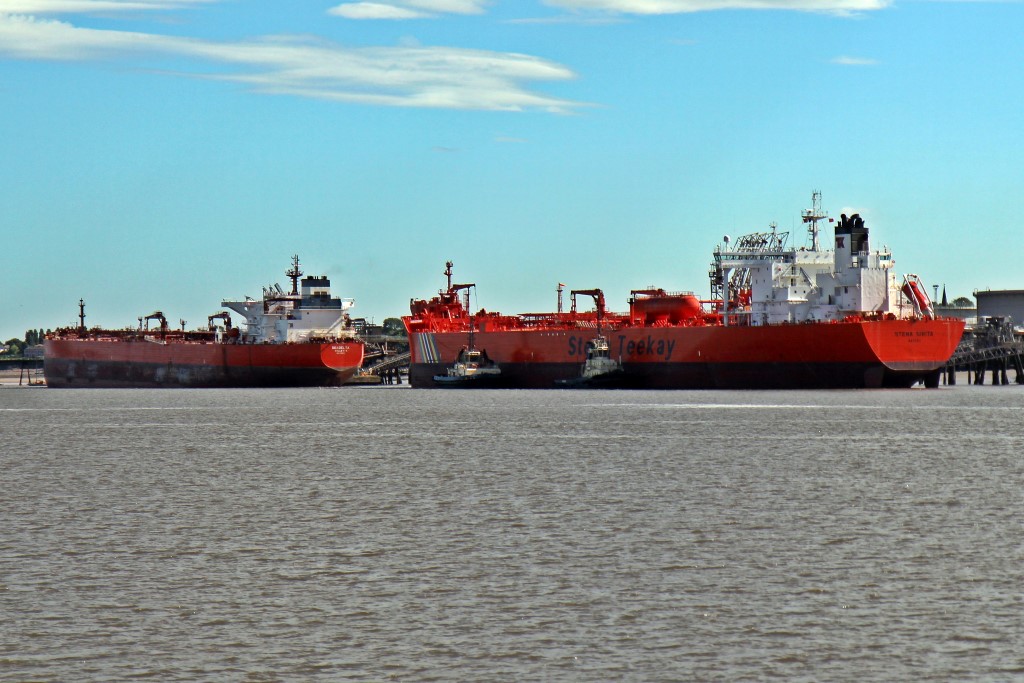
El Pollock / Oil tankers, Tranmere Oil Terminal / CC BY-SA 2.0

Jack Marley, The Conversation

Days before the latest climate summit is due to begin in Dubai, the first flight powered entirely by “sustainable aviation fuel” landed safely in New York.

The twin engines of this Boeing 787 Dreamliner ran on farm waste and used cooking oil, an alternative to the kerosene that is usually dug up, refined and burned to satisfy the wanderlust of a relatively wealthy minority of Earth’s people.

Sadly, the entire event was a stunt, say political economists Gareth Dale (Brunel University London) and Josh Moos (Leeds Beckett University). They point out that the market for cooking oil is poorly regulated, and so “sustainable fuels” can come from palm oil plantations which have devastated orangutan habitat in the tropics.

The result is “a smoke-and-mirrors exercise” designed to give the illusion of a world leaving fossil fuels behind, they say. With climate disasters mounting and greenhouse gas emissions at an all-time high, the same could be said for the UN negotiations themselves.

Imagine weekly climate newsletter

This roundup of The Conversation’s coverage of COP28 comes from our weekly climate action newsletter. Every Wednesday, The Conversation’s environment editor writes Imagine, a short email that goes a little deeper into just one climate issue. Join the 30,000+ readers who’ve subscribed.


First, let’s check in on the climate.

“Eight years ago, the world agreed to an ambitious target in the Paris Agreement: hold warming to 1.5°C to limit further dangerous levels of climate change,” says Brendan Mackey, an environmental scientist at Griffith University.

“Since then, greenhouse gas emissions have kept increasing … In 2023, the world is at 1.2°C of warming over pre-industrial levels. Heatwaves of increasing intensity and duration are arriving around the world. We now have less than 10 years before we reach 1.5°C of warming.”

COP28 in the United Arab Emirates (UAE) will proceed under the shadow of the UN’s global stocktake. This assessed whether humanity was on course to cut emissions in line with the Paris agreement’s targets by 2030.

The results are in: if all national pledges are fulfilled (not guaranteed), global warming will peak between 2.1-2.8°C this century. Blowing past 2°C, the upper temperature target of the Paris agreement, makes triggering feedback loops (like the release of potent greenhouse gas methane from Arctic permafrost) and catastrophic sea-level rise more likely.

For a chance to avoid climate breakdown and limit warming to 1.5°C, the world needs to prevent greenhouse gases equivalent to 22.9 gigatonnes of carbon dioxide (CO₂) from reaching the atmosphere over the next six years. This is roughly how much the top five polluters (China, US, India, Russia and Japan) emit in a year.

Tasked with leading negotiations to secure this outcome is Sultan Al Jaber, chief executive of Adnoc, the UAE’s state-owned oil company. Al Jaber and the UAE hosts were recently embarrassed by leaked documents showing they intended to pitch oil and gas deals to international delegates at the summit.

“The UK invited ridicule by expanding its North Sea oil fields less than two years after urging the world to raise its climate ambitions as summit host. The UAE seems destined for a similar fate – before its talks have even begun,” say Emilie Rutledge and Aiora Zabala, economists at the Open University.

On the agenda at COP28 is a proposed target for tripling renewable energy capacity and doubling the efficiency of existing sources by 2030. Delegates from countries within the High Ambition Coalition demand a written agreement to halt the burning of coal, oil and gas which accounts for roughly 90% of all CO₂ emissions.

Rutledge and Zabala argue that the UAE is an apt case study for the inertia which seems to prevent countries from meeting these aims. The Persian Gulf state subsidises rampant energy use among its public with oil and gas sales that total 80% of government revenues.

Little wonder the UAE would rather talk about the potential for technology to mop up its emissions.

“Adnoc, along with the wider oil and gas industry, has invested in carbon sequestration and making hydrogen fuel from the byproducts of oil extraction. According to the Intergovernmental Panel on Climate Change (IPCC), such measures, even if fully implemented, will only have a small impact on greenhouse gas emissions,” Rutledge and Zabala say.

Where’s the money?

Another test of the UN negotiations will concern the money needed to help developing countries phase out fossil fuels, adapt to a hostile climate and overcome the damage wrought by greenhouse gases overwhelmingly produced by developed countries.

According to the UN, 80% of climate change can be attributed to G20 countries, a group consisting of the world’s major economies.

“For decades, nations have wrestled over the fraught question of who should pay for loss and damage resulting from climate change,” says Mackey.

“Now we’re close to finalising arrangements for the new Loss and Damage Fund. This will be [a] major issue for negotiators at COP28.”

Lisa Vanhala, a professor of political science at UCL, has followed the wrangling over a fund to compensate poor nations for climate change since one was agreed in principle in 2013. Ten years later, questions remain over who will pay into it, who will be able to draw from it and who will control it.

The last of those three questions was at least partially answered in early November. The World Bank, headquartered in Washington D.C., will administer the fund for an interim period. This would give rich donor countries like the US disproportionate influence over loss and damage funding, Vanhala says, and is a far cry from the partnership model small-island developing states had urged.

The World Bank traditionally offers loans instead of grants. Developing countries have consistently argued this funding should not increase a recipient’s debt burden, Vanhala says. And a board member for another fund hosted by the World Bank has reported that the admin fees it charges are rising and absorbing a larger share of its aid.

“This could mean that, for every US$100 billion offered to countries and communities reeling from disaster, the World Bank will keep $US1.5 billion. This will be hard for an institution still funding the climate-wrecking oil and gas industry to justify,” Vanhala adds.

Aside from loss and damage, rich countries failed to keep a promise to raise US$100 billion of climate change mitigation and adaptation funding by 2020. This money would help the most vulnerable nations build sturdier storm defences and solar farms, for instance, and will be the subject of heated debate at COP28.

US and EU negotiators have argued that China, the world’s second largest economy and its current biggest emitter, should be obliged to contribute to such funding – despite sitting with other developing countries in the UN talks.

But a new analysis by Sarah Colenbrander, director at the Overseas Development Institute and guest lecturer in climate economics at the University of Oxford, tells a different story. By following the substantial climate aid China already provides via other channels, such as multilateral development banks, Colenbrander argues that the real laggard and obstacle to a financial settlement is the US.

“The fastest way to restore trust in the international climate regime would be for the US to step up with its fair share of climate finance,” she says.

“Only once the developed countries have fulfilled their longstanding promise does a conversation about new climate finance contributors become politically possible.”The Conversation

Jack Marley, Environment + Energy Editor, The Conversation

This article is republished from The Conversation under a Creative Commons license. Read the original article.
Continue ReadingCOP28: oil pushers scrape the barrel as critical climate talks begin in Dubai

COP28 starting today

Christian rockers Europe ‘The Final Countdown’
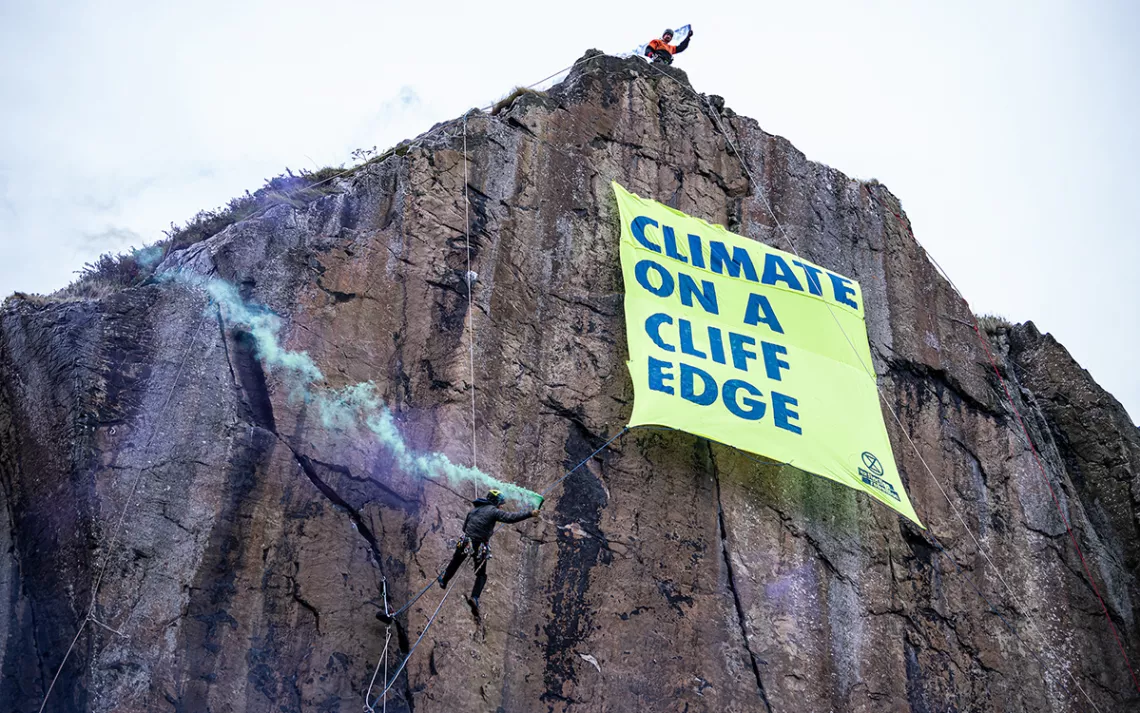
Experienced climbers scale a rock face near the historic Dumbarton castle in Glasgow, releasing a banner that reads “Climate on a Cliff Edge.” One activist, dressed as a globe, symbolically looms near the edge, while another plays the bagpipes on the shores below. | Photo courtesy of Extinction Rebellion and Mark Richards

Extinction Rebellion UK position on COP 28

Five years ago, XR was told that our warnings about the escalation of the climate and ecological emergency were hysterical, exaggerated and scientifically unfounded. It’s now clear that we were right to sound the alarm. There will be groups from all sides telling us that we cannot talk about 2°C yet, that there’s no scientific evidence and that we haven’t seen the global trends — but we must continue to do so. Under the precautionary principle, which makes us put our seatbelts on in case of an accident, it’s vital we up the pressure because the truth is, that even if it was only for one day, even if temperatures will dip again, 2 °C has been breached and the trend is relentlessly upwards.

In this context — in a world that is as bad, if not worse than we predicted five years ago — we are once again seeing world leaders fly, on their private jets [3], to the next Conference of the Parties (COP) on Climate, COP 28. The conference will take place in Dubai in the United Arab Emirates [4], a nation built almost entirely on fossil fuel wealth. COP28 is led by Dr. Sultan Ahmed Al Jaber [5], founder and Chair of Abu Dhabi National Oil Company (ADNOC) [6]. which has the largest net-zero busting plans in the world [7]. 

At the same time, indigenous people who work tirelessly to defend their lands —  which contain 80% of the world’s remaining biodiversity —  and whose traditional knowledge is key to designing a sustainable future, are excluded from the negotiations [8].

Before it has even begun, it is clear the COP process has been captured by the fossil fuel economy. We are unlikely to see the rapid, just and equitable phaseout of all fossil fuels coming out of this process.

[3] Flight Operations to COP28 Dubai COP28 UAE will take place at Dubai’s Expo City from November 30 – December 12, 2023, with government leaders and dignitaries from all over the globe descending on Dubai for the historic event.
Operations to COP 28 in Dubai
Jetluxe – Your gateway to COP 28

[4] COP 28 UAE:
A visual guide: COP 28 explainer infographic

[5] About Sultan Al Jaber:
i. The Guardian: Meet the oil man tasked with saving the planet
ii. The Guardian: COP 28 host UAE planned promote oil deals climate talks
iii. Letter calling for the dismissal of Al Jaber, from US Congress and EU Parliament Members

[6] Abu Dhabi National Oil Company (ADNOC)

[7] COP 28 host UAE has world’s biggest climate-busting oil plans.

[8] Lands inhabited by Indigenous Peoples contain 80% of the world’s remaining biodiversity. Indigenous Peoples’ traditional knowledge and knowledge systems are key to designing a sustainable future for all.
i. IISD: Indigenous peoples defending environment
ii. AXIOS: Indigenous activists “seen, not heard” at COP 27iii. The Independent: Fossil fuel delegates attended Cops at least 7,200 times over 20 years – study

https://extinctionrebellion.uk/2023/11/29/extinction-rebellion-uk-position-on-cop-28/

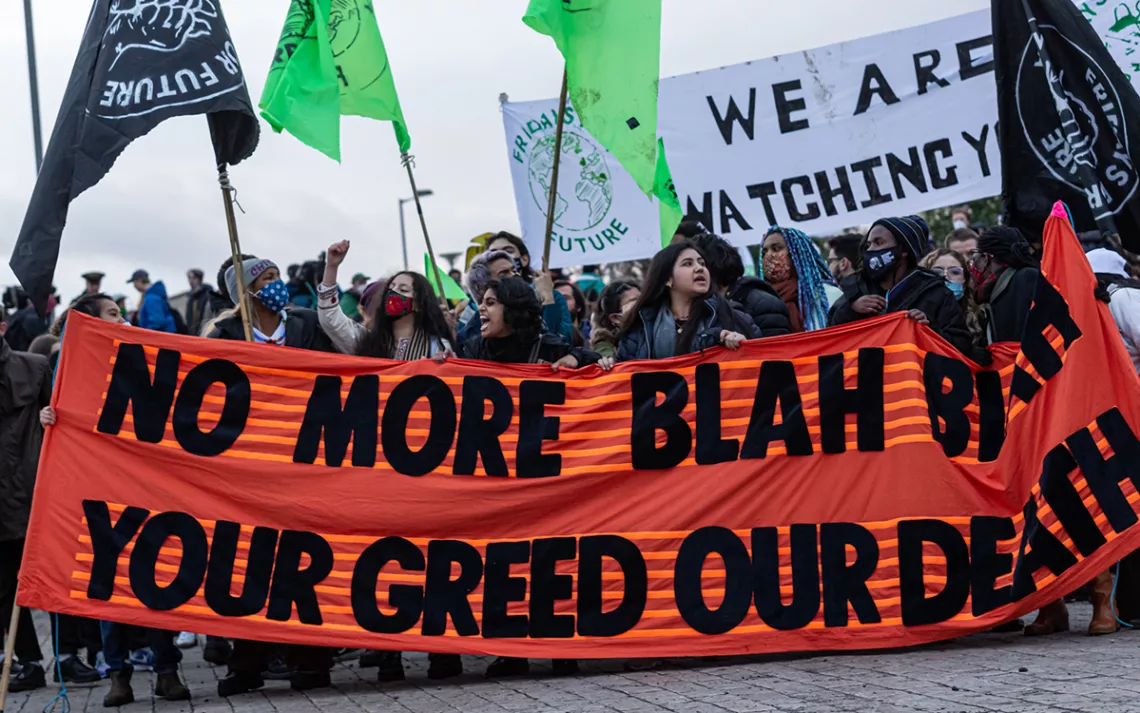
People march through Glasgow, a demonstration led by Fridays for Future. | Photo courtesy of Extinction Rebellion Scotland and Simone Rudolphi
Continue ReadingCOP28 starting today

FFS: Publically financed Fossil Fuel Subsidies

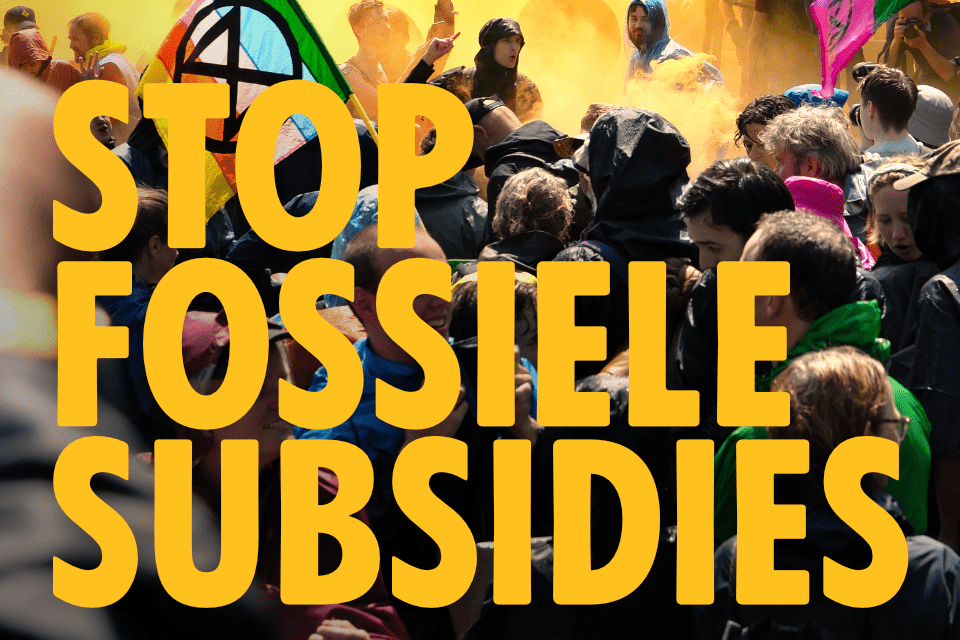
Extinction Rebellion NL image reads STOP FOSSIELE SUBSIDIES

https://www.climaterealityproject.org/blog/fossil-fuel-subsidies-public-finance

Like it or not, we’re all paying the fossil fuel industry to destroy the planet every time we do our taxes.

That’s right. Each of us is chipping in our hard-earned dollars [, Euros or Pounds], all to an industry earning billions in profits every year. One whose product is heating up our planet and sowing more and more climatic chaos the higher the thermometer rises.

We’re doing it through fossil fuel subsidies. And the time to end them is now.

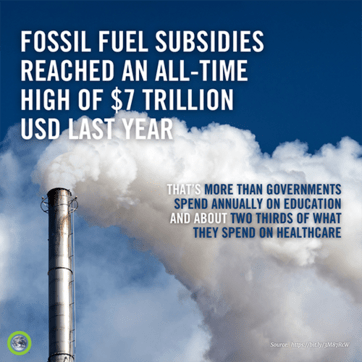
According to the International Monetary Fund (IMF), fossil fuel subsidies reached an all-time high of $7 trillion USD last year, costing the equivalent of over 7% of global GDP. To put it in more relatable terms, it’s “more than governments spend annually on education and about two thirds of what they spend on healthcare.” Fossil fuel subsidies rose by $2 trillion USD over the past two years alone.

Fossil Fuel Subsidies reached all time high of 7 trillion US Dollars

In general, most fossil fuel subsidies are implicit. This means that they fail to consider the negative externalities of fossil fuel production, such as the environmental and human health consequences of GHG emissions and particulate matter pollution. While it may seem difficult to account for these costs, the IMF estimates that implicit government subsidies resulted in failing to cover over $5 trillion worth of environmental damages last year.

https://www.climaterealityproject.org/blog/fossil-fuel-subsidies-public-finance

FFS: Publically financed Fossil Fuel Subsidies

Continue ReadingFFS: Publically financed Fossil Fuel Subsidies

We Won’t Be Tricked: How the fossil fuel industry is using the dangerous “abatement” distraction to stay in business

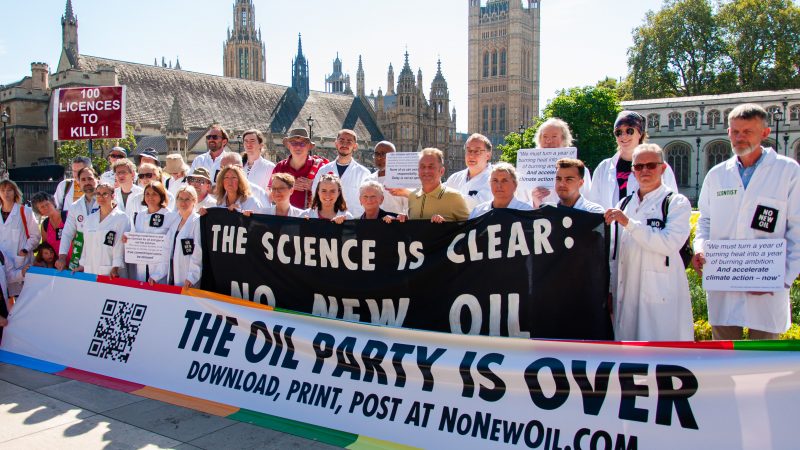
Scientists protest at UK Parliament 5 September 2023.

https://priceofoil.org/2023/11/29/we-wont-be-tricked/

Oil and gas companies, and some governments, are more interested in looking like they are acting on climate change than actually acting on climate change. They spend billions on smoke and mirrors, such as:

to make us believe that they are coming up with solutions for a livable planet when, in reality, they are trying to build escape hatches to suck every last ounce of profit out of their dirty fossil fuel business. These companies and their lobbyists are counting on adding loopholes in the final UN Climate Change Conference commitments to keep business as usual. 

We cannot let them.

The end of the fossil fuel era is unstoppable but we cannot allow polluters to delay us. We must hold governments to moving forward the solutions we need. We need a full, fast, fair, and funded fossil fuel phase out, and a just transition that triples renewable energy and doubles energy efficiency. Any dangerous distractions that allow companies to keep extracting oil and gas, instead of phasing out these dirty energies, are traps.


“Abated Fossil Fuels” and COP

At The UN Climate Change Conference (COP28), fossil fuel companies and their government enablers will push the fantasy of “abated fossil fuels”. They will try to convince the global community that when fossil fuels are produced or used along with certain technologies, they don’t pollute, cause climate chaos, or harm communities.

The term fossil fuel “abatement” has no official definition but is generally understood to mean “with carbon capture and storage”. The fossil fuel industry is pursuing a wide range of technologies it frames as “abatement”, despite these technologies failing to deliver emissions reductions and prolonging the era of fossil fuels. 

The idea of “abated fossil fuels” is a delay tactic. “Abatement” is a qualifier that allows oil and gas companies to keep pumping out and profiting off dirty energy, instead of phasing out. What we need is a full, fast, fair and funded phaseout.

Read the Brief: “Beyond Abatement: Securing a Full Phase Out of Fossil Fuels at COP28”

Read the article at https://priceofoil.org/2023/11/29/we-wont-be-tricked/

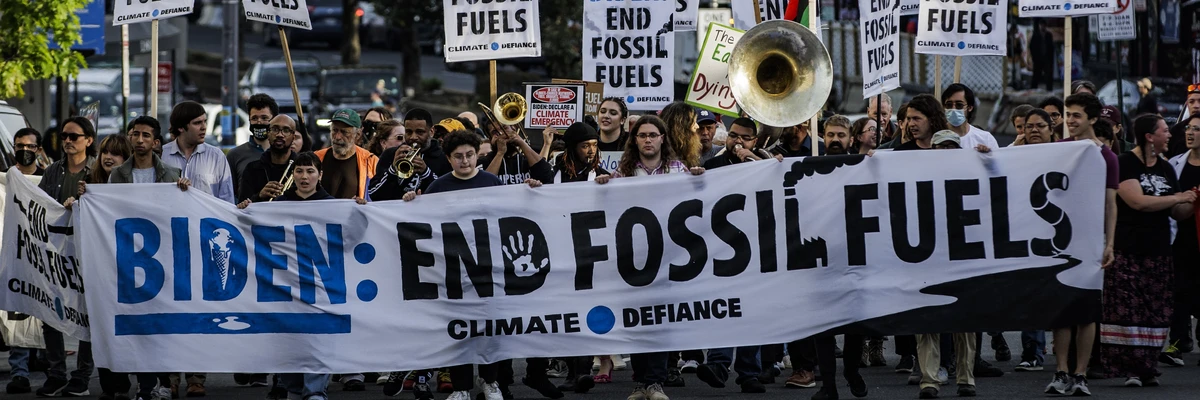
Climate protestors march in Washington DC
Continue ReadingWe Won’t Be Tricked: How the fossil fuel industry is using the dangerous “abatement” distraction to stay in business

COP28: how bad is climate change already and what do we need to do next to tackle it?

As the global stocktake has found, policies on cutting emissions remain a long way off what is needed to hold temperatures to well below 2°C – let alone 1.5°C. The recently published 2023 UN emissions gap report, which tracks our progress in limiting global warming, echoes the same concern. The report revealed that the world is on track for 2.9°C of global warming, and maybe considerably more, before the end of this century.

Olga Gordeeva/Shutterstock

Piers Forster, University of Leeds

As the latest UN climate change summit (COP28) gets underway in Dubai, conversations around limiting global warming to 1.5°C will confront a harsh reality. Global temperatures have surged over the past year, with the monthly global average surpassing 1.5°C above pre-industrial levels during the summer. Some days in November have even breached 2°C of warming for the first time.

Since the Glasgow Climate Summit in 2021, the UN has been conducting a review of our progress towards limiting temperature rise in line with the Paris Agreement. This review, which is set to conclude in Dubai, aims to make countries ratchet up their emission reduction commitments.

The evidence from this two-year “stocktake” is now available, and it shows just how far off track we are. To restrict global warming to 1.5°C, countries must reduce greenhouse gas emissions by more than 40% by 2030, yet emissions are currently on the rise.

Countries around the world have borne the human and economic toll. The United Arab Emirates itself is one of the latest countries to be hit by severe flooding, with parts of Dubai under water for the first time. This has led some, including the legendary climate scientist James Hansen, to speculate that climate scientists have underestimated the pace of change.

The evidence itself presents a more balanced view. Climate change has indeed accelerated, but this uptick in pace was entirely predicted by climate models and is expected due to greenhouse emissions being at an all-time high.

The potential for confusion as we approach 1.5°C of global warming makes it all the more crucial to track rising temperatures and climate change as they develop between the comprehensive Intergovernmental Panel on Climate Change assessments. The next assessment isn’t expected until around 2030.

A broken record

As the global stocktake has found, policies on cutting emissions remain a long way off what is needed to hold temperatures to well below 2°C – let alone 1.5°C. The recently published 2023 UN emissions gap report, which tracks our progress in limiting global warming, echoes the same concern. The report revealed that the world is on track for 2.9°C of global warming, and maybe considerably more, before the end of this century.

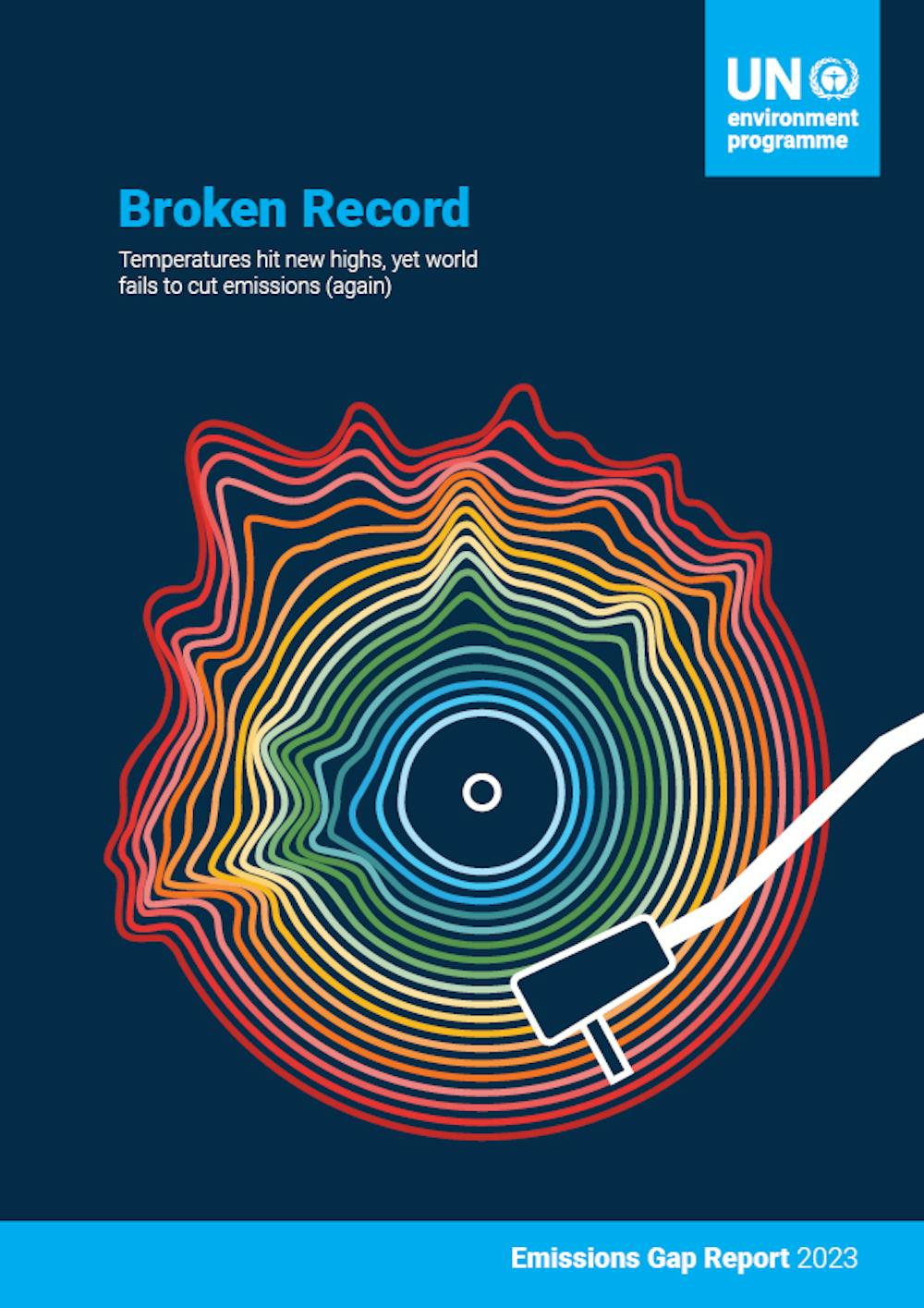
If this sounds like a broken record – as emphasised by the report’s cover art – it is. The message that we need urgent action and stronger emissions cuts to avoid the worst climate impacts is far from new, but still somehow needs to hit home.

The front cover of the UN's 2023 emissions gap report.
The emission gap report’s cover art.
UN Environment Programme / Emissions Gap Report 2023, CC BY-NC-SA

The UN emissions gap report finds that 80% of climate change can be attributed to G20 countries, a group consisting of the world’s major economies. Within the bloc, western countries generally have ambitious emissions reduction targets, but are failing to deliver on them. By contrast, countries including China, India, Mexico and Indonesia are largely overachieving much weaker targets, but are failing on ambition.

This divide is evident in national submissions to the global stocktake process. Western countries are urging the rest of the world to increase ambition, while other nations are urging western governments to deliver on their finance and other commitments, especially in providing sufficient funding to help developing countries adapt to the harmful effects of climate change.

Inequalities in how emissions vary across a country’s population were highlighted in the UN Emissions Gap report and also in a dedicated report by Oxfam. The report revealed that the world’s wealthiest 1% account for 16% of global emissions. These wealthy people each emit more than 100 tonnes of CO₂ every year, 15 times the global average.

Inequality drives vulnerability. The same report showed that floods kill seven times as many people in countries with higher levels of inequality than they do in more equal ones.

A crucial period

The gloomy picture places a clear focus on the need for transformative progress at COP28 and beyond. In a report that was released ahead of COP, the International Energy Agency places the challenge firmly at the door of the oil and gas sector.

This report found that only 1% of clean energy investment comes from the industry, and that oil and gas use needs to decline by 75% or more to be compatible with net zero targets. The industry needs to undergo radical change.

If oil and gas firms urgently remove emissions from their operations, especially around methane leaks, and invest in trebling global renewable energy capacity by 2030 instead of extraction, they can be a force for change.

Discussions around the role of oil and gas will be a recurring theme both at COP28 and at future climate change summits. But concerted efforts to reduce methane emissions, build renewable energy infrastructure, roll out electric vehicles and halt deforestation globally could also see emissions fall significantly by 2030, consequently slowing down the rate of warming.

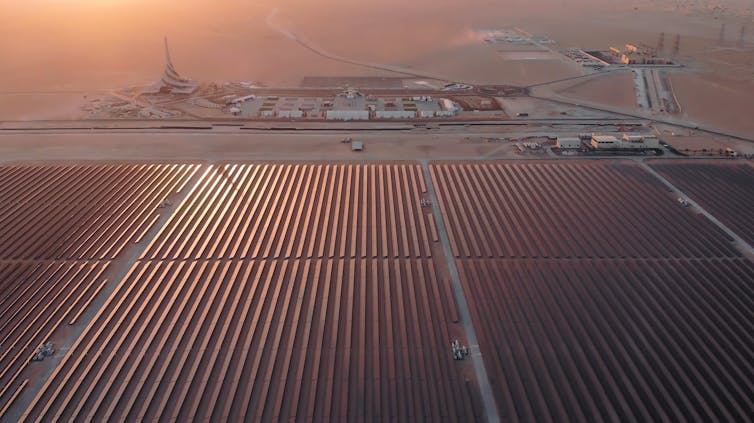
Aerial view of a huge solar power plant in the UAE.
Investment in global renewable energy capacity needs to be trebled by 2030.
SkyMediaPro/Shutterstock

Whether the discussions in Dubai lead to the transformative change we need remains to be seen. However, it is essential to continue offering independent, expert and respected advice to governments through organisations like the UK Climate Change Committee, which I currently chair, and the International Climate Councils Network. This effort is crucial in advocating for transformative change across all sectors and in providing consistent and ambitious national emission reduction policies that are based on evidence.

As we approach 1.5°C of global warming, we need to work even harder. To quote from a recent article in US magazine Scientific American: “Declarations that 1.5°C is dead make no sense. Global temperature limits don’t die if we surpass them. People do.”


Imagine weekly climate newsletter

Don’t have time to read about climate change as much as you’d like?

Get a weekly roundup in your inbox instead. Every Wednesday, The Conversation’s environment editor writes Imagine, a short email that goes a little deeper into just one climate issue. Join the 20,000+ readers who’ve subscribed so far.The Conversation


Piers Forster, Professor of Physical Climate Change; Director of the Priestley International Centre for Climate, University of Leeds

This article is republished from The Conversation under a Creative Commons license. Read the original article.
Continue ReadingCOP28: how bad is climate change already and what do we need to do next to tackle it?