A home burns as flames from the Dixie Fire tear through the Indian Falls neighborhood of unincorporated Plumas County, California on July 24, 2021. (Photo: Josh Edelson/AFP via Getty Images)
The United Nations warned Friday that the planet is barreling toward 2.7°C of warming by the end of the century, a nightmare scenario that can be averted only if policymakers take immediate and sweeping action to slash greenhouse gas emissions.
Even if the 191 parties to the Paris climate accord meet their current commitments, global greenhouse gas emissions will still rise 16% by 2030 compared to 2010 levels, according to a new report published by the U.N. Framework Convention on Climate Change (UNFCCC).
“Failure to meet this goal will be measured in the massive loss of lives and livelihoods.”
The goal of the 2015 Paris agreement is to limit global warming to below 2°C—and preferably to 1.5°C—above pre-industrial levels. An analysis released earlier this week found that the climate targets and actions of just one country—The Gambia—are in line with the critical 1.5° goal.
“This is what betrayal looks like,” Swedish climate activist Greta Thunberg tweeted in response to the latest U.N. findings. “Whatever our so-called ‘leaders’ are doing, they are doing it wrong.”
Patricia Espinosa, executive secretary of U.N. Climate Change,
said in a statement that the international community must “peak emissions as soon as possible before 2030 and support developing countries in building up climate resilience.”
“The 16% increase is a huge cause of concern,” said Espinosa. “It is in sharp contrast with the calls by science for rapid, sustained, and large-scale emission reductions to prevent the most severe climate consequences and suffering, especially of the most vulnerable, throughout the world.”
The U.N. analysis came as U.S. President Joe Biden met with world leaders and announced that the United States is partnering with the European Union in an effort to cut methane emissions—a powerful driver of global warming—by nearly 30% by the end of the decade.
In its landmark report last month, the Intergovernmental Panel on Climate Change (IPCC) emphasized that a “strong, rapid, and sustained” reduction in methane emissions is necessary to prevent the worst of the planetary crisis.
The IPCC also estimated that keeping global warming to 1.5°C above pre-industrial levels would require a 45% reduction in carbon dioxide emissions by 2030—a mark that the international community is currently on track to miss badly, according to the new U.N. report.
António Guterres, the secretary-general of the U.N., said in a statement Friday that 2.7°C of planetary heating would be “catastrophic” and that world leaders are “rapidly running out of time” to act.
“This is breaking the promise made six years ago to pursue the 1.5°C goal of the Paris agreement,” said Guterres. “Failure to meet this goal will be measured in the massive loss of lives and livelihoods.”
Our work [Common Dreams] is licensed under Creative Commons (CC BY-NC-ND 3.0). Feel free to republish and share widely.
20th anniversary of 911, insane politicians who should be serving long prison terms appearing in the corporate media, 3-character intelligence agencies promoting the official conspiracy-theory, fake-manufactured terrorism praised relentlessly, the last 20 years of Neo-Con dictated BS wars promoted.
It should be clear to any reasonably intelligent person that we were fed BS to pursue a pre-determined Neo-Con agenda … which means so many people willing to accept and promote tyranny over democracy.
Dozens of Extinction Rebellion activists have carried out a mass act of non-violent civil disobedience by breaking bail conditions ordering them to stay away from the City of London financial district.
The activists joined with hundreds of supporters in a low-key rally outside the Bank of England on Thursday afternoon, listening to speeches from a mobile sound system.
XR said they had targeted the Bank because of its new remit to take environmental sustainability into account in its activities, and that protesters were willing to stay until its governor and the prime minister declared an end to all new fossil fuel funding.
Those breaking bail advertised their civil disobedience with signs bearing messages such as “arrested for sitting in a road”, “arrested for conspiracy to commit climate justice” and “arrested for caring about my grandchildren”.
Among them was Etienne Stott, who won gold in the canoe slalom for Britain in the 2012 London Olympics. He gave a speech publicly telling the crowd he was breaking the law by violating the conditions of his bail.
He told the Guardian: “I’m fed up of being criminalised for acting for the future of all life on Earth in a peaceful, disobedient and responsible way, and it feels quite wrong that I’ve been criminalised for doing what’s so logically and obviously the right thing, given the emergency situation that we are in.
“It seems to me completely sensible that our government stops its fossil fuel investments immediately, and yet I know they have got plans for a new oilfield in Shetland [and] a coalmine that’s in train.
“It’s just so wrong. It’s the height of stupidity; it’s madness.”
Bolstering the case for meaningful climate action, a major report released Wednesday found that Earth’s atmospheric greenhouse gas concentrations and sea levels both hit record highs in 2020.
“This situation is urgent, but it’s not hopeless. We have an opportunity to lead the global response in the fight against the climate crisis—we cannot afford to waste it.” —Rep. Eddie Bernice Johnson
Based on the contributions of more than 530 scientists from over 60 countries and compiled by the U.S. National Oceanic and Atmospheric Administration (NOAA), State of the Climate in 2020 is the 31st installment of the leading annual evaluation of the global climate system.
“The major indicators of climate change,” officials from NOAA’s National Centers for Environmental Information pointed out in a statement, “continued to reflect trends consistent with a warming planet. Several markers such as sea level, ocean heat content, and permafrost once again broke records set just one year prior.”
“Annual global surface temperatures were 0.97°–1.12°F (0.54°–0.62°C) above the 1981–2010 average” in 2020, said NOAA, making last year one of the three warmest on record “even with a cooling La Niña influence in the second half of the year.”
Last year was the warmest on record without an El Niño effect, and “new high-temperature records were set across the globe,” NOAA said. The agency added that the past seven years (2014-2020) had been the seven warmest on record.
Although the coronavirus-driven economic slowdown resulted in an estimated 6% to 7% reduction of carbon dioxide (CO2) emissions in 2020, the global average atmospheric concentration of CO2 increased to a record high of 412.5 parts per million. The atmospheric concentrations of other major greenhouse gases (GHG), including methane and nitrous oxide, also continued to climb to record highs last year despite the pandemic.
According to NOAA, last year’s CO2 concentration “was 2.5 parts per million greater than 2019 amounts and was the highest in the modern 62-year measurement record and in ice core records dating back as far as 800,000 years.” Moreover, “the year-over-year increase of methane (14.8 parts per billion) was the highest such increase since systematic measurements began.”
In addition, global sea levels continued to rise, surpassing previous records.
“For the ninth consecutive year,” said NOAA, “global average sea level rose to a new record high and was about 3.6 inches (91.3 millimeters) higher than the 1993 average,” which is when satellite measurements began. As a result of melting glaciers and ice sheets, warming oceans, and other expressions of the climate crisis, the “global sea level is rising at an average rate of 1.2 inches (3.0 centimeter) per decade.”
Other notable findings of the new report include:
Upper atmospheric temperatures were record or near-record setting;
Oceans absorbed a record amount of CO2, global upper ocean heat content reached a record high, and the global average sea surface temperature was the third highest on record;
The Arctic continued to warm at a faster pace than lower latitudes—resulting in a spike in carbon-releasing fires—and minimum sea ice extent was the second smallest in the 42-year satellite record;
Antarctica witnessed extreme heat and a record-long ozone hole; and
There were 102 named tropical storms during the Northern and Southern Hemisphere storm seasons, well above the 1981–2010 average of 85.
In contrast to the release less than three weeks ago of the latest assessment from the United Nations’ Intergovernmental Panel on Climate Change, which warned that fossil fuel emissions are intensifying extreme weather disasters—provoking a flurry of reactions and even garnering a short-lived uptick in corporate media’s coverage of the climate emergency—NOAA’s new report was met with less fanfare.
In one of the few early statements issued by members of Congress in response to the report, Rep. Eddie Bernice Johnson (D-Texas) said that “scientists sounded the alarm on the climate crisis again.”
“It is clear that without swift action, we can, unfortunately, expect to set new records like these every year,” said Johnson, chair of the House Committee on Science, Space, and Technology. “The consequences of climate change impact every American—especially disadvantaged communities—across the country; from the devastating floods in Tennessee a few days ago to the record-breaking wildfires in the West.”
“Building a better future for all means acting on climate now,” the lawmaker added. “This situation is urgent, but it’s not hopeless. We have an opportunity to lead the global response in the fight against the climate crisis—we cannot afford to waste it.”
Our work is licensed under Creative Commons (CC BY-NC-ND 3.0). Feel free to republish and share widely.
The recent Intergovernmental Panel on Climate Change (IPCC) report underscored the dire state of the climate crisis, concluding that “immediate, rapid and large-scale reductions in greenhouse gas emissions” are needed to limit global warming even to 1.5°C or 2°C.
The world absolutely needs to reduce or eliminate emissions, and fast. But while many of the problems inhibiting effective climate action are political, they aren’t really about politicians failing to do anything. There has actually been plenty of climate action over the last couple of decades. So far, however, it’s largely failed.
Different kinds of climate action have different costs and benefits for different people. Because of this, choices about what courses of action to pursue are profoundly shaped by relations of power.
We live in a world marked by severe disparities of wealth and power within and between countries, many of which are rooted in longer histories of colonialism and exploitation. These disparities have often allowed powerful companies in sectors like finance and energy to dictate the course of climate action. This has made it very difficult to pursue measures that might threaten their interests, but which would dramatically reduce emissions – like banning fossil fuel exploration.
Instead, we’ve had a slew of measures to address climate change which rely on making emissions reductions profitable. But the quickest ways to reduce emissions aren’t always the most profitable. And what is profitable for some can be harmful for less powerful people and communities.
One example is carbon credits – permits that allow firms and governments to meet emissions targets and offset their pollution by funding projects that reduce emissions elsewhere, mainly in developing countries. The Clean Development Mechanism (CDM) organised by the UN was meant to help reduce emissions this way. As agreed in the 1997 Kyoto Protocol, the CDM was supposed to mobilise investment to install renewable energy, retrofit factories and restore habitats.
While a large market developed for carbon offsets, it failed to substantially reduce emissions. A major reason for this was its reliance on profit-seeking private investors. Many of the projects funded through the CDM were probably profitable on their own – the distribution of CDM credits very closely mirrors patterns of private foreign investment in developing countries, with the vast majority funding projects in China and India.
Only a narrow range of possible emissions reduction projects, which either delivered their own revenue or provided cost savings for existing businesses, were financed as a result. But even these efforts were hampered by the push to create secondary markets for carbon credits, in which banks and financial institutions speculated on the price of credits. This was supposed to create more accurate prices, but instead, it made them more volatile, inhibiting new projects, as it became hard to predict how much the carbon credits they generated were worth.
Carbon trading also privileged the interests of private investors over those of communities near CDM-funded projects. Windfarms built in southern Mexico and financed through the CDM, for instance, privatised communal land, displacing indigenous communities.
Not-so-sustainable energy
Another major plank of climate action so far has been incentivising the adoption of new technologies with lower emissions. Governments in developed countries have offered subsidies for people to buy electric cars, or increased funding for research and development of clean energy technology.
It is tempting to think public and private investment in renewable energy might allow governments, businesses and civil society to pull together and fight climate change. But there remain significant obstacles. For one, many of the major energy firms investing in wind and solar power, like Shell and British Petroleum, also supply oil and gas. As long as producing fossil fuels remains profitable, these firms will resist efforts to stop selling them.
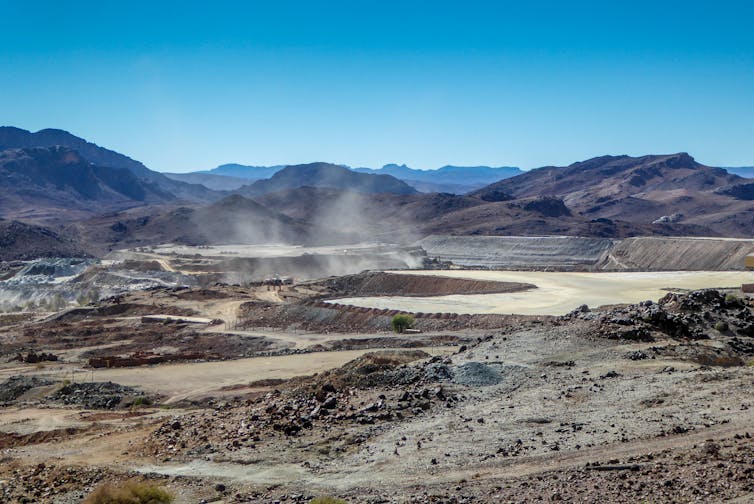
More importantly, shifting to fully renewable energy sources would require mineral extraction on a truly massive scale to supply the materials for batteries, wiring and other components of solar panels and wind turbines. Recent estimates suggest that meeting current global energy demand with 100% renewable energy would take more cobalt, lithium, and nickel than is known to exist on earth.
A scramble for these minerals is already underway. Demand for batteries in phones, laptops, and electric cars has triggered a rush to establish industrial mines in the southeast of the Democratic Republic of Congo, where the majority of the world’s known reserves of cobalt are found.
Foreign-owned industrial mines employ very few Congolese workers and the profits largely accumulate abroad. Some communities have been removed to make way for mining operations. Small-scale mining by local people, often operating without permits or formal mineral rights and using their own tools, has become the main means by which cobalt has benefited local livelihoods.
But according to media and activist reports, child labour is rife in these smaller mines. Meanwhile, the cobalt boom has been linked to landslides, river pollution, and deforestation, and locals have suffered widespread exposure to toxic mining dust in the air and in food and drinking water.
Some firms, including manufacturers of cars and electronics, as well as financial institutions involved in trading cobalt, have tried to minimise the negative effects of mining. Most of these programmes focus on tackling child labour, by certifying that cobalt was extracted from industrial mines rather than from the small-scale mines where most of the problem exists. But replacing smaller mines with industrial-scale ones wouldn’t necessarily benefit mining communities.
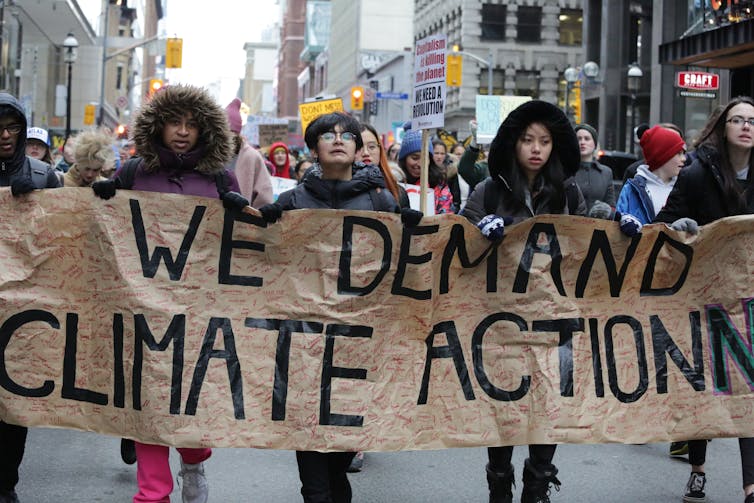
Climate action so far has failed to confront the interests of powerful businesses and governments, while passing costs on to vulnerable people and places which have contributed very little to the climate crisis. If we want results, we may need to go beyond simply demanding action and instead focus on changing the way the global economy is organised and governed.