NHS news review

Public sector day of action on strikes yesterday.

Health workers expect the Con-Dem coalition governments health changes to increase inequalities and reduce the standard of service.

NHS workers will see any pay rises capped at 1% for two years.

There is an alternative: The case against cuts in public spending – PCS

 Tax justice

Addressing the ‘tax gap’ is a vital part of tackling the deficit. Figures produced for PCS by the Tax Justice Network show that £25 billion is lost annually in tax avoidance and a further £70 billion in tax evasion by large companies and wealthy individuals.

An additional £26 billion is going uncollected. Therefore PCS estimates the total annual tax gap at over £120 billion (more than three-quarters of the annual deficit!). It is not just PCS calculating this; leaked Treasury documents in 2006 estimated the tax gap at between £97 and £150 billion.

A comparison between levels of benefit fraud and the tax gap
If we compare the PCS estimate of the tax gap with the DWP estimate of benefit fraud, we can see that benefit fraud is less than 1% of the total lost in the tax gap (see diagram opposite).

Employing more staff at HM Revenue & Customs would enable more tax to be collected, more investigations to take place and evasion reduced. Compliance officers in HMRC bring in over £658,000 in revenue per employee.

If the modest Robin Hood tax – a 0.05% tax on global financial transactions – was applied to UK financial institutions it would raise an estimated £20-30bn per year. This alone would reduce the annual deficit by between 12.5% and 20%.

Closing the tax gap, as part of overall economic strategy, would negate the need for devastating cuts – before even considering tax rises.

Our personal tax system is currently highly regressive. The poorest fifth of the population pay 39.9% of their income in tax, while the wealthiest fifth pays only 35.1%. We need tax justice in personal taxation – which would mean higher income tax rates for the richest and cutting regressive taxes like VAT and council tax.


Cut the real waste

While it is not necessary to cut a penny in public expenditure due to the ‘deficit crisis’, there are of course areas of public spending which could be redirected to meet social needs.

In the civil and public services, we know there are massive areas of waste – like the £1.8 billion the government spent on private sector consultants last year. The government could get better advice and ideas by engaging with its own staff and their trade unions.

There is also the waste of the government having 230 separate pay bargaining units, when we could have just one national pay bargaining structure.

There are also two other large areas where government costs could be cut.

Trident

The current Trident system costs the UK around £1.5 billion every year.

A private paper prepared for Nick Clegg (in 2009, when in opposition) estimated the total costs of Trident renewal amounting to between £94.7bn and £104.2bn over the lifetime of the system, estimated at 30 years. This equates to £3.3bn per year.

At the time Nick Clegg (now Deputy Prime Minister) said: “Given that we need to ask ourselves big questions about what our priorities are, we have arrived at the view that a like-forlike Trident replacement is not the right thing to do.”

The 2010 Liberal Democrat manifesto committed the Party to: “Saying no to the like-for-like replacement of the Trident nuclear weapons system, which could cost £100 billion.”

PCS policy is to oppose the renewal of Trident and invest the money saved in public services, whilst safeguarding Ministry of Defence staff jobs.

War in Afghanistan

The war in Afghanistan is currently costing £2.6 billion per year. The war is both unwinnable and is making the world less safe. More important than the financial cost are the countless Afghan and British lives that are being lost in this conflict.


The PCS alternative…

  • There is no need for cuts to public services or further privatisations
  • Creating jobs will boost the economy and cut the deficit. Cutting jobs will damage the economy and increase the deficit
  • We should invest in areas such as housing, renewable energy and public transport
  • The UK debt is lower than other major economies
  • There is a £120 billion tax gap of evaded, avoided and uncollected tax
  • The UK holds £850 billion in banking assets from the bailout – this is more than the national debt
  • We could free up billions by not renewing Trident
  • End the use of consultants

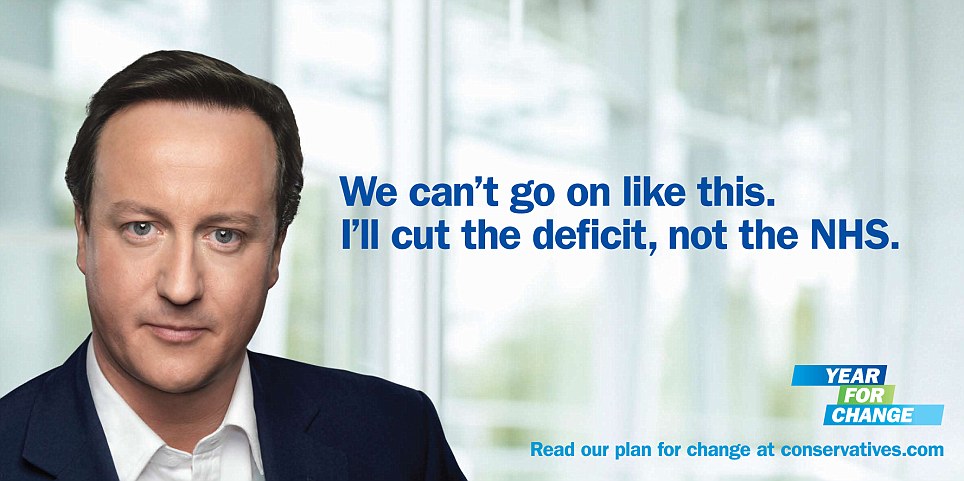
Conservative election poster 2010

A few recent news articles about the UK’s Conservative and Liberal-Democrat (Conservative) coalition government – the ConDem’s – brutal attack on the National Health Service.

Public services union warns of more industrial action over pensions | Society | guardian.co.uk

Amid a row over the impact of the national 24-hour strike, Mark Serwotka says government needs to make further concessions

A union leader has warned that the “ball is in now in the government court” over public sector pensions and warned that further industrial action would take place if ministers failed to make further concessions.

The coalition government has said that an improved offer tabled on 2 November could be withdrawn if negotiations are not concluded by the end of the year.

Mark Serwokta, the leader of the Public and Commercial Services union, said public sector unions who took strike action on Wednesday had set themselves an earlier deadline of 15 December to decide their next move if the government did not shift its position.

Serwotka hit back at a claim by David Cameron that the mass walkout by 29 different unions across local government, health, the civil service and education had been a “damp squib”.

He said the day was “an outstanding success”, adding: “We haven’t gone on strike to have a strike, we have done it to win concessions on pensions and, in that sense, it’s the government’s move now. We hope they want to talk but, if they don’t, we have to plan for more action. The ball is very much in the government’s court. Two million people have said no to their proposals. They now need to make fresh proposals.”

A spokesperson for the Cabinet Office challenged TUC claims that up to 2 million people took action: “This figure is wrong. The figures we have show turnout was much lower than these claims and significantly less than the unions predicted. In health, civil service and local government there were approximately 900,000 people on strike. We do not have final figures for teachers.”

Disagreement between the two sides was not restricted to the pension deal or the turnout. It also rested on the nature of talks that have taken place since the last deal was tabled, with ministers insisting that talks for each pension scheme have been ongoing, while unions say discussions have either stalled or proved insubstantive.

This strike could start to turn the tide of a generation | Seumas Milne | Comment is free | The Guardian

It’s not just the scale of the walkout but the breadth that sets it apart: the ‘big society’, but not as Cameron meant it

It was the wrong time to call a strike. Industrial action would inflict “huge damage” on the economy. It would make no difference. Public sector workers wouldn’t turn out and public opinion would be against them. Downing Street was said to be “privately delighted” the unions had “fallen into their trap”.

The campaign against today’s day of action has been ramped up for weeks, and in recent days has verged on the hysterical. The Mail claimed the street cleaners and care workers striking to defend their pensions were holding the country to “ransom”, led by “monsters”, while Rupert Murdoch’s Sun called them “reckless” and “selfish”.

Michael Gove and David Cameron reached for the spirit of the 1980s, the education secretary damning strike leaders as “hardliners itching for a fight”, and the prime minister condemning the walkouts as the “height of irresponsibility”, while also insisting on the day they had been a “damp squib”.

But up to two million public employees, from teachers and nurses to dinner ladies, ignored them and staged Britain’s biggest strike for more than 30 years. The absurd government rhetoric about gold-plated public pensions – 50% get £5,600 or less – clearly backfired.

It’s not just the scale of the strike, though, but its breadth, from headteachers to school cleaners in every part of the country, that has set it apart. Most of those taking action were women, and the majority had never been on strike before. This has been the “big society” in action, but not as Cameron meant it.

And despite the best efforts of ministers and media, it has attracted strong public sympathy. The balance of opinion has varied depending on the question, but a BBC ComRes poll last week found 61% agreeing that public service workers were “justified in going on strike over changes to their pensions”.

Of course that might well change if the dispute and service disruption drags on. But the day’s mass walkouts should help bury the toxic political legacy of the winter of discontent – that large-scale public sector strikes can never win public support and are terminal for any politician that doesn’t denounce and face them down.

The Tory leadership is unmistakably locked into that Thatcher-era mindset. Not only did George Osborne’s autumn statement this week respond to the failure of his austerity programme by piling on more of the same for years to come, it was also the most nakedly class budget since Nigel Lawson hacked a third off the tax rate for the rich in 1988.

Any claim that “we’re all in this together” can now only be an object of ridicule after Osborne coolly slashed child tax credit for the low paid, propelling 100,000 more children into poverty, to fund new bypasses and lower fuel duty.


NHS services hit as thousands join strikes | GPonline.com

Hundreds of thousands of NHS staff are estimated to have taken part in strikes on Wednesday in protest at cuts to public sector pensions.

The strikes forced NHS services in parts of the UK to cancel operations and appointments.

Health union Unison said 400,000 NHS staff took part in industrial action across the UK – close to half the total NHS workforce.

The DoH estimate of NHS staff taking part was far lower, however. A spokeswoman said 79,000 staff – equivalent to 14% of staff in NHS trusts, foundation trusts, ambulance services and NHS Direct – did not go to work on 30 November.

Speaking in parliament on the ‘day of action’ prime minister David Cameron dismissed the strikes as a ‘damp squib’.

But Dr Ron Singer, chairman of the Medical Practitioners’ Union, a branch of public sector union Unite, said: ‘If that’s a damp squib, I hope David Cameron never witnesses a firework display by the public sector.

‘It was a fantastic show of support. To walk with people of all ages and from all backgrounds – nothing like this has happened in 30 years.’

‘Nightmare’ NHS reforms will worsen health inequalities – IFAonline

Public health experts fear the government’s plans to reform public health could be a “nightmare” that will make it harder to respond to emergencies and increase health inequalities.

They widely criticised the proposed NHS reforms and suggested the new service would be more fragmented than at present.

The vast majority also rejected one of the government’s key reasons for implementing the Bill, improving care commissioning.

These views were supported by the British Medical Association (BMA) which said the plans could cause problems when planning major events such as the next year’s London Olympics.

A survey of nearly 1,000 public health specialists conducted by the UK Faculty of Public Health (FPH) about the Health and Social Care Bill found that almost three-quarters (71%) of respondents disagreed or strongly disagreed that reforms would create a safer and more effective response to public health emergencies.

Even more (81%) disagreed or strongly disagreed that inequalities in healthcare access would fall, while 83% disagreed or strongly disagreed that the NHS would see less bureaucracy.

A similar number (79%) thought the reforms would lead to the fragmentation of the public health discipline with 50% strongly agreeing.

And three quarters (76%) disagreed or strongly disagreed that the reforms would lead to improved healthcare commissioning, one of the Department of Health’s central reasons for introducing the legislation.

The FPH said the research produced a clear message that there is ‘significant concern about public health’s future – for both the specialty itself and for the future health and wellbeing of the public’.

‘Words such as “chaos” and “nightmare” were used to describe the current and anticipated situation in the NHS and public health systems,’ it added.

The BMA noted that the findings add further weight to calls for the Health and Social Care Bill to be withdrawn.

Nursing in Practice – Public sector pay rises capped at 1% for two years

NHS workers will see any pay rises capped at 1% for two years as they prepare to bear the brunt of the UK’s shaky economy.

The cap on public sector pay will kick in during 2013 – when the current pay freeze is set to end – and is likely to be below inflation, leading to a real terms pay cut.

In his Autumn Statement, George Osborne admitted the cuts were “tough” but said the government “cannot afford the 2% rise assumed by some government departments” post 2013.

The pay cap is likely to provide savings of more than £1bn by 2014-15.

While Osborne pledged his commitment to protect NHS spending, Dr Peter Carter, Chief Executive and General Secretary of the Royal College of Nursing (RCN), claimed he has seen no evidence to support this.

Dr Carter described the cuts as “deeply provocative” and “insensitive”.

“We have always accepted that money does need to be saved but this latest attack on pay is another hammer blow to the morale of nurses, who are already in the middle of a two year pay freeze, and who are witnessing the NHS going through unprecedented upheaval,” he said.

“It is for the independent and expert pay review body to recommend an appropriate and fair deal for frontline workers – not the Government.”

Continue ReadingNHS news review

NHS news review

There’s a strike today by public servants over attacks on their pensions. Chancellor George Osborne and the Con-Dem coalition government is confrontational to the unions over the strikes and blame the strikers – and everyone and everything else except themselves – for damaging the UK economy.

Conservative election poster 2010

A few recent news articles about the UK’s Conservative and Liberal-Democrat (Conservative) coalition government – the ConDem’s – brutal attack on the National Health Service.

Day of strikes as millions heed unions’ call to fight pension cuts | Society | guardian.co.uk

  • • Disruption across UK as many services come to virtual halt
  • • Airports, schools, rail services and hospitals affected
  • • Reform of public sector pensions is at heart of dispute

The UK is experiencing the worst disruption to services in decades as more than 2 million public sector workers stage a nationwide strike, closing schools and bringing councils and hospitals to a virtual standstill.

The strike by more than 30 unions over cuts to public sector pensions started at midnight, leading to the closure of most state schools; cancellation of refuse collections; rail service and tunnel closures; the postponement of thousands of non-emergency hospital operations; and possible delays at airports and ferry terminals.

The TUC said it was the biggest stoppage in more than 30 years and was comparable to the last mass strike by 1.5 million workers in 1979. Hundreds of marches and rallies are due to take place in cities and towns across the country.

Pickets began to form before dawn at many hospitals, Whitehall departments, ports and colleges.

The strikes have been called over government plans to overhaul pensions for all public sector workers, by cutting employer contributions, increasing personal contributions and, it emerged on Tuesday, increasing the state retirement age to 67 in 2026, eight years earlier than originally planned.

Union leaders were further enraged after George Osborne announced that as well as a public sector pay freeze for most until 2013, public sector workers’ pay rises would be capped at 1% for the two years after that.


BBC News – Strike ‘not expect to affect urgent NHS care’

The NHS is confident emergency and urgent care will be mainly unaffected by the strikes, managers believe.

The walkout will be the biggest in the health service for more than 20 years, with the government expecting a fifth of the workforce to take action.

But contingency measures have been put in place to protect services such as A&E units, cancer treatment and end-of-life care, NHS Employers said.

Routine appointments and non-emergency operations are likely to be hit though.

Health workers who are members of Unison and Unite will take part in the strikes on Wednesday.

Between them they have more than 500,000 health staff, including nurses, health care workers, admin staff, porters and cleaners.

But not all of these will take part, because unions have agreed urgent care should not be affected. For example, ambulance staff will be on strike but they will still be on hand to answer 999 calls.

“Many services will be working in much the same way they do at a weekend or on a bank holiday”

Dean Royles NHS Employers

Radiographers, physics, podiatrists and chiropodists are also walking out.

However, the British Medical Association, Royal College of Nursing and Royal College of Midwives are not taking part.

George Osborne: strikers are ‘damaging our economy’ – Telegraph

George Osborne opened a new front in the Coalition’s escalating conflict with the unions yesterday as he announced pay cuts for millions of state employees.

On the eve of the largest national strike since 1979, the Chancellor told nurses, police, teachers and council workers they would suffer real-terms reductions in pay until at least 2015.

State employees also face seeing their salaries reduced further under plans to abolish national pay deals, Mr Osborne warned.

Union leaders accused the Chancellor of launching a “class war” after he chose to announce the pay reforms just hours before a national strike over pensions by 2 million public sector staff was due to begin.

Mr Osborne’s statement came as official forecasts predicted 710,000 more public sector workers could lose their jobs in the next six years.

Workers ranging from lollipop ladies to nuclear physicists are expected to join the industrial action over pensions, which ministers expect to close 90% of state schools and bring “gridlock” to airports.

Royal College of Nursing Scotland comments on latest NHS workforce figures – RCN

Figures released by the Scottish Government’s NHS Information Services Division (ISD) today reveal the number of nursing staff employed by NHS Scotland is continuing to fall, with a further 372 posts lost between June and September 2011. This means that in the space of a year, the number of nursing and midwifery staff in post has fallen by 1,569 (2.7%) to 56,309, and more than 2,000 nursing posts have been lost in two years.

Royal College of Nursing (RCN) Scotland Director Theresa Fyffe said:

“True to their word, health boards are cutting the number of nurses they employ, as they set out in their workforce projections for the financial year. As a result the number of nursing staff working in our NHS is at its lowest level since 2006. Health boards are in the unenviable position of having to balance their books and make savings at the same time. This is resulting in cuts to the nursing workforce – the backbone of the NHS – so they can save money on their wage bills, yet at the same time Scotland’s population is getting older and living longer with complex conditions so healthcare demand is going up. These cuts are not only bad news for patient care, but mean that the remaining staff in the NHS are increasingly over-stretched. Our most recent survey of members in the NHS found that half reported they were too busy to provide the standard of care they would like to.

Bowel cancer patients dying due to lack of surgeons – Telegraph

An audit of bowel cancer patients has found that 11 per cent of those undergoing emergency surgery in England and Wales die within 30 days of an operation.

That is more than four times higher than the rate for those who had pre-planned surgery (2.4 per cent).

Part of the reason for the difference is that those presenting as urgent or emergency cases are sicker. For example, their tumours can be so large that they can be blocking the intestine, which can kill very quickly. They can also cause deadly bleeds.

However, surgeons believe it is also because hospitals have tended to prioritise pre-planned surgery over emergency surgery, due to the way they are paid.

Professor Paul Finan from Leeds General Infirmary, lead author of the audit, said: “There has been a real push to do elective [pre-planned] surgery to reduce waiting times, and emergency surgery has become a bit of Cinderella.

Continue ReadingNHS news review

NHS news review

Conservative election poster 2010

A recent news article about the UK’s Conservative and Liberal-Democrat (Conservative) coalition government – the ConDem’s – brutal attack on the National Health Service.

Controversial NHS shake-up will cost over £3bn, Labour claims – Main Section – Yorkshire Post

CONTROVERSIAL reforms of the NHS will cost nearly £3.4 billion, Labour claimed last night.

Shadow health secretary Andy Burnham accused the Government of “burying” the true scale of the cost of the reorganisation in papers setting out the technical details of the plans.

He claims an order for primary care trusts (PCTs) to hold back two per cent of their budgets over two financial years to pay for the overhaul will total £1.69bn this year and £1.7bn in 2011-12.

Government estimates put the cost of the shake-up, which includes giving GPs control of health service budgets, at around £1.3bn but academics have predicted the final bill will reach double that.

Mr Burnham said: “This wasteful reorganisation is costing the NHS even more than we first feared.

“It is scandalous that the Government is spending £3.5bn on an unnecessary reorganisation when the NHS is facing the biggest financial challenge in its history.

“On his watch patients are waiting longer for treatment and thousands of nursing jobs are being axed.

“These shocking new figures show that the reality is that patient care is being cut in real terms. If ever a reason was needed to stop this reorganisation, then this is surely it.”

Continue ReadingNHS news review

NHS news review

People admitted to NHS hospitals for emergency treatment during the weekend are almost 10% more likely to die than those taken in during the week, according to a new report. While concerning, this is likely to be more complex than it first appears e.g. there are likely to be more DIY and sporting activities, more drinking etc at weekends.

There are suggestions that the government may reverse its intention to abolish the mobility component of Disability Living Allowance (DLA) for people in care homes.

Public sector strike over pensions on Wednesday.

UK Uncut

We start with some simple points of agreement. The brutal cuts to services about to be inflicted by the current Government are unnecessary, unfair and ideologically motivated. The coalition are particularly fond of two obscene catchphrases: ‘There is no alternative’ and ‘We’re all in this together.’ Both slogans are empty and untrue. The cuts will dismantle the welfare state, send inequality sky-rocketing and hit the poorest and most vulnerable hardest. A cabinet of millionaires have decided that libraries, healthcare, education funding, voluntary services, sports, the environment, the disabled, the poor and the elderly must pay the price for the recklessness of the rich.

Austerity-economics is the policy of the powerful. It cannot be stopped by asking nicely. We cannot wait until the next election. If we want to win the fight against these cuts (and we can win) then we must make it impossible to ignore our arguments and impossible to resist our demands. This means building a powerful grassroots mass movement, able to resist the Government cuts at every turn.

UK Uncut

The Government’s Line lies


“There is no alternative.”

We are told that the only way to reduce the deficit is to cut public services. This is certainly not the case. There are alternatives, but the government chooses to ignore them, highlighting the fact that the cuts are based on ideology, not necessity.

  • One alternative is to clamp down on tax avoidance by corporations and the rich and tax evasion, estimated to cost the state £95bn a year
  • Another is to make the banks pay for free insurance provided to them by the taxpayer: a chief executive at the Bank of England put the cost of this subsidy at £100bn in a single year

Either the tax avoided and evaded in a single year or the taxpayer subsidy to the banking industry could pay for all of the £81bn, four-year cuts programme.

“We are all in this together.”

Since the banking crisis:

David Cameron himself has said that the cuts will change Britain’s “whole way of life”. Every aspect of what was fought for by generations seems under threat – from selling off the forests, privatising health provision, closing the libraries and swimming pools, to scrapping rural bus routes. What Cameron doesn’t say is that the cuts will also disproportionately hit the poor and vulnerable, with cuts to housing benefit, disability living allowance, the childcare element of working tax credits, EMA, the Every Child a Reader programme, Sure Start and the Future Jobs Fund to name a few.

The facts speak for themselves; we are not all in this together, we are paying for the folly of reckless bankers whilst the rich profit.

Conservative election poster 2010

A few recent news articles about the UK’s Conservative and Liberal-Democrat (Conservative) coalition government – the ConDem’s – brutal attack on the National Health Service.

NHS hospitals have higher death rates at weekends, research finds | Society | The Guardian

People admitted to NHS hospitals for emergency treatment during the weekend are almost 10% more likely to die than those taken in during the week, according to a new report.

Research by the Dr Foster Intelligence comparative healthcare website found that one in eight NHS trusts had higher than expected death rates on Saturdays and Sundays, the Daily Telegraph reported. Many hospitals have vastly fewer numbers of senior consultants on site outside normal office hours, and rely on junior doctors, and nurses, to treat critically ill patients, according to the paper.

The report, which is officially published today, was said to have found that at 12% of trusts, 18 in all, mortality rates at the weekend were higher than expected; it also said that in a “handful” of trusts, the mortality rate was found to have risen 20% or more at weekends.

Government U-turn on scrapping mobility allowance expected – 11/25/2011 – Community Care

Charities are cautiously optimistic that the government will not now take away the mobility component of disability living allowance from 78,000 residents funded by the NHS or councils as envisaged in the Welfare Reform Bill, which is currently being debated in the House of Lords.

It is thought the government will announce its U-turn next month, though it is uncertain precisely what concessions the government is prepared to make on the mobility component.

The news follows disability rights campaigner Lord Low’s inquiry into scrapping the mobility component, which called for the benefit to be retained.

The government is holding its own internal review into the proposal, which would come into force in 2013 with the replacement of DLA with a new benefit, personal independence payment.

Steve McIntosh, policy and public affairs officer at Carers UK, said: “There are a number of areas, which the government is looking at again around the Welfare Reform Bill. We would welcome any move that the government would make to continue the mobility component in residential care and hope this represents a positive sign the government is looking to reconsider the decision.”

Wednesday’s strike is just the start | Len McCluskey | Comment is free | The Guardian

The day of action is a rebuke to an elite that gives money to banks at the expense of the poor


Last week ministers tried to raise a scare about the alleged cost of the day of action. The fantasy figure they came up with was £500m. Even were it true, you would have to multiply it 248 times to get to the minimum calculation of the sum taxpayers have lost bailing out the banks: £124bn. That is why the “all in it together” rhetoric has attracted such ridicule. And there is no respect in which it is less true than pension provision. Cabinet members Francis Maude and Eric Pickles can look forward to more than £43,000 a year in retirement at the taxpayers’ expense – about £37,000 a year more than the dinner ladies they are now asking to pay more to get less. For those striking it is a very different picture. They are victims of the elite policy of taking money from the taxpayer to give it to the bankers and then plugging the budget gap at the expense of some of the poorest.

Let me offer a few examples from members of Unite. A worker for the Ministry of Defence with 20 years of public service will have to start paying £870 extra a year for his pension, which is to be cut by 15%. Graeme, a firefighter from the north-east, will have to find an additional £79 a month not just until he is 60, as hitherto, but until he is 67. “Do you want a 67-year-old fireman coming to your rescue? Me neither,” he says.

Carole, working for a local authority in Lincolnshire, will be on strike because “my apparently gold-plated pension will be £6,000 per year”. She warns that if the government makes the scheme unaffordable, “people will walk away from it and it will fold”.

Continue ReadingNHS news review

NHS news review

Conservative election poster 2010

A few recent news articles about the UK’s Conservative and Liberal-Democrat (Conservative) coalition government – the ConDem’s – brutal attack on the National Health Service.

The British Medical Association (BMA) Council passed a motion expressing its “opposition to the whole Health and Social Care Bill” and calling for a public campaign of opposition.


BMA demands withdrawal of DoH plans to ‘privatise’ commissioning support | GPonline.com

The BMA Council has taken a decision to oppose the whole Health and Social Care Bill following a publication of draft guidance for commissioning support organisations.

Following the publication of draft guidance from the DoH – Developing commissioning support: Towards service excellence – the BMA will be urging clinical commissioning groups (CCGs) to urgently review and where necessary change their structures to ensure they are able to fulfil their statutory functions without using private commissioning support.

Management in Practice – BMA has ‘misunderstood’ gov plans

The British Medical Association (BMA) has “misunderstood” commissioning support plans, the Department of Health has claimed.

In a statement to MiP a spokesperson from the DH said it will be BMA members that determine what form commissioning support takes in the future, not the government.

BMA gives members chance to vote on government’s final pensions offer | GPonline.com

Following a final offer from the government, expected in December or January, BMA members will be asked to give their views on whether the offer is acceptable.

A BMA spokesman said the union would also use the vote to get a ‘steer’ on industrial action.

The BMA Council agreed on Thursday that ‘given the strength of feeling within the profession, members should have their say on the future of their pensions’.

Following the Council’s decision, the BMA will begin an intensive workplace outreach programme to raise awareness of the proposals and to help ensure members’ personal details are completely up to date – a vital step if a ballot is to go ahead.

BMA chairman Dr Hamish Meldrum described the proposed reforms as ‘manifestly unfair’ since the NHS scheme was reviewed in 2008.

‘Doctors stand to be very hard hit by the proposed changes to the NHS pension scheme. Those at the start of their careers face the prospect of paying around £200,000 more in lifetime contributions, and of working much longer.

Join ‘Bevan’s Run’ to protest against THE BILL » Hospital Dr

Whatever your view of the Health and Social Care Bill – evil instrument of NHS privatisation or empowering tool for clinician-led commissioning – you’ve got to respect people who go the extra mile to get their message across.

I’ve mentioned the chairman of the Israel Medical Association in the past who completed a 12-day hunger strike earlier this year in a bid to secure better pay, work conditions and funding for the country’s public doctors.

Dr Clive Peedell is about to embark on his own form of suffering in order to raise the profile of his anti-Health Bill campaign. He’s a clinical oncologist, co-chair of the NHS Consultants’ Association and a member of BMA council. Along with another oncologist Dr David Wilson, he’s going to be running 160 miles from Aneurin Bevan’s statue in Cardiff to the Department of Health in Whitehall.

It was Bevan, the founding father of the NHS, who famously said: “The NHS will last as long as there are folk left with the faith to fight for it.”

The Courier – ‘We are getting absolutely pummelled’ — NHS Tayside worker describes pressure amid recruitment freeze

The situation looks unlikely to improve any time soon as the health authority’s director of finance, Ian McDonald, confirmed there is a freeze on ”non-essential” recruitment.

He said that will last at least until the end of next March and probably beyond.

The disgruntled employee said: ”There are not enough bodies to do the work and we are getting absolutely pummelled with jobs. Management have got to save 30-odd million pounds so there are cutbacks and they are not filling jobs.

”The people that are left are getting hit with doing their own job and the jobs of the people that are not replaced. It is really hard and nobody seems to be doing anything about it.”

A Ninewells Hospital worker was unimpressed with the claim the freeze is limited to ”non-essential” posts.

”What the managers don’t realise is that if there aren’t enough cleaners, porters and kitchen staff, then the doctors and nurses can’t do their jobs properly. Doctors and nurses aren’t the only essential staff.”

Mr McDonald said he was leading by example and was not filling three posts that had become vacant in his own department.

”It just means every other member of staff is having to work a bit harder,” he said.

He explained that managers who want to take on staff and fill posts must go before an NHS Tayside panel that scrutinises the request.

”For posts that become vacant between now and March 31, they will be separated into two — essential to recruit or non-essential. Essential posts we will fill. If they are not essential, they will be deferred.

”That is not just an issue between now and March 31 but that would probably continue in to 2012/13 (financial year beginning April 1).”

Continue ReadingNHS news review