COP28: how bad is climate change already and what do we need to do next to tackle it?

Spread the love

As the global stocktake has found, policies on cutting emissions remain a long way off what is needed to hold temperatures to well below 2°C – let alone 1.5°C. The recently published 2023 UN emissions gap report, which tracks our progress in limiting global warming, echoes the same concern. The report revealed that the world is on track for 2.9°C of global warming, and maybe considerably more, before the end of this century.
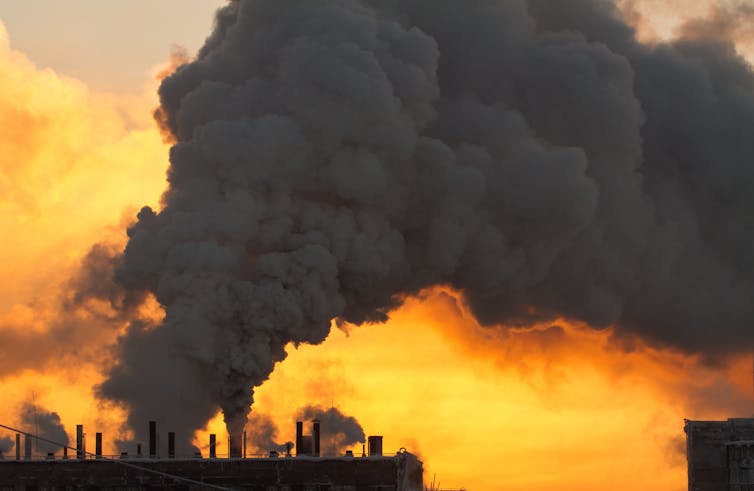
Olga Gordeeva/Shutterstock

Piers Forster, University of Leeds

As the latest UN climate change summit (COP28) gets underway in Dubai, conversations around limiting global warming to 1.5°C will confront a harsh reality. Global temperatures have surged over the past year, with the monthly global average surpassing 1.5°C above pre-industrial levels during the summer. Some days in November have even breached 2°C of warming for the first time.

Since the Glasgow Climate Summit in 2021, the UN has been conducting a review of our progress towards limiting temperature rise in line with the Paris Agreement. This review, which is set to conclude in Dubai, aims to make countries ratchet up their emission reduction commitments.

The evidence from this two-year “stocktake” is now available, and it shows just how far off track we are. To restrict global warming to 1.5°C, countries must reduce greenhouse gas emissions by more than 40% by 2030, yet emissions are currently on the rise.

Countries around the world have borne the human and economic toll. The United Arab Emirates itself is one of the latest countries to be hit by severe flooding, with parts of Dubai under water for the first time. This has led some, including the legendary climate scientist James Hansen, to speculate that climate scientists have underestimated the pace of change.

The evidence itself presents a more balanced view. Climate change has indeed accelerated, but this uptick in pace was entirely predicted by climate models and is expected due to greenhouse emissions being at an all-time high.

The potential for confusion as we approach 1.5°C of global warming makes it all the more crucial to track rising temperatures and climate change as they develop between the comprehensive Intergovernmental Panel on Climate Change assessments. The next assessment isn’t expected until around 2030.

A broken record

As the global stocktake has found, policies on cutting emissions remain a long way off what is needed to hold temperatures to well below 2°C – let alone 1.5°C. The recently published 2023 UN emissions gap report, which tracks our progress in limiting global warming, echoes the same concern. The report revealed that the world is on track for 2.9°C of global warming, and maybe considerably more, before the end of this century.

If this sounds like a broken record – as emphasised by the report’s cover art – it is. The message that we need urgent action and stronger emissions cuts to avoid the worst climate impacts is far from new, but still somehow needs to hit home.
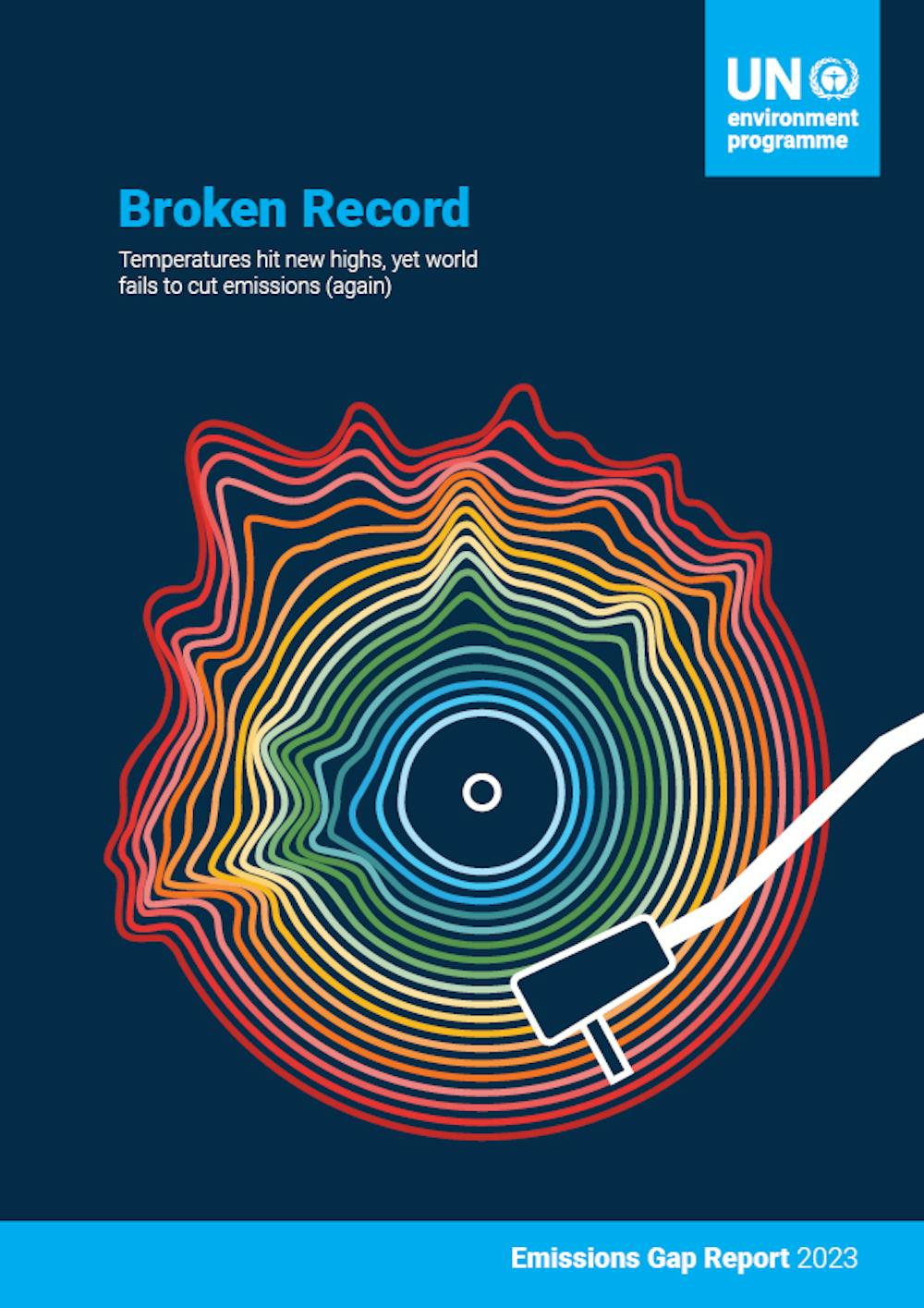
The front cover of the UN's 2023 emissions gap report.
The emission gap report’s cover art.
UN Environment Programme / Emissions Gap Report 2023, CC BY-NC-SA

The UN emissions gap report finds that 80% of climate change can be attributed to G20 countries, a group consisting of the world’s major economies. Within the bloc, western countries generally have ambitious emissions reduction targets, but are failing to deliver on them. By contrast, countries including China, India, Mexico and Indonesia are largely overachieving much weaker targets, but are failing on ambition.

This divide is evident in national submissions to the global stocktake process. Western countries are urging the rest of the world to increase ambition, while other nations are urging western governments to deliver on their finance and other commitments, especially in providing sufficient funding to help developing countries adapt to the harmful effects of climate change.

Inequalities in how emissions vary across a country’s population were highlighted in the UN Emissions Gap report and also in a dedicated report by Oxfam. The report revealed that the world’s wealthiest 1% account for 16% of global emissions. These wealthy people each emit more than 100 tonnes of CO₂ every year, 15 times the global average.

Inequality drives vulnerability. The same report showed that floods kill seven times as many people in countries with higher levels of inequality than they do in more equal ones.

A crucial period

The gloomy picture places a clear focus on the need for transformative progress at COP28 and beyond. In a report that was released ahead of COP, the International Energy Agency places the challenge firmly at the door of the oil and gas sector.

This report found that only 1% of clean energy investment comes from the industry, and that oil and gas use needs to decline by 75% or more to be compatible with net zero targets. The industry needs to undergo radical change.

If oil and gas firms urgently remove emissions from their operations, especially around methane leaks, and invest in trebling global renewable energy capacity by 2030 instead of extraction, they can be a force for change.

Discussions around the role of oil and gas will be a recurring theme both at COP28 and at future climate change summits. But concerted efforts to reduce methane emissions, build renewable energy infrastructure, roll out electric vehicles and halt deforestation globally could also see emissions fall significantly by 2030, consequently slowing down the rate of warming.
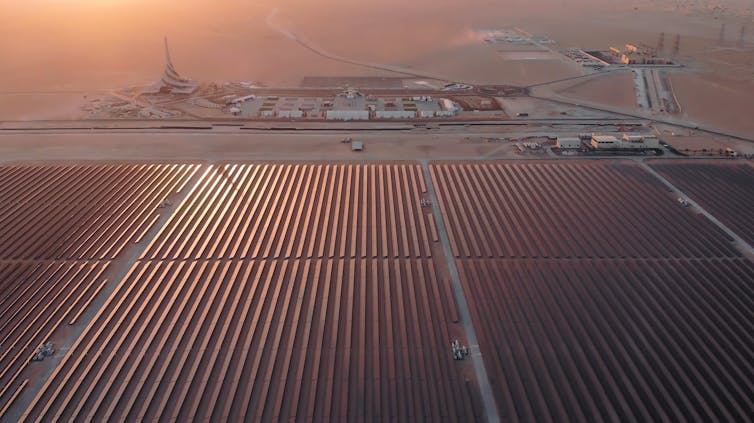
Aerial view of a huge solar power plant in the UAE.
Investment in global renewable energy capacity needs to be trebled by 2030.
SkyMediaPro/Shutterstock

Whether the discussions in Dubai lead to the transformative change we need remains to be seen. However, it is essential to continue offering independent, expert and respected advice to governments through organisations like the UK Climate Change Committee, which I currently chair, and the International Climate Councils Network. This effort is crucial in advocating for transformative change across all sectors and in providing consistent and ambitious national emission reduction policies that are based on evidence.

As we approach 1.5°C of global warming, we need to work even harder. To quote from a recent article in US magazine Scientific American: “Declarations that 1.5°C is dead make no sense. Global temperature limits don’t die if we surpass them. People do.”

Imagine weekly climate newsletter

Don’t have time to read about climate change as much as you’d like?

Get a weekly roundup in your inbox instead. Every Wednesday, The Conversation’s environment editor writes Imagine, a short email that goes a little deeper into just one climate issue. Join the 20,000+ readers who’ve subscribed so far.The Conversation


Piers Forster, Professor of Physical Climate Change; Director of the Priestley International Centre for Climate, University of Leeds

This article is republished from The Conversation under a Creative Commons license. Read the original article.
Continue ReadingCOP28: how bad is climate change already and what do we need to do next to tackle it?

‘Five-Alarm Fire’ as Global Temps Breach 2°C Threshold

Spread the love
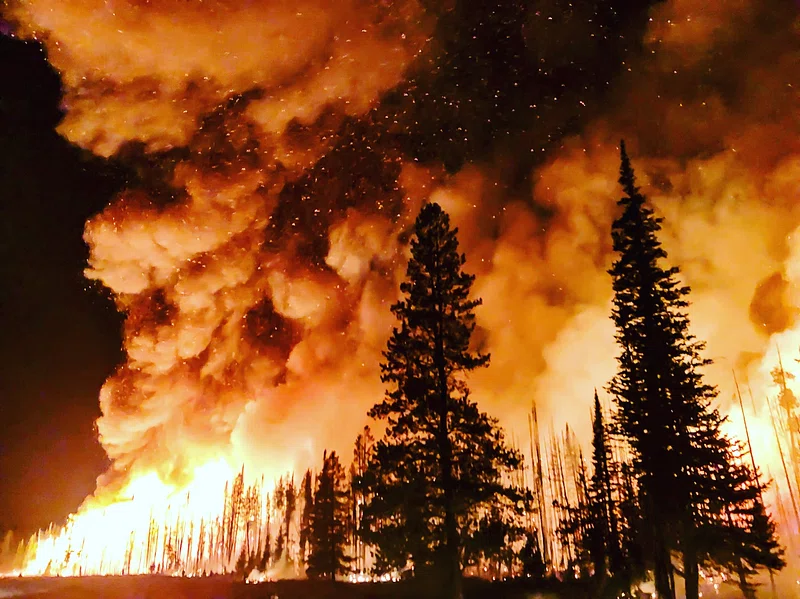
Canadian wildfire 2023

Original article by OLIVIA ROSANE republished from Common Dreams under Creative Commons (CC BY-NC-ND 3.0). 

While scientists were quick to point out that this was just a daily anomaly, not a permanent shift, it is a “canary in the coalmine” that “underscores the urgency of tackling greenhouse gas emissions.”

Global temperatures surpassed 2°C above preindustrial levels for the first time Friday, according to preliminary data from the European Union’s Copernicus Climate Change Service.

The European Centre for Medium-Range Weather Forecasts’ ERA5 data set showed global service air temperatures rising 2.07°C above the 1850-1900 average on Friday and 2.06°C above that average on Saturday, the service said.

“This is a five-alarm fire for humanity,” the group Climate Defiance tweeted in response to the figures.

In the 2015 Paris agreement, world leaders set out to keep warming to “well-below” 2°C above preindustrial levels. Allowing warming to breach that point increases several climate risks, according to the Intergovernmental Panel on Climate Change (IPCC): 2°C of warming compared with 1.5°C would raise sea levels by an additional 0.1 meters by 2100, destroy 99% of coral reefs instead of 70% to 90%, and expose several hundred million more people to poverty and climate-related hazards by 2050.

Friday’s 2°C breach was first noted by Copernicus Climate Change Service deputy director Samantha Burgess on social media Sunday. She said the day was also 1.17°C above the 1991-2020 average, making it the warmest November 17 on record.

Scientists were quick to point out that this doesn’t mean global heating has breached the 2°C threshold long-term.

“The 1.5°C and 2°C warming thresholds have been defined in terms of the trend line,” University of Pennsylvania climate scientist Michael Mann tweeted. “Not individual years, let alone months, weeks, or days (the shorter the time period, the larger the random fluctuations). Those who imply otherwise are misleading you.”

Richard Allan, professor of climate science at the University of Reading in the U.K., told CNN that it was “entirely expected that single days will surpass 2°C above preindustrial well before the actual 2°C target is breached over many years.”

“We are blowing past warning signs with wild abandon. We are approaching the precipice and flooring the gas.”

That said, the reading was a “canary in the coalmine” that “underscores the urgency of tackling greenhouse gas emissions,” Allan said.

It also comes in a year of dropping canaries: The 12 months from November 2022 to October 2023 were the 12 hottest on record, according to a Climate Central analysis. 2023 saw the hottest Northern Hemisphere summer on record, the hottest month in July, and is likely to be the hottest year not just since record-keeping began, but in the last 125,000 years. And it’s not just numbers. The record-breaking temperatures fueled deadly heatwaveswildfires, and floods around the world.

“The indicators are flashing red,” Climate Defiance wrote. “The planet’s vital signs are clear. Humanity is on life support. With the El Niño cycle just beginning, this 2°C breach sadly represents not a climax but a small taste of what is to come.”

“This is happening faster than expected,” the group continued. “We are blowing past warning signs with wild abandon. We are approaching the precipice and flooring the gas. This is madness. Utter madness.”

The 2°C breach comes a little less than two weeks from the start of the next United Nations Climate Change Conference in the United Arab Emirates. A recent report from U.N. Climate Change found that national plans were still incompatible with limiting warming to 1.5°C and that world leaders must take “bold strides forward” at the conference “to get on track.” More than 650 scientists have signed a letter to President Joe Biden urging him to back a fossil-fuel phaseout at the talks.

“It’s just one day (so far) above 2°C, but it highlights again that the world is approaching the limits set out by the Paris Agreement,” IPCC scientist Ed Hawkins tweeted. “We already have many of the solutions to rapidly reduce emissions and halt the rise in global temperatures. We just need to choose to use them.”

Original article by OLIVIA ROSANE republished from Common Dreams under Creative Commons (CC BY-NC-ND 3.0). 

Continue Reading‘Five-Alarm Fire’ as Global Temps Breach 2°C Threshold

Not convinced on the need for urgent climate action? Here’s what happens to our planet between 1.5°C and 2°C of global warming

Spread the love

Rachel Warren, University of East Anglia and Sally Brown, University of Southampton

Many numbers are bandied around in climate emergency discussions. Of them, 1.5°C is perhaps the most important. At the Paris Agreement in 2015, governments agreed to limit global warming to well below 2°C and to aim for 1.5°C. By 2018, the Intergovernmental Panel on Climate Change – the UN body tasked with relaying the science of climate breakdown to the world – had made worryingly clear in a special report how much graver the consequences of the higher number would be.

Together with the University of Queensland’s Ove Hoegh-Guldberg and colleagues around the world, we’ve explored in newly published work just how much sticking to 1.5°C matters.

Climate breakdown is already harming livelihoods, cities and ecosystems. From heatwaves and droughts to cyclones and floods, devastating extreme weather events are more frequent, more intense and more unpredictable than they would be in the absence of global heating. Warming and acidifying oceans are causing severe coral bleaching to occur twice as often as in 1980, leaving many unable to recover.

Shrinking habitats are increasingly forcing wildlife into conflict with human settlements. Increasing wildfires are damaging vital carbon stores in North America and Siberia, while the advance of spring is throwing species who depend on each other out of sync.

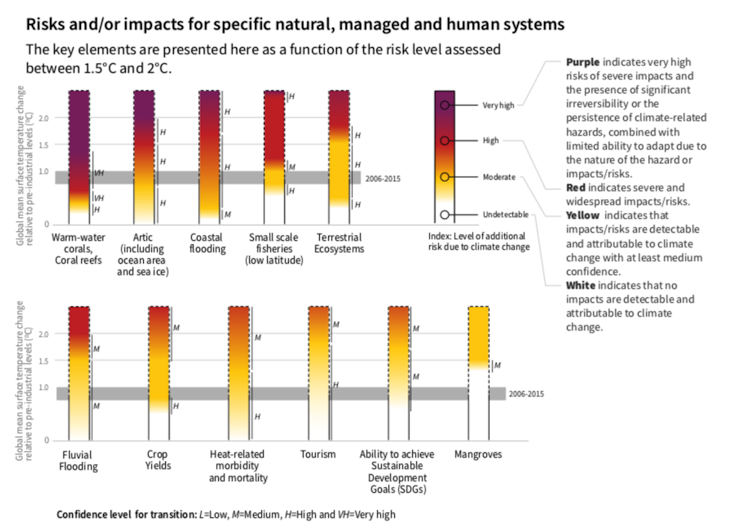
The more we destabilise our climate, the greater the risk to human societies and ecosystems. Even at 1.5°C of global heating, tough times are in store for the living planet. But the space between 1.5°C and 2°C of heating is a crucial battleground, within which risks to humanity and ecosystems amplify rapidly.

Climate battleground

At 1.5°C of warming, about one in twenty insect and vertebrate species will disappear from half of the area they currently inhabit, as will around one in ten plants. At 2°C, this proportion doubles for plants and vertebrates. For insects, it triples.

A great many risks amplify between 1.5 and 2 degrees of warming.
Hoegh-Guldberg, Jacob, Taylor/IPCC

Such high levels of species loss will put many ecosystems across the world at risk of collapse. We rely on healthy ecosystems to pollinate crops, maintain fertile soil, prevent floods, purify water, and much more. Conserving them is essential for human survival and prosperity.

Between 1.5°C and 2°C, the number of extremely hot days increases exponentially. Some parts of the world can also expect less rain and more consecutive dry days, while others will receive more extreme floods. Collectively, this will place agriculture, water levels and human health under severe stress – especially in southern African nations, where temperatures will increase faster than the global average. The Mediterranean is another key area at particular risk above 1.5°C of heating, where increased drought will alter flora and fauna in a way without precedent in ten millennia.

At 1.5°C of warming, we could expect to lose between 70% and 90% of our coral reefs. While this would be catastrophic for the millions of ocean creatures and human livelihoods these beautiful ecosystems support, there would still be a chance of recovery in the long term if oceans warm slowly. But at 2°C of warming, we could kill 99% of reefs. To be clear, this is a line that once crossed cannot be easily uncrossed. It could mean the extinction of thousands of species.

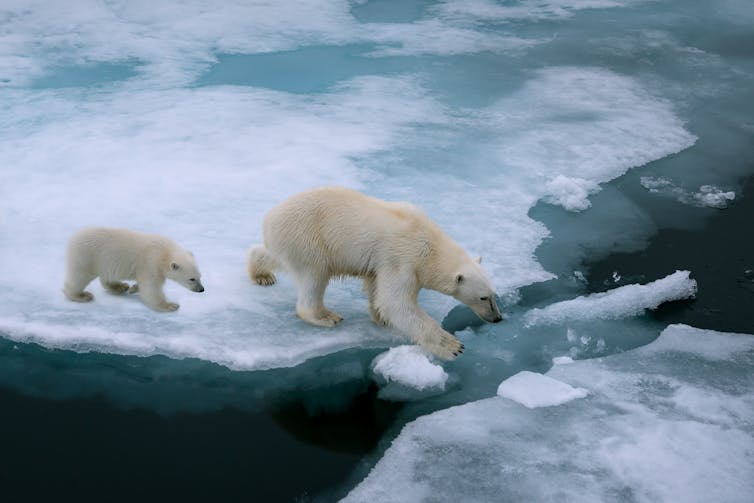
Arctic sea ice has been a constant on our planet for hundreds of thousands, perhaps millions of years. If we limit global heating to 1.5°C, there’s a 70% chance of it remaining that way. But at 2°C, some Arctic summers will be ice-free. Polar bears and other species who depend on frozen sea ice to eat and breed will be left homeless and struggling to survive.

Studies show that at 1.5°C, we could expect one metre of sea-level rise in 2300, with an extra 26cm at 2°C. However, between these two levels of global heating, the risk of the Greenland and West Antarctic Ice Sheets starting a slow process of decline dramatically increases. For the Greenland sheet, this is likeliest to happen at 1.6°C, with the Antarctic ice sheet’s tipping point hovering not far above this mark.

Polar bears depend on Arctic sea ice.
FloridaStock/Shutterstock

If these ice sheets melt, seas could rise by up to two metres over the next two centuries. These rises could lead to millions more people being exposed to flooding each year. Many of those living in coastal cities, deltas, or small islands will be faced with little option but to build upwards or relocate.

Way off track

The impacts of climate breakdown are accelerating. The planet has warmed by 1.1°C since 1850-79, but 0.2°C of this warming happened between 2011 and 2015 alone. The last four years were the warmest in the global temperature record.

Despite knowing all the above, many country-level commitments and action are nowhere near enough to limit warming to 2°C, let alone 1.5°C. We’re heading for 2.9°C to 3.4°C of warming. By this point, many dangerous tipping points could be crossed, leading to rainforest die-back, deadly heatwaves, and significant sea-level rise. Half of all insect and plant species are projected to disappear from more than half of the area they currently inhabit, potentially causing widespread ecosystem collapse and threatening organised human civilisation itself.

Limiting warming to 1.5°C will save the global economy trillions of dollars in the long run, even accounting for the seemingly gargantuan cost of transitioning our energy systems. But this is more than just an economic or academic issue – its a matter of life and death for millions of humans and animal species, and a severe threat to the well-being of billions.

Tackling climate breakdown is perhaps the tallest order humanity has ever faced, and there is no simple solution. The only way forward is accepting that we must fundamentally change the way we live our lives. It won’t be an easy transition, but there is no alternative if we are to preserve the well-being of humans, wildlife, and ecosystems. The coming year is vital, and there’s too much at stake not to act now.


Click here to subscribe to our climate action newsletter. Climate change is inevitable. Our response to it isn’t.The Conversation

Rachel Warren, Professor of Global Change, University of East Anglia and Sally Brown, Senior Research Fellow, University of Southampton

This article is republished from The Conversation under a Creative Commons license. Read the original article.
Continue ReadingNot convinced on the need for urgent climate action? Here’s what happens to our planet between 1.5°C and 2°C of global warming

1.5°C: where the target came from – and why we’re losing sight of its importance

Spread the love

Javier Ballester/Shutterstock

Piers Forster, University of Leeds

The US economist William Nordhaus claimed as early as the 1970s, when scientific understanding of climate change was still taking shape, that warming of more than 2°C would “push global conditions past any point that any human civilisation had experienced”. By 1990, scientists had also weighed in: 2°C above the pre-industrial average was the point at which the risk of unpredictable and extensive damage would rapidly increase.

Two years later, the United Nations Framework Convention on Climate Change (UNFCCC) was established to stabilise the amount of greenhouse gas in the atmosphere at a level that would “prevent dangerous interference with the climate system”. At the first summit in Berlin in 1995, countries began negotiations for the global response to climate change which continue to this day.

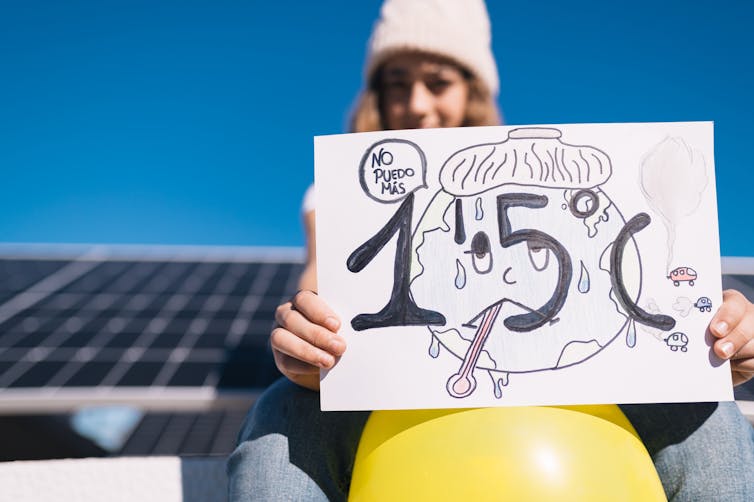
Halting global heating at 2°C remained the horizon to which negotiators strived for nearly two decades. And yet, you’re more likely to hear about the rapidly approaching 1.5°C temperature limit nowadays. At the most recent UN summit, COP27 in Egypt, leaders clinched an agreement to keep the target at 1.5°C, though they achieved little that would put the world on track to meet it.

So why did 1.5°C became the acceptable limit to rising temperatures? That story reveals an essential truth about climate change itself.

Acceptable for who?

Global temperature rise is just one measure of how the climate is changing. Scientists also track concentrations of CO₂ in the atmosphere, sea-level rise and the intensity of heatwaves and flooding. But taking the Earth’s temperature is the simplest way to predict the global consequences of warming.

At Copenhagen’s 2009 climate summit, the world still lacked an official temperature goal, nor had there been a full scientific assessment of what was “safe”. But a formation of island nations known as the Alliance of Small Island States (AOSIS) was already urging countries to draw the line at 1.5°C.

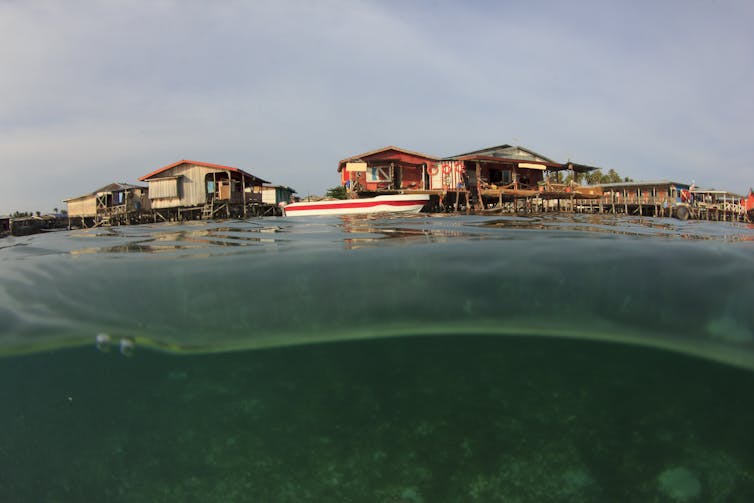
Scientific research had started to reveal the devastation that awaited many of these countries at 2°C, with coral bleaching, coastal erosion and erratic weather expected to become more frequent and severe. Worse still, new estimates indicated that sea levels would rise faster than earlier assessments had predicted, threatening the very existence of some islands.

Wooden seaside lodges visible above ocean water.
Low-lying islands in the tropics are among the most vulnerable places to climate change.
Rich Carey/Shutterstock

Only stopping global temperature rise well below 1.5°C would head off this catastrophe, AOSIS argued. As Mia Mottley, prime minister of Barbados, would later put it: “2°C is a death sentence”.

At a summit in Cancún, Mexico in 2010, governments agreed to keep global average temperature rise below 2°C while scientists reviewed the proposal for 1.5°C. The review, when published in 2015, found that the “concept, in which 2°C of warming is considered safe, is inadequate”. The idea that a “safe” level of warming could be achieved was subjective: current levels were already unsafe for those on the sharpest end of climate change.

Although the science on the effects of 1.5°C was, at the time, less robust than for 2°C, the review concluded that limiting warming to 1.5°C would minimise risks compared to a warmer world.

Coral reefs, for example, which millions depend on for food and income, are already being damaged by climate change. At 1.5°C, few reefs will escape harm. But at 2°C, virtually all reefs throughout the tropics are thought to be at severe risk. Halting climate change at 1.5°C would slow the rate of sea-level rise by roughly 30%, preserving cultures and communities that could disappear at 2°C.

.

This insight fed into negotiations that ultimately produced the Paris Agreement in 2015, which committed countries to:

holding the increase in the global average temperature to well below 2°C above pre-industrial levels, and pursuing efforts to limit the temperature increase to 1.5°C.

A scientific assessment in 2018 confirmed the relative advantages of limiting warming to 1.5°C. In essence, the benefits of halting warming at a lower temperature are always relative to the costs of allowing warming to continue, which will continue to mount for as long as action is delayed. The only “acceptable” limit is that which humanity collectively decides.

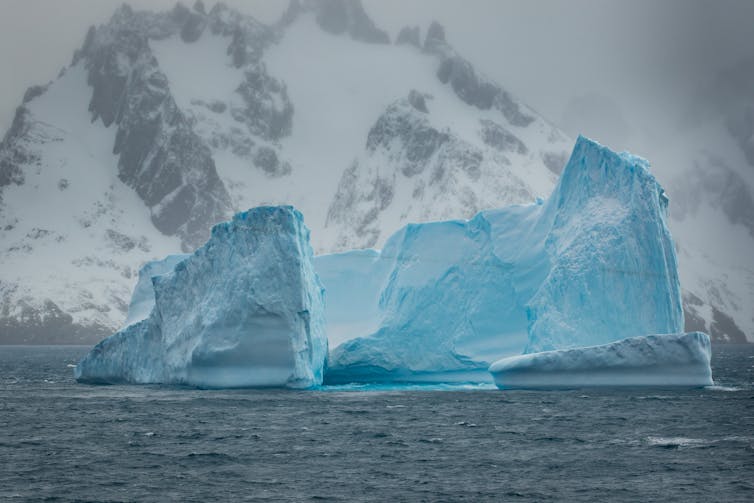
Campaigning by AOSIS forced the rest of the world to acknowledge (in principle at least) that 2°C was unacceptable for many. But more recent research suggests that even 1.5°C of warming could carry unforeseen risks, such as the West Antarctic ice sheet collapsing at current levels of warming.

A blue iceberg with Antarctic land mass in the background.
Collapsing ice shelves can raise sea levels significantly.
Dennis Stogsdill/Shutterstock

1.5 is still alive

The world has already warmed by around 1.2°C. By the time COP27 ended in late November 2022, only 30 out of nearly 200 countries had strengthened their national pledges for reducing emissions. No country has a pledge compatible with limiting warming to 1.5°C. And with temperatures increasing more than 0.2°C a decade, some suggest that 1.5°C is already out of reach.

The latest scientific assessments indicate that achieving the 1.5°C limit is still technically and economically feasible, but fossil fuels must be rapidly phased out, and CO₂ emissions halved by 2030 and reduced to net zero by mid-century. This is a huge, but not impossible, task.

We will, however, need a little luck on our side. Staying within 1.5°C also depends on how the climate responds to the emissions we put into the atmosphere in the meantime. Although limiting warming to 1.5°C becomes increasingly unlikely with every year of delay, giving up on it now would play into the hands of those determined to preserve fossil fuel revenues indefinitely.

Limiting warming limits the consequences of climate change, particularly for the most vulnerable people and communities. And even if the world does pass 1.5°C, it doesn’t remove any pressure. 1.5°C became the goal because exceeding it was deemed unacceptable. The increasing likelihood – but not certainty – of passing 1.5°C demands even more urgent action to avoid every additional fraction of a degree of warming, minimising the impacts, risks and costs of climate change for everyone, everywhere.


Imagine weekly climate newsletter

Don’t have time to read about climate change as much as you’d like?

Get a weekly roundup in your inbox instead. Every Wednesday, The Conversation’s environment editor writes Imagine, a short email that goes a little deeper into just one climate issue. Join the 10,000+ readers who’ve subscribed so far.The Conversation


Piers Forster, Professor of Physical Climate Change; Director of the Priestley International Centre for Climate, University of Leeds

This article is republished from The Conversation under a Creative Commons license. Read the original article.

Continue Reading1.5°C: where the target came from – and why we’re losing sight of its importance