Labour figures took £10,000 gifts from Google and YouTube ahead of tax U-turn

Spread the love
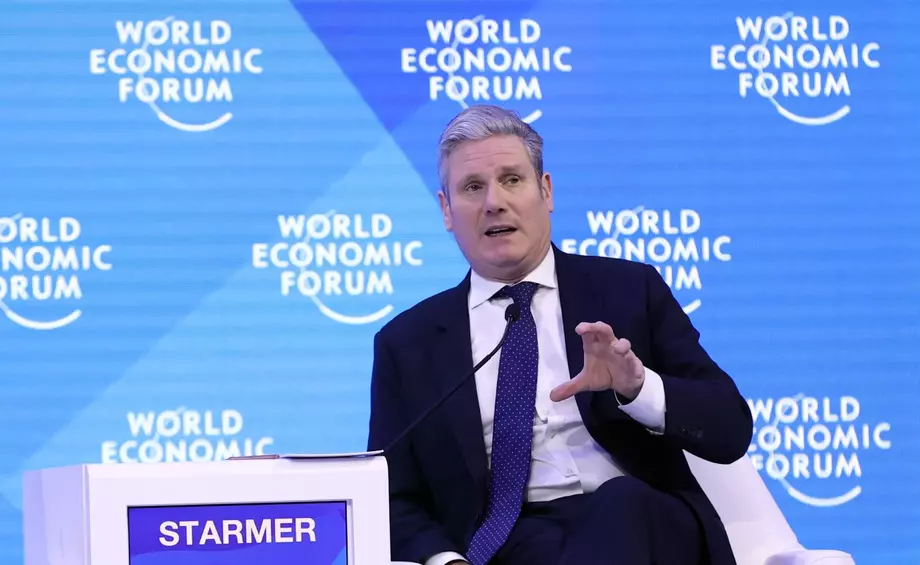
Keir Starmer sucking up to the rich and powerful at World Economic Forum, Davos.

Original article by Adam Ramsay republished from Open Democracy under  Creative Commons Attribution-NonCommercial 4.0 International licence.
Senior Labour figures accepted valuable gifts from Google in the days before abandoning a plan to tax digital giants more, openDemocracy can reveal.

Labour’s shadow business secretary Jonathan Reynolds, his senior parliamentary assistant (who is his wife), and Keir Starmer’s political director all attended Glastonbury festival in June as guests of YouTube, which is owned by Google. Including accommodation and ‘hospitality’, Reynolds estimates his Glastonbury package for two was worth £3,377 – significantly more than the cost of two regular tickets, which were £335 each.

The next day, reports emerged that Labour had ditched its proposal to hike tax on digital businesses like Google.

The Digital Services Tax, introduced in 2020, is a 2% levy on the UK income of online companies like search engines and social media platforms. In August last year, Reynolds and his shadow chancellor colleague Rachel Reeves had called for an increase in the tax to 10%, saying the income would be used to fund a slash in tax for small businesses.

As recently as 5 June, Reynolds was still talking about the policy. Yet on 26 June this year, the day after Glastonbury ended, The Times reported that the policy had been ditched, with Labour saying it had “no plans” to raise the digital service tax when in government. Reynolds declined to comment.

It was not the only time senior figures in Starmer’s team accepted luxury gifts from Google in the months before the party’s U-turn. Shadow culture secretary Lucy Powell’s political adviser, Labour’s executive director of policy, and the party’s head of domestic policy all accepted tickets and transport to, and ‘hospitality’ at, the Brit Awards in February from the digital giant. Powell’s register of interests estimates that the adviser’s ticket was worth £1,170.

Starmer’s political director also accepted transport to and ‘hospitality’ ahead of the event from Google, though his ticket, along with that of Starmer’s private secretary, was covered by Universal Music.

YouTube will sponsor an event at Labour’s annual conference next month with the chair of the business and trade select committee, Darren Jones. The talk, hosted by the New Statesman Media Group, will be on “harnessing tech for growth”.

Last week, openDemocracy revealed that Starmer had accepted a £380 dinner from Google for him and one staff member during the World Economic Forum in January.

In total, openDemocracy estimates that Labour shadow cabinet members and their staff accepted luxury gifts from Google worth nearly £10,000 over the months before they announced their policy U-turn. By contrast, the value to the British public of the policy Labour appears to have ditched is estimated at around £3bn.

Nick Dearden, director of Global Justice Now, said: “This is a really very worrying set of events which suggests that big business has far too much access to senior opposition politicians.

“But this isn’t simply about foolish behaviour on the part of the individuals concerned. In office, Labour needs to radically restructure our economy if it’s to have any hope of creating a more sustainable and equal society, and undoing the damage of recent governments. To do that, they must take on vested interests, like the Big Tech monopolies, which have far too much wealth and power.”

Staff for other Labour shadow cabinet members have also accepted valuable gifts from controversial companies. A political adviser to the shadow chancellor Rachel Reeves, accepted two ‘box’ tickets to a Harry Styles concert worth £250 each from BT. In the 2019 Labour manifesto, the party committed to nationalising BT, a measure the company opposed. It’s not clear whether the party maintains this policy, but Reeves has distanced herself from other nationalisation plans.

In April this year, BT announced a 14.4% average increase in its prices, and £1.7bn in profit. An Openreach spokesperson said: “As you’d expect from any major employer investing billions into the UK, we engage regularly with a range of stakeholders to support the interests of our people, our customers and our business. Any hospitality is consistent with the rules, fully declared and transparent.”

Updated 31 August 2023: The original version of this article incorrectly stated that the value of the Harry Styles box tickets was £700 each. They were in fact £250 each.

Original article by Adam Ramsay republished from Open Democracy under  Creative Commons Attribution-NonCommercial 4.0 International licence.

Continue ReadingLabour figures took £10,000 gifts from Google and YouTube ahead of tax U-turn

How police in England can now stop basically any protest

Spread the love

Original article republished from openDemocracy under a Creative Commons Attribution-NonCommercial 4.0 International licence.

New anti-protest legislation forced through by Suella Braverman has been labelled “unlawful”

Adam Ramsay

15 June 2023, 3.55pm

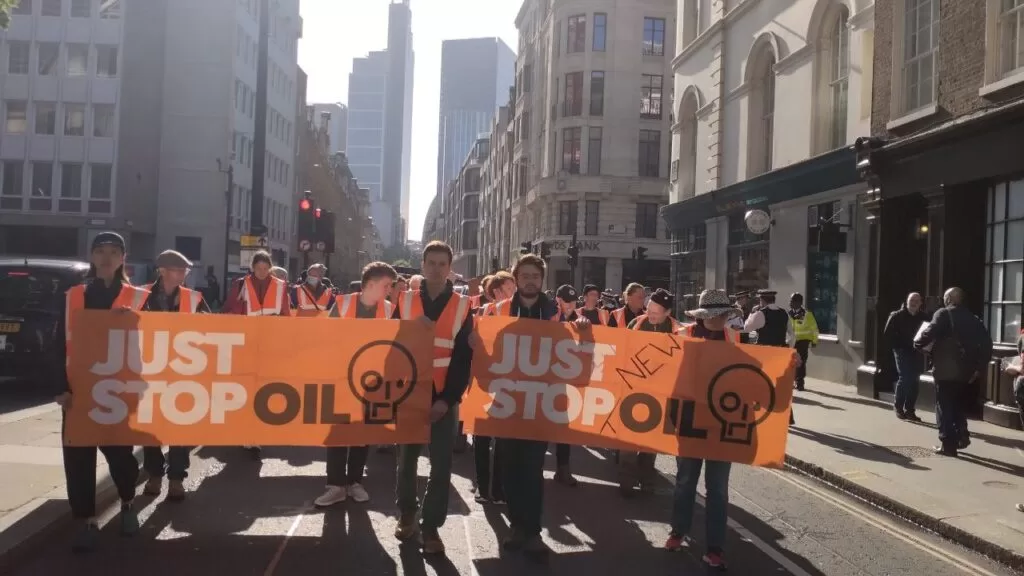
A Just Stop Oil protest in central London
Suella Braverman forced through new anti-protest laws after slow-marching demonstrations from Just Stop Oil activists in London

At midnight last night, the right to protest in England and Wales became a matter of police discretion.

Yesterday, the police could restrict or stop a protest to prevent it causing either “serious public disorder, serious damage to property, or significant and prolonged disruption to the life of the community”.

Those powers already allowed plenty of room for interpretation, but from today the threshold is even lower. This week, home secretary Suella Braverman forced through new laws in a way never seen before in the UK. Here’s what you need to know.

What are the new police powers targeting protests?

Changes to the Public Order Act mean police can now restrict or stop a protest if they believe it could cause “more than minor disruption to the life of the community”. They have the power to arrest anyone taking part in a protest, or even anyone encouraging others to take part.

Officers are also now required to consider “cumulative disruption” from protest, even if the protests in question are organised by different people and about different issues. And the definition of “community” has been changed to include anyone affected by a protest, not just people who live or work in the area it’s happening in.

“The regulations also say the police will be required to take into account all relevant disruption. For example, if there are regular traffic jams in the area, that would have to be taken into account [when the police decide whether to ban a protest], even if it had nothing to do with the protest”, Jodie Beck, policy and campaigns officer at Liberty told openDemocracy.

Braverman argued the new laws were needed to target slow-marching protests from climate activists Just Stop Oil and Extinction Rebellion.

What do they mean?

In reality, the police could find a way to argue that any protest meets the threshold for imposing restrictions, if they wanted to. The new law, says Beck, is a “huge expansion of police powers” that could also lead to police allowing some protests to go ahead while imposing restrictions on others, simply based on how the officers felt about the message behind them.

While the government has focused on one particular type of protest – slow-marching – all protests are potentially impacted.

Beck gives the example of striking railway workers and their supporters holding a rally outside a train station. The police “could decide that means a more than minor disruption to people’s travel,” and so ban the gathering, and arrest anyone taking part.

It could even be that police officers rule that a picket line causes “more than minor” disruption to the workplace it is picketing – after all, that’s the point.

But it’s not just the new laws which have shocked experts. It’s also how they came about this week.

How did the new laws restricting protests get passed?

Originally, Suella Braverman tried to sneak the new legislation into the Public Order Act, which passed earlier this year and came into effect just before the coronation. Rather than allowing these changes to face the usual scrutiny in the House of Commons, the home secretary had them added as last minute amendments to the bill in the House of Lords, after MPs had already voted on it. Her attempt failed – the Lords thought these measures were too draconian and voted them down, though they approved the broader new bill.

Undeterred, Braverman turned to a constitutional trick that’s never been used before. Because while new bills – known as ‘primary legislation’ – require line-by-line scrutiny in both houses, various laws already on the statute book give ministers powers to make small changes via something called ‘secondary legislation’. And secondary legislation doesn’t get nearly as much scrutiny, with both the Commons and Lords simply voting for or against.

The home secretary argued that another act passed last year by then-home secretary Priti Patel – the Police, Crime, Sentencing and Courts Act – already gave her the power to make these changes via secondary legislation. So that’s what she did this week, making it the first time ever that a government has used secondary legislation to push through a measure that had already been voted down by parliament.

The secondary legislation passed through the Commons on Monday, with the Tories taking full advantage of their majority. In the Lords, Green peer Jenny Jones filed a highly unusual fatal motion, a rare procedure used to try and kill off the passage of a bill. Normally, because it’s an unelected house, the Lords tweaks legislation passed by the Commons, but doesn’t ultimately vote it down. Jones argued that, because the government was bringing back a law which had already been voted down by parliament through a route which requires almost no scrutiny, this should be an exception.

Labour, although they complained about Braverman’s shenanigans, refused to back Jones, and abstained on the motion, meaning it passed. Police, Crime and Fire minister Chris Philp then enacted the new measures from midnight last night (secondary legislation doesn’t need royal assent). And so now, the police can shut down any protest they like.

The story doesn’t end there. Liberty is taking the government to court, calling the move “unlawful” and arguing that it broke many of the basic principles of the British constitution.

What do human rights campaigners say?

Katy Watts, a lawyer at Liberty, accused the government of “putting itself above the law” and said the move gives police “almost unlimited powers to stop any protest the government doesn’t agree with”.

And Beck believes we need to see this in the context of a much broader attack on our democratic rights. Noisy protests have been banned. The government is already attacking the right to strike, making it easier for bosses to sack people who vote to withdraw their labour. They’ve made it harder to vote, and harder to challenge them in the courts.

“Even if you’ve never been to a protest, you never know when you might need to,” she said.

With the new laws, there is a growing chance you’ll be arrested if you do.

Original article republished from openDemocracy under a Creative Commons Attribution-NonCommercial 4.0 International licence.

Continue ReadingHow police in England can now stop basically any protest