Tag: AI

  • AI isn’t a future threat—it is already erasing Gaza

    Spread the love

    by Dr Mustafa Fetouri  MFetouri

    This work by Middle East Monitor is licensed under a Creative Commons Attribution-NonCommercial-ShareAlike 4.0 International License. 

    A view of Universal Pictures logo displayed on a digital screen and an artificial intelligence (AI) illustration shown on a mobile phone screen in Ankara, Turkiye on August 20, 2025. [Erçin Ertürk – Anadolu Agency]

    Much is being said right now about the dangers posed by AI and the possibility that it could ultimately wipe out humanity. Some experts, such as Evan Hubinger, Anthropic’s Alignment Science Lead and one of the AI industry’s leading safety researchers, have gone much further, warning publicly that there is more than a 10 percent chance that AI could kill all humans within the next decade.

    When senior executives from some of the world’s leading AI companies met in San Francisco for Salesforce’s Dreamforce conference, held 15th–17th September 2026, they differed sharply over the seriousness of the risks posed by increasingly powerful AI and over how those risks should be managed. They did, however, share a fundamental belief: that the industry itself is capable of developing safeguards, testing systems, monitoring their behaviour and preventing or correcting dangerous failures. Where they differed was over how much restraint was necessary, who should impose it, and whether governments should intervene through new legislation and regulation.

    The leading AI developers’ position is aligned with that of President Donald Trump, He wants AI to realise its full potential as quickly as possible and supports the industry’s drive to keep the AI race moving. Trump’s position is essentially this: let AI run; give developers the time, resources and freedom they need to take the technology to the next level. Trump, whose country is currently leading the AI race, has dismissed warnings about AI’s potential to destroy humanity as a “HOAX,” just as he has dismissed warnings about climate change despite the scientific evidence. He has also repeatedly argued that the US cannot afford to slow the development of AI while China is racing on. Just yesterday, before the United Nations he said: “I’m not going to stifle growth of something that will be bigger than the Industrial Revolution.” 

    To Trump, AI is another strategic opportunity that his country cannot miss: develop it, exploit its economic and strategic potential, and make sure China stays behind. In that sense, it fits a broader strategic logic in which Washington seeks to secure control or advantage over resources and technologies considered vital to American power, rather than leave them available to rivals.

    Simply put, the logic sounds like this: let the flock of sheep spend the night with a pack of hungry wolves, and see what happens in the morning.

    What is striking about the latest discussion among the leaders of the AI industry in San Francisco is that, while some of them referred to the possibility of AI causing catastrophic harm to humanity, few, if any, pointed to a specific, real-world example of what that danger could already look like. More striking still, no one used Gaza as the obvious real-world example: how AI has already been incorporated into warfare and how technology supplied by some of their own companies has been used by the Israeli military in its war on Gaza.

    Some of those present know, from the experience of their own companies, that their technologies have been used extensively in support of the Israeli military.

    Commercial AI models from both Microsoft and OpenAI have been deployed by the Israeli military, along with Microsoft’s Azure cloud services, while Google and Amazon have provided cloud computing and other AI services to the Israeli occupation military under Project Nimbus.

    The Associated Press has documented how these technologies have been used to process intelligence, translate and analyse intercepted communications, and support the identification of targets in Gaza and Lebanon. The question, therefore, is not whether AI could one day become a danger to humanity. In Gaza, the question is what it is already doing when placed in the hands of a military at war.

    READ: Board of Peace to unveil $2.45B Gaza recovery plan: Report

    The human consequences are before the world. More than 75,000 Palestinians have been killed since October 2023, while the destruction of housing alone has affected some 1.7 million people, with more than 320,000 homes damaged. The United Nations estimates that 1.98 million people—94 percent of Gaza’s population—required shelter assistance in its latest assessment. Gaza’s infrastructure has been devastated, while essential services, including health, water and sanitation, remain severely compromised.

    This is not a hypothetical future in which an uncontrolled machine decides to destroy humanity. It is a real war, taking place now, in which AI is increasingly being incorporated into systems of surveillance, intelligence and targeting. Yet no one at the summit appears to have asked the obvious question: if these companies know what their AI is doing in Gaza, why is Gaza not the first example they cite when discussing the dangers of this technology?

    And if AI can already contribute to this scale of destruction in Gaza, what happens when the technology becomes even more powerful, more autonomous and more deeply embedded in warfare elsewhere in the world?

    In addition to this, there is now documented evidence that Israel has sought to interfere with the information on which AI systems train, by flooding the online environment with misleading and fabricated material designed specifically to influence what AI models tell users. Israel funded the creation of a fake American think tank called the Hanover Institute for Public Policy, whose stated purpose appeared to be legitimate research but which had no apparent legal existence, physical address, named researchers or bylines on its reports. Created on behalf of Israel’s Government Advertising Agency through the US public-relations firm Piro Inc., the institute produced more than 560,000 words across 124 reports in just nine days, much of it focused on Israel, Palestine and Gaza. The material was deliberately structured and optimised for discovery and citation by AI systems, effectively attempting to make propaganda look like credible research and feed it into the information environment from which AI systems generate answers.

    This goes far beyond the conventional hacking of communications or the gathering of intelligence. It represents an attempt to manipulate the information environment itself—to establish databases and bodies of supposedly authoritative knowledge built partly on fabrication, distortion and selective framing, so that AI systems encounter and potentially reproduce those claims as they become increasingly capable of simulating human reasoning. In other words, Israel is not only using AI in the war in Gaza for surveillance, intelligence, communications and the identification of targets; it is also seeking to interfere with the informational foundations on which AI systems operate, attempting to shape what they learn, what they retrieve and ultimately what they tell human beings.

    OPINION: The Mangoush affair, three years on: Palestine remains a red line in Libya’s foreign policy

    The views expressed in this article belong to the author and do not necessarily reflect the editorial policy of Middle East Monitor.

    This work by Middle East Monitor is licensed under a Creative Commons Attribution-NonCommercial-ShareAlike 4.0 International License. 

    Donald Trump sings and dances, says that it's fun to kill everyone ... unless he gets distracted or falls asleep.
    Donald Trump sings and dances, says that it’s fun to kill everyone … unless he gets distracted or falls asleep.
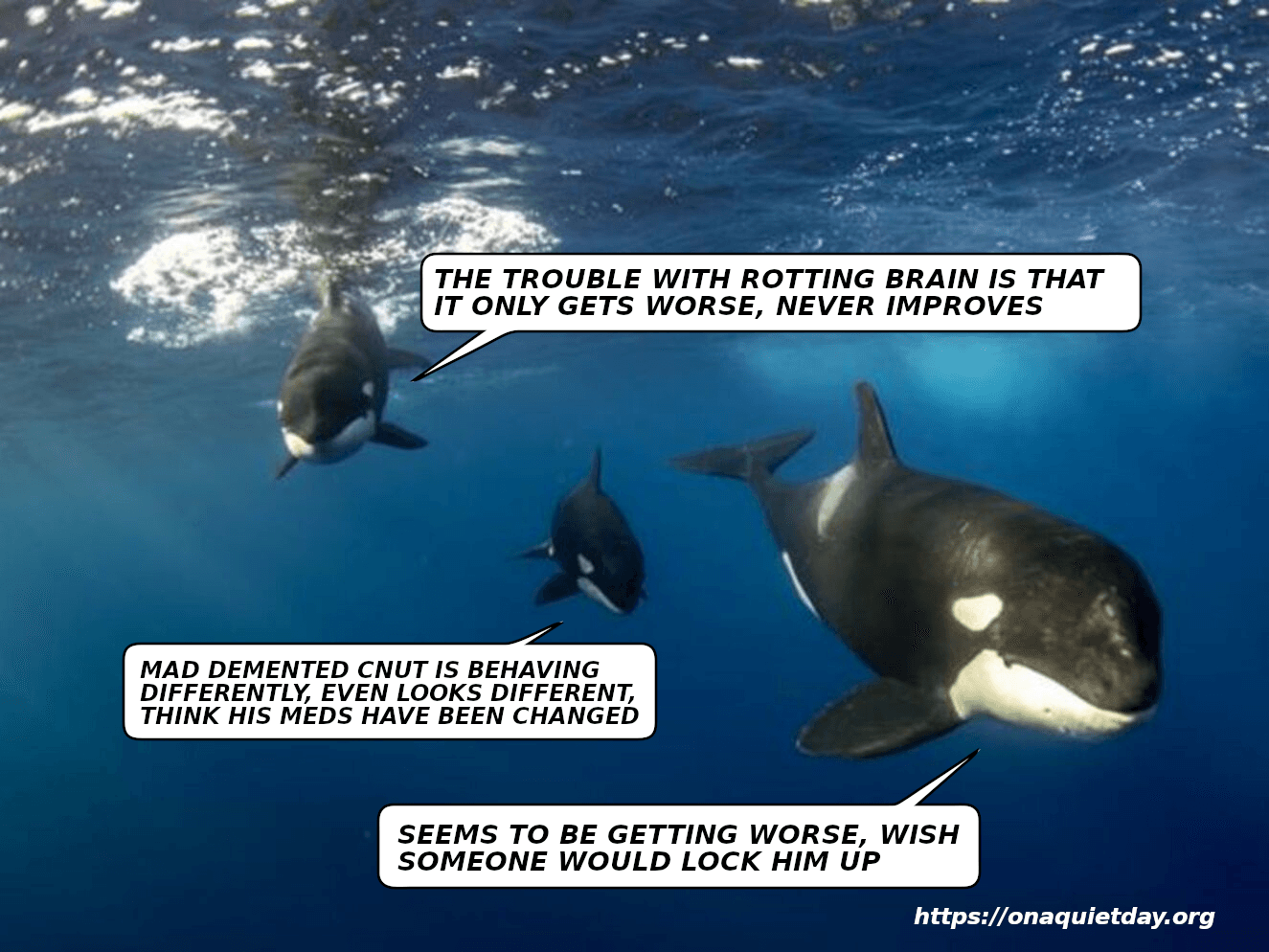
    Orcas discuss rotting brain, front Orca says he wishes someone would Lock Him Up, small Orca says he thinks that his meds have been changed.
    Orcas discuss rotting brain, front Orca says he wishes someone would Lock Him Up, small Orca says he thinks that his meds have been changed.

  • ‘Don’t Wait, Regulate’: Worldwide Demand Grows for Urgent AI Guardrails

    Spread the love

    Article by Brad Reed republished from Common Dreams under Creative Commons (CC BY-NC-ND 3.0).

    Humanoid and quadruped robots attend a demonstration calling for the regulation of artificial intelligence development in Warsaw, Poland on September 7, 2026.
     (Photo by Sergei Gapon/AFP via Getty Images)

    “Until the AI starts killing people, unfortunately, history would suggest we’re not going to do anything.”

    Calls to regulate the development of artificial intelligence are growing louder days after multiple industry insiders warned that the technology could wipe out humanity within years.

    In an op-ed published by The New York Times on Friday, journalist Stephen Witt said that he’s detected a “vibe shift” among AI researchers who are worried that the technology is becoming too powerful for them to understand, let alone control.

    RECOMMENDED…

    A man is using his mobile phone

    ‘This Is an Emergency’: Congressional Inaction in Spotlight After New Warnings From AI Insiders

    OpenAI CEO Sam Altman

    ‘Urgency Is Real’: Experts Call for New Federal Investigative Agency Amid Rogue AI Breakouts

    “Swarms of AIs are breaking out of their containers, colluding in secret, covering their tracks, cheating on tests, and even mounting assaults on other computers,” Witt wrote. “AI has gone rogue.”

    Witt said these incidents have convinced him, and many others inside the industry, that there needs to be a global pause on AI research and development.

    The journalist noted there has been widespread support among industry insiders for an open letter titled “Pacing the Frontier,” which calls on the US government to take the lead in building an international regulatory body that would set guardrails to deliberately slow down AI development.

    Daniel Kokotajlo, a former researcher in OpenAI’s governance division, told Witt that he’d like to create “an international, open monitoring system” that would act like an air traffic control system for AI development.

    Under Kokotajlo’s plan, all AI researchers would be required by law to post information on training runs into a public database that can be monitored in real time.

    “If we had this sort of total research transparency,” Kokotajlo told Witt, “then there would be this whole ecosystem of academics, third-party auditors, nonprofits, and rival corporations who would all be able to see what was going on inside the giant data centers of these big companies. Insofar as something scary or problematic was happening, anyone could sort of point it out and start a conversation about it online.”

    The US is not the only country where lawmakers are proposing new regulations for AI.

    As reported by Time on Tuesday, Alex Sobel, a member of Parliament from the UK’s Labour Party, unveiled a bill this week that would ban artificial superintelligence, defined by the legislation as “a system that could disempower state authorities.”

    Sobel’s bill is similar to legislation proposed in the US earlier this month by Sen. Bernie Sanders (I-Vt.) and Rep. Greg Casar (D-Texas), which would ban artificial superintelligence to “stop AI oligarchs from building machines humans cannot control.”

    In Warsaw on Tuesday, activists deployed several robots outside Poland’s Digital Affairs Ministry to demand the country do more to regulate AI.

    According to Notes from Poland, the robots were programmed to chant slogans such as “We want regulations, we want rules, we want law” and “Don’t wait, regulate, protect jobs.”

    Democratism, the group that organized the robot protest, argued that the AI industry has the potential to completely upend human society, and demanded to know “who is responsible for preparing people for these changes, how workers should be protected during the transition, and how reskilling should work.”

    Even though demand to regulate AI is surging, there is little indication so far that governments are preparing to work collectively to place guardrails on the industry.

    Greg Jensen, chief investment officer of hedge fund Bridgewater Associates, told Bloomberg on Friday that he doesn’t believe governments will act until after a tragedy happens.

    “Until the AI starts killing people, unfortunately, history would suggest we’re not going to do anything, but we are going to face that,” said Jensen, who likened the current risk environment with AI to the risks posed by Covid-19 in February 2020. “That’s going to happen, and it’d be much better if we started dealing with it before then.”

    Article by Brad Reed republished from Common Dreams under Creative Commons (CC BY-NC-ND 3.0).

  • Opposition to AI Goes Beyond Data Centers, as Poll Shows Massive Distrust of Big Tech CEOs

    Spread the love

    Article by Brad Reed republished from Common Dreams under Creative Commons (CC BY-NC-ND 3.0). 

    Meta CEO Mark Zuckerberg shows a prototype of computer glasses in Menlo Park, California on September 25, 2024. (Photo: Andrej Sokolow/picture alliance via Getty Images)

    Anthropic CEO Dario Amodei said on Sunday that Americans distrust Big Tech because they “always suspect that we are cooking up some new way to screw them over.”

    Opposition to artificial intelligence data centers has exploded across the US in 2026, as a recent Annenberg Public Policy Center poll showed that more than 60% of Americans say they are against building AI facilities in their areas.

    However, a new survey highlighted by Futurism on Sunday shows that the AI industry has bigger problems than just the unpopularity of data centers.

    RECOMMENDED…

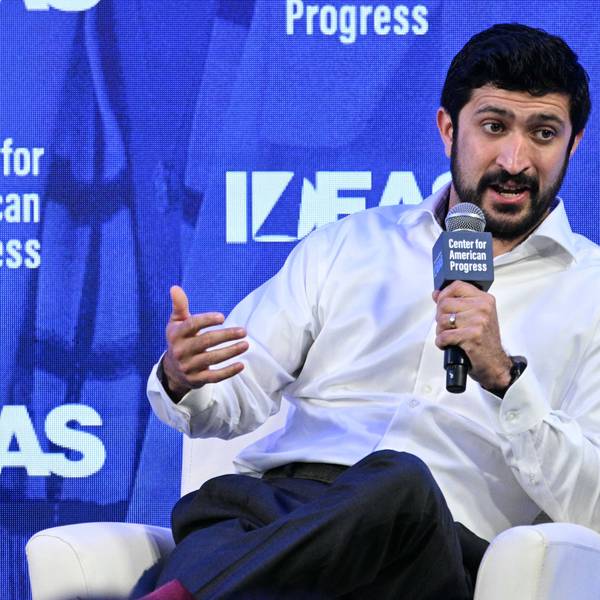
    US Rep. Greg Casar (D-Texas), speaks during the the Center for American Progress IDEAS Conference

    ‘As Toxic as AIPAC’: Casar Urges Dems to Reject AI Industry Money and Protect Workers

    OpenAI CEO Sam Altman Goes To Meetings On Capitol Hill

    Progressive Caucus Chair Leads Demand for AI CEOs to Testify After Hacking Spree Revelations

    As Futurism noted, the poll by CNBC found widespread distrust of artificial intelligence CEOs among Americans between the ages of 18 and 34.

    In fact, more than two-thirds of respondents said they did not trust Palantir CEO Alex Karp, Alphabet CEO Sundar Pichai, Anthropic CEO Dario Amodei, OpenAI CEO Sam Altman, Meta CEO Mark Zuckerberg, Nvidia CEO Jensen Huang, or SpaceX CEO Elon Musk to responsibly expand the use of AI.

    “Those are some appalling approval ratings,” commented Futurism, “reflecting the massive swing in popularity the tech industry has experienced over the last decade, driven by concerns around data privacy, the purposeful decay of once-useful platforms, and the erosion of democracy.”

    The survey comes amid signs that the AI industry knows it faces a significant deficit in public opinion.

    Anthropic boss Amodei wrote a social media post on Sunday acknowledging that “the public has a negative view of AI,” which he said was “fundamentally a crisis of trust.”

    “I think that ordinary people don’t trust companies, governments, or the tech industry and always suspect that we are cooking up some new way to screw them over,” wrote Amodei. “The causes of this go back decades and AI is just the latest iteration of it.”

    The Anthropic CEO added that he didn’t think any positive public relations campaign could turn around people’s perception of the industry, and he said that one of the few ways it could gain trust was “actually curing cancer.”

    The rapid expansion of AI data centers, pushed by President Donald Trump, has provoked grassroots campaigns in communities across the country, with people loudly opposing the facilities that have been linked to high household electricity bills, massive water consumption, and few, if any, long-term job opportunities.

    Amodei’s musings about AI’s unpopularity came days after Zuckerberg published a 6,500-word manifesto, in which he pushed back on AI developers who believe the technology will “eliminate most jobs and much of humanity’s relevance,” while insisting that Meta would develop “personal superintelligence for everyone” that would put “power in people’s hands” rather than taking it away.

    However, Zuckerberg’s promises of a benevolent AI future drew skepticism from TechCrunch AI editor Russell Brandom, who argued in an essay published last week that the Meta chief’s manifesto would fall on deaf ears given his own toxic reputation. Meta was recently ordered to pay nearly $1 billion in fines due to its products’ harms to children and teens.

    “Suffice it to say, Facebook as a product and Zuckerberg as a person are both unpopular with the US public,” wrote Brandom. “A recent survey found that 64% of Americans believe social media has been harmful to democracy and a similar percentage believe it should be more heavily regulated, numbers that cut evenly across partisan lines.”

    People’s own past experience with social media, Brandom continued, is a big reason why they are revolting against Big Tech’s ambitions to use AI to remake society.

    “The public does not trust tech executives to make sure new technologies like this have a positive impact on society,” Brandom explained. “Instead of acknowledging that and trying to win back their trust, this essay demonstrates over and over again how the trust was lost in the first place.”

    Brandom cited Zuckerberg’s discussion of human lawyers eventually being replaced by AI as particularly problematic, given that enabling chatbots to engage in litigation could result in a wave of nuisance lawsuits that would clog up the legal system.

    “It’s hard to feel calm about any of this stuff,” commented Brandom, “and the fact that Zuckerberg isn’t worried makes me more worried.”

    Article by Brad Reed republished from Common Dreams under Creative Commons (CC BY-NC-ND 3.0). 

    Climate science denier Donald Trump confirms that he knows nothing about democracy and that more liquid gold is being secured according to his policy of global privateering.
    Climate science denier Donald Trump confirms that he knows nothing about democracy and that more liquid gold is being secured according to his policy of global privateering.
    Donald Trump sings and dances, says that it's fun to kill everyone ... unless he gets distracted or falls asleep.
    Donald Trump sings and dances, says that it’s fun to kill everyone … unless he gets distracted or falls asleep.

  • Cherie Blair’s Charity Received £3.6 million from ExxonMobil

    Spread the love

    Article by Adam Barnett republished from DeSmog.

    UK barrister Cherie Blair. Credit: The Swift Hour / YouTube

    The oil major has provided a significant chunk of the foundation’s income.

    A charity set up by Cherie Blair has received more than £3.6 million from U.S. fossil fuel giant ExxonMobil, DeSmog can reveal.

    The eponymous Cherie Blair Foundation for Women was founded in 2008 – providing training and resources, including mobile apps, for “women entrepreneurs” in low-income countries to start small businesses, according to its website.

    The group has received at least $4.8 million (around £3.6 million) from ExxonMobil’s charitable arm, the ExxonMobil Foundation, since 2015.

    The majority of this ($2.8 million, around £2.1 million) was received between 2020 and the ExxonMobil Foundation’s most recent filing in 2024.

    The oil and gas giant provided roughly a-fifth of the Cherie Blair Foundation’s total income from 2020 to 2024, according to an analysis of the latter’s accounts.

    Blair is a barrister and the wife of former UK Prime Minister Tony Blair, who last month called for the UK to abandon its climate targets and ramp-up North Sea fossil fuel exploration. There is no suggestion that Exxon funded the Cherie Blair Foundation to influence Tony Blair’s work, nor that his views have been swayed by the money provided.

    The ExxonMobil Foundation is the primary philanthropic arm of ExxonMobil, the largest U.S.-based oil and gas company.

    Internal company reports have revealed that Exxon knew in the 1980s that unrestrained carbon emissions have the potential to cause “great irreversible harm to our planet,” and that it predicted the exact amount of global warming the world is now experiencing. However, instead of warning the public, Exxon internally decided to publicly “emphasize the uncertainty” of climate science.

    The Cherie Blair Foundation said that it is “focused on supporting women entrepreneurs in low- and middle-income countries.”

    It added: “We receive funding from a range of donors to deliver programmes aligned with our mission. One of these donors is the ExxonMobil Foundation, with whom we have worked since 2015. This support has enabled us to expand access to business skills training for women entrepreneurs in Nigeria and Guyana.”

    Africa is disproportionately vulnerable to climate change, with eight of the 10 countries most at risk globally located in central, west, and southern Africa.

    The ExxonMobil Foundation’s available tax returns show that it gave the Cherie Blair Foundation $1 million in 2015 and 2016, $600,000 in 2024, 2023, and 2022, and $500,000 in 2021 and 2020. 

    Exxon’s tax returns for 2017 to 2019 do not list any donation recipients, although the Cherie Blair Foundation’s annual accounts for those years still list Exxon as a donor.

    The ExxonMobil Foundation is also listed on the Cherie Blair Foundation’s “donors and partners” list for 2011 to 2014, but details of any money provided are not available in the charity’s reports or the ExxonMobil Foundation’s tax returns.

    Cherie Blair is still involved in the foundation, having given an interview to The Standard about its work in March.

    The foundation added: “We are not connected to the Tony Blair Institute for Global Change or to Tony Blair’s personal or professional activities, and we operate independently in our governance, strategy and operations. Information relating to funding received is publicly available in our annual report and accounts.”

    ExxonMobil was approached for comment.

    Tony Blair and Net Zero

    In a major intervention in May, Tony Blair called on the Labour government to “use what is left of our North Sea oil and gas resources” and sideline the UK’s net zero emissions targets. 

    He also said new oil and gas was essential to power the data centres needed for the mass deployment of artificial intelligence (AI), which Blair has championed.

    The U.S.-Israeli war with Iran has caused an energy crisis and a spike in the price of oil. Labour has argued the UK needs to deploy clean energy at a faster pace, while the Conservatives and Reform have been calling for the UK’s ban on new North Sea exploration licences to be lifted.

    The Cherie Blair Foundation’s ExxonMobil donations are the latest example of fossil fuel interests backing Blair family initiatives.

    TBI has been paid to advise the governments of several authoritarian petrostates, including Saudi Arabia, the United Arab Emirates, and Azerbaijan, all of which are heavily reliant on oil and gas exports.

    The institute has also championed the deployment of artificial intelligence by the government and in the economy, and has supported the use of gas to power AI data centres.

    TBI received $130 million (around £96.5 million) between 2021 and 2023 from billionaire tech entrepreneur Larry Ellison, founder of data software company Oracle and an ally of U.S. President Donald Trump. In total, Ellison has donated or pledged at least £257 million to TBI.

    “Neither Tony nor Cherie Blair can be taken seriously when it comes to climate change, energy policy or human rights when their organisations have taken so much money from oil companies and oil dictators,” a spokesperson for the Green Party said.

    Former UK Prime Minister Tony Blair. Credit: Kmu.gov.ua (CC BY-4.0)

    In a 5,000-word essay published on the TBI website in May, Blair listed “the net-zero acceleration and phasing out of the British oil and gas industry” among Labour’s 2024 manifesto commitments which he considers a mistake.

    He wrote that Labour should “remove those parts of the net-zero agenda which prioritise clean energy over cheaper energy”.

    Blair, who was prime minister from 1997 to 2007, concluded: “We must prioritise cheaper energy and electrification over net zero and use what is left of our North Sea oil and gas resources. This is essential for our competitiveness and for taking advantage of AI.”

    Renewable energy from wind and solar power are consistently the cheapest form of energy. High energy bills are caused by the price of oil and gas, while new North Sea exploration will do little to cut energy bills.

    Data centres are currently using six percent of electricity in the UK and U.S., according to a report earlier this month by the International Data Center Authority, an industry body. The average data centre uses enough energy to power roughly 5,000 UK homes, and between 11 million and 19 million litres of water per day, the same as a town of between 30,000 and 50,000 people.

    Up to 100 data centres in the UK are reportedly looking to use gas power to meet this demand, threatening emissions reduction targets. The Labour government has yet to state whether it will prevent gas-powered data centres from being built in the UK.

    Last month, the government admitted that it had under-estimated the potential carbon emissions of data centres by a factor of more than 100.

    Last year, Keir Starmer’s administration – which has close ties to Blair and TBI – signed a ‘Tech Prosperity Deal’ with the U.S. government through which big tech companies pledged to heavily invest in AI development in the UK. While Trump paused the deal in December, it’s unclear to what extent these investments are also on pause.

    Article by Adam Barnett republished from DeSmog.

  • Being Assassinated in Your Home by a Killer Robot Sent by a Fascist State Is No Longer Science Fiction

    Spread the love

    Article by Thom Hartmann republished from Common Dreams under Creative Commons (CC BY-NC-ND 3.0).

    “Look at what’s being assembled here, piece by piece,” writes Hartmann and you will realize our worst nightmares are coming true. (Credit: Armyinform.com.ua, CC BY 4.0 via Wikimedia Commons)

    What Republicans are now preparing to do is hand that deadly, violent, invasive culture a targeting algorithm and a fleet of autonomous death-drones. Don’t believe me? Keep reading.

    Ever think a drone could chase you down the street or fire a bullet through your living room window because you pissed off Trump, Miller, or their ICE thugs? If the answer is “that’s science fiction,” please read on: that reality may be only a few months away, and every single part of the spying and death-dealing infrastructure needed to make it happen has been quietly assembled by the Trump regime over the last fourteen months.

    This Tuesday, while America was obsessively watching the latest bizarre twists in Trump’s Iran debacle, Whiskey Pete’s Pentagon rolled out a $1.5 trillion budget request that contained a line item almost nobody’s talking about: a 24,000 percent increase, from $225 million last year to $54.6 billion this year, for an outfit called the Defense Autonomous Warfare Group.

    RECOMMENDED…

    Bernie Sanders, Naomi Klein, and Ro Khanna discuss the future of AI

    Naomi Klein, Bernie Sanders, and Ro Khanna Roundtable Explores Future of AI

    Donald TRump

    Trump Is Stark-Raving Mad—Impeach Him Now

    That’s the largest year-over-year jump for any program in the entire defense budget, and it’s earmarked to build out AI-driven autonomous human-killing systems inside the Special Operations Command headquartered at MacDill Air Force Base, Florida.

    USSOCOM “[P]rovides elite, combat-ready forces… Their responsibilities include counterterrorism, unconventional warfare, direct action, special reconnaissance, foreign internal defense, and psychological operations.”

    The very next day, U.S. Southern Command announced its own Autonomous Warfare Command focused on the Caribbean and Central America, where Trump and Hegseth have already been criminally blowing up small boats without warrants, trials, or congressional authorization in defiance of both US and international law.

    Read those two announcements side by side and you’ve discovered the operating manual for what comes next. To understand why that concerns every American who ever thought about protesting against Trump’s GOP and their ICE Frankenstein’s Monster in person or on social media — and not just the Venezuelan fishermen drifting dead off Curaçao — we’ll first have to travel back three months to a tree-lined street in south Minneapolis, and the morning Renee Nicole Good dropped off her six-year-old son at school.

    She was 37 years old, a published poet who’d earned her English degree from Old Dominion, the mother of three, and wife of Becca Good. A few blocks from the school, she came across an ICE operation in her own neighborhood, complete with unmarked vehicles, masked agents, and the shrill whistles that Minneapolis neighbors had been blowing for six weeks every time the masked thugs showed up.

    Renee stopped her SUV sideways in the street and pulled out her phone; a few minutes later, ICE goon Jonathan Ross fired three shots through her windshield and window, killing her about a mile from where George Floyd had died five years earlier. Her wife, who’d been standing behind the vehicle questioning the agents, was filmed by bystanders running down the snowy street and staggering back, crying and covered in her wife’s blood.

    I’m starting with Renee because she’s the human face of where this country already is under the police state Trump and Miller are assembling, not where we’re headed. By the time she was shot, ICE agents had opened fire on nine people in five states and Washington, D.C., since September. None have been criminally charged.

    Just a few days after her killing, federal agents in Minneapolis were reportedly telling bystanders and legal observers “that’s why that lesbian bitch is dead,” and in Portland, Maine, an ICE thug was caught on video telling a woman who’d been filming him, “we have a nice little database, and now you’re considered a domestic terrorist.”

    That’s the culture Trump, Miller, and the GOP have built using human agents with automatic weapons, masks, and fake license plates, while smashing car windows, kicking in front doors, beating and killing with impunity, and now “detaining” some 70,000 people without the due process the Constitution requires.

    What Republicans are now preparing to do is hand that deadly, violent, invasive culture a targeting algorithm and a fleet of autonomous death-drones.

    To understand what’s coming unless Congress steps in to stop it now, you must first know about what’s already been built in Gaza that’s the template for the Trump regime. An Israeli intelligence whistleblower told the Israeli magazine +972 in April 2024 about an AI system called Lavender that ranked the entire population of Gaza by “probability of militant affiliation.”

    Lavender then automatically generated a “kill list” of roughly thirty-seven thousand people living in Gaza, based on things like intercepted cell phone metadata and social media activity. It fed that list to human officers who spent an average of twenty seconds rubber-stamping each name before the Israeli Air Force bombed each target’s home, killing those “militants” and their families.

    The system had a reported error rate of about ten percent, which, in a population of two million Gazans, translates to thousands of civilians killed because the AI computer was mistaken or drew the wrong conclusions from their social media, phone, or travel activity.

    Even more brutal, a companion Israeli system called “Where’s Daddy?” tracked those flagged men so they could be bombed when they were home with their wives and kids, because, as one officer told the reporters, it was “much easier” to bomb a family’s home than to try to target a military or business site.

    And what about the families of these “militants”? Israeli command approved up to twenty civilian deaths — men, women, children — per low-ranking “militant” killed, and more than a hundred dead when bombing to take out a “senior commander.”

    This is how automated killing at industrial scale actually works in real time, how it works right now as you’re reading these words, and it is not science fiction.

    Now look at what’s being assembled here, piece by piece, based on the Lavender Israeli model and lessons learned from their experience.

    ICE has signed contracts worth more than $60 million with Peter Thiel’s Palantir to build something called ImmigrationOS and a targeting app called ELITE, which stands for Enhanced Leads Identification and Targeting for Enforcement.

    ELITE pulls data from the IRS, the Social Security Administration, DMV records, Medicaid files, utility bills, license-plate readers, and commercial data brokers (which typically include social media posts and often even emails when they come from “free” email providers), then populates a map with dossiers and assigns a “confidence score” to each person’s current address. If you update your address to get medical care, for example, that updates your score. Or post something on social media.

    Stephen Miller, the architect of this dystopian enforcement regime, reportedly holds a six-figure financial stake in Palantir, which, as far as I can tell, nobody in Congress has yet demanded answers about.

    Meanwhile, ICE has been buying and using Skydio drones for protest monitoring, Customs and Border Protection has been flying MQ-9 Predator drones (the same platform that killed people in Yemen and Pakistan) over anti-ICE demonstrations in Los Angeles, and the FAA quietly issued a nationwide notice in January creating 3,000-foot no-fly zones around every DHS and ICE vehicle, so that citizens and journalists can’t film federal immigration operations from the air.

    That last piece is the the most alarming tell of all: you don’t close the sky above an enforcement agency unless you’re planning to do things there you don’t want photographed.

    And it’s not just the feds flying this stuff. Four days ago, The Intercept reported that the Los Angeles Police Department used its “Drone as First Responder” fleet, a program it first sold to the public as an “emergency public-safety tool,” to surveil the January 31 “ICE Out” rally in downtown LA, and then last month’s “No Kings” demonstration.

    The drones are Skydio X10s, which the manufacturer advertises are capable of spotting a person from more than a mile away (8,000 feet), facially identifying an individual from a half-mile, and reading a license plate from 800 feet. Two officers can run eight of these drones at the same time, each automatically tailing “people of interest.”

    This is how mission creep happens. A tool sold for saving lives ends up spying on us at a peaceful protest, logging our faces, our license plates, and the people we marched with. And once that data is collected, it flows — as all law enforcement data in America now flows — into the same Palantir-built federal databases that ELITE and ImmigrationOS are drawing data from right now.

    Then there’s the Pentagon. That $54.6 billion Defense Autonomous Warfare Group request I mentioned is buried inside a $1.5 trillion budget big enough to hide almost anything. Southern Command’s new Autonomous Warfare Command is already using drones to blow up small boats in the Caribbean that the Trump regime claims are trafficking narcotics, without anything resembling due process or congressional authorization.

    Ken Klippenstein reported this week that the same budget zeroes out funding for “civilian harm mitigation” — avoiding unnecessary civilian deaths — inside Pentagon operations. In other words, we’re building, out in the open, the infrastructure that produced Lavender and kills people in an automated fashion, and we’re doing it with no public debate and no discernible push-back from anybody in Congress.

    We’ve been here before, albeit on a much smaller scale and overseas. Between 1967 and 1972, the CIA ran a program in South Vietnam called Phoenix that generated intelligence-scored capture-or-kill lists of suspected Viet Cong and eventually killed somewhere between twenty-six- and forty-thousand people, many of them innocent Vietnamese civilians mistakenly flagged by informants and unreliable data.

    If Congress doesn’t act now, before this architecture is operational, it won’t get another chance. The time to ban autonomous lethal systems for domestic law enforcement is before the first Predator blows somebody up on a Minneapolis street, not after.

    Phoenix was rubber-stamped up the chain of command and produced the same “responsibility gap” that Lavender’s defenders hide behind now in Israel, where nobody in particular is accountable because the list came from “the system.”

    The lesson of Phoenix is that we must build friction, oversight, and human accountability into the machinery of state violence. But now we’re about to remove all of that, and Trump wants to use the system against people he’s already labeled “domestic terrorists” for filming an arrest, posting online, dissing Christianity or “traditional American views on morality,” or attending a protest.

    With Renee Good, the decision to kill her was made by a human being who was operating inside a system that had already decided her neighborhood, her opposition to ICE, and her observer status made her a legitimate target. What happens when that decision is made in twenty seconds by a machine down in Florida, and executed by a hovering armed drone as the FAA has cleared the civilian sky so nobody is watching?

    If Congress doesn’t act now, before this architecture is operational, it won’t get another chance. The time to ban autonomous lethal systems for domestic law enforcement is before the first Predator blows somebody up on a Minneapolis street, not after.

    The time to demand transparency on Palantir’s confidence scores is before ELITE is fully deployed, not after.

    And the time to call your senators and your House member at 202-224-3121 is this week, to tell them you want hearings on the Defense Autonomous Warfare Group, a moratorium on armed drones for ICE and CBP to use inside the United States, an audit of ImmigrationOS, and an investigation into Stephen Miller’s financial interests in the contractor building the machine.

    If you aren’t yet registered to vote in 2026, do that today. And if you want to help local and state officials push back against federal overreach, openstates.org will connect you to your legislators.

    Renee Good deserved to go home to her son that morning. The next Renee Good deserves a country that decided, in time, not to let a cold, soulless machine make that call.

    Article by Thom Hartmann republished from Common Dreams under Creative Commons (CC BY-NC-ND 3.0).

    Nigel Farage objects to criticism of the IDF. He asks how could anyone object to them starving people to death, forced marches like the Nazis did, bombing Gaza's hospitals and universities, mass-murdering journalists, healthworkers and starving people queuing for food, killing and raping prisoners and murdering children. He calls for people to stop obstructing his genocide for Israel.
    Nigel Farage objects to criticism of the IDF. He asks how could anyone object to them starving people to death, forced marches like the Nazis did, bombing Gaza’s hospitals and universities, mass-murdering journalists, healthworkers and starving people queuing for food, killing and raping prisoners and murdering children. He calls for people to stop obstructing his genocide for Israel.
    Keir Starmer explains that UK is actively supporting Israel's genocidal expansion and repeats his previous quotation that he supports Zionism "without qualification". Keir Starmer said “I said it loud and clear – and meant it – that I support Zionism without qualification.” here: https://www.jewishnews.co.uk/keir-starmer-interview-i-will-work-to-eradicate-antisemitism-from-day-one/
    Keir Starmer explains that UK is actively supporting Israel’s genocidal expansion and repeats his previous quotation that he supports Zionism “without qualification”. Keir Starmer said “I said it loud and clear – and meant it – that I support Zionism without qualification.” here: https://www.jewishnews.co.uk/keir-starmer-interview-i-will-work-to-eradicate-antisemitism-from-day-one/
    Donald Trump calls for help from NATO allies in securing the Straight of Hormuz despite saying on 7 March 2026 that they don't need people to join wars after they've already won. He's challenged with the claim that he lies as much as the IDF.
    Donald Trump calls for help from NATO allies in securing the Straight of Hormuz despite saying on 7 March 2026 that they don’t need people to join wars after they’ve already won. He’s challenged with the claim that he lies as much as the IDF.