Flamingos, Jared Kushner, and Albania’s fight against Trump’s Resorts

Spread the love

Article by Nandini Naira Archer republished from OpenDemocracy under a Creative Commons Attribution-NonCommercial 4.0 International licence.
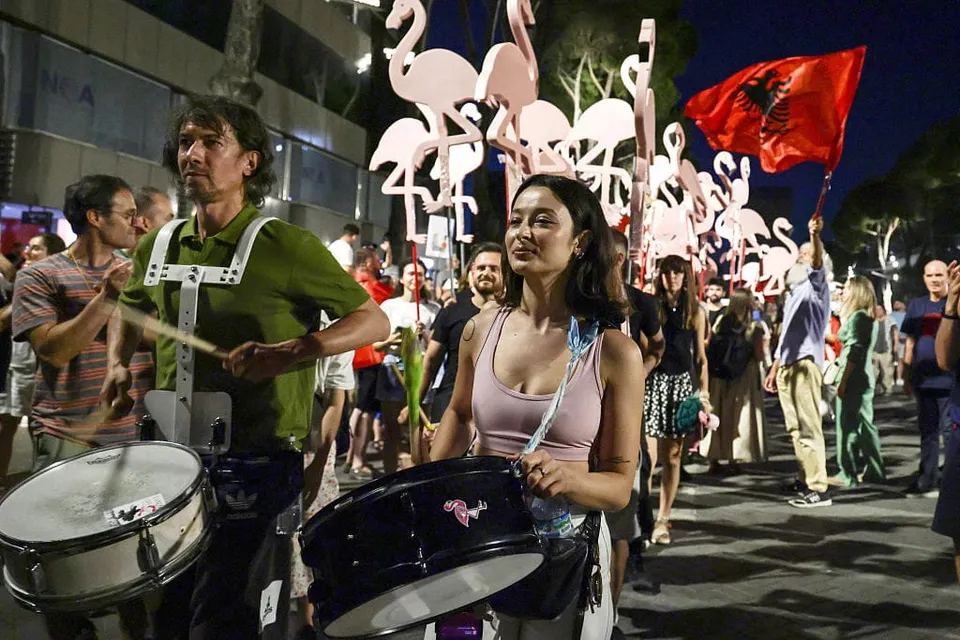
20 days of protest over Kushner development plan on 19 June 2026. Vlasov Sulaj/NurPhoto via Getty

Campaign against luxury developments in protected wetlands has become national revolt over land, corruption and power

On 30 May, residents and activists gathered beside Albania’s Narta Lagoon to protest against the fencing off of Pishë Poro beach, part of the protected Vjosa-Narta landscape.

The confrontation that followed transformed a long-running environmental campaign. Activists say private security guards dragged away a local resident, threw stones and used pepper spray while nearby police failed to intervene. Footage spread rapidly online, drawing young people, members of Albania’s diaspora and many first-time protesters onto the streets.

Flamingos, among the wetlands’ most recognisable inhabitants, appeared across placards and banners. The emerging ‘Flamingo Revolution’ was no longer only about wildlife: it had become a protest against corruption, political capture and a development model campaigners say transfers public land and natural wealth to powerful investors.

At the centre of the dispute are luxury tourism developments associated with US president Donald Trump’s daughter, Ivanka Trump, and her husband, Jared Kushner, planned for Sazan Island and the nearby Zvërnec peninsula, beside the Vjosa-Narta Protected Landscape.

Albanian prime minister Edi Rama has presented the projects as an opportunity to attract investment and turn the country into a high-end tourism destination. Campaigners instead see a system in which environmentally sensitive land is placed at the disposal of wealthy investors, with little meaningful public involvement.

A recent investigation by the Balkan Investigative Reporting Network found that the company developing the Zvërnec resort is registered through a network of Dutch companies and trusts, while its ultimate beneficial owners remain undisclosed. Campaigners say this opacity reinforces concerns about who stands to benefit from the development.

openDemocracy spoke to ornithologist Ledi Selgjekaj about what is already being lost in Vjosa-Narta, and to Lëvizja Bashkë activist Bora Mema, a member of the left-wing Lëvizja Bashkë party, about how the campaign became a wider political movement. The following interviews have been edited for length and clarity.

‘Connected changes that gradually weaken the whole ecosystem’

Ledi Selgjekaj is a biologist and bird expert at PPNEA, the Protection and Preservation of Natural Environment in Albania, the country’s BirdLife partner. She is completing a PhD focused on the behaviour and reproductive success of shorebirds in the Vjosa-Narta Protected Landscape.

You have spent five years monitoring birds in Vjosa-Narta. What changes have you witnessed yourself?

The main disturbance began with the construction of Vlora airport. It fragmented habitats, reduced ecological continuity and affected how species use the wider landscape.

It also limited the space available for wildlife movement, increasing pressure on ground-nesting birds. At the same time, the constant disturbance has affected sensitive species such as flamingos, which have been present for years but have struggled to breed successfully.

Recent works in the area have also led to the destruction of dune habitats, which are crucial for many species.

From a field perspective, these are not isolated impacts. They are connected changes that gradually weaken the whole ecosystem. With the planned resort and further infrastructure, there is a real concern that these pressures will intensify, pushing an already fragile wetland system closer to a point where it can no longer function as it does today.

Flamingos have become the movement’s defining symbol. Has that helped people understand what is at stake, or could the wider ecological damage be overlooked?

Flamingos are striking, familiar and present in large numbers in the Vjosa-Narta wetlands. They are closely tied to the identity of the place and are often seen as part of the landscape itself.

Many people recognise them from photographs and media coverage, making them an immediate and powerful way to connect the public with the wetlands.

In the context of the Albanian protests against recent development projects, the flamingo has come to represent a wider sense of shared natural heritage and concern for the whole ecosystem.

What action is now needed from the Albanian government and European institutions – and what would victory look like?

The European Parliament has already spoken clearly, calling for stronger protection of the Vjosa-Narta wetlands, including the repeal of the 2024 amendments to the Law on Protected Areas and a moratorium on new development in sensitive ecosystems until full compliance with EU nature standards is ensured.

Albania should halt current construction, repeal the recent amendments to the Law on Protected Areas and restore strong legal protection for this network.

Large-scale infrastructure and urban expansion that are incompatible with the ecosystem should be stopped, and decision-making must fully respect biodiversity protection and public participation.

That would represent a victory for the wetlands and the wider movement: a shift away from destructive development towards real protection, where Vjosa–Narta is safeguarded as a functioning natural landscape and conservation, biodiversity and sustainable local livelihoods are prioritised together.

‘People connected the dots’

Bora Mema is an activist with Lëvizja Bashkë, a left-wing Albanian political party that grew out of worker, student and social justice organising.

How did a campaign to protect Albania’s coastline and wetlands grow into a much broader revolt against corruption and political capture?

The campaign grew because the issue at its core is what David Harvey [distinguished professor in anthropology, earth and environmental sciences at the City University of New York] calls “accumulation through dispossession”, the blatant theft of public and private land to hand it over to oligarchs and drug traffickers.

What started as an environmental protest to save the ecosystems and wetlands of Zvërnec and Pishë Poro-Nartë, or the private lands of communities in the village, quickly exposed the deeper corruption of the state. People connected the dots: their protected natural areas were being fenced off and privatised for a $4.5bn luxury resort under the guise of “foreign investment”. Because the movement targets this entire system of looting public wealth, it naturally turned from a local environmental fight into a direct rebellion against three decades of corrupt political capture.

What was the turning point that brought so many young people, members of the diaspora and first-time protesters onto the streets?

The definitive turning point was 30 May 2026. During a peaceful protest against the luxury resort, private security forces violently dragged away and put a gun to the head of a citizen, threw stones and pepper-sprayed, while the state police just stood there and watched.

Activists from Lëvizja Bashkë caught this violence on camera while they supported the community, and the footage spread like wildfire on social media. Seeing state-supported corporate thugs attack peaceful citizens completely shattered public apathy. It pushed Gen Z, members of the diaspora, and thousands of first-time protesters to overcome their fear and take to the streets, turning the flamingo into a radical symbol of resistance.

What have activists achieved so far, and which responses from the government, prosecutors or European institutions came as a result of public pressure?

Public pressure has broken the traditional political narrative and forced the establishment onto the defensive.

First, the government is visibly panicking. Prime minister Edi Rama has tried to downplay the movement by minimising crowd sizes, claiming the project didn’t even exist, and even wearing flamingo-printed T-shirts to try and hijack the symbol.

What happens next? What would victory look like, and how can the movement maintain its momentum beyond this particular development fight?

Victory looks like a complete rejection of the old political duopoly and a total systemic overhaul. It means permanently ending the process of accumulation through dispossession, revoking the “strategic investor” statuses used by oligarchs and money launderers, and ensuring public assets stay in the hands of the citizens. It also means seeing the corrupt ruling class held accountable, which is why people are chanting, “Rama in jail, Berisha in jail!”. [The latter refers to the former prime minister and current opposition leader, Sali Berisha, who has long been accused of links to organised crime and corruption, which he denies.]

To maintain momentum, the movement must stay completely independent from the traditional political establishment. It cannot let itself be co-opted by the mainstream opposition, who are just the other side of the same corrupt coin and initially failed to even oppose the luxury project. They should organise and understand that the power relies on them.

Article by Nandini Naira Archer republished from OpenDemocracy under a Creative Commons Attribution-NonCommercial 4.0 International licence.

Donald Fuhrump says that Amerikkka doesn't bother with crimes or charges anymore, not being 100% Amerikkkan and opposing his real estate intentions is enough.
Donald Fuhrump says that Amerikkka doesn’t bother with crimes or charges anymore, not being 100% Amerikkkan and opposing his real estate intentions is enough.

Continue ReadingFlamingos, Jared Kushner, and Albania’s fight against Trump’s Resorts

‘We Are Being Cooked Alive’: Wildfires Driven by Climate Crisis Ravage Europe

Spread the love

Original article by Jessica Corbett republished from Common Dreams under Creative Commons (CC BY-NC-ND 3.0). 

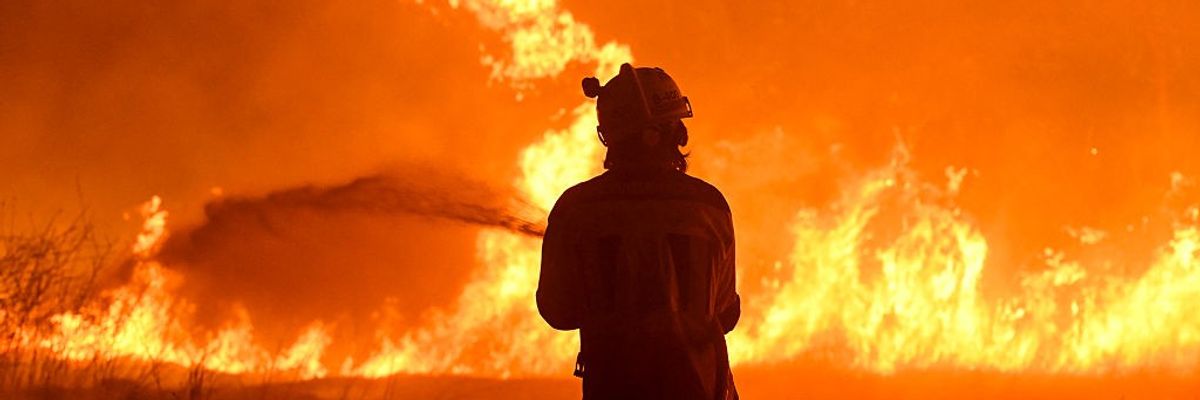
A firefighter works to extinguish a wildfire in the village of Vilaza in northwestern Spain on August 12, 2025.  (Photo: Miguel Riopa/AFP via Getty Images)

Fire-related deaths were reported in Turkey, Spain, Montenegro, and Albania.

With firefighters in southern Europe battling blazes that have killed people in multiple countries and forced thousands to evacuate, Spain’s environment minister on Wednesday called the wildfires a “clear warning” of the climate emergency driven by the fossil fuel industry.

While authorities have cited a variety of causes for current fires across the continent, from arson to “careless farming practices, improperly maintained power cables, and summer lightning storms,” scientists have long stressed that wildfires are getting worse as humanity heats the planet with fossil fuels.

The Spanish minister, Sara Aagesen, told the radio network Cadena SER that “the fires are one of the parts of the impact of that climate change, which is why we have to do all we can when it comes to prevention.”

“Our country is especially vulnerable to climate change. We have resources now but, given that the scientific evidence and the general expectation point to it having an ever greater impact, we need to work to reinforce and professionalize those resources,” Aagesen added in remarks translated by The Guardian.

The Spanish meteorological agency, AEMET, said on social media Wednesday that “the danger of wildfires continues at very high or extreme levels in most of Spain, despite the likelihood of showers in many areas,” and urged residents to “take extreme precautions!”

The heatwave impacting Spain “peaked on Tuesday with temperatures as high as 45°C (113°F),” according to Reuters. AEMET warned that “starting Thursday, the heat will intensify again,” and is likely to continue through Monday.

The heatwave is also a sign of climate change, Akshay Deoras, a research scientist in the Meteorology Department at the U.K.’s University of Reading, told Agence France-Presse this week.

“Thanks to climate change, we now live in a significantly warmer world,” Deoras said, adding that “many still underestimate the danger.”

There have been at least two fire-related deaths in Spain this week: a man working at a horse stable on the outskirts of the Spanish capital Madrid, and a 35-year-old volunteer firefighter trying to make firebreaks near the town of Nogarejas, in the Castile and León region.

Acknowledging the firefighter’s death on social media Tuesday, Spanish Prime Minister Pedro Sánchez sent his “deepest condolences to their family, friends, and colleagues,” and wished “much strength and a speedy recovery to the people injured in that same fire.”

According to The New York Times, deaths tied to the fires were also reported in Turkey, Montenegro, and Albania. Additionally, The Guardian noted, “a 4-year-old boy who was found unconscious in his family’s car in Sardinia died in Rome on Monday after suffering irreversible brain damage caused by heatstroke.”

There are also fires in Greece, France, and Portugal, where the mayor of Vila Real, Alexandre Favaios, declared that “we are being cooked alive, this cannot continue.”

Reuters on Wednesday highlighted Greenpeace estimates that investing €1 billion, or $1.17 billion, annually in forest management could save 9.9 million hectares or 24.5 million acres—an area bigger than Portugal—and tens of billions of euros spent on firefighting and restoration work.

The European fires are raging roughly three months out from the next United Nations Climate Change Conference, or COP30, which is scheduled to begin on November 10 in Belém, Brazil.

Original article by Jessica Corbett republished from Common Dreams under Creative Commons (CC BY-NC-ND 3.0). 

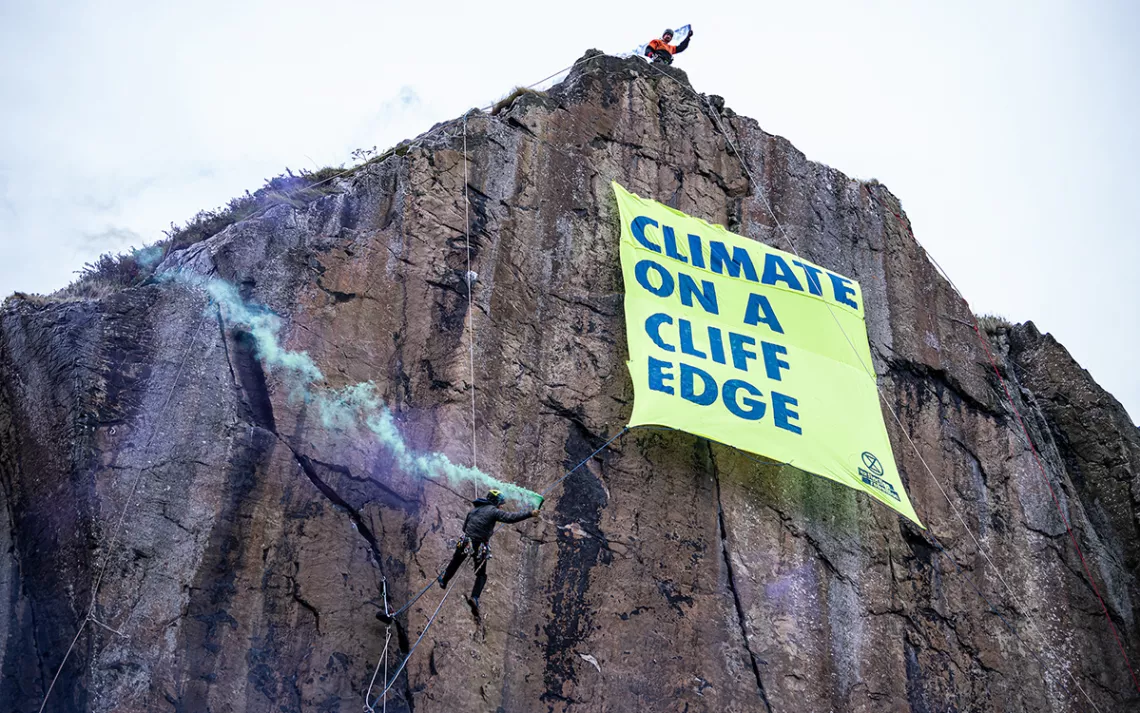
Experienced climbers scale a rock face near the historic Dumbarton castle in Glasgow, releasing a banner that reads “Climate on a Cliff Edge.” One activist, dressed as a globe, symbolically looms near the edge, while another plays the bagpipes on the shores below. | Photo courtesy of Extinction Rebellion and Mark Richards
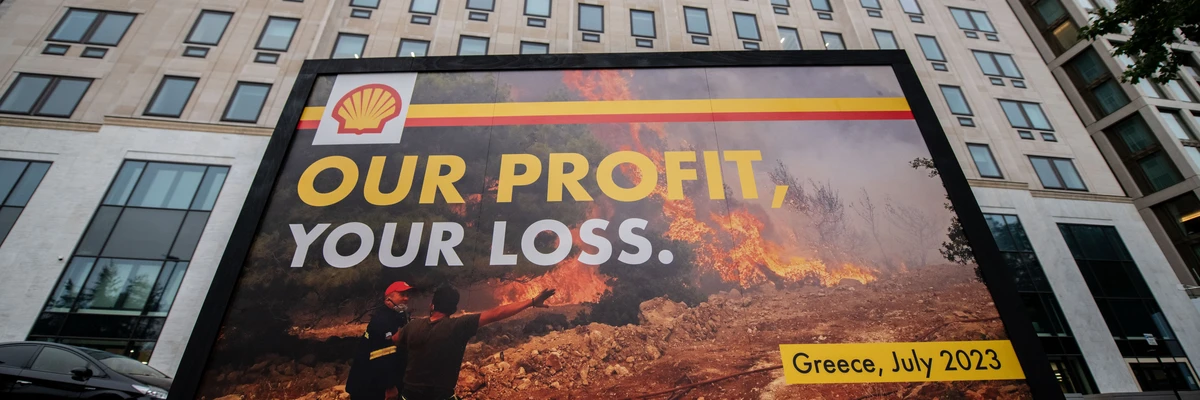
Greenpeace activists display a billboard during a protest outside Shell headquarters on July 27, 2023 in London.
Greenpeace activists display a billboard during a protest outside Shell headquarters on July 27, 2023 in London. (Photo: Handout/Chris J. Ratcliffe for Greenpeace via Getty Images)
Donald Trump urges you to be a Climate Science denier like him. He says that he makes millions and millions for destroying the planet, Burn, Baby, Burn and Flood, Baby, Flood.
Nigel Farage urges you to ignore facts and reality and be a climate science denier like him. He says that Reform UK has received millions and millions from the fossil fuel industry to promote climate denial and destroy the planet.
Continue Reading‘We Are Being Cooked Alive’: Wildfires Driven by Climate Crisis Ravage Europe

Analysis: Record UK wildfires have burned an area twice the size of Glasgow in 2025

Spread the love

Original article by Orla Dwyer, Ho Woo Nam and Tom Prater republished from Carbon Brief under a CC license.

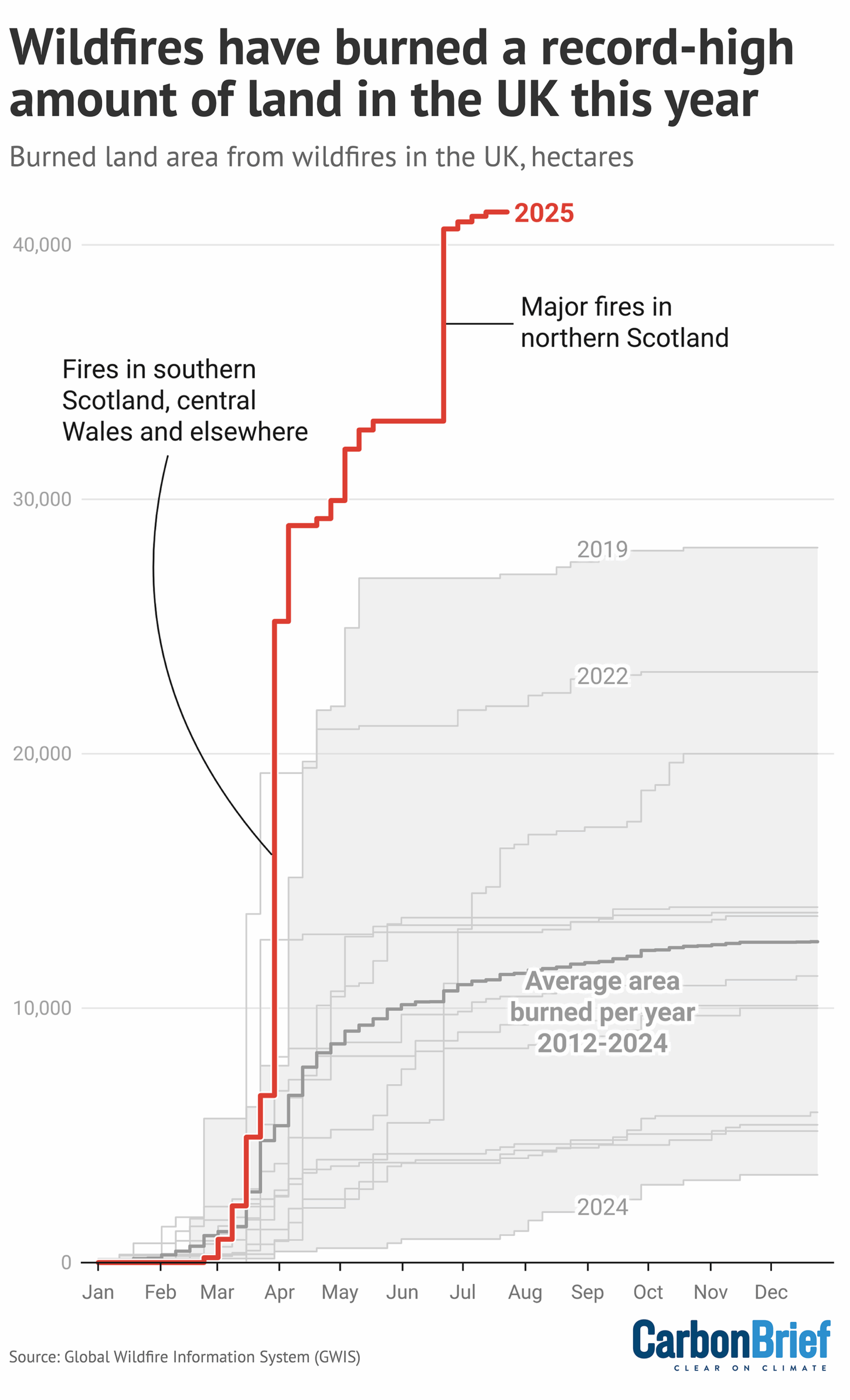
Wildfires have scorched more than 40,000 hectares of land so far this year across the UK – an area more than twice the size of the Scottish city of Glasgow.  

This is already a record amount of land burned in a single year, far exceeding the previous high, Global Wildfire Information System (GWIS) data shows. 

It is also almost four times the average area burned in wildfires by this stage of the year over 2012-24 – and 50% higher than the previous record amount burned by this time in 2019. 

The burned area overtook the previous annual record in April, BBC News reported at the time, and has continued to soar in the months since.

Major wildfires 

The chart below shows that UK wildfires in 2025 so far have already burned by far the largest area of land over any calendar year since GWIS records began in 2012. The previous record year was 2019, followed by 2022, while 2024 saw the lowest area size burned. 

Annual land area burned by wildfires across the UK from 2012 to 2025 (red), alongside the average area burned each year over 2012-24. Source: Global Wildfire Information System.

Climate change can increase the risk and impact of wildfires. Warmer temperatures and drought can leave land parched and dry out vegetation, which helps fires spread more rapidly. Climate change is making these types of extreme conditions more likely to occur, as well as more severe.  

Fire services in England and Wales responded to 564 wildfires from January to June 2025 – an increase from 69 fires in the same period last year, the National Fire Chiefs Council (NFCC) said in a statement in June. 

Most wildfires in the UK are caused by human activity, whether accidental or deliberate, according to the NFCC. Some common ignition sources are disposable barbecues, lit cigarettes and campfires. 

Jessica Richter, a research analyst at Global Forest Watch, says that, while fires are also a key part of some ecosystems, climate change is the “major driver behind the increasing fire activity around the globe”. She tells Carbon Brief: 

“As we see more fires, we’re going to see more carbon being emitted and that’s just going to be, for lack of a better phrasing, adding fuel to the fire.” 

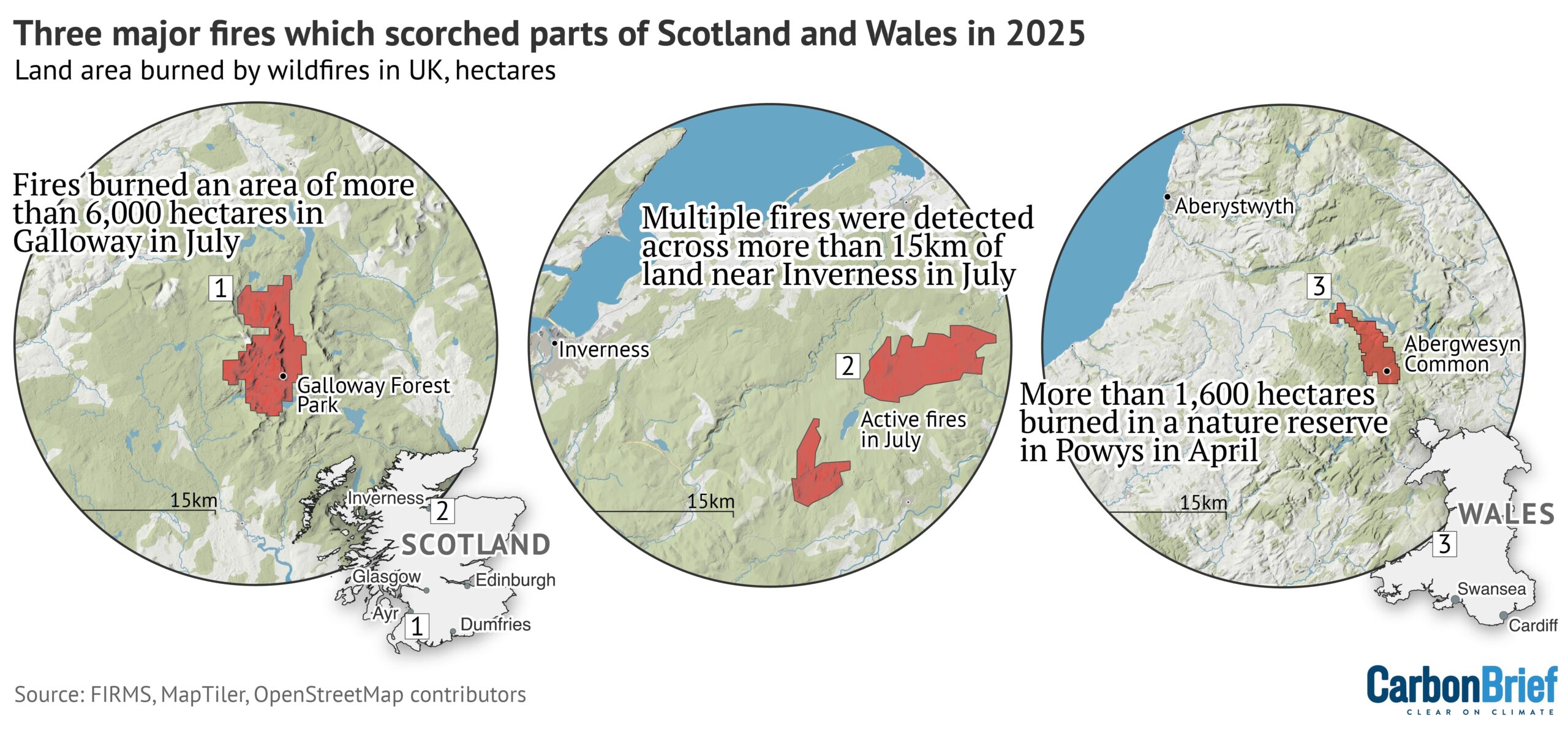
Examples of 2025 wildfires around Galloway (1) and Inverness (2) in Scotland, and a wildfire in Powys (3) in Wales. Source: FIRMSMapTilerOpenStreetMap contributors.

The UK has also recorded its highest-ever wildfire emissions this year, according to Copernicus, which was “primarily driven” by major wildfires in Scotland from late June to early July.

These were the largest wildfires ever recorded in the country, reported the Scotsman. They “ravaged” land in Moray and the Highlands in the north of the country, the newspaper added. 

Scotland experienced an extreme wildfire in Galloway Forest Park in April, which was “so intense it could be seen from space”, the Financial Times said. 

Elsewhere, in April, the Belfast News Letter reported that firefighters tackled almost 150 fires on the Mourne Mountains in Northern Ireland. 

More recently, BBC News reported that firefighters in Dorset, England received “non-stop” wildfire calls in the first weekend of August, with one blaze “engulf[ing] an area the size of 30 football pitches”. 

Wildfires have also caused devastation across many parts of Europe in recent weeks – including AlbaniaCyprusFranceGreeceSpain and Turkey – as well as in the US and Canada

Words by Orla Dwyer. Analysis by Ho Woo Nam. Charts by Tom Prater.

Original article by Orla Dwyer, Ho Woo Nam and Tom Prater republished from Carbon Brief under a CC license.

Media reaction: The 2025 Texas floods and the role of climate change Extreme weather 10.07.25

Children born in 2020 will face ‘unprecedented exposure’ to climate extremes Attribution 07.05.25

Two-thirds of global warming since 1990 caused by world’s ‘wealthiest 10%’ Attribution 07.05.25

Global soil moisture in ‘permanent’ decline due to climate change Drought 27.03.25

Nigel Farage urges you to ignore facts and reality and be a climate science denier like him. He says that Reform UK has received millions and millions from the fossil fuel industry to promote climate denial and destroy the planet.
Donald Trump urges you to be a Climate Science denier like him. He says that he makes millions and millions for destroying the planet, Burn, Baby, Burn and Flood, Baby, Flood.
Continue ReadingAnalysis: Record UK wildfires have burned an area twice the size of Glasgow in 2025

Morning Star Editorial: Starmer copies the Tories in misrepresenting migration

Spread the love

https://morningstaronline.co.uk/article/starmer-copies-tories-misrepresenting-migration

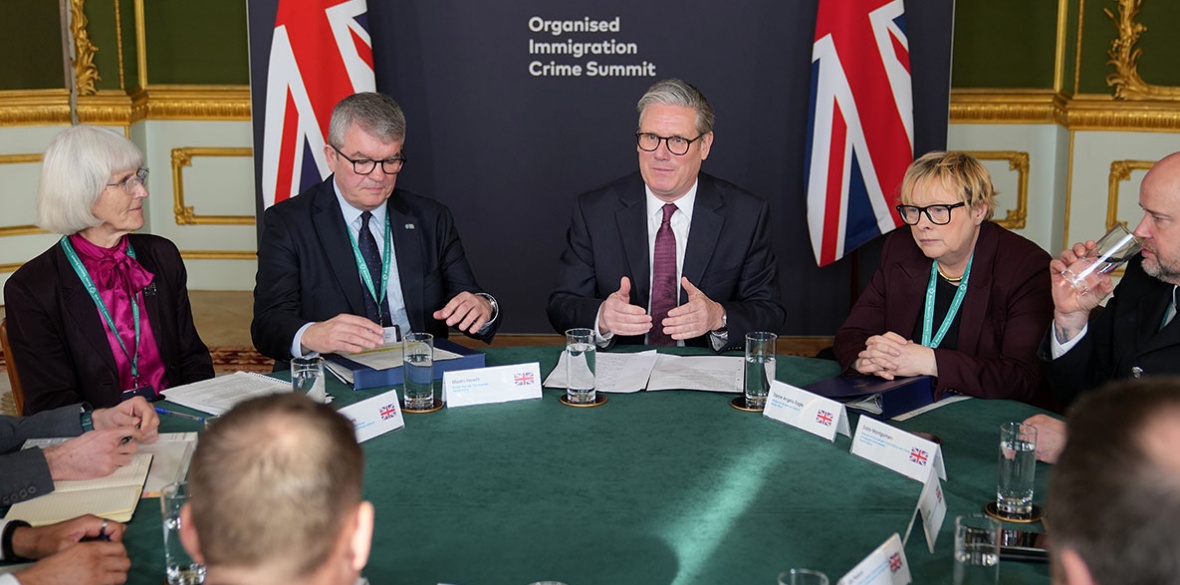
Prime Minister Sir Keir Starmer leads a roundtable discussion at the Organised Immigration Crime Summit at Lancaster House in central London, March 31, 2025

KEIR STARMER’S anti-refugee summit picks up where the Tories left off in giving unauthorised migration exaggerated status as some kind of national crisis.

Just as Rishi Sunak penned a joint article with Italy’s far-right Prime Minister Giorgia Meloni calling for a Europe-wide crackdown on irregular arrivals, Meloni took centre-stage by video link today, citing Italy’s use of a third-country processing hub in Albania as a model increasingly adopted across the continent.

Meloni depicts Italy as a pioneer. It is, though not in a good way. It successfully pushed the EU to abolish its last official search-and-rescue service in the Mediterranean nearly five years ago and it has led the way too in prosecuting civilian search-and-rescue missions it smears as people-smugglers.

As the Public and Commercial Services union and Care4Calais recently urged, the easiest way to end criminal people-smuggling operations would be to provide safe routes for people to claim asylum, perhaps through an extension of the scheme for Ukrainian refugees to people of other backgrounds.

There is no reason why victims of one war should be privileged over victims of others, and Britain bears responsibility for many of those wars. Yvette Cooper’s own reference to gangs working from the “hills of Kurdistan to the money markets of Kabul” cites two countries devastated by invasions we took part in, Iraq and Afghanistan.

The international refugee crisis is driven by war, poverty and climate change.

Article continues at https://morningstaronline.co.uk/article/starmer-copies-tories-misrepresenting-migration

‘A wasted opportunity to do what is really needed’

Keir Starmer warns against following the https://onaquietday.org blog.
Continue ReadingMorning Star Editorial: Starmer copies the Tories in misrepresenting migration