https://morningstaronline.co.uk/article/weekend-protest-and-survive-responding-climate-crisis

As a new report reveals how dire the climate situation is now, other recent research demonstrates how activism – namely Extinction Rebellion and the school strikes – has already forced governments into action, writes IAN SINCLAIR
“WE are on the brink of an irreversible climate disaster.” This is the terrifying opening sentence of the 2024 State Of The Climate report, co-written by a team of leading climate experts and published in the Oxford University Press academic journal BioScience.
The highly respected authors — including Prof William J Ripple, Prof Johan Rockstrom, Prof Michael E Mann and Prof Naomi Oreskes — note current policies mean humanity is on track for 2.7°C of warming by 2100. It is “a dire situation never before encountered in the annals of human existence.”
Out of 35 planetary vital signs, the report warns that 25 “are at record levels,” with the warming climate potentially causing “many millions of additional deaths by 2050” and displacing hundreds of millions, perhaps even billions, of people. According to the authors, “more and more scientists have begun to research the possibility of societal collapse.”
In the face of this planetary catastrophe, the world has made “only very minor headway on climate change,” the experts conclude. Why? “In part because of stiff resistance from those benefitting financially from the current fossil-fuel-based system.”
Like much of the news and science published about the climate, the report makes for chilling reading. However, a new journal article gives me a tiny bit of hope.
Published in Climate Policy journal, the paper investigates the dynamics of competing climate policy narratives and the impact of climate protest in Britain between 2017 and 2022.
Analysing parliamentary debates and interviewing politicians and civil servants, Dr Nicole Nisbett from the University of Leeds and her co-authors conclude: “Climate movements can affect a shift in climate policies through increasing political salience of climate change and changing the frames used to negotiate climate policies.”
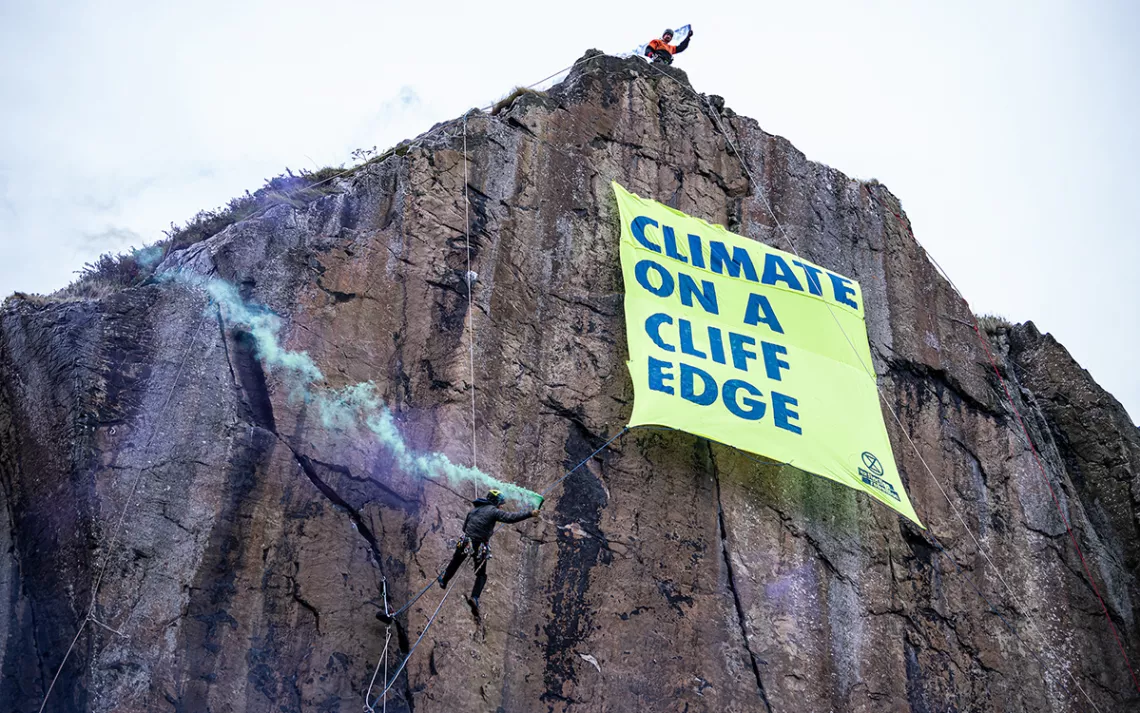
They note there was a shift to a “pro-climate action narrative” in 2018-19 “when Britain experienced unprecedented levels of climate protests.” This, of course, was the time of Extinction Rebellion (XR) and the increasingly large nationwide school strikes inspired by Swedish activist Greta Thunberg.
The shift affected both the governing Conservative Party and the opposition Labour Party. The flagship British climate policies during this period, including the net zero by 2050 legislation passed in June 2019 and the Labour Party’s Green New Deal launched in March 2019, “were aided by climate protests,” the paper concludes.
…
Climate Action or Delay: The Dynamics of Competing Narratives in Britain’s Political Sphere and the Influence of Climate Protest by Nicole Nisbett et al. is published in the Climate Policy journal. [It’s available for free download, can be searched using the title.]
https://morningstaronline.co.uk/article/weekend-protest-and-survive-responding-climate-crisis
dizzy: The 2024 State Of The Climate report warning of “a dire situation never before encountered in the annals of human existence”, ‘potentially causing’ “many millions of additional deaths by 2050” and ‘displacing hundreds of millions, perhaps even billions, of people’ are consistent with the warnings of imprisoned activist Roger Hallam.