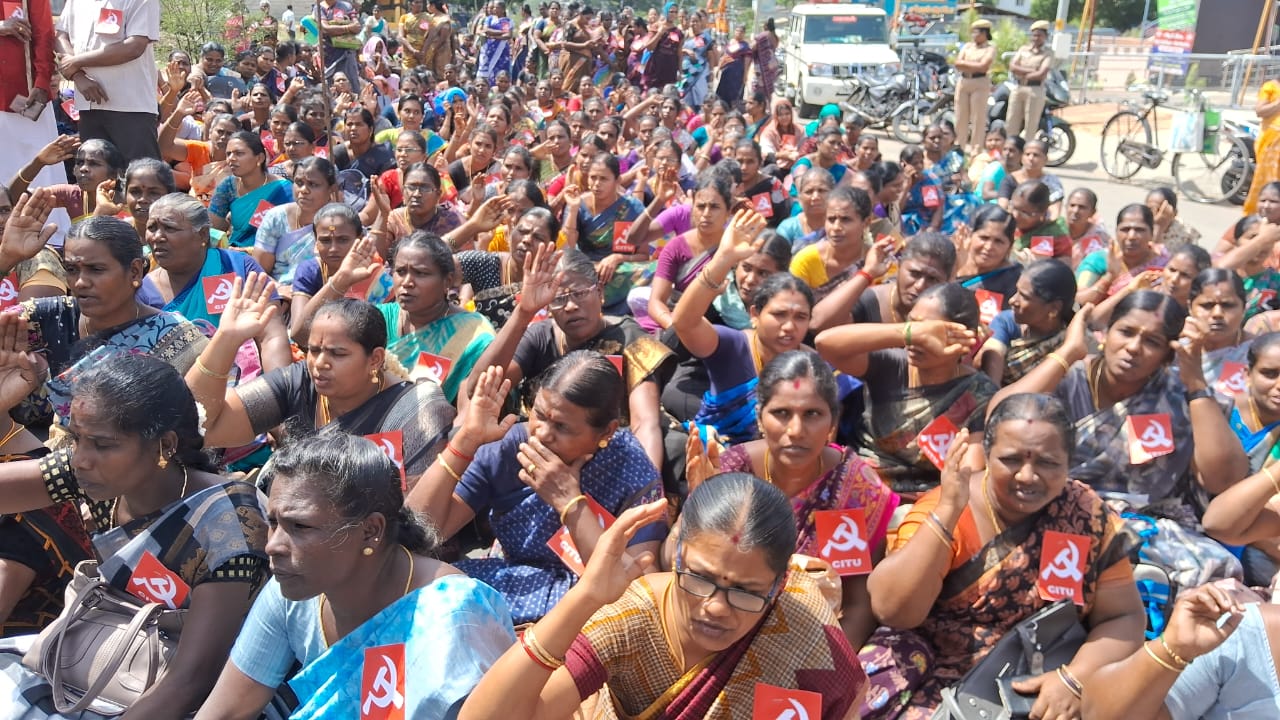
Journalists decry escalating state attacks on press freedom in India

Spread the love

Original article by Abdul Rahman republished from peoples dispatch under a Creative Commons Attribution-ShareAlike 4.0 (CC BY-SA) license.
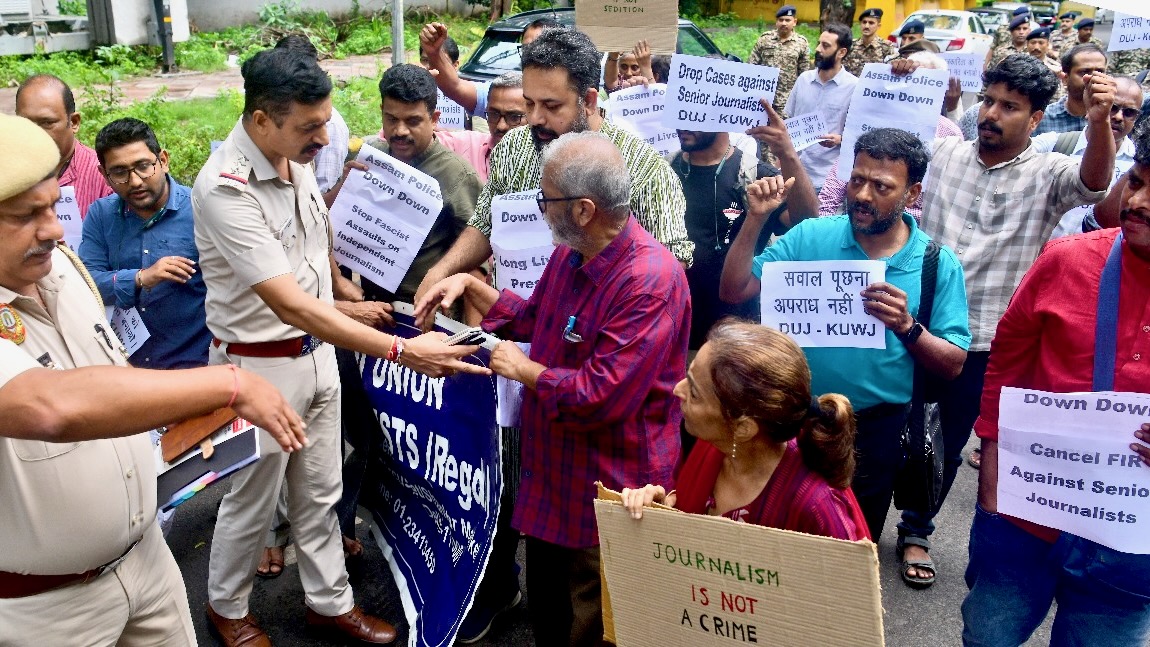
Journalists and activists protest in Delhi against the state’s attacks on press freedom. Photo: DUJ

The ultra-right-wing Bharatiya Janata Party (BJP) governments in various provinces in India have used sedition charges against journalists for their critical reporting on policies and actions.

Members of the Delhi Union of Journalists (DUJ) and the Kerala Union of Working Journalists (KUWJ) held a protest in India’s capital, New Delhi, on Wednesday, August 27, denouncing the rising cases of state-sponsored attacks on journalists in the country.

The protesters also demanded the immediate withdrawal of all the false charges against senior journalists Siddharth Varadarajan, Karan Thapar, and Abhisar Sharma, calling them blatant attacks on media and press freedom in the country.

The DUJ and KUWJ warned that if their cases are not withdrawn and such attacks on press freedom continue in the future, journalists in the country will take larger public action and flood the streets in protest.

Siddharth Varadarajan, founding editor-in-chief of the independent newsportal The Wire, Karan Thapar, senior editor with The Wire, and another senior journalist, Abhisar Sharma, were booked by the police in India’s north-eastern state of Assam and charged with sedition and other criminal activities.

The case against Abhisar is related to his reporting on his YouTube channel on the charges of corruption against the chief minister of Assam, Himanta Biswa Sarma. Abhisar also talks about the chief minister’s openly sectarian policies and provocative language against Muslim minorities in his video.

Varadarajan and Thapar were booked first in July and then again in August by the Assam police for their critical reporting on Operation Sindoor, India’s military operation against Pakistan in May which created a war-like situation between the two nuclear-powered neighbors.

Varadarajan and Thapar went to the court demanding the dismissal of the cases against them. While the matter was still under consideration by the court, the Assam police filed fresh charges against them. The Supreme Court of India (SCI) provided the journalists temporary protection from any action.

Abhisar Sharma also received interim relief from the SCI on Thursday. However, in both cases the SCI failed to quash the First Information Reports (FIRs), the official document in India that initiates criminal proceedings.

BJP’s attempts to silence critical voices

What the DUJ calls “attempts to browbeat and harass the media into submission”, has been a policy of the BJP government to silence critical voices in the country.

Assam is ruled by the same BJP which runs the union government in Delhi.

Several other journalists have faced false charges in the state in the last few years. In March of this year, Assam witnessed large-scale protests against the arrest of senior journalist Dilwar Hussain Mazumdar, who was arrested after he tried to expose corruption in a cooperative bank.

The union government has also used its agencies to raid and shut down independent newsportals, such as Newsclick, and has threatened others, including the Wire, to try to silence them.

Reflecting on the state of media in India earlier this year, Reporters without Borders (RSF) demanded that the state must “end media raids and arrests of journalists, often carried out under the guise of anti-terrorism laws or tax regulations.”

RSF had noted that “this judicial harassment has reached a critical level for independent news media”, with authorities repeatedly misusing the legal provisions.

Misuse of sedition

Apart from anti-terrorism laws and allegations of financial irregularities, the BJP government has also used sedition, a colonial era offense which remained a part of India’s legal codes even decades after independence. It has been frequently invoked against journalists questioning government policies.

Following massive public outcry and court interventions, the BJP government promised to scrap it in 2023, underlining its “colonial origin”. However, within months, the same government brought it back with a new name under the new set of legal codes called Bharatiya Nyaya Sanhita (BNS), promulgated in 2024.

The Wire has filed a fresh petition in the court to remove the sedition charges from the new code (section 156 of the BNS).

The DUJ hopes that the section “will be struck down so it can no longer be used to arrest, imprison, browbeat and harass those who dare to speak truth to power.”
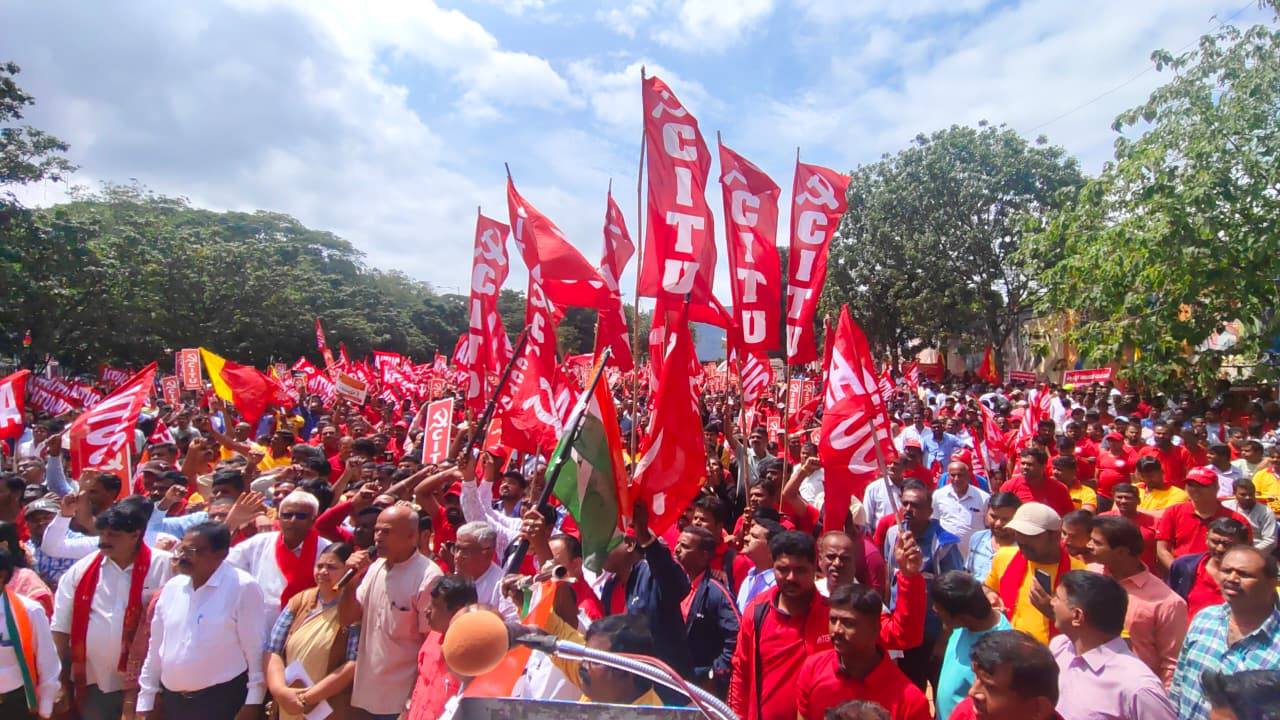
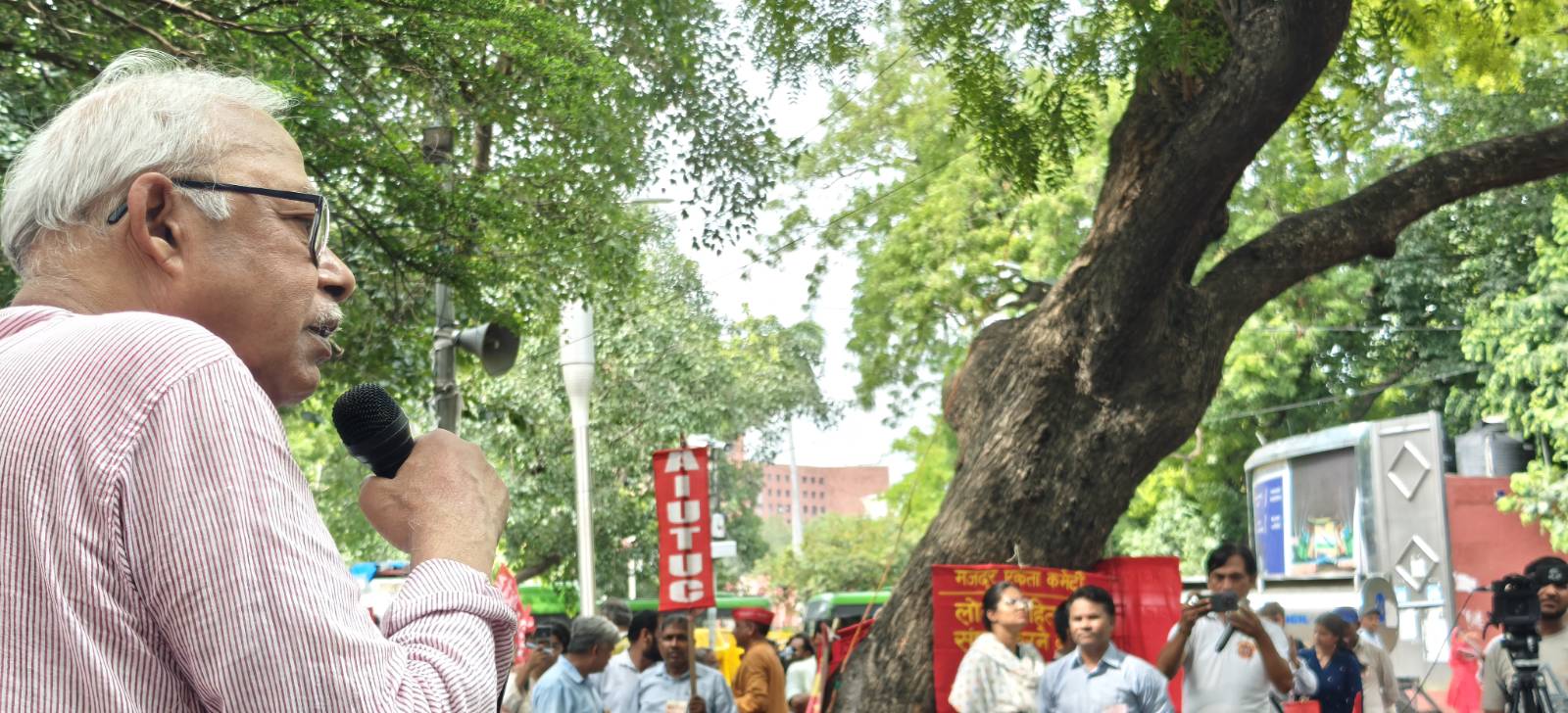
Continue ReadingJournalists decry escalating state attacks on press freedom in India

250 million Indian workers and farmers on the streets in a national strike

Spread the love

Original article by Abdul Rahman republished form peoples dispatch under a Creative Commons Attribution-ShareAlike 4.0 (CC BY-SA) license.

The strike was called by the trade unions and farmers groups against anti-workers labor codes and failures of the government to enact a legal support price for farm products.July 09, 2025 by Abdul Rahman

250 million Indian workers and farmers on the streets in a national strike

National strike against the “anti-worker” labor codes of the Modi government on July 9. Photo: CPI(M)

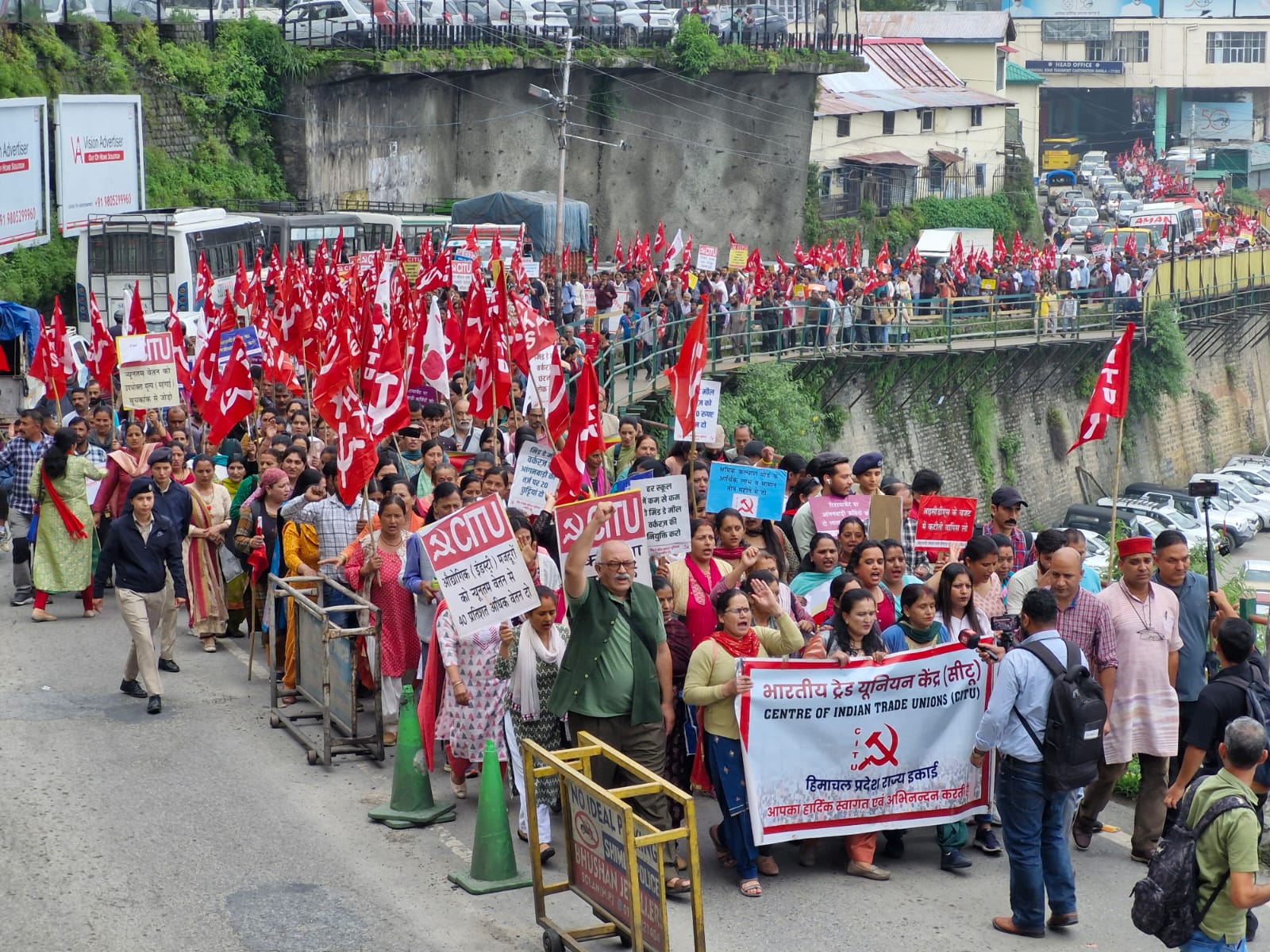
Millions took to the streets all over India on Wednesday, July 9, to observe a national strike call made by Central Trade Unions (CTU). They are striking against the anti-worker policies adopted by the ultra-right-wing government in the country. 

CTU is a platform of all the major trade union federations in the country, spanning the ideological and political spectrum. It includes the Center for Indian Trade Unions (CITU), the All India Trade Union Congress (AITUC), the Indian National Trade Union Congress (INTUC) and several others. 

The strike was also supported by all the major groups of farmers, students, women, and various professional unions such as teachers, journalists, and IT employees in the country. 

According to various estimates, more than 250 million workers and farmers – both in organized and unorganized sectors – directly participated in the strike and protests across the country. 

Workers in other organized sectors such as ports, airports, and banking also participated alongside those in various public sectors.

The strike affected most of the industrial activities in the country, particularly industries related to mining.

#Strike #GeneralStrike बी टी आर वाडको एम्पलाइज यूनियन के साथी अपनी कंपनी एस एफ सी सॉल्यूशन साहिबाबाद के गेट पर हड़ताल को कामयाब बनाते हुए। pic.twitter.com/311IoxICHS

— CPIM DELHI (@CPIMSTATEDELHI) July 9, 2025

In several places, workers blocked the movement of trains, blocked highways, and picketed factory gates to mobilize greater support. In some cases, such as the Kochi refinery in the southern state of Kerala, workers defied court orders and observed the strike.

Picket lines stand strong and militant in front of the factory gate.#9thJulyGeneralStrike pic.twitter.com/V2a33uoQT9

— CITU CENTRE (@cituhq) July 9, 2025

A total shut down of all major business was observed in various states in the country such as Kerala, Tripura, Bihar, Jharkhand, and others.

Anti-worker labor codes must be withdrawn

The workers were demanding immediate withdrawal of the new labor codes enacted by the ultra-right-wing government led by Narendra Modi at the center in 2020. CTU claims the four new labor codes are anti-worker, depriving them of their basic rights, including the right to collective bargaining, which was won through a historic and painful worker’s struggle.

The other major demands include: 

  • The end of the privatization and contractualization of jobs
  • A national minimum wage of Rs. 26,000 (USD 303)
  • Improvements in working conditions across all sectors for all kinds of workers

Trade union workers take out a march in West Bengal. #GeneralStrike #StrikeHard pic.twitter.com/hxrTd0AoYY

— CPI (M) (@cpimspeak) July 9, 2025

The strike also supported the demands raised by the country’s major farmers groups, led by the Samyukta Kisan Morcha (SKM), for a legal minimum support price for all farm produce, the waiving of loans for farmers, an end to all forced land acquisition, and better employment opportunities.

The strike was originally scheduled for May 19. It had to be postponed following the war-like situation in the region created after India attacked several locations inside neighboring Pakistan, accusing it of supporting armed groups who carried out attacks on tourists in Pahalgam.

Popular action defeats government lies

A central protest rally was held in the national capital Delhi. The protest was attended by all the constituents of CTU and SKM, the farmers collective which has extended support to the strike.

Millions of workers, farmers strike in India to protect their basic rights, livelihoods
CPI(M) Politburo Member and CITU General Secretary Tapan Sen addresses a strike demonstration in Jantar Mantar, New Delhi. Photo: CPI (M)

Addressing the rally, Tapan Sen, general secretary of CITU and a member of the Communist Party of India (Marxist) polit bureau, claimed that the success of the strike demolishes the myths created by the Modi government about the so-called economic prosperity his government’s policies have created.

Millions strike in India
Strike demonstration in Shimla, Himachal Pradesh. Photo: CPI (M)

Most Indians today are struggling to find a decent source of livelihood and those who have one are struggling to protect it from the effects of the various wrongful and pro-corporate policies of the Bharatiya Janata Party (BJP)-led government, Sen underlined.

The lies about India being the third or fourth largest economy in the world, propagated by the present government in the country and magnified by the complicit media, have been exposed by the sheer number of people who participated in today’s strike. It establishes the fact that under Modi’s decade-long rule the condition of the working classes in India has gone from bad to worse, Sen told the protesters gathered at the rally.

Millions strike in India workers and farmers
Photo: CPI(M)

Sen also warned the government against going ahead with the proposed trade deal with the US, claiming that would further compromise the interest of workers and farmers in India.

Amarjeet Kaur, general secretary of the AITUC, claimed that the BJP used pro-government unions to divide the working classes in the country and falsely called the strike “illegal”.

“The attempts to divide the working class, so that the interest of its corporate bosses are protected, was defeated by the successful strike” Kaur declared. She noted that this was the fourth such strike since 2020 and more such strikes will happen in the future, with more intensity, if the government fails to correct its ways and take back the four draconian labor codes, and enact laws which really benefit the working classes of this country.

Original article by Abdul Rahman republished form peoples dispatch under a Creative Commons Attribution-ShareAlike 4.0 (CC BY-SA) license.

Continue Reading250 million Indian workers and farmers on the streets in a national strike