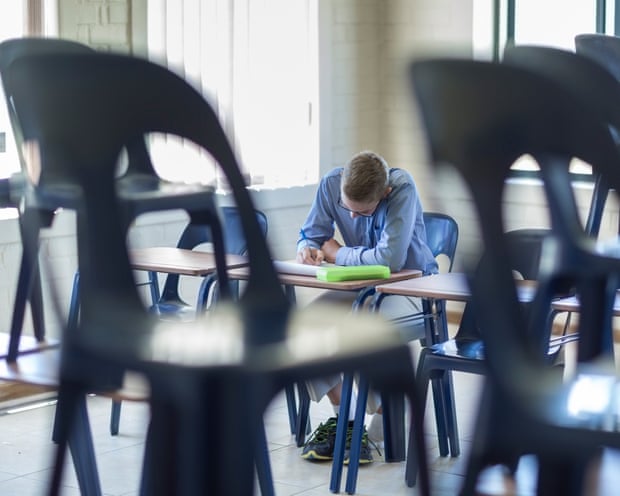
The use of isolation, and in particular isolation booths, has become a growing source of concern among some parents. Picture posed by model. Photograph: Westend61/Getty Images
Children with special educational needs more than twice as likely to be put in isolation, say Manchester researchers
One in 12 secondary pupils report being put into school isolation rooms at least once a week where they often spend in excess of eight hours, missing more than a full day of lessons, according to research.
Children with special educational needs were more than twice as likely to be placed in isolation, otherwise known as internal exclusion, while students from low-income backgrounds were also disproportionately affected.
Pupils on free school meals were more than one-and-a-half times more likely to be placed in isolation than their wealthier peers, researchers found from self-reported data provided by pupils.
Children who identified as LGBTQ+ were nearly twice as likely to be in isolation, while Black, Asian and mixed heritage children were also more likely to be in isolation than their white British peers, the research from the University of Manchester found.
Keir Starmer says that the Labour Party under his leadership is intensely relaxed about assaulting those least able to defend themselves – the very poorest and most vulnerable.
dizzy: While they are in a very vulnerable situation, I would suggest that pupils try to pursue their human rights in such circumstances. They should not be – but of course are – subjected to arbitrary punishment without a fair hearing and without being advised that they have any option to object, defend themselves or appeal. Human rights apply to all including school students.
BLACK workers are more than 50 per cent more likely to be employed on exploitative zero-hour contracts than white workers, new TUC analysis reveals.
The union body published the research showing how black workers are bearing the brunt of insecure work today as delegates gather for TUC black workers’ conference.
The analysis also found that nearly four in 10 BME (black and minority ethnic) workers are also at risk of unfair dismissal, due to having been with their employer for less than two years.
Black workers are also overrepresented in four of the five occupations with the highest number of workers on zero-hours contracts.
This is most stark in social care, where one in 15 is employed, compared to one in 50 white workers.
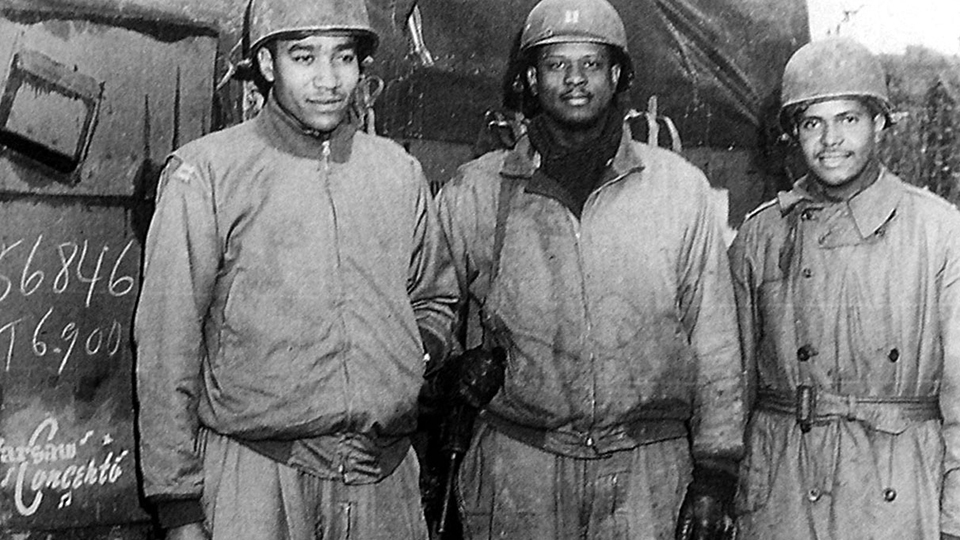
Captain Ivan Harrison, Captain Irvin McHenry, and 2nd Lieutenant James Lightfoot of the 761st Tank Battalion (Photo: US Army)
The US Army’s all-Black unit has gone down in history for heroism and are referred to by some as the “original Black Panthers”
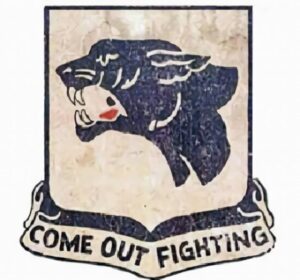
The US Army’s 761st Tank Battalion, the first all-Black tank unit to see combat during World War II, has gone down in history as “one of the most effective tank battalions” during the war, leaving a legacy of fighting Nazis and liberating concentration camps. Yet due to the realities of racism and segregation in the United States, back home, these Black soldiers were treated like second class citizens. With a bold logo of a snarling black Panther emblazoned with the motto “Come Out Fighting,” this all-Black unit is occasionally referred to as the “original Black Panthers.”
Shoulder sleeve patch of the United States 761st Tank Battalion (Photo: US Military)
Heroism abroad, oppression at home
The US Army did not officially desegregate until President Harry Truman signed an executive order after World War II. The Black soldiers of the 761st Tank Battalion were not allowed to serve in the same units as white soldiers. The Battalion’s soldiers also had to train in installations located throughout the highly segregated US South, in states such as Kentucky, Louisiana, and Texas, still under the shadow of Jim Crow.
Institutional racism characterized much of the training experience of the 761st Tank Battalion. Training for the men of the 761st lasted for almost two years, yet white units were sent overseas after far less training. As a result, the 761st Tank Battalion, which had been originally created for the purpose of maintaining support within the Black community for the WWII war effort, developed into one of the better trained units in the army and was later celebrated for its heroism.
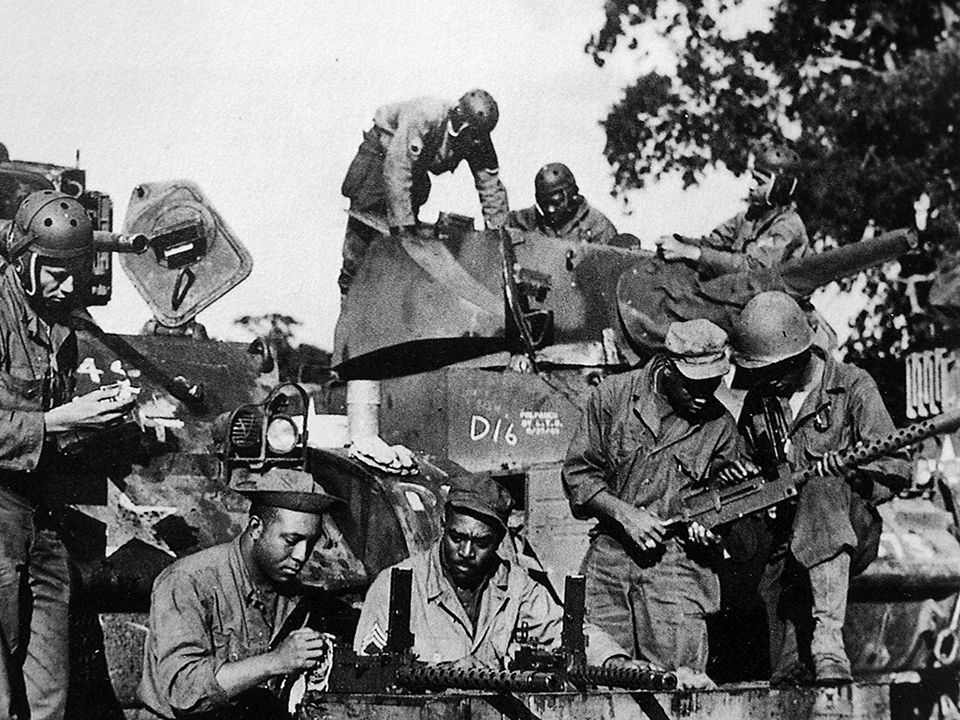
61st Tank Battalion preparing for combat (Photo: US Army)
“This was [US Army General George] Patton’s best tank unit and they didn’t get any recognition because whites did not look upon blacks as having any competence as fighting men,” writes athlete and author Kareem Abdul-Jabbar in his book about the unit, “Brothers in Arms.”
The soldiers of the 761st Battalion were subject to racist violence from their white fellow soldiers. A bloody “race riot” broke out while 761st soldiers were in training in Alexandria, Louisiana, after Black soldiers from Northern states, unused to the violence of the Jim Crow South, reacted to the brutal arrest of a fellow Black soldier by white military police. Soldiers in the 761st were incensed at the racist violence, and went as far as to commandeer six tanks and a half-track, but were eventually persuaded to stand down by their commanding officer, Lieutenant Colonel Paul Bates.
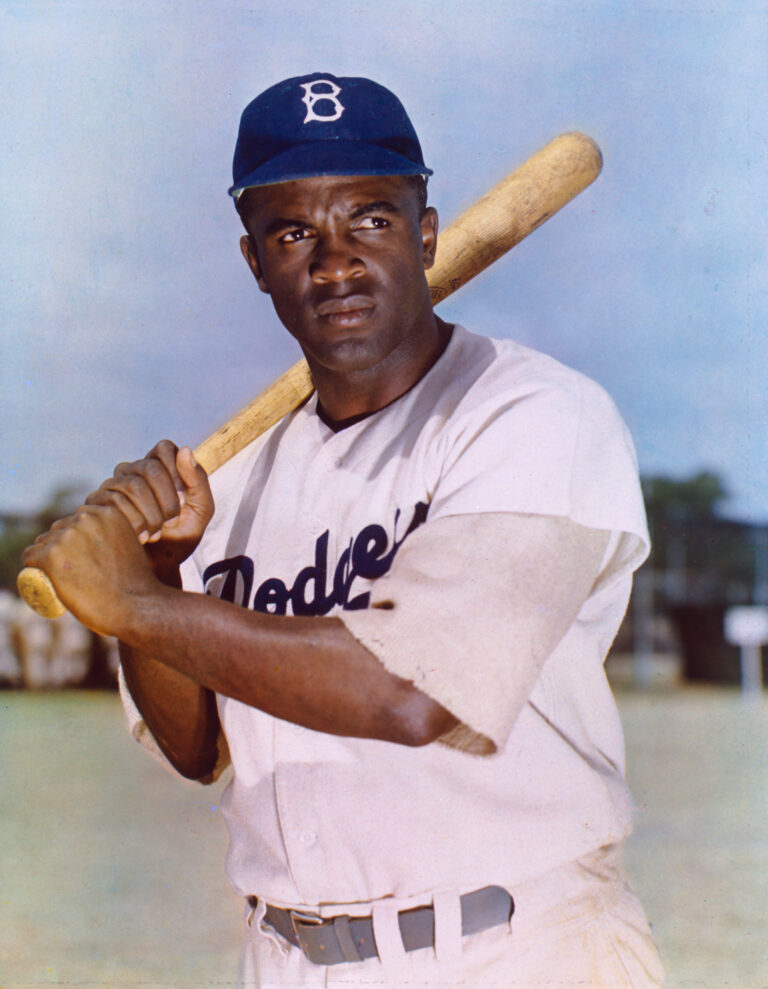
The most famous member of the 761st Battalion was Jackie Robinson, who would go on to become the first Black player in Major League Baseball, heralding the end of racial segregation in professional baseball in the US. During 761st’s training in Texas, a White bus driver told Robinson to move to sit at the back of the bus, which Robinson refused—a move that resulted in his arrest. Lieutenant Colonel Bates refused to consider the court martial charges against Robinson. Robinson was subsequently transferred to the 758th Tank Battalion, also an all-Black unit.
761st Battalion member Jackie Robinson would go on to become the first Black player in Major League Baseball (Photo: National Portrait Gallery, Smithsonian Institution)
761st breaches Nazi defenses
After training for two years in Texas, 761st was finally deemed ready for deployment overseas in 1944. The unit was assigned to General George Patton‘s Third Army. As the unit was about to enter into combat, Patton, himself white, made a speech to bolster their confidence, claiming that “Everyone has their eyes on you and is expecting great things from you. Most of all your race is looking forward to your success.” However, Patton expressed doubts about their abilities to his fellow officers, remarking that “They gave a good first impression, but I have no faith in the inherent fighting ability of the race.”
The 761st would go on to serve in the infamous Battle of the Bulge, the last major German offensive on the Western Front, in which it opened the way for the US 4th Armored Division into Germany, during an action which breached the Nazi German defensive Siegfried Line, rapidly advancing into the Reich. The 761st became one of the first US units to reach Steyr, Austria, which became a meeting point between the Black tank battalion and the Soviet Red Army on May 9, 1945.
Seeing Black soldiers rise out of their tank hatches reportedly put a unique terror into the hearts of the ultra-racist German Nazi soldiers.
Liberation of Gunskirchen camp
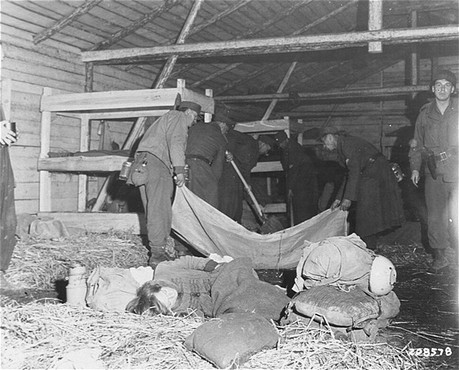
The 761st Tank Battalion, alongside the 71st Infantry Division, liberated the Gunskirchen concentration camp in Austria on May 4, 1945, which Nazi guards had fled days before. Captain J. D. Pletcher, a member of the 71st Infantry, recounted his experience at Gunskirchen, “When the German SS troops guarding the concentration camp at Gunskirchen heard the Americans were coming, they suddenly got busy burying the bodies of their victims—or rather, having them buried by inmates,” Pletcher recounted.
“Skin and bone… skin and bone and filthy rags and bodies crawling with vermin… row on row, endless… filling the square. And not a sound. Not one human sound came from those thousands of throats. Perhaps they hadn’t the strength to speak, even in gratitude. Perhaps words of thanks were long forgotten… forgotten under the lash and the pistol-butt, the abysmal degradation.”
Medical corpsmen of the US 71st Infantry Division look on as captured German soldiers remove bodies from inside a barracks in the liberated Gunskirchen concentration camp (Photo: National Archives and Records Administration, College Park, MD)
It was only on January 24 1978 that the 761st Tank Battalion was awarded the Presidential Unit Citation by then-President Jimmy Carter for their service during World War II. Many individual members of the battalion also received individual accolades, including one Medal of Honor, eleven Silver Stars and around 300 Purple Hearts.
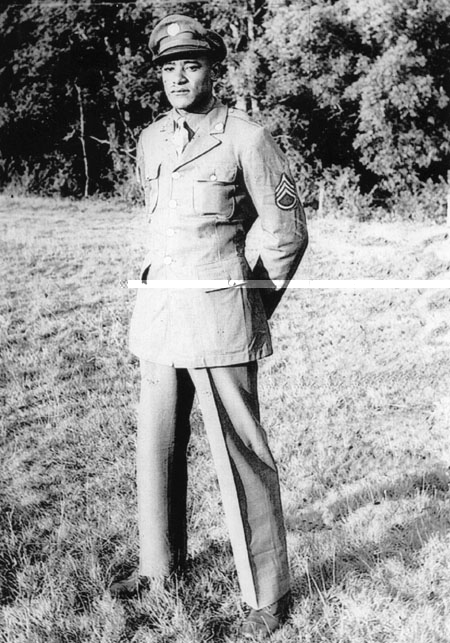
761st Tank Battalion staff sergeant Ruben Rivers was posthumously awarded the Medal of Honor, the nation’s highest military decoration for valor, his actions on November 16–19, 1944 in France, during which he was killed in combat.
The 761st Tank Battalion was historic, as a Black unit striking fear into the hearts of Nazis and liberating victims of the most extreme forms of fascist violence. And yet, the stories of the soldiers’ training period and their challenges of being recognized for their bravery after the war are yet another example of the deep legacy of racism in the United States itself. Recounting the unique story of the 761st becomes even more crucial when marking Black History Month this February, and recognizing the long legacy of Black struggle against racism and white supremacy, at home and abroad.
Mainline media are being fundamentally dishonest in presenting the killing of Chris Kaba. There is a concerted attempt to further excuse armed police from killing people, that is what it’s about. For example, a hard traffic stop is presented as a traffic stop. A hard traffic stop is an intentional crash to sandwich a car between 2 others front and back. If I was subjected to a hard stop, I would then expect to be killed by armed men (police or army) and it’s certainly not unreasonable or unexpected to try to escape.
Deputy Labour Party Leader Angela Rayner calls for police to kill and harass innocent people.
You already don’t need to be armed to be killed by armed police in UK. It helps no end if you’re black but I’ve know people to be killed because of their names. I don’t regard myself as black but can get a very deep tan. My father was once told to “Get back to where you came from” to which he replied “What, Ely?”. Ely is an area of Cardiff.
It’s not that difficult to ram hard into the back of the car in front – it happens many times every day.
Corbyn to carry the radical spirit of his tenure as Labour leader by fighting for his Islington North seat as an independent
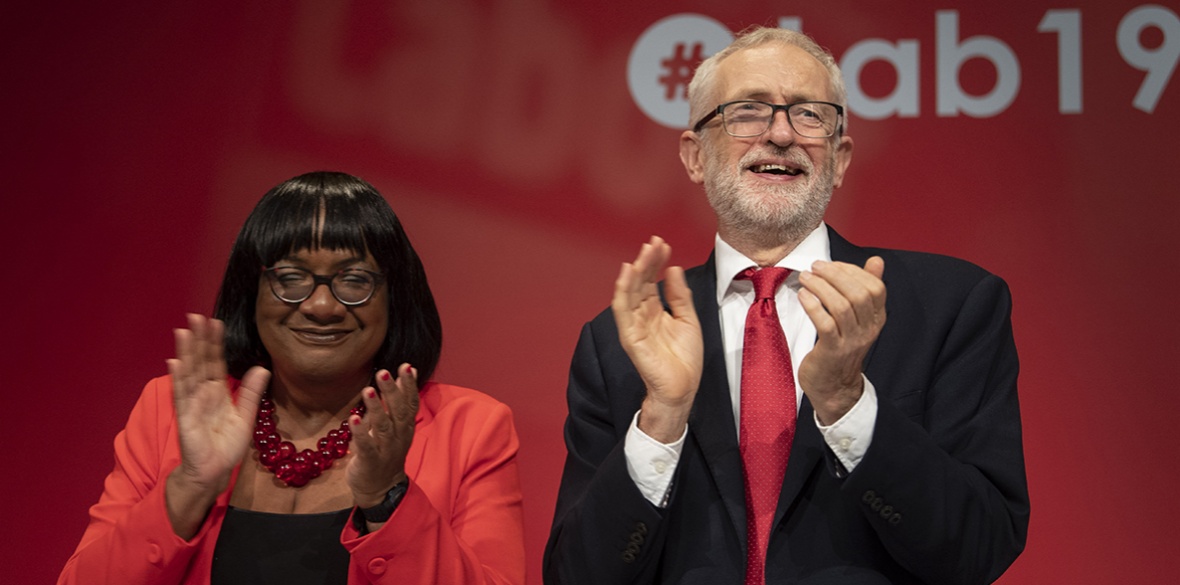
BRITAIN’S first black female MP told Sir Keir Starmer today to give her the right to stand for Labour in the general election.
Diane Abbott told the Morning Star that she wanted to continue as Labour MP for the Hackney North constituency she has represented since 1987.
Ms Abbott said: “I apologised promptly for the letter to the Observer which caused all the fuss. But 13 months later Keir Starmer still cannot come to a decision about whether he thinks that I should be allowed to rejoin the Parliamentary Labour Party.
“Yet it only took him weeks to decide that life-long Tory Natalie Elphicke could join. I was reselected unanimously over a year ago and my constituents want to know what is happening.”
Ms Abbott has been suspended from Labour’s parliamentary party for over a year while the party purportedly investigates a short newspaper letter deemed offensive and for which she immediately apologised.
Her treatment contrasts with the indulgence shown to right-wing, and male and white, MPs who have done the same or worse and got off with a slap on the wrists.