Broken promises, rising taxes: Inside Reform UK’s first year in power

Spread the love

Original article by Sian Norris republished form OpenDemocracy
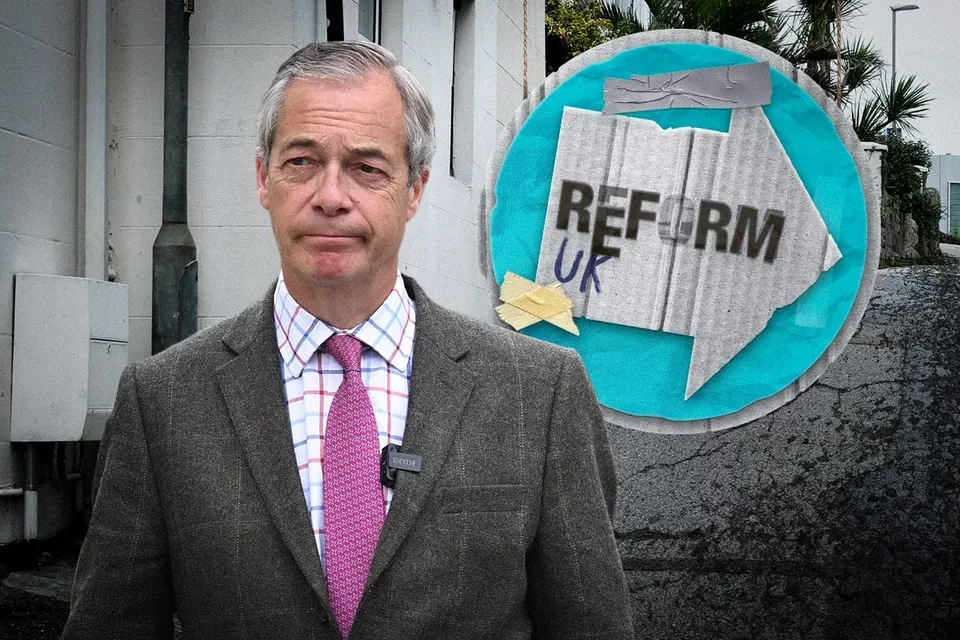
Credit: James Battershill

Reform has run councils for a year. As local elections near, we ask: how has the party performed in power?

Broken promises, broken roads, and broken council leadership teams – that’s the outcome of Reform UK’s first year in power, an investigation by openDemocracy reveals.

Twelve months ago, Nigel Farage’s latest party took control of 10 English councils, meaning they now hold a total of 985 seats across Britain. Now, as Reform seeks to increase its foothold at elections in other English local authorities and pick up seats in the Scottish and Welsh Parliaments next week, we have examined its track record in office, finding that it failed to deliver on its pledges across the board.

Reform is still a young party, founded in 2022. To win so many seats after just three years – and on a promise to do things ‘differently’ – demands scrutiny, particularly when early polls suggest they could win government at the next general election.

While Reform was never going to be able to meaningfully deliver on many of its 2025 campaign points, which focused on policy areas not devolved to local government – such as illegal immigration, net-zero “madness” and law and order – we have been able to shed some light on its local priorities by reviewing election leaflets that it distributed in different areas of the country. 

These materials reveal that Reform intended to slash council tax, fix potholes, and cut council waste by emulating Elon Musk’s ‘DOGE’ drive in Donald Trump’s White House. Yet even in these areas, our analysis shows it frequently fell short on its promises.

Instead, Reform raised taxes in every council where it holds or shares power. Potholes continue to cause accidents and damage, and councillors’ struggles over where to make promised savings have put much-loved local services at risk of closure.

For some Reform councillors, the broken promises were too much. The party has lost more than 70 of its elected local politicians in the space of a year, according to research by Liberal Democrat peer Mark Pack, although some were forced to resign or sacked.

One former Reform councillor, David Taylor, resigned from the party during a live BBC interview in February over the 9% council tax rise in Worcestershire, where Reform is the largest party but lacks overall control. 

Taylor, who now represents the ward of Redditch East as an independent councillor, told openDemocracy of his discomfort at being expected to pass both the tax increase and bonuses of up to 10% for the council’s senior staff, who reportedly have six-figure salaries.

“I run a small recruitment company, and the party wanted me to sit on the council’s employment panel,” he said. “The discussion was on bonus payments. This was to pay a retention bonus to all staff, but realistically in that panel you are only dealing with senior staff. I was not going to vote for that, not when there is so much debt, redundancies and people being put on shorter hours – and then put up council tax.”

The policy shift felt at odds with the reasons why Taylor ran for office in the first place. 

“I live in my community, all my family live in my constituency, all my friends live in my constituency. I talk directly with people who are impacted every day and who know the things we want to change,” he explained. “As a councillor, I could focus on helping people who matter most to me. We campaigned on lowering taxes and saving money, and none of it happened.” 

‘If anything, it’s worse’

As last year’s local elections neared, Farage seized on one particular issue that he said was “getting worse all over the country”. He rode into a Reform rally on a JCB Pothole Pro and posted videos of himself playing ‘pothole golf’ and planting flowers in holes in the road.

Since then, though, Reform has struggled to keep its promise to drivers, according to Freedom of Information data obtained by openDemocracy.

We asked the ten Reform-led councils how many complaints they received about potholes in the years before and after the party took power. Only five councils responded; complaints had increased in four. 

Staffordshire, where Farage filmed himself planting flowers in potholes, was among four councils to fail to respond to our FOI request within the 20-day legal time limit, while a fifth rejected our request.

In West Northamptonshire, residents made an average of 1,193 complaints about potholes each month after Reform took power – a sharp increase since the council was controlled by the Conservatives, when it received an average of 860 pothole-related complaints each month, according to data obtained by openDemocracy. 

The data also shows that many of the complaints made since Reform took office concerned potholes that the council claimed to have already fixed, and that council staff marked 381 as “unable to fix”..

In March of this year, one aggrieved local complained: “Pot hole has been reported, a bodge job infill was done, this was not done to any standard, when your workmen arrived today they were very rude to my husband when he asked if he could help. THIS POT HOLE IS STILL THERE.”

“I had an email though today, marking this pothole as fixed at 15:12,” wrote another resident. “I can confirm that I drove past this pothole at 15:49 and it definitely has not been repaired, and if anything has got significantly worse!”

This sentiment was echoed by Sally Keeble, the leader of the Labour group at West Northamptonshire council. “They are not repairing potholes,” she told openDemocracy. “If anything, it has got worse.”

Doncaster City Council received an average of 165 pothole complaints a month before Reform took power, rising to 147 complaints a month after. It did, however, also fix more potholes under Reform. Other councils recorded smaller numbers of complaints. 

While complaints persist, one company benefiting from the pothole crisis is JCB, which donated £200,000 to Reform in 2025 and whose owner, Conservative donor Lord Bamford, paid £8,400 for Farage and an aide to visit the firm’s factory via helicopter in October 2024.

The Reform-run council in Lincolnshire has invited the heavy machinery outfit back to re-trial its Pothole Pro despite it previously being rejected by the council after a nine-week trial in 2021, when engineers concluded “better tools” were available. The same model is now also being trialled by the Reform councils in Derbyshire and Staffordshire.

Culture wars 

Reform also promised to cut council waste by slashing spending on projects linked to “diversity, inclusion and equality” and “net-zero”. Once in power, however, the party found little to cut. 

Four of the 10 councils had no equality officers even before Reform took control, according to their Freedom of Information responses to openDemocracy. The three that did have a small number of equality staff still employed them one year later (three councils did not respond to our request). DEI training programmes were also still being run at the same levels.

“Everyone thought we’d come in and there were going to be these huge costs we could cut away, but there just aren’t,” one anonymous Reform cabinet member at Kent County Council told the Financial Times in October last year. Months later, a cabinet member at the council, Matthew Fraser Moat, told the same paper that Reform had “not actually made any cuts”. He later resigned from cabinet over the comment, which he said had been “twisted to fit what I believe to be an anti-KCC narrative”.

Durham council chose to attack “DEI” by withdrawing the £2,500 funding set aside for the annual local Pride march, a celebration of LGBTQ+ rights, which is due to take place on 30 May this year. It justified its decision in an email to organisers, and seen by openDemocracy, by saying that “the focus of the modern Pride movement has shifted in a way that many find divisive”. 

The council said it was taking “a principled stand that the council should not be in the position of subsidising events that have become primarily associated with the promotion of a specific and contested political ideology.” 

This week, it was reported in local media that Reform’s leader of the council, Andrew Husband, had been accused of homophobia after using an offensive slur on a social media post that openDemocracy has reviewed but is choosing not to repeat for legal reasons. We put this allegation to Husband, who called it “desperate deflection from the Labour Party which doesn’t deserve a response”.

Despite the cut, Pride is going ahead, with organiser Mel Metcalf saying: “We are fighting hate with love. We have a lot of support. A lot of unions are coming together to support us.” Still, Reform’s attitude to LGBTQ+ rights has had an effect, he said. 

“Some of our volunteers no longer feel confident wearing their rainbow T-shirts or lanyards in public for fear of being challenged. That’s the difference. There is a hesitation now in Durham, about not being as out or open as previous,” he said. “It is sad that people are feeling that way.”

But, Metcalf insists, “what will get us through is love, not hate.”

Reform councils have become embroiled in culture wars on issues surrounding flags, misogyny and racism. 

“The equalities stuff is appalling,” said Sally Keeble in West Northants. “Reform’s Peter York was in trouble for saying women should never have left the kitchen. Female councillors have resigned and when I challenged the leader of the council Mark Arnull about what he was doing to get more women into the cabinet, he accused me of promoting toxic identity politics. I thought it was an appalling response when you have to provide services to all communities.” 

Further north, in Derbyshire, councillor Stephen Reed apologised at the end of last year after using a council meeting to declare that if having a “view that says our citizens should come first rather than people jumping on boats and getting into the country illegally is racist, then guess what? I’m a racist and I’m proud of it!” 

The climate crisis is another front in Reform’s culture war.

Derbyshire council scrapped its climate change committee, with Labour group leader Anne Clarke telling openDemocracy: “They don’t believe in climate change. The committee ran for four years and was looking at the reductions on carbon in the council portfolio. Work was progressing’.” She added that the savings Reform made by scrapping the committee “are small”, describing the decision to do so as “disappointing”. 

Reform councillor Carol Wood, Derbyshire County Council’s cabinet member for net zero and environment, said: “Making sure this council is as efficient as it can be and that every pound of council tax-payers’ money is accounted for and spent wisely is our top priority.” Focus on environmental issues, she said, has moved under the “existing ‘Place’ scrutiny committee to streamline operations.”

Kent council has similarly abandoned its Net Zero 2030 Plan in favour of an Energy Efficiency Plan, branding the original as “unattainable” and a source of “financial and operational risk.” 

In Lincolnshire, rejecting what Conservative MP-turned-Reform mayor Andrea Jenkyns called “the net-zero bandwagon” has opened the doors to US fracking interests. According to reports in The Guardian, Jenkyns has courted Egdon Resources and its parent company, US fracker Heyco Energy, in the hope of bringing fracking to the region. The controversial energy method was effectively banned in England in 2019 due to earthquake concerns. 

Losing out

Despite promises to put Britain’s people first, our investigation learnt that Reform is failing local residents, including by threatening to close much-needed local services such as Glossop tip. 

“The local tip is something that everyone uses; it impacts on everyone,” Derbyshire’s Anne Clarke told openDemocracy. “It has really sparked local concerns and the savings made will be small. It’s in a Reform councillor’s patch and even he is campaigning to keep it open!”

Clarke is concerned that a longer drive to a local tip will lead to more fly-tipping, which affects quality of life and tourism. “We are reliant on our visitor economy, so even a small increase in fly tipping could affect our local businesses.”

Also facing permanent closure is the Grange care home, a centre that is close to the heart of Labour district councillor for North East Derbyshire and parish councillor for Eckington, Kathy Clegg. Her grandmother, also a councillor, helped to open the home. 

“It’s a special place,” she said. “Everyone would consider this as the place to go to for care. It’s local, we all know each other. It’s hugely sad to see it closed. Residents had to move out and were effectively homeless. There’s an issue of relocation stress syndrome. People die due to the stress when moved out of care homes.” Some of the residents have lived there for more than two decades. 

The Grange is one of eight care homes facing closure following a decision by the previous Conservative administration. Local businessman Matt Davison has since offered to buy the Grange, to rescue it for the community and residents, but said he was rebuffed by the Reform council, which planned to sell all eight homes to one buyer. When that sale fell through, Davison again made an offer, telling local media that he was ignored and Reform wants to “close the home.”

This is in contrast to a second care home, with the council currently in negotiations with a private buyer. 

Derbyshire council’s cabinet member for adult care, Joss Barnes, told openDemocracy that “all offers to buy [the care homes] were carefully considered – whether singly, in groups, or as a whole package. Unfortunately, despite intensive negotiations with a provider to take over the running of the homes, the sale fell through and we are now in the process of ensuring residents find new, suitable homes to live in.” 

“I think people feel let down, people feel terrified,” said Kathy Clegg. “Some of the Grange carers went to visit a former resident in his new care home. He was inconsolable. I am choking up thinking about it, because he was saying ‘I want to go home, I want to go home.’ Our local Reform councillor is silent. He’s done nothing at all.”

“Derbyshire County Council led by Reform has failed in every promise they made before the election,” she added.

Vulnerable people are also losing out in West Northants, where the Reform council has scrapped free parking for disabled blue badge holders in Northampton. 

A year of broken promises, attacks on equalities, and unfair spending decisions is a warning for the UK as a whole, said Sally Keeble. “What we are seeing is the reality of how Reform behaves, and what they would do if they got into power.”

openDemocracy approached Kent, Durham, West Northants councils and JCB for comment, as well as Peter York and Mark Arnull. We did not receive a response before publication.

Original article by Sian Norris republished form OpenDemocracy

Elon Musk urges you to be a Fascist like him, says that you can ignore facts and reality then.
Nigel Farage explains the politics of Reform UK: Racism, Fake anti-establishmentism, Deregulation, Corporatism, Climate Change Denial, Mysogyny and Transphobia.
Nigel Farage reminds you that he's the man that brought you Brexit and asks what could possibly go wrong.
Nigel Farage reminds you that he’s the man that brought you Brexit and asks what could possibly go wrong.
Continue ReadingBroken promises, rising taxes: Inside Reform UK’s first year in power

Owen Jones: My conference pass was revoked for asking difficult questions: this is Keir Starmer’s Labour

Spread the love
Keir Starmer objects to criticism of the IDF. He asks how could anyone object to them starving people to death, forced marches like the Nazis did, bombing Gaza's hospitals and universities, mass-murdering journalists, healthworkers and starving people queuing for food, killing and raping prisoners and murdering children. He calls for people to stop obstructing his genocide for Israel.
Keir Starmer objects to criticism of the IDF. He asks how could anyone object to them starving people to death, forced marches like the Nazis did, bombing Gaza’s hospitals and universities, mass-murdering journalists, healthworkers and starving people queuing for food, killing and raping prisoners and murdering children. He calls for people to stop obstructing his genocide for Israel.

https://www.theguardian.com/commentisfree/2025/sep/30/keir-starmer-labour-conference-pass-revoked

A party without a soul, a purpose, or tolerance for dissent: that’s the lasting impression of Labour from its annual jamboree in Liverpool.

I have been covering Labour and Conservative conferences almost every year for the decade and a half. Each year, I confront ministers with uncomfortable questions – on issues such as benefit cuts, sleaze allegations, or broken promises. This year, I questioned Labour grandees, including the foreign secretary, on Britain’s continued sale of crucial components for Israel’s murderous fighter jets. The next day, the party emailed me to revoke my conference pass, citing “complaints” about my “conduct”. It added that: “After careful consideration, we’ve concluded that we cannot continue your attendance while ensuring we meet our safeguarding obligations to all attendees.” Rivkah Brown, another leftwing journalist, from Novara Media, also had her pass cancelled at almost the exact same time.

Invoking “safeguarding” – as though asking uncomfortable questions about genocide somehow threatens safety – resembles Trumpian attempts to portray critique and dissent as incitement to violence. Nigel Farage similarly claims that Keir Starmer labelling his anti-migrant policies as “racist” is inciting violence against his party. A couple of years ago, I and a number of other leftwing journalists abruptly stopped receiving emails from Labour’s press list. Every rightwing media outlet retained its place, and note how GB News has an on-site studio in the conference zone, fuelled by a constant supply of smiling Labour ministers.

Where has this toxic blend of authoritarianism and soullessness left the party? The country seethes with contempt for the governing party. Starmer is the most unpopular new prime minister since records began in the 1980s, plummeting to depths unseen even by Liz Truss, while just 12% approve of the government’s record, compared with 70% who disapprove. As Britain’s pre-eminent pollster, Sir John Curtice, told a room of depressed-looking delegates, the party began its term in office with weak enthusiasm – securing just over a third of the vote amid record low turnout – and it was downhill from there.

https://www.theguardian.com/commentisfree/2025/sep/30/keir-starmer-labour-conference-pass-revoked

Keir Starmer says that the Labour Party under his leadership all feel a small part of Scunthorpe.
Experiencing issues with this image not appearing. I suspect because it's so critical of Zionist Keir Starmer's support of and complicity in Israel's genocides.
Genocide denier and Current UK Prime Minister Keir Starmer is quoted that he supports Zionism without qualification. He also confirms that UK air force support has been essential in Israel’s mass-murdering genocide. Includes URLs https://www.declassifieduk.org/keir-starmers-100-spy-flights-over-gaza-in-support-of-israel/ and https://youtu.be/O74hZCKKdpA
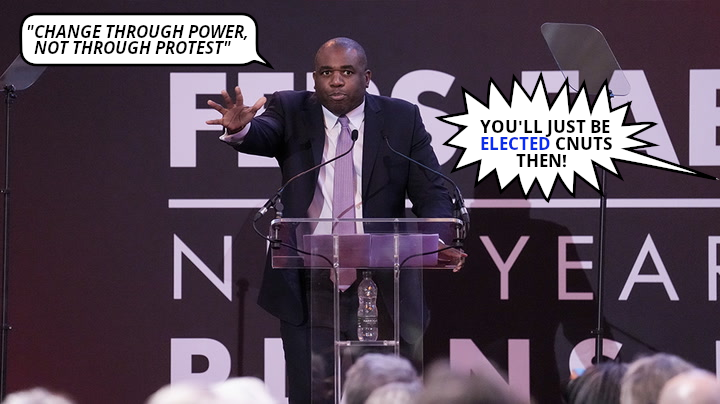
UK Labour Party Foreign Secretary David Lammy repeatedly heckled at a speech to the Fabian Society over his and the Labour Party's support for and complicity in Israel's genocide of Gaza.
UK Labour Party Foreign Secretary David Lammy repeatedly heckled at a speech to the Fabian Society over his and the Labour Party’s support for and complicity in Israel’s genocide of Gaza.

Continue ReadingOwen Jones: My conference pass was revoked for asking difficult questions: this is Keir Starmer’s Labour

Dear Keir Starmer: End The Profit-Driven Sewage Scandal

Spread the love

Republished from https://www.sas.org.uk/updates/dear-keir-starmer. Please let me know if you don’t want me republishing it.

An open letter to the Government, signed by a coalition of environmental and civil society groups

Dear Keir Starmer, Prime Minister and Steve Reed, Secretary of State for Environment and Rural Affairs,

We demand an urgent end to the sewage scandal through systemic transformation of the water industry – public and environmental good must be put before private profit.

A year ago, you began your premiership with a clear commitment to deliver on your election mandate to end the sewage pollution crisis and clean up our waters. On Monday, the Independent Water Commission is set to publish its final recommendations but it will fall fatally short if it fails to confront the root cause of the crisis: a system built towards serving private profit cannot deliver an end to sewage pollution.

Your election mandate has given you a once-in-a-generation opportunity to fix our broken water system. But this will take more than incremental change—it demands a decisive break from the failed model that has deluged our coastlines, rivers and lakes with sewage.

The need for a full system overhaul is painfully clear. Since privatisation in 1990, water companies have paid shareholders over £74 billion in dividends—while burdening the system with £69 billion in debt. Despite repeated promises to invest, shareholders have actually withdrawn more than they have put in, meanwhile essential infrastructure has been left to crumble. In 2024 alone, untreated sewage was dumped 565,383 times across England and Wales. It’s a 35-year tale of broken pipes, broken promises and a fundamentally broken system.

The consequences of inaction are shocking. Coastal economies and communities are being hammered. Rivers declared ecologically dead. Pollution poisoning our wildlife. Thousands of people are falling ill after swimming in raw sewage. Yet water bills will keep rising – to service debt, to fund dividends – and so it is the public who will continue to pay the price.

Enough is enough. You must act now. Rebuild a system that people can be proud of, not angry about. A system that serves the public and protects nature – not private profit. Anything less would be a betrayal of the promise you made to the electorate.

Yours,

Surfers Against Sewage
River Action
Greenpeace UK
WWF UK
GMB Union
Compass
Zero Hour
Friends of the Earth England, Wales and Northern Ireland 
GMB Union
Public and Commercial Services Union
Green New Deal Rising
Wildlife and Countryside Link
Triodos Bank
Surfing England
The Wave Project
38 Degrees
Faith For The Climate
People & Planet
Medact
Health for XR 
Dirty Water Campaign
Blue Marine Foundation 
Women’s Environmental Network
Angling Trust
End Sewage Convoys and Pollution Exmouth (ESCAPE) 
SOS Whitstable
Campaign for National Parks
Centre for Alternative Technology
Finisterre
Carve Magazine
SurfGirl Magazine 
Planet Patrol
Rewilding Britain
Christian Surfers
Good Law Project
The Wildlife Trusts 
Clean Water Sport Alliance Wales
Clean Water Sport Alliance 
The Rivers Trust 
Right To Roam
Students Organising for Sustainability UK

Continue ReadingDear Keir Starmer: End The Profit-Driven Sewage Scandal

Starmer breaks another promise: elite schools to retain ‘charity’ status and tax breaks

Spread the love

Original article republished from the Skwawkbox

One more for the endless list of betrayals to please the obscenely rich

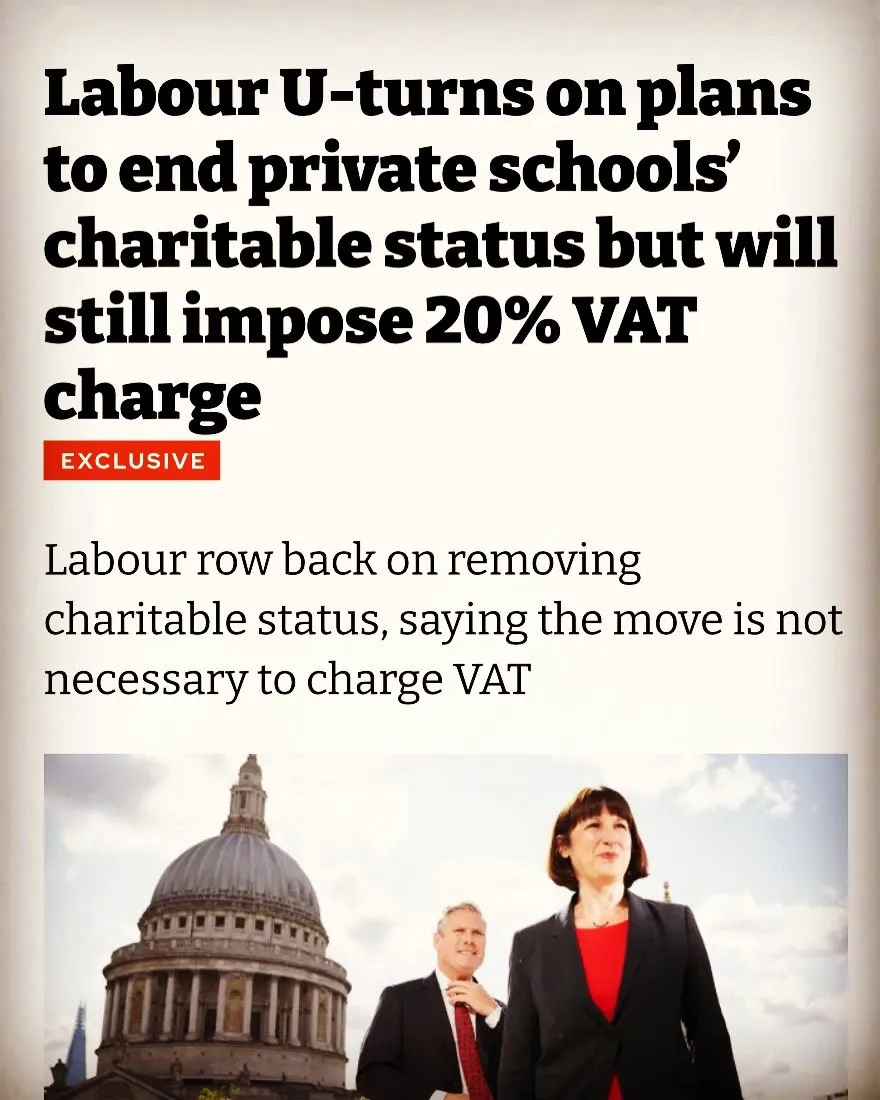
Yet another of Keith Starmer's pledges discarded. Image thanks to the Skwawkbox
Yet another of Keith Starmer’s pledges discarded. Image thanks to the Skwawkbox

It’s hard to imagine there were any promises left that Keir Starmer hadn’t already broken, but today he has added another to the list: the pledge to end the tax-perk ‘charitable’ status of elite private schools.

Starmer and his Shadow Chancellor Rachel Reeves have announced that the schools will now keep their charity status – allowing them and their donors/fee-payers more tax breaks – though as a sop Starmer says he will still charge them VAT if he becomes PM. As if anyone can believe that either.

Every day, Starmer and his toxic cronies show themselves more and more the creatures of the rich – and to be unhesitating in betraying and lying to ordinary people to please billionaires and corporations..

Original article republished from the Skwawkbox

Continue ReadingStarmer breaks another promise: elite schools to retain ‘charity’ status and tax breaks

How big business took over the Labour Party

Spread the love

Original article by Adam Ramsay republished from Open Democracy under a Creative Commons Attribution-NonCommercial 4.0 International licence.

Corporate lobbyists have successfully pushed Keir Starmer’s party to ditch its progressive policies

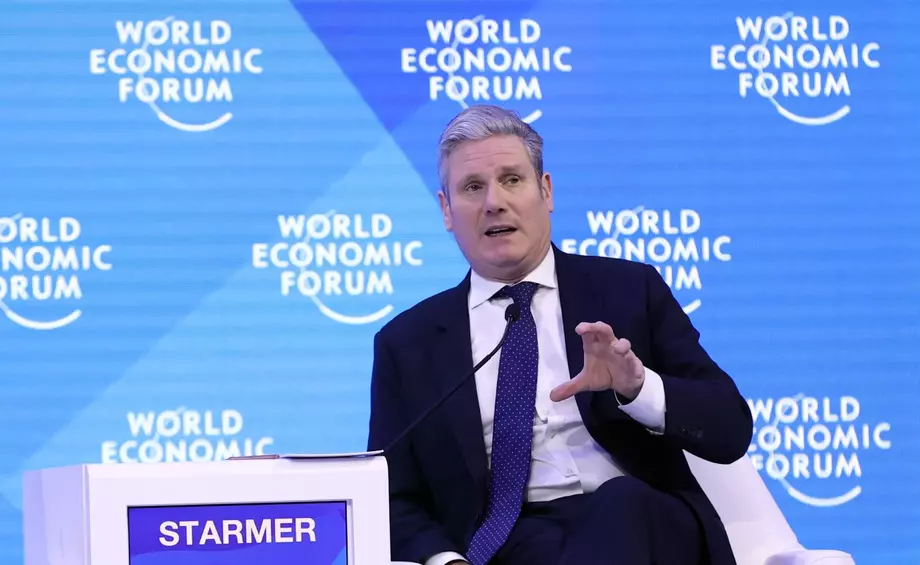
Keir Starmer sucking up to the rich and powerful at World Economic Forum, Davos.

Over the summer, Keir Starmer’s Labour Party for the first time articulated a clear vision for government: everything will continue to be awful. Nothing will get better. Hope is for fools. And, most importantly, no one with wealth or power need worry themselves that any of either will be taken from them.

Because despite two-thirds of voters wanting the government to increase wealth taxes, shadow chancellor Rachel Reeves last month emphasised that she won’t. And although 63% of Brits think taxes on the rich are too low, Starmer has made clear that he doesn’t want to raise income tax for top earners, saying his driving principle is, rather, to lower taxes. Only 5% think the rich pay too much tax.

Meanwhile, Labour’s £28bn-a-year pledge to invest in a Green New Deal – a plan to boost the transition to a zero-carbon economy – has been cancelled by Reeves, who stressed a need for ‘fiscal discipline’. The policy has wide support among voters, particularly in key marginals in England’s North and Midlands.

Also on the party’s scrapheap are popular plans for a publicly owned energy company and a tax hike on digital giants such as Facebook and Google, as well as pledges to replace Universal Credit and scrap the two-child benefit cap.

A certain portion of the press – both Conservative hacks and Blairite shills – see all this as genius: if Labour steals the Tories’ story, how can Rishi Sunak attack? And in a way, though not the way they mean, they may be right.

Wealth and political power are enormously concentrated in Britain. Since 1945, Labour has only ever got into government when it’s made very clear that it doesn’t intend to challenge the ruling elite.

As we saw with Jeremy Corbyn, our oligarch-controlled media, the City and even army generals won’t allow any suggestion that the party plans to govern in line with the egalitarian desires of the overwhelming majority of voters.

In the battle of a general election, the cultural grip of the UK’s establishment is strong enough to override voters’ policy preferences. Actually doing the things voters want – taxing the rich, renationalising key services and tackling the climate crisis – would mean taking on institutions powerful enough to take you down. Or, at least, that’s what many Labour strategists have effectively concluded, even if that’s not how they would express it.

Of course, you can argue against that. Maybe establishment institutions are losing their grip. Perhaps the Tories would still lose the next election if Starmer stuck to his promise to run on the left.

On the other hand, it’s possible that the Labour leader being such an obvious liar – getting himself elected by his party on one set of promises and then immediately breaking them – will allow the Tories to successfully take him down. But more likely, it will make his first term as prime minister very difficult, and leave a festering anger that the right will exploit.

Cock-ups and corruption

Over the past few weeks, I’ve revealed a series of scandals about Labour.

The party accepted an illegal donation of £600,000. Starmer has accepted more corporate freebies over the past two years than every other Labour leader since 1997 put together. The shadow business secretary, his wife-come-senior-assistant, and a senior Starmer staffer accepted luxury Glastonbury tickets from Google, then announced they were scrapping plans to hike the digital service tax the next day. Shadow cabinet members, including Starmer, have corporate lobbyists placed in their staff teams.

Most of these stories boil down to at least one of the various C-words that shape so much of our politics: cock-up, conspiracy, co-option, coercion, collusion, corruption, capture, cooperation and class interest. Each is, in its own way, revealing.

In the first story, I showed that the Barnes and Richmond Labour Club had given the central party an illegal donation of just under £600,000. This seems to have been an example of the first C – a cock-up.

The money came from a local Labour club selling a building that had once been used as a social club for members. The club’s treasurer had given the cash to his local party through the national party in order to comply with regulations. But the national party seems to have failed to deliver it: within five minutes of going through their donor list, I could see that they’d broken the rules.

One local Labour club messing up isn’t a big deal. The fact that the central party cared so little about obeying transparency laws that one of its biggest donors in recent years inadvertently broke them, is. For all of Starmer’s emphasis on competence, the party he leads seems not to have invested enough in training its staff in the laws governing political finance.

It’s much harder to see Google as the bad guy when you’ve sung along to Elton John with its team, while tipsy on its tab

When we broke the second story, about Starmer’s freebies, and the third, about Jonathan Reynolds’ trip to Glasto with Google, there was a pretty ferocious reaction online. The word people kept coming back to was ‘corruption’. But I’m sure that, in his mind, Starmer doesn’t think there is any transaction going on; he’s not accepting gifts from the gambling industry in exchange for future laxity with gambling laws. They are just inviting him, he presumably thinks, because they enjoy the glamour of having the likely next prime minister on their arm.

And, the labour leader’s internal monologue might argue, it’s perfectly appropriate for him to hear from and experience the wares of various British industries. In any case, if a politician was selling elements of public policy, they could do a lot better than a four-course meal with fizz in a special box at the races.

A better word for what is going on is ‘co-option’.

Co-option

The social theorist Ralph Miliband – dad of Ed and David – documented how the same thing was done to the very first Labour MPs, a century ago. While some of the establishment was horrified by the arrival of these cloth-capped working-class men in the hallowed halls of the Palace of Westminster, its cleverer figures knew just what to do. They took them out for dinner at their smart London clubs. They introduced them to their wives, and to fine wines. They inducted them into the ruling class.

The consequence was that the first Labour administrations in the 1920s governed very much within the rules set by the establishment they had been socialised into, including pushing through massive public spending cuts after the Wall Street Crash, rather than devaluing the pound. What we’re seeing now is the same process of co-option in post-Corbyn Labour. Only now, it’s not so much co-option into the old ruling class – though we get a whiff of that in Starmer’s days out at the races – but into the glitz of big business: tickets to the Brit Awards, the best seats in the nation’s swankiest football stadiums, the luxury end of Glastonbury.

Part of the message these businesses are trying to convey to Labour folk will be expressed verbally, over sips of champagne or between the amuse bouche and the appetiser. But part of it comes in the setting itself: it’s much harder to see Google as the bad guy when you’ve sung along to Elton John with its team, while tipsy on its tab. It’s much easier to go soft on elites once you feel part of them, to see things from the perspective of a multi-millionaire if you’re watching the football from the premium suite than if you’re cheering from the stands with the fans.

You see a similar phenomenon with sponsored events at Labour Party conference, as revealed by my colleague Ruby recently. Often, these are luxurious affairs – I can still remember the delicious beef and truffle canapés I got from a firm pushing freeports a few years back.

Businesses with policy agendas invest time and money in buying nice things for politicians and their staff because it works – not in the simple transactional way that a word like ‘corruption’ implies. But in subtler, softer ways. If it didn’t, they wouldn’t do it.

Co-operation

Cooperation is important, too. While members of the cabinet have special advisers funded through the civil service, their shadows don’t get equivalent staffing support – and the resources aren’t distributed equally. Some members of the shadow cabinet have just one adviser, funded by the Labour Party, others have whole teams, paid for by major donors.

It’s generally those associated with the right of the Labour Party who seem able to attract the funding of the handful of hedge funders and millionaires who chip in to such things. As a result, they get the researchers and spinners who make them look more competent, allowing them to deliver more, to grow their profiles, to succeed.

In 2018, the party took £700,000 in donations. So far this year, it’s already taken £12m

Peter Kyle, for example, who has recently been appointed shadow secretary of state for science, and who is associated with the right of the party, has been given £50,000 by wealthy financiers over the past year. Jonathan Ashworth, who was shadow secretary of state for work and pensions and who is seen as being on the soft left of the party, got no such donations, and was demoted to paymaster general in the recent reshuffle.

Other recipients of large amounts of private cash include shadow chancellor Rachel Reeves, shadow health secretary Wes Streeting, and shadow home secretary Yvette Cooper – all of whom are associated with the right of the party. Shadow cabinet members who come from the ‘soft left’ don’t get anything like the same support.

There is no suggestion of impropriety here. Kyle and pals genuinely believe in policies that are good for their banker backers, while Ashworth et al are less keen. But the result is that the one on the side of the super-rich gets to have a super-sized staff team, and the political muscle which comes with it.

This phenomenon is not limited to shadow cabinet members. The Labour Party has changed its policy over the past few months, and has subsequently been richly rewarded with a surge in large donations.

Since becoming leader in 2020, Starmer’s Labour has struggled for money. Membership – and the revenue it provides – has dropped by 170,000 in the past three years, while trade union contributions have fallen by more than a million since 2018.

But the party’s latest accounts, which came out this week, show that the shortfall has now been more than bridged by large donations from rich people and companies. In 2018, the party took £700,000 in donations above the £7,500 reporting threshold (or £1,500 for local parties and the like). So far this year, it’s already taken £12m.

The policies that Labour has ditched in recent months may have been overwhelmingly popular among voters. But they weren’t, it seems, with its wealthy potential donors.

Collusion

It’s not surprising that lots of businesses want to shape Labour policy. Polls show that the party will likely form the next government, and corporations want to make sure it won’t get in the way of their plans to extract as much profit as they can.

In one of its newsletters this week, Politico quotes Alice Perry, associate director at H/Advisors Cicero and a former chair of Labour’s ruling National Executive Committee, as saying that demand for insider advice on how to lobby Starmer’s team has rocketed since last year. According to the website: “You can’t move in SW1 without meeting one of the new bespoke ‘Labour units’ being set up by lobbying shops or their latest ex-Labour hire.”

The revolving door goes the other way, too. As I revealed earlier this week, at least ten current staffers for shadow cabinet ministers previously worked as corporate lobbyists.

But the revolving door between lobbying agencies and the top of politics is old news. And at least a revolving door means you are either in or out at any given moment. Starmer and his colleagues, however, seem to have found a new way to blur the lines: taking on staff who are still employed as corporate lobbyists – seconded from their usual work to the Labour Party. Much of the shadow cabinet is, in other words, directly collaborating with the lobbying firms trying to sell access to them.

Commercial lobbying exists to help those with money get extra influence over governments. The inevitable corollary is that ordinary citizens will get, relatively, less say. As such, its point is to distort democratic processes, to bend them to the will of capital.

In the dying days of the last Labour government, a string of former cabinet ministers were caught offering themselves for hire as lobbyists. The ensuing scandal contributed to a sense that the party’s time in office was coming to a somewhat sordid end, and coincided with a dip in the polls. But that was after 13 years in power.

If the party is willing to so openly collude with corporate lobbyists when it ought to be fresh faced and ready for office, then voters will hear its message loud and clear: don’t expect anything to get better.

Original article by Adam Ramsay republished from Open Democracy under a Creative Commons Attribution-NonCommercial 4.0 International licence.

Continue ReadingHow big business took over the Labour Party