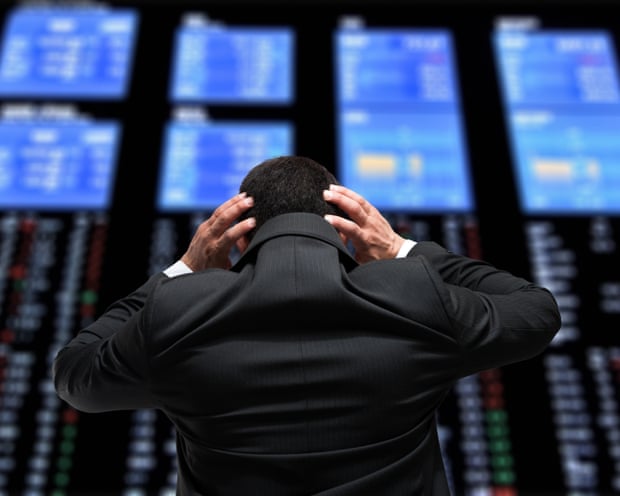
‘Capitalism cares about our species’ prospects as much as a wolf cares about the lamb’s.’ Photograph: Minerva Studio/Alamy
Capitalism cares about our species’ prospects as much as a wolf cares about a lamb’s. But democratise our economy and a better world is within our grasp
We have an urgent responsibility. Our existing economic system is incapable of addressing the social and ecological crises we face in the 21st century. When we look around we see an extraordinary paradox. On the one hand, we have access to remarkable new technologies and a collective capacity to produce more food, more stuff than we need or that the planet can afford. Yet at the same time, millions of people suffer in conditions of severe deprivation.
What explains this paradox? Capitalism. By capitalism we do not mean markets, trade and entrepreneurship, which have been around for thousands of years before the rise of capitalism. By capitalism we mean something very odd and very specific: an economic systemthat boils down to a dictatorship run by the tiny minority who control capital – the big banks, the major corporations and the 1% who own the majority of investible assets. Even if we live in a democracy and have a choice in our political system, our choices never seem to change the economic system. Capitalists are the ones who determine what to produce, how to use our labour and who gets to benefit. The rest of us – the people who are actually doing the production – do not get a say.
And for capital, the purpose of production is not primarily to meet human needs or to achieve social progress, much less to deliver on any ecological goals. The purpose is to maximise and accumulate profit. That is the overriding objective. This is the capitalist law of value. And to maximise profits, capital requires perpetual growth – ever increasing aggregate production, regardless of whether it is necessary or harmful.
…
We urgently need to overcome the capitalist law of value and democratise our economy, so that we can organise production around urgent social and ecological priorities. After all, we are the producers of the goods, the services, the technologies. It is our labour and our planet’s resources that are at stake. And so we must claim the right to decide what is produced, how, and for what purpose.
Donald Trump urges you to be a Climate Science denier like him. He says that he makes millions and millions for destroying the planet, Burn, Baby, Burn and Flood, Baby, Flood.Nigel Farage urges you to ignore facts and reality and be a climate science denier like him and his Deputy Richard Tice. He says that Reform UK has received £Millions and £Millions from the fossil fuel industry to promote climate denial and destroy the planet.Orcas discuss Donald Trump and the killer apes’ concept of democracy. Front Orca warns that Trump is crashing his country’s economy and that everything he does he does for the fantastically wealthy.
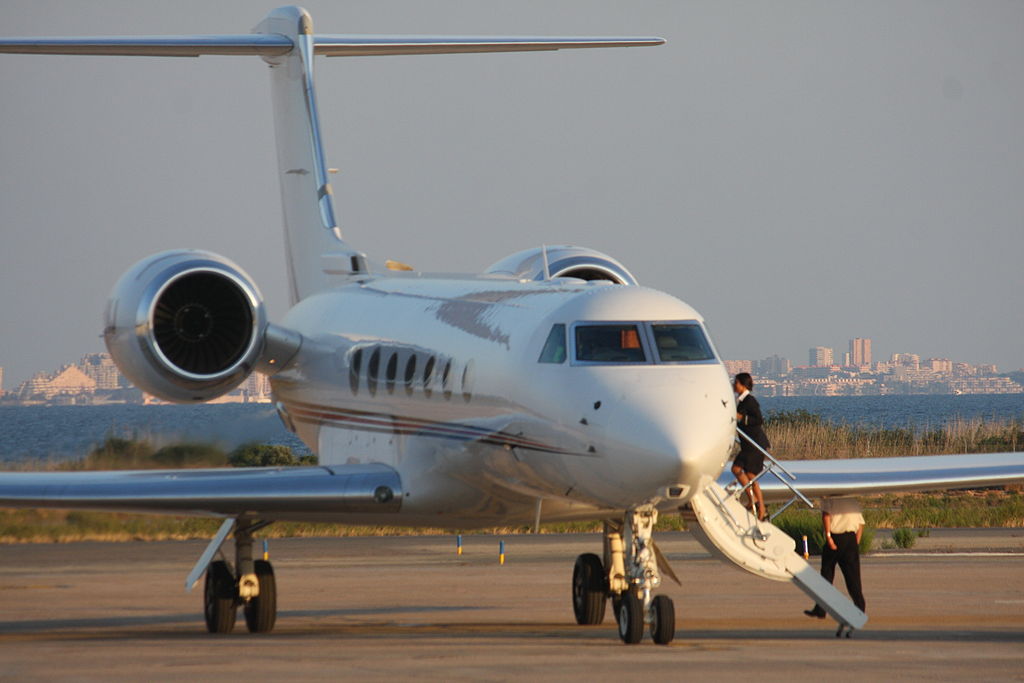
Image of a private jet by Andrew Thomas from Shrewsbury, UK.
Billionaire investments in polluting industries such as fossil fuels and cement double the average for the Standard and Poor group of 500 companies – Oxfam
The investments of just 125 billionaires emit 393 million tonnes of CO2 each year – the equivalent of France – at an individual annual average that is a million times higher than someone in the bottom 90 percent of humanity.
Carbon Billionaires: The investment emissions of the world’s richest people, is a report published by Oxfam based on a detailed analysis of the investments of 125 of the richest billionaires in some of the world’s biggest corporates and the carbon emissions of these investments. These billionaires have a collective $2.4 trillion stake in 183 companies.
The report finds that these billionaires’ investments give an annual average of 3m tonnes of CO2e per person, which is a million times higher than 2.76 tonnes of CO2e which is the average for those living in the bottom 90 percent.
The actual figure is likely to be higher still, as published carbon emissions by corporates have been shown to systematically underestimate the true level of carbon impact, and billionaires and corporates who do not publicly reveal their emissions, so could not be included in the research, are likely to be those with a high climate impact.
“These few billionaires together have ‘investment emissions’ that equal the carbon footprints of entire countries like France, Egypt or Argentina,” said Nafkote Dabi, Climate Change Lead at Oxfam “The major and growing responsibility of wealthy people for overall emissions is rarely discussed or considered in climate policy making. This has to change. These billionaire investors at the top of the corporate pyramid have huge responsibility for driving climate breakdown. They have escaped accountability for too long,” said Dabi.
Jeff Bezos’s superyacht ‘Koru’ often travels accompanied by a smaller ‘support’ superyacht. Image by Conmat13 under the Creative Commons Attribution-Share Alike 4.0 International license via wikimedia.
“Emissions from billionaire lifestyles, their private jets and yachts are thousands of times the average person, which is already completely unacceptable. But if we look at emissions from their investments, then their carbon emissions are over a million times higher,” said Dabi.
Contrary to average people, studies show the world’s wealthiest individuals’ investments account for up to 70 percent of their emissions. Oxfam has used public data to calculate the “investment emissions” of billionaires with over 10 percent stakes in a corporation, by allocating them a share of the reported emissions of the corporates in which they are invested in proportion to their stake.
The study also found billionaires had an average of 14 percent of their investments in polluting industries such as energy and materials like cement. This is twice the average for investments in the Standard and Poor 500. Only one billionaire in the sample had investments in a renewable energy company.
The choice of investments billionaires make is shaping the future of our economy, for example, by backing high carbon infrastructure – locking in high emissions for decades to come. The study found that if the billionaires in the sample moved their investments to a fund with stronger environmental and social standards, it could reduce the intensity of their emissions by up to four times.
“The super-rich need to be taxed and regulated away from polluting investments that are destroying the planet. Governments must put also in place ambitious regulations and policies that compel corporations to be more accountable and transparent in reporting and radically reducing their emissions,” said Dabi.
Oxfam has estimated that a wealth tax on the world’s super-rich could raise $1.4 trillion a year, vital resources that could help developing countries – those worst hit by the climate crisis – to adapt, address loss and damage and carry out a just transition to renewable energy. According to the UNEP adaptation costs for developing countries could rise to $300 billion per year by 2030. Africa alone will require $600 billion between 2020 to 2030. Oxfam is also calling for steeply higher tax rates for investments in polluting industries to deter such investments.
The report says that many corporations are off track in setting their climate transition plans, including hiding behind unrealistic and unreliable decarbonization plans with the promise of attaining net zero targets only by 2050. Fewer than one in three of the 183 corporates reviewed by Oxfam are working with the Science Based Targets Initiative. Only 16 percent have set net zero targets.
Donald Trump urges you to be a Climate Science denier like him. He says that he makes millions and millions for destroying the planet, Burn, Baby, Burn and Flood, Baby, Flood.Nigel Farage urges you to ignore facts and reality and be a climate science denier like him and his Deputy Richard Tice. He says that Reform UK has received £Millions and £Millions from the fossil fuel industry to promote climate denial and destroy the planet.Keir Starmer commits to play the caretaker role for Capitalism through the “hard times”.
Prime Minister Keir Starmer departs 10 Downing Street, London, to attend Prime Minister’s Questions at the Houses of Parliament, November 12, 2025
IF KEIR STARMER intended to stave off a leadership challenge by advertising his readiness to fight one, he has miscalculated.
All his intervention has done is placed the question of his leadership at the top of MPs’ minds.
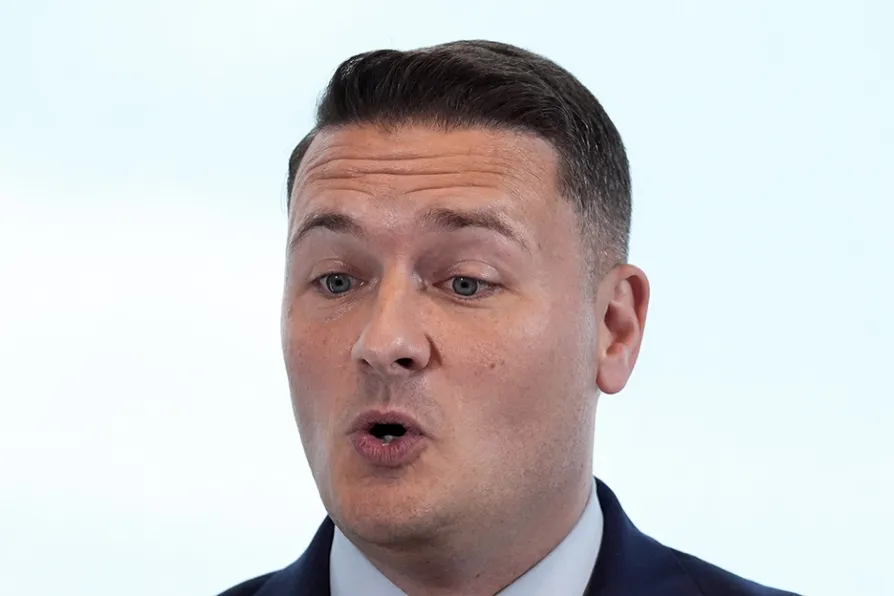
Perhaps identifying Wes Streeting as a possible challenger was intended to frighten the left away from triggering a contest — since Streeting is even further right than Starmer.
In practice it simply showcases the Prime Minister’s insecurity and the toxic culture Streeting accurately describes in Downing Street — where the government briefs against its own, and a leadership that has always relied on bans and expulsions to maintain authority descends into a “circular firing squad,” to use the ever eloquent Barry Gardiner’s phrase. Unlike Starmer, MPs might reflect, Streeting has never pretended to be on the left and as a Blairite true believer might at least try to govern through persuasion rather than fear.
Nobody should fear challenging Starmer: his government is as inept as it is cruel and is paving the way for a far-right Reform UK regime.
But Streeting is no solution. The Health Secretary would be a cosmetic change, no more: he’s wedded to the same policies of privatisation and cuts that have wrecked our public services and national infrastructure. Starmer loyalists point to the long death agony of the last Tory government as evidence that switching leader doesn’t help — and it won’t, without dramatic changes in Labour policy.
And that’s a problem. Starmer’s leadership exists to prevent change, not deliver it: its whole mission has been the destruction of Corbynism and the threat of a socialist-led Labour Party. That project was endorsed by the overwhelming majority of Labour MPs even before last year’s election brought in cohorts of carefully vetted conformists.
Keir Starmer refuses to be outcnuted by Nigel Farage’s chasing the racist bigot vote.Keir Starmer commits to play the caretaker role for Capitalism through the “hard times”.Keir Starmer says that the Labour Party under his leadership is intensely relaxed about assaulting those least able to defend themselves – the very poorest and most vulnerable.
A conceptual rendering of the proposed AI datacentre. Image: Northumberland County Council
Does he think we’re stupid?
When Keir Starmer announced the creation of a £10 billion AI datacentre at Blyth in Northumberland last year, it was with a promise that the site would bring 4,000 jobs to the north-east of England.
For an ex-mining town, once home to two coal power stations, this was welcome news. The area had been let down once before: the new “artificial intelligence datacentre” will open on a site once destined to host Britishvolt, the startup planning to employ 3,000 people making batteries for electric vehicles that collapsed spectacularly in 2023.
However, it has since emerged that the true figure for job creation is closer to just 300 to 400 permanent staff, a tenth of what Starmer promised. Other media outlets have noted the yawning gap between Starmer’s hype and the disappointing reality. But the apparent willingness of the government to launder dodgy figures provided by the PR machine of a rapacious private equity firm has not been scrutinised – until now.
When asked in January by Labour MP Chi Onwurah what the evidential basis for the 4,000 claim was in a parliamentary question, Chris Bryant, a minister in the culture and science department, said that it had been supplied by Northumberland County Council.
However, in a freedom of information request seen by Novara Media sent by Foxglove, a legal campaign group monitoring big tech, the council revealed that that source was in fact Blackstone, the vampiric US private equity giant behind the data centre’s construction. The 4,000 figure came from Blackstone’s “evidence of the anticipated job creation numbers” put forward in the planning application.
Martha Dark, Foxglove’s co-executive director, said that Starmer had either “willingly promoted US Blackstone-owned developer QTS’s PR spiel on jobs, in effect laundering the dubious credibility of the claim through association with his office – or he didn’t know the claim came from them.
What makes Pope Francis and his 183-page encyclical so radical isn’t just his call to urgently tackle climate change. It’s the fact he openly and unashamedly goes against the grain of dominant social, economic and environment policies.
While the Argentina-born pope is a very humble person whose vision is of a “poor church for the poor”, he seems increasingly determined to play a central role on the world stage. Untainted by the realities of government and the greed of big business, he is perhaps the only major figure who can legitimately confront the world’s economic and political elites in the way he has.
However his radical message potentially puts him on a confrontation course with global powerbrokers and leaders of national governments, international institutions and multinational corporations.
The backlash has begun even before the encyclical has been officially published. US presidential candidate Jeb Bush, a Catholic, feels the pope should stay out of the climate debate, joining other Republicans, fossil fuel lobbyists and climate denier think-tanks in seeking to discredit Pope Francis’s intervention.
What makes the pope so radical?
There are several meanings of the word “radical” that can be applied to the Pope and in particular his forthcoming encyclical.
First, radical can be understood as going back to the roots (from Latin radix, root). The majority of Catholics live in the Global South; in Latin America and sub-Saharan Africa. Francis is the first pope from the Global South, and naming himself in honour of Saint Francis of Assisi, “a man of poverty and peace who loved nature and animals”, signalled to the world a commitment to going back to the roots of human existence.
The pope knows the plight of the majority world. Before he became Archbishop of Buenos Aires, he was a priest in the vast, poor neighbourhoods, the villas miserias or slums, of Argentina’s capital.
Improving the lives of slum dwellers and addressing climate change is, for Pope Francis, one and the same thing. Both require tackling the structural, root causes of inequality, injustice, poverty and environmental degradation.
Even as the quality of available water is constantly diminishing, in some places there is a growing tendency, despite its scarcity, to privatize this resource, turning it into a commodity subject to the laws of the market. Yet access to safe drink- able water is a basic and universal human right, since it is essential to human survival and, as such, is a condition for the exercise of other human rights. (p. 23)
This stands in stark contrast to, for example, Peter Brabeck-Letmathe, the chairman of Nestlé, the world’s largest food and bottled water company, who thinks water is a normal commodity with a market value, and not a human right. Nestlé is far from unusual. Its stance is backed up by the official water privatisation policies of the World Bank, IMF and other international institutions.
In fact, the encyclical is a radical – for a pope and international leader, unprecedented – attack on the logic of the market and consumerism, which has been expanded into all spheres of life.
The document states:
Since the market tends to promote extreme consumerism in an effort to sell its products, people can easily get caught up in a whirlwind of needless buying and spending. Compulsive consumerism … leads people to believe that they are free as long as they have the supposed freedom to consume. But those really free are the minority who wield economic and financial power. (p. 149-150)
The pope rejects market fundamentalism, instead arguing that “the market alone does not ensure human development and social inclusion.”
The strategy of buying and selling “carbon credits” can lead to a new form of speculation which would not help reduce the emission of polluting gases worldwide. This system seems to provide a quick and easy solution under the guise of a certain commitment to the environment, but in no way does it allow for the radical change which present circumstances require. Rather, it may simply become a ploy which permits maintaining the excessive consumption of some countries and sectors. (p. 126)
The pope’s right. The same criticisms of carbon markets have been made by myself and others.
Climate change is a global problem with grave implications: environmental, social, economic, political and for the distribution of goods. It represents one of the principal challenges facing humanity in our day. (p. 20)
While the pope is not a politician – or maybe precisely because he is not one – he commands high moral and ethical authority that goes beyond traditional partisan lines. His encyclical speaks truth to power, and he might be the only person with both the clout and the desire to meaningfully deliver a message like this:
Many of those who possess more resources and economic or political power seem mostly to be concerned with masking the problems or concealing their symptoms, simply making efforts to reduce some of the negative impacts of climate change. However, many of these symptoms indicate that such effects will continue to worsen if we continue with current models of production and consumption. There is an urgent need to develop policies so that, in the next few years, the emission of carbon dioxide and other highly polluting gases can be drastically reduced, for example, substituting for fossil fuels and developing sources of renewable energy. (p. 21)
The bosses of Shell, ExxonMobil and other fossil fuel companies will not like this message, as it threatens their fundamental business model, and it also stands in contrast to the underwhelming ambitions of the G7 leaders who recently pledged to phase out fossil fuels only by 2100.
The time for bold, radical action on the environment as well as poverty eradication has come. This seems to be Pope Francis’ message: “The same mindset which stands in the way of making radical decisions to reverse the trend of global warming also stands in the way of achieving the goal of eliminating poverty.” (p. 128)
We need to think beyond the current, taken-for-granted logic that believes only markets and consumerism can solve the world’s social and environmental problems. The pope himself believes the situation is so grave that only a new, “true world political authority” will be able to address these problems.
This article was updated on 18 June to include quotes from the final encyclical rather than the earlier draft leaked to L’Espresso magazine.