Has the UK Signed Up to Build a Faulty Nuclear Power Plant?

Spread the love

http://www.huffingtonpost.co.uk/katie-mcque/has-the-uk-signedup-to-bu_b_4136299.html?utm_hp_ref=uk-politics&ir=UK+Politics

by Katie McQue

On Monday, the UK woke-up to the news that the government had struck a deal to build our first new nuclear plant in over 18 years. The 3.2GW plant, named Hinkley Point C, has been touted as a job-maker and a boost to our energy security. Worryingly, however, the design of this nuclear reactor may be flawed, potentially exposing the UK to huge financial risks, as well a gravely unsafe nuclear plant.

The group of firms responsible for building Hinkley Point C; EDF, Areva, China General Nuclear Power Group and China National Nuclear Corp, intend to use nuclear reactor technology that has not yet proven to be successful. In fact, it has caused huge time delays and spiralling budgets in other nuclear projects that are yet to become operational.

Even Ed Davey, the Secretary of State for Energy and Climate change has admitted in an interview that the projects using the same nuclear reactor have a track record of mistakes.

Podcast of the interview with Ed Davey:

http://icisenergy.podomatic.com/entry/2013-06-13T07_38_01-07_00

Hinkley Point C will use Areva’s European Pressurised Reactor (EPR) nuclear technology. It is the same reactor being used in the Flamanville 3 plant in France and two reactors in China, which are all EDF projects. The Olkiluoto plant in Finland, being developed by Finnish utility Teollisuuden Voima, is also using the EPR.

The construction at Flamanville has overrun by four years and costs have doubled. Olkiluoto, meanwhile, has been hit by delays of over six years. Some experts have estimated its budget has tripled. Less is known about the status of the Chinese power plants.

It is probable that Hinkley Point C may meet similar technical difficulties to that of Flamanville and Olkiluoto projects, since these engineering issues have not yet been resolved.

“Nobody is taking bets at the moment. Even EDF are in despair about the EPR reactor,” said Paul Dorfman of the Energy Institute, University College London. “EDF argue that the Chinese projects are going well. But there are rumours that they’re facing similar problems to Flamanville and Olkiluoto.”
http://www.icis.com/heren/articles/2013/05/09/9666925/concerns+over+uks+hinkley+nuclear+technology+could+add+to.html

Moreover, the major issues with this reactor lie with its computerised control system, known and the instrumentation and control system. Experts believe that the computerised back-up system is too similar to the front-end computer. So, if a fault, either technical glitch or cyber-attack damages one of the computers, it will ll likely cause the whole operational system to crash or become uncontrollable.

“If a technical problem occurs with the plant, you need an entirely independent back-up system, which there isn’t. So if you lose the first system, it might take out the second system. This is a problem with the plants being built in Finland and France.” Stephen Thomas, professor of energy policy at the University of Greenwich.

Unlike most reactors, the EPR does not have manual shut-down system, leaving it further vulnerable for malfunction.

The UK government’s Office for Nuclear Regulation (ONR) flagged problems with the instrumentation and control system during its design assessment process. In its quarterly updates on progress, each aspect of the plan was graded by a traffic light-style alert system that represented the difficulty of solving the issues raised.

In August 2012, six issues related to the instrumentation and control system were highlighted. Two were graded as “amber”, meaning that remedying the issue is feasible, but needs prompt attention. Four were given a “red” alert, which, according to the report means the resolving of these issues are “in serious doubt with serious risks apparent”.

But in December 2012 the nuclear regulators approved the EPR design, signing off all of these alerts without much explanation. Many experts have questioned how this is possible, especially since the design faults have not yet been rectified at the Finnish and French nuclear plants. These reports can be found on the ONR’s website.

Continue ReadingHas the UK Signed Up to Build a Faulty Nuclear Power Plant?

Tax Special Investigation: How Camelot has avoided millions in tax – with help from teachers in Canada

Spread the love

http://www.independent.co.uk/news/uk/home-news/tax-special-investigation-how-camelot-has-avoidedmillions-in-tax–with-help-from-teachers-in-canada-8895219.html

The great Eurobond tax scandal

Camelot, the company behind the National Lottery, has avoided millions of pounds in corporation tax by exploiting a legal loophole that HMRC failed to close.

The company saved an estimated £10m in tax in the last two years through interest on loans taken from its Canadian owner via the Channel Islands Stock Exchange. Its owner is one of Canada’s largest pension plans, the Ontario Teachers’ Pension Plan board. The revelation comes as the National Lottery has doubled the price of its tickets to £2.

The Government estimated in 2012 that the loophole was costing the public purse some £200m, but publicly available accounts suggest the true cost could be more than £500m – and probably higher.


27/11/13 Having received a takedown notice from the Independent newspaper for a different posting, I have reviewed this article which links to an article at the Independent’s website in order to attempt to ensure conformance with copyright laws.

I consider this posting to comply with copyright laws since
a. Only a small portion of the original article has been quoted satisfying the fair use criteria, and / or
b. This posting satisfies the requirements of a derivative work.

Please be assured that this blog is a non-commercial blog (weblog) which does not feature advertising and has not ever produced any income.

dizzy

Continue ReadingTax Special Investigation: How Camelot has avoided millions in tax – with help from teachers in Canada

Tax Special Investigation: HMRC ‘particularly feeble’ over failure to close loophole

Spread the love

http://www.independent.co.uk/news/uk/politics/tax-special-investigation-hmrc-particularly-feeble-over-failure-to-close-loophole-8895209.html

Despite the tax exemption costing the UK economy at least £500m a year, the  Government bowed to  pressure after intense lobbying from the financial sector to allow companies to use it

The Government chose not to close a tax loophole which costs the UK economy at least £500m a year after intense lobbying from the financial sector, The Independent has learnt.

<snipped>

More than 30 companies are paying more than £2bn in total to their overseas owners every year as interest on borrowings. As these can be deducted from the companies’ taxable UK income, this amounts to a corporation tax saving of around £500m when compared to equivalent investment in shares in the company.

Without the exemption, any tax savings from the interest deductions would be greatly reduced by the 20 per cent withholding tax that HMRC would otherwise take from interest payments going overseas. As many more companies list debt in the Channel Islands, and the loophole also works in other exchanges including Luxembourg and the Cayman Islands, the total tax lost may be significantly higher.

27/11/13 Having received a takedown notice from the Independent newspaper for a different posting, I have reviewed this article which links to an article at the Independent’s website in order to attempt to ensure conformance with copyright laws.

I consider this posting to comply with copyright laws since
a. Only a small portion of the original article has been quoted satisfying the fair use criteria, and / or
b. This posting satisfies the requirements of a derivative work.

Please be assured that this blog is a non-commercial blog (weblog) which does not feature advertising and has not ever produced any income.

dizzy

Continue ReadingTax Special Investigation: HMRC ‘particularly feeble’ over failure to close loophole

Npower to raise energy prices by 10.4%

Spread the love

http://www.bbc.co.uk/news/business-24607242

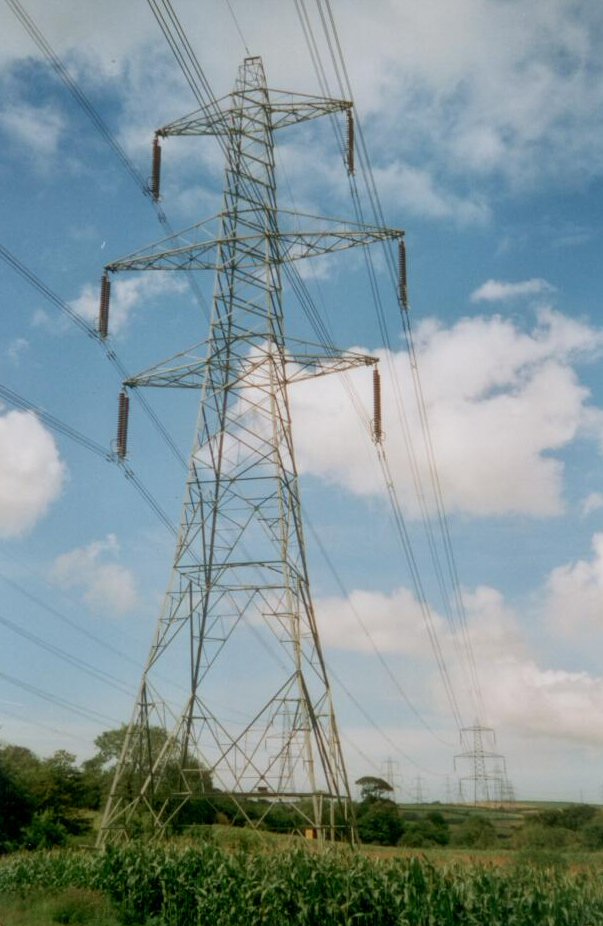
Image of an electricity pylon treeEnergy firm Npower has become the third major supplier to announce price rises, with a dual-fuel bill to go up 10.4%.

The price rise will take effect on 1 December, and is the highest increase announced by any supplier so far.

SSE will increase prices by 8.2% from 15 November and British Gas said prices would go up by 9.2% on 23 November.

The Npower increase includes an electricity price rise of 9.3% and a gas price rise of 11.1%. The move will affect 3.1 million customers.

The change will add an extra £137 to an annual average dual-fuel bill, taking it to £1,459.

Continue ReadingNpower to raise energy prices by 10.4%

Lib Dem MPs targeted by campaign group over lobbying bill

Spread the love

http://www.theguardian.com/politics/2013/oct/20/lobbying-bill-liberal-democrats-targeted-campaign-group-38-degrees

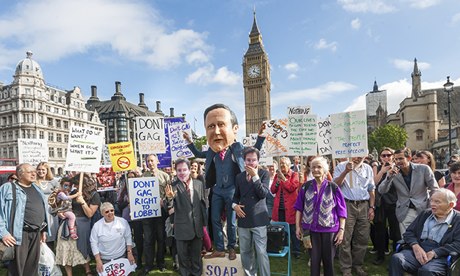
Image of a rally against the lobbying bill in London on 8 October.

With the controversial lobbying bill having moved from the Commons to the Lords this month MPs might have hoped they would now be spared the protests of those worried the new law will curb the campaigning ability of charities and voluntary groups.

One organisation has redoubled its efforts, however, organising a rush of public meetings with Liberal Democrat MPs to remind them, it says, that their traditionally grassroots-based party should know better than to back such a measure.

The group, 38 Degrees, has set up 11 public meetings over little more than a week with MPs, 10 of them with Lib Dems and one with the Tory Chloe Smith, to demand continued attention over what is officially called the transparency of lobbying, non-party campaigning and trade union administration bill. Concentrating the MPs’ minds still further is the fact that several of them have distinctly slim majorities, several hovering around 1,000 and in the case of Simon Wright in Norwich South, a mere 310.

All the MPs at some point either supported or abstained on votes for the bill, which seeks to impose financial limits on spending “for election purposes”. A number of charities and campaign groups have warned this could affect even non-party political activities despite a series of amendments, said David Babbs, the executive director of 38 Degrees.

“We want to give the MPs a strong reminder that the lobbying bill threatens very popular institutions like charities and community groups, things that are generally held in much higher regard than they are, and their constituents will take a keen interest in how they voted on this,” he said. “Secondly, we want to remind MPs about what’s good about grassroots community campaigning, which this bill threatens to constrain. Most MPs at some point thought this stuff was important.”

Continue ReadingLib Dem MPs targeted by campaign group over lobbying bill