Lords raise concerns with “rushed” Lobbying Bill

Spread the love

http://www.parliament.uk/business/committees/committees-a-z/lords-select/constitution-committee/news/lobbying-bill/

18 October 2013

The House of Lords Constitution Committee has today published its report on the Transparency of Lobbying, Non-Party Campaigning and Trade Union Administration Bill and has raised “significant concerns” about the content and handling of the bill.

The report comes ahead of the second reading of the bill in the Lords on 22 October. The report says that effective parliamentary scrutiny is of “manifest importance” for legislation of constitutional significance such as the bill, which regulates lobbying and sets rules on expenditure by persons or bodies other than political parties at elections.

The committee questions whether the significant lowering of the cap on expenditure at general elections by third parties is justified, given the fundamental constitutional right to freedom of political expression. The committee points to the lack of consultation by the Government on the proposals, including with the Electoral Commission, as well as the lack of clarity on how the changes will affect campaigning in Northern Ireland, Scotland and Wales.

The committee raises questions about the narrow definition of lobbying in the bill, which excludes “in-house” lobbyists and covers only communications between professional consultant lobbyists and ministers or permanent secretaries. The committee encourages the House of Lords to consider whether this definition is appropriate.

Committee Chairman

Commenting, Baroness Jay of Paddington, chairman of the House of Lords Constitution Committee, said:

“The committee is concerned about the restrictions on the right to freedom of political expression that will result from the proposal to limit third-party expenditure at general elections. We think this constitutional right should only be interfered with where there is clear justification for doing so.


“We are also concerned that the lobbying bill will not achieve its objectives of increasing transparency and restoring public confidence. We have therefore recommended that the House of Lords considers whether the limited definition of lobbying in the bill, which excludes in-house public affairs work and covers only communication with ministers and permanent secretaries, will provide adequate transparency.


“We are critical of the hurried way in which this legislation has proceeded, which has resulted in a lack of consultation. Bills of constitutional importance such as this should not be rushed through Parliament.”

Continue ReadingLords raise concerns with “rushed” Lobbying Bill

Probation officers vote to strike over privatisation

Spread the love

http://www.bbc.co.uk/news/uk-24580263

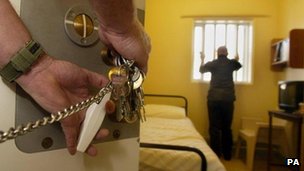
Image of locking a prison cell doorProbation officers in England and Wales have voted to strike over government privatisation plans.

Private firms and charities are currently bidding for contracts worth £450m to supervise 225,000 low and medium-risk offenders each year.

The National Association of Probation Officers (Napo) said there had been an 46% turn-out, with more than 80% voting yes for action. No date has been given.

Napo has said the changes would “put communities at risk”.

Under the government’s proposals, most of the Probation Service’s current work will be done under new payment-by-results contracts, to be awarded in 20 English regions. The whole of Wales will be one region.

The contracts would mean that low and medium risk offenders will be supervised by a mix of private firms, charities and voluntary groups.


Continue ReadingProbation officers vote to strike over privatisation

Anti-racism campaigner and immigration caseworker sent ‘go home’ text messages by Home Office

Spread the love

http://www.independent.co.uk/news/uk/antiracism-campaigner-and-immigration-caseworker-sent-go-home-text-messages-by-home-office-8886200.html

UKBA left red faced after Suresh Grover and Bobby Chan receive texts telling them to leave the country

Image of immigrants go home van

Less than two weeks since the Home Office anti-immigration vans were banned by the advertising watchdog for using “misleading” statistics, the UK Border Agency has come under fire for telling an anti-racism campaigner and an immigration adviser to leave the country in a text.

On behalf of UKBA, private contractor Crapita sent leading campaigner Suresh Grover a text telling him he had no right to live here. The same text was sent to Bobby Chan, an Immigration Caseworker at Central London Community Law.

Mr Grover, who founded the anti-racism charity The Monitoring Group, has campaigned for justice for Stephen Lawrence, Zahid Mubarek and Victoria Climbie. He also runs race relations advice surgeries across London.

He told the Independent “ I was absolutely shocked and quite horrified to receive the text. I thought it wasn’t meant for me. I came here with my parents in 1966, I was born in East Africa and have always had a British passport.”

<original posting snipped>

27/11/13 Having received a takedown notice from the Independent newspaper for a different posting, I have reviewed this article which links to an article at the Independent’s website in order to attempt to ensure conformance with copyright laws.

I consider this posting to comply with copyright laws since
a. Only a small portion of the original article has been quoted satisfying the fair use criteria, and / or
b. This posting satisfies the requirements of a derivative work.

Please be assured that this blog is a non-commercial blog (weblog) which does not feature advertising and has not ever produced any income.

dizzy

Continue ReadingAnti-racism campaigner and immigration caseworker sent ‘go home’ text messages by Home Office

Extent of spies’ mass surveillance to be investigated in ‘public inquiry’

Spread the love

http://www.theguardian.com/uk-news/2013/oct/17/uk-gchq-nsa-surveillance-inquiry-snowden

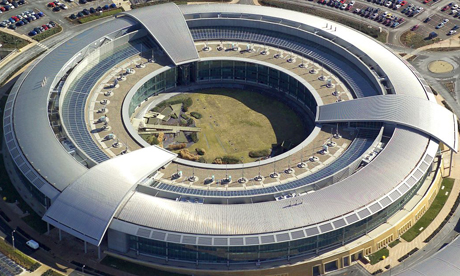
Image of GCHQ donught buildingIntelligence inquiry begun after Edward Snowden leaks and Guardian revelations on GCHQ and NSA personal data sharing

The extent and scale of mass surveillance undertaken by Britain’s spy agencies is to be scrutinised in a major inquiry to be formally launched on Thursday.

Parliament’s intelligence and security committee (ISC), the body tasked with overseeing the work of GCHQ, MI5 and MI6, will say the investigation is a response to concern raised by the leaks from the whistleblower Edward Snowden.

Sir Malcolm Rifkind, the committee chair, said “an informed and proper debate was needed”. One Whitehall source described the investigation as “a public inquiry in all but name”.

The announcement comes four months after the Guardian, and leading media groups in other countries, including the New York Times and the Washington Post, began disclosing details of secret surveillance programmes run by Britain’s eavesdropping centre, GCHQ, and its US counterpart, the National Security Agency.

The Guardian has been urging a debate about programmes such as GCHQ’s Tempora and the NSA‘s Prism, which allow the agencies to harvest vast amounts of personal data from millions of people – intelligence that is routinely shared between the two countries.

In a change from its usual protocol, the normally secretive committee also announced that part of its inquiry would be held in public.

It will also take written evidence from interested groups and the public, as well as assessing secret material supplied by the intelligence agencies. The Guardian will also consider submitting evidence.

Conceding that public concerns had to be addressed, Rifkind, a former foreign secretary, added: “There is a balance to be found between our individual right to privacy and our collective right to security.”

Continue ReadingExtent of spies’ mass surveillance to be investigated in ‘public inquiry’

Postal workers’ strike: Royal Mail should expect a battle royal

Spread the love

http://www.theguardian.com/commentisfree/2013/oct/16/postal-workers-strike-royal-mail-cwu-privatisation

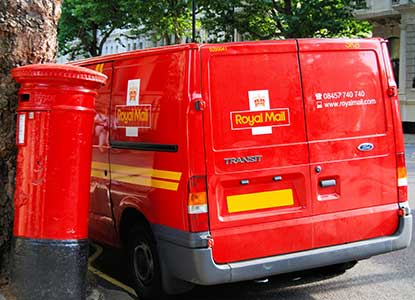
Image of post office van next to postboxIt’s been a case of third time unlucky for the postal workers’ union (CWU). It defeated the privatisation of Royal Mail in 1994 under the Tories and again in 2009 under Labour. Despite employing similar tactics of political lobbying and industrial action, on Tuesday the company was floated on the stock exchange. The share price has risen by almost 50% since then. And just a tiny handful of postal workers refused to take up the free share offer open to them.

Some have proclaimed it’s “game over” for the CWU and any planned industrial action – the left-leaning New Statesman pronounced striking now was “a little bit pointless”.

Yes, the CWU was caught on the hop by a sell-off timetable that was brought forward, a bargain basement initial share price and having to take extra time to fully check the accuracy of its membership records in order to avoid a possible high court injunction to stop any action.

But exactly the opposite is now true. So while industrial action is extremely unlikely to bring Royal Mail back into public hands any time soon – especially as the Labour leadership reneged on its own party policy within days of it being set , it is still vital. This is because it is necessary to allow the workforce to have the chance to contest what privatisation turns out be. And, that’s why postal workers today voted by 4-1 for action on a high turnout.

Continue ReadingPostal workers’ strike: Royal Mail should expect a battle royal