NHS news review & other news
Spread the love

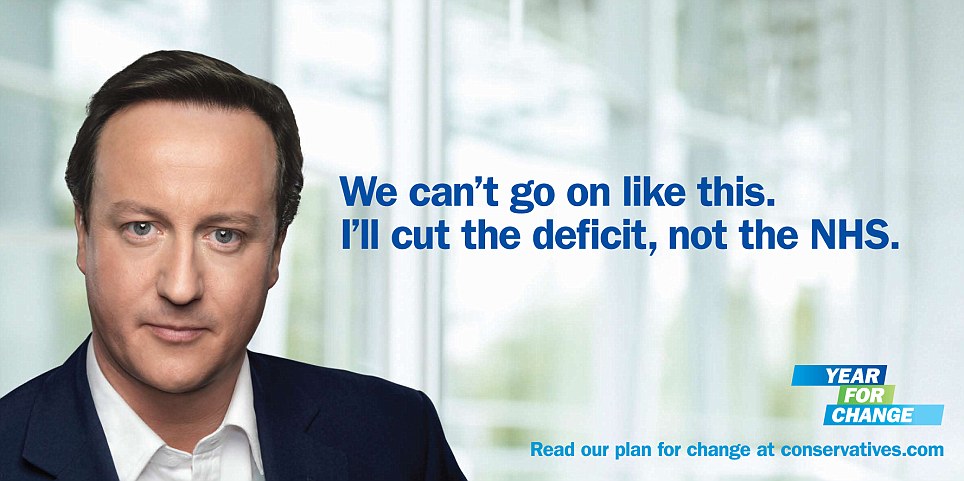
Conservative election poster 2010

A few recent news articles about the UK’s Conservative and Liberal-Democrat (Conservative) coalition government – the ConDem’s – brutal attack on the National Health Service.

Hundreds of GPs issue a rebuttal to a letter that appeared on Monday by an unrepresentative group of doctors claiming that the British Medical Association is not representative of GPs’ views on ConDem plans to destroy the NHS.

Doctors rebut claim most favour health reforms – Telegraph

Opening it up to “competing private providers” will lead to “fragmentation, chaos and damage to the quality and availability of patient care”, according to 365 GPs, specialists and health academics.

The letter is a tit-for-tat move in response to one from 56 in favour, published in Saturday’s edition.

It was written and signed by senior GPs who are leading the set up of clinical commissioning groups (CCGs), which will be handed the lion’s share of the NHS budget when primary care trusts are abolished.

They had warned that the Bill’s failure would put the health service “in peril”, arguing: “The risks of derailing the development of clinical commissioning cannot be underestimated.”

But today’s letter, signed by more than six times as many doctors, throws that language back at them.

“The NHS is not in peril if these reforms don’t go ahead,” they write. “On the contrary, it is the Bill which threatens to derail and fragment the NHS into a collection of competing private providers.”

They argue the Bill “will result in hundreds of different organisations pulling against each other leading to fragmentation, chaos and damage to the quality and availability of patient care”.

BBC News – Government offers NHS bill concessions

The government is to promise the health secretary will keep ultimate control over the NHS in England, as it pushes for Parliament to pass its NHS bill.

The legislation, which would bring a fundamental reorganisation of the service, has encountered opposition from peers and various groups.

But ministers will later table amendments aimed at quelling unrest.

These will include giving more powers to the health watchdog and doing more to encourage medical research.

Through the Health and Social Care Bill, Health Secretary Andrew Lansley is proposing the biggest shake-up since the NHS was founded in 1948.

‘Backdoor privatisation’

Under the plans, groups of GPs will take charge of much of the NHS budget from managers working for primary care trusts, while more competition with the private sector will be encouraged.

The British Medical Association, the Royal College of Nurses and the Royal College of Midwives have all opposed the proposals, with some critics claiming they are unworkable and amount to “backdoor privatisation”.

BBC News – Private firm starts running NHS Hinchingbrooke Hospital

A private firm has become the first to start running an NHS hospital.

Circle, which is co-owned by doctors, has taken on managing Hinchingbrooke Hospital, Cambridgeshire, which had been threatened with closure as it grappled with £40m of debt.

Circle aims to find a solution to the debt problems of the hospital by attracting new patients.

Union Unison said although the hospital had been saved, it was concerned at involving private firms in the NHS.

Lansley pledges a million more people will have access to an NHS dentist | Mail Online

NHS dentists are to treat an extra million patients following a shake-up in funding.

Health Secretary Andrew Lansley will today pledge that everyone who lost their NHS dentist since 2006 will now have access to one.

The Coalition has set aside £28million, trimmed from the NHS budget via efficiency savings, to pay for the new patients.

The funding will be given to primary care trusts, who have bid for the cash by setting out proposals to expand local services.

They will fund new dentists, increase the number of appointments with existing ones, or provide care in people’s homes for patients who cannot travel to a surgery. Between 2006 and 2008, a million Britons lost access to an NHS dentist.

In other news:

There’s a difference between a veto and an abstention or voluntary exclusion. The difference is that a veto prevents something from happening. David Cameron has a different interpretation of a veto.

Any suggestions for an improved name for this beer? Unloved, Discarded Mutt Ale? Muttley Ale? What a howler? Barking Mad?

Why that veto looks less like a victory | Mail Online

Less than two months ago David Cameron said ‘no’ to Europe. He vetoed a treaty agreed by every other EU member state to impose tighter fiscal disciplines across Europe.

As a result of his veto, Britain rejoiced. Just in time for Christmas, the Prime Minister won his best ever press coverage. His ratings soared. Finally we had someone in Downing Street who wasn’t afraid to upset other EU leaders.

The moment seemed exciting, even historic. Many on both sides of the great European debate – sceptics and enthusiasts – concluded that Britain was now in the EU’s departure lounge and it was only a matter of time before Britain formed a very different relationship with Brussels.

But today Cameron’s Christmas veto looks much less significant than it did. After he used it, he repeatedly promised to stop the countries which had signed that new treaty from using European institutions such as the European Court of Justice – which are part funded by British taxpayers – to implement and police it.

This week it became clear that he was not going to fulfil that promise. His resounding ‘no’ has become a tepid ‘oh, go on then’. Little wonder that Ed Miliband taunted the Prime Minister yesterday, saying the veto turned out to be just for Christmas, not for life.

Wheelchair users block Oxford Circus to protest at disability cuts | Society | The Observer

‘We’re not scroungers and fakers’ say wheelchair protesters

Disability activists blocked one of central London’s busiest road junctions on Saturday with a line of wheelchair users chained together in the first of a series of promised direct action protests against government welfare cuts.

The demonstration, which brought much of Oxford Circus to a standstill for more than two hours, was the product of an alliance between disabled groups and UK Uncut, which came to prominence by staging similar direct actions against corporations accused of avoiding tax.

Planned cuts to the disability living allowance could see 500,000 disabled people losing money, the charity Mencap has said.

Many of those taking part said they had never before joined a demonstration, let alone taken such direct action, but felt angry at the proposed cuts and the associated rhetoric from ministers and the media.

“The tabloids have created this idea that we’re scroungers, or fakers,” said Steven Sumpter, 33, who left his home in Evesham, Worcestershire, at 6.30am. “This has allowed the government to do this [propose the cuts]. Disabled people are seen as a good scapegoat.”

BBC News – Ministers seek to overturn peers’ welfare bill changes

The government will seek to overturn seven defeats inflicted by the House of Lords to its Welfare Reform Bill later.

Ministers will urge the Commons to reject peers’ amendments to the bill, including those to disability allowances proposed on Tuesday.

They will also rule out Labour calls to scrap a £26,000 benefits cap in favour of variable limits for different localities, calling them “unworkable”.

Labour says the government needs to create jobs before cutting benefits.

Far-reaching changes to welfare entitlements are needed, ministers argue, to help people out of dependency on the state, increase incentives for work and make the benefits system fair to both claimants and taxpayers.

But campaigners say the proposals – which ministers also hope will save billions – risk pushing already vulnerable people into further hardship and distress.

A reputation shredded: Sir Fred loses his knighthood | Business | The Guardian

Ex-RBS chief executive pays price for role in the recession, leading to calls for others to be stripped of honours

The former chief executive of the Royal Bank of Scotland, Fred Goodwin, has been stripped of his knighthood by the Queen for his role in the creation of the biggest recession since the second world war.

With unceremonial haste, a committee of five senior civil servants took away the knighthood given to Goodwin by the last Labour government in 2004 for services to banking.

The chancellor, George Osborne, welcoming the move, said: “RBS came to symbolise everything that went wrong in the British economy over the past decade.”

Which is a handy distraction for the ConDems from this story whereby they were previously claiming that they could not intervene in obscene bonuses for bankers.

Labour vows to maintain pressure on RBS bonuses | Business | The Guardian

Ed Miliband says Stephen Hester bonus row cannot be a one-off as party pledges to look at payments to other senior bank staff

Labour has said it will put further pressure on RBS executives to rein in excessive bonuses after helping to force the bank’s chief executive, Stephen Hester, to abandon his plan to take a £1m share bonus.

The shadow business secretary, Chuka Umunna, described RBS employees as public sector workers and said Labour would be taking a close look at the bonuses offered to the bank’s senior staff.

The threat of a Commons vote to condemn the size of Hester’s bonus was pivotal in persuading him to forgo his bonus, even though it had been sanctioned by the board and had the implicit endorsement of David Cameron.

The Labour leader, Ed Miliband – looking for victories to strengthen his leadership – can reasonably claim that his party effectively led the charge demanding Hester’s rethink, but now faces the challenge of setting out the wider criteria by which he will judge other salaries and bonuses in the City.

Apple criticism grows as ‘accidental activists’ make their point | Technology | guardian.co.uk

Almost 150,000 people sign online petition which calls for tech giant to clean up its act on alleged human rights abuses in China

Mark Shields, a communications worker in Washington DC, did not intend to become an activist calling for Apple to clean up its act over allegations of brutal labour abuses in its Chinese supplier network.

But, listening to a recent radio show on the subject, Shields, a dedicated user and fan of Apple products, felt he had to act. He was going to write a letter to Apple until a friend suggested he start a petition at change.org, an online group that facilitates campaigning on controversial subjects.

In its first 48 hours, Shield’s petition attracted more than 140,000 signatures. Now more 147,000 people from all around the world have signed up, and it has become one of the main focuses of consumer discontent at the way Apple makes its sleek computer products that have become a mainstay of much of modern life. “I am an accidental activist here. I have never started a petition before,” Shields, 35, told the Guardian. “I am an Apple person, I have my MacBook and iPhone. I love all that stuff. These products have changed my life, but they are coming at a cost in human suffering,” he added.

Whistleblower: MONSANTO wants to kill the bees to make way for its super bee. – World Affairs – China Forum

Soon to be whistleblower who worked for Monsanto will be releasing documents detailing how Monsanto planned to kill off bee colonies in order to introduce a “new and improved” species of bee that will only pollinate Monsanto crops

Relevant: Monsanto buys company researching death of bees:

        http://www.businessweek.com/ap/financialnews/D9Q1M0UO0.htm

        And for those who said crops aren’t pollinated by bees? You’re wrong. Alfalfa is http://blog.targethealth.com/?p=58

        And if you think Monsanto isn’t dominating our government? Read some cables released by wikileaks all about our officials asking for

talking points from them, our ambassadords urging trade wars on their behalf:

        http://themomu.wordpress.com/2011/04/02/wikileaks-cables-show-u-s-threatening-retaliation-if-europe-wont-accept-monsanto-corn/

        Are they evil enough to do this? Read up about Monsanto:

        http://www.vanityfair.com/politics/features/2008/05/monsanto200805?currentPage=1

        http://www.pakalertpress.com/2012/01/26/whistleblower-monsanto-wants-to-kill-the-bees-to-make-way-for-its-super-bee/?utm_source=feedburner&utm_medium=email&utm_campaign=Feed%3A+pakalert+%28Pak+Alert+Press%29

posted by Armando Rozário ¹²³ macanese – Cabo Frio, Brazil     –    January 30, 2012.

Continue ReadingNHS news review & other news

NHS news review

Spread the love

Conservative election poster 2010

A few recent news articles about the UK’s Conservative and Liberal-Democrat (Conservative) coalition government – the ConDem’s – brutal attack on the National Health Service.

Royal medical colleges toughen stance against NHS reforms | Politics | The Guardian

Academy of Medical Royal Colleges outline ‘significant concerns’ about coalition’s heath and social care bill

Britain’s medical establishment has decided to toughen its stance against the coalition’s controversial NHS shakeup. All but one of the 20 medical colleges that represent medical professionals have come out against the government’s proposals to change the service.

The Academy of Medical Royal Colleges (AoMRC) agreed the move on Tuesday when its members, who represent all the different medical specialities, said it held a “full, long” debate on the bill.

The Guardian has obtained a draft statement that says: “The Medical Royal Colleges and Faculties of the AoMRC continue to have significant concerns over a number of aspects of the health bill and are disappointed that more progress has not been made in directly addressing the issues we have raised.”

The medical bodies say that “unless the proposals are modified the academy believes that bill may widen rather than lessen health inequalities and that unnecessary competition will undermine the provision of high quality integrated care to patients.

“The Academy and Medical Royal Colleges are not able to support the bill as it currently stands.

“The academy is deeply concerned that the upheaval caused by the changes in the bill will distract the NHS from the huge task of meeting the current financial challenges.”

However, the Royal College of Surgeons will continue to support the “aims of the reforms”, saying that these would help “to modernise the health care system”.

Unlike the full-throated opposition of the British Medical Association, the Royal College of Nursing and the Royal College of Midwives, the draft statement says “the academy and colleges retain these concerns but they will work with the government and NHS organisations to ensure that the NHS provides the best possible care to patients should the bill become law”.

The move follows decisions by the BMA, RCN and RCM, which together represent the bulk of the NHS’s medical workforce, to call for the bill to be dropped. The NHS Confederation, which speaks for 95% of the NHS’s employers such as hospitals and ambulance services, has voiced concern at the lack of clinical support for the bill.

New Statesman – The NHS is toxic for the Tories and they know it

An increasing number of Conservative MPs are starting to think the unloved health reforms ought somehow to be killed.

David Cameron was rattled in the Commons today by an attack on his health reforms – and with good reason. The NHS reorganisation is a disaster on many fronts. It is unloved by doctors, poorly understood by the public and, after a series of mangling amendments in parliament, barely even resembles the vision first outlined by Health Secretary Andrew Lansley. The likeliest outcome from the whole thing is protracted chaos and worse services. This time it will be very hard for the Tories to blame the mess on Labour’s legacy.

Opinion polls traditionally show Labour well ahead of Conservatives in terms of who is trusted to look after the NHS. Crucially for Ed Miliband, this is also an issue that is personally associated with David Cameron. The pledge to avoid “top down reorganisations” came from Conservative leader’s lips. So did the promise to protect health spending in real terms. That will be very hard to achieve even if inflation comes down – at least not without imposing harsher cuts elsewhere. The Labour front bench think the NHS is one policy area where they might be able to puncture Cameron’s famous Teflon coating. I have even heard it said by MPs, and not just from Labour ones, that the NHS alone could cost the Tories a majority at the next election.

New Statesman – Leader: Now is Mr Cameron’s chance to halt the NHS sell-off


Mr Cameron worked hard in opposition to convince the public that the Tories could be trusted with the health service. Yet the zeal with which his government has pursued these reforms has undermined his earlier reassurances. Mr Lansley’s supporters, determined not to lose face, insist that it is “too late” to abandon the bill but that is precisely what the government should do. No reasonable person believes that the NHS, subject to enormous demographic pressures, can be preserved in aspic, but these reforms will exacerbate, rather than diminish, its challenges. Mr Cameron once spoke of his desire to put an end to “pointless reorganisations” of the health service. He will not get a better chance than this.


There is an alternative: The case against cuts in public spending – PCS

The government’s cuts strategy – and why it’s wrong

Debt as % of GDPFirstly, we need to get the ‘debt crisis’ in perspective. The table opposite shows UK debt relative to other major economies.

From 1918 to 1961 the UK national debt was over 100% of GDP. During that period the government introduced the welfare state, the NHS, state pensions, comprehensive education, built millions of council houses, and nationalised a range of industries. The public sector grew and there was economic growth.

Today, the coalition government wants to turn back the clock. It is set on dismantling the NHS and comprehensive education, and it is attacking the welfare state. It is not doing this because the country is on the verge of economic collapse, it is doing it because it is ideologically opposed to public services and the welfare state, and committed to handing over more of our public assets to big business.

Cutting public sector jobs will increase unemployment. This would mean increased costs for government in benefit payments and lost tax revenue. If people’s incomes are taken away or cut through pay freezes they will spend less. Less consumer spending means cuts in the private sector, and lower VAT revenues.
Internal analysis by HM Treasury proves this to be the case. Leaked documents estimated that over the next six years 600,000 public sector jobs would be cut, and 700,000 private sector jobs would also be lost – based on the current government’s policies.

Job cuts are therefore counterproductive. Mass job cuts would worsen the economic situation by reducing demand in the economy, and providing less tax revenue.

The government claims it can make cuts of between 25% and 40%, and still “protect frontline public services”. This is impossible – not just because ‘frontline services’ are being cut, but because services rely on ‘back office’ support staff. For example, cutting support staff like NHS cleaners has meant an increase in healthcare acquired infections, costing the NHS £1 billion. All public services require tax revenues to fund them, yet HM Revenue & Customs has cut 25,000 staff in recent years, which has led to uncollected tax at record levels and a growing tax gap.

The impact is likely to be highly divisive too. There is evidence of this already in the UK. In areas where public sector workers have already been laid off, retail sales have fallen faster than the UK average. In nations and regions where public sector workers make up a high proportion of the workforce, major public sector cuts could destroy local economies. Any attack on the public sector will also disproportionately affect women, as 68% of the public sector workforce is female. The public sector also has a much better record of employing disabled workers too.

The global race to cut labour costs is central to the economic collapse we have seen around the world. Squeezed consumers are defaulting on mortgages and personal debts, and are less able to spend in the economy. In the UK, the value of wages has declined from nearly 65% of GDP in the mid-1970s to 55% today. Over the same period, the rate of corporate profit has increased from 13% to 21%. It is no coincidence that in this period trade union rights were severely restricted, large swathes of the economy privatised, markets deregulated and corporation tax slashed.

There is an urgent need to rebalance the economy in the interests of people over big business.

The experience of Ireland

Ireland shows how cutting public spending can damage the economy. The crisis in Ireland was caused by the collapse of its banking sector. The massive cuts in spending and public sector pay that followed have
increased unemployment and sapped demand, causing the economy to shrink further. Because of this, Ireland is now considered more at risk of sovereign default than before it started making cuts. Historical research clearly demonstrates that budget cuts actually provoke increases in the national debt by damaging the economy.


Economic growth and public investment

Investing in public services is the solution to the deficit crisis. Instead of cutting jobs, we should be creating them. Jobs are not created by bullying people on benefits into jobs that don’t exist. Instead there are several areas where public sector jobs urgently need to be created.

It has been estimated that over a million ‘climate jobs’ could be created if the government was serious about tackling both climate change and unemployment – these would include areas like housing, renewable energy and public transport investment including high speed rail, bus networks and electric car manufacture.

Today there are 1.8 million families (representing over 5 million people) on council house waiting lists. There is an urgent need to build affordable housing for these people, which would also help reduce housing benefit payments.

The UK lags behind much of the rest of Europe in the development of a high-speed rail network, which would have the potential to create thousands of jobs and reduce carbon emissions by shifting passengers and freight away from road and air travel. Much of the country outside of London also needs huge investment in bus services – and, just as we should invest in electric car technology, we should also invest in electric buses and tram networks.

Only 2.2% of UK energy comes from renewable sources compared with 8.9% in Germany, 11% in France, and an impressive 44.4% in Sweden. If we are committed to tackling climate change and ensuring domestic energy security there needs to be investment in renewable energy technology.

All of these industries would generate revenue – people are billed for electricity, buy tickets to travel on public transport, and pay rent for council housing.

Research by Richard Murphy (of Tax Research) has shown that the state recoups 92% of the cost of creating new public sector jobs – through lower benefit payments and increased tax revenues.

The banks

We should never forget that it was the banking sector that caused the recession, and is ultimately responsible for the huge debts that the UK has amassed. Despite causing the crisis, the banking sector has escaped any significant regulation, and bankers are again awarding themselves huge bonuses.

Government debt as of % gdbThe table opposite clearly shows how UK debt accelerated after the banking crisis in 2008. As a result of the UK government’s £1.3 trillion bailout to the financial sector, the government still owns over £850 billion in bank assets. This figure is roughly equal to the total UK debt.

The UK has an 84% stake in RBS and a 41% stake in Lloyds TSB. In addition, the state also owns Northern Rock and Bradford & Bingley. Under public ownership and control these assets could yield significant annual income to the Government, and could be used to meet social needs and tackle financial exclusion.


The case against privatisation

As a result of the government’s agenda to slash the public sector, privatisation, outsourcing and the Private Finance Initiative (PFI) are a fast growing threat to civil and public services despite the many performance failures of past privatisations.

Privatisation is no solution to the national debt. Evidence confirms that after transfer to the private sector the terms and conditions of workers are worse than before, the public sector loses any revenue stream while ultimately keeping the risk, and services to the public decline or cost more:

  • In the DWP, welfare is now described as “an annual multi-billion pound market”, and despite the department’s own research showing that Jobcentre staff outperform the private sector in helping people back to work, all contracts for welfare programmes are now outsourced.
  • Qinetiq was a company formed from the privatisation of the Defence Evaluation and Research Agency (DERA). In 2007, the 10 most senior managers gained £107.5m on a total investment of £540,000 in the company’s shares. The return of 19,990% on their investment was described as “excessive” by the National Audit Office. In 2009, Qinetiq offered its staff a pay freeze.
  • Although the economic downturn has led to a drying up of bank finance for PFI projects, the government has got round this by funnelling public funds – through the Treasury’s Infrastructure Finance Unit – to state owned banks who then loan finance to PFI consortia (which then claim inflated returns to government for the next thirty years, greatly exceeding the money given to them). The journalist and antiprivatisation activist George Monbiot observed, “the Private Finance Initiative no longer requires much private finance or initiative”.

Public services were won by trade union struggles in an effort to establish the basis of a civilised society. Driven by the desire for maximum profits, the private sector fails to provide effective and efficient public services.


Tax justice

Addressing the ‘tax gap’ is a vital part of tackling the deficit. Figures produced for PCS by the Tax Justice Network show that £25 billion is lost annually in tax avoidance and a further £70 billion in tax evasion by large companies and wealthy individuals.

An additional £26 billion is going uncollected. Therefore PCS estimates the total annual tax gap at over £120 billion (more than three-quarters of the annual deficit!). It is not just PCS calculating this; leaked Treasury documents in 2006 estimated the tax gap at between £97 and £150 billion.

A comparison between levels of benefit fraud and the tax gapIf we compare the PCS estimate of the tax gap with the DWP estimate of benefit fraud, we can see that benefit fraud is less than 1% of the total lost in the tax gap (see diagram opposite).

Employing more staff at HM Revenue & Customs would enable more tax to be collected, more investigations to take place and evasion reduced. Compliance officers in HMRC bring in over £658,000 in revenue per employee.

If the modest Robin Hood tax – a 0.05% tax on global financial transactions – was applied to UK financial institutions it would raise an estimated £20–30bn per year. This alone would reduce the annual deficit by between 12.5% and 20%.

Closing the tax gap, as part of overall economic strategy, would negate the need for devastating cuts – before even considering tax rises.

Our personal tax system is currently highly regressive. The poorest fifth of the population pay 39.9% of their income in tax, while the wealthiest fifth pays only 35.1%. We need tax justice in personal taxation – which would mean higher income tax rates for the richest and cutting regressive taxes like VAT and council tax.


Cut the real waste

While it is not necessary to cut a penny in public expenditure due to the ‘deficit crisis’, there are of course areas of public spending which could be redirected to meet social needs.

In the civil and public services, we know there are massive areas of waste – like the £1.8 billion the government spent on private sector consultants last year. The government could get better advice and ideas by engaging with its own staff and their trade unions.

There is also the waste of the government having 230 separate pay bargaining units, when we could have just one national pay bargaining structure.

There are also two other large areas where government costs could be cut.

Trident

The current Trident system costs the UK around £1.5 billion every year.

A private paper prepared for Nick Clegg (in 2009, when in opposition) estimated the total costs of Trident renewal amounting to between £94.7bn and £104.2bn over the lifetime of the system, estimated at 30 years. This equates to £3.3bn per year.

At the time Nick Clegg (now Deputy Prime Minister) said: “Given that we need to ask ourselves big questions about what our priorities are, we have arrived at the view that a like-forlike Trident replacement is not the right thing to do.”

The 2010 Liberal Democrat manifesto committed the Party to: “Saying no to the like-for-like replacement of the Trident nuclear weapons system, which could cost £100 billion.”

PCS policy is to oppose the renewal of Trident and invest the money saved in public services, whilst safeguarding Ministry of Defence staff jobs.

War in Afghanistan

The war in Afghanistan is currently costing £2.6 billion per year. The war is both unwinnable and is making the world less safe. More important than the financial cost are the countless Afghan and British lives that are being lost in this conflict.


The PCS alternative…

  • There is no need for cuts to public services or further privatisations
  • Creating jobs will boost the economy and cut the deficit. Cutting jobs will damage the economy and increase the deficit
  • We should invest in areas such as housing, renewable energy and public transport
  • The UK debt is lower than other major economies
  • There is a £120 billion tax gap of evaded, avoided and uncollected tax
  • The UK holds £850 billion in banking assets from the bailout – this is more than the national debt
  • We could free up billions by not renewing Trident
  • End the use of consultants

What you can do

  • Spread the word! Share this page with friends on social networking sites using the buttons below
  • Get involved in campaigns and events, and keep informed at our campaigns pages
  • Unite with other local trade unions and community groups
  • Recruit your colleagues to the union – there’s never been a more important time to join PCS
  • Lobby your local politicians against public service cuts and against the attack on our jobs and conditions


Continue ReadingNHS news review

NHS news review: Lansley responds to criticism

Spread the love

Conservative election poster 2010

A few recent news articles about the UK’s Conservative and Liberal-Democrat (Conservative) coalition government – the ConDem’s – brutal attack on the National Health Service.

Health Secretary Andrew Lansley responds to criticism by a committee of MPs by calling their brand new report “out of date” and “unfair”.

MPs criticise Lansley over viability of health cuts / Britain / Home – Morning Star

The government’s controversial NHS shake-up is hindering efforts to find ways of slashing health spending without cutting vital services, MPs warned yesterday.

In a highly critical report, the health select committee said hospitals were resorting to short-term “salami slicing” as they try to find £20 billion in efficiency savings by 2014/15.

But in a stinging criticism of Health Secretary Andrew Lansley’s reorganisation, it said the process “continues to complicate the push for efficiency gains.”

There was a “marked disconnect between the concerns expressed by those responsible for delivering services and the relative optimism of the government” over achieving cuts, the committee noted.

The attack is especially wounding as the committee is chaired by former Tory health minister Stephen Dorrell and is dominated by Conservative and Lib Dem MPs.

It comes days after all the major health unions – representing doctors, nurses and midwives – expressed their “outright opposition” to the Health and Social Care Bill.

The British Medical Association, the Royal College of Nursing and the Academy of Medical Royal Colleges are also holding a summit on Thursday evening to discuss the Bill.

RCN concerns echoed by MPs – RCN

The Royal College of Nursing has today (24 January) responded to a Health Select Committee report into public expenditure saying it agrees that forging ahead with reforms has caused disruption and distraction at a time of austerity within the NHS.

“We concur with the report findings,” said RCN Chief Executive & General Secretary Dr Peter Carter. “We feel that the dual impact of the reform process and the full extent of the efficiency savings is now seriously destabilising the NHS. Indeed, in our opinion the bill has created such turmoil that it should be stopped. Now is the time for the Government to get a grip of the situation and work with organisations such as the RCN to stabilise the health service.”

The findings of the Health Select Committee chime with many of the concerns nursing staff have raised about efficiency savings. RCN research has shown that some NHS trusts are making short-term cuts to services and nursing posts in an attempt to make savings, rather than engaging in intelligent service redesign. The RCN says that in England alone, 48,000 NHS posts are earmarked to go.

“This will undoubtedly have a deep and potentially dangerous impact on patient care,” added Dr Carter. “As the report acknowledged, long-term planning and more integrated health and social care services could provide huge benefits for patient care.

Andrew Lansley: criticism of NHS reforms is ‘out of date and unfair’ – Telegraph

Andrew Lansley, the Health Secretary, has defended his NHS reforms, describing a highly critical report by MPs as “out of date” and “unfair” to the health service.

Mr Lansley insisted that the NHS was delivering efficiency savings and improvements for patients following a warning from MPs that the overhaul of the NHS is hindering efforts to slash health spending without cutting vital services.

“I think the select committee’s report is not only out of date but it is also, I think, unfair to the NHS, because people in the NHS, in hospitals and in the community services are very focused on ensuring that they deliver the best care to patients and that they live within the financial challenges that clearly all of us have at the moment,” Mr Lansley told ITV Daybreak.

“I am afraid the evidence points to the fact that they are doing that extremely well.”

His remarks follow a highly critical report from the Commons Health Select Committee which said hospitals were resorting to short-term “salami slicing” as they try to find £20 billion in efficiency savings by 2014/15.

In a stinging criticism of Mr Lansley’s reorganisation, it said the process “continues to complicate the push for efficiency gains”.

Continue ReadingNHS news review: Lansley responds to criticism

NHS news review

Spread the love

Conservative election poster 2010

A few recent news articles about the UK’s Conservative and Liberal-Democrat (Conservative) coalition government – the ConDem’s – brutal attack on the National Health Service.

Health reform in new crisis as MPs savage Andrew Lansley’s plans | Politics | The Observer

Andrew Lansley’s health reforms face a fresh crisis as a powerful committee of MPs says the changes are obstructing efforts to make the NHS more efficient and that they fail to address the most urgent health challenge of modern times – how to care better for an expanding elderly population.

A highly critical report by the cross-party select committee on health, due to be published on Tuesday or Wednesday, comes as the medical establishment prepares to stage its own summit on Thursday to discuss concerns over the health and social care bill. The report, a late draft of which has been seen by the Observer, will cause alarm in Downing Street as it is the work of a committee with a Tory and Liberal Democrat majority and is chaired by Stephen Dorrell, a former Conservative health secretary.

One of its key messages is that Lansley’s far-reaching attempts to restructure the NHS in England and devolve more power to GPs are making it more difficult to deliver on a separate target of £20bn of efficiency savings by 2014-15. The report echoes the widespread view in the medical profession that it is deeply unwise to be inflicting far reaching structural reform on the NHS at the same time as asking it to make huge savings.

The MPs say that instead of finding savings by innovation and greater efficiency, many hospitals and trusts are simply cutting services, despite Lansley’s assurances that this would not happen. It says: “The reorganisation process continues to complicate the push for efficiency gains. Although it may have facilitated savings in some cases we heard that it more often creates disruption and distraction that hinders the ability of organisations to consider truly effective ways of reforming service delivery and releasing savings.”

Nick Clegg defends NHS reforms as MPs criticise plans | Society | The Guardian

Nick Clegg has defended the coalition government’s NHS reforms in England, saying the health service could not be “frozen in time”, following a barrage of criticism from a cross-party group of MPs.

The deputy prime minister insisted ministers had gone a long way to allay concerns over the future of the NHS. A report from the Commons health select committee this week, a late draft of which was seen by the Observer, is expected to warn that far-reaching attempts to restructure the NHS will make it more difficult to deliver £20bn of efficiency savings by 2014-15.

Clegg told the BBC’s Andrew Marr Show on Sunday: “We have said there is going to be no privatisation of the NHS by the back door … and that there is a proper way to account for the NHS, but we don’t want people to think that we can freeze [the NHS] in time and it will all be OK.

“I haven’t seen [the report], but of course we will look at it. There is a totally legitimate question [asked by the committee] about how you conduct reform when at the same time you are making savings.”

Clegg said that making people on the front line more responsible for the use of NHS money would help, not hinder. He said: “I think that no one should believe we are helping the NHS by sticking our heads in the sand and saying ‘no change’.”…

Video: Health reforms will push NHS ‘over a cliff’ – Telegraph

Shadow Secretary of State for Health Andy Burnham says that the Government’s controversial health reforms threaten to push the NHS “over a cliff edge”.

Mr Burnham accused the coalition of reneging on its promise not to impose ‘top down reorganisation’ and claimed that the proposed changes to the NHS may be dangerous.

“I think if these changes go ahead it will be the end of the National Health Service as we know it. It will be a plan to put market forces at the very heart of our health services. In essence it is a privatisation plan for the NHS,” said Mr Burnham.

Andrew Lansley’s health reforms are contained in the health and social care bill, which will return to the House of Lords next month. This Thursday the British Medical Association, health workers unions and other interested parties who want the bill scrapped will hold a summit in London.

Continue ReadingNHS news review

NHS news review

Spread the love

Conservative election poster 2010

A few recent news articles about the UK’s Conservative and Liberal-Democrat (Conservative) coalition government – the ConDem’s – brutal attack on the National Health Service.

Royal Colleges and the BMA (British Medical Association) restate their opposition to evil Con-Dem coalition government attempts to abolish the NHS. Lying scumbag and Health Secretary Andrew Lansley responds by claiming that they actually support his plans despite their repeatedly stated opposition and by accusing them of acting politically.

Huge increases in waiting times.

BMA rejects changes to pension schemes.

NHS cuts, etc

Unions use NHS reforms to ‘have a go at Government’, says Lansley – Health News – Health & Families – The Independent

Relations between the Government and health professionals sank to a new low after Andrew Lansley accused them of opposing his NHS reforms because they were upset about cuts to their pay and pensions.

Union leaders reacted furiously to the Health Secretary’s claim that they wanted “to have a go” at the Government and his suggestion that they were not addressing his NHS shake-up on its merits. Mr Lansley is under fresh pressure after the Royal College of Nursing (RCN) and Royal College of Midwives (RCM) joined the British Medical Association in calling on the Coalition to drop its NHS and Social Care Bill.

Mr Lansley told the BBC the legislation was essential in order to give nurses and doctors clinical leadership. He said: “[The RCN] used to be a professional association that was working with us on professional issues and will carry on doing that, but now the trade union aspect of the Royal College of Nursing has come to the fore, they want to have a go at the Government… about things like pay and pensions.” He added: “It’s a purely political operation.”

Mr Lansley claimed the RCN and RCM supported the principles of the Bill. “What they are actually unhappy about is pay, pensions and jobs. I complete understand that. But if there were no Bill the same issues would have to be addressed. We inherited a deficit, we are having to manage the NHS within limited increases, but actually next year the NHS budget is going to go up by 2.8 per cent.”

Mr Lansley denied suggestions that his decision to allow hospitals to raise 49 per cent of their income from private patients was an issue, as hospitals had no limit at the moment. “You have to see the political nature of this. The RCN does not like private activity,” he said. But Dr Peter Carter, general-secretary of the RCN, rejected Mr Lansley’s claims, saying: “We are disappointed that the Secretary of State would suggest that nurses and healthcare assistants would put self interest before that of patients.”

Related: Health staff tell minister: drop the NHS Bill / Britain / Home – Morning Star

‘Scrap the reforms’ says RCM – Royal College of Midwives

Nurses’ union backs calls to scrap Health Bill | GPonline.com

Physios urge Government to look again at plans for the future of the NHS | The Chartered Society of Physiotherapy

Video: Shadow health secretary: too dangerous to go ahead with NHS reforms – Telegraph

43pc rise in patients waiting too long for NHS treatment since election – Telegraph

The number of hospital patients forced to wait more than 18 weeks for NHS treatment has risen by almost half since the Coalition came to power, new figures show.

In May 2010, 20,662 patients referred for treatment in hospital had to wait longer than the recommended time, according to Department of Health data.

But by last November that figure had grown to 29,508 – an increase of 8,846, or 42.8 per cent.

A third of hospital trusts across England (47) are now failing to meet the goal of 90 per cent of their inpatients being seen within 18 weeks of being referred by a GP – almost four times as many as in the middle of 2010.

The NHS no longer lets GPs like me offer routine operations | Ann Robinson | Comment is free | The Guardian

Healthcare rationing is now everywhere – and don’t think being slim and a non-smoker makes you immune

If you’re overweight or you smoke, you won’t be able to have your hip replaced or your gallbladder removed. Before being put on a waiting list, you’ll have to make efforts to mend your wicked ways. That is what one consortium of GPs in Hertfordshire has decided. And with the government determined to save £60bn from the NHS, it’s unlikely to be the last to agree to this kind of rationing of resources.

Fair enough, you may say. The risks of operations are reduced if you are slim and don’t smoke. Obesity contributes to osteoarthritis of the hip and gallstones, as well as diabetes and high blood pressure. Every smoker in the land must know that they are running an increased risk of lung cancer, and lung and heart disease. Clearly, the risks of anaesthetic complications are higher if you’re a heavy smoker or very fat. And why should slim, non-smoking taxpayers bear the cost of the lumpen puffers?

But this cannot be a defensible position. The Hertfordshire GPs are surely going to have to rethink. Their ruling will potentially affect nearly one quarter of all adults in their area (in 2009 22% of men and 24% of women in England were obese – with a body mass index over 30), and a third of women and nearly half of men if they include overweight people (with a BMI of 25-30). It is completely unrealistic to assume that telling people they can’t go on the waiting list for a much-needed operation until they lose weight will yield any result except despair. Fat is a class issue nowadays. The richer you are, the less likely you are to be fat. Healthy food’s expensive. The factors are complex, and responsibility lies with individuals, schools, health professionals, government and the food and advertising industries – not with a bunch of GPs flexing their commissioning muscle.

BBC News – Cuts hit Welsh NHS patient safety, says Royal College of Nursing

Patient safety in Welsh hospitals is being compromised by a drive to save money, says a nursing union.

The Royal College of Nursing (RCN) says the Welsh government has warned NHS managers to hit financial year-end targets despite a £50m shortfall.

RCN Wales director Tina Donnelly said members in several health boards reported concerns on patient safety.

The Welsh NHS Confederation denied safety was being undermined and said it remained a priority.

Ms Donnelly said nurses had reported having to work shifts with reduced staff numbers, as well as experiencing shortages of basics such as bed linen.

“They really are finding it very, very difficult in the last three months of this financial year,” she said.

“Staffing levels are a lot lower and also their grading is being reduced, which reduces the level of supervision which they are able to have in clinical practice.”

BMA rejects proposed changes to NHS Pension Scheme – HR News, Talent Management News, HR Jobs, Senior HR Jobs | askGrapevine HR

The British Medical Association (BMA) is urging the government to reconsider their pension plans as thousands of doctors may take industrial action.

A meeting of BMA Council, the association’s governing body, resulted in the decision to reject the government’s recent pension propositions – in support of the views of tens of thousands of doctors and medical students.

A national survey of 46,000 found that 84% wanted to reject the latest proposals, while 63% would be willing to take industrial action to pursue changes. Over a third of doctors aged 50 and over said they will retire early if the current changes go ahead.

The government’s current proposals include a rise in members’ contributions, those that currently pay 8.5% will pay 14.5%, an increase in the Normal Pension Age resulting in new doctors having to work until they are 68 and a change in pension accrual methods, to a career average revalued earnings (CARE) scheme for all doctors.

Dr Hamish Meldrum, Chairman, BMA Council says: “Doctors are at the forefront of attempts to save the NHS £20 billion, while trying to protect patient care, are in the midst of huge system reform in England, which is causing chaos in many areas, and are about to enter a fourth successive year of a pay freeze.

“Now on top of this, they are facing wholesale changes to their pension scheme, which was radically overhauled less than four years ago and is actually delivering a positive cashflow to the Treasury.

“Industrial action remains a last resort and the Government must urgently reconsider its damaging plans. The action we are considering is unprecedented in recent decades. This demonstrates the current level of discontent among NHS staff.”

27/11/13 Having received a takedown notice from the Independent newspaper for a different posting, I have reviewed this article which links to an article at the Independent’s website in order to attempt to ensure conformance with copyright laws.

I consider this posting to comply with copyright laws since
a. Only a small portion of the original article has been quoted satisfying the fair use criteria, and / or
b. This posting satisfies the requirements of a derivative work.

Please be assured that this blog is a non-commercial blog (weblog) which does not feature advertising and has not ever produced any income.

dizzy

Continue ReadingNHS news review