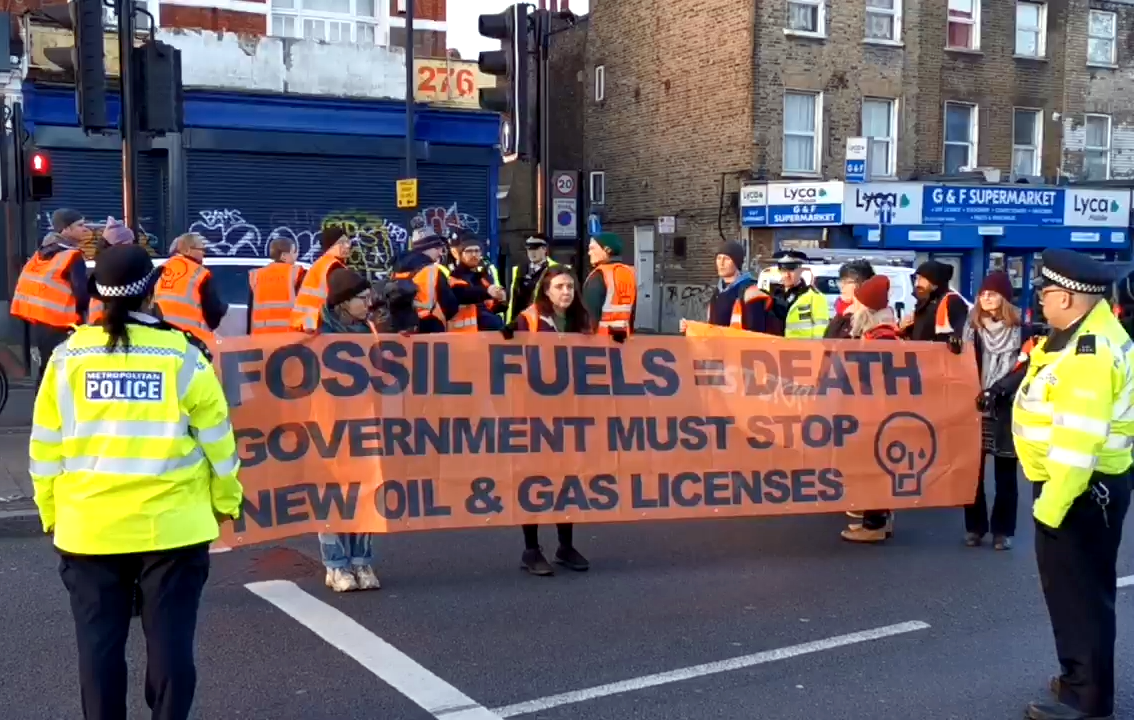
Week of Protests Over Equinor’s Media Sponsorship Greenwashing

Spread the love

Original article by Adam BarnettPhoebe Cooke and Ellen Ormesher republished from DeSmog

Eldar Saetre, CEO of Equinor. Credit: Jeff Gilbert / Alamy

Campaigners likened the fossil fuel company’s patronage of climate events to letting an “arsonist sponsor a fire safety conference”.

Major media companies have sparked a wave of criticism after allowing a Norwegian oil and gas company behind the UK’s largest new North Sea project to sponsor events on climate change.

Equinor was an official sponsor of two conferences on climate and energy this week, one run by the New Statesman magazine, and one run by Politico. Both saw MPs pull out over the sponsorship, while the first was interrupted by a climate activist. 

The Norwegian state-owned company has a majority stake in the Rosebank North Sea oil field, which has been dubbed a “carbon bomb” by environmental law charity ClientEarth. 

Equinor claims it supplies 27 percent of the UK’s energy from oil and gas, and is currently investing $6 billion (£4.8 billion) a year in fossil fuel exploration and drilling.

“Allowing fossil fuel companies like Equinor to sponsor and speak at climate conferences is as absurd as allowing an arsonist to sponsor and participate in fire safety conferences,” said Carys Boughton of the Fossil Free Parliament campaign. “At this critical time for climate and energy policy-making, we can’t afford this absurdity.”

Equinor’s sponsorship of these events is the latest example of fossil fuel companies using media partnerships to greenwash their polluting activities. 

An investigation by DeSmog and Drilled in December detailed how oil and gas companies are using media deals – including partnerships with Politico, the Economist, the Financial TimesReuters, and the Washington Post – to present a climate-friendly image. 

DeSmog also revealed this week, based on documents released by a powerful U.S. congressional committee, that fossil fuel companies believe these media partnerships help to protect their “social licence to operate”.

Michelle Amazeen, a mass communications researcher at Boston University, said that oil and gas sponsorship is “a strategic move by fossil fuel companies to compromise the integrity of events intended to foster dialogue and action around climate issues”. 

She added that, “While the sponsorship gives the impression of caring about the environment, it’s a veneer that’s like an oil slick obscuring the actual conduct of the fossil fuel industry.”

This week, a cross-party group of 50 MPs, including three Conservatives, wrote to Prime Minister Rishi Sunak urging him to end the licensing of new oil and gas fields, appoint a climate envoy, and back the Beyond Oil and Gas Alliance, an international coalition working to facilitate a global phase-out of oil and gas production.

Alice Baxter, Equinor’s UK spokesperson, said: “At Equinor we believe in openness and the importance of engaging in the complex conversations around the energy transition. We respect everyone’s right to protest and encourage robust debate.”

New Statesman Event 

Equinor was one of the sponsors of the New Statesman’s Energy and Climate Change Conference on 14 May at the Leonardo Royal Hotel in south London.

Green Party MP Caroline Lucas pulled out of the event last week due to Equinor’s sponsorship.

At the event, attended by DeSmog, the second panel discussion featured Equinor’s UK country manager Alex Grant. The session was entitled “How can the UK lead the world in the green transition?”

When it was Grant’s turn to speak, a Fossil Free London activist in the audience stood up and gave a speech criticising Equinor and its sponsorship of the event.

The activist said climate scientists “are warning us that we are headed towards a catastrophic 2.5C of global warming. Yet staggeringly, Equinor, that’s sponsoring this event, is opening the largest undeveloped oil field in the North Sea.” 

Labour MP Meg Hillier, who chairs the Public Accounts Committee and was on the panel, interjected: “Why don’t you let us talk about it, because I’m actually here to be pretty critical of the government, I’d quite like to get my points across.” 

The protester continued her speech, and was removed by security. Her comments received a round of applause from the audience. 

Grant replied by saying that Equinor takes a “pragmatic approach” to the energy transition, as opposed to one that “costs more than it needs to”. He also defended the Rosebank project, saying it would reduce carbon emissions over the long term.

Rosebank could produce around 300 million barrels of oil over its lifetime, emitting 200 million tonnes of carbon dioxide. 

Questions at the New Statesman event were submitted online, rather than asked in person by the audience. 

During the event’s final session with Chris Stark, the former chief executive of the Climate Change Committee, which advises the government on its climate policies, DeSmog submitted a question about Equinor and Rosebank’s impact on the climate. The question was not posed to the panel. 

The latest issue of the New Statesman magazine, which features an interview with climate scientist and author Michael Mann, includes advertorials from biomass company Drax, which is the UK’s largest single source of CO2 emissions, and Calor Gas, one of the UK’s largest suppliers of liquefied petroleum gas.

The New Statesman hosted a number of events at the 2023 Labour Party conference sponsored by fossil fuel companies and lobbying groups, including Cadent, National Gas, and Offshore Energies UK

The New Statesman did not respond to DeSmog’s request for comment. 

Politico Event

On 16 May, Politico held its own Energy and Climate Summit, also sponsored by Equinor. 

Labour MP Alex Sobel, who chairs the All-Party Parliamentary Group on Net Zero, last week pulled out of the event due to Equinor’s sponsorship. 

At the event, attended by DeSmog, a panel on Carbon Capture and Storage (CCS) featured David Cairns, a former British ambassador to Sweden and now Equinor’s vice president of political and public affairs. 

When questioned by the Politico chair, Cairns confirmed that the company had no plans to set targets for phasing out oil and gas.

He also said it was “debatable” whether the oil and gas industry was making large profits. Equinor reported £28 billion in profits in 2023. Cairns added that it was “really misplaced” to think that the oil and gas industry is an “easy business in which it’s easy to make money”.

A Politico spokesperson said: “This multi-sponsored Energy and Climate UK Summit is an extension of Politico’s ongoing and robust coverage of climate policy in the United Kingdom. 

“There is a clear division between Politico’s newsroom and our commercial operations. With critical milestones and a general election on the horizon, we continue to cover climate each day through our dedicated reporting.”

Politico’s influential London Playbook newsletter has this week been sponsored by the oil and gas giant BP. 

Michelle Amazeen said that fossil fuel sponsorship of media companies “has delegitimised their journalistic content, opened their journalists up for attack, and has even led to the resignation of journalists who are trying to write about climate issues”.

Equinor’s AGM 

Equinor also faced further public criticism this week, when on Tuesday the company was confronted by a climate activist at its annual general meeting (AGM).

Lauren MacDonald of the environmental group Uplift delivered a four minute speech about the company’s impact on the planet, and promised that campaigners would not stop opposing Rosebank or the company’s other fossil fuel projects.

At the meeting, shareholders rejected a resolution calling on the company to align its strategy and spending with climate goals.

“We invest in the energy the world needs now. That is oil and gas,” Equinor’s chief executive Anders Opedal said.

Tessa Khan, executive director at Uplift, told DeSmog: “Try as it might, Equinor can no longer ignore the scale of opposition to its climate-wrecking business model – it’s not just campaigners who are calling out its harmful mission, it’s also politicians pulling out of Equinor-sponsored events and shareholders demanding it ditch its plans of endless oil and gas expansion.

“Even if Equinor wants to stay silent, these demands for accountability will only get louder. Governments in the UK and Norway – who can’t afford to ignore this chorus of voices – must reject Equinor’s delay tactics and insist that their activities don’t further endanger our climate. As a first step, this means rejecting new oil and gas fields, and pulling the plug on disastrous projects like Rosebank.”

All-Energy and Dcarbonise

Equinor was not the only fossil fuel company to sponsor climate events this week. 

On Wednesday, climate protesters disrupted the All-Energy and Dcarbonise event in Glasgow, which describes itself as “The meeting place for the renewable and low carbon energy community”, yet featured paid exhibitions from oil and gas majors BP and Shell. 

Protesters from Stop Polluting Politics, and Fuel Poverty Action interrupted a speech by Scotland’s Net Zero and Energy Secretary Màiri McAllan, and a pre-recorded video of UK Energy and Net Zero Secretary Claire Coutinho. Both appeared alongside Louise Kingham, a senior vice president at BP. 

“As the lethal reality of climate breakdown becomes unmissable, the PR strategies of big fossil fuel companies like Equinor and Shell reveal their growing isolation, and an increasingly desperate attempt to buy friends,” said Andrew Simms, a director of the New Weather Institute and a co-founder of the Badvertising campaign.  

“They are the unwelcome guests at the party with everyone waiting for them to leave, but who keep buying rounds for anyone willing to drink with them in order to stay.”

Original article by Adam BarnettPhoebe Cooke and Ellen Ormesher republished from DeSmog

Rishi Sunak on stopping Rosebank says that any chancellor can stop his huge 91% subsidy to build Rosebank, that Keir Starmer is as bad as him for sucking up to Murdoch and other plutocrats and that we (the plebs) need to get organised to elect MPs that will stop Rosebank.
Image of InBedWithBigOil by Not Here To Be Liked + Hex Prints from Just Stop Oil's You May Find Yourself... art auction. Featuring Rishi Sunak, Fossil Fuels and Rupert Murdoch.
Image of InBedWithBigOil by Not Here To Be Liked + Hex Prints from Just Stop Oil’s You May Find Yourself… art auction. Featuring Rishi Sunak, Fossil Fuels and Rupert Murdoch.
Continue ReadingWeek of Protests Over Equinor’s Media Sponsorship Greenwashing

Government defeated in High Court over climate plans

Spread the love

https://www.bbc.co.uk/news/science-environment-68947242

The government has been defeated in court – for a second time – for not doing enough to meet its targets for cutting greenhouse gas emissions.

Environmental campaigners argued that the energy minister signed off the government’s climate plan without evidence it could be achieved.

The High Court ruled on Friday that the government will now be required to redraft the plan again.

In response the government defended its record on climate action.

A Department for Energy Security and Net Zero spokesperson said: “The UK can be hugely proud of its record on climate change. We do not believe a court case about process represents the best way of driving progress towards our shared goal of reaching net zero.”

The legal challenge was brought by environmental groups Friends of the Earth, ClientEarth and The Good Law Project.

Tony Bosworth, lead campaigner at Friends of the Earth, said it was “an embarrassing day for the government”.

Speaking outside the court to BBC News he said: “What we now need to see is a climate plan which is robust, which is comprehensive and which is fair, which makes sure we meet all our climate targets, and which does that in a way which doesn’t leave anybody behind.”

https://www.bbc.co.uk/news/science-environment-68947242

Continue ReadingGovernment defeated in High Court over climate plans

Watchdog confirms government may have broken law on river pollution

Spread the love

https://leftfootforward.org/2024/01/watchdog-confirms-government-may-have-broken-law-on-river-pollution/

The Office for Environmental Protection (OEP), the government’s own environmental watchdog, has confirmed that the government may have broken environmental law by the watering down of critical regulations on the pollution of rivers in England.

The disclosure was made in response to a legal complaint made by ClientEarth and the Worldwide Fund for Nature (WWF) in November 2022 against the Environmental Agency for its failure to monitor and enforce environmental protections on nitrogen pollution.

The complaint was based on Freedom of Information (FOI) requests submitted by WWF and ClientEarth. The FOIs revealed that between January 2020 to December 2021 the Environment Agency conducted 2,213 inspections of three key agricultural regulations, identifying breaches in almost half of farms. However, only one case was issued with a civil sanction.  

According to ClientEarth and WWF, these inspections represented just 2 percent of farms each year, suggesting that the Environment Agency has “little idea of the scale of law breaking taking place and of the damage being currently done to the environment.”

Given the high levels of nitrogen pollution in England, WWF and ClientEarth accused the Environment Agency of “an unlawful abdication of its statutory responsibilities.”

In response to the WWF and ClientEarth’s complaint, the OEP agreed that the Environment Agency had potentially breached environmental law by failing to adequately assess environmental impacts on protected conservation sites before allowing farmers to exceed manure spreading limits. English rivers are particularly at risk of nitrogen-related pollution, with over half the country classified as vulnerable to nitrogen run-off.

https://leftfootforward.org/2024/01/watchdog-confirms-government-may-have-broken-law-on-river-pollution/

Continue ReadingWatchdog confirms government may have broken law on river pollution

Lawsuit Targets Shell’s Board of Directors Over Energy Transition Plans

Spread the love

Original article by Dana Drugmand republished from DeSmog according to its republishing agreement.

Shell admits in internal documents it has “no immediate plans to move to a net-zero emissions portfolio.”

Series: CLIMATE CHANGE LAWSUITS

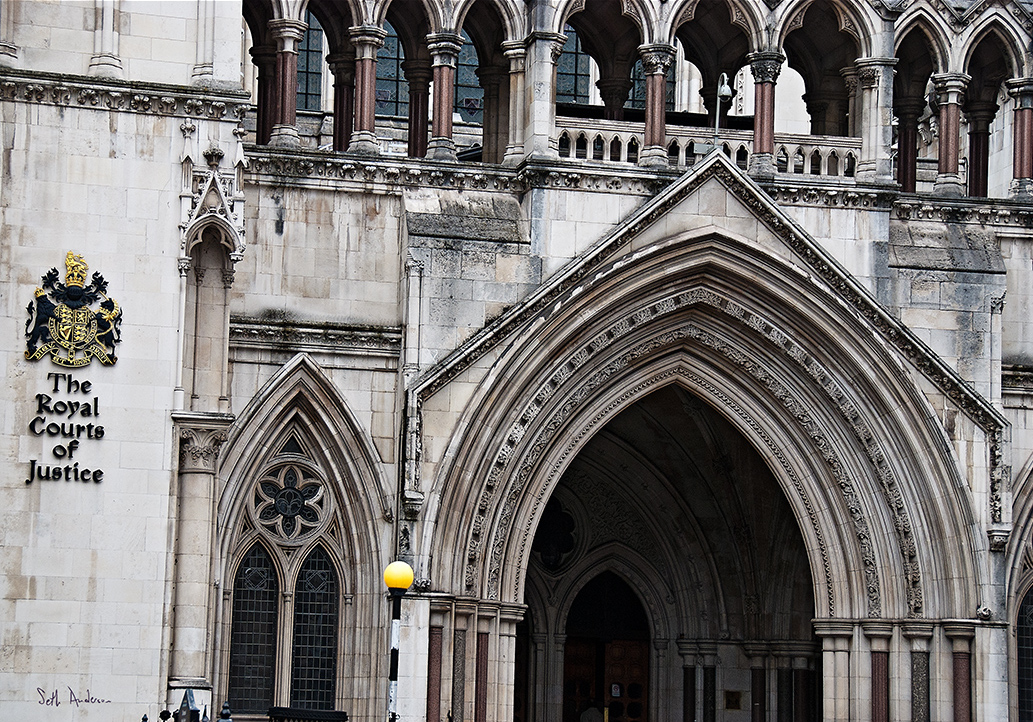
Exterior view of the Victorian Gothic arched doorways and windows of the pale stone Royal Courts of Justice building
The entrance to the Royal Courts of Justice in London, which houses the UK High Court. Credit: Derived from the original by Seth AndersonCC BY-NC-SA 2.0

Shell’s board of directors officially has been served with a world-first lawsuit aiming to hold its corporate directors personally liable for alleged mismanagement of climate risk. The lawsuit, filed Thursday by UK-based environmental law organization ClientEarth, contends that Shell’s strategy to address climate change and manage the energy transition fails to align with the objectives of the Paris Agreement and leaves the company in a vulnerable position as society shifts away from fossil fuels.

ClientEarth alleges that inadequate climate strategy by Shell and improper management by the board amounts to violations under the UK Companies Act. ClientEarth, itself a token shareholder in Shell, filed its case in the High Court of England and Wales in London and is suing the company’s 11 directors. Institutional investors with collective holdings of over 12 million shares in Shell are supporting the legal action, which comes on the heels of Shell reporting a record $40 billion in profits in 2022.

“Shell may be making record profits now due to the turmoil of the global energy market, but the writing is on the wall for fossil fuels long term,” ClientEarth senior lawyer Paul Benson said. “The shift to a low-carbon economy is not just inevitable, it’s already happening. Yet the Board is persisting with a transition strategy that is fundamentally flawed, leaving the company seriously exposed to the risks that climate change poses to Shell’s future success — despite the Board’s legal duty to manage those risks.”  

This is the first ever case targeting a company’s board over its handling of climate risk and alleged failure to prepare for the energy transition. As DeSmog previously reported, it is likely just the beginning of such litigation against corporate directors.

Climate Litigation Piling up Against Shell

ClientEarth initiated this new lawsuit last year when it gave notice to Shell’s board of its intention to sue and is the latest in a string of legal actions seeking to hold the oil major accountable for its alleged climate and environmental misdeeds. Earlier this month the environmental and corporate accountability group Global Witness lodged a greenwashing complaint with the U.S. Securities and Exchange Commission claiming that Shell was misleading investors and authorities on its renewable energy spending. 

That complaint came just days after more than 11,300 individuals and 17 institutions from the heavily polluted Nigerian community of Ogale sued Shell in the UK High Court, adding to existing legal claims filed in 2015 by 2,335 residents of the Nigerian community of Bille — bringing the total to over 13,000 people from the Niger Delta taking Shell to court. These claims are demanding damages from oil spills that have devastated the local communities and their environment.

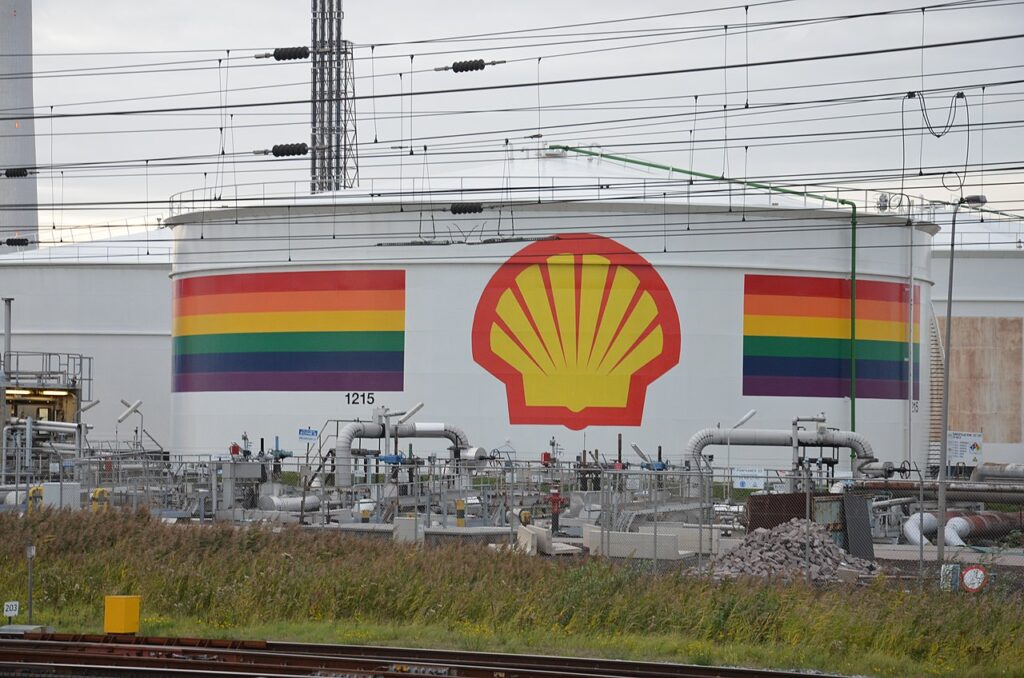
A large white oil storage tank with the yellow and red Shell logo and a thick band of rainbow stripes around it
Shell’s Pernis refinery in the Netherlands. Credit: Steven LekCC BY-SA 4.0

And in May 2021 the Dutch chapter of Friends of the Earth, Milieudefensie, won a landmark climate court case against Shell claiming the company’s business was not aligned with the Paris Agreement’s goals and human rights obligations. The court ordered Shell to slash emissions across its entire supply chain by 45 percent by 2030. Shell is appealing the verdict and appears to be ignoring its duty to comply, as the company has publicly committed to reducing only part of its supply chain emissions — not those released from using their products — by 2030 while continuing to invest in new oil and gas development. 

According to ClientEarth, Shell’s board “has since rebuffed parts of the verdict, indicating that it is unreasonable and essentially incompatible with Shell’s business.” The case against Shell’s board of directors aims to compel the company to comply with the Dutch court verdict and with its legal obligations under the UK Companies Act. Additionally, Shell faces a raft of climate lawsuits in the U.S. brought by states and municipalities over its alleged deception and efforts to derail meaningful climate action despite advanced knowledge of climate risks decades ago.

In response to the new lawsuit targeting the company’s directors, Shell denied that it has acted improperly and said it would oppose ClientEarth’s efforts to pursue its claim through the court.

“We do not accept ClientEarth’s allegations. Our directors have complied with their legal duties and have, at all times, acted in the best interests of the company,” a Shell spokesperson said in an emailed statement.

“We believe our climate targets are aligned with the more ambitious goal of the Paris Agreement: to limit the increase in the global average temperature to 1.5°C above pre-industrial levels,” the spokesperson continued. “Our shareholders strongly support the progress we are making on our energy transition strategy, with 80% voting in favour of this strategy at our last Annual General Meeting. ClientEarth’s attempt, by means of a derivative claim, to overturn the board’s policy as approved by our shareholders has no merit.”

Telling a Different Story Inside Shell

While Shell claims to support the Paris Agreement and says it will achieve net zero emissions by 2050, internal corporate communications obtained through subpoena by a U.S. congressional committee suggest that the company has no intention to genuinely pursue these objectives.

According to documents released in September by the U.S. House Oversight Committee as part of its investigation into Big Oil and climate disinformation, Shell privately urged caution in communicating about the energy transition due to litigation risk.

In an internal company slide deck on messaging around the energy transition, Shell clarifies that the net zero emissions goal is a “collective” ambition and challenge for society and is not a Shell goal or target. The company states that it “has no immediate plans to move to a net-zero emissions portfolio over our investment horizon of 10-20 years.”

View the entire document with DocumentCloud

Shell further advised its employees to refrain from suggesting the company would take climate action that risked its fundamental business strategy, writing: “Please do not give the impression that Shell is willing to reduce carbon dioxide emissions to levels that do not make business sense.”

In ClientEarth’s view, the oil giant’s failure to advance its own transition to net zero will only harm the company in the long run. “Long term, it is in the best interests of the company, its employees and its shareholders — as well as the planet — for Shell to reduce its emissions harder and faster than the Board is currently planning,” Benson said.

The High Court will next decide if it grants permission for ClientEarth’s case to proceed.

Original article by Dana Drugmand republished from DeSmog according to its republishing agreement.

Continue ReadingLawsuit Targets Shell’s Board of Directors Over Energy Transition Plans

‘The Writing Is on the Wall for Fossil Fuels’: Activist Investors Sue Shell Board Over Climate Failures

Spread the love
Just Stop Oil protesting in London 6 December 2022.

\Original article by JAKE JOHNSON Feb 09, 2023 republished from Common Dreams under Creative Commons (CC BY-NC-ND 3.0). Feel free to republish and share widely.

“The shift to a low-carbon economy is not just inevitable, it’s already happening. Yet the board is persisting with a transition strategy that is fundamentally flawed.”

A group of activist investors sued Shell’s board of directors on Wednesday for failing to “deliver the reduction in emissions that is needed to keep global climate goals within reach.”

ClientEarth, an environmental law charity and institutional investor in Shell, described the case as the first time a company board is facing a shareholder lawsuit for inadequately preparing to transition away from fossil fuels.

“Shell may be making record profits now due to the turmoil of the global energy market, but the writing is on the wall for fossil fuels long term,” Paul Benson, a senior lawyer at ClientEarth, said in a statement. “The shift to a low-carbon economy is not just inevitable, it’s already happening. Yet the board is persisting with a transition strategy that is fundamentally flawed, leaving the company seriously exposed to the risks that climate change poses to Shell’s future success—despite the board’s legal duty to manage those risks.”

The lawsuit, which is backed by large institutional investors that collectively hold 12 million shares of Shell, alleges that the oil giant’s 11 directors are violating the Companies Act, a U.K. law that requires corporate boards to “promote the success” of the business.

By failing to sufficiently manage climate risks and implement “an energy transition strategy that aligns with the Paris Agreement,” Shell is flouting its legal obligations, the lawsuit contends.

“Shell’s Board on the other hand maintains that its ‘Energy Transition Strategy’—including its plan to be a net-zero emissions business by 2050—is consistent with the 1.5°C temperature goal of the Paris Agreement,” ClientEarth notes. “It also claims that its plan to halve emissions from its global operations by 2030 is ‘industry-leading,’ however this covers less than 10% of its overall emissions.”

“It is in the best interests of the company, its employees, and its shareholders—as well as the planet—for Shell to reduce its emissions harder and faster than the board is currently planning.”

ClientEarth and its backers are asking the High Court of Justice in London to force Shell’s board to “adopt a strategy to manage climate risk in line with its duties under the Companies Act” and in compliance with a 2021 Dutch court ruling ordering the oil giant to cut its total carbon emissions by 45% by 2030.

“Long term, it is in the best interests of the company, its employees, and its shareholders—as well as the planet—for Shell to reduce its emissions harder and faster than the board is currently planning,” Benson said.

Jacqueline Amy Jackson, the head of responsible investment at London CIV—one of the institutional backers of ClientEarth’s lawsuit—said that “we do not believe the board has adopted a reasonable or effective strategy to manage the risks associated with climate change affecting Shell.”

“In our view,” Jackson added, “a board of directors of a high-emitting company has a fiduciary duty to manage climate risk, and in so doing, consider the impacts of its decisions on climate change, and to reduce its contribution to it.”

Shell said in response that ClientEarth’s suit “has no merit.”

ClientEarth filed its complaint a week after Shell announced that its profits doubled in 2022, surging to a record $40 billion as households across Europe and around the world struggled with high energy costs. The company said it returned $26 billion to shareholders last year through dividends and stock buybacks.

Earlier this month, the advocacy group Global Witness filed a complaint with the U.S. Securities and Exchange Commission accusing Shell of “lumping together some of its gas-related investments with its spending on renewables to inflate its overall investment in renewable sources of energy,” misleading investors and authorities.

“Shell’s so-called renewable and energy solutions category is pure fiction,” said Zorka Milin, a senior adviser at Global Witness. “The company is living in fantasy land if it thinks fossil gas has any place in the much-needed energy transition. Shell’s business model has always been, and continues to be, overwhelmingly based on climate-polluting fossil fuels.”

Shell is also facing lawsuits from nearly 14,000 Nigerians whose communities have been devastated by the company’s pollution and oil spills.

\Original article by JAKE JOHNSON Feb 09, 2023 republished from Common Dreams under Creative Commons (CC BY-NC-ND 3.0). Feel free to republish and share widely.

Continue Reading‘The Writing Is on the Wall for Fossil Fuels’: Activist Investors Sue Shell Board Over Climate Failures