Reform’s local councils are bringing climate denial into the mainstream

Spread the love

Original article by Josephine Moulds Grace Murray republished from TBIJ under a Creative Commons Attribution-NonCommercial-NoDerivs 3.0 Unported License.

Top polling party’s moves to ‘undeclare’ the climate emergency and scrap net zero targets could be a sign of things to come

Reform UK’s disregard of the climate crisis is already taking effect across the country. Since gaining control of 10 councils last May, the party has scrapped vital environmental goals. It has courted support from fossil fuel investors with a promise to “drill, baby, drill”. And its councillors have hijacked public debates with outright climate denialism.

Seven of the councils now controlled by Reform have abandoned important green measures. This includes ditching ambitious net zero targets and withdrawing the declaration of a climate emergency – which could threaten green investment and undermine action taken locally to deal with the crisis.

With Reform leading the polls and more local elections to come this year, what we’ve seen so far could be the tip of the iceberg.

For Lord Adair Turner, co-chair of the Energy Transitions Commission, the return of climate denial to public debate is “undoubtedly bad news” and presents a major setback for tackling the crisis. “We’ve got to work out how to convince people that there is a real, massive climate problem and that we do have the solutions now, which are available at relatively low cost,” he said.

We’ve been looking at how Reform has treated climate issues at a local level to gauge what might happen if it wins more councils this year – and if it comes to power in 2029.

The ‘global warming hoax’

One of Reform UK’s key campaigning pledges is the scrapping of net zero in order to cut energy bills. West Northamptonshire’s council leader Mark Arnull said: “Every resident who voted Reform UK voted for that and they must be heard.”

Of the 10 new Reform-controlled councils, seven promptly abandoned their climate promises. Of the remaining three, Lincolnshire did not have any significant climate pledges to scrap but Reform leaders there say they have “declared war” on green energy projects; Derbyshire confirmed its commitment to cutting emissions but ditched the objective to “work to address the causes, and adapt to the impacts, of climate change”; and Doncaster – which has a Reform majority but a Labour mayor and cabinet – has maintained its climate pledges.

The Reform councils’ position contrasts sharply with those controlled by other parties. Climate Emergency UK – a campaign organisation for council climate action – says it is not aware of any other local authorities that have scrapped their climate pledges. Across the UK, more than 300 councils have declared a “climate emergency” and many of those are backed up with ambitious net zero targets.

Polling suggests almost three quarters of people in the UK believe climate change is caused by human activity; a study of more than 88,000 climate-related studies found that 99.9% of peer-reviewed scientific papers agree.

Yet in public debates, some Reform councillors have put forward the opposite view. In Nottinghamshire, councillor Bert Bingham said: “I’ve been involved in sustainability projects for 25 years and I’ve never seen such nonsense as the anthropogenic global warming hoax.”

In Kent, Councillor Chris Hespe said: “It is often stated that anthropogenic climate change is ‘settled science’ and that the whole scientific community believes it. However, this is far from the case.”

Outright climate denial has permeated local debate. After Rachael Hatchett, a Green councillor in Derbyshire, spoke up in a debate about solar farms last year, she was heckled by another councillor shouting: “There is no climate change!”

Reform’s claim that scrapping net zero will cut energy bills is also misleading, according to energy experts. Dhara Vyas, chief executive of industry body Energy UK, told Carbon Brief it is “crystal clear what has driven electricity bills up in the UK … it’s the wholesale costs, driven by the price of gas”.

Liberal Democrat councillor Alex Ricketts said Reform’s climate denial would have real-world impacts for Kent’s constituents. Parts of the county are recognised to be at risk of flooding and local authorities have received funding from the Environment Agency to shore up sea walls and maintain other defences.

Ricketts said this money was allocated based on the science and policymaking that Reform criticises: “There are very real effects on the people of Kent by trying to debunk these things.”

Recommended Articles

In Durham, Reform proposed retracting the climate emergency and instead declaring a “care emergency” with a focus on special educational needs. Independent councillor Chris Lines said: “Politically, the rhetoric from Reform was that if you voted against it, you were labelled as someone who didn’t care about young people. Conflating the two issues was frankly appalling.”

Lines is concerned about the impact of these declarations on the economy, pointing to research showing that the low-carbon industry was worth £1.7bn to County Durham in 2021/22. “If I was a business in that growing sector looking to invest in an area, would I really want to come here, given the direction this council is going?”

Not all the debates on net zero have involved outright climate denial. In West Northamptonshire, councillors questioned how feasible climate policies were and raised concerns about their cost – an approach that academics have labelled “climate delay”, which can hinder action on climate change.

Alan Graves, the Reform UK leader in Derbyshire, said: “We do not deny that the climate is changing… The council continues to support practical, affordable measures that cut waste, improve efficiency, and reduce costs for residents.”

Responding to whether climate denial had spread in local councils, he said he could only speak for Derbyshire but that they weren’t focusing on “culture-war labels”.

Graves added: “We do not remove policies for ideological reasons. Where we have amended plans, it is because they were vague, unfunded, sometimes unfounded or undeliverable. Our responsibility is to be honest with the public about what can realistically be achieved within local government budgets.” Reform UK and the other councils mentioned did not respond to requests for comment.

A familiar playbook

Reform UK has proudly borrowed slogans from Donald Trump’s campaigns in the US. At a recent council meeting in Durham, Reform councillor Kyle Genner painted a vivid picture of the county’s “dilapidated and deprived estates … the joblessness … the lack of dignity and hope”. He urged his fellow councillors to support the reindustrialisation of the county – including the extraction of coal, oil and gas – to “make Durham great again”.

“I’m clearly not Donald Trump,” he said. “But I do like the idea of ‘drill, baby, drill’. I do like the idea of ‘jobs, baby, jobs’.”

Reform are in the climate denial camp and the Conservatives have moved into – not climate denial, but saying they want to get away from net zero

Lord Turner

The Reform leader of the council, Andrew Husband, said this local debate held a national significance. “It’s telling the North Sea oil and gas producers, ‘Don’t give up just yet’. We’re preparing County Durham for a Reform government in 2029 so we can hit the ground running. Simple as that.”

Back in Kent, former Reform councillor Fothergill said it was “ridiculous” the county was not exploiting its abundance of gas, coal and mineral resources.

In further echoes of the Trump administration, Reform councils across the country are erasing the words climate and environment from cabinet roles, committee names and planning documents.

Where Trump set up the Department of Government Efficiency spearheaded by Elon Musk, Kent county council introduced its own Department of Local Government Efficiency, or DOLGE.

Andrew Husband speaks during the Reform UK County Durham Conference last FebruaryIan Forsyth / Getty Images

Kent’s first head of DOLGE, Matthew Fraser Moat, highlighted what he said were “several, maybe tens of millions of pounds” wasted on the county’s declaration of a climate emergency. In September last year, he said this spending should be stopped, “given that there is no discernible benefit to the world’s climate from all of [Kent county council’s] efforts over the last seven years”.

Weeks later, Kent’s council leader said Reform had saved the county £32m over four years by “undeclaring the climate emergency”, and a further £7.5m by scrapping the county council’s transition to electric vehicles.

Fraser Moat, however, told the Financial Times this month that the Reform council “had not actually made any cuts”. ​​The DOLGE team reportedly expected to find vast amounts of waste but didn’t. Fraser Moat has since stepped down from the council’s cabinet, saying his comments were the result of a “lapse of judgement” and that his words had been twisted.

Blocking the bulldozers

Across the country, Reform-controlled councils have opposed solar projects. In Durham, the party has abandoned a plan to install solar panels on council buildings, which aimed to save the council money on energy bills.

In Lincolnshire, Reform councillor Sean Matthews told the BBC about a new solar farm development: “I’m going to do whatever I can to stop it, and that does include laying in front of those bulldozers.”

While it may not always stray into the outright climate denial Hatchett faced in Derbyshire, Ricketts said Reform’s opposition to solar is largely political. “They know that resonates with one part of their base that don’t want solar farms built on fields, but also with the other part that are anti-climate change measures.”

Time and again, the environmental issues raised in local councils came back to party politics. Independent councillor Ian McCord welcomed West Northamptonshire’s move to scrap net zero targets. “Those that are crying into their tofu and quinoa forget that they lost the May election,” he said.

This has shifted the debate on net zero across the political spectrum. Lord Turner said: “Reform, obviously, are in the climate denial camp but the Conservatives have moved into, not climate denial, but saying they want to get away from net zero.

“It’s a bit ironic that, in the face of catastrophic weather events around the world, we are losing [the cross-party] consensus. I’m under no illusion that we’re facing a more tricky situation than we were five or 10 years ago.”

This story was updated on Wednesday 25 February 2026 to reflect the fact that Nottinghamshire county council has not rescinded its climate emergency declaration.

Reporters: Josephine Moulds and Grace Murray
Environment editor: Rob Soutar
Deputy editor: Chrissie Giles
Editor: Franz Wild

Fact checker: Ero Partsakoulaki
Production editor: Alex Hess

TBIJ has a number of funders, a full list of which can be found here. None of our funders have any influence over editorial decisions or output.

Original article by Josephine Moulds Grace Murray republished from TBIJ under a Creative Commons Attribution-NonCommercial-NoDerivs 3.0 Unported License.

Nigel Farage urges you to ignore facts and reality and be a climate science denier like him and his Deputy Richard Tice. He says that Reform UK has received £Millions and £Millions from the fossil fuel industry to promote climate denial and destroy the planet.
Nigel Farage explains the politics of Reform UK: Racism, Fake anti-establishmentism, Deregulation, Corporatism, Climate Change Denial, Mysogyny and Transphobia.
Neo-Fascist Climate Science Denier Donald Trump says Burn, Baby, Burn.
Continue ReadingReform’s local councils are bringing climate denial into the mainstream

No time to recover: Hurricane Melissa and the Caribbean’s compounding disaster trap as the storms keep coming

Spread the love
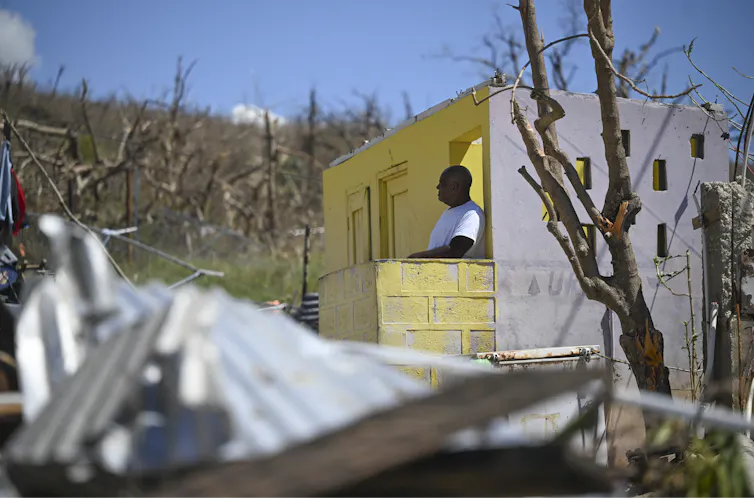
Hurricane Melissa tore off roofs and stripped trees of their leaves, including in many parts of Jamaica hit by Hurricane Beryl a year earlier. Ricardo Makyn/AFP via Getty Images

Farah Nibbs, University of Maryland, Baltimore County

Headlines have been filled with talk of the catastrophic power of Hurricane Melissa after the Category 5 storm devastated communities across Jamaica, Cuba and Haiti in October 2025. But to see this as a singular disaster misses the bigger picture: Melissa didn’t hit stable, resilient islands. It hit islands still rebuilding from the last hurricane.

Jamaica was still recovering from Hurricane Beryl, which sideswiped the island in July 2024 as a Category 4 storm. The parish of St. Elizabeth – known as Jamaica’s breadbasket – was devastated. The country’s Rural Agriculture Development Authority estimated that 45,000 farmers were affected by Beryl, with damage estimated at US$15.9 million.

An aerial view of a city damaged by the hurricane. Mud is in the streets and buildings have lost roofs and walls.
St. Elizabeth Parish, Jamaica, suffered intense damage from both Hurricane Melissa in October 2025 and Hurricane Beryl a year earlier. Ivan Shaw/AFP via Getty Images

In Cuba, the power grid collapsed during Hurricane Oscar in October 2024, leaving 10 million people in darkness. When Melissa arrived, it struck the same fragile infrastructure that Cubans had barely begun to rebuild.

Haiti’s fragile situation before Hurricane Melissa cannot be overstated. The island nation was still reeling from years of cascading disasters – deadly hurricanes, political instability, gang violence, an ongoing cholera crisis and widespread hunger – with over half the population already in need of humanitarian assistance even before this storm hit.

This is the new reality of the climate crisis: Disasters hitting the Caribbean are compounding and can trigger infrastructure collapse, social erosion and economic debt spirals.

The compounding disaster trap

I study disasters, with a focus on how Caribbean island systems absorb, adapt to and recover from recurring shocks, like the nations hit by Melissa are now experiencing.

It’s not just that hurricanes are more frequent; it’s that the time between major storms is now shorter than the time required for a full recovery. This pulls islands into a trap that works through three self-reinforcing loops:

Infrastructure collapse: When a major hurricane hits an already weakened system, it causes simultaneous infrastructure collapses. The failure of one system – such as power – cascades, taking down water pumps, communications and hospitals all at once. We saw this in Grenada after Hurricane Beryl and in Dominica after Hurricane Maria. This kind of cascading damage is now the baseline expectation for the Caribbean.

Economic debt spiral: When countries exhaust their economic reserves on one recovery, borrow to rebuild and are then hit again while still paying off that debt, it becomes a vicious cycle.

Hurricane Ivan, which struck the region in 2004, cost Grenada over 200% of its gross domestic product; Maria, in 2017, cost Dominica 224% of its GDP; and Dorian, in 2019, cost the Bahamas 25% of GDP. With each storm, debt balloons, credit ratings drop and borrowing for the next disaster becomes more expensive.

Social erosion: Each cycle weakens the human infrastructure, too. More than 200,000 people left Puerto Rico for the U.S. mainland in Maria’s aftermath, and nearly one-quarter of Dominica’s population left after the same storm. Community networks fragment as people leave, and psychological trauma becomes layered as each new storm reopens the wounds of the last. The very social fabric needed to manage recovery is itself being torn.

The interior of a school that has been torn apart by hurricane winds. Desks and debris are scattered and light shines through the rafters
When schools are heavily damaged by storms, like this one in Jamaica that lost its roof during Hurricane Melissa, it’s harder for families to remain. Ricardo Makyn/AFP via Getty Images

The trap is that all three of these loops reinforce each other. A country can’t rebuild infrastructure without money. It can’t generate economic activity without infrastructure. And it can’t retain the skilled workforce needed for either when people are fleeing to safer places.

Rebuilding a system of overlapping recoveries

The Caribbean is not merely recovering from disasters – it is living within a system of overlapping recoveries, meaning that its communities must begin rebuilding again before fully recovering from the last crisis.

Each new attempt at rebuilding happens on the unstable physical, social and institutional foundations left by the last disaster.

The question isn’t whether Jamaica will attempt to rebuild following Melissa. It will, somehow. The question is, what happens when the next major storm arrives before that recovery is complete? And the one after that?

Without fundamentally restructuring how we think about recovery – moving from crisis response to continuous adaptation – island nations will remain trapped in this loop.

The way forward

The compounding disaster trap persists because recovery models are broken. They apply one-size-fits-all solutions to crises unfolding across multiple layers of society.

Breaking free requires adaptive recovery at all levels, from household to global.

A line of people pass bags of food items one to another.
Residents formed a human chain among the hurricane debris to pass food supplies from a truck to a distribution center in the Whitehouse community in Westmoreland, an area of Jamaica hit hard by Hurricane Melissa in October 2025. Ricardo Makyn/AFP via Getty Images

At the household level: Helping amid trauma

Recovery isn’t just about repairing a damaged roof. When families experience back-to-back disasters, trauma compounds. Direct cash assistance and long-term, community-based mental health services can help restore dignity.

Cash transfers allow families to address their own needs, stimulate local economies and restore control to people whose lives have been repeatedly upended.

At community level: Mending the social fabric

Repairing the “social fabric” means investing in farmer cooperatives, neighborhood associations and faith groups – networks that can lead recovery from the ground up.

Local networks are often the only ones capable of rebuilding trust and participation.

At the infrastructure level: Breaking the cycle

The pattern of rebuilding the same vulnerable roads or power lines only to see them wash away in the next storm fails the community and the nation. There are better, proven solutions that prepare communities to weather the next storm:

A man looks into an open drainage area that has been torn up out by the storm
Hurricanes can damage infrastructure, including water and drainage systems. Hurricane Beryl left Jamaican communities rebuilding not just homes but also streets, power lines and basic infrastructure. Ricardo Makyn/AFP via Getty Images

At the global level: Fixing the debt trap

None of this is possible if recovery remains tied to high-interest loans. There are ways for internal financial institutions and global development lenders to allow for breathing room between disasters:

The current international disaster finance system, controlled by global lenders and donors, requires countries to prove their losses after a disaster in order to access assistance, often resulting in months of delay. “Proof” is established by formal evaluations or inspections, such as by the United Nations, and aid is released only after meeting certain requirements. This process can stall recovery at the moment when aid is needed the most.

The bottom line

The Caribbean needs a system that provides support before disasters strike, with agreed-upon funding commitments and regional risk-pooling mechanisms that can avoid the delays and bureaucratic burden that slow recovery.

What’s happening in Jamaica, Cuba and Haiti today is a glimpse of what’s coming for coastal and island communities worldwide as climate change accelerates. In my view, we can either learn from the Caribbean’s experiences and redesign disaster recovery now or wait until the trap closes around everyone.

Farah Nibbs, Assistant Professor of Emergency and Disaster Health Systems, University of Maryland, Baltimore County

This article is republished from The Conversation under a Creative Commons license. Read the original article.

Elon Musk urges you to be a Fascist like him, says that you can ignore facts and reality then.
Donald Trump urges you to be a Climate Science denier like him. He says that he makes millions and millions for destroying the planet, Burn, Baby, Burn and Flood, Baby, Flood.
Nigel Farage urges you to ignore facts and reality and be a climate science denier like him and his Deputy Richard Tice. He says that Reform UK has received £Millions and £Millions from the fossil fuel industry to promote climate denial and destroy the planet.

Continue ReadingNo time to recover: Hurricane Melissa and the Caribbean’s compounding disaster trap as the storms keep coming

Record-breaking CO₂ rise shows the Amazon is faltering — yet the satellite that spotted this may soon be shut down

Spread the love
titoOnz / shutterstock

Paul Palmer, University of Edinburgh and Liang Feng, University of Edinburgh

Atmospheric carbon dioxide (CO₂) rose faster in 2024 than in any year since records began – far faster than scientists expected.

Our new satellite analysis shows that the Amazon rainforest, which has long been a huge absorber of carbon, is struggling to keep up. And worryingly, the satellite that made this discovery could soon be switched off.

Systematic measurements of CO₂ in the atmosphere began in the late 1950s, when the Mauna Loa observatory in Hawaii (chosen for its remoteness and untainted air) registered about 315 parts per million (ppm). Today, it’s more than 420ppm.

But just as important is the rate of change. The annual rise in global CO₂ has gone from below 1ppm in the 1960s to more than 2ppm a year in the 2010s. Every extra ppm represents about 2 billion tonnes of carbon – roughly four times the combined mass of every human alive today.

Across six decades of measurements, atmospheric CO₂ has gradually increased. There have been some large but temporary departures, typically associated with unusual weather caused by an El Niño in the Pacific. But the long-term trend is clear.

In 2023, CO₂ in the atmosphere grew by about 2.70ppm. That’s a large step up, but not too unusual. Yet in 2024, it was an unprecedented 3.73ppm.

How satellites observe atmospheric CO₂

Until recently, we could only monitor CO₂ through stations on the ground like the one in Hawaii. That changed with satellites such as Nasa’s Orbiting Carbon Observatory (OCO-2), launched in 2014.

The OCO-2 satellite analyses sunlight reflected from Earth. Carbon dioxide acts like a filter, absorbing specific wavelengths of light. By observing how much of that specific light is missing or dimmed when it reaches the satellite, scientists can accurately calculate how much CO₂ is in the atmosphere.

But air is always on the move. The CO₂ above any one point can come from many sources – local emissions, nearby forests, or air carried from far away. To untangle this mix, scientists use computer models that simulate how winds move CO₂ around the globe.

They then adjust these models until they match what the satellite sees. This gives us the most accurate estimate possible of where carbon is being released and where it’s being absorbed.

The decade-long data record from OCO-2 allows us to put 2023 and 2024 into historical context.

The result

From the satellite data, we infer that the largest changes in CO₂ emissions and absorption during 2023 and 2024, compared with the baseline year of 2022, were over tropical land.

shaded map of tropics
Data from 2023 and 2024 shows the areas where more carbon was emitted (in red) and withdrawn (blue) compared with the ‘normal’ year of 2022. The Amazon stands out in both years. Feng et al

The largest change was over the Amazon, where much less CO₂ is being absorbed. Similar slowdowns also appeared over southern Africa and southeast Asia, parts of Australia, the eastern US, Alaska and western Russia.

Conversely, we detected more carbon being absorbed over western Europe, the US and central Canada.

Other data backs this up. For instance, plants emit a faint glow as they photosynthesise – remarkably, we can see this glow from space. Measurements of this glow along with vegetation greenness both show that tropical ecosystems were less active in 2023 and 2024.

Our analysis suggests that warmer temperatures explain most of the Amazon’s reduced capability to absorb carbon. Elsewhere in the tropics, changes in rainfall and soil moisture were more important.

Why 2023 and 2024 were special

In many ways, these years resembled previous El Niño years such as 2015-16, when drought and heat led to less carbon absorption and more wildfires. But what’s interesting about 2023-24 is that the responsible El Niño event was comparatively weak.

Something else must be amplifying the effect. The most likely culprit is the extensive, record-breaking drought that has gripped much of the Amazon basin. When plants are already stressed by a lack of water, even modest warming can push them beyond their tolerance, reducing their ability to absorb carbon.

Small boats in shallow water
Small boats left stranded as the Tapajós river (a major Amazon tributary) dries up in late 2023. Tarcisio Schnaider / shutterstock

Roughly half of the CO₂ emitted by humans stays in the atmosphere. The other half is absorbed, more or less equally, by the land and the oceans. If drought or heat means plants are less able to absorb carbon, even temporarily, more of our emissions will remain in the air.

Our ability to meet climate targets relies on nature continuing to provide this vital carbon storage.

Satellite shutdown

It’s not yet clear whether 2023-24 is a short-term blip or an early sign of a long-term shift. But evidence points to an increasingly fragile situation, as tropical forests are stressed by hot and dry conditions.

Understanding exactly how and where these ecosystems are changing is essential if we want to know their future role in the climate, and whether drought will delay their recovery. One step is to urgently send scientists to tropical ecosystems to document recent changes in person.

That’s also where satellites like OCO-2 come in. They offer global and almost real-time coverage of how carbon dioxide is moving between the land, oceans and atmosphere, helping us separate temporary effects like El Niño from deeper changes.

Yet, despite being fit and healthy and having enough fuel to keep it going until 2040, OCO-2 is at risk of being shut down due to proposed Nasa budget cuts.

We wouldn’t be blind without it – but we’d be seeing far less clearly. Losing OCO-2 would mean losing our best tool for monitoring changes in the carbon cycle, and we will all be scientifically poorer for it.

The Amazon is sending us a warning. We must keep watching – while we still can.


Don’t have time to read about climate change as much as you’d like?
Get a weekly roundup in your inbox instead. Every Wednesday, The Conversation’s environment editor writes Imagine, a short email that goes a little deeper into just one climate issue. Join the 45,000+ readers who’ve subscribed so far.


Paul Palmer, Professor of Quantitative Earth Observation, University of Edinburgh and Liang Feng, Research Associate, Data Assimilation, University of Edinburgh

This article is republished from The Conversation under a Creative Commons license. Read the original article.

Orcas comment on killer apes destroying the planet by continuing to burn fossil fuels.
Donald Trump urges you to be a Climate Science denier like him. He says that he makes millions and millions for destroying the planet, Burn, Baby, Burn and Flood, Baby, Flood.
Nigel Farage urges you to ignore facts and reality and be a climate science denier like him and his Deputy Richard Tice. He says that Reform UK has received £Millions and £Millions from the fossil fuel industry to promote climate denial and destroy the planet.
Continue ReadingRecord-breaking CO₂ rise shows the Amazon is faltering — yet the satellite that spotted this may soon be shut down

Tory plan to scrap net zero target puts UK climate leadership at risk

Spread the love
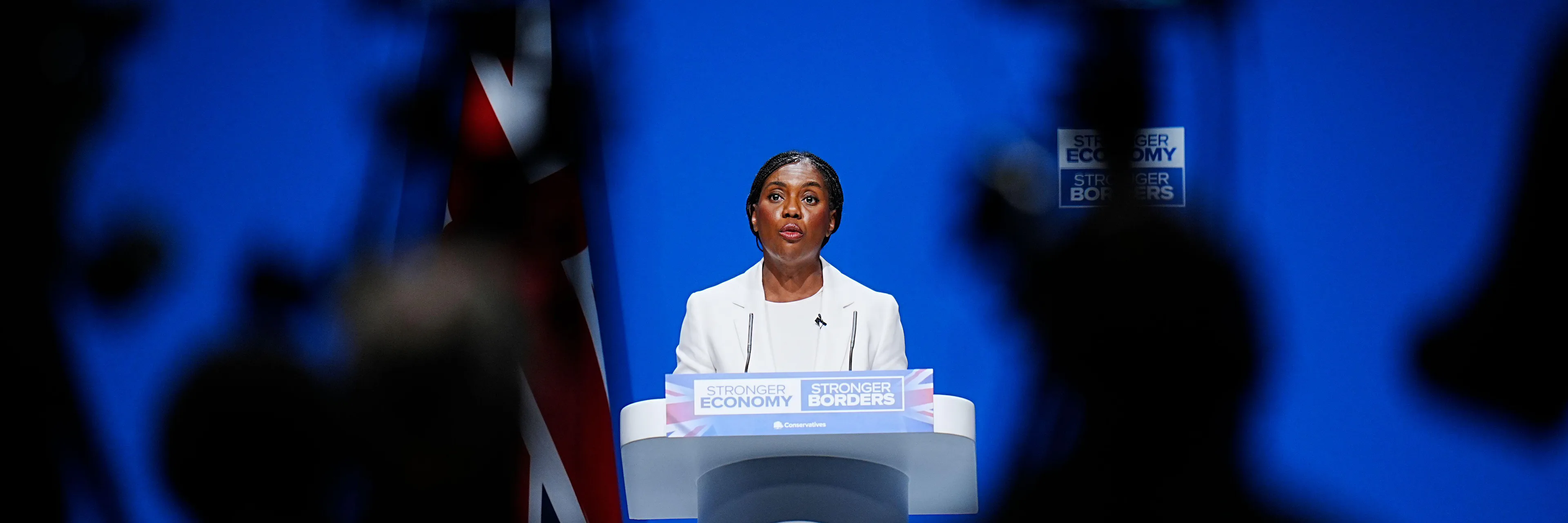
Kemi Badenoch wants to scrap the UK’s Climate Change Act. Danny Lawson / PA

Sam Fankhauser, University of Oxford

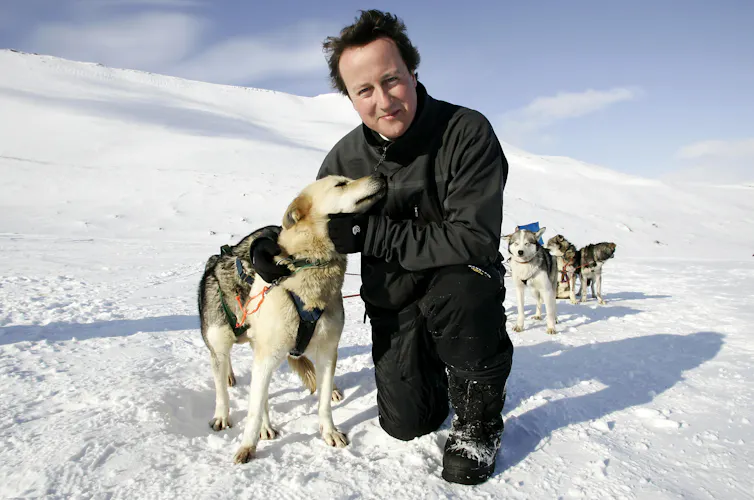
In the mid-2000s, soon after becoming Conservative leader, David Cameron hugged a husky on a trip to the Arctic, in what was widely described as an attempt to “detoxify” the Tory brand. Eighteen years later, Kemi Badenoch has promised to scrap the law that once made that rebranding credible.

Her announcement that the Conservatives will repeal the 2008 Climate Change Act if they win the next general election has the potential to be a major own goal – politically, environmentally and economically.

To understand why, we need to remember how the Climate Change Act came about. The bill was put forward by the Labour government of Gordon Brown, but it had enthusiastic support from the Conservative opposition, which tabled several amendments to strengthen it. Cameron had concluded that green policies were a good way to modernise his party and lead it back into power.

It worked, both for Cameron, who became prime minister in 2010, and for UK climate policy, which has enjoyed a unique period of consensus and stability. Over seven governments, multiple economic crises, Brexit, COVID-19 and the war in Ukraine, there has been clarity about Britain’s climate change objectives. Policies were chopped and changed, often to the frustration of investors, but the institutional framework was stable and widely appreciated.

The Climate Change Act gives the UK a statutory long-term emissions target – initially an 80% cut from 1990 levels by 2050, strengthened to net zero by 2050 by Theresa May, another Tory prime minister.

Progress is managed through a series of five-year carbon budgets, legislated 12 years in advance and monitored by a powerful independent body, the Climate Change Committee (CCC). For much of its existence, the CCC has been chaired by yet another environmentally-minded Tory, Lord Deben (John Gummer). It is this framework the Conservatives now say they want to dismantle.

Husky hugger David Cameron visits Svalbard, Norway, in 2008. Andrew Parsons / PA

Yet the Climate Change Act has delivered, both in terms of process and substance. Indeed, the UK model has been emulated around the world. Nearly 60 countries have UK-style climate change laws and over 20 countries have CCC-style advisory bodies, cementing the UK’s position as a climate leader.

The act gives the UK a steady institutional rhythm. Relevant businesses and other organisations know the formal set pieces, such as the CCC’s annual report to parliament, and can time their interventions accordingly.

When colleagues and I interviewed people from business and civil society about the act a few years ago, they emphasised the predictable process, the clear rules on accountability and the evidence-based discourse it has enabled. This all reduces uncertainty and enables long-term planning.

Importantly, the Climate Change Act has delivered environmentally too. Compared to 1990, UK greenhouse gas emissions are down by 50%. The UK economy now uses three times less carbon per unit of economic output than in 1990. Emissions are at their lowest level since 1872.

This trend started before the act, but it was helped and accelerated by it. This is perhaps most noticeable in the radical transformation of the electricity sector: coal has been completely phased out, while offshore wind and other renewables have flourished.

Most people want climate action

Voters value this progress more than politicians appreciate. A University of Oxford survey found that internationally public support for climate action is almost twice as high as policymakers assume. In the UK, three out of four people are fairly or very concerned about climate change.

Badenoch’s announcement comes just as households are starting to reap the financial benefits of clean technology. Colleagues and I have estimated that four out of five UK households, particularly those owning a car, would be better off if net zero was achieved. The typical savings are £100-£380 per household and year.

It is true that households do not yet see the benefits of renewables on their energy bills. We are still paying for the high costs of early investments in clean power, before technology and sheer scale brought the price down.

Successive governments have chosen to recoup these learning costs through electricity bills, rather than general taxation, which would have been easier on most households. But recent analysis suggests renewables are now cutting electricity prices by up to a quarter.

The policy uncertainty generated by the Tory announcement and similar pronouncements by Reform UK will eventually find its way into the risk premiums for investors, though for the time being this effect is still small.

But the reputational damage is immediate. Undoing the act would signal that the UK no longer values the long-term stability that has driven clean investment and made its climate policy admired around the world.

Climate policy requires debate. Deeply political choices need to be made about different decarbonisation strategies, how to pay for necessary investments or the role of controversial technologies like nuclear energy. The past 17 years have shown that these debates are best had within an agreed framework, with support from all major parties. That is what the Climate Change Act provides.


Don’t have time to read about climate change as much as you’d like?
Get a weekly roundup in your inbox instead. Every Wednesday, The Conversation’s environment editor writes Imagine, a short email that goes a little deeper into just one climate issue. Join the 45,000+ readers who’ve subscribed so far.


Sam Fankhauser, Professor of Climate Economics and Policy, Smith School of Enterprise and the Environment, University of Oxford

This article is republished from The Conversation under a Creative Commons license. Read the original article.

UK Conservative Party leader Kemi Badenoch explains her reality that the Earth is flat, the Moon is made of cheese and that she was born from Unicorn horn dust
UK Conservative Party leader Kemi ‘not a genocide’ Badenoch explains her reality that the Earth is flat, the Moon is made of cheese and that she was born from Unicorn horn dust
Nigel Farage urges you to ignore facts and reality and be a climate science denier like him. He says that Reform UK has received £Millions and £Millions from the fossil fuel industry to promote climate denial and destroy the planet.
Orcas discuss how Trump was re-elected and him being an obviously insane, xenophobic Fascist.
Continue ReadingTory plan to scrap net zero target puts UK climate leadership at risk

We surveyed British MPs – most don’t know how urgent climate action is

Spread the love

John Kenny, University of East Anglia and Lucas Geese

To keep global warming below 1.5°C, greenhouse gas emissions had to peak no later than 2025. That was a key finding of the IPCC’s most recent major report on the topic, published a few years ago. Yet when we surveyed UK MPs and members of the public in four countries, fewer than 15% could identify this deadline correctly.

This matters. If politicians and voters underestimate how urgently we have to fight climate change, they are less likely to back the tough policies needed. Instead, they risk assuming we have more time, all while climate change targets slip further out of reach.

Our study, published in the journal Communications Earth and Environment, found that across Britain, Canada, Chile and Germany, about one-third of respondents thought emissions only had to peak by 2040 or later. In the UK, we also surveyed MPs. We found Labour politicians were more likely than Conservatives to answer correctly, but overall awareness was low in both groups.

Among the public, younger people, those worried about climate change, and those less prone to believing conspiracy theories were the most likely to know the right answer. But overall, the pattern was clear: most people – and most MPs – don’t grasp the urgency of the situation.

The distribution of responses was remarkably similar across the four countries. Kenny and Geese (2025)

Why awareness matters

Knowing the scientific facts does not automatically spur action. But political priorities are shaped by what MPs or their constituents consider as urgent (MPs sometimes cite a lack of urgency from constituents as an excuse for not taking climate actions even when they are concerned about it).

If neither MPs nor their voters realise how pressing the problem is, climate change risks being overlooked in favour of other issues. That MPs were largely not aware that much more immediate action was required may help explain why, by mid-2024, the UK was already behind the pace required to meet its own emissions reduction targets.

Partisan divides reinforce the problem. In our survey, 2019 Labour voters were more likely to know the correct 2025 deadline than those who voted Conservative. Political differences in knowledge were greater than the gap between MPs and the public, suggesting that party identity or political ideology, not just parliamentary expertise, is a factor in level of awareness.

Many of those Conservative MPs were replaced by new Labour MPs in the 2024 election, so perhaps a repeat survey today would show greater awareness of climate change among parliamentarians. But even Labour MPs are still not very likely to appreciate the urgency.

Graph showing MP and public responses by party
Labour-Tory was a bigger divide than public-politician. Kenny and Geese (2025)

The communication challenge

The IPCC and other big institutions produce authoritative reports, but they are not always written in a manner accessible to non-specialists. Policymakers are inundated with these reports and are expected to absorb huge amounts of information, digest it, and act on it. Crucial findings can get lost in the detail. If the urgency of climate action is not communicated clearly and memorably, it is less likely to be a factor in forming policy.

In the UK, scientists have long made “global greenhouse gases need to peak by 2025 for 1.5°C” a centrepiece of public and political communications. For example, it is there in the slogan of the Tyndall Centre, the major climate research hub where we work, that this is a Critical Decade for Climate Action.

But our findings suggest this message is not cutting through, with either politicians or the public. If deadlines are misunderstood, policies will inevitably not go far enough.

Make timelines impossible to ignore

The science is clear: emissions really did need to peak this year for a chance of staying within 1.5°C. A number of studies suggest this target is now effectively unreachable given the lack of substantial progress in recent years, but the urgency remains.

To close the gap between science and politics, communications must be sharper. Reports need to highlight timelines and consequences in ways that are impossible to ignore. Politicians and the public need to understand not just the scale of the climate crisis, but how immediate it is.

John Kenny, Research Fellow (Public Engagement with Climate Change), School of Environmental Sciences, University of East Anglia and Lucas Geese, Research Fellow, Tyndall Centre and School of Environmental Sciences, University of East Anglia

This article is republished from The Conversation under a Creative Commons license. Read the original article.

UK Conservative Party leader Kemi Badenoch explains her reality that the Earth is flat, the Moon is made of cheese and that she was born from Unicorn horn dust
UK Conservative Party leader Kemi ‘not a genocide’ Badenoch explains her reality that the Earth is flat, the Moon is made of cheese and that she was born from Unicorn horn dust
Nigel Farage urges you to ignore facts and reality and be a climate science denier like him. He says that Reform UK has received £Millions and £Millions from the fossil fuel industry to promote climate denial and destroy the planet.
Orcas discuss how Trump was re-elected and him being an obviously insane, xenophobic Fascist.
Continue ReadingWe surveyed British MPs – most don’t know how urgent climate action is