‘Inviting the Fox Into the Henhouse’: Canada Delegation to COP30 Loaded with Fossil Fuel Representatives

Spread the love

Original article by Taylor Noakes republished from DeSmog.
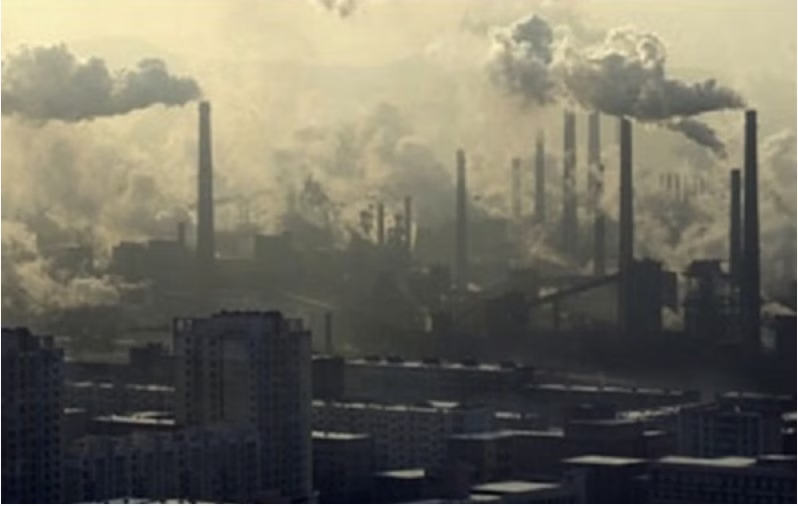
Fossil fuel lobbyists in the Canadian delegation include representatives of the Canadian Association of Petroleum Producers (CAPP), a lobby group that represents Canada’s oil and natural gas producers. Credit: C2C Journal

Delegation’s composition consistent with new KBPO report revealing this year’s U.N. climate talks have the largest number of fossil fuel lobbyists to date.

Lobbyists and representatives of Canada’s oil and gas industry are part of Canada’s official delegation to this year’s U.N. climate talks in Brazil, in keeping with the high number of fossil fuel representatives in attendance at the summit. 

About a dozen individuals representing fossil fuel interests were part of the 240-person Canadian delegation, according to documents reviewed by DeSmog as well as a Nov. 12 Canadian Press article.  

“Fossil fuel lobbyists have no place at the U.N. climate negotiations,” Emilia Belliveau, program manager of energy transition with Environmental Defence, said in a statement to DeSmog.

“Their presence here with official badges from Canada undermines the work of Canadians attending COP30 who are genuinely working to advance climate action,” she said. 

This year’s U.N. climate talks have the single largest share of fossil fuel lobbyists in attendance to date. Some 1,600 people — or one out of every 25 attendees — are fossil industry or related lobbyists, according to an analysis by Kick Big Polluters Out (KBPO), an alliance of climate and justice organizations that push to remove fossil fuel companies and their lobbyists from influencing climate negotiations and policymaking.

The presence of so many Canadian fossil fuel sector representatives exemplifies the report’s findings.
 
“It demonstrates the extent by which the current government is aligned with oil industry interests,” Patrick Bonin, the Bloc Québécois’ environment and climate change critic, said in a statement to DeSmog. 

“The oil and gas industry is the biggest lobby in Canada,” Bonin continued, “so it’s like inviting the fox into the henhouse … Giving them access to the delegation gives them far greater influence than regular participants.” 

Fossil fuel lobbyists in the Canadian delegation include representatives of the Canadian Association of Petroleum Producers (CAPP), a lobby group that represents Canada’s oil and natural gas producers; Tourmaline Oil, Canada’s largest natural gas producer; CarbonAi; the International Emissions Trading Association (IETA), the Global CCS Institute; and the gas industry advocacy group Energy for a Secure Future.

Huge Industry Presence

KBPO’s analysis reveals that fossil fuel lobbyists at COP30 outnumber every national delegation except for Brazil, the host country. The number of lobbyists also represents a 12 percent increase over last year’s COP conference held in Baku, Azerbaijan.

Fossil fuel lobbyists received two-thirds more passes to COP30 than the total number of delegates from the 10 most climate-affected nations on Earth, the KBPO report said. This highlights “how industry presence continues to dwarf that of those on the frontlines of the climate crisis,” KBPO said in a statement that accompanied the report’s release.

The influence of major trade associations at COP30 is palpable, with the IETA bringing 60 representatives, including delegates from oil and gas giants ExxonMobil, BP, and TotalEnergies. These associations are “a primary vehicle for fossil fuel influence, according to a KBPO statement.  

Kathleen Sullivan, global managing director with IETA, is in the COP30 Canadian delegation. It also includes Jay Averill, assistant vice president of communications with CAPP; Scott Volk and Tim Shaw of Tourmaline Oil; and Todd Smith, Ontario’s former energy minister who advocated for an expansion of nuclear power. Smith left office in August 2024 to become vice president of marketing and business development with CANDU Energy Inc., a manufacturer of nuclear reactors.

The Canadian delegation also includes several representatives from Energy for a Secure Future, a lobby group that advocates for continued fossil fuel use to ensure “energy affordability.” The group states on their website that “our gas energy can respond to the needs of our friends around the world who are facing punishing energy costs and are left with options that drive up global emissions.”

Canadian “Carbon Bombs”

However, Canada’s natural gas industry is a major contributor of rising global emissions. The nation’s natural gas resources have been described as “carbon bombs” for their potential to release billions of tonnes of CO2 into the atmosphere, according to a 2024 DeSmog article.

“The spectacle of Canada’s COP delegation [serving as] a Trojan horse for fossil fuel interests like Tourmaline and the CAPP is shocking,” said James Browning, executive director of F Minus, a climate accountability group. F Minus recently issued a report detailing numerous conflicts of interest that have resulted from Canadian environmental organization sharing lobbyists who also serve major polluters.
 
 “Lobbying decisionmakers in secret is really just another day at the office for these climate denialists, given the failure of Canada’s lobbyist disclosure system to fully capture the extent of their dealings with Canadian officials,” Browning said in a statement to DeSmog. 

“COP may be 5,000 kilometres away, but the deeper scandal here is that Tourmaline’s and CAPP’s lobbyists enjoy a similar, extraordinary level of secrecy in their meetings with government officials every day in Ottawa,” he said.

CAPP has misled the public about emissions from Canada’s oil and gas sector, and has  campaigned against anti-greenwashing laws. Heather Feldbusch, one of Pierre Poilievre’s campaign’s inner circle, was formerly a lobbyist with Alberta Counsel Inc., which represents Tourmaline.

“At the COP negotiations two years ago, governments took a historic step by committing to transition away from fossil fuels in energy systems in a just, orderly, and equitable manner,” Keith Stewart, senior energy strategist with Greenpeace Canada, said in a statement to DeSmog. “By including fossil fuel lobbyists in our official delegation, Canada is undermining that global effort and risks being seen as negotiating in bad faith.” 

“CAPP has been fighting against effective climate action for decades and should be shown the door, not the red carpet,” he added.

Another organization with a stake in fossil fuels included in the Canadian delegation is the Global CCS Institute, a carbon capture advocacy group based in Australia. Critics have long argued that carbon capture is an expensive false solution designed to give fossil fuel production an air of social acceptability. Canadian Prime Minister Mark Carney has used the term “low carbon oil” in reference to carbon capture, despite experts arguing that the term is nonsense.

“Inviting fossil fuel lobbyists into global climate negotiations is as misguided as letting the tobacco industry write health policy, and Canada is compounding the problem by weakening its own greenwashing rules” Sabaa Khan, director general, Quebec and Atlantic Canada, with the David Suzuki Foundation, said in a statement to DeSmog.

DeSmog reached out to Keean Nembhard, press secretary for Canadian environment minister Julie Dabrusin, but did not receive a statement by press time.

Original article by Taylor Noakes republished from DeSmog.
Continue Reading‘Inviting the Fox Into the Henhouse’: Canada Delegation to COP30 Loaded with Fossil Fuel Representatives

Florida Meteorologist Breaks Down Reporting on Milton’s Growing Strength

Spread the love

Original article by Julia Conley republished from Common Dreams under Creative Commons (CC BY-NC-ND 3.0). 

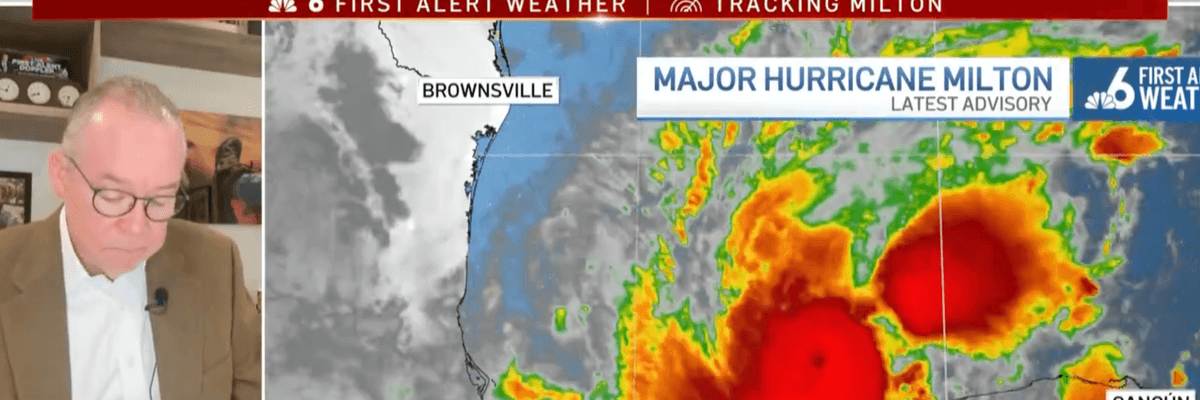
Florida meteorologist John Morales warns residents to evacuate and says the rapid intensifying of Hurricane Milton is due to the climate crisis and planetary heating in a news report on October 7, 2024. (Image: NBC6)

“The warming world has forcibly shifted my manner from calm concern to agitated dismay,” said John Morales. “Now I look at storms differently. And I communicate differently.”

As NBC6 hurricane specialist John Morales in Miami reported on the rapid drop in barometric pressure as Hurricane Milton gained strength in the Gulf of Mexico on Monday, the veteran meteorologist’s voice broke.

“It has dropped 50 millibars in 10 hours,” Morales said, becoming visibly emotional. “I apologize, this is just horrific.”

The storm is expected to make landfall on the west coast of Florida on Wednesday as the state struggles to recover from Hurricane Helene.

Morales spoke as the hurricane’s winds reached 160 miles per hour and climate experts noted that the Gulf of Mexico and Atlantic Ocean’s waters have been abnormally warm.

“The seas are just incredibly, incredibly hot, record hot, as you might imagine,” said Morales. “You know what’s driving that. I don’t need to tell you. Global warming, climate change [are] leading to this and becoming an increasing threat.”

Morales posted the clip on social media later, saying he “debated whether to share” the emotional moment in which he reported on what is likely to be further catastrophic damage to his home state as well as parts of Mexico.

“Frankly, you should be shaken too, and demand climate action now,” said Morales.

A week ago, the meteorologist wrote in the Bulletin of Atomic Scientists that Hurricane Helene, which killed more than 230 people across six states, was “a harbinger of the future.”

“For decades I had felt in control. Not in control of the weather, of course. But in control of the message that, if my audience was prepared and well informed, I could confidently guide them through any weather threat, and we’d all make it through safely,” wrote Morales. “Today as a result of so many compounding climate-driven factors, the warming world has forcibly shifted my manner from calm concern to agitated dismay. Now I look at storms differently. And I communicate differently.”

“No one can hide from the truth,” he added. “Extreme weather events, including hurricanes, are becoming more extreme. I must communicate the growing threats from the climate crisis come hell or high water—pun intended.”

Former U.S. Rep. Debbie Mucarsel-Powell (D-Fla.), who is running for Senate, was among those who applauded Morales’ frank assessment of the crisis facing his state and the country.

“I’ve never seen someone like John Morales get emotional about a storm before. He understands these systems better than most and it should be a warning for all of us to get ready now,” said Mucarsel-Powell. “We MUST have the courage to stand up to climate denialists and take action before it is too late.”

Original article by Julia Conley republished from Common Dreams under Creative Commons (CC BY-NC-ND 3.0). 

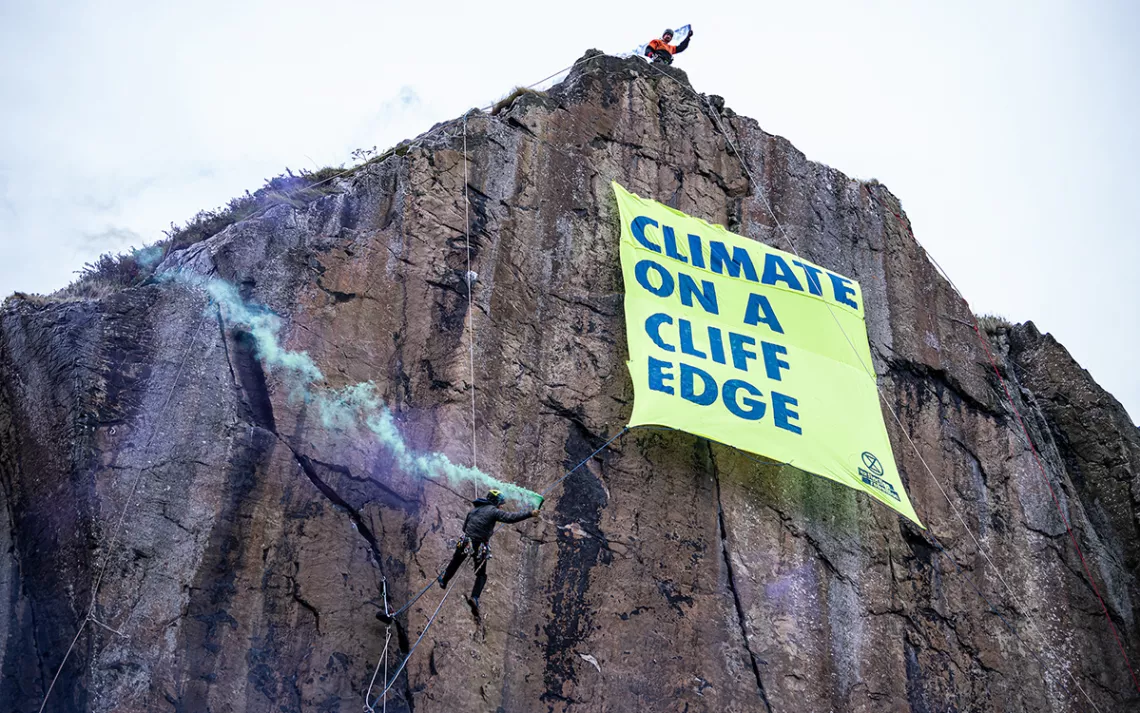
Experienced climbers scale a rock face near the historic Dumbarton castle in Glasgow, releasing a banner that reads “Climate on a Cliff Edge.” One activist, dressed as a globe, symbolically looms near the edge, while another plays the bagpipes on the shores below. | Photo courtesy of Extinction Rebellion and Mark Richards
Continue ReadingFlorida Meteorologist Breaks Down Reporting on Milton’s Growing Strength

Climate change: multi-country media analysis shows scepticism of the basic science is dying out

Spread the love

This article is republished from The Conversation under a Creative Commons license. Read the original article.


Frame Stock Footage/Shutterstock

James Painter, University of Oxford

Any regular viewer of BBC’s Question Time could be forgiven for thinking that old-fashioned climate science denialism is alive and kicking. In a recent edition, panellist Julia Hartley-Brewer called the IPCC’s climate models “complete nonsense”, and dismissed the 2022 record UK heatwave and the floods in Pakistan by saying: “It’s called weather.”

But for some time now, researchers have suggested that the balance of arguments propagated by climate sceptics or denialists has shifted from denying or undermining climate science to challenging policy solutions designed to reduce emissions.

For example, computer-assisted methods applied to thousands of contrarian blogs or websites have found that since the year 2000, “evidence scepticism” which argues that climate change is not happening, or is not caused by humans or the effects won’t be too bad, has been on the decline, while “response” or “solutions scepticism” has been on the rise.

In the US media and UK media, there is strong evidence too that the prevalence of these arguments may be shifting. By 2019 much less space was being given to those denying the science in newspaper outlets in Australia, Canada, New Zealand, the UK and the US, except in some right-leaning titles.

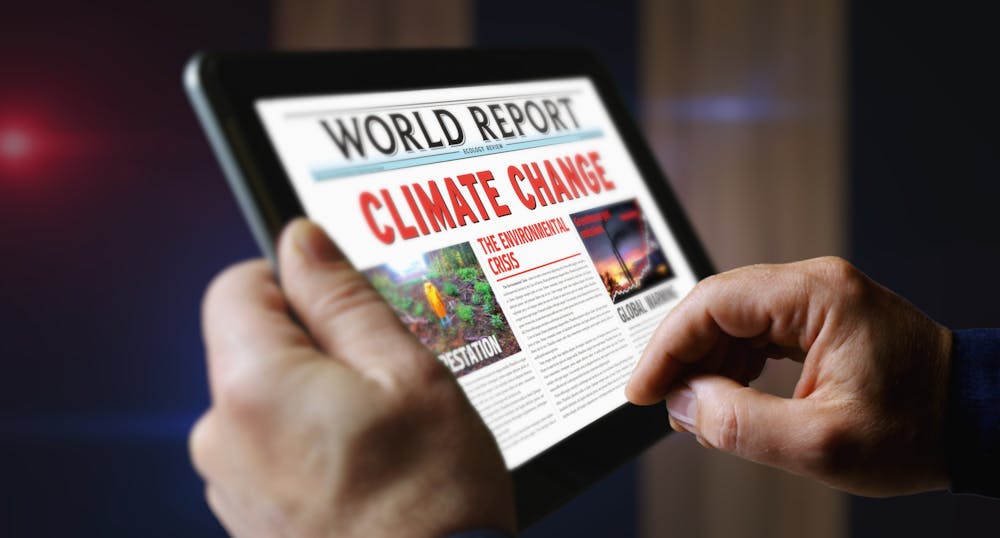
tablet showing climate change news article


From denial to delay.
Skorzewiak / shutterstock

But what about television coverage? Recent survey work finds that in most countries, television programmes, including news and documentaries, are by far the most used source of information on climate change compared to online news, print or radio.

In a new study published in Communications Earth & Environment my colleagues and I looked at 30 news programmes on 20 channels in Australia, Brazil, Sweden, the UK and the US which included coverage of a 2021 report by the IPCC on the physical science basis of climate change. Australia, the UK and the US were chosen for their long history of climate scepticism, whereas Brazil and Sweden were included for the more recent arrival of scepticism among key political parties.

These channels included 19 “mainstream” examples such as the BBC, ABC in Australia and NBC in America, and 11 examples from a selection of “right-wing” channels ranging from Fox News, which commands a large audience, to more outliers such as GBTV in the UK, SwebbTV in Sweden, Sky News in Australia and Rede TV! in Brazil.

We then watched and manually coded all 30 programmes (around 220 minutes of content) for examples of the different types of scepticism present, following the broad distinction above between “evidence” and “response/policy” scepticism. But we also distinguished between “general response” scepticism, usually advanced by organised sceptical groups, and “directed” response scepticism, where country-specific economic, social and political obstacles to enacting climate policies were mentioned.

Science scepticism is no longer mainstream

First, we found that on mainstream channels, the presence of science scepticism, science sceptics and general contestation around the IPCC’s report was much less present in our sample than in the coverage of the previous round of IPCC reports in 2013 and 2014, even in countries that have historically had strong traditions of science denial.

Second, response scepticism was in some of the coverage by mainstream channels. But in most cases, these were examples of “directed” scepticism. In contrast, there was more non-specific response scepticism on right-wing channels such as right-wing politician and pro-Brexit campaigner Nigel Farage on GBTV arguing that “whatever we do here [in the UK], it’s China that needs to do far more than us”, or a commentator on Fox News suggesting that “only being able to fly when it is morally justifiable would lead to people having to entirely change their lifestyles”.

Also on right-wing channels, in four countries (Australia, Sweden, the UK and the US) sceptics were combining evidence and response scepticism. For example, Fox News continued its historical record of scepticism by criticising the IPCC report and hosting evidence sceptics, but it also included a wide range of examples of response scepticism (such as the infringement on civil liberties by taking climate action).

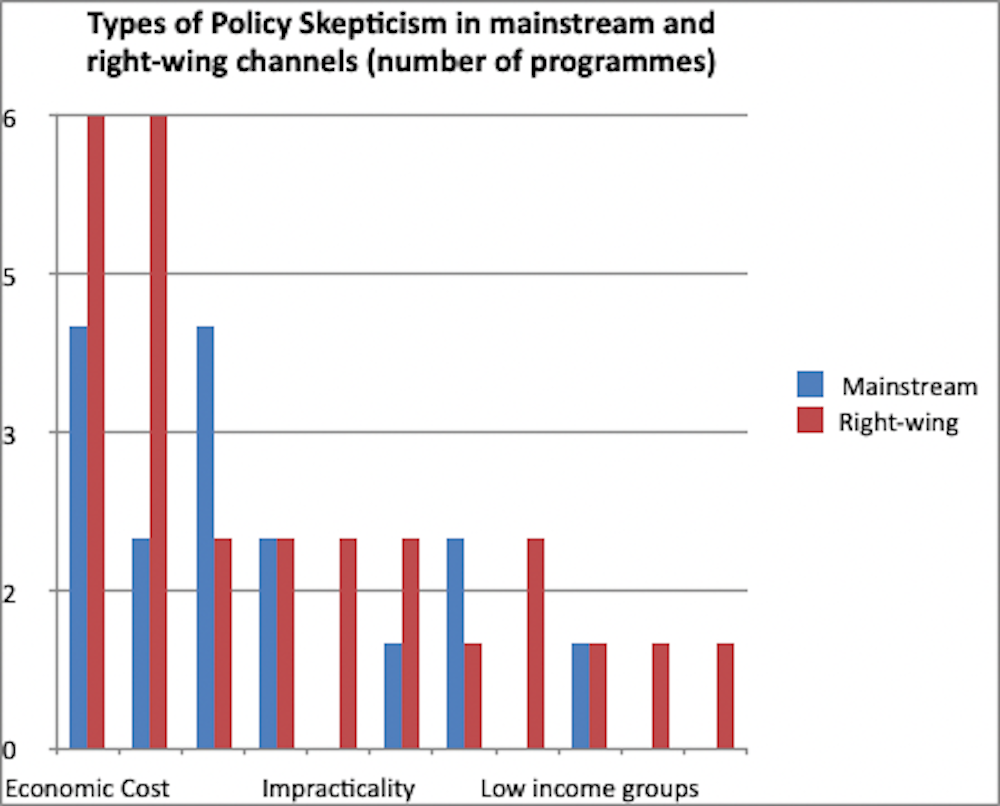
Finally, we looked at the sorts of arguments that were being made, following a useful taxonomy of climate scepticism or obstructionism published in the journal Nature in 2021. We found a wide variety of claims, but the most common concerned the high cost of taking action and “whataboutism” (typically questioning the need to take action when other countries such as China were not doing enough).

Graph showing types of policy scepticism


The most common policy scepticism concerned the economic cost of climate action.
Painter et al / Nature Comms, Author provided

Why does this matter? First, how these arguments play out on television is hugely important because of its dominance as a source of climate information. Second, there is strong evidence that media has a very powerful agenda-setting effect, and in certain contexts, can exert a strong effect on attitudes and behaviour change.

Legitimate policy discussion needs to be carefully distinguished from false claims put out by organised sceptical groups. But for those active in opposing organised scepticism, any definitive shift towards response scepticism across the media, such as vocal opposition to net zero policies, represents an important new challenge to climate action.The Conversation

James Painter, Research Associate, Reuters Institute, University of Oxford

This article is republished from The Conversation under a Creative Commons license. Read the original article.

Continue ReadingClimate change: multi-country media analysis shows scepticism of the basic science is dying out