Barclays’ $2bn coal loans expose ‘enormous loophole’ in its climate policy

Spread the love

Original article by Josephine Moulds republished from The Bureau of Investigative Journalism under a Creative Commons Attribution-NonCommercial-NoDerivs 3.0 Unported License.

Bank accused of ‘trying to have it both ways’ with coal policy that allows financing for huge polluters

Barclays helped raise nearly $2bn for companies running highly polluting coal-fired power plants in the US, exposing an “enormous loophole” in its climate policy.

As part of its strategy to reach net zero, the bank has committed to stop financing companies that make more than half their revenues from coal-fired power.

Last year, however, Barclays helped raise $1.7bn for coal-fired power companies that appear to exceed that threshold, the Bureau of Investigative Journalism and ITV News can reveal.

Among these deals were two $400m loans for Monongahela Power, which generates 95% of its electricity from burning coal at two huge plants in West Virginia. The company only sells electricity that it generates itself, suggesting that the vast majority of its revenues are from coal-fired power.

Barclays, however, said its policy only prohibits financing for companies that make more than 50% of revenues specifically from generating coal-fired power; and that TBIJ’s calculations did not account for these companies’ revenues from transmitting and distributing that power.

Barclays was Europe’s biggest lender to the coal power industry last yearAndrea Domeniconi / Alamy

Seth Feaster, an analyst at the Institute for Energy Economics and Financial Analysis (IEEFA) think tank, said: “The bank is trying to have it both ways: a public-facing coal policy that sounds like it will no longer support coal-heavy companies, but the technicality [regarding transmission and distribution revenue] has rendered that policy largely meaningless.

“The bank has created an enormous loophole that appears to allow it to largely continue doing business as usual with coal-friendly utilities.”

Natasha Landell-Mills, head of stewardship at the asset manager Sarasin & Partners, which holds Barclays debt, said the bank’s position appeared to be “somewhat disingenuous”.

“In the end, what matters is that coal-fired power falls in keeping with ensuring a safe climate. As investors, we would expect all related activities that enable coal-fired power to be captured and, if they are not, would hope to see the board urgently address this loophole.” She said this was not just a question of how Barclays is run and its reputation, but that continuing to fund high emitters was also financially risky for long-term investors.

The news comes amid a storm of protest against the bank, which was revealed in May to be Europe’s biggest funder of fossil fuels.

It is also Europe’s biggest lender to the coal power industry, taking part in $75bn worth of deals for companies active in the sector last year.

Bold pledges

Under pressure from its customers and investors, Barclays has made increasingly bold climate promises. It tightened its coal policy in 2022 and said financing the sector not only poses a threat to the planet but could represent a bad lending decision. Yet a number of companies it funded last year appear to be making most of their money from coal-fired power.

In addition to the Monongahela Power deals, Barclays helped raise $400m for Kentucky Utilities, which in 2022 generated almost three quarters of its electricity from burning coal. This suggests more than half its revenues were from coal-fired power.

Barclays also helped raise a $500m loan for Louisville Gas & Electric, which generated 83% of its power from coal in 2022. It makes some revenues from selling gas but calculations based on company and government data suggest its revenue share from coal was more than 50%.

Mill Creek power plant, a coal-fired stations owned by Louisville Gas and ElectricWilliam Alden / Creative Commons

Neither company appears to be transitioning to renewable power and their owner, PPL Corporation, said it expects they will use coal and natural gas as their predominant fuels “for the foreseeable future”.

Monongahela Power is investing millions to keep its two West Virginia plants running until 2035 and 2040, despite scientists warning that developed countries must end power generation from coal by 2030. The company aims to build 50MW of solar generation, but that represents less than 2% of its current coal-fired power capacity.

Barclays told TBIJ the deals complied with its policy “based on publicly disclosed information and our due diligence”. It said its policy does not have a loophole and that its methodology is robust. “An ambition to be net zero by 2050 does not require an immediate exit from financing coal,” the bank said. “Barclays is financing an energy sector in transition, providing finance to meet current energy needs and also financing the scaling of clean energy”.

PPL, which owns utilities in Kentucky, Rhode Island and Pennsylvania, said it had set a clear goal to achieve net-zero carbon emissions by 2050 and was transitioning to a cleaner energy mix across the group. It added that it had received approval from the authorities to retire 600MW of coal-fired power generation in Kentucky by 2027. This, however, represents less than 15% of its remaining coal capacity.

Monongahela Power did not respond to TBIJ’s request for comment.

Deadly coal plants

Coal-fired power plants are responsible for more than 40% of global CO2 emissions from energy. At Cop28 UN climate talks in Dubai last year, all countries agreed that accelerating the transition from coal to renewables was essential in order to avert catastrophic climate change.

Coal is also a major source of toxic air pollution. In the US alone, more than 3,800 people die from soot released by coal-fired power plants every year, according to a report by Sierra Club, a US NGO. While many European banks have distanced themselves from the industry, Barclays has retained strong links with US coal-fired power companies.

The boom in fracked gas and plunging cost of renewables has changed the landscape for power generation in the US. Seth Feaster at IEEFA said: “[Coal-fired power] companies are going to start struggling because they can’t sell their power in competitive environments.

“Investing in coal is very risky because most of [these coal plants] are losing money. They’re not going to be around for very long and if something breaks, they tend to shut down early because they can be very costly to repair.”

Bob Ward from the Grantham Research Institute on Climate Change said: “The coal industry in the United States is failing, it’s on its way out … there’s no excuse for propping up the American coal industry.” He described the distinction Barclays made between the generation, transmission and distribution of electricity from coal in its policy as “semantics”.

“What consumers and investors will be expecting is that Barclays are complying with the spirit of their declarations, and not just a technicality,” Ward said. “If you are generating most of your income from burning coal and then distributing the electricity results, then that’s the coal. That’s the coal industry. You’re damaging the climate. And that is what Barclays said they would stop.”

Last month, the organisers of the Wimbledon tennis championships faced calls to drop Barclays as a sponsor over its ties to fossil fuels and defence companies supplying Israel. Barclays addressed criticism of its defence funding, saying it trades in shares on behalf of clients. “Whilst we provide financial services to these companies, we are not making investments for Barclays.”

Live Nation also dropped the bank as a sponsor for various music festivals – including Download, Latitude and Isle of Wight – after protests from bands and fans.

Steff Wright, chairman of the Gusto Group, said his construction and manufacturing business is moving away from banking with Barclays. “As a company that’s working towards a green future, we need to look at our supply chain and who else is on that journey with us.

“We’d encourage all businesses to move away from them, to put pressure on them to rethink their strategy.”

Reporters: Josephine Moulds
Environment editor: Robert Soutar
Impact producer: Grace Murray
Deputy editors: Chrissie Giles and Katie Mark
Editor: Franz Wild
Production editor: Alex Hess
Fact checker: Somesh Jha

This reporting is funded by the Sunrise Project. None of our funders have any influence over our editorial decisions or output.

Original article by Josephine Moulds republished from The Bureau of Investigative Journalism under a Creative Commons Attribution-NonCommercial-NoDerivs 3.0 Unported License.

More from this project

Barclays’ billions of ‘sustainable’ finance for fossil fuel industry is greenwash, says investor

HSBC helped oil and gas industry raise $47bn despite net-zero pledge

How will new FCA greenwashing rule tackle banks’ dodgy climate claims?
Continue ReadingBarclays’ $2bn coal loans expose ‘enormous loophole’ in its climate policy

Tory climate tsar Chris Skidmore quits as MP with brutal attack on Rishi Sunak

Spread the love

https://www.mirror.co.uk/news/politics/breaking-tory-net-zero-tsar-31817773

A Tory MP has launched a spectacular attack on Rishi Sunak’s climate record as he announced he was quitting.

Former energy minister Chris Kingswood, who led a Government review of net zero, warned: “I can no longer stand by.”

His decision creates another by-election nightmare for the Prime Minister. Mr Kingswood has resigned with immediate effect from the Conservative Party and will formally stand down as an MP when Parliament returns after the Christmas break on Monday.

In a statement posted on X, the Tory who signed the UK’s net zero commitment by 2050 into law said he was resigning as he could not support proposed new legislation that “clearly promotes the production of new oil and gas” by handing out more North Sea drilling licence.

He said the “future will judge harshly” anyone who backs the Offshore Petroleum Licensing Bill, which is due to be voted on by MPs on Monday.

“I can… no longer condone nor continue to support a government that is committed to a course of action that I know is wrong and will cause future harm,” he wrote in the excoriating statement. “To fail to act, rather than merely speak out, is to tolerate a status quo that cannot be sustained. I am therefore resigning my party whip and instead intend to be free from any party-political allegiance.”

He added: “I can no longer stand by. The climate crisis that we face is too important to politicise or to ignore.”

Mr Skidmore said the Bill that will be debated next week “achieves nothing apart from to send a global signal that the UK is rowing ever further back from its climate commitments”

Chris Skidmore’s full resignation statement is at the linked article: https://www.mirror.co.uk/news/politics/breaking-tory-net-zero-tsar-31817773

Useful information from Wikipedia. https://en.wikipedia.org/wiki/Chris_Skidmore

… In September 2022, he was appointed by the Truss government to chair the Independent Government Review on Net Zero.[5] On 5 January 2024, Skidmore announced that he would resign his party whip and his Parliamentary seat in protest at the introduction of the Offshore Petroleum Licensing Bill.[6]

On 27 June 2019, as Interim Minister for Energy and Clean Growth, Skidmore signed the UK’s Net Zero Pledge into law, becoming the first major economy to do so.

Net zero

On 26 September 2022 Skidmore launched the Net Zero Review, pledging to use the review to focus on the UK’s fight against climate change while maximising economic growth to ensure energy security and affordability for consumers and businesses.[28]

On 19 October 2022, Skidmore put out a statement on Twitter, in advance of a debate on fracking, saying that “[a]s the former Energy Minister who signed Net Zero into law”, he could not vote “to support fracking and undermine the pledges I made at the 2019 General Election”. The government was reportedly treating this vote as a confidence vote, putting Skidmore at risk of losing the Conservative Party whip.[29][30]

On 16 January 2023, Skidmore published “Mission Zero”,[31] the final report of the Net Zero Review. The 340 page report, containing 129 recommendations on how to deliver the UK’s net zero commitments, has been widely welcomed by the energy and climate sector.[32][33]

In June 2023, it was announced that Skidmore had been appointed to a professorship at the University of Bath to undertake research on sustainability and climate change.[34][35]

Although in November 2022 he had declared he would not stand again, in January 2024 Skidmore stated he would leave Parliament “as soon as possible”, stating that the relaxation of net zero targets was “the greatest mistake of [Rishi Sunak’s] premiership”.[36]

Resignation

On 26 November 2022, Skidmore announced that he would be standing down at the next general election, later stating in Parliament that ‘my constituency of Kingswood is being formally abolished in the boundary changes and there is nowhere for me to go.’[37][38][39]

However, on 5 January 2024 Skidmore announced that he would resign his party whip and his Parliamentary seat in protest at the introduction of the Offshore Petroleum Licensing Bill.[40]

https://en.wikipedia.org/wiki/Chris_Skidmore

dizzy: From the Resignation section immediately above, by resigning Skidmore is forcing a by-election in a seat that will cease to exist at the next general election expected this year. From his statement and the rest of the Wikipedia entry, it’s clear that he’s doing it because he’s opposed to Rishi Sunak’s energy policy. Part of his resignation statement reads “I cannot vote for a bill that clearly promotes the production of new oil and gas. While no one is denying that there is a role for existing oil and gas in the transition to net zero, the International Energy Agency, the UNCCC and the Committee on Climate Change have all stated that there must be no new additional oil and gas production on top of what has already been committed, if we are to both reach net area carbon dioxide emissions by 2050 and keep the chance of limiting temperature rises to 1.5 degrees.”

He ends his statement “I can no longer stand by. The climate crisis that we face is too important to politicise or to ignore. We all have a responsibility to act when and where we can to protect the future: I look forward to devoting my time in 2024 and beyond to making the future a better place, in whatever capacity I can.”

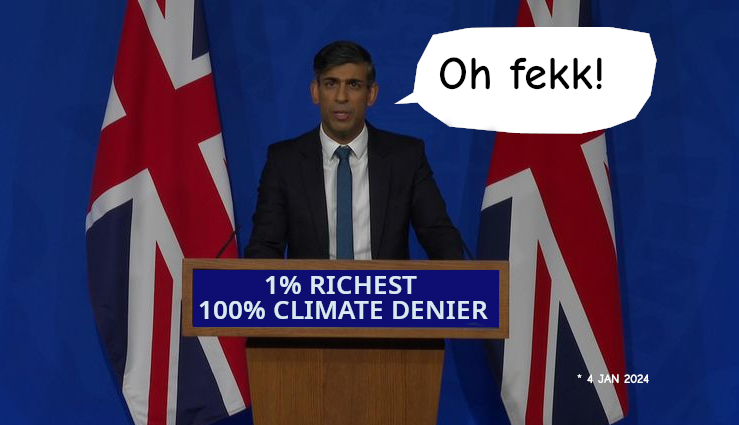
Rishi Sunak says Oh fekk!

Continue ReadingTory climate tsar Chris Skidmore quits as MP with brutal attack on Rishi Sunak

Rishi Sunak is wrong: we polled the British public and found it largely supports strong climate policies

Spread the love
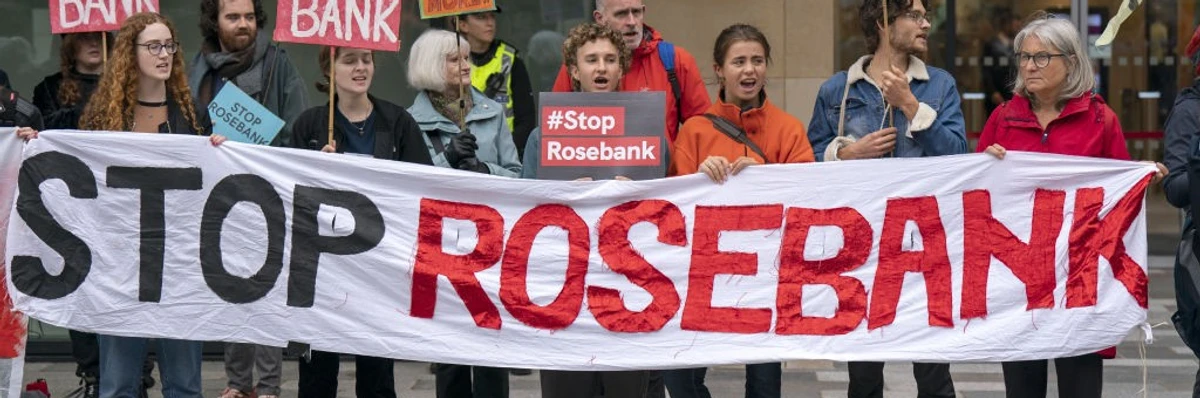
Campaigners take part in a Stop Rosebank emergency protest outside the U.K. Government building in Edinburgh, after the controversial Equinor Rosebank North Sea oil field was given the go-ahead Wednesday, September 27, 2023. (Photo: Jane Barlow/PA Images via Getty Images)

Christian Bretter, University of Leeds and Felix Schulz, University of Leeds

The UK’s Tory government is rolling back climate legislation and is continuing to fund the expansion of domestic oil and gas reserves. Our new research suggests this might be based on a misreading of public opinion.

Since winning a July 2023 by-election in the London suburb of Uxbridge, the UK government has made polarising voters on climate policy one of its main strategies. The Tory campaign had focused on opposing a new low emission zone for cars, and prime minister Rishi Sunak took its victory as vindication of a clear “pro-motorist” and anti-climate policy stance.

The apparent lack of public support for strict climate policies such as a ban of fossil-fuelled cars is now being used as an excuse to roll back policies urgently necessary to reach net zero targets.

In a recently study in the journal Climate Policy, we demonstrate that, by betting on a public tired of stringent climate policies, the government is backing the wrong horse.

We asked 1,911 people that are representative of the UK population in terms of age, gender and ethnicity to indicate the extent to which they support different climate policy instruments. Almost two thirds support the most stringent climate policies, while others receive even higher support.

In short, people in the UK favour all kinds of policy instruments to tackle climate change, even the most stringent ones. There is a lesson here for the opposition too, which should put forward more effective climate policies, and not shy away from regulation.

A vote in favour of UK climate politics

In our study, we asked people about actual policy proposals by UK government bodies and political parties (as opposed to hypothetical ones).

We put each into one of four categories based on the type of policy instrument: regulation (such as banning the sale of fossil-fuel-powered cars or stopping drilling for oil and gas), market instruments (carbon trading, stopping fossil fuel subsidies), informational tools (consumer labels, advertising campaigns), and voluntary initiatives (carbon offsets, non-binding product standards).

Cars in traffic jam on wet day
The UK public is mostly happy to support measures like phasing out petrol cars.
Kittipong33 / shutterstock

Contrary to the government’s rhetoric, our findings point towards a more optimistic view of the UK’s future climate politics – at least from a voter perspective. A large majority supports strict regulations that mandate or prohibit specific behaviour. An even larger share backs market-based initiatives (78%), information tools (86%) and voluntary measures (87%).

While the important thing here is that the UK public wants a package of different policy instruments to decarbonise the economy and reach net zero, one could rightly argue that more still needs to be done to increase support for stricter measures. So what drives public support for climate policies?

Drivers of public support

In line with previous research, our study found that free market and environmental beliefs have the biggest impact on whether someone supports climate policies.

The more people believed that a free market acts in the interests of the public, the less they supported all climate policies. Similarly, people that believe nature is important voiced stronger support for all policies.

Interestingly, support for regulatory and market-based policies didn’t change according to a person’s income. This is important because the current government usually tries to appeal to working class voters in its attempts to demonise ambitious climate policies.

These are important findings that highlight the need to challenge free market ideologies by publicly and repeatedly scrutinising their validity for a functioning and just society. We also should start recognising their detrimental effect on climate policy preferences.

Regional variations in public support

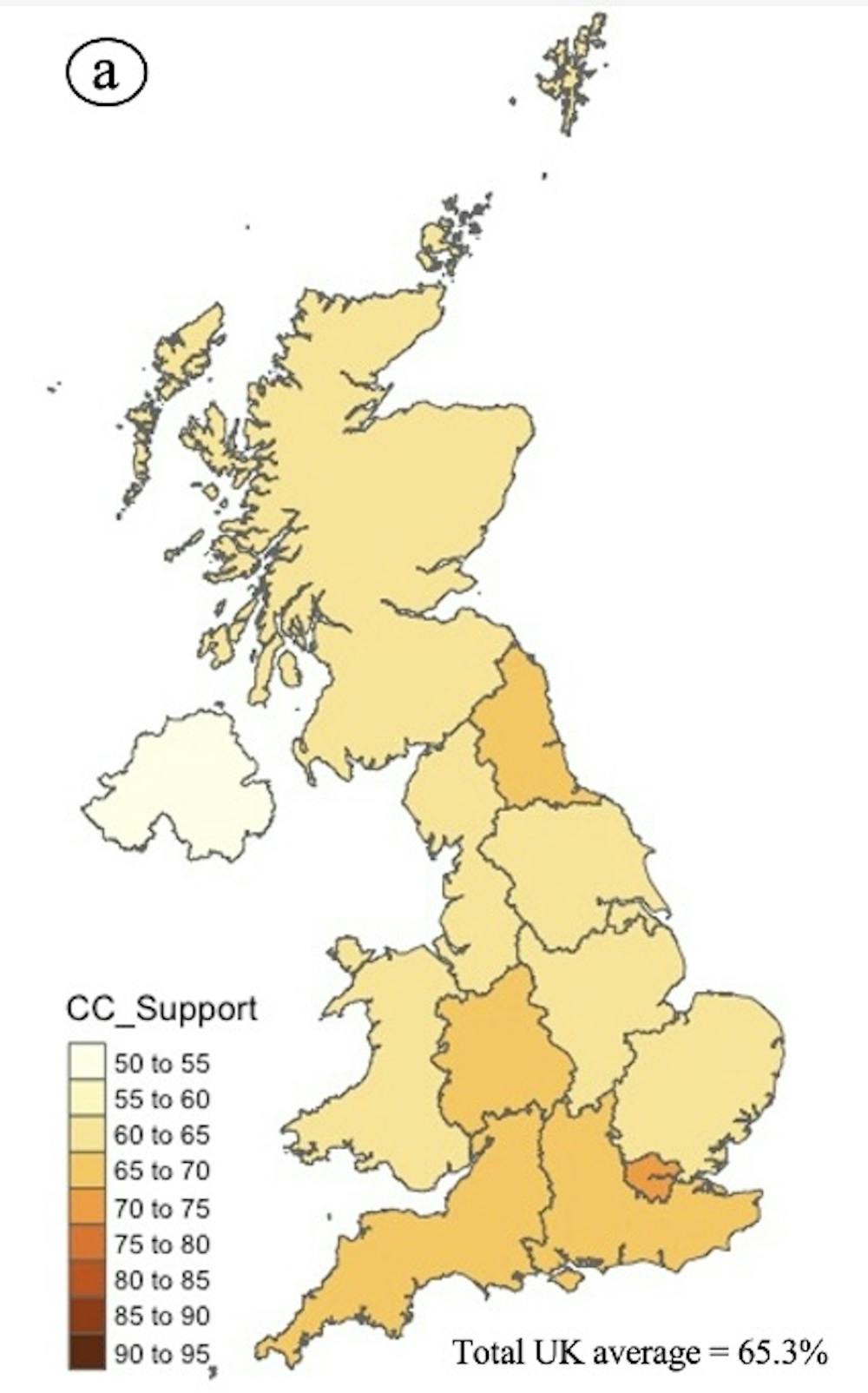
However, only looking at national results might hide important differences. Our research found important regional variation, with London often being an exception compared to the rest of the UK.

People living in other regions were about 30% less likely to support regulatory and market-based climate policies compared to people in Greater London, for instance.

Shaded map of UK
Regulatory measures were the least popular around the country, though still had majority support everywhere and a strong majority in London.
Bretter and Schulz, CC BY-SA

Drivers of these differences are both ideological and structural. People living in Greater London tend to believe less in the free market system compared to people in regions which had significantly lower support for climate policies. This indicates that neoliberal ideology favouring free markets is discouraging climate action.

Yet it is not only what people believe in. Those in more rural regions with higher emissions show less support for stricter climate policies. These tend to be regions with less access to public transport where people have to rely more heavily on high-emitting cars.

More needs to be done to improve public infrastructure in rural areas. This will require investment in affordable, low-carbon transport networks rather than championing the continuation of the combustion engine.

How the media may shape policy support

Of course, our study only captured a snapshot of people’s policy preferences. We are constantly confronted by news stories, particularly through social media.

These often act as echo chambers to reinforce existing ideologies (and by extension, policy preferences), thereby strengthening existing polarisations. This will make it harder to engage people with contrasting beliefs in a discussion on climate policies.

On the other hand, being repeatedly confronted with particular views and ideas can shift one’s beliefs. In psychology, this is referred to as “repeated priming”. In Germany, we have seen how newspaper campaigns against the slow phase-out of gas boilers have further undermined public support for this specific climate policy.

Could something similar happen in the UK? To avoid the gradual weakening of support by particular news outlets, the UK opposition parties need to be consistent and persistent in their communication of climate policies and their effects.


Imagine weekly climate newsletter

Don’t have time to read about climate change as much as you’d like?

Get a weekly roundup in your inbox instead. Every Wednesday, The Conversation’s environment editor writes Imagine, a short email that goes a little deeper into just one climate issue. Join the 20,000+ readers who’ve subscribed so far.The Conversation


Christian Bretter, Research Fellow in Environmental Psychology, University of Leeds and Felix Schulz, Research Fellow, University of Leeds

This article is republished from The Conversation under a Creative Commons license. Read the original article.

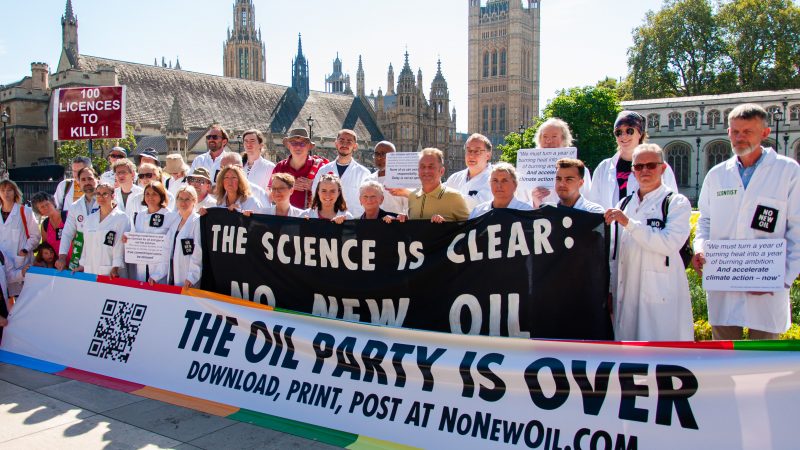
Scientists protest at UK Parliament 5 September 2023.
Continue ReadingRishi Sunak is wrong: we polled the British public and found it largely supports strong climate policies

COP26 News review day 9

Spread the love

Gender day today at the COP26 summit. Alexandria Ocasio-Cortez and Nancy Pelosi arrived today.

COP26 Report Reveals ‘Massive’ Credibility Gap Between Climate Commitments and 1.5°C Target

Climate policy experts on Tuesday called for the final days of the United Nations Climate Change Conference to be spent with world leaders focusing on closing the “credibility, action, and commitment” gap that has emerged as countries put forward their goals for reaching net-zero fossil fuel emissions, with current targets on track to allow global heating far above the 1.5°C limit.

The climate policy organizations Climate Analytics and NewClimate Institute released their annual Climate Action Tracker (CAT) on Tuesday, showing that even with full implementation of emissions targets set for 2030, the planet is expected to heat up by 2.4°C by the end of the century.

[Comment by dizzy: I can’t see humans surviving anything like an increase of 2.4C. Apparently we’re at 1.1 or 1.2C increase currently and look at the problems that we have already …]

First Draft of COP26 Decision Text Slammed as ‘Love Letter’ to Fossil Fuel Industry

As a new analysis revealed Monday that fossil fuel industry lobbyists have a larger presence at the COP26 than any country, global campaigners criticized the first draft of the final decision text for the United Nations climate summit for failing to even mention phasing out coal, gas, and oil.

Greenpeace International, in a statement, highlighted that “this glaring omission” comes despite expert warnings about the need to keep fossil fuels in the ground that have mounted in the leadup to the ongoing summit in Glasgow, Scotland.

“What’s very concerning here in Glasgow is that the first draft of the climate pact text is already exceptionally weak. Usually, the text starts with some ambition, which then gets watered down,” said Greenpeace International executive director Jennifer Morgan.

UN ‘guilty’ of failing to act on climate change say activists and experts from the Global South

Sunday was an official break day for proceedings at COP26 – but that doesn’t mean that climate events weren’t still happening across Glasgow.

Organised by the COP26 Coalition, the People’s Summit for Climate Justice was one of those events. And as negotiators and COP attendees took a well-deserved rest, a People’s Tribunal took place. This is a simulated trial with the aim of holding the UN accountable for failing to act on climate change.

Made up of activists, experts, NGOs and even a former COP negotiator from the Global South, the tribunal heard four hours of evidence against the UNFCCC, the UN organisation behind these climate talks.

Climate change is a far bigger problem than coronavirus, Sir Patrick Vallance warns

The climate crisis poses a far greater threat to humanity than Covid, the UK’s Chief Scientific Advisor Sir Patrick Vallance has said.

In a stark warning, Sir Patrick Vallance said global warming could kill more people than the pandemic and pose a threat that could last a hundred years.

Jeremy Corbyn hits out at COP26 ‘greenwashing’

Former Labour leader Jeremy Corbyn has told The Big Issue there is too much greenwashing and “chat” at COP26, and not enough action.

“I’m concerned that there’s an awful lot of greenwash. There’s an awful lot of chat going on, there seems to be very few concrete agreements that have been reached so far. That worries me,” he said.

Boris Johnson to return to Cop26 for one-day visit

Continue ReadingCOP26 News review day 9