World almost certain to endure record hot year by 2030, UN warns

Spread the love

https://www.theguardian.com/environment/2026/may/28/climate-impacts-spiralling-more-record-global-heat-warns-un

Southern Vietnam in 2024, the hottest year ever recorded globally. Photograph: Nhac Nguyen/AFP/Getty Images

Global temperature record could be broken as soon as 2027, with El Niño expected later this year

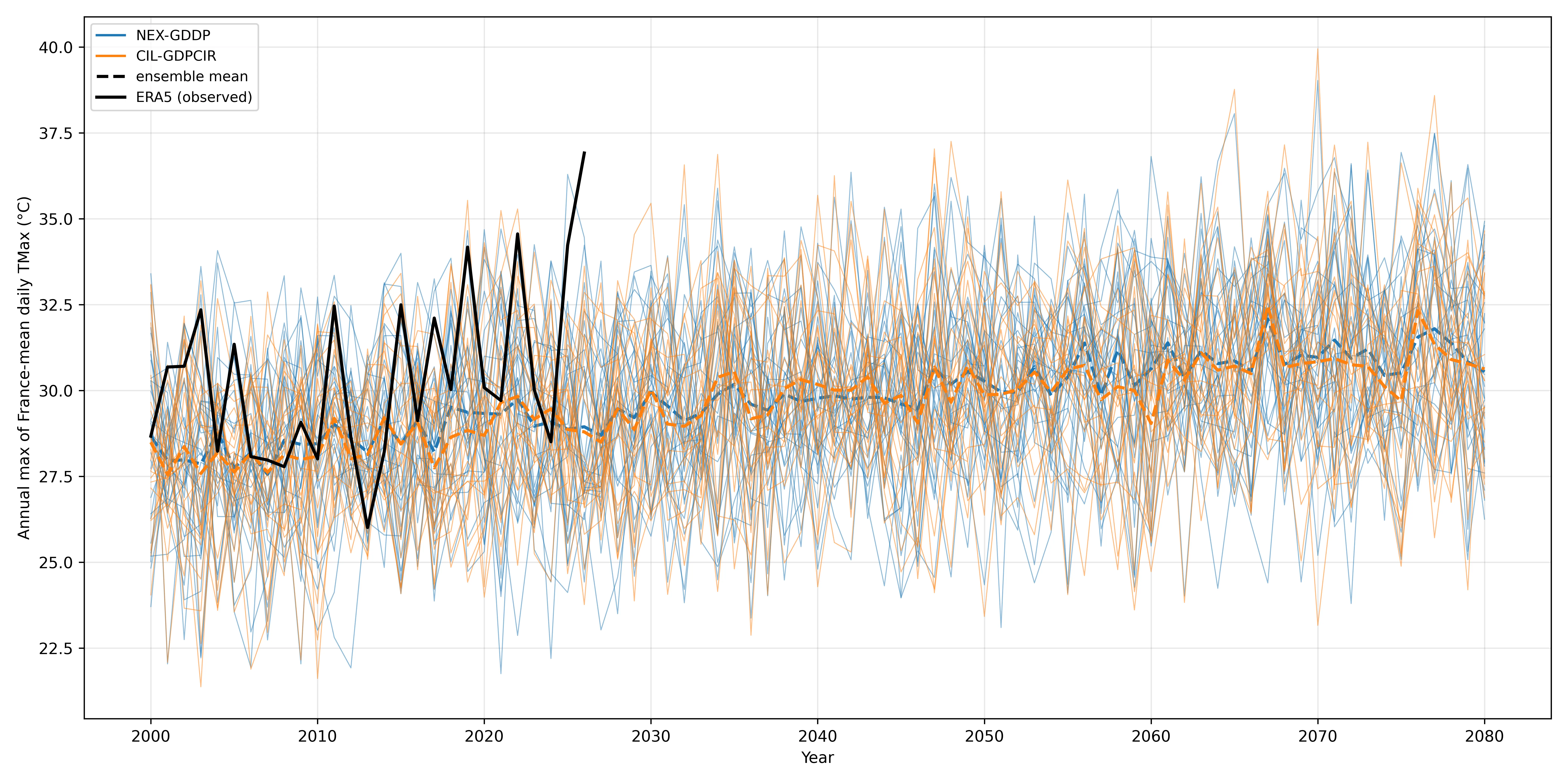
A record-breaking hot year is almost certain by 2030 as the climate crisis intensifies, the UN’s World Meteorological Organization has warned.

With an El Niño event expected later this year, the global temperature record could fall as soon as 2027.

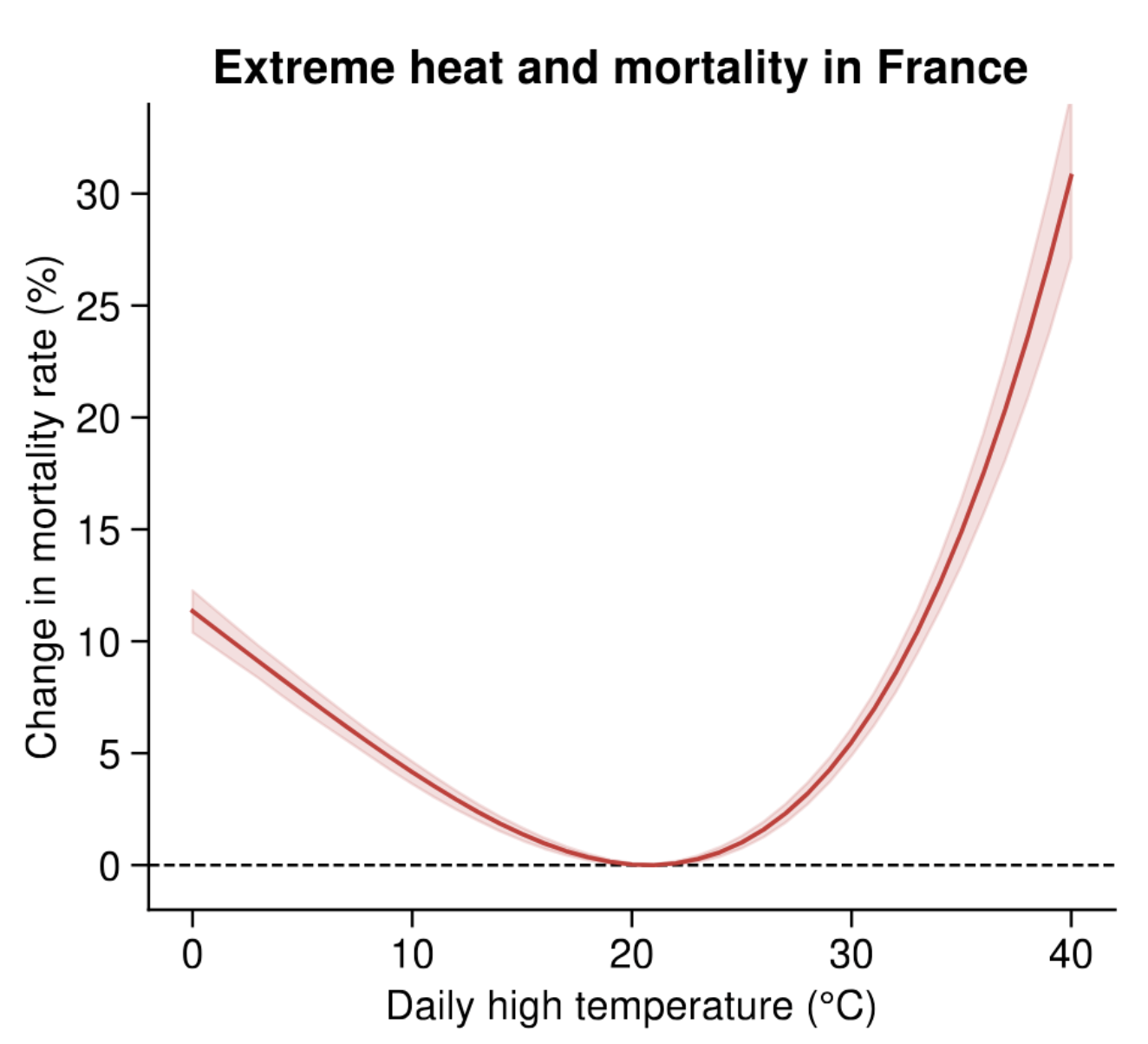
Carbon dioxide emissions from fossil fuels are continuing to rise, trapping more heat and driving more extreme weather, including the record-breaking heatwave that has hit the UK and Europe this week.

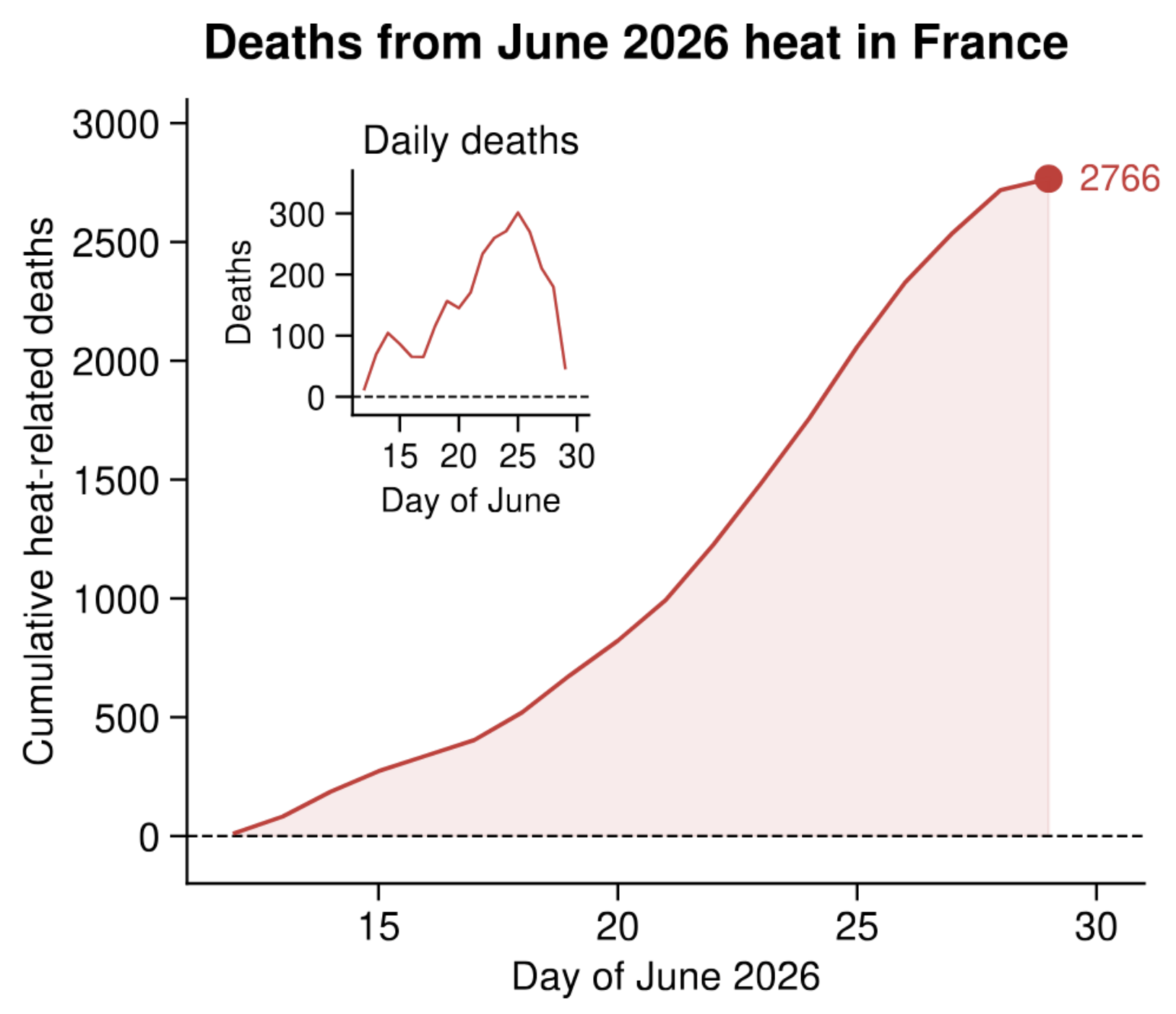
Global heating is already estimated to be taking one life every minute, with the toll likely to rise unless emissions fall rapidly.

The report, produced for the WMO by the UK Met Office, predicts an 86% chance that at least one year between 2026 and 2030 will surpass 2024 as the hottest ever recorded. There is a 75% chance that the average temperature for the five-year period from 2026 to 2030 will be more than 1.5C above the pre-industrial average.

Simon Stiell, the UN climate chief, said: “The latest heatwave in Europe is a brutal reminder of the spiralling impacts of the climate crisis, both human and economic. Many other parts of the world are also getting hit hard, such as India and other parts of Asia.”

https://www.theguardian.com/environment/2026/may/28/climate-impacts-spiralling-more-record-global-heat-warns-un

Donald Trump urges you to be a Climate Science denier like him. He says that he makes millions and millions for destroying the planet, Burn, Baby, Burn and Flood, Baby, Flood.
Nigel Farage urges you to ignore facts and reality and be a climate science denier like him and his Deputy Richard Tice. He says that Reform UK has received £Millions and £Millions from the fossil fuel industry to promote climate denial and destroy the planet.
Elon Musk urges you to be a Fascist like him, says that you can ignore facts and reality then.
Continue ReadingWorld almost certain to endure record hot year by 2030, UN warns

Climate Coverage Plunges, Though Crisis More Dire Than Ever

Spread the love

Article by Olivia Riggio republished from FAIR under a Creative Commons Attribution-NonCommercial-NoDerivs 3.0 Unported License.

The UN just released its 2025 Global Climate Report, and, predictably, the outlook for our earth is incredibly dire. The past 11 years were the 11 warmest on record, and Earth’s energy imbalance—the amount of solar energy absorbed versus the amount Earth radiates back into space—is also the highest on record. Greenhouse gas emissions continued to increase through 2025, despite the world crossing the 1.5°C threshold marked in the Paris Agreement above which the worst effects of global heating will take place.

There is no shortage of urgent climate news right now. The scientific consensus that we need to phase out fossil fuels fast has not changed, despite President Donald Trump’s anti-climate policies rolling back environmental protections and clean energy growth. But data shows coverage about climate change in US news outlets has plunged.

Downward trend

FAIR’s research has found that online news coverage of climate change has been trending down. A search of the term “climate change” in Media Cloud’s US–National dataset, which indexes 248 online outlets, found that there was almost 32% less climate coverage in 2025 than 2024.

This trend is similar in TV news. A recent Media Matters (3/4/26) study found that climate coverage on major US commercial broadcast TV networks was down 35% in 2025.

Zooming out to the past five years to date, results show a steep downward trend. In 2021, 2.4% of US online news pieces in MediaCloud contained the phrase “climate change.” In 2025, that percentage was 1.3%, which is a nearly 46% decrease.

This trend continues in 2026. Between January 1 and March 31 2026, climate stories made up 1.1% of total US news coverage. That’s a 42% decrease compared to the same period in 2021, when climate stories made up 1.9% of coverage.

US Media Attention to Climate Change

Coverage of climate change in MediaCloud’s US news database peaked at 3.4% of content in October 2021. This was in the runup to the COP26 climate conference in Glasgow (10/31/21–11/13/21), and was at the time the world’s fourth-warmest October on record, although now it’s only the seventh-warmest. Coverage reached its nadir in January 2026, at just under 1%, and as of March 31, 2026, sat at 1.1%.

The unlabeled ‘crisis’

The term “climate crisis,” which carries with it a more urgent connotation than the more familiar “climate change,” has nearly disappeared from media lexicon. The term, which averaged 0.4% of coverage in 2021, reaching its peak in November 2021 at 0.7%, has averaged 0.1% of content in the first quarter of 2026.

US Media Attention to Climate Crisis

Though it has never approached the usage of “climate change,” there was a time when the terms “crisis” or “emergency” to describe the heating planet were popularized in media and political lexicon (Public Citizen, 6/22/19). In 2019, activist Greta Thunberg (Twitter/X6/4/19) declared:

It’s 2019. Can we all now please stop saying “climate change” and instead call it what it is: climate breakdown, climate crisis, climate emergency, ecological breakdown, ecological crisis and ecological emergency?

Months later, the Guardian (10/16/19) changed its style guide to “introduce terms that more accurately describe the environmental crises facing the world.” The editors explained:

Climate change is no longer considered to accurately reflect the seriousness of the overall situation; use climate emergency or climate crisis instead to describe the broader impact of climate change.

In 2026, this terminology is arguably more applicable now than it has ever been. The years 2015–25 were the hottest on record. Yet while the Guardian continues its policy, it appears increasingly isolated.

Trump and climate silence

Under a president who called climate change a “con job” at the UN, and whose EPA edited its “Climate Change Science” page to blame global heating on debunked “natural causes” theories like changes in Earth’s orbit and volcanic activity, news media should be redoubling their efforts to tell climate change stories with accuracy.

Instead, one cannot help but notice a correlation between Trump’s second presidency and dwindling media attention to the climate. From January 2021 through November 2024, climate pieces were an average of 2.2% of total news content per month. From December 2024, after Trump was elected, through March 2026, climate pieces averaged more than 46% lower, at 1.2%.

The lack of recent coverage is not for lack of newsworthy climate stories. In addition to the release of the 2025 UN report, in March alone:

  • The University Corporation for Atmospheric Research filed a lawsuit charging that the Trump administration shut down the Colorado-based National Center for Atmospheric Research to get back at Colorado Gov. Jared Polis, whom Trump has clashed with (NCAR/UCAR, 3/16/26).
  • Scientists found that March’s record-shattering heatwave in the Western US would have been “virtually impossible” without the climate crisis. The heatwave included the hottest March days on record in the US, with two 112°F days in Arizona (NBC New York3/30/26).
  • The Trump administration paid a French energy giant $1 billion to cancel its offshore wind projects and invest in fossil fuels instead (Grist3/25/26).
  • More than 160 environmental and public health groups called for the firing of EPA administrator Lee Zeldin, who has rolled back national environmental regulations, including air quality standards, pollution limits for oil and gas drilling, and regulations on power plant and vehicle emissions (Earth.org, 3/26/26).
  • An oil spill in the Gulf of Mexico began in late March, killing wildlife and damaging reefs (Al Jazeera3/27/26).

Iran War and climate

The US and Israel’s unprovoked war on Iran is causing global oil and gas price shocks—and is being reported as the worst energy crisis in history, topping the crises of the 1970s and the Ukraine invasion of 2022 (Fortune3/23/26). With the war dominating headlines—the terms “Iran” and “war” made up 10.5% of US news coverage in March, per MediaCloud’s data—there were plenty of opportunities to discuss the war’s impact on climate.

While 5,012 stories in MediaCloud’s US news database mentioned Iran and oil or gas prices during March 2026, only 219 (4.4%) mentioned those topics in relation to renewable energy or climate change.

Simon Stiell, executive secretary of the UN Framework Convention on Climate Change, spoke at the 2026 Green Growth Summit in Brussels, explaining that a just transition from fossil fuels is not only an environmental imperative, but also an economic and national security one:

Sunlight doesn’t depend on narrow and vulnerable shipping straits, wind blows without massive taxpayer-funded naval escorts [and] renewable energy allows countries to insulate themselves from global turmoil and to side-step might-is-right politics.

Renewables like solar and wind are less beholden to geopolitics than fossil fuels, which are vulnerable to volatile shipping lanes and international relations in the specific regions of the world they are produced. Once solar panels and wind turbines are installed, they allow for energy to be produced locally and predictably. As a result, their prices remain stable over time (Global Witness, 4/2/26).

Solar and wind have also been cheaper than fossil fuels for quite some time. A 2025 Lazard report found that utility-scale solar and wind have been the lowest-cost generation sources for 10 years, even without tax subsidies.

This is not the first time in recent years the corporate press failed to make the connection between war-inflated gas prices and the need for renewable energy. In June 2022, after Russia invaded Ukraine, UN sanctions on Russian oil led to a global shortage, causing the national gas price average to top $5 a gallon. Out of 93 nightly news episodes in June 2022 that discussed gas prices, only 18 made even a passing climate connection, and only one made a pro-climate argument (FAIR.org7/29/22).

Impacts of climate

Nation: The Iran War Is Also a Climate War

The Nation (3/5/26): “The climate implications of this new war are not the center of attention at the moment, but they are essential context for understanding what’s at stake.”

What’s more, as Mark Hertsgaard and Giles Trendle wrote for The Nation (3/5/26), “Modern warfare is inextricably linked with climate change.” Whether or not a war is fought over oil, the authors note, it cannot be fought without it. If the world’s militaries were a country, they would have the fourth-largest national carbon footprint.

Modern warfare emits astronomical amounts of carbon, which cause extreme heat and other dangerous weather events that impact livelihoods and destabilize economies—conditions that lead to more war.

And warfare also has immediate environmental and public health impacts, some directly linked to fossil fuels. After Israel attacked Iran’s oil facilities, black rain fell in Tehran. The heavy metals and toxic chemicals unleashed have the potential for major public health ramifications, leaching into food supplies and waterways in addition to air. Health risks from this pollution include lung problems, heart problems and cancer.

Climate change does not occur in a vacuum. It is relevant to virtually everything that happens on Earth, from natural disasters to your weekly expenses. Studies show that 80–89% of people worldwide want to see stronger action on climate change from their governments.

It is news media’s responsibility to reflect reality and to address the concerns of the communities they serve, regardless of the priorities of the administration in power. Failing to mention climate change where it is relevant will not stop it from occurring, but inattention will surely make it worse.


This story is part of the 89 Percent Project, an initiative of the global journalism collaboration Covering Climate Now.

FAIR’s work is sustained by our generous contributors, who allow us to remain independent. Donate today to be a part of this important mission.

Article by Olivia Riggio republished from FAIR under a Creative Commons Attribution-NonCommercial-NoDerivs 3.0 Unported License.

Elon Musk urges you to be a Fascist like him, says that you can ignore facts and reality then.
Nigel Farage urges you to ignore facts and reality and be a climate science denier like him and his Deputy Richard Tice. He says that Reform UK has received £Millions and £Millions from the fossil fuel industry to promote climate denial and destroy the planet.
Donald Trump urges you to be a Climate Science denier like him. He says that he makes millions and millions for destroying the planet, Burn, Baby, Burn and Flood, Baby, Flood.
Continue ReadingClimate Coverage Plunges, Though Crisis More Dire Than Ever

Earth being ‘pushed beyond its limits’ as energy imbalance reaches record high

Spread the love

https://www.theguardian.com/environment/2026/mar/23/earth-being-pushed-beyond-its-limits-as-energy-imbalance-reaches-record-high

Heatwaves and acidification are growing problems for corals and other marine life. Photograph: Mike Veitch/Alamy

State of the Climate report finds Earth’s energy has moved dangerously out of balance, with oceans absorbing vast majority of trapped heat

Our home planet is struggling with a record energy imbalance, which is warming oceans to unprecedented levels, making weather more extreme and threatening health and food supplies, the World Meteorological Organization has warned.

The United Nations body confirmed 2015 to 2025 were the hottest 11 years ever measured, but a still bleaker message was that the rising temperature experienced by humans on the surface was only 1% of the faster-accumulating heat in the wider Earth system.

More than 90% of that excess is absorbed by the oceans, which experienced the highest heat content in history last year. The rate of ocean warming has more than doubled over the past two decades, compared with the average over the previous 45 years.

The authors of the latest annual State of the Global Climate report say this highlights the increasing vulnerability of a planet that is moving ever further out of balance as a result of human activity. The burning of oil, gas, coal and forests releases heat-trapping greenhouse gases such as carbon dioxide, methane and nitrous oxide, which are all at their highest level in at least 800,000 years.

At present, humans and other life forms on the surface directly suffer only a small fraction of that energy backup because 91% is absorbed by oceans, 5% by the land, 1% warms the atmosphere, and 3% melts ice at the poles and on high mountains.

Article continues at https://www.theguardian.com/environment/2026/mar/23/earth-being-pushed-beyond-its-limits-as-energy-imbalance-reaches-record-high

Experienced climbers scale a rock face near the historic Dumbarton castle in Glasgow, releasing a banner that reads “Climate on a Cliff Edge.” One activist, dressed as a globe, symbolically looms near the edge, while another plays the bagpipes on the shores below. | Photo courtesy of Extinction Rebellion and Mark Richards
Neo-Fascist Climate Science Denier Donald Trump says Burn, Baby, Burn.
Orcas comment on killer apes destroying the planet by continuing to burn fossil fuels.

What are zettajoules – and what do they tell us about Earth’s energy imbalance?

Continue ReadingEarth being ‘pushed beyond its limits’ as energy imbalance reaches record high

A UK climate security report backed by the intelligence services was quietly buried – a pattern we’ve seen many times before

Spread the love
[dizzy; That’s the MI6 Building at Vauxhall, London and a goose.]

Marc Hudson, University of Sussex

Last autumn, a UK government report warned that climate-driven ecosystem collapse could lead to food shortages, mass migration, political extremism and even nuclear conflict. The report was never officially launched.

Commissioned by Defra – the Department for Environment Food and Rural Affairs – and informed by intelligence agencies including MI5 and MI6, the briefing assessed how environmental degradation could affect UK national security.

At the last minute the launch was cancelled, reportedly blocked by Number 10. Thanks to pressure from campaigners and a freedom of information request, a 14-page version of the report was snuck out (no launch, not even a press release) on January 22.

That report says: “Critical ecosystems that support major food production areas and impact global climate, water and weather cycles” are already under stress and represent a national security risk. If they failed, the consequences would be severe: water insecurity, severely reduced crop yields, loss of arable land, fisheries collapse, changes to global weather patterns, release of trapped carbon exacerbating climate change, novel zoonotic disease and loss of pharmaceutical resources.

In plainer terms: the UK would face hunger, thirst, disease and increasingly violent weather.

An unredacted version of the report, seen by the Times, goes further. It warns that the degradation of the Congo rainforest and the drying up of rivers fed by the Himalayas could drive people to flee to Europe (Britain’s large south Asian diaspora would make it “an attractive destination”), leading to “more polarised and populist politics” and putting more pressure on national infrastructure.

The Times describes a “reasonable worst case scenario” in the report, where many ecosystems were “so stressed that they could soon pass the point where they could be protected”. Declining Himalayan water supplies would “almost certainly escalate tensions” between China, India and Pakistan, potentially leading to nuclear conflict. Britain, which imports 40% of its food, would struggle to feed itself, the unredacted report says.

The report isn’t an outlier, and these concerns are not confined to classified briefings. A 2024 report by the University of Exeter and think-tank IPPR warned that cascading climate impacts and tipping points threaten national security – exactly the risk outlined in the Defra report.

River flows through jagged mountains
Melting glaciers in remote mountains ultimately pose a security threat for the UK, say intelligence services. Hussain Warraich / shutterstock

The government has not publicly explained why the launch was cancelled. In response to the Times article, a Department for Environment, Food and Rural Affairs spokesperson said: “Nature underpins our security, prosperity and resilience, and understanding the threats we face from biodiversity loss is crucial to meeting them head on. The findings of this report will inform the action we take to prepare for the future.”

Perhaps there are mundane reasons to be cautious about a report linked to the intelligence services that warns of global instability. But the absence of any formal briefing or ministerial comment is itself revealing – climate risks appear to be treated differently from other risks to national security. It’s hard to imagine a report warning of national security risks from AI, China or ocean piracy getting the same treatment.

This episode is not even especially unusual, historically. Governments have been receiving warnings about climate change – and downplaying or delaying responses – for decades.

Decades of warnings

In January 1957, the Otago Daily Times reported a speech by New Zealand scientist Athol Rafter under the headline “Polar Ice Caps May Melt With Industrialisation”. And Rafter was merely repeating concerns already circulating internationally, including by a Canadian physicist whose similar warning went around the world in May 1953. Climate change first went viral more than seven decades ago.

By the early 1960s, scientists were holding meetings explicitly focused on the implications of carbon dioxide build-up. In 1965, a report to the US president’s Science Advisory Council warned that “marked changes in climate, not controllable though local or even national efforts, could occur”.

Senior figures in the UK government were aware of these discussions by the late 1960s, while the very first environment white paper, in May 1970, mentions carbon dioxide build-up as a possible problem.

But the story we see today was the same. Reports are commissioned, urgent warnings are issued – and action is deferred. When climate change gained renewed momentum in the mid-1980s, following the discovery of the ozone hole and the effects of greenhouse gases besides carbon dioxide, the message sharpened: global warming will come quicker and hit harder than expected.

Margaret Thatcher finally acknowledged the threat in a landmark 1988 speech to the Royal Society. But when green groups tried to get her to make specific commitments, they had little success.

Since about 1990, the briefings have barely changed. Act now, or suffer severe consequences later. Those consequences, however, are no longer theoretical.

Why does nothing happen?

Partly, it’s down to inertia. We have built societies in which carbon-intensive systems are locked in. Once you’ve built infrastructure around, say, the private petrol-powered automobile, it’s hard for competitors to offer an alternative. There’s also a mental intertia: it’s hard to let go of assumptions you grew up with in a more stable era.

Secrecy plays a role too. As the Defra report illustrates, uncomfortable assessments are often softened, delayed or buried. Then, if you do accept the need for action, you are then up against the problem of responsibility being fragmented across sectors and institutions, making it hard to know where to aim your efforts. Meanwhile, social movements fighting for climate action find it hard to sustain momentum for more than three years.

Here’s the final irony. Conspiracy theorists and climate deniers insist governments are exaggerating the threat. In reality, the evidence increasingly suggests the opposite. Official assessments tend to lag behind scientific warnings, and the most pessimistic scenarios are often confined to technical or classified documents.

The situation is not better than we are told. It’s actually far worse.


Don’t have time to read about climate change as much as you’d like?
Get a weekly roundup in your inbox instead. Every Wednesday, The Conversation’s environment editor writes Imagine, a short email that goes a little deeper into just one climate issue. Join the 47,000+ readers who’ve subscribed so far.


Marc Hudson, Visiting Fellow, SPRU, University of Sussex Business School, University of Sussex

This article is republished from The Conversation under a Creative Commons license. Read the original article.

Nigel Farage urges you to ignore facts and reality and be a climate science denier like him and his Deputy Richard Tice. He says that Reform UK has received £Millions and £Millions from the fossil fuel industry to promote climate denial and destroy the planet.
Donald Trump urges you to be a Climate Science denier like him. He says that he makes millions and millions for destroying the planet, Burn, Baby, Burn and Flood, Baby, Flood.
Orcas discuss Donald Trump and the killer apes' concept of democracy. Front Orca warns that Trump is crashing his country's economy and that everything he does he does for the fantastically wealthy.
Orcas discuss Donald Trump and the killer apes’ concept of democracy. Front Orca warns that Trump is crashing his country’s economy and that everything he does he does for the fantastically wealthy.
Continue ReadingA UK climate security report backed by the intelligence services was quietly buried – a pattern we’ve seen many times before