Cuban President Vows ‘Impregnable Resistance’ to Any Trump Attempt to Seize the Island

Spread the love

Original article by Jake Johnson republished from Common Dreams under Creative Commons (CC BY-NC-ND 3.0). 

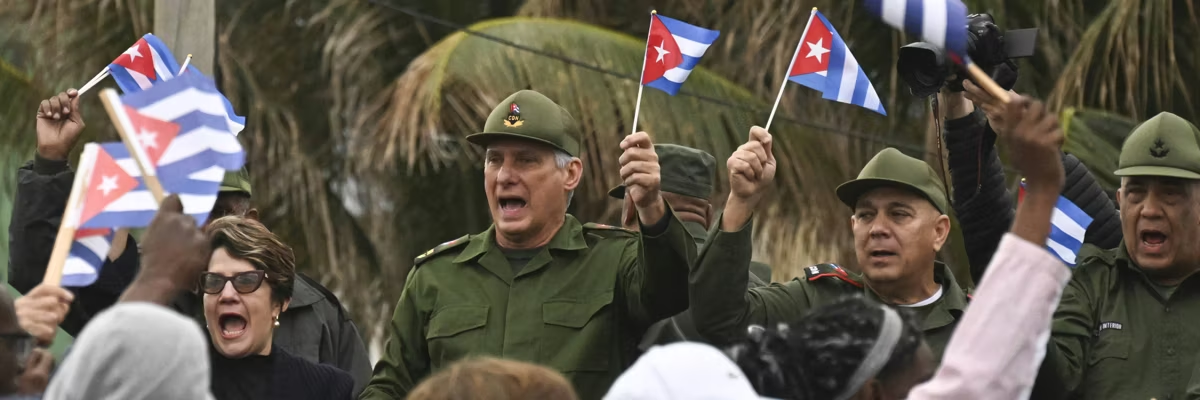
Cuban President Miguel Díaz-Canel takes part in a protest in front of the US Embassy in Havana on January 16, 2026. (Photo by Yamil Lage/Pool/AFP via Getty Images)

“The US publicly threatens Cuba, almost daily, with overthrowing the constitutional order by force,” said Miguel Díaz-Canel.

Cuban President Miguel Díaz-Canel on Tuesday condemned US President Donald Trump’s open threat to forcibly seize control of the island nation and vowed that any such aggression would be met with “impregnable resistance.”

“The US publicly threatens Cuba, almost daily, with overthrowing the constitutional order by force,” Díaz-Canel wrote on social media. “And it uses an outrageous pretext: the harsh limitations of the weakened economy that they have attacked and sought to isolate for more than six decades.”

RECOMMENDED…

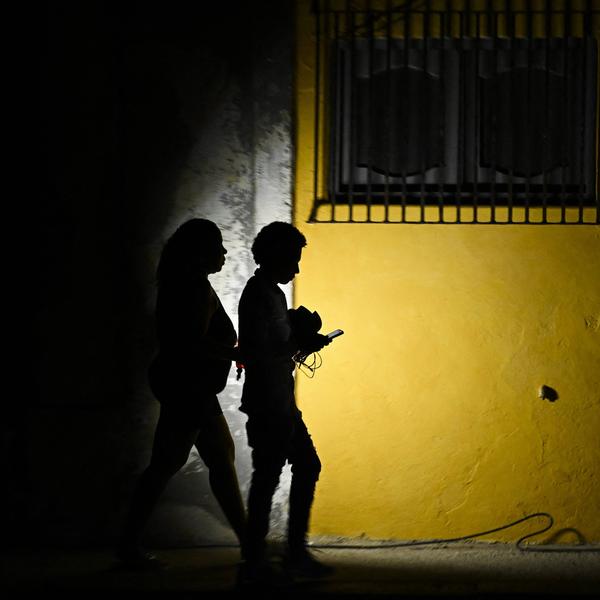
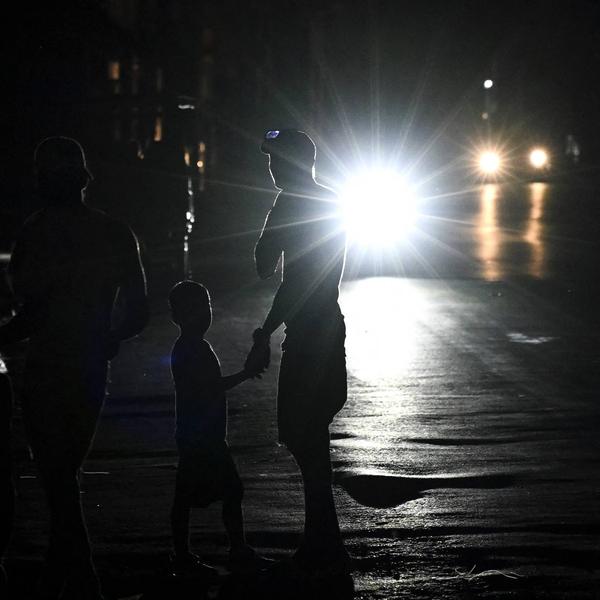
Cubans walk in the dark during a blackout

As Trump Tightens US Chokehold on Cuba’s Economy, Rubio Says Fix Requires ‘New People in Charge’

Cuba blackout

‘We Must Stop Him’: Trump Advertises Desire to ‘Take’ Cuba as Oil Embargo Devastates Island

“They intend and announce plans to seize the country, its resources, its properties, and even the very economy they seek to strangle to make us surrender,” the Cuban president added. “Only in this way can the fierce economic war be explained, which is applied as collective punishment against the entire people. In the face of the worst scenario, Cuba is accompanied by a certainty: Any external aggressor will clash with an impregnable resistance.”

Díaz-Canel’s statement came a day after Trump said from the Oval Office of the White House that he believes he will have “the honor of taking Cuba” as it faces a grave humanitarian crisis fueled by the administration’s oil embargo, which began shortly after the US abducted Venezuelan President Nicolás Maduro in early January.

“I think I can do anything I want with it,” Trump said of Cuba on Monday.

The New York Times reported earlier this week that Trump administration officials are demanding Díaz-Canel’s ouster as part of any negotiated deal between the two countries.

US Secretary of State Marco Rubio, the son of Cuban immigrants and a longtime supporter of regime change on the island, said publicly on Tuesday that Cuba “has to get new people in charge.” Trump said earlier this month that he’s “going to put Marco over there and we’ll see how that works out.”

YouGov poll out this week shows that more Americans disapprove than approve of the US embargo on Cuba. The same survey found that only 13% of US voters would support attacking Cuba, and a mere 18% would support using military force to overthrow the country’s government.

Trump’s threats came as his oil embargo and the broader, decadeslong, and illegal economic warfare against Cuba continued to take their toll on the island’s population, most recently in the form of an island-wide blackout that lasted nearly 30 hours.

On Wednesday, the first delegation of the Nuestra América Convoy arrived in Havana as part of an effort by individuals and organizations to deliver critical humanitarian aid to the Cuban people as the US besieges the island’s economy and threatens its sovereignty.

Nathan J. Robinson and Alex Skopic, editors of the left-wing magazine Current Affairs, announced Wednesday that they are heading to Cuba to cover the mission, which they characterized as part of a “proud tradition of internationalism” on the American left.

“Beyond food, medicine, and energy infrastructure, this mission sends a message,” Robinson and Skopic wrote. “As Americans, we want to make it crystal clear that the Trump administration does not speak for us when it talks about ‘taking over’ Cuba, and we’re sickened by what Trump and Rubio are doing to the Cuban people in the name of U.S. foreign policy. But we’re determined to do what we can, and we’re going to make sure the people of Cuba do not stand alone.”

Original article by Jake Johnson republished from Common Dreams under Creative Commons (CC BY-NC-ND 3.0). 

Donald Fuhrump says that Amerikkka doesn't bother with crimes or charges anymore, not being 100% Amerikkkan and opposing his real estate intentions is enough.
Donald Fuhrump says that Amerikkka doesn’t bother with crimes or charges anymore, not being 100% Amerikkkan and opposing his real estate intentions is enough.
Orcas discuss how Trump was re-elected and him being an obviously insane, xenophobic Fascist.
Continue ReadingCuban President Vows ‘Impregnable Resistance’ to Any Trump Attempt to Seize the Island

Mexico sends shipment of humanitarian aid to Cuba

Spread the love

Original article by Pablo Meriguet republished from peoples dispatch under a Creative Commons Attribution-ShareAlike 4.0 (CC BY-SA) license.

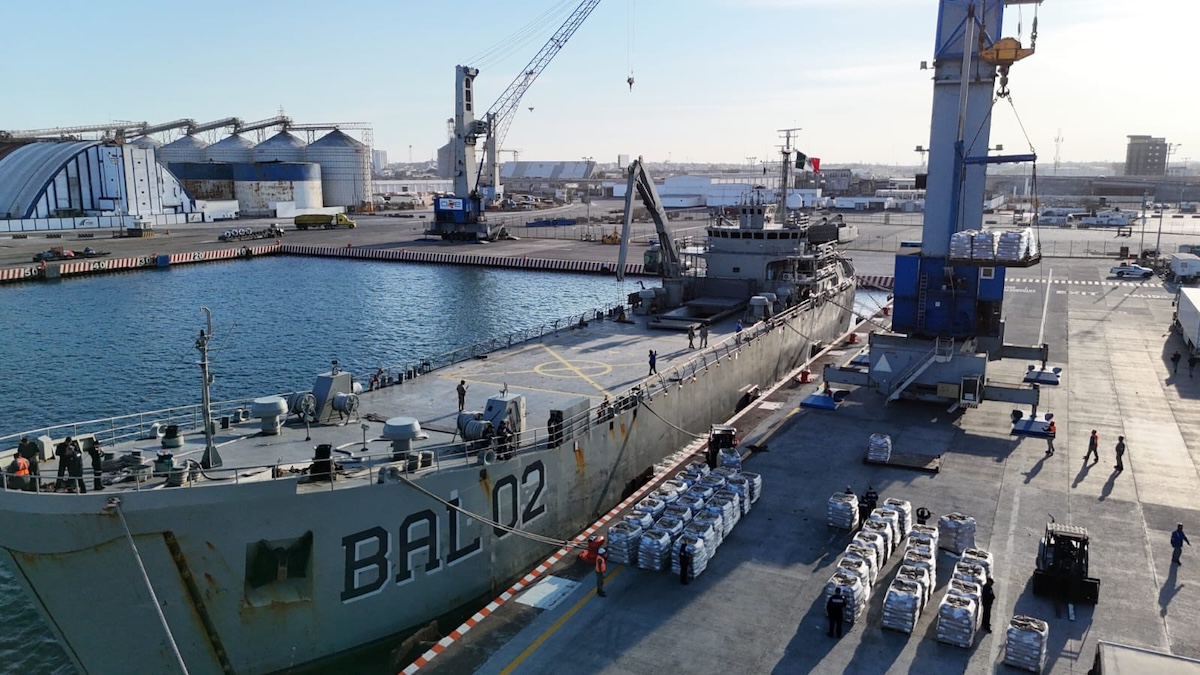
Shipment of humanitarian aid leavez Mexico for Cuba. Photo: MFA Mexico

Hundreds of tons of food were sent from the port of Veracruz to the island as the island faces one of its most critical challenges. Mexico also promised to send hundreds of tons of food in the coming weeks.

The government of Mexican President Claudia Sheinbaum announced the shipment of 814 tons of milk, meat, beans, rice, and other foodstuffs to Cuba on Sunday, February 8. The move came days after Cuban President Miguel Díaz-Canel presented a series of emergency measures being adopted by his government to mitigate the impact of the severe fuel shortage facing the island.

Cuba is currently facing a serious crisis, provoked by recent maneuvers from the US government which, emboldened by its massive military build up in the Caribbean and its recent bombing of Caracas, has sought to further tighten the blockade on the island, hoping to finally force the overthrow of the government. On January 29, Trump announced an executive order under which any country that trades hydrocarbons with Havana will see a 10% increase in tariffs on its products exported to the United States. The executive order was said to have targeted Cuba’s main energy suppliers: Venezuela, Mexico, and Russia. 

Venezuela was already effectively forced to halt oil shipments to Cuba due to the naval blockade imposed by the US against Venezuela, which already resulted in the illegal seizure of a Cuba-bound Venezuelan oil tanker.

Russia, a country which, due to heavy sanctions, is the most decoupled from the US economy, has declared that it will continue supplying fuel to Cuba. The government has said that “the situation in Cuba is truly critical” and top government spokesperson Dimitry Peskov, said “We are in close contact with our Cuban friends through diplomatic and other channels.”

Mexico, for its part, announced that it was engaged in negotiations with the US over oil shipments. President Claudia Sheinbaum has openly declared her rejection of the Trump measure: “You can’t suffocate people like that. It is very unfair.”

She also promised that Mexico would continue to help Cuba in any way possible: “We will continue to support Cuba and take all necessary diplomatic action to resume oil shipments.” In recent days, after learning of the Trump administration’s “threat”. Mexico, one of the few countries that sent oil to Cuba, said it would consult with Washington to determine the extent of possible retaliation.

According to Cuban President Miguel Díaz-Canel, not a single drop of oil has entered the island in 2026, posing a serious threat to a country that depends heavily on fuel for its power grid and to keep transportation, health, education, and other key systems functioning. Government officials and political analysts have claimed that the recent measure seeks to annihilate the Cuban people.

Former Colombian President Ernesto Samper shared this opinion in a post: “SOS for Cuba. The genocide of the Cuban people is being prepared by suffocating their vital conditions for survival. A United Nations humanitarian mission could lead a deployment of humanitarian ships loaded with the fuel that the island needs today, like the oxygen we breathe every day to stay alive.”

Mexican solidarity with Cuba

For his part, the Cuban president said, regarding the Mexican shipment that departed in two ships from the port of Veracruz: “Thank you, Mexico. For your solidarity, affection, and always warm embrace of Cuba.”

Cuban Foreign Minister Bruno Rodríguez wrote on X: “We thank the Government of Mexico, under the leadership of President Claudia Sheinbaum, for sending more than 800 tons of aid to Cuba, amid the intensification of the blockade following the recent Executive Order by the US government. While some try to suffocate our population, sister nations extend their hand in solidarity.”

Original article by Pablo Meriguet republished from peoples dispatch under a Creative Commons Attribution-ShareAlike 4.0 (CC BY-SA) license.

Orcas discuss Donald Trump and the killer apes' concept of democracy. Front Orca warns that Trump is crashing his country's economy and that everything he does he does for the fantastically wealthy.
Orcas discuss Donald Trump and the killer apes’ concept of democracy. Front Orca warns that Trump is crashing his country’s economy and that everything he does he does for the fantastically wealthy.
Elon Musk urges you to be a Fascist like him, says that you can ignore facts and reality then.
Donald Fuhrump says that Amerikkka doesn't bother with crimes or charges anymore, not being 100% Amerikkkan and opposing his real estate intentions is enough.
Donald Fuhrump says that Amerikkka doesn’t bother with crimes or charges anymore, not being 100% Amerikkkan and opposing his real estate intentions is enough.
Continue ReadingMexico sends shipment of humanitarian aid to Cuba

Cuban government responds to US-manufactured fuel shortage: “We will defend Cuba”

Spread the love

Original article by Pablo Meriguet republished from peoples dispatch under a Creative Commons Attribution-ShareAlike 4.0 (CC BY-SA) license.

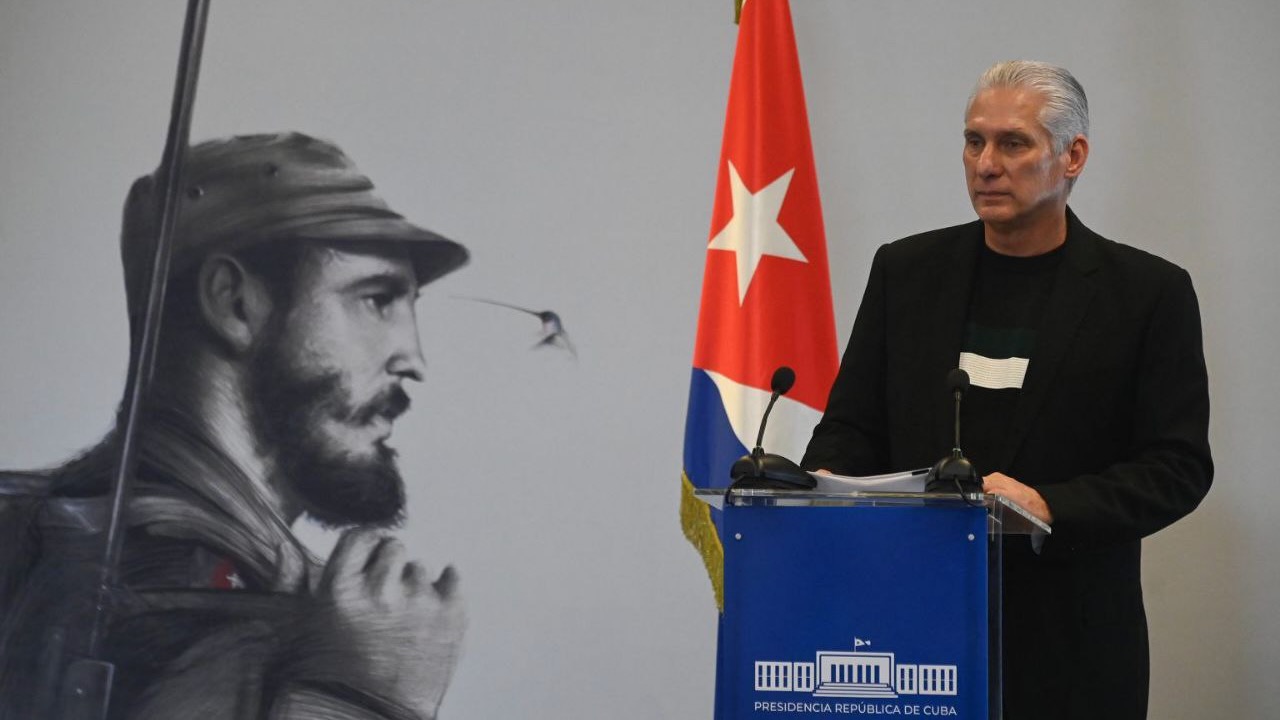
Cuban President Miguel Díaz-Canel addresses nation. Photo: Presidencia Cuba

The Cuban president emphasized to the press that his country does not pose a threat to US security. He reported on the hardships Cubans are facing as a result of the Trump administration’s latest decisions.

Cuban President Miguel Díaz-Canel spoke to the press on Thursday, February 5, about the situation facing the island in the wake of the latest measures imposed by Washington.

Following the seizure of Venezuelan tankers bound for Cuba by the United States Military, the Trump administration increased pressure on the island, which has been under an economic and commercial blockade for more than 60 years, by threatening to increase tariffs on any country that sells fuel to Cuba.

The US military campaign against Venezuela, including a naval blockade on oil and the kidnapping of the president and the first lady, cut off one of Cuba’s only alternatives for obtaining oil. 

In his address, the president reported that no fuel has entered Cuba since December. 

The loss of fuel supply severely complicates the electricity supply on which schools, transportation, and vital health infrastructure depend. In view of this, several analysts have called Trump’s latest measure against the Cuban people “genocidal”.

“Cuba is not a threat to the United States”

Díaz-Canel said he is aware of the difficulties and painful hardships that the Cuban people are going through following a decision that Washington justifies based on an alleged threat that Cuba poses to its national security, something that has been widely questioned by various analysts and politicians around the world.

On this subject, a deeply moved Díaz-Canel said during his appearance: “Cuba is not a terrorist country, nor is it a threat to the security of the United States. Cuba has never carried out, nor proposed, nor organized any aggressive action that puts at risk the territorial integrity, the security, or the stability of the government of the United States.”

He added: “We do not protect terrorists, and there are no military forces in Cuba from other nations or from other groups. In Cuba, there is indeed a military base – an illegal military base – and it is an illegal United States military base on Cuban soil, in the province of Guantánamo, against the will of the Cuban people.” 

Cuba proposes dialogue “between equals”

In response, he affirmed that Cuba has always been and remains willing to engage in dialogue with Washington, although he clarified that “dialogue under pressure is not dialogue.” In this regard, he said that Cuba advocates civilized relations between neighbors, but rejects blackmail, threats, and impositions by some countries on others as a method of negotiation. He thus demanded respect for Cuban sovereignty.

Díaz-Canel said that his government is willing to meet with officials from the Trump administration to discuss the situation between the two countries: “Cuba is open to dialogue on any issue that needs to be debated or discussed, as long as there is no pressure or preconditions, in a situation of equality and respect for our sovereignty, independence, and self-determination.”

The theory of collapse

According to Cuban Foreign Minister Bruno Rodríguez, between March 2024 and February 2025 alone, the damage caused by the economic blockade of Cuba amounts to 7.556 billion USD, which represents a 49% increase compared to the previous period, showing that the blockade causes greater damage over time.

For his part, the Cuban president recalled that the US strategy of applying pressure until the country collapses is not new, and that despite all the difficulties Cuba has had to endure, it is not a failed state, as claimed by the White House: “The theory of collapse and the insistence on it is related to a whole set of constructs that the US government has tried to use to characterize the Cuban situation. This theory of collapse is associated with one of the currents in which the US government is determined to overthrow the Cuban revolution.”

Currently, he said, Cuba is enduring not only a series of mechanisms that seek to suffocate the Caribbean country, combined with the constant threat of military aggression, but also a media campaign that combines slander, hatred, and psychological warfare to justify various US attacks.

Read more: For the Cuban people, surrender is not an option

However, the Cuban president also pointed out that, despite the new conditions following the attack on Venezuela on January 3, there are several signs of international solidarity with his government: “Cuba is not alone, and we know that there are countries and companies willing to continue working with the largest of the Antilles.”

The revolutionary government’s decisions: savings and defense

Faced with this difficult situation, Díaz-Canel outlined the decisions his government has taken to tackle this new onslaught: “We have had to make a series of assessments in the Political Bureau, the Executive Committee of the Council of Ministers, and the National Defense Council, and we have just had a meeting in the Council of Ministers to update the plan to be implemented based on government directives to address an acute fuel shortage.”

Cuba has implemented fuel rationing to ensure the functioning of essential and basic activities for the Cuban population, although he acknowledged that the difficulty has been enormous, considering that no oil shipments have arrived in Cuba throughout 2026. This will mean a reduction in public transportation and an increase in blackouts on the island, which have already broken records.

In response, the Cuban president raised the possibility of increasing other types of energy sources, such as renewable energies, although this process will take time. Therefore, he said, the government must now demonstrate enormous creativity to overcome this new barrier that the United States, the most powerful country on earth, is unilaterally imposing on a country of just 10 million inhabitants.

In addition, Díaz-Canel stated that following the attack on Venezuela, in which more than 30 Cuban combatants on security missions in the South American country were killed, Cuba has prepared itself to face possible US military aggression: “One of the priorities we established was to deploy a defense preparedness plan.”

According to Díaz-Canel, in the event of military aggression, Fidel Castro’s old military principle of “war by the entire people” will be used against external aggressors. This, however, does not mean that the country is entering a “state of war”, but rather that it is preparing for the moment when that step must be taken, the president said.

In this regard, Foreign Minister Rodríguez said on Telegram: “The US seeks to impose its will on the rights of sovereign states and has been using force and aggression against Cuba for 67 years. On its side is enormous military power and the size of its economy, plus vast experience in aggression and crimes. On our side is reason, international law, and the patriotic spirit of a people.”

He added: “We Cubans are not willing to sell our country or give in to threats and blackmail, nor are we willing to renounce the inalienable prerogative with which we build our own destiny, in peace with the rest of the world. We will defend Cuba. Those who know us know that this is a firm, categorical, and proven commitment.”

Original article by Pablo Meriguet republished from peoples dispatch under a Creative Commons Attribution-ShareAlike 4.0 (CC BY-SA) license.

Orcas discuss Donald Trump and the killer apes' concept of democracy. Front Orca warns that Trump is crashing his country's economy and that everything he does he does for the fantastically wealthy.
Orcas discuss Donald Trump and the killer apes’ concept of democracy. Front Orca warns that Trump is crashing his country’s economy and that everything he does he does for the fantastically wealthy.
Donald Fuhrump says that Amerikkka doesn't bother with crimes or charges anymore, not being 100% Amerikkkan and opposing his real estate intentions is enough.
Donald Fuhrump says that Amerikkka doesn’t bother with crimes or charges anymore, not being 100% Amerikkkan and opposing his real estate intentions is enough.
Elon Musk urges you to be a Fascist like him, says that you can ignore facts and reality then.
Continue ReadingCuban government responds to US-manufactured fuel shortage: “We will defend Cuba”

“Even though our weapons were smaller, we didn’t stop fighting”: the testimony of a Cuban combatant after the US attack on Venezuela

Spread the love

Original article by Pablo Meriguet republished from peoples dispatch under a Creative Commons Attribution-ShareAlike 4.0 (CC BY-SA) license.

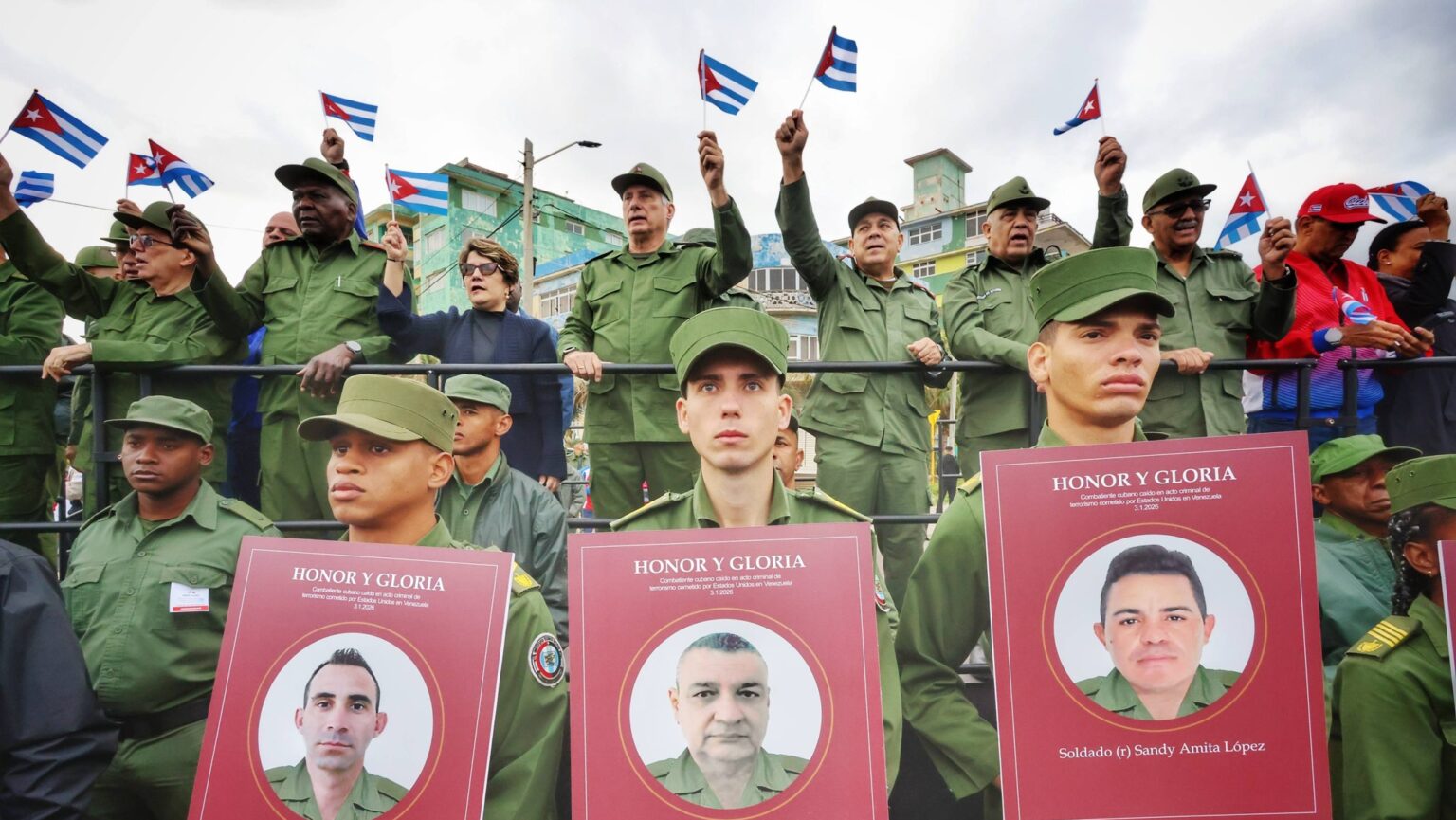
Cuban soldiers during a demonstration honoring the 32 combatants killed in the US attack on Venezuela. Source: Miguel Díaz-Canel/Facebook

Yohandris Varona Torres, a Cuban combatant and survivor of the US attack on Venezuela, describes the events of January 3.

Cuba honored 32 soldiers who fell in combat with the US army on January 3 in Venezuela, carrying out security activities legally agreed upon with the Caracas government. Many of the Cubans killed were part of the personal security detail of Venezuelan President Nicolás Maduro, who was kidnapped after the attack and transferred to the United States. Hundreds of thousands of Cubans attended the ceremonies commemorating the fallen in what the Cuban government described as a new attack against the Revolution.

But not all Cubans who fought against US forces died. Little by little, the testimonies of Cuban soldiers who survived a clearly uneven fight have been revealed.

The testimony of a surviving combatant

Among them is Yohandris Varona Torres, who gave an interview to Adelante, a Cuban media outlet. Varona had been in Venezuela for just over two months as a security guard until the day of the intervention, where, according to Venezuelan authorities, 100 people died and 100 more were injured.

“We fought there against the planes that were firing at us. Even though our weapons were smaller, we didn’t stop fighting; we confronted them. I am trained, and I know how to fight, but they were superior to us. At that moment, my only thought was to fight. We had to shoot, and I started doing so,” said Varona during the commemoration ceremony for the fallen combatants.

Regarding his personal experience during the attack, Varona stated that despite the narrative that the mainstream media tried to impose, the forces on the ground did confront US troops: “That night, I had gone on duty at midnight and was supposed to be there for six hours. The attack took place at approximately 2:00 a.m. It was dawn. Everything was dark. If a helicopter comes at you, the only thing you can do is shoot at it and defend yourself. That’s how it was. We were shooting until the very last moment.”

Varona also spoke about the huge technological gap between Venezuelan and US forces. The same argument had already been made by Cuban President Miguel Díaz-Canel, who explained the difference in weaponry and military infrastructure between the troops defending Venezuelan soil and the US attackers.

In addition, Varona said that after the attack, there was dispersion, and that there was no timely support to collect their dead compatriots: “Our comrades are a glory for all of Cuba. They were my brothers. They were working with me. I saw them all fall, and I carried them all. There was no support from anyone for that, but nobody was left on the field. We preserved them in one of our dormitories. I cannot explain the pain. But at least no one was left in Venezuela. Here they are, in our homeland.”

In the face of threats of possible new aggression against Cuba, during his speech to the crowd honoring the dead, Díaz-Canel said that revolutionaries are willing to fight to the bitter end if a similar or worse attack were to occur against the island. In the same spirit, Yohandris Varona Torres declared: “I will always be at my country’s disposal to fight the enemy wherever necessary. That is what the Commander [Fidel Castro] taught us. And the deaths of my comrades cannot be in vain.”

Original article by Pablo Meriguet republished from peoples dispatch under a Creative Commons Attribution-ShareAlike 4.0 (CC BY-SA) license.

Donald Fuhrump says that Amerikkka doesn't bother with crimes or charges anymore, not being 100% Amerikkkan and opposing his real estate intentions is enough.
Donald Fuhrump says that Amerikkka doesn’t bother with crimes or charges anymore, not being 100% Amerikkkan and opposing his real estate intentions is enough.
Elon Musk urges you to be a Fascist like him, says that you can ignore facts and reality then.
Orcas discuss how Trump was re-elected and him being an obviously insane, xenophobic Fascist.

Continue Reading“Even though our weapons were smaller, we didn’t stop fighting”: the testimony of a Cuban combatant after the US attack on Venezuela