Kenya’s High Court rules in favor of smallholder farmers and indigenous seeds

Spread the love

This article by Nicholas Mwangi republished from peoples dispatch under a Creative Commons Attribution-ShareAlike 4.0 (CC BY-SA) license.
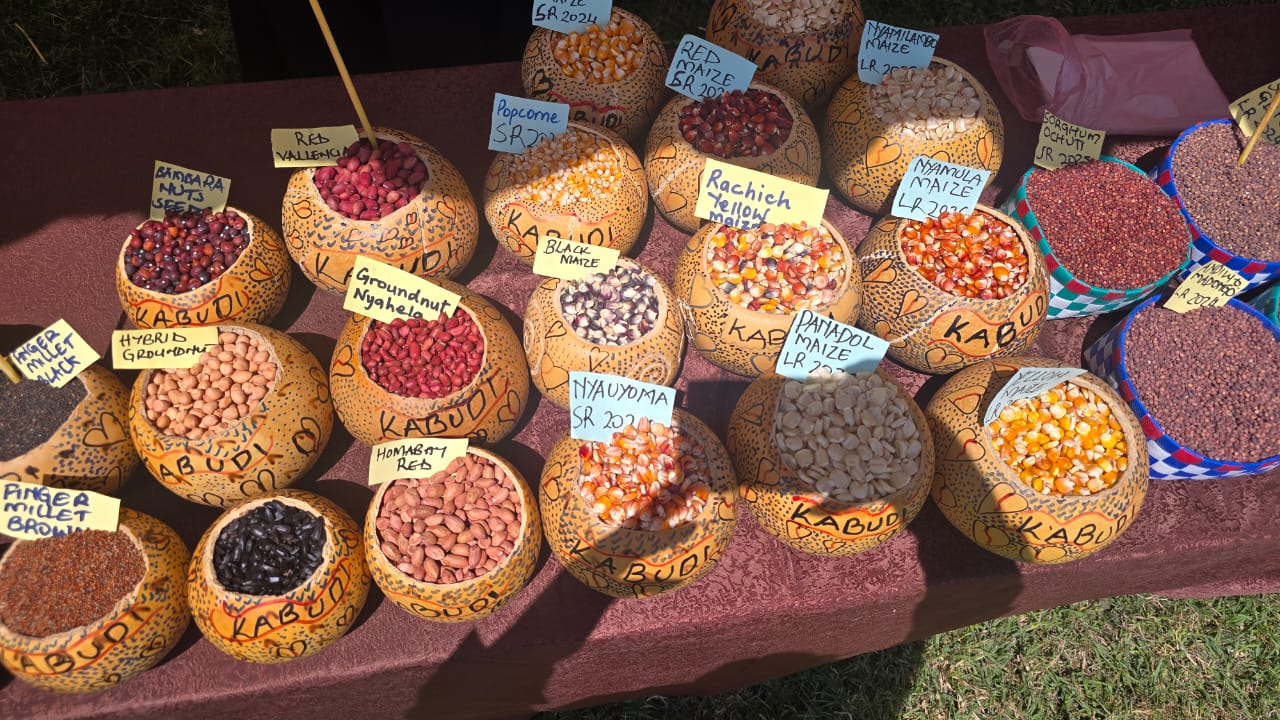
Indigenous seed exchange. Photo: Seed Savers Kenya

The landmark ruling secures farmers’ right to save, share, and exchange indigenous seeds, by decriminalizing it and safeguarding traditional farming heritage.

In a historic judgment, Kenya’s High Court on November 27, 2025, declared the Seed and Plant Varieties Act unconstitutional, delivering a significant victory for smallholder farmers and advocates of food sovereignty across the country. The case, filed in 2022 by fifteen smallholder farmers from various regions of Kenya, challenged provisions in the law that criminalized the long-standing tradition of saving, sharing, and exchanging indigenous seeds, practices at the heart of Kenyan agriculture for generations.

The lawsuit was supported by civil society organizations, including Greenpeace Africa, the Seed Savers Network, and the Biodiversity and Biosafety Association of Kenya (BIBA). It was argued that the Act imposed unfair restrictions on informal seed systems, which form the backbone of smallholder farming, and disproportionately penalized farmers who rely on indigenous seeds for sustenance and livelihood.

Under the law, farmers risked fines of up to KSh 1 million (USD 7,734) or two years in prison for participating in informal seed exchanges. The legislation also granted breeders exclusive economic rights over seed production, sale, and exchange, effectively restricting farmers to commercial seed markets and increasing their vulnerability to corporate control. Legal experts and activists argued that such provisions violated constitutional guarantees, including the rights to culture, non-discrimination, food security, and fair administrative action.

Hamisi Omolo, an ecological farming activist, described the ruling to Peoples Dispatch as “a wake-up call for farmers and grassroots activists to organize and strengthen structures that advance the struggle for land, food, and freedom.” Omolo reiterated the importance of indigenous seeds, noting that “the culture of sharing seeds must continue, not only to preserve biodiversity but also to support herbal medicine and traditional knowledge that benefit entire communities.”

The decision is a relief and expected to have an impact for food sovereignty and agricultural sustainability in Kenya. Smallholder farmers, who account for over 70% of agricultural production in the country, often rely on farmer-saved seeds adapted to local climates and conditions. By affirming their right to maintain and exchange these seeds, the court has reinforced the role of farmers as custodians of biodiversity and protectors of sustainable agricultural practices.

Grassroots and organizations fighting for food sovereignty welcomed the ruling, calling it a major step toward protecting farmers’ rights and resisting corporate monopolies over seeds.

This decision empowers farmers to safeguard their seeds, culture, and livelihoods,” Omolo added. “While it’s only the start, it is a reminder that food sovereignty is not just about growing crops, it is about protecting our way of life, our traditions, and our future.”

And the need for active engagement and organized campaign to ensure that future policies support, rather than undermine, the agricultural practices that sustain the livelihoods of so many Kenyans.

This article by Nicholas Mwangi republished from peoples dispatch under a Creative Commons Attribution-ShareAlike 4.0 (CC BY-SA) license.

Continue ReadingKenya’s High Court rules in favor of smallholder farmers and indigenous seeds

Report Reveals $2 Billion of New Financing by Big Banks for Oil and Gas in the Amazon

Spread the love

Original article by Julia Conley republished from Common Dreams under Creative Commons (CC BY-NC-ND 3.0). 

The Pastaza River and the Heart island are seen in the southern Ecuadorian Amazon Rainforest on April 12, 2023. 
Photo by Misha Vallejo Prut for The Washington Post via Getty Images)

“These investments are complicit in genocide: They are killing our culture, our history, and destroying the biodiversity of the Amazon.”

A day after the Brazilian state-run oil firm Petrobras announced it would begin drilling for oil near the mouth of the Amazon River “immediately” after obtaining a license despite concerns over the impact on wildlife, an analysis on Tuesday revealed that banks have added $2 billion in direct financing for oil and gas in the biodiverse Amazon Rainforest since 2024.

The report from Stand.earth—and Petrobras’ license—come weeks before officials in Belém, Brazil prepare to host the 2025 United Nations Climate Change Conference (COP30), where advocates are calling for an investment of $1.3 trillion per year for developing countries to mitigate and adapt to the climate emergency.

Examining 843 deals involving 330 banks, Stand.earth found that US banks JPMorgan ChaseBank of America, and Citi are among the worst-performing institutions, pouring between $283 million and $326 million into oil and gas in the Amazon.

The biggest spender on oil and gas in the past year has been Itaú Unibanco, the Brazilian bank, which has sent $378 million in financing to oil and gas firms for extractive activities in the Amazon.

“Oil and gas expansion in the Amazon endangers one of the world’s most vital ecosystems and Indigenous peoples who have protected it for millennia,” said Stand.earth. “In addition to fossil fuels leading global greenhouse gas emissions, in the Amazon their extraction also accelerates deforestation, and pollutes rivers and communities.”

The group’s research found that banks have directly financed more than $15 billion to oil and gas companies in the Amazon region since the Paris Agreement, the legally binding climate accord, was adopted in 2016. Nearly 75% of the investment has come from just 10 firms, including Itaú, JPMorgan Chase, Citi, and Bank of America.

The analysis comes weeks after the UN-backed Net-Zero Banking Alliance said it was suspending its operations, following decisions by several large banks to leave the alliance that was established in 2021 to limit banks’ environmental footprint, achieve net-zero emissions in the sector by 2050, and set five-year goals for reducing the institutions’ financing of emissions.

“Around 1,700 Indigenous people live here, and our survival depends on the forest. We ask that banks such as Itaú, Santander, and Banco do Nordeste stop financing companies that exploit fossil fuels in Indigenous territories.”

Devyani Singh, lead researcher for Stand.earth’s new bank scorecard on fossil fuel financing, noted that European banks like BNP Paribas and HSBC have “applied more robust policies to protect the sensitive Amazon rainforest than their peers” and have “significantly dropped in financing ranks.”

But, said Singh, “no bank has yet brought its financing to zero. Every one of these banks must close the existing loopholes and fully exit Amazon oil and gas without delay.”

More than 80% of the banks’ Amazon fossil fuel financing since 2024 has gone to just six oil and gas companies: Petrobras, Canada’s Gran Tierra, Brazil’s Eneva, oil trader Gunvor, and two Peruvian companies: Hunt Oil Peru and Pluspetrol Camisea.

The companies have been associated with human rights violations and have long been resisted by Indigenous people in the Amazon region, who have suffered from health impacts of projects like the Camisea gas project, a decline in fish and game stocks, and a lack of clean water.

“It’s outrageous that Bank of America, Scotiabank, Credicorp, and Itaú are increasing their financing of oil and gas in the Amazon at a time when the forest itself is under grave threat,” said Olivia Bisa, president of the Autonomous Territorial Government of the Chapra Nation in Peru. “For decades, Indigenous Peoples have suffered the heaviest impacts of this destruction. We are calling on banks to change course now: by ending support for extractive industries in the Amazon, they can help protect the forest that sustains our lives and the future of the planet.”

Stand.earth’s report warned that both the Amazon Rainforest—which provides a habitat for 10% of Earth’s biodiversity, including many endangered species—and the people who live there are facing “escalating threats” from oil and gas companies and the firms that finance them, with centuries of exploitation driving the forest “toward an ecological tipping point with irreversible impacts that have global consequences.”

Oil and gas exploration is opening roads into intact parts of the Amazon and other forests, while perpetuating the new fossil fuel emissions that scientists and energy experts have warned have no place on a pathway to limiting planetary heating.

“With warming temperatures, the delicate ecological balance of the Amazon could be upset, flipping it from being a carbon-absorbing rainforest into a carbon-emitting savannah,” reads the group’s report.

Jonas Mura, chief of the Gavião Real Indigenous Territory in Brazil, said “the noise, the constant truck traffic, and the explosions” from Eneva’s projects “have driven away the animals and affected our hunting.”

“Even worse: they are entering without our consent,” said Mura. “Our territory feels threatened, and our families are being directly harmed. Around 1,700 Indigenous people live here, and our survival depends on the forest. We ask that banks such as Itaú, Santander, and Banco do Nordeste stop financing companies that exploit fossil fuels in Indigenous territories.”

“These companies have no commitment to the environment, to Indigenous and traditional peoples, or to the future of the planet,” he added. “These investments are complicit in genocide: They are killing our culture, our history, and destroying the biodiversity of the Amazon.”

Original article by Julia Conley republished from Common Dreams under Creative Commons (CC BY-NC-ND 3.0). 

Orcas comment on killer apes destroying the planet by continuing to burn fossil fuels.
Donald Trump urges you to be a Climate Science denier like him. He says that he makes millions and millions for destroying the planet, Burn, Baby, Burn and Flood, Baby, Flood.
Nigel Farage urges you to ignore facts and reality and be a climate science denier like him and his Deputy Richard Tice. He says that Reform UK has received £Millions and £Millions from the fossil fuel industry to promote climate denial and destroy the planet.

Continue ReadingReport Reveals $2 Billion of New Financing by Big Banks for Oil and Gas in the Amazon

We are Nobel laureates, scientists, writers and artists. The threat of fascism is back

Spread the love

Article republished from the Guardian. The text of the letter is © 2025 Stop Return Fascism.

Open letter

‘We scientists, philosophers, writers, artists and citizens of the world have a responsibility to denounce and resist the resurgence of fascism in all its forms.’ Photograph: Karl B DeBlaker/AP

As in 1925, when Mussolini was in power, we must openly defy the brutal imposition of the fascist ideology

On 1 May 1925, with Benito Mussolini already in power, a group of Italian intellectuals publicly denounced his fascist regime in an open letter. The signatories – scientists, philosophers, writers and artists – took a stand in support of the essential tenets of a free society: the rule of law, personal liberty and independent thinking, culture, art and science. Their open defiance against the brutal imposition of the fascist ideology – at great personal risk – proved that opposition was not only possible, but necessary. Today, 100 years later, the threat of fascism is back – and so we must summon that courage and defy it again.

Fascism emerged in Italy a century ago, marking the advent of modern dictatorship. Within a few years, it spread across Europe and the world, taking different names but maintaining similar forms. Wherever it seized power, it undermined the separation of powers in the service of autocracy, silenced opposition through violence, took control of the press, halted the advancement of women’s rights and crushed workers’ struggles for economic justice. Inevitably, it permeated and distorted all institutions devoted to scientific, academic and cultural activities. Its cult of death exalted imperial aggression and genocidal racism, triggering the second world war, the Holocaust, the death of tens of millions of people and crimes against humanity.

At the same time, the resistance to fascism and the many other fascist ideologies became a fertile ground for imagining alternative ways of organising societies and international relations. The world that emerged from the second world war – with the charter of the United Nations, the Universal Declaration of Human Rights, the theoretical foundations of the EU and the legal arguments against colonialism – remained marked by deep inequalities. Yet, it represented a decisive attempt to establish an international legal order: an aspiration toward global democracy and peace, grounded in the protection of universal human rights, including not only civil and political, but also economic, social and cultural rights.

Fascism never vanished, but for a time it was held at bay. However, in the past two decades, we have witnessed a renewed wave of far-right movements, often bearing unmistakably fascist traits: attacks on democratic norms and institutions, a reinvigorated nationalism laced with racist rhetoric, authoritarian impulses and systematic assaults on the rights of those who do not fit a manufactured traditional authority, rooted in religious, sexual and gender normativity. These movements have re-emerged across the globe, including in long-standing democracies, where widespread dissatisfaction with political failure to address mounting inequalities and social exclusion has once again been exploited by new authoritarian figures. True to the old fascist script, under the guise of an unlimited popular mandate, these figures undermine national and international rule of law, targeting the independence of the judiciary, the press, institutions of culture, higher education and science, even attempting to destroy essential data and scientific information. They fabricate “alternative facts” and invent “enemies within”; they weaponise security concerns to entrench their authority and that of the ultra-wealthy 1%, offering privileges in exchange for loyalty.

This process is now accelerating, as dissent is increasingly suppressed through arbitrary detentions, threats of violence, deportations and an unrelenting campaign of disinformation and propaganda, operated with the support of traditional and social media barons – some merely complacent, others openly techno-fascist enthusiasts.

Democracies are not flawless: they are vulnerable to misinformation and they are not yet sufficiently inclusive. However, democracies by their nature provide fertile ground for intellectual and cultural progress and therefore always have the potential to improve. In democratic societies, human rights and freedoms can expand, the arts flourish, scientific discoveries thrive and knowledge grow. They grant the freedom to challenge ideas and question power structures, propose new theories even when culturally uncomfortable, which is essential to human advancement. Democratic institutions offer the best framework for addressing social injustices, and the best hope to fulfil the post-war promises of the rights to work, education, health, social security, participation in cultural and scientific life, and the collective right of peoples to development, self-determination and peace. Without this, humanity faces stagnation, growing inequality, injustice and catastrophe, not least from the existential threat caused by the climate emergency that the new fascist wave negates.

In our hyper-connected world, democracy cannot exist in isolation. As national democracies require strong institutions, international cooperation relies on the effective implementation of democratic principles and multilateralism to regulate relations among nations, and on multistakeholder processes to engage a healthy society. The rule of law must extend beyond borders, ensuring that international treaties, human rights conventions and peace agreements are respected. While existing global governance and international institutions require improvement, their erosion in favor of a world governed by raw power, transactional logic and military might is a regression to an era of colonialism, suffering and destruction.

As in 1925, we scientists, philosophers, writers, artists and citizens of the world have a responsibility to denounce and resist the resurgence of fascism in all its forms. We call on all those who value democracy to act:

  • Defend democratic, cultural and educational institutions. Call out abuses of democratic principles and human rights. Refuse pre-emptive compliance.
  • Join collective actions, locally and internationally. Boycott and strike when possible. Make resistance impossible to ignore and costly to repress.
  • Uphold facts and evidence. Foster critical thinking and engage with your communities on these grounds.

This is an ongoing struggle. Let our voices, our work and our principles be a bulwark against authoritarianism. Let this message be a renewed declaration of defiance.

  • Nobel laureates: Eric Maskin, Roger B Myerson, Alvin E Roth, Lars Peter Hansen, Oliver Hart, Daron Acemoglu, Wolfgang Ketterle, John C Mather, Brian P Schmidt, Michel Mayor, Takaaki Kajita, Giorgio Parisi, Pierre Agostini, Joachim Frank, Richard J Roberts, Leland Hartwell, Paul Nurse, Jack W Szostak, Edvard I Moser, May-Britt Moser, Harvey James Alter, Victor Ambros, Gary Ruvkun, Barry James Marshall, Craig Mello, Charles Rice
  • Leading scholars on fascism and democracy: Ruth Ben-Ghiat, Timothy Snyder, Jason Stanley, Claudia Koonz, Mia Fuller, Giovanni De Luna and Andrea Mammone
  • The full list of signatories can be found here

Article republished from the Guardian. The text of the letter is © 2025 Stop Return Fascism.

Image of the original Fascists Mussolini and Hitler.
The original Fascists Mussolini and Hitler
Elon Musk urges you to be a Fascist like him, says that you can ignore facts and reality then.
UK Labour Party government ministers Keir Starmer, Angela Rayner and Rachel Reeves explain that they are partners complicit in Israel's Gaza genocide. The UK has provided Israel with arms, military and air force support. They explain that they don't do gas chambers but do do forced marches, starvation, destroy hospitals, mass-murders of journalists and healthcare workers.
UK Labour Party government ministers Keir Starmer, Angela Rayner and Rachel Reeves explain that they are partners complicit in Israel’s Gaza genocide. The UK has provided Israel with arms, military and air force support. They explain that they don’t do gas chambers but do do forced marches, starvation, destroy hospitals, mass-murders of journalists and healthcare workers.
Image of Mussolini & Co hanging out. What happens to Fascists.
Continue ReadingWe are Nobel laureates, scientists, writers and artists. The threat of fascism is back