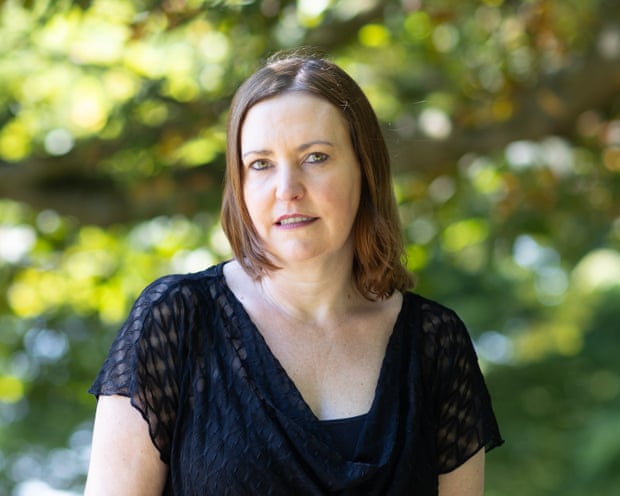
Vicky Foxcroft said co-production with disabled people should have happened ‘absolutely from the start’. Photograph: Teri Pengilley/The Guardian
[Guardian] Exclusive: Vicky Foxcroft, who resigned as whip over welfare bill, urges ministers to work with affected people on changes
The Labour whip who resigned in protest against disability benefit cuts has said Keir Starmer’s concessions do not yet go far enough to win her over, as No 10 launched a fresh attempt to stem the revolt against its welfare bill.
Vicky Foxcroft, who quit her frontbench role over the welfare bill a little more than a week ago, urged the government to work jointly on the changes with disabled people and to publish the review of the system before bringing in cuts.
In an interview with the Guardian, Foxcroft said she had not made up her mind how to vote on Tuesday but would need assurances about further improvements.
“I would hope that actually we start to ensure we listen to disabled people and their organisations right across government. This isn’t just about warm words. This is about making sure we get policy right,” she said.
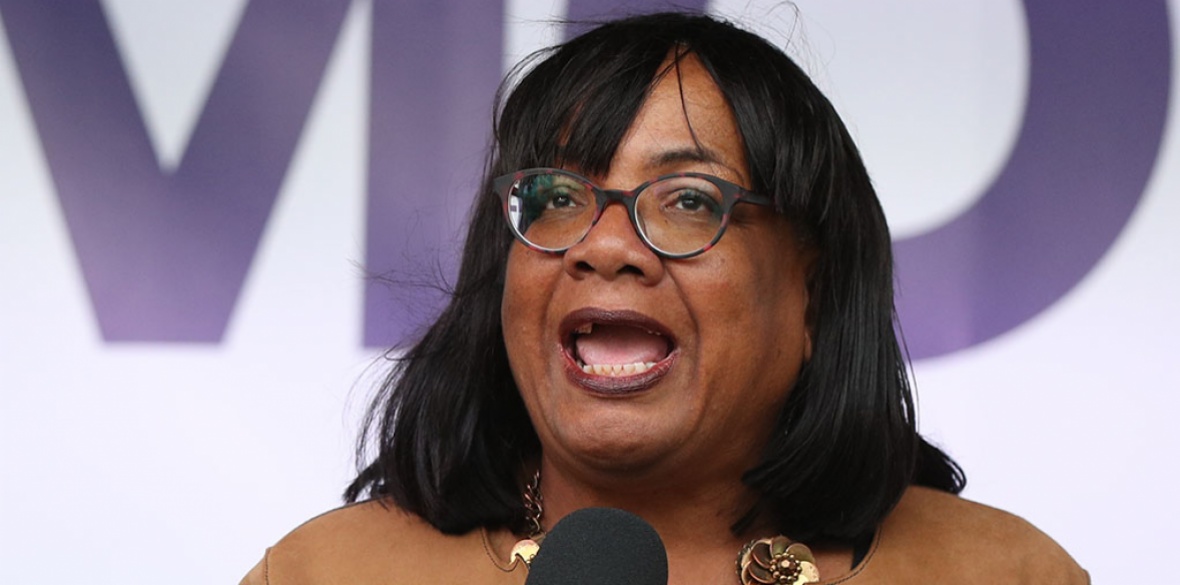
DIANE ABBOTT MP points out the false premises used by Rachel Reeves in the Spring Statement
THERE is a liberal cliche that the first casualty of war is the truth. In reality it is usually the working class, the poor, disabled people and ethnic minorities.
Typically, they face more pressure and exploitation, longer hours, higher prices or charges, they get less state support and face greater discrimination all as part of the war effort. Or, more accurately, the war effort is used as the excuse to implement long-desired changes which increase exploitation and discrimination of all kinds.
That is what it is happening now.
To give just one example, both the Chancellor and the Secretary for Work and Pensions separately have said many years ago that we should be tougher on welfare than the Tories.
But it is only now, against the backdrop of the Ukraine war and the rhetoric of rearmament that that they are finally able to realise their ambitions.
Tory commentators are amazed and admiring about the depth of the cuts to welfare. One called Rachel Reeves the new George Osborne
This is true across the board. So it seems strange that many on the left are currently unwilling to link the war drive with the attacks on welfare and the cuts to international aid.
Government cuts to disability benefits will disproportionately inflict suffering on women | Hollie Adams/WPA Pool/Getty Images
Cuts will push hundreds of thousands of women into poverty or force them out of workforce
While the staggering £5bn of planned cuts to disability benefits announced by chancellor Rachel Reeves at last week’s Spring Statement have rightly been the subject of much scrutiny, the disproportionate suffering they will inflict on women has been under-discussed both by politicians and the media.
The government’s own risk assessment found the cuts will push 250,000 adults and 50,000 children in the UK below the poverty line. Women, who are both more likely to be Disabled and more likely to be a carer for a loved one, will be worst affected.
Indeed, single Disabled women make up 44% of those due to lose out from the cuts, and face an average loss of £1,610 per year, the government’s Equality Impact Assessment found.
This demographic has already been significantly affected by austerity cuts to social security and public services since 2010. Such measures, taken together with tax changes, will cost Disabled women an average of £4,000 a year by 2028, according to an analysis that we at The Women’s Budget Group (WGB) published in September last year.
That means, for many Disabled women in the UK, Reeves’ latest cuts follow what has already been an 11% drop in their living standards over the past 15 years. Cutting their living standards further is unthinkable.
Women also make up the majority of the UK’s unpaid carers, who provide care and support to family members, friends, or neighbours. They, too, will be hit hard by the changes.
When a person receives the Personal Independence Payment (PIP) – a benefit to help with the extra costs incurred by long-term ill health or disability – their unpaid carer may be entitled to the Carer’s Allowance benefit. The government plans to reduce the number of people eligible for PIP, which in turn will reduce the number of people eligible for Carer’s Allowance.
A couple where one person loses PIP and the other therefore loses Carer’s Allowance could be over £12,000 worse off annually, according to calculations by anti-poverty charity The Joseph Rowntree Foundation.
Reeves failed to acknowledge this knock-on impact in her speech. Worse still, the Equality Impact Assessment of these changes that was published as the chancellor was still speaking, also made no reference to it (although these impacts were included in the distributional assessment published at the same time).
What’s more, restricting the eligibility for PIP may increase the number of unpaid carers if a Disabled or chronically ill person is no longer able to rely on the benefit to pay somebody to provide their care. This may force women who are currently just about managing to stay in work to reduce their hours or quit their jobs altogether to take on additional care duties for loved ones.
Forcing women out of the workforce in this manner is not only detrimental to their health and wellbeing, it directly undermines the government’s claim that the measures are necessary to reduce economic inactivity.
At the same time, cutting PIP may push some disabled people out of the labour market if they can no longer afford the adaptations and services that enable them to work.
Years of austerity have already weakened our economy and eroded our living standards, leaving us ill-prepared for economic shocks. Cutting vital social security and public services is not the path to improving living standards.
Ahead of the Spring Statement, the WBG, along with more than 40 women’s organisations across the UK, wrote an open letter to the chancellor highlighting the gendered nature of these cuts – and urging her to consider more equitable ways to raise revenue.
Rather than targeting some of the most vulnerable members of our society, the government should be looking into taxing those with the broadest shoulders in our society.
A 2% wealth tax on assets over £10m could raise up to £24bn a year – far exceeding the savings from the proposed disability benefit cuts. This measure has already been called for by Tax Justice UK, which campaigns for a fairer tax system, and Patriotic Millionaires UK, which describes itself as a nonpartisan network of British millionaires.
A wealth tax of this kind could be used for much-needed investment in the foundations of our economy, including our social infrastructure – from childcare and education to social care and local government services.
Moreover, it’s what the public wants. Some 77% would rather the government increase taxes on the very richest than cut public spending, according to recent polling by YouGov for Oxfam.
Investing in social security and public services is not just a cost, but an investment in our society and economy. By choosing to cut benefits instead of implementing a wealth tax, the Government is not just balancing numbers on a spreadsheet. It is making a political choice – one that will deepen inequality and harm those who are already struggling.
Keir Starmer, Angela Rayner and Rachel Reeves wear the uniform of the rich and powerful. They have all had clothes bought for them by multi-millionaire Labour donor Lord Alli. CORRECTION: It appears that Rachel Reeves clothing was provided by Juliet Rosenfeld.Keir Starmer says that his Labour Party is intensely relaxed about assaulting the very poorest and most vulnerable.
Wednesday’s spring statement has been overshadowed by where the cuts are due to fall, with some departments asked to model cuts of up to 11%. Photograph: pxl.store/Alamy
‘You can’t cut your way to growth,’ says PCS head as Reeves confirms move to cut administrative costs by 15% by 2030
Rachel Reeves’s planned cuts of £2bn to government departments will hit frontline services from jobcentres to HMRC phone lines and efforts to cut the asylum backlog, a union has said.
On Sunday the chancellor confirmed plans to seek a 15% reduction in admin costs across Whitehall, amounting to about £2bn a year, by the end of the decade. She said this would also result in about 10,000 job losses in the civil service, although this was not a target.
As she prepares to give her spring statement on Wednesday, Reeves is under pressure to balance the books in line with her fiscal rules, meaning some departments are in line for spending cuts to avoid more tax rises or higher borrowing.
But the Public and Commercial Services Union (PCS) warned her that there would be consequences for public services after 15 years of underfunding by the Tories.
Fran Heathcote, the general secretary of the PCS, said: “You hear that every day from the public, that they wait too long on the phone when they try to make tax payments, jobseekers rushed through the system in just 10 minutes because there aren’t enough staff to see them, victims of crime waiting until 2027 to have their cases heard in the courts as well as the backlog in the asylum system which results in additional hotel costs.
“The impact of making cuts will not only disadvantage our members but the public we serve and the services they rely on. We’ve heard this before under Gordon Brown when cuts were made to backroom staff and [the] consequences of that were chaos.”
Keir Starmer, Angela Rayner and Rachel Reeves wear the uniform of the rich and powerful. They have all had clothes bought for them by multi-millionaire Labour donor Lord Alli. CORRECTION: It appears that Rachel Reeves clothing was provided by Juliet Rosenfeld.Keir Starmer confirms that he’s proud to be a red Tory continuing austerity and targeting poor and disabled scum.
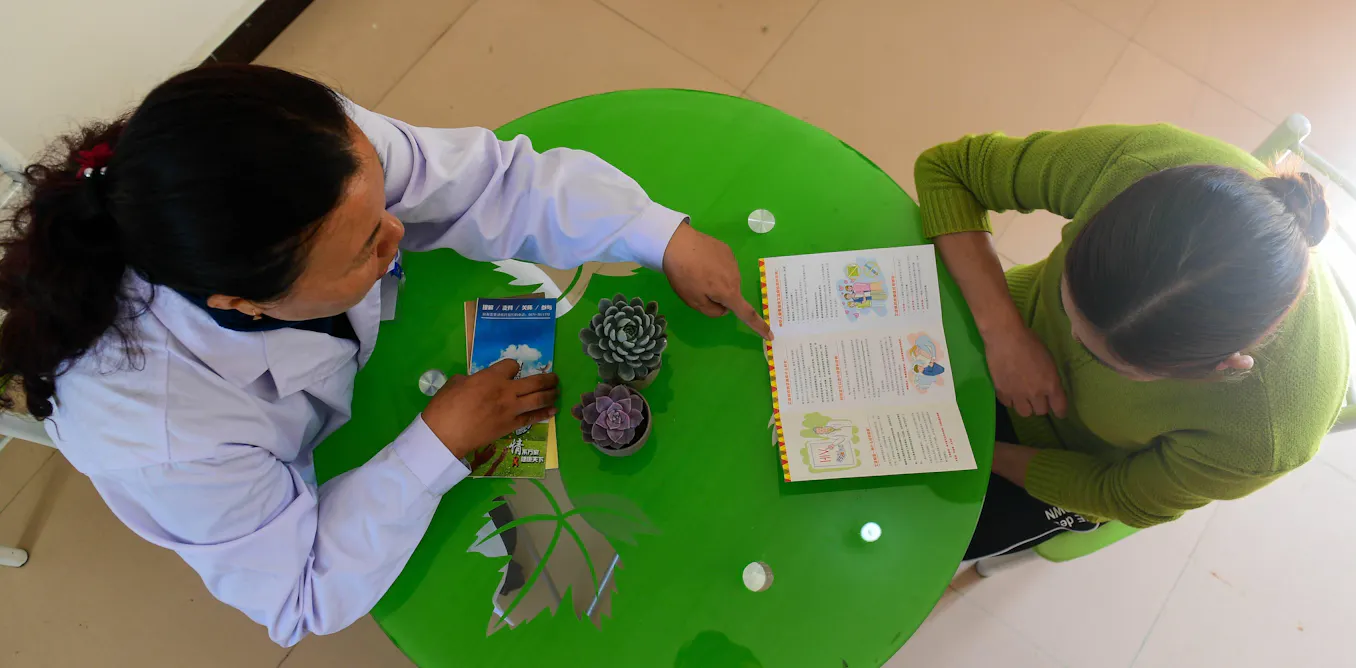
Enormous progress has been made in tackling the global HIV epidemics over the past two decades. The number of people dying from HIV-related causes has fallen by 51% since 2010; and the number of annual new infections has fallen from 2.1 million new infections in 2010 to 1.3 million in 2023 (a drop of 39%).
This is the impact of the roll out of massive global programmes for prevention and treatment in this period. In 2003, around 400,000 people living in low and middle-income countries were able to access the life-saving anti-retroviral therapy drugs to manage the virus. Today it stands at more than 25 million people.
A large part of this success is due to the role of the President’s Emergency Plan for AIDS Relief (Pepfar), established by George W. Bush in 2003. Pepfar now accounts for around 70% of the total funding for the global response to HIV. And it has been a rare example of successful bipartisan support within the US.
Or at least it was, until the Trump administration included Pepfar in its attack on US aid spending in January. HIV spending under Pepfar was included in the initial freeze on aid grants imposed by executive order. And on February 27, news broke that the US secretary of state, Marco Rubio, had signed off on cuts affecting more than 90% of USAid grants, including the ending of US global HIV funding. Pepfar-funded programmes in South Africa were terminated with immediate effect; and UNAids was sent a letter confirming that the US was stopping its funding to the organisation.
Although details on what, if any, Pepfar programmes might survive in some form have not yet been forthcoming, the programme has been gutted in its current form, and few now hold out hope for anything significant remaining.
It has been a remarkable fall for an organisation that at the end of 2024 was funding the treatment of more than 20 million people (including over 560,000 children) across 55 countries; supporting over 90% of the use of pre-exposure phrophylaxis to prevent new infections; funding the testing of 83.8 million people in 2024 (up from 71 million the previous year); and was directly supporting 342,000 health workers across the world.
The importance of Pepfar as a tool of global soft power, the bipartisan support, and the relative uncontroversial focus of its activities, had led many to assume it would survive the administration’s swingeing reductions of aid. This was not to be the case.
In hindsight, that bipartisan support had started to weaken as early as two years ago. In 2023, in the face of growing Republican hostility to the programme, former president, George W. Bush, warned Congress not to drop its support for Pepfar. In March 2024, its mandate and funding was renewed, but for 12 months rather than the usual five years. Criticism increased in the days before Trump took power in January of this year when Pepfar notified Congress (as it was bound to) that four nurses funded through Pepfar in Mozambique had performed abortions (entirely legally). Funding had been suspended and an investigation launched, but enraged Republicans insisted on an additional inquiry.
George W. Bush talks about 20 years of the Pepfar programme.
Trump is expected to reinstate the controversial Mexico City policy. Abortion issues were already an area of heightened sensitivity and contributed to renewed calls from some Republicans for an end to Pepfar. The executive order removing funding from the World Health Organization was another indication of the direction of travel, and a signal that not even relatively uncontroversial support for health funding (where the impact of aid can be seen most clearly) was safe.
Whatever the reasons and politics of Pepfar’s decline, the ending of US support for global HIV programmes is a disaster for those in low and middle-income countries. In South Africa, for instance, Pepfar supports around 17% of the budget of the world’s biggest HIV programme. Around 8 million people live with HIV, and around 5.5 million people are being treated, most of whom are supported by Pepfar funds. The immediate challenge is now to fund ongoing treatment in the weeks and months to come before an alternative secure source of funding can be found.
But even if new funding can be found, the knock-on impact will be serious. The disruption caused by the initial freeze was immense. And the crisis in addressing HIV will also impact wider health issues, especially TB, sexual and reproductive health care. A report published prior to the confirmation of Pepfar’s destruction, suggested ending US support could lead to an additional 565,000 new infections and 601,000 more deaths over the next decade.
In countries where the US funding for HIV programmes is a higher proportion – and for many low and middle-income countries, Pepfar accounts for about two-thirds of the HIV prevention and treatment budget – it will be even harder to plug the funding gap. The former head of UNAids, Peter Piot, has raised the prospect of countries like Zimbabwe and Zambia running out of anti-HIV drugs.
Treatment programmes in in Lesotho, Eswatini and Tanzania have already had to close. Amongst the 350,000 people affected are more than 10,000 pregnant women living with HIV who require treatment to prevent passing on the virus to their unborn child.
The tragedy of the end of Pepfar is that it was one of the clear success stories in how aid can support and transform lives and countries. It played a major role in turning the tide of the epidemic back. The programme was also instrumental in enabling those with the virus to lead full, active lives and contributed to major reductions in the numbers of people newly infected. With a stroke of a pen, that progress has not just been threatened, but reversed.
Rebuilding a global HIV response less dependent on any single donor is essential. But at a time when big donors are stepping back, rather than stepping up in response to the US aid cuts, prospects for filling the gaps quickly to minimise the harm look very dim.
Neo-Fascist Climate Science Denier Donald Trump says Burn, Baby, Burn.Elon Musk urges you to be a Fascist like him, says that you can ignore facts and reality then.