Tag: disability benefits

  • Women will suffer most from UK government’s cuts to disability benefits

    Spread the love

    Original article by Mary-Ann Stephenson republished from Open Democracy under a Creative Commons Attribution-NonCommercial 4.0 International licence.

    Government cuts to disability benefits will disproportionately inflict suffering on women | Hollie Adams/WPA Pool/Getty Images

    Cuts will push hundreds of thousands of women into poverty or force them out of workforce

    While the staggering £5bn of planned cuts to disability benefits announced by chancellor Rachel Reeves at last week’s Spring Statement have rightly been the subject of much scrutiny, the disproportionate suffering they will inflict on women has been under-discussed both by politicians and the media.

    The government’s own risk assessment found the cuts will push 250,000 adults and 50,000 children in the UK below the poverty line. Women, who are both more likely to be Disabled and more likely to be a carer for a loved one, will be worst affected.

    Indeed, single Disabled women make up 44% of those due to lose out from the cuts, and face an average loss of £1,610 per year, the government’s Equality Impact Assessment found.

    This demographic has already been significantly affected by austerity cuts to social security and public services since 2010. Such measures, taken together with tax changes, will cost Disabled women an average of £4,000 a year by 2028, according to an analysis that we at The Women’s Budget Group (WGB) published in September last year.

    That means, for many Disabled women in the UK, Reeves’ latest cuts follow what has already been an 11% drop in their living standards over the past 15 years. Cutting their living standards further is unthinkable.

    Women also make up the majority of the UK’s unpaid carers, who provide care and support to family members, friends, or neighbours. They, too, will be hit hard by the changes.

    When a person receives the Personal Independence Payment (PIP) – a benefit to help with the extra costs incurred by long-term ill health or disability – their unpaid carer may be entitled to the Carer’s Allowance benefit. The government plans to reduce the number of people eligible for PIP, which in turn will reduce the number of people eligible for Carer’s Allowance.

    A couple where one person loses PIP and the other therefore loses Carer’s Allowance could be over £12,000 worse off annually, according to calculations by anti-poverty charity The Joseph Rowntree Foundation.

    Reeves failed to acknowledge this knock-on impact in her speech. Worse still, the Equality Impact Assessment of these changes that was published as the chancellor was still speaking, also made no reference to it (although these impacts were included in the distributional assessment published at the same time).

    What’s more, restricting the eligibility for PIP may increase the number of unpaid carers if a Disabled or chronically ill person is no longer able to rely on the benefit to pay somebody to provide their care. This may force women who are currently just about managing to stay in work to reduce their hours or quit their jobs altogether to take on additional care duties for loved ones.

    Forcing women out of the workforce in this manner is not only detrimental to their health and wellbeing, it directly undermines the government’s claim that the measures are necessary to reduce economic inactivity.

    At the same time, cutting PIP may push some disabled people out of the labour market if they can no longer afford the adaptations and services that enable them to work.

    Years of austerity have already weakened our economy and eroded our living standards, leaving us ill-prepared for economic shocks. Cutting vital social security and public services is not the path to improving living standards.

    Ahead of the Spring Statement, the WBG, along with more than 40 women’s organisations across the UK, wrote an open letter to the chancellor highlighting the gendered nature of these cuts – and urging her to consider more equitable ways to raise revenue.

    Rather than targeting some of the most vulnerable members of our society, the government should be looking into taxing those with the broadest shoulders in our society.

    A 2% wealth tax on assets over £10m could raise up to £24bn a year – far exceeding the savings from the proposed disability benefit cuts. This measure has already been called for by Tax Justice UK, which campaigns for a fairer tax system, and Patriotic Millionaires UK, which describes itself as a nonpartisan network of British millionaires.

    A wealth tax of this kind could be used for much-needed investment in the foundations of our economy, including our social infrastructure – from childcare and education to social care and local government services.

    Moreover, it’s what the public wants. Some 77% would rather the government increase taxes on the very richest than cut public spending, according to recent polling by YouGov for Oxfam.

    Investing in social security and public services is not just a cost, but an investment in our society and economy. By choosing to cut benefits instead of implementing a wealth tax, the Government is not just balancing numbers on a spreadsheet. It is making a political choice – one that will deepen inequality and harm those who are already struggling.

    Original article by Mary-Ann Stephenson republished from Open Democracy under a Creative Commons Attribution-NonCommercial 4.0 International licence.

    Keir Starmer, Angela Rayner and Rachel Reeves wear the uniform of the rich and powerful. They have all had clothes bought for them by multi-millionaire Labour donor Lord Alli. CORRECTION: It appears that Rachel Reeves clothing was provided by Juliet Rosenfeld.
    Keir Starmer, Angela Rayner and Rachel Reeves wear the uniform of the rich and powerful. They have all had clothes bought for them by multi-millionaire Labour donor Lord Alli. CORRECTION: It appears that Rachel Reeves clothing was provided by Juliet Rosenfeld.
    Keir Starmer says that his Labour Party is intensely relaxed about assaulting the very poorest and most vulnerable.
    Keir Starmer says that his Labour Party is intensely relaxed about assaulting the very poorest and most vulnerable.

  • Labour doubles down on slashing billions from DWP’s disability benefits bill

    Spread the love

    https://www.bigissue.com/news/social-justice/dwp-disability-benefits-bill-high-court-ruling/

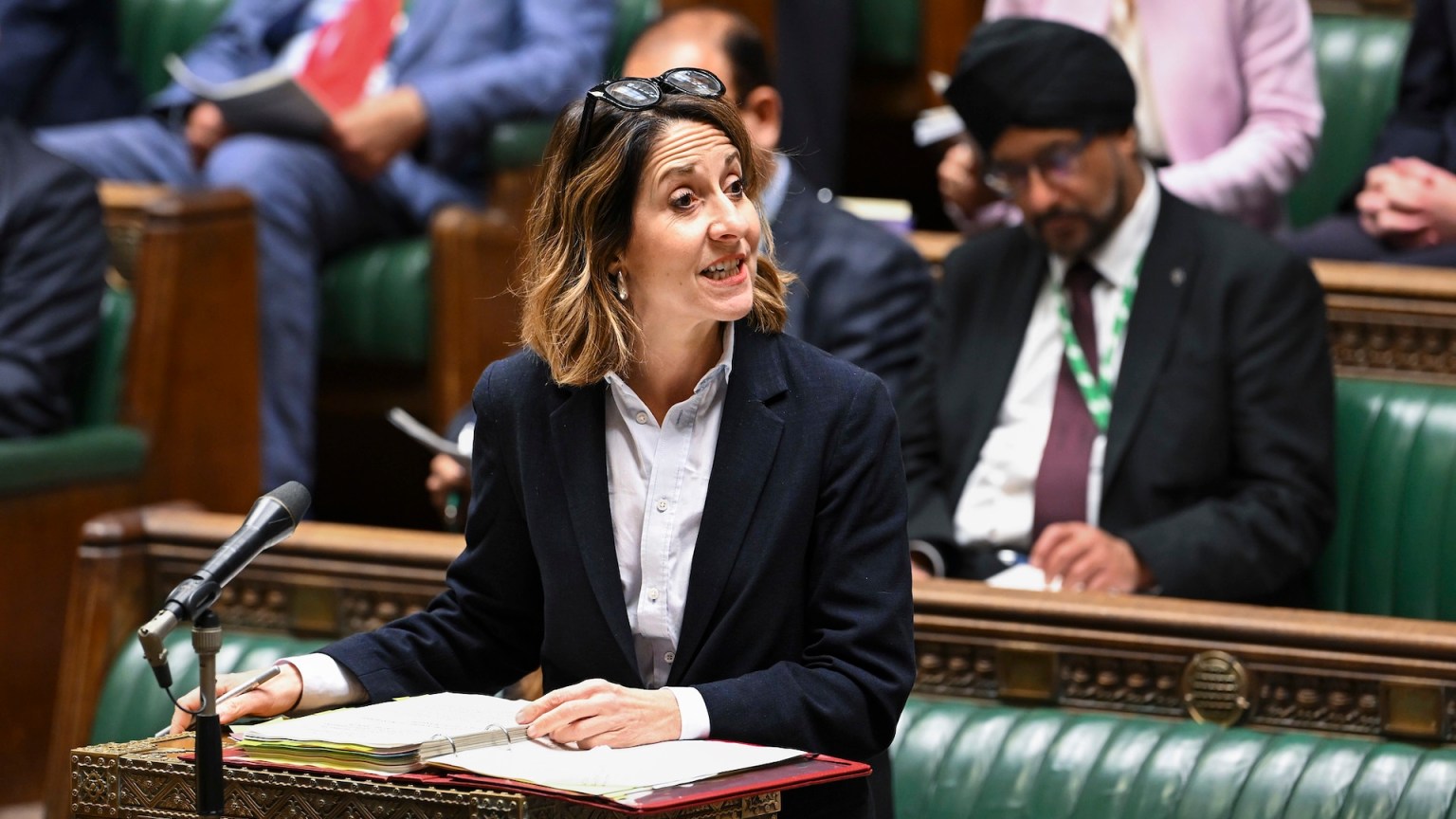
    Work and pensions secretary Liz Kendall speaking in parliament. Image: House of Commons/ Flickr

    The Labour government has indicated that it will stick with Tory plans to cut disability benefits after a High Court judge ruled the previous government’s consultation into the plans was unlawful.

    The proposals would cut around £400 a month from the disability benefits of hundreds of thousands of new applicants by 2029, compared to what they would receive under the current system.

    Earlier today (16 January) Mr Justice Calver ruled in favour of disability activist Ellen Clifford, who had brought a judicial review of the public consultation that was held by the Department for Work and Pensions (DWP) in autumn 2023. 

    The proposals would change the way the work capability assessment (WCA) functions, by reducing the weight attached to difficulties with mobility and getting around in considering applicants’ level of disability

    Responding to today’s verdict, a government spokesperson said: “The judge has found the previous government failed to adequately explain their proposals. As part of wider reforms that help people into work and ensure fiscal sustainability, the government will re-consult on the WCA descriptor changes, addressing the shortcomings in the previous consultation, in light of the judgment.

    “The government intends to deliver the full level of savings in the public finances forecasts.”

    It is not clear if Labour will consult on all the proposals in the original consultation, some of which were subsequently dropped, or whether it will only consult on the proposals that the last government chose to take forward.

    The High Court ruling doesn’t force the government to ditch the proposals, although it would make it very difficult to proceed with them without holding a new consultation first. 

    Article continues at https://www.bigissue.com/news/social-justice/dwp-disability-benefits-bill-high-court-ruling/

  • DWP’s ‘misleading and unfair’ consultation on disability benefit reforms unlawful, High Court rules

    Spread the love

    https://www.bigissue.com/news/social-justice/dwp-disability-benefits-reforms-consultation-ruling/

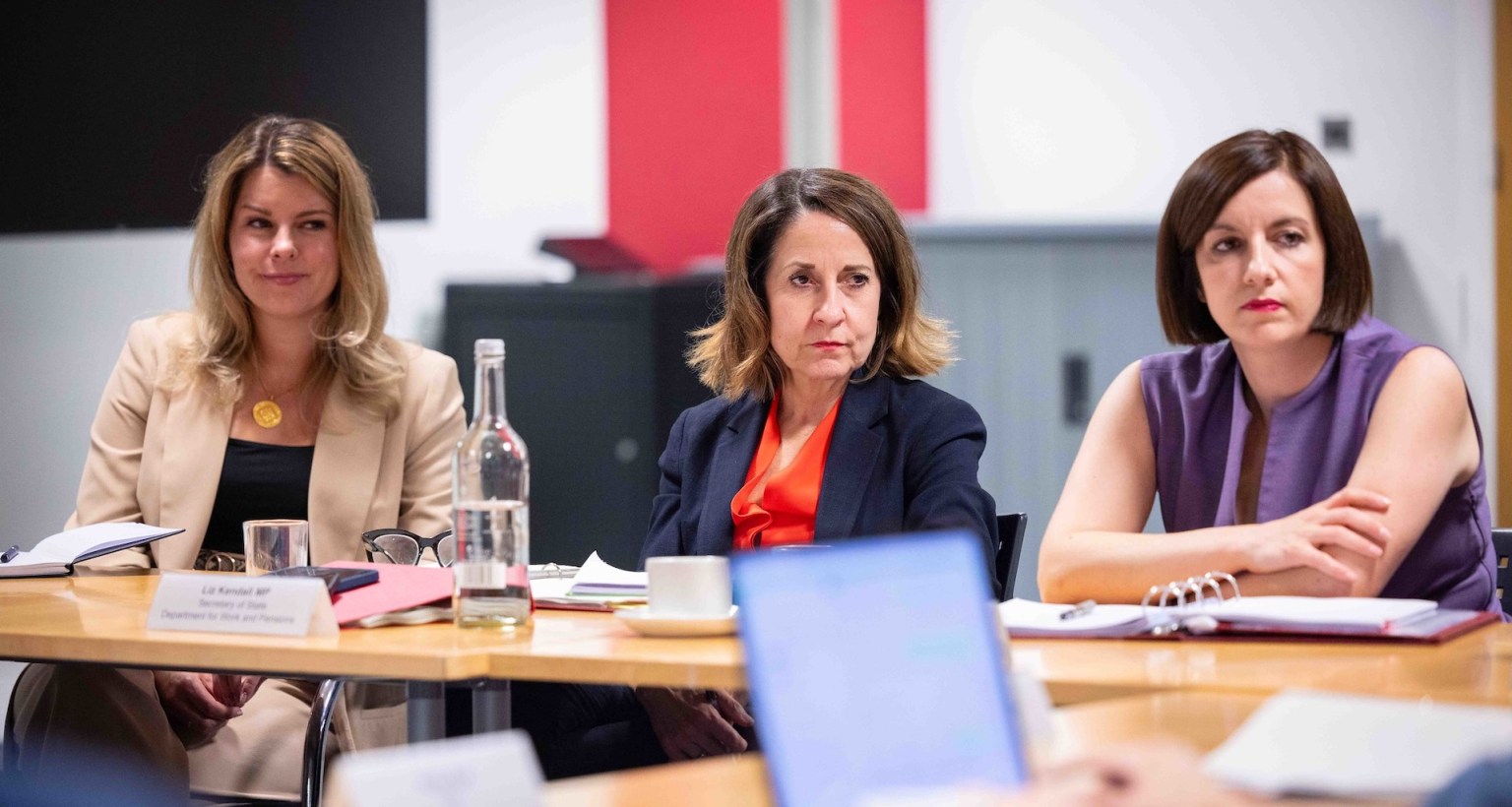
    A meeting of the child poverty taskforce. From left to right: Mayor of the North East Kim McGuinness, work and pensions secretary Liz Kendall and education secretary Bridget Phillippson. Image: Department for Education/ Flickr

    Tory ministers presented reforms to disability benefits as a way to support disabled people into work – and they would have seen many worse off by at least £416.19 per month

    The Department for Work and Pensions’ (DWP) consultation into plans to slash billions of pounds from disability benefits has been ruled unlawful in a damning High Court judgement.

    In a judgment published this morning (16 January), Mr Justice Calver said that the judicial review, brought by disability activist Ellen Clifford, had “surmounted the substantial hurdle of establishing that the consultation was so unfair as to be unlawful”.

    Repeatedly describing the DWP consultation in autumn 2023 as “misleading”, “rushed” and “unfair”, he said:

    • The consultation documents failed to highlight the “substantial” loss of benefits facing those affected by the proposals.

    • The consultation gave the “misleading impression” that changes were required to ensure deaf and disabled people could access employment support, when they could already choose to access this voluntarily.

    • Despite the consultation presenting the changes as being solely about helping disabled people into work, in reality “costs savings was at least one of the two bases, if not the central basis, on which decisions would be taken on which policies would be taken forward by the government”.

    • The eight-week consultation was unlawfully short in the circumstances.

    Article continues at https://www.bigissue.com/news/social-justice/dwp-disability-benefits-reforms-consultation-ruling/

  • Benefit Fraud: The Right-Wing Lie that Refuses to Die

    Spread the love

    https://leftfootforward.org/2024/05/benefit-fraud-the-right-wing-lie-that-refuses-to-die/

    For many right-wing politicians and their media allies, ‘welfare cheats’ is a line that bears endless repetition.

    News broke this week that the Equalities and Human Rights Commission (EHRC) is investigating the Department for Work and Pensions (DWP)  over its treatment of disabled people, specifically whether the department failed to make reasonable adjustments for people with learning disabilities or long-term mental health conditions when carrying out benefit health assessments. 

    “The DWP has been failing disabled people for decades now” and “full transparency and accountability is imperative,” said David Linden MP, the SNP’s Social Justice Spokesperson, in response to news of the investigation.

    For years, successive Tory governments and the media ecosystems that support them, have demonised benefit claimants, presenting them as ‘scroungers,’ ‘frauds’ and ‘cheats.’ Who can forget the Sun’s ‘Beat the Cheat’ campaign in 2012, encouraging readers to be “patriotic” by reporting suspected benefit cheats to a benefit fraud hotline? In 2016, the then chancellor George Osborne refused to apologise for attempting to slice £4.4bn off benefits for people with disabilities, as he defended his controversial budget which led to the resignation of the work and pensions secretary Iain Duncan Smith.

    Today, very little has changed, except that the country is mired in a cost-of-living crisis that has fuelled the sharpest increase in absolute poverty in 30 years.

    Disability benefit fraud a ‘non-issue’

    Meanwhile, separate and more recent DWP figures show that there were almost no recorded losses to the taxpayer due to fraud in the disability benefits system in the financial year ending 2024.

    Disability Living Allowance fraud was just 0.1 percent, rounded down to £0m. PIP cheating was found to be 0 percent in the same period, the data showed.

    PIP overpayments represented 0.4 percent, equating to around £90m lost in a year, marking a significant decrease from the previous year, when such overpayments stood 1.1 percent (£200m). The overpayments were said to be mainly due to errors made by the department when allocating award levels at the assessment stage.

    Responding to the figures, Mikey Erhardt, campaigner at Disability Rights UK described PIP fraud as a ‘non-issue.’

    “New data shows what we, as disabled people, have known for years – PIP fraud is a non-issue. PIP fraud is now the lowest on record – despite the government placing fraud front and centre of their latest public announcements,” he said.

    Erhardt added: “If the government is concerned about fraud, it would be serious about the £15.2bn that multinational companies hide from the UK via tax havens. Money which could fund public services that we all need and use. Instead, disabled people continue to be demonised.”

    https://leftfootforward.org/2024/05/benefit-fraud-the-right-wing-lie-that-refuses-to-die/

    UK Prime Minister Rishi Sunak describes his benefit to already filthy rich fossil fuel investors and how he hates poor people.
    UK Prime Minister Rishi Sunak describes his benefit to already filthy rich fossil fuel investors and how he hates poor people.