Prime Minister Sir Keir Starmer departs 10 Downing Street, London, to attend Prime Minister’s Questions at the Houses of Parliament, February 12, 2025
DOUBLE standards. The Prime Minister vows to close a “loophole” that allowed a Gaza family, whose home was destroyed by Israeli bombing, to claim asylum under a scheme designed for Ukrainian refugees.
There are deserving and undeserving refugees. Ukrainians are white, and fleeing from an army we don’t like, Russia’s. Palestinians aren’t and they are fleeing from an army we advise, fund and equip.
Labour’s anti-immigrant braggadocio won’t shorten NHS waiting lists or lower housing costs. Its zeal for action contrasts with its foot-dragging over employment rights and its indifference to rising energy and water bills. Keir Starmer only punches down: he cowers before the corporate crooks bleeding this country dry but talks tough when it comes to the powerless and penniless.
Most of all he cowers before Donald Trump. British laws can be amended if they offend the US president: an online safety Bill may be reshaped to please Elon Musk, and proper taxation of the digital sector’s huge profits may be permanently shelved.
Journalist Sam Husseini is carried out of a State Department news conference after confronting Secretary of State Antony Blinken about the U.S. policy towards Gaza on January 16, 2025. (Photo credit: Ryan Grim/X.com)
“Physically dragging out a reporter from the State Department briefing room while preaching press freedom to the rest of the world is the perfect example of the Biden administration’s love affair with double standards and duplicity,” said one foreign policy observer.
Two journalists were removed from Secretary of State Antony Blinken’s final news conference on Thursday after interrupting Blinken’s remarks to heckle him about the United States’ policy toward Gaza, a day after a cease-fire deal between Hamas and Israelwas announced. One of the reporters, independent journalist Sam Husseini, was physically carried out of the briefing room by security.
Less than two minutes into Blinken’s remarks, as he was thanking the reporters in the attendance for “asking tough questions,” Max Blumenthal, the editor in chief of The Grayzone—an independent news—addressed Blinken, saying loudly in reference to the cease-fire deal:“300 reporters in Gaza were on the receiving end of your bombs. Why did you keep the bombs flowing when we had a deal in May?” On Wednesday, President Biden announced the breakthrough, saying that “this is the ceasefire agreement I introduced last spring.”
“Why did you sacrifice the rules-based order on the mantle of your commitment to Zionism,” Blumenthal continued, before being led to the door. “How does it feel to have your legacy be genocide?” he yelled.
Blumenthal also called out State Department Spokesman Matt Miller, who is briefly visible in a video filmed by the journalist, who charged that Miller “smirked through a genocide.”
Not long after, Husseini also interrupted Blinken.
“I am asking questions after being told by Matt Miller that he will not answer my questions,” said Husseini, who also referenced the findings of Amnesty International, which concluded in December that Israel has committed genocide against Palestinians in Gaza. “You pontificate about a free press… Criminal! Why aren’t you in the Hague.” The Hague is where the International Criminal Court is located.
Blinken can be heard saying “respect the process” in response to Husseini’s outburst.
Trita Parsi, the executive vice president of the non-interventionist “action tank” the Quincy Institute for Responsible Statecraft, remarked that “physically dragging out a reporter from the State Department briefing room while preaching press freedom to the rest of the world is the perfect example of the Biden administration’s love affair with double standards and duplicity…”
Ken Klippenstein, an independent reporter operating on Substack and an investigative alum of the Intercept, announced (Substack, 9/26/24) that he had been kicked off Twitter (now rebranded as X). His crime, he explained, stemmed from posting the 271-page official dossier of Republican vice presidential candidate’s J.D. Vance’s campaign vulnerabilities; the US government alleges that the information was leaked through Iranian hacking. In other words, the dossier is a part of the “foreign meddling campaign” of “enemy states.”
Klippenstein is not the first reporter to gain access to these papers (Popular Information, 9/9/24), but most of the reporting about this dossier has been on the intrigue revolving around Iranian hacking rather than the content itself (Daily Beast, 8/10/24; Politico, 8/10/24; Forbes, 8/11/24). Klippenstein decided it was time for the whole enchilada to see the light of day:
As far as I can tell, it hasn’t been altered, but even if it was, its contents are publicly verifiable. I’ll let it speak for itself.
“The terror regime in Iran loves the weakness and stupidity of Kamala Harris, and is terrified of the strength and resolve of President Donald J. Trump,” Steven Cheung, communications director for the Trump campaign, responded when I asked him about the hack.
If the document had been hacked by some “anonymous”-like hacker group, the news media would be all over it. I’m just not a believer of the news media as an arm of the government, doing its work combating foreign influence. Nor should it be a gatekeeper of what the public should know.
The US Office of the Director of National Intelligence said in a statement that alleged Iranian hacking (9/18/24) was “malicious cyber activity” and “the latest example of Iran’s multi-pronged approach…to stoke discord and undermine confidence in our electoral process.”
Where’s the beef?
Ken Klippenstein (Substack, 9/26/24) argued that the Vance dossier ” is clearly newsworthy, providing Republican Party and conservative doctrine insight into what the Trump campaign perceives to be Vance’s liabilities and weaknesses.”
The Vance report isn’t as salacious as Vance’s false and bizarre comments about Haitians eating pets (NPR, 9/15/24), but it does show that he has taken positions that have fractured the right, such as aid for Ukraine; the report calls him one of the “chief obstructionists” to providing assistance to the country against Russia. It dedicates several pages to Vance’s history of criticizing Trump and the MAGA movement, suggesting that his place on the ticket could divide Trump’s voting base.
On the other hand, it outlines many of his extreme right-wing stances that could alienate him with putative moderates. It says Vance “appears to have once called for slashing Social Security and Medicare,” and “is opposed to providing childcare assistance to low-income Americans.” He “supports placing restrictions on abortion access,” and states that “he does not support abortion exceptions in the case of rape.”
And for any voter who values 7-day-a-week service, Vance “appears to support laws requiring businesses to close on Sundays.” It quotes him saying: “Close the Damn Businesses on Sunday. Commercial Freedom Will Suffer. Moral Behavior Will Not, and Our Society Will Be Much the Better for It.” That might not go over well with small business owners, and any worker who depends on their Sunday shifts.
‘Took a deep breath’
The Washington Post (8/13/24) suggested that Vance dossier was different from Hillary Clinton’s hacked emails in 2016 because of “foreign state actors increasingly getting involved” in US elections.
Are the findings in the Vance dossier the story of the century? Probably not, but it’s not nothing that the Trump campaign is aware its vice presidential candidate is loaded with liabilities. There are at least a few people who find that useful information.
And the Washington Post (9/27/24) happily reported on private messages Vance sent to an anonymous individual who shared them with the newspaper that explained Vance’s flip-flopping from a Trump critic to a Trump lover. Are the private messages really more newsworthy than the dossier—or is the issue that the messages aren’t tainted by allegedly foreign fingerprints? Had that intercept of material involved an Iranian, would it have seen the light of day?
In fact, the paper (8/13/24) explained that news organizations, including the Post, were reflecting on the foreign nature of the leak when deciding how deep they should report on the content they received:
“This episode probably reflects that news organizations aren’t going to snap at any hack that comes in and is marked as ‘exclusive’ or ‘inside dope’ and publish it for the sake of publishing,” said Matt Murray, executive editor of the Post. Instead, “all of the news organizations in this case took a deep breath and paused, and thought about who was likely to be leaking the documents, what the motives of the hacker might have been, and whether this was truly newsworthy or not.”
Double standards for leaks
Politico (10/7/16) quoted a Clinton spokesperson: “Striking how quickly concern about Russia’s masterminding of illegal hacks gave way to digging through fruits of hack.” This was immediately followed by: “Indeed, here are eight more e-mail exchanges that shed light on the methods and mindset of Clinton’s allies in Brooklyn and Washington.”
There seems to be a disconnect, however, between ill-gotten information that impacts a Republican ticket and information that tarnishes a Democrat.
Think back to 2016. When “WikiLeaks released a trove of emails apparently hacked from Hillary Clinton’s campaign chairman email account, unleashing thousands of messages,” as Politico (10/7/16) reported, the outlet didn’t just merely report on the hack, it reported on the embarrassing substance of the documents. In 2024, by contrast, when Politico was given the Vance dossier, it wrote nothing about its contents, declaring that “questions surrounding the origins of the documents and how they came to our attention were more newsworthy than the material that was in those documents” (CNN, 8/13/24).
The New York Times and Washington Post similarly found the Clinton leaks—which were believed at the time to have been given to WikiLeaks by Russia—far more newsworthy than the Vance dossier. The Times “published at least 199 articles about the stolen DNC and Clinton campaign emails between the first leak in June 2016 and Election Day,” Popular Information (9/9/24) noted.
FAIR editor Jim Naureckas (11/24/09) has written about double standards in media, noting that information that comes to light through unethical or illegal means is played up if that information helps powerful politicians and corporations. Meanwhile, if such information obtained questionably is damaging, the media focus tends to be less on the substance, and more on whether the public should be hearing about such matters.
For example, when a private citizen accidentally overheard a cell phone conversation between House Speaker John Boehner, former Speaker Newt Gingrich and other Republican congressmembers, and made a tape that showed Gingrich violating the terms of a ethics sanction against him, news coverage focused on the illegality of taping the conversation, not on the ethics violation the tape revealed (Washington Post, 1/14/97; New York Times, 1/15/97).
But when climate change deniers hacked climate scientists’ email, that produced a front-page story in the New York Times (11/20/09) scrutinizing the correspondence for any inconsistencies that could be used to bolster the deniers’ arguments.
When Cincinnati Enquirer reporter Michael Gallagher wrote a series of stories about the Chiquita fruit corporation, based in part on listening without authorization to company voicemails, the rest of the media were far more interested in Gallagher’s ethical and legal dilemmas (he was eventually sentenced to five years’ probation) rather than the bribery, fraud and worker abuse his reporting exposed.
Meet the new boss
Musk personally ordered the suspension of the account of antifascist activist Curt Loder, the Independent (1/29/23) revealed, noting that “numerous other accounts of left-leaning activists and commentators have been suspended without warning.”
There’s a certain degree of comedy in the hypocrisy of Klippenstein’s suspension. Since right-wing billionaire Elon Musk bought Twitter, he has claimed that his administration would end corporate censorship, but instead he’s implemented his own censorship agenda (Guardian, 1/15/24; Al Jazeera, 8/14/24).
The Independent (1/29/23) reported that Musk “oversaw a campaign of suppression that targeted his critics upon his assumption of power at Twitter.” He
personally directed the suspension of a left-leaning activist, Chad Loder, who became known across the platform for his work helping to identify participants in the January 6 attack.
Al Jazeera (2/28/23) noted that “digital rights groups say social media giants,” including X, “have restricted [and] suspended the accounts of Palestinian journalists and activists.” Musk has likewise fulfilled censorship requests by the governments of Turkey (Ars Technica, 5/15/23) and India (Intercept, 1/24/23, 3/28/23) officials, and is generally more open to official requests to suppress speech than Twitter‘s previous owners (El Pais, 5/24/23; Washington Post, 9/25/24).
Meanwhile, Musk’s critics contend, he’s allowed the social network to be a force multiplier for the right. “Elon Musk has increasingly used the social media platform as a megaphone to amplify his political views and, lately, those of right-wing figures he’s aligned with,” AP (8/13/24) reported. (Musk is vocal about his support for former President Donald Trump’s candidacy—New York Times, 7/18/24.)
“Twitter Antisemitism ‘Skyrocketed’ Since Elon Musk Takeover—Jewish Groups,” blasted a Newsweek headline (4/25/23). Earlier this year, Mother Jones (3/13/24) reported that Musk “has been retweeting prominent race scientist adherents…spreading misinformation about racial minorities’ intelligence and physiology to his audience of 176.3 million followers.”
‘Chilling effect on speech’
The message Ken Klippenstein got from X announcing he had been kicked off the platform.
Now Musk’s Twitter is keeping certain information out of the public view—information that just happens to damage the presidential ticket he supports. With Klippenstein having been silenced on the network, anyone claiming X is a bastion of free speech at this point is either mendacious or simply deluded.
Klippenstein (Substack, 9/26/24) explained that “X says that I’ve been suspended for ‘violating our rules against posting private information,’ citing a tweet linking to my story about the JD Vance dossier.” He added, though, that “I never published any private information on X.” Rather, “I linked to an article I wrote here, linking to a document of controversial provenance, one that I didn’t want to alter for that very reason.”
The journalist (Substack, 9/27/24) claims that his account suspension, which he reports to be permanent, is political because he did not violate the network’s code about disclosing personal information, and even if he did, he should have been given the opportunity to correct his post to become unsuspended. “So it’s not about a violation of X’s policies,” he said. “What else would you call this but politically motivated?”
Klippenstein is understandably concerned that he is now without a major social media promotional tool. “I no longer have access to the primary channel by which I disseminate primarily news (and shitposts of course) to the general public,” he said. “This chilling effect on speech is exactly why we published the Vance Dossier in its entirety.”
UPDATE: Klippenstein (Substack, 9/29/24) reports that his publication of the Vance dossier is being censored not only by X, but by Meta (Facebook and Instagram) and Google as well: “The platforms said that the alleged Iranian origin of the dossier — which no one is calling fake or altered — necessitated removing any links to the document.”
FAIR’s work is sustained by our generous contributors, who allow us to remain independent. Donate today to be a part of this important mission.
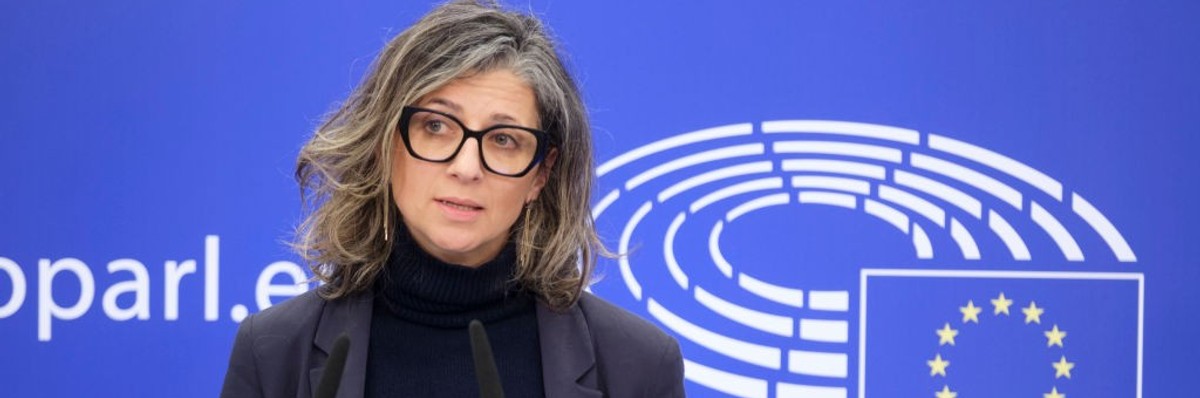
United Nations special rapporteur on the Occupied Palestinian Territories Francesca Albanese addresses the European Parliament in Brussels on April 10, 2024. (Photo: Thierry Monasse/Getty Images)
One expert even asked if Israel’s United Nations membership should be reconsidered given the country “seems to have zero respect” for the world body.
United Nations human rights experts warned Monday that Israel risks becoming an international “pariah” over its ongoing assault on Gaza—for which it is on trial for genocide at the world body’s International Court of Justice.
The special rapporteurs—who are appointed by the U.N. but do not speak on its behalf—condemned Israel’s human rights violations against Palestinians, as well as its blatant disregard for international law and multiple rulings from the ICJ.
George Katrougalos, the U.N. special rapporteur on the promotion of democratic and equitable international order and a former Greek foreign minister, said during a press conference that the “first obligation” for harmonious relations between nations “is for everybody to respect the United Nations rules.”
“This is not happening in the case of Israel,” Katrougalos noted.
"In order to be able to work… a first obligation is for everyone to respect the UN rules. This is not happening in the case of Israel"
UN Special Rapporteur @gkatr explains that if this continues Israel will become a pariah state like apartheid South Africa was pic.twitter.com/Hl790IqRWM
The United Nations agency for Palestinian relief says that around 200 of its staff members have been killed in more than 450 Israeli attacks on agency facilities since October. More than 500 Palestinians have been killed while seeking shelter under the U.N. flag.
Overall, more than 146,000 Palestinians have been killed or wounded by Israeli forces since October. Almost all of Gaza’s 2.3 million people have been forcibly displaced, and Israel’s “complete siege” has caused widespread starvation—sometimes deadly—and sickness throughout the coastal enclave.
Comparing the international community’s reaction to Russia’s ongoing invasion of Ukraine and Israel’s war on Gaza, Katrougalos stressed that “we cannot anymore stand this kind of double standards and hypocrisy.”
“I trust that the progressive and democratic citizens of Israel would not let their country become a pariah like South Africa [had] become during the times of apartheid,” he added. South Africa is leading the genocide case against Israel at the ICJ.
Francesca Albanese, the U.N. special rapporteur on the rights situation in the occupied Palestinian territory, said that “I think it’s unavoidable for Israel to become a pariah in the face of its continuous, relentless, vilifying assault of the United Nations, on top of millions of Palestinians.”
“Shockingly, in the face of the abyss reached in the OPT… most member states remained inactive at best, or [are] actively aiding and assisting Israel’s criminal conduct,” she continued.
“Should there be a consideration of its membership as part of this organization, which Israel seems to have zero respect for?” Albanese added.
Pedro Arrojo-Agudo, the U.N. special rapporteur on the rights to safe drinking water and sanitation, warned that “we are blowing up the United Nations if we don’t react” to Israel’s human rights violations.
Arrojo-Agudo added that, as with starvation, Israel is using deprivation of water as a “weapon” and disavowed Israel’s claim that Hamas—which led the October 7 attack on Israel—has “completely mismanaged water in Gaza.”
The special rapporteurs’ remarks came as representatives of U.N. member states gathered in New York for this year’s annual General Assembly. General debate sessions are set for next week.