Oil and Gas Investments of Donald Trump’s New UK Ambassador

Spread the love

Original article by Adam Barnett republished from DeSmog

Warren Stephens. Credit: The Golfer’s Journal / YouTube

Campaigners warn that the UK will face “pressure from American fossil fuel interests” to slow its energy transition.

U.S. president-elect Donald Trump’s pick to be UK ambassador runs a firm with investments in several oil and gas companies, DeSmog can reveal.

Billionaire Warren Stephens, a major Trump donor who was nominated on Monday to be the next UK ambassador, is chairman, president, and CEO of Stephens Inc., one of the largest privately-owned investment banks in the U.S..

The firm’s portfolio includes at least five companies that make their money from oil and gas exploration and production, including one, Stephens Natural Resources, which is “solely owned” by the Stephens family business. 

“President-elect Trump’s promise to boost U.S. fossil fuel production is reflected in his choice of UK ambassador, raising concerns about the potential impact on the UK’s own climate leadership”, said Fossil Free Parliament campaigner Carys Boughton. 

Tessa Khan, executive director of the environmental campaign group Uplift, told DeSmog the appointment was a sign that “the UK is going to be under pressure from American fossil fuel interests to slow its transition away from oil and gas”.

Trump has vowed to “drill, baby, drill” for oil and gas in the U.S. while his presidential campaign received the backing of major fossil fuel interests. The president-elect has called climate change a “hoax” and is expected to once again pull the U.S. out of the flagship 2015 Paris Agreement, which established a global ambition to limit warming to 1.5C above industrial levels. 

The Stephens hire comes just weeks after the UK Labour government unveiled an ambitious new climate target to cut emissions by 81 percent by 2035. The move was criticised by Conservative Party leader Kemi Badenoch, who this week flew to Washington DC reportedly to build ties with senior Republicans ahead of a second Trump presidency.  

As DeSmog revealed last week, Badenoch has hired advisors who have criticised climate action and have links to fossil fuel-funded think tanks. Badenoch, who describes herself a “net zero sceptic” has also received donations from the head of Net Zero Watch, a climate science denial group.

Oil and Gas Investments

Stephens Inc.’s investments in oil and gas include Stephens Natural Resources, a company run by Warren’s uncle Witt Stephens. 

The company, which trades as Stephens Production, “has a rich history of drilling and producing both oil and natural gas”, according to its website, and “continues to expand its production and reserves in the continental U.S. and offshore Gulf of Mexico”. 

The company is “solely owned” by the Stephens family, whose investment stretches back to 1953, according to the website. 

Stephens Inc.’s other current investments, which date back to the mid-2010s, include Four Corners Petroleum, an oil exploration and production company based in Colorado. 

Stephens Inc. lists RK Supply in its portfolio, a “leading distributor of piping, oil and gas valves, fittings, and other oilfield service equipment” based in Texas. It also lists Dakota Midstream, a company that “provides infrastructure support to oil and gas exploration and production”, based in Colorado. 

Another company in the Stephen Inc. portfolio, Texas-based Basin Oil & Gas, buys “non-operating oil and gas interests”, and is developing carbon capture and sequestration projects. Carbon capture is a favoured climate solution of the oil and gas industry, and is often used simply to extract more fossil fuels. 

Stephens Inc. lists a firm called Capture Point in its portfolio, which specialises in enhanced oil recovery – a method for extracting hard-to-get oil. Capture Point told DeSmog that Stephens Inc. was not an investor in the company, though did not respond when asked if Stephens Inc. was previously an investor. 

All the companies cited were approached for comment. 

Trump Tensions

Stephens’s appointment comes at a critical time for the UK’s energy transition, and highlights the differences between the new Labour government and the incoming Trump administration. 

Prime Minister Keir Starmer last month attended the COP29 climate summit in Baku, Azerbaijan, pledging that the UK would restore its role “as a climate leader on the world stage”. In its 2024 election manifesto, Starmer’s Labour Party pledged to ban all new licenses for oil and gas exploration in the North Sea. However, after five months in office, the government has yet to implement that promise. 

“While the UK government has pledged to turn the UK into a ‘clean energy superpower’, it has not enacted its manifesto commitment to ban new licenses, nor provided a plan for a just transition away from fossil fuels”, Carys Boughton told DeSmog. 

“Trump’s choice of ambassador will gift the fossil fuel industry yet more influence within UK politics, which is particularly concerning while the government is still wavering on the future of fossil fuels. 

“It is therefore yet more important that the government take action to restrict fossil fuel industry influence – to protect its developing climate and energy policy from the industry’s polluting interests.”

As DeSmog has reported, Trump’s would-be energy secretary Chris Wright, chief executive of fracking company Liberty Energy, has praised Danish climate crisis denier Bjorn Lomborg as a friend. Wright’s nomination was welcomed by the CO2 Coalition, a climate science denial group which has received funding from the Koch Industries oil dynasty. 

Analysis by the climate outlet Heated found that all of Trump’s cabinet picks have made misleading statements about climate change. 

Science denial and an enthusiasm for fossil fuels are also views shared by Trump’s UK supporters. In September, DeSmog reported that Trump ally Nigel Farage, the Clacton MP and leader of Reform UK, was a keynote speaker at an event in Chicago run by the Heartland Institute, where he called on the U.S. to “drill, baby, drill” for more fossil fuels. 

“It’s no surprise that this appointment – like the rest of Trump’s administration – is shot through with oil and gas interests”, Uplift’s Tessa Khan, told DeSmog.

“Fossil fuel companies will prove extremely influential in the incoming U.S. government, and they want nations across the world to remain hooked on oil and gas for years to come just so they can keep profiting.

“The UK is going to be under pressure from American fossil fuel interests to slow its transition away from oil and gas. To succumb would be against the UK’s national interest”.

Original article by Adam Barnett republished from DeSmog
Continue ReadingOil and Gas Investments of Donald Trump’s New UK Ambassador

Most People on Earth, Even in Petrostates, Want Quick Fossil Fuel Phaseout: Poll

Spread the love

Original article by EDWARD CARVER republished from Common Dreams under Creative Commons (CC BY-NC-ND 3.0). 

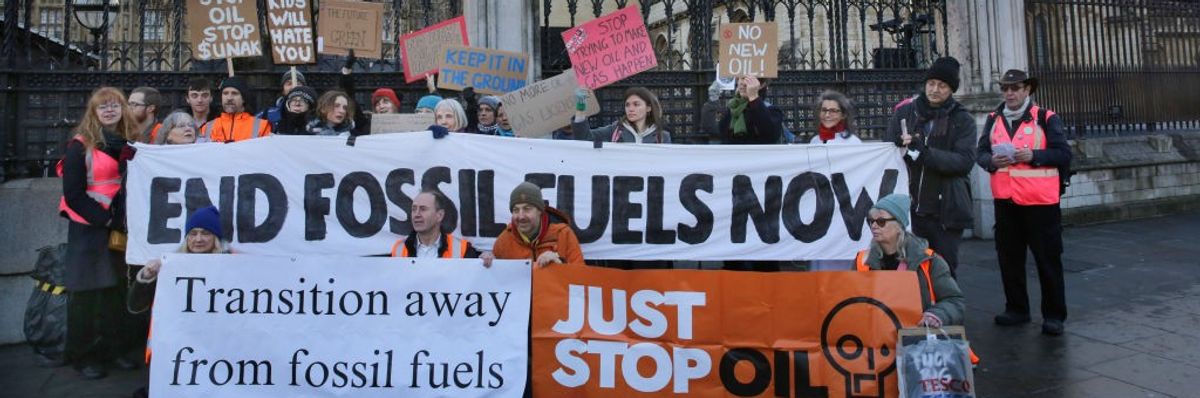
Campaigners gathered outside the Houses of Parliament in London, United Kingdom, in January 2024 to protest the issuance of North Sea oil and gas licenses. 
(Photo: Martin Pope/SOPA Images/LightRocket via Getty Images)

“There can be no doubt that citizens across the world are saying to their leaders, you have to act and, above all, have to act faster,” a U.N. official said. “This is an issue that almost everyone, everywhere, can agree on.”

A large majority of the global population, including people who live in oil, gas, and coal producing countries, supports a fast transition to clean energy and a phaseout of fossil fuels, a poll released Thursday showed.

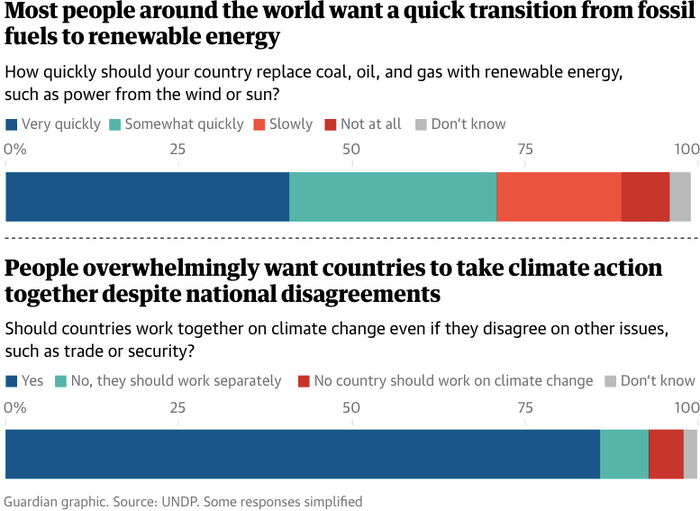
Across 77 countries, 72% of those surveyed supported a quick fossil fuel phaseout, while an even higher percentage, 80%, supported stronger climate action in general, according to the poll, called Peoples’ Climate Vote and conducted for the United Nations Development Program (UNDP) with the University of Oxford and GeoPoll.

“There can be no doubt that citizens across the world are saying to their leaders, you have to act and, above all, have to act faster,” UNDP Administrator Achim Steiner told The Guardian. “This is an issue that almost everyone, everywhere, can agree on.”

People in most major fossil fuel producing nations support a quick energy transition in their own countries, the poll showed. In the United States, the world’s largest oil and gas producer, 53% supported either a “very” or “somewhat” quick phaseout; in Saudi Arabia, the second largest, 75% did so; and in China and India, the leading coal producers, the figures were 80% and 76%, respectively.

The poll also showed overwhelming support for transnational cooperation, even if it requires setting aside other differences: 86% of those surveyed said want countries to tackle climate change together. Steiner called this a “stunning” level of consensus.

Steiner noted that fossil fuel subsidies distort the market and subvert the public will for change.

“There are very narrow, self-interested agendas that maintain artificially inflated [profits] for fossil fuel-based industries that ultimately are coming at the cost of everyone,” he said.

The poll—the largest standalone public opinion survey on climate change to date, building on a first edition that was run in 2021—clarifies the will of the global public and strengthens the moral case for climate action, commentators said.

“Brilliant to see clear, credible evidence that the overwhelming majority of people across the world—oil rentier economy or not—want to see transition from fossil fuels to renewable energy ‘quickly,'” X user Dave Drabble wrote. “Let’s not let oil and gas interests determine our fate.”

Similarly rejecting the influence of fossil fuel interests, Steiner said, “It is so important we let the people speak for themselves.”

Original article by EDWARD CARVER republished from Common Dreams under Creative Commons (CC BY-NC-ND 3.0). 

Continue ReadingMost People on Earth, Even in Petrostates, Want Quick Fossil Fuel Phaseout: Poll

Carla Denyer destroys right wing argument that tackling the climate emergency and cost of living crisis is incompatible

Spread the love
Green Party’s Carla Denyer appears on BBC’s Question Time.

https://bright-green.org/2023/04/20/carla-denyer-destroys-right-wing-argument-that-tackling-the-climate-and-cost-of-living-crises-is-incompatible/

On her first appearance on BBC Question Time, Green Party of England and Wales co-leader Carla Denyer dismantled a right wing argument that tackling the cost of living crisis is incompatible with rapid action to address the climate emergency.

“The UK has the leakiest homes in Europe. People are spending so much on their energy bills only for it to blow out the windows and the doors and the gaps because they’re poorly insulated. If we had a proper, big, nationwide home insulation programme street by street, that insulated people’s homes, it would bring down their bills, it would give them warmer, more comfortable homes which are healthier, and we’ve heard all about – recently – the issues with living in cold, damp homes, and it would tackle carbon emissions. It can be done.”

https://bright-green.org/2023/04/20/carla-denyer-destroys-right-wing-argument-that-tackling-the-climate-and-cost-of-living-crises-is-incompatible/

Continue ReadingCarla Denyer destroys right wing argument that tackling the climate emergency and cost of living crisis is incompatible

ENERGY TRANSITION

Spread the love

How many jobs could the clean energy transition create?

Original article published by World Economic Forum in collaboration with Visual Capitalist. Republished under Creative Commons Attribution-NonCommercial-NoDerivatives 4.0 International Public License. [I’m trying to prevent your boy Starmer getting elected rich Davosers].

This article is published in collaboration with Visual Capitalist

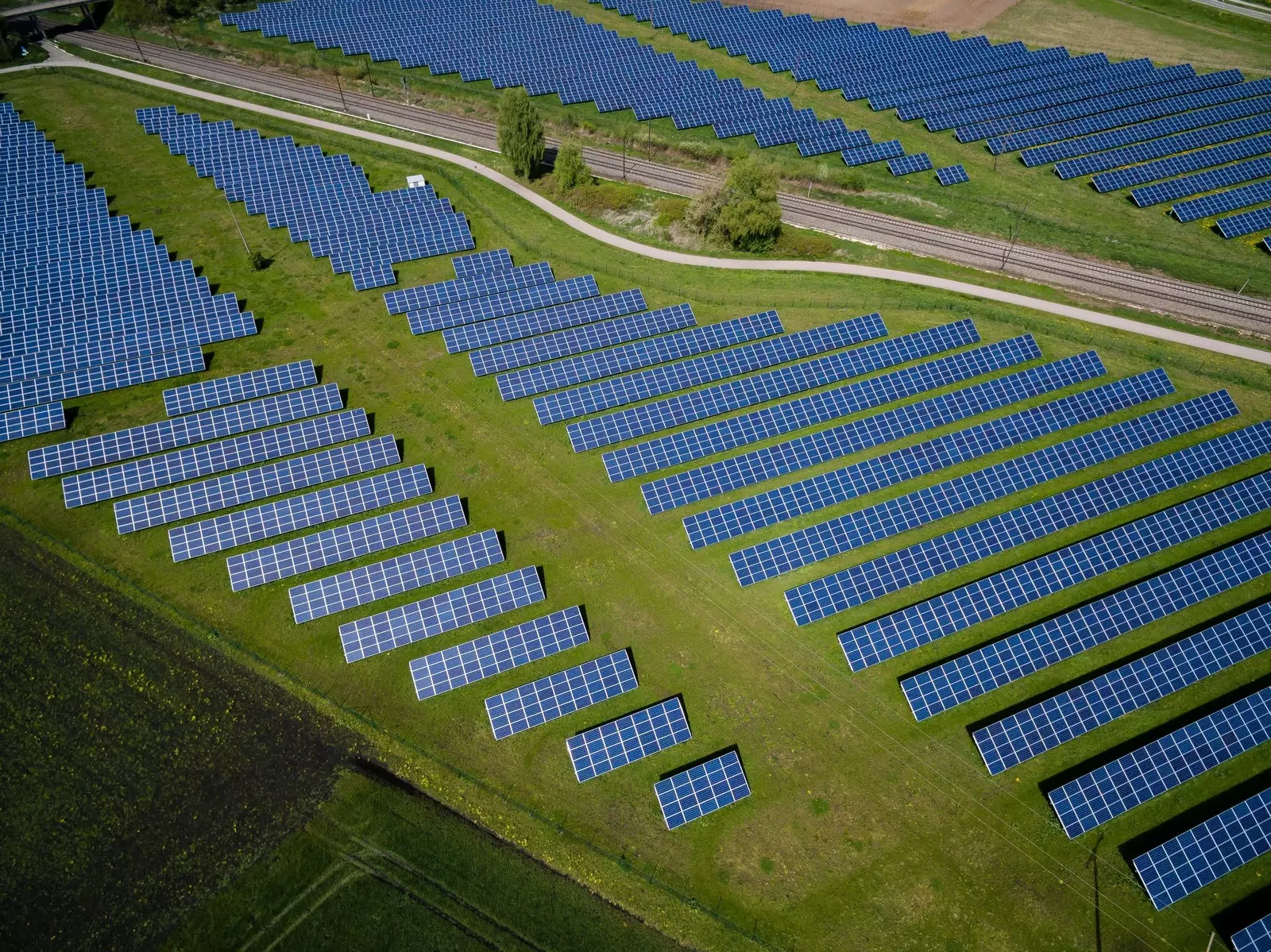
There are expected to be large job gains in grid modernization. Image: Unsplash/Andreas Gücklhorn
Omri Wallach

Reporter, Visual Capitalist

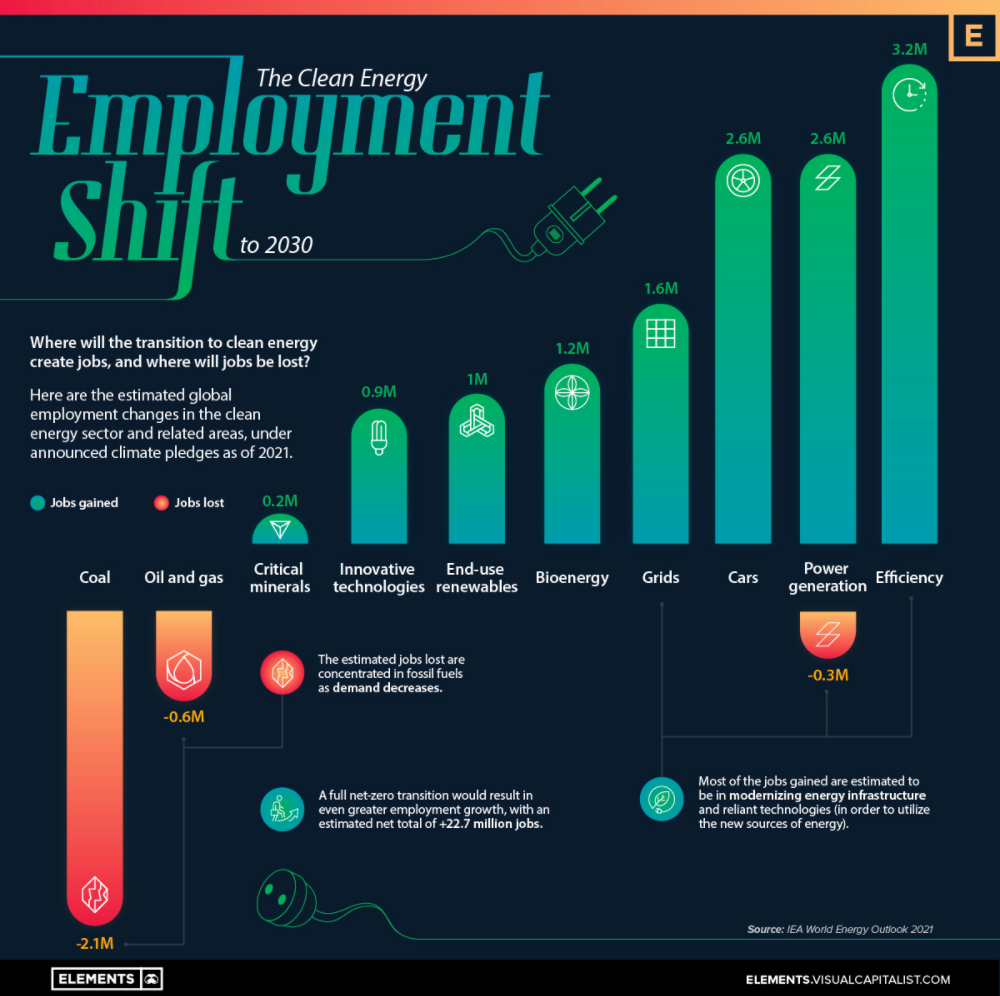
  • The transition to clean energy is expected to generate 10.3 million net new jobs globally by 2030.
  • That will offset the 2.7 million jobs expected to be lost in fossil fuel sectors.
  • Most of the anticipated job gains are likely to be in electrical efficiency, power generation and the automotive sector.
Over 1 million jobs in Bioenergy is expected to be gained Image: Visual Capitalist/IEA World Energy Outlook 2021

The Clean Energy Employment Shift, by 2030

With many countries and companies pledged to reduce emissions, the clean energy transition seems to be an inevitability. And that transition will undoubtedly have an impact on employment.

New sources of power don’t just require new and updated equipment, they also require people to operate them. And as demand for cleaner fuels shifts attention away from fossil fuels, it’s likely that not every sector will see a net gain of employment.

This graphic shows projected global employment growth in the clean energy sector and related areas, under announced climate pledges as of 2021, as tracked by the IEA’s World Energy Outlook.


Stay up to date:

Energy Transition

Follow

DISCOVER

What’s the World Economic Forum doing about the transition to clean energy? Show more

Which Sectors Will Gain Jobs By 2030?

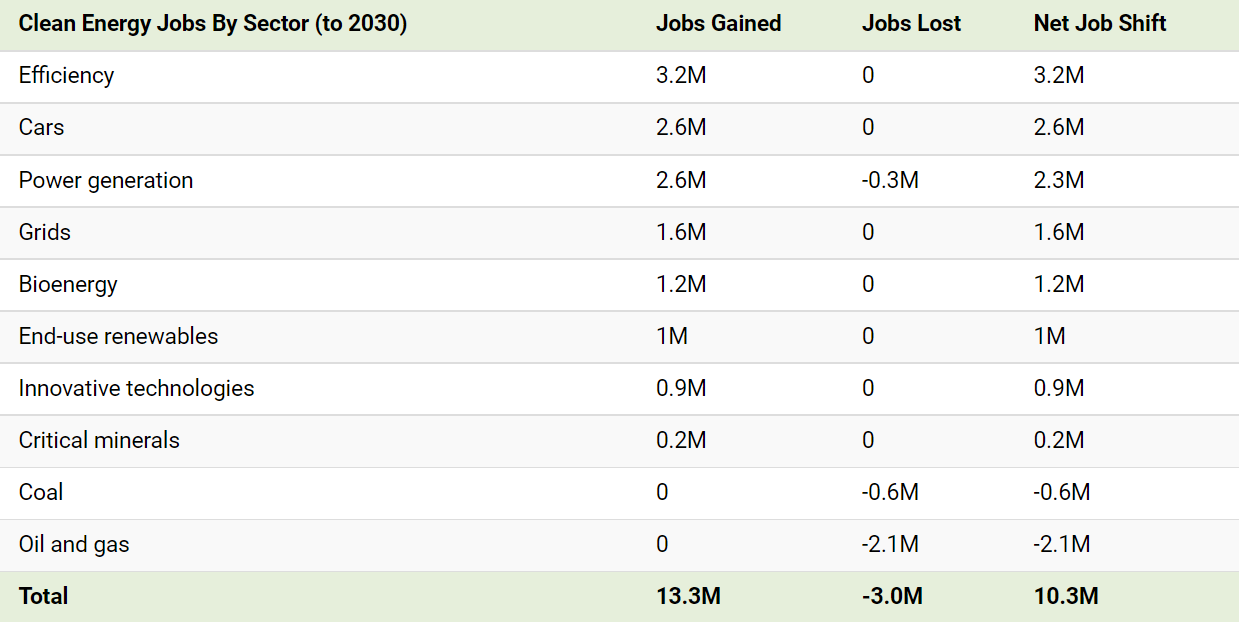
In total, the clean energy transition is expected to generate 10.3 million net new jobs around the world by 2030.

Though fuel generation will definitely be affected by the clean energy transition, the biggest impact will be felt in modernizing energy infrastructure:

Over 13 million jobs are expected to be gained Image: Visual Capitalist

In order to properly utilize the new sources of energy, the largest expected job gains are in electrical efficiency, power generation, and the automotive sector. Combined with modernizing the grid, they make up 75% of the 13.3 million in new job gains expected.

Comparatively, new energy sources like bioenergy, end-use renewables, and supply chain resources like innovative technologies and critical minerals combine for 3.3 million jobs. That offsets the 2.7 million jobs expected to be lost in fossil fuel sectors, plus an additional 0.3 million lost in power generation.

Have you read?

But it’s important to note that these expected employment changes are under announced climate pledges as of 2021. The IEA has calculated that in a full net-zero clean energy transition, the estimated quantity of jobs gained and lost would more than double across almost all sectors, with a net addition of 22.7 million new jobs.

Regardless of which path is closest to the reality, it’s clear the job landscape in energy and related sectors will be shifting in the coming years, and it will be interesting to see how and when such changes materialize.

Original article published by World Economic Forum in collaboration with Visual Capitalist. Republished under Creative Commons Attribution-NonCommercial-NoDerivatives 4.0 International Public License. [I’m trying to prevent your boy Starmer getting elected rich Davosers].

Continue ReadingENERGY TRANSITION