For the Cuban people, surrender is not an option

Spread the love

Original article by Manolo De Los Santos republished from peoples dispatch under a Creative Commons Attribution-ShareAlike 4.0 (CC BY-SA) license.
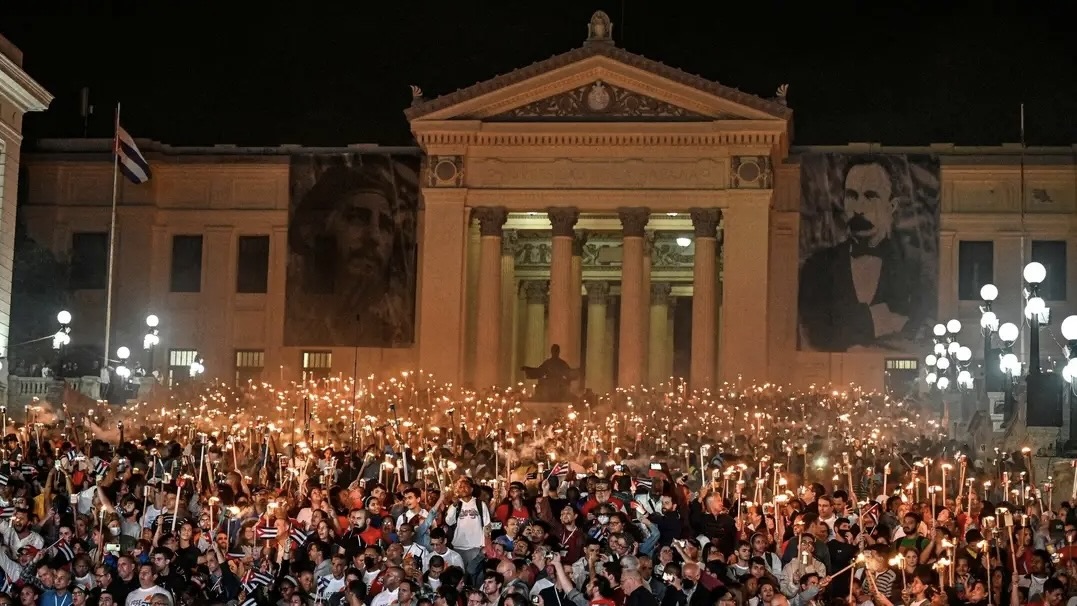
Thousands marched on January 26, 2026 in Havana, Cuba, to honor José Martí’s legacy. Photo: Progressive International

Claims by officials in Washington that “Cuba’s collapse is imminent” usually coincide with a tightening of the blockade. Yet, once again, Cubans have reaffirmed their commitment to the revolution and their creative resistance in the face of the latest US attacks.

The halls of power in Washington are echoing with a familiar, predatory chorus. Once again, the White House, various think-tank experts, and US politicians are predicting the “imminent collapse” of Cuba. This is a tune the world has heard for over sixty years, usually sung at its highest volume whenever the United States decides to tighten the economic noose around the island’s neck. However, in 2026, the rhetoric has shifted from sanctions to an overt campaign of total strangulation. Under a new executive order signed in late January, the second Trump administration has escalated the decades-long blockade into a proactive fuel blockade.

Cuban President Miguel Díaz-Canel laid bare the intended consequences in a press conference on February 5, 2026: “Not allowing a single drop of fuel to enter our country will affect transportation, food production, tourism, children’s education, and the healthcare system.” The objective is clear: to induce systemic failure, sow popular discontent, and create conditions for political destabilization. The White House rhetoric confirms this intent. Press Secretary Karoline Leavitt’s statement on the same day, that “the Cuban government is on its last leg and its country is about to collapse,” is not an analysis but public signaling, a psychological operation meant to reinforce the narrative of inevitable doom and pressure Cuban leadership into unilateral concessions.

This policy is not merely a “sanction” in the traditional sense; it is a calculated attempt to suffocate a nation by blocking every drop of fuel from reaching its shores. The administration has authorized aggressive tariffs and sanctions on any foreign country or company that dares to trade oil with the island, effectively treating Cuban territorial waters as a zone of exclusion. Since December, multiple oil tankers headed to Cuba have been seized by US naval forces in the Caribbean or forced to return to their ports of origin under threat of asset forfeiture. In direct response to this intensifying siege, Cuba has announced sweeping fuel rationing measures designed to protect essential services. The plan prioritizes fuel for healthcare, water, food production, education, public transportation, and defense, while strictly limiting sales to private drivers. To secure vital foreign currency, the tourism sector and key export industries, such as cigar production, will continue operating. Schools will maintain full in-person primary education, with hybrid systems implemented for higher levels. The leadership of the Cuban Revolution has affirmed that Cuba “will not collapse.”

To the planners in the White House, Cuba is a 67-year-old problem to be solved with starvation and darkness. But to the Cuban people, the current crisis is a continuation of a long-standing refusal to trade their sovereignty for Washington’s demands of submission.

The ghost of the “Special Period” 

To understand why the Cuban people have not descended into the chaos Washington predicted, one must look to the historical precedent of the “Special Period in Time of Peace.” Following the collapse of the Soviet Union in 1991, Cuba experienced an economic shock that would have toppled almost any other modern state. Overnight, the island lost 85% of its international trade and nearly all of its subsidized fuel imports. The resulting statistics were staggering: the Gross Domestic Product plummeted by 35%, and the daily caloric intake of the average citizen dropped from over 3,000 calories to roughly 1,800. During this era, the lights went out across the island for more than 16 hours a day, and the bicycle became the primary mode of transportation as the public transit system collapsed.

At the same time, Washington escalated its assault through the Torricelli Act (1992) and the Helms-Burton Law (1996), each tightening the noose around Cuba’s economy. However, instead of fracturing under the weight of this tightened blockade, Cubans developed “Option Zero”, a survival plan designed to keep hospitals running and children fed without any fuel, and the Cuban social fabric tightened. The government prioritized the distribution of remaining resources to the most vulnerable, ensuring that infant mortality rates remained lower than those in many parts of the United States despite the scarcity. This period proved that when a population is politically conscious of the external forces causing their suffering, they become extraordinarily resilient. The “Special Period” was not just a time of hunger; it was a period of forced innovation that gave rise to the world’s first national experiment in organic urban farming and mass-scale energy conservation.

The return of the energy crisis

The crisis of 2026 is, in many ways, a sequel to the 1990s, but with higher stakes and more advanced technological targets. The roots of the current energy shortage can be traced back to the first Trump administration’s decision in 2019 to target Cuban oil imports as a means of punishing the island for its solidarity with Venezuela. By designating Cuba as a “State Sponsor of Terrorism” and activating Title III of the Helms-Burton Act, the US successfully scared off international shipping lines and insurance companies. This was followed by a focused campaign against the PDVSA (Venezuela’s state oil company) and the shipping firms involved in the trade agreement between countries in the region known as ALBA-TCP.

By 2025, the impact on Cuba’s energy grid was catastrophic. The island’s thermal power plants, most of which were built with aging Soviet technology, were never designed to burn the heavy, sulfur-rich crude that Cuba produces domestically without constant maintenance and expensive imported additives. The lack of foreign exchange, caused by the tightening of the blockade, meant that spare parts were non-existent. By the time the 2026 fuel blockade began, the national grid was already operating at 25% below its required capacity. President Miguel Díaz-Canel has been transparent with the public, noting that without fuel, everything from the morning school bus to the refrigeration systems for the nation’s advanced biotech medicines is under constant threat, a reality that has now precipitated the stringent new rationing regime.

The threat of intervention: from Caracas to Havana

The current US stance toward Cuba cannot be viewed in isolation from its recent military interventions in the Middle East and Latin America. The “regime change” efforts in Cuba are being modeled after the maximum pressure campaigns used against Iran and the military incursions seen in Venezuela on January 3, 2026. The threat of a US military attack is no longer a rhetorical flourish used by Havana to drum up nationalism; it is a documented strategic option discussed in Washington.

The logic behind such an intervention is twofold. First, there is the ideological drive to eliminate the “contagion” of a country that questions the Monroe Doctrine and US domination in the region. Cuba’s existence serves as a reminder that sovereignty is possible even in the shadow of a superpower. Second, and more pragmatically, the US is motivated by a thirst for strategic minerals. Cuba sits on some of the world’s largest reserves of nickel and cobalt, essential components of lithium-ion batteries that power the global transition to electric vehicles and advanced weaponry. In a world where the US is scrambling to compete with China for control of the mineral and energy supply chain, a sovereign Cuba that controls its own mines is seen as an obstacle to American hegemony. If the US can force a collapse, these minerals would no longer belong to the Cuban people; they would be auctioned off to US corporations as it was before 1959.

The new resistance: extraordinary efforts in renewable energy

However, the Cuban response to this renewed strangulation is not a white flag of surrender. Recognizing that fossil fuel dependence is a vulnerability the US will always exploit, Cuba has, in recent years, launched an extraordinary national effort to transform its energy matrix. Building on this momentum, the country completed 49 new solar parks in 2025 alone. This massive undertaking added approximately 1,000 megawatts of power to the national grid, marking a 7% increase in total grid capacity and accounting for a remarkable 38% of the nation’s energy generation. By the end of March 2026, with support from China, the island is on track to add over 150 MW of renewable power to its grid through the rapid deployment of solar parks.

The strategy is clear: if the empire can shut off the oil, Cuba will harvest the sun. “The way the US energy blockade has been implemented reinforces our commitment to the renewable energy strategy,” President Miguel Díaz-Canel declared. The government has committed to a plan to generate 24% of the country’s electricity from renewable sources by 2030, with a long-term goal of achieving total energy independence. This involves not just large-scale solar farms, but the decentralization of the grid through the installation of thousands of small-scale solar panels on homes and state buildings. This “energy sovereignty” movement is the 21st-century equivalent of the 1990s urban gardens. It is a way of overcoming the US blockade by removing the very commodity, oil, that Washington uses as a leash.

The narrative of Cuba’s “imminent collapse” has been written a thousand times by people who do not understand the depth of the island’s historical memory. The 2026 fuel blockade is a brutal crime against a civilian population, designed to create the very chaos that the US media then reports on as “proof” of government failure. It is the arsonist blaming the house for being flammable. The newly imposed fuel rationing is not a sign of surrender, but a tactical maneuver of national defense, a structured effort to outlast the assault while safeguarding the pillars of Cuban society that precisely make it an alternative to the US model.

Yet, Cuba’s message to the world remains consistent. They are willing to talk and trade, but not to be owned or become a neo-colony of the United States. The story of Cuba is not one of a failed state, but of a people who have decided that the most potent fuel for their future isn’t oil, it’s the will to remain independent. As the sun rises over the new solar arrays in the Cuban countryside, it serves as a silent, glowing testament to a nation that refuses to disappear.

Manolo De Los Santos is Executive Director of The People’s Forum and a researcher at Tricontinental: Institute for Social Research. His writing appears regularly in Monthly Review, Peoples Dispatch, CounterPunch, La Jornada, and other progressive media. He coedited, most recently, Viviremos: Venezuela vs. Hybrid War (LeftWord, 2020), Comrade of the Revolution: Selected Speeches of Fidel Castro (LeftWord, 2021), and Our Own Path to Socialism: Selected Speeches of Hugo Chávez (LeftWord, 2023).

Original article by Manolo De Los Santos republished from peoples dispatch under a Creative Commons Attribution-ShareAlike 4.0 (CC BY-SA) license.

Donald Fuhrump says that Amerikkka doesn't bother with crimes or charges anymore, not being 100% Amerikkkan and opposing his real estate intentions is enough.
Donald Fuhrump says that Amerikkka doesn’t bother with crimes or charges anymore, not being 100% Amerikkkan and opposing his real estate intentions is enough.
Elon Musk urges you to be a Fascist like him, says that you can ignore facts and reality then.

Continue ReadingFor the Cuban people, surrender is not an option

Overshooting 1.5°C: even temporary warming above globally agreed temperature limit could have permanent consequences

Spread the love
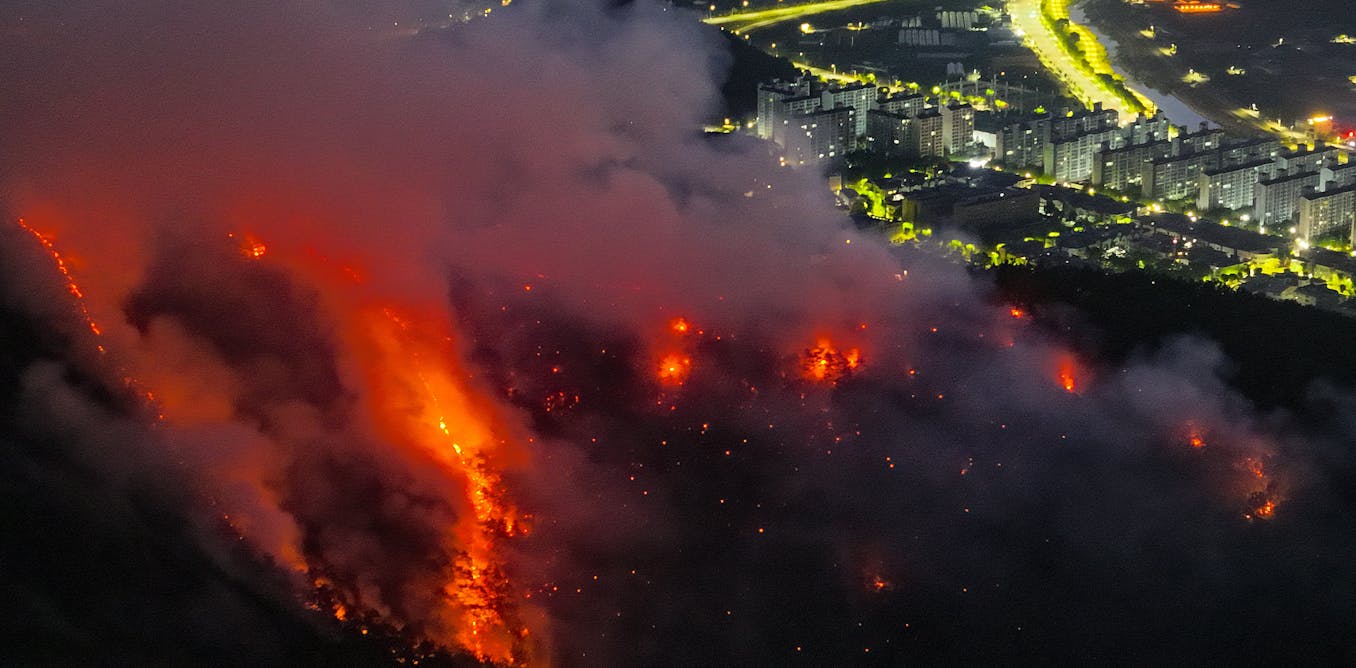
A wildfire raging near a residential area of Daegu, South Korea in April 2025. EPA-EFE/Yonhap

Paul Dodds, UCL

Earth’s surface temperature has been 1.5°C hotter than the pre-industrial average for 21 of the last 22 months.

The 2015 Paris agreement committed countries to keeping the global temperature increase “well below 2°C”, which is widely interpreted as an average of 1.5°C over a 30-year period. The Paris agreement has not yet failed, but recent high temperatures show how close the Earth is to crossing this critical threshold.

Climate scientists have, using computer simulations, modelled pathways for halting climate change at internationally agreed limits. However, in recent years, many of the pathways that have been published involve exceeding 1.5°C for a few decades and removing enough greenhouse gas from the atmosphere to return Earth’s average temperature below the threshold again. Scientists call this “a temporary overshoot”.

If human activities were to raise the global average temperature 1.6°C above the pre-industrial average, for example, then CO₂ removal, using methods ranging from habitat restoration to mechanically capturing CO₂ from the air, would be required to return warming to below 1.5°C by 2100.


Get your news from actual experts, straight to your inbox. Sign up to our daily newsletter to receive all The Conversation UK’s latest coverage of news and research, from politics and business to the arts and sciences.


Do we really understand the consequences of “temporarily” overshooting 1.5°C? And would it even be possible to lower temperatures again?

Faith that a temporary overshoot will be safe and practicable has justified a deliberate strategy of delaying emission cuts in the short term, some scientists warn. The dangers posed by remaining above the 1.5°C limit for a period of time have received little attention by researchers like me, who study climate change.

To learn more, the UK government commissioned me and a team of 36 other scientists to examine the possible impacts.

How nature will be affected

We examined a “delayed action” scenario, in which greenhouse gas emissions remain similar for the next 15 years due to continued fossil fuel burning but then fall rapidly over a period of 20 years.

We projected that this would cause the rise in Earth’s temperature to peak at 1.9°C in 2060, before falling to 1.5°C in 2100 as greenhouse gases are removed from the atmosphere. We compared this scenario with a baseline scenario in which the global temperature does not exceed 1.5°C of warming this century.

Our Earth system model suggested that Arctic temperatures would be up to 4°C higher in 2060 compared to the baseline scenario. Arctic Sea ice loss would be much higher. Even after the global average temperature was returned to 1.5°C above pre-industrial levels, in 2100, the Arctic would remain around 1.5°C warmer compared to the baseline scenario. This suggests there are long-term and potentially irreversible consequences for the climate in overshooting 1.5°C.

Comparative maps of global temperature increases in the middle of the century caused by overshooting 1.5°C, when compared to a pathway in which the global temperature does not exceed 1.5°C.
Temperature increases caused by overshooting 1.5°C are primarily felt in the Arctic and on land. Selena Zhang, Maria Russo, Luke Abraham and Alex Archibald.

As global warming approaches 2°C, warm-water corals, Arctic permafrost, Barents Sea ice and mountain glaciers could reach tipping points at which substantial and irreversible changes occur. Some scientists have concluded that the west Antarctic ice sheet may have already started melting irreversibly.

Our modelling showed that the risk of catastrophic wildfires is substantially higher during a temporary overshoot that culminates in 1.9°C of warming, particularly in regions already vulnerable to wildfires. Fires in California in early 2025 are an example of what is possible when the global temperature is higher.

Our analysis showed that the risk of species going extinct at 2°C of warming is double that at 1.5°C. Insects are most at risk because they are less able to move between regions in response to the changing climate than larger mammals and birds.

The impacts on society

Only armed conflict is considered by experts to have a greater impact on society than extreme weather. Forecasting how extreme weather will be affected by climate change is challenging. Scientists expect more intense storms, floods and droughts, but not necessarily in places that already regularly suffer these extremes.

In some places, moderate floods may reduce in size while larger, more extreme events occur more often and cause more damage. We are confident that the sea level would rise faster in a temporary overshoot scenario, and further increase the risk of flooding. We also expect more extreme floods and droughts, and for them to cause more damage to water and sanitation systems.

Floods and droughts will affect food production too. We found that impact studies have probably underestimated the crop damage that increases in extreme weather and water scarcity in key production areas during a temporary overshoot would cause.

We know that heatwaves become more frequent and intense as temperatures increase. More scarce food and water would increase the health risks of heat exposure beyond 1.5°C. It is particularly difficult to estimate the overall impact of overshooting this temperature limit when several impacts reinforce each other in this way.

In fact, most alarming of all is how uncertain much of our knowledge is.

For example, we have little confidence in estimates of how climate change will affect the economy. Some academics use models to predict how crops and other economic assets will be affected by climate change; others infer what will happen by projecting real-word economic losses to date into future warming scenarios. For 3°C of warming, estimates of the annual impact on GDP using models range from -5% to +3% each year, but up to -55% using the latter approach.

We have not managed to reconcile the differences between these methods. The highest estimates account for changes in extreme weather due to climate change, which are particularly difficult to determine.

We carried out an economic analysis using estimates of climate damage from both models and observed climate-related losses. We found that temporarily overshooting 1.5°C would reduce global GDP compared with not overshooting it, even if economic damages were lower than we expect. The economic consequences for the global economy could be profound.

So, what can we say for certain? First, that temporarily overshooting 1.5°C would be more costly to society and to the natural world than not overshooting it. Second, our projections are relatively conservative. It is likely that impacts would be worse, and possibly much worse, than we estimate.

Fundamentally, every increment of global temperature rise will worsen impacts on us and the rest of the natural world. We should aim to minimise global warming as much as possible, rather than focus on a particular target.


Don’t have time to read about climate change as much as you’d like?
Get a weekly roundup in your inbox instead. Every Wednesday, The Conversation’s environment editor writes Imagine, a short email that goes a little deeper into just one climate issue. Join the 45,000+ readers who’ve subscribed so far.


Paul Dodds, Professor of Energy Systems, UCL

This article is republished from The Conversation under a Creative Commons license. Read the original article.

Orcas comment on killer apes destroying the planet by continuing to burn fossil fuels.
Neo-Fascist Climate Science Denier Donald Trump says Burn, Baby, Burn.
Elon Musk urges you to be a Fascist like him, says that you can ignore facts and reality then.
Continue ReadingOvershooting 1.5°C: even temporary warming above globally agreed temperature limit could have permanent consequences

How the weather got ‘stuck’ over the UK – and produced an unusually dry and warm spring

Spread the love
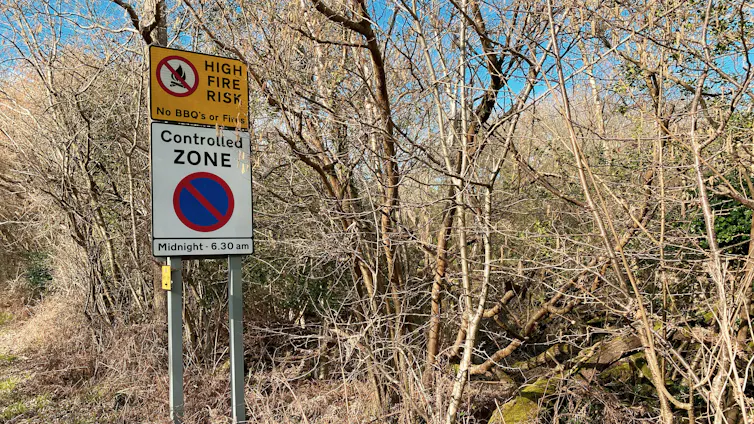
Wildfires have ignited in forests and on moorland across the UK in recent months. LSP EM/Shutterstock

Simon H. Lee, University of St Andrews and Matthew Patterson, University of St Andrews

A “blocking” weather system lingering high above the UK has produced one of the driest, warmest and brightest starts to spring on record.

April 2025 was the sunniest since records began in 1910. This followed the third-sunniest March, and both months saw temperatures well above average nationwide. On May 1, the temperature reached 29.3°C in Kew Gardens in London – a new record for the date.

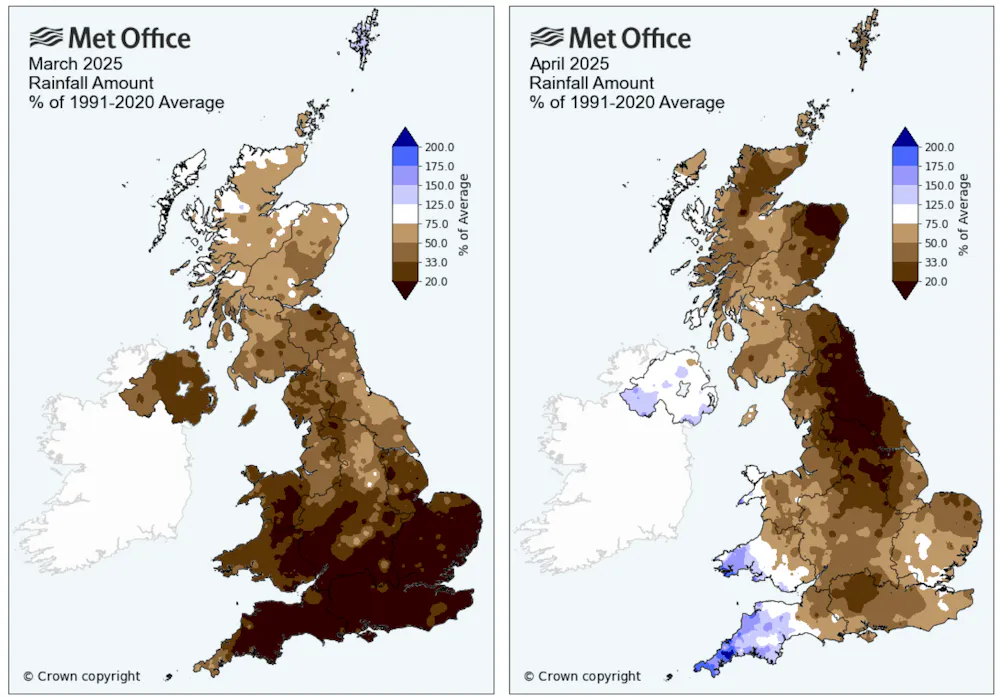
Meteorologists are warning of the potential for a summer drought, as the UK has seen roughly half its usual amount of rainfall for March and April. While farmers fret about this year’s harvest, some water companies are urging customers to help reservoir levels recover by limiting water use.

Meanwhile, wildfires have engulfed forest and moorland in areas of Scotland, Wales and England.

Two maps of the UK, showing mostly dark brown colours which indicate rainfall below 50% of normal.
Most of the UK has experienced a record-dry spring so far. Met Office

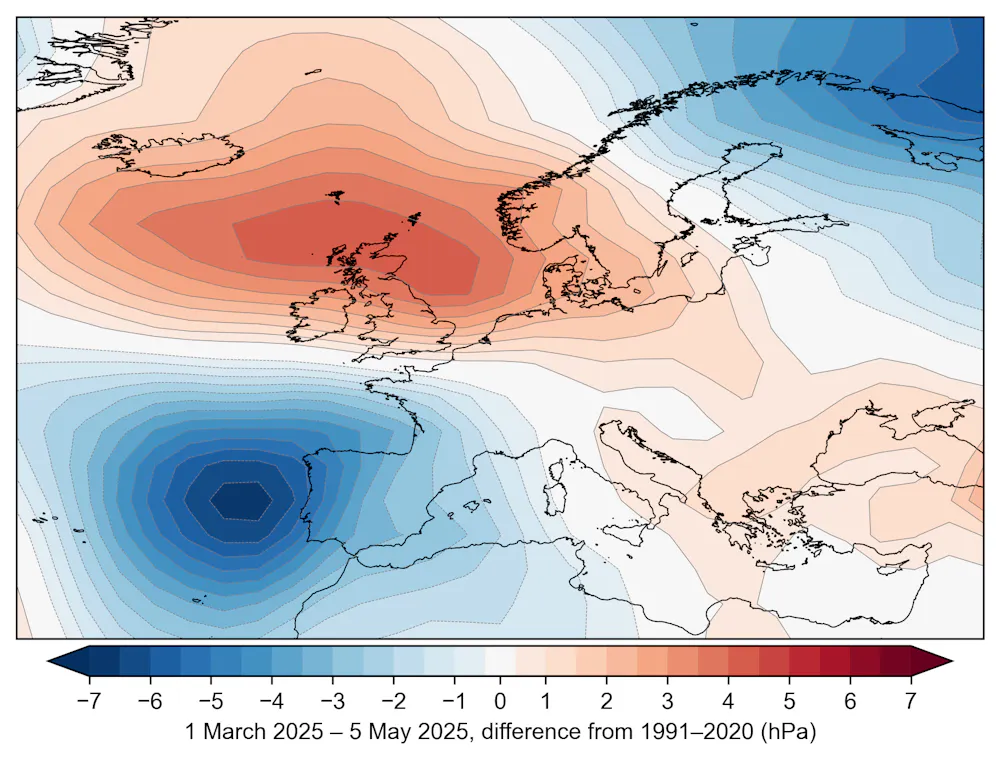
For several weeks, a stubborn area of high pressure over the UK has diverted the usual flow of mild, moist air from the North Atlantic like a boulder in a river. This is known as a blocking weather system.

Within it, air descends, warms and dries, which is why this weather pattern tends to be linked to heatwaves and drought. Blocking is usually persistent, making it seem like the weather is stuck.

Here’s how climate change may have played a role in setting up this unusual spring.


Get your news from actual experts, straight to your inbox. Sign up to our daily newsletter to receive all The Conversation UK’s latest coverage of news and research, from politics and business to the arts and sciences. Join The Conversation for free today.


The human fingerprint

The warming climate means that unusually warm weather is occurring more often and becoming more intense. At the same time, we can expect more periods of both severe drought and extreme rainfall. Sudden changes from drought to deluge, termed “weather whiplash”, are due to the intensification of the water cycle in a warmer atmosphere that can hold more water vapour.

However, certain weather patterns are necessary to produce extreme weather. More blocking events in future could increase the chance of heatwaves or drought. But are blocking weather patterns becoming more common?

It’s difficult to determine how weather patterns will change as a result of the rising concentration of greenhouse gases in the atmosphere, which is predominantly caused by the burning of fossil fuels.

Part of the difficulty arises from the fact that weather patterns vary year to year. Several years in a row with more blocking events than usual could make it seem like blocking is increasing due to climate change, but it could simply be down to chance.

As a result, it is difficult to detect the fingerprint of human activity from weather observations alone. For example, blocking weather patterns over Greenland during summer have happened more often in recent decades, which can enhance the melting of the ice sheet. But it isn’t clear that this trend is the result of human-induced climate change.

Climate models do suggest future changes in the occurrence of blocking, however. These computer simulations, consisting of equations that describe the fundamental physics of the atmosphere, are the main tool scientists use to perform experiments that parse how the climate will behave in future.

A map of pressure anomalies over Europe.
The blocking system is visible in the area of high pressure over Britain and Ireland. National Centers for Environmental Prediction/National Center for Atmospheric Research/NOAA Physical Sciences Laboratory, CC BY

When scientists run climate model simulations with increased greenhouse gas concentrations the results consistently show a decrease in blocking events. But blocking generally happens more often in real life than model simulations, which reduces the confidence scientists have in future projections.

Keeping track of the jet stream

The movement of weather systems in Earth’s mid-latitudes – including over the UK – is linked to the jet stream, which is a fast-flowing river of air driven by the contrast in temperature between the poles and mid-latitudes.

Some researchers have suggested that, because the Arctic is warming faster than the tropics, the jet stream may weaken and become more “wavy”, increasing the occurrence of blocking events, contrary to what most climate models show.

Outside of the scientific community, this idea has become popular. However, the hypothesis remains controversial among scientists, and observational evidence has weakened in recent years.

In fact, around ten kilometres above the Earth’s surface, near commercial aircraft cruising altitudes, the opposite trends are occurring: the temperature difference between the Arctic and mid-latitudes is increasing, acting to increase the strength of the jet stream.

There are considerable challenges with understanding how climate change is affecting the large-scale atmospheric patterns which drive the weather we experience. These include large natural variability and imperfect climate models. Models mostly suggest a decline in blocking events with climate change, though this remains relatively uncertain compared with other aspects of the science.

Overall, we can be confident that climate change is bringing warmer conditions in all seasons. Scientists also have strong evidence to suggest that drought conditions will become more common. These changes are already affecting food production, energy generation and water availability and these impacts will continue to worsen with climate change.


Don’t have time to read about climate change as much as you’d like?
Get a weekly roundup in your inbox instead. Every Wednesday, The Conversation’s environment editor writes Imagine, a short email that goes a little deeper into just one climate issue. Join the 45,000+ readers who’ve subscribed so far.


Simon H. Lee, Lecturer in Atmospheric Science, University of St Andrews and Matthew Patterson, Research Fellow in climate and machine learning, University of St Andrews

This article is republished from The Conversation under a Creative Commons license. Read the original article.

Continue ReadingHow the weather got ‘stuck’ over the UK – and produced an unusually dry and warm spring

Privatizing Syria: US Plans to Sell Off a Nation’s Wealth After Assad

Spread the love

Original article by Kit Klarenberg republished from Mint Press News under a Creative Commons Attribution-NonCommercial-ShareAlike 3.0 International License.

Feature photo | Illustration by MintPress News

In the immediate wake of the Syrian government’s abrupt collapse, much remains uncertain about the country’s future – including whether it can survive as a unitary state or will splinter into smaller states as did Yugoslavia in the early 1990s, a move that ultimately led to a bloody NATO intervention. Moreover, who or what may take power in Damascus remains an open question. For the time being at least, members of ultra-extremist Hayat Tahrir al-Sham (HTS) appear highly likely to take key positions in whatever administrative structure sprouts from Bashar Assad’s ouster after a decade-and-a-half of grinding Western-sponsored regime change efforts.

As Reuters reported on December 12, HTS is already “stamping its authority on Syria’s state with the same lightning speed that it seized the country, deploying police, installing an interim government and meeting foreign envoys.” Meanwhile, its bureaucrats – “who until last week were running an Islamist administration in a remote corner of Syria’s northwest” – have moved en masse “into government headquarters in Damascus.” Mohammed Bashir, head of HTS’ “regional government” in extremist-occupied Idlib, has been appointed the country’s “caretaker prime minister.”

However, despite the chaos and precariousness of post-Assad Syria, one thing seems assured – the country will be broken open to Western economic exploitation, at long last.

Multiple reports show that HTS has informed local and international business leaders that when in office, it will “adopt a free-market model and integrate the country into the global economy, in a major shift from decades of corrupt state control.”

As Alexander McKay of the Marx Engels Lenin Institute tells MintPress News, state-controlled parts of Syria’s economy may have been under Assad, but corrupt it wasn’t. He believes a striking feature of the ongoing attacks on Syrian infrastructure from forces within and without the country is that economic and industrial sites are a recurrent target. Moreover, the would-be HTS-dominated government has done nothing to counter these broadsides when “securing key economic assets will be vital to societal reconstruction, and therefore a matter of priority”:

We can see clearly what kind of country these ‘moderate rebels’ plan to build. Forces like HTS are allied with U.S. imperialism, and their economic approach will reflect this. Prior to the proxy war, the government pursued an economic approach that mixed public ownership and market elements. State intervention enabled a degree of political independence [that] other nations in the region lack. Assad’s administration understood without an industrial base, being sovereign is impossible. The new ‘free market’ approach will see all of that utterly decimated.”

‘Reconstruction Project’

Syria’s economic independence and strength under Assad’s rule and the benefits reaped by average citizens, as a result, were never acknowledged in the mainstream before or during the decade-long proxy war. Yet, countless reports from major international institutions underline this reality – which has now been brutally vanquished, never to return. For example, an April 2015 World Health Organization document noted how Damascus “had one of the best-developed healthcare systems in the Arab world.”

Per a 2018 U.N. investigation, “universal, free healthcare” was extended to all Syrian citizens, who “enjoyed some of the highest levels of care in the region.” Education was likewise free, and before the conflict, “an estimated 97% of primary school-aged Syrian children were attending class, and Syria’s literacy rates were thought to be at over 90% for both men and women [emphasis added].” By 2016, millions were out of school.

A U.N. Human Rights Council report two years later noted pre-war Syria “was the only country in the Middle East region to be self-sufficient in food production,” its “thriving agricultural sector” contributing “about 21%” to GDP 2006 – 2011. Civilians’ daily caloric intake “was on par with many Western countries,” with prices kept affordable via state subsidy. Meanwhile, the country’s economy was “one of the best performing in the region, with a growth rate averaging 4.6%” annually.

At the time that report was written, Damascus had been reduced to heavy reliance on imports by Western sanctions in many sectors and, even then, was barely able to buy or sell much in the way of anything, as the measures amounted to an effective embargo. Simultaneously, the U.S. military occupation of a resource-rich third of Syria cut off the government’s access to its own oil reserves and wheat. The situation would only worsen with the Caesar Syria Civilian Protection Act’s passing in June 2020.

Under its auspices, a vast volume of goods and services in every conceivable field were and today remain banned from being sold to or traded with any Syrian citizen or entity. The legislation’s terms explicitly state preventing attempts to rebuild Syria was its chief objective. One passage openly outlines “a strategy to deter foreign persons from entering into contracts related to reconstruction.”

Immediately after coming into effect, the Syrian pound’s value collapsed further, sending living costs skyrocketing. In a blink, almost the entire country’s population was left barely able to afford even the bare essentials. Even mainstream sources typically approving of belligerence towards Damascus cautioned of an inevitably impending humanitarian crisis. However, Washington was neither concerned nor deterred by such warnings. James Jeffrey, State Department chief of Syria policy, actively cheered these developments.

Simultaneously, as Jeffrey subsequently admitted to PBS, the U.S. was engaged in frequent, secret communication with HTS and actively assisting the group – albeit “indirectly” due to the faction’s designation as a terrorist entity by the State Department. This followed direct approaches to Washington by its leaders, including Abu Mohammed Jolani, former leader of Al Qaeda affiliate al-Nusra. “We want to be your friend. We’re not terrorists. We’re just fighting Assad,” HTS reportedly said.

Given this contact, it may be no coincidence that in July 2022, Jolani issued a series of communications about HTS’ plans for future Syria, containing multiple passages in which finance and industry loomed large. Directly foreshadowing the group’s recent pledge to “adopt a free-market model,” the extremist mass murderer discussed his desire to “open up local markets to the global economy.” Many passages read as if they were authored by representatives of the International Monetary Fund.

Coincidentally, Syria, since 1984, has refused IMF loans, a key tool by which the U.S. Empire maintains the global capitalist system and dominates the Global South, ensuring ‘poor’ countries remain under its heel. The World Trade Organization, of which Damascus isn’t a member either, plays a similar role. Accession to both would go some way to cementing the “free-market model” advocated by HTS. After over a decade of deliberate, systematic economic ruin, geopolitical risk analyst Firas Modad tells MintPress News:

They have no choice. They need Turkish and Qatari backing, so [they] will need to liberalize. They have no capital whatsoever. The country is in ruins and they desperately need investment. Plus, they hope liberalizing may attract some Saudi, Emirati or Egyptian interest. It’s impossible for Syria to rebuild using its own resources. The civil war might resume. They are acting out of necessity.”

‘Shock Therapy’

In Syria’s protracted political and economic dismantling, there are eerie echoes of the U.S. Empire’s destruction of Yugoslavia throughout the 1990s. During that decade, the multiethnic socialist federation’s breakup produced bitter wars of independence in Bosnia, Croatia and Slovenia – encouraged, financed, armed, and prolonged every step by Western powers. Belgrade’s perceived centrality to these brutal conflicts and purported complicity in and sponsorship of horrendous war crimes led the U.N. Security Council to impose sanctions against what remained of the country in May 1992.

The measures were the harshest ever levied in U.N. history. At one point, producing inflation of 5.578 quintillion percent, drug abuse, alcoholism, preventable deaths and suicides skyrocketed, while shortages of goods – including water – were perpetual. Yugoslavia’s once thriving independent industry was crippled, its ability to manufacture even everyday medicines virtually non-existent. By February 1993, the CIA assessed that the average citizen had “become accustomed to periodical shortages, long lines in stores, cold homes in the winter and restrictions on electricity.”

Surveying the wreckage years later, Foreign Affairs noted that sanctions against Yugoslavia demonstrated how “in a matter of months or years whole economies can be devastated,” and such measures can serve as uniquely lethal “weapons of mass destruction” against civilian populations of target countries. Yet, despite such desolation and misery, throughout this period, Belgrade remained resistant to privatization and foreign ownership of its industry or to the pillaging of its vast resources. The overwhelming majority of Yugoslavia’s economy was state- or worker-owned.

Yugoslavia was not a member of the IMF, World Bank, or WTO, which went some way to insulate the country from economic predation. In 1998, though, authorities began waging a heavy-handed counterinsurgency against the Kosovo Liberation Army, a CIA and MI6-funded and armed al-Qaeda-linked extremist militia. This provided the U.S. Empire with a pretext to, at last, finish the job of neutralizing what remained of the country’s socialist system. As a Clinton administration official later admitted:

It was Yugoslavia’s resistance to the broader trends of political and economic reform [in Eastern Europe] – not the plight of Kosovar Albanians – that best explains NATO’s war.”

From March – June 1999, the military alliance bombed Yugoslavia for 78 straight days. Yet, Belgrade’s army was barely in the firing line at any stage. In all, officially, just 14 Yugoslav tanks were destroyed by NATO, but 372 separate industrial facilities got smashed to smithereens, leaving hundreds of thousands jobless. Markedly, the alliance took guidance from U.S. corporations on which sites to target, and not a single foreign- or privately-owned factory was hit.

NATO’s bombing laid the foundations for Yugoslav leader Slobodan Milosevic’s removal via a C.I.A.- and National Endowment for Democracy-sponsored color revolution in October of the following year. In his place, a doggedly pro-Western government advised by a collective of U.S.-sponsored economists took power. Their explicit mission was to “make an economic environment favorable for private and other investments” in Belgrade. Ravaging “shock therapy” measures were deployed the moment they assumed office, to the further detriment of an already immiserated and impoverished population.

In the decades since successive Western-backed governments across the former Yugoslavia have enforced an endless array of neoliberal “reforms” to ensure an “investor-friendly” environment locally for wealthy Western oligarchs and corporations. In lockstep, low wages and a lack of employment opportunities stubbornly endure or worsen while living costs rise, producing mass depopulation, among other destructive effects. All along, U.S. officials intimately implicated in the country’s breakup have brazenly sought to enrich themselves from the privatization of former state industries.

‘Internal Repression’

Does such a fate await Damascus? For Pawel Wargan, founder of the Green New Deal for Europe, the answer is a resounding “yes.” He believes the country’s story is familiar “to those who study the mechanisms of imperialist expansion.” Once its defenses are fully neutralized, he foresees the country’s industries being “bought-up at bargain sale prices as part of market ‘reforms,’ which transfer yet another chunk of humanity’s wealth to Western corporations”:

We’ve witnessed the well-rehearsed choreography of imperialist regime change: a ‘tyrant’ is overthrown; backers of national sovereignty are systematically and viciously repressed; with tremendous, but hidden, violence, the country’s assets are chopped and diced and sold to the lowest bidder; labor protections are discarded; human lives are cut short. The most predatory forms of capitalism take root in every crevice and pore that emerges in the collapse of the state. This is the agenda of structural adjustment policies enforced by the World Bank and IMF.”

Alexander McKay echoes Wargan’s analysis. Now “free,” Syria will be forcedly made “dependent upon imports from the West” evermore. This not only fattens the Empire’s bottom line but “also severely restricts the freedom of any Syrian government to act with any degree of independence.” He notes similar efforts have been undertaken throughout the post-1989 era of U.S. unipolarity. It was well underway in Russia during the 1990s “until the slow turn around in policy started in the early 2000s under Putin”:

The aim is to reduce Syria to the same status as Lebanon, with an economy controlled by imperial forces, an army used primarily for internal repression, and an economy no longer able to produce anything but merely serve as a market for commodities produced elsewhere, and site of resource extraction. The U.S. and its allies do not want independent development of any nation’s economy. We must hope the Syrian people can resist this latest act of neo-colonialism.”

Kit Klarenberg is an investigative journalist and MintPress News contributor exploring the role of intelligence services in shaping politics and perceptions. His work has previously appeared in The Cradle, Declassified UK, and Grayzone. Follow him on Twitter @KitKlarenberg.

Original article by Kit Klarenberg republished from Mint Press News under a Creative Commons Attribution-NonCommercial-ShareAlike 3.0 International License.

Continue ReadingPrivatizing Syria: US Plans to Sell Off a Nation’s Wealth After Assad