One expert called Nigel Farage’s policies a contract to “bankrupt Britain and condemn future generations to climate catastrophe”.
Nigel Farage’s Reform UK, which is funded by climate science deniers and fossil fuel interests, has launched its manifesto with a pledge to expand oil and gas exploration and open new coal mines.
The document repeats the party’s policy to “scrap net zero”, the UK’s legally-binding target to reduce greenhouse gas emissions. It says Reform would “fast-track licences of North Sea gas and oil” and introduce two-year “test sites” for the controversial practice of fracking for shale gas, followed by “major production when safety is proven”.
It says Reform would “increase and incentivise UK lithium mining for electric batteries, combined cycle gas turbines, clean synthetic fuel and clean coal mining”.
Coal emits the most carbon dioxide (CO2) of any fossil fuel. The world’s foremost climate science body, the UN’s Intergovernmental Panel on Climate Change (IPCC), has stated that stated that carbon dioxide “is responsible for most of global warming” since the late 19th century, which has increased the “severity and frequency of weather and climate extremes, like heat waves, heavy rains, and drought”.
The International Energy Agency (IEA) has said that any new fossil fuel projects would be incompatible with limiting warming to 1.5°C.
Earlier this month, DeSmog revealed that Reform had received more than £2.3 million from oil and gas interests, highly polluting industries, and climate science deniers since December 2019 – amounting to 92 percent of the party’s donations during that period.
Reform’s manifesto also says it would impose billions of pounds’ worth of taxes on renewable energy, claiming that renewables have increased energy bills. The party says that scrapping net zero would save the UK £30 billion a year – a claim that contradicts the views of scientists and economists.
The Climate Change Committee, which advises the government on its net zero policies, has estimated that the cost of achieving net zero will be less than 1 percent of the UK’s annual economic output. The government independent spending watchdog – the Office for Budget Responsibility – has said that, “the costs of failing to get climate change under control would be much larger than those of bringing emissions down to net zero”.
Ed Matthew, campaigns director at the energy think tank E3G, said: “Nigel Farage’s pitch to obliterate net zero investment would damage the UK’s economic recovery and keep UK households hooked on high-cost gas.
“Net zero is the economic opportunity of the century. Farage is a climate change denier, in the pocket of fossil fuel vested interests, and he has presented a ‘contract’ to bankrupt Britain and condemn future generations to climate catastrophe.”
Dirty Donors
Reform has received a fortune from wealthy donors who either deny climate science or have interests in polluting industries.
Since 2019, Reform has received more than £1.1 million in donations from Richard Tice, the party’s former leader and current chairman, plus more than 50 loans collectively worth around £1.4 million from a Tice-owned company called Tisun Investments.
Tice is one of the UK’s most prominent climate science deniers, using his presenting role on the right-wing broadcaster GB News to attack net zero policies and the science behind them. Tice has claimed that “there is no climate crisis” and expressed the view that “CO2 isn’t a poison. It’s plant food”.
Reform has received more than £500,000 since the last general election from Jeremy Hosking, whose investment firm Hosking Partners had more than $134 million (around £108 million) invested in the energy sector at the close of 2021, two thirds of which was in the oil industry, along with millions in coal and gas.
Hosking previously told DeSmog: “I do not have millions in fossil fuels; it is the clients of Hosking Partners who are the beneficiaries of these investments.”
Farage also has a history of denying the science of climate change and attacking green policies. Speaking on GB News in August 2021, he said that he was “very much an environmentalist” and that he couldn’t “abide things like plastics in our seas, pollution in our rivers.” However, on the issue of climate change, he added: “What annoys me though, is this complete obsession with carbon dioxide almost to the exclusion of everything else, the alarmism that comes with it, based on dodgy predictions and science.”
The IPCC has stated that it is “unequivocal that human influence has warmed the atmosphere, ocean and land”.
Reform has also received £200,000 from First Corporate Consultants, a firm owned by Terence Mordaunt, a director and former chair of the Global Warming Policy Foundation (GWPF), the UK’s leading climate science denial group.
‘Problematic’ Policies
Reform’s previous manifesto, which was on the party’s website as of last week, said the government’s windfall tax on oil and gas companies should be “scrapped”. It is not clear whether this is still Reform policy, as it does not appear in the new manifesto.
“Everyone can see that the oil and gas companies have raked in billions in profits since the start of the energy crisis and that it is the soaring price of gas – and our high dependency on it – that lies at the root of our high energy bills”, said Tessa Khan, executive director of environmental campaign group Uplift.
She added: “Our energy system is broken, but the only way to fix it is to phase out gas, not double down on new drilling, while scrapping support for insulation and renewables, as Reform is proposing.”
Analysis by the independent research group, the Institute for Fiscal Studies (IFS), today called the numbers in Reform’s manifesto “problematic”, adding: “Spending reductions would save less than stated, and the tax cuts would cost more than stated, by a margin of tens of billions of pounds per year.”
In May, a Reform spokesperson told DeSmog: “Climate change is real, Reform UK believes we must adapt, rather than foolishly think you can stop it.
“We are proud to be the only party to understand that economic growth depends on cheap domestic energy and we are proud that we are the only party that are climate science realists, realising you can not stop the power of the sun, volcanoes or sea level oscillation.”
In May, DeSmog revealed that the Conservative Party had received £8.4 million from fossil fuel interests, highly polluting industries, and climate science deniers since the 2019 election. The party received an additional £225,000 from fossil fuel interests during the first week of the 2024 campaign – equivalent to 40 percent of its funding during this period.
An investigation last week mapped the Conservatives’ ties to a network of climate denial and fossil fuel interests, and the party last week launched its manifesto by promising to issue more oil and gas licences.
Regardless of who wins next month, fossil fuel interests have multiple levers for influencing policy.
The UK is heading to the polls on July 4. Although it doesn’t get enough attention, the two major parties — the Conservatives and Labour — have chosen climate change and, in particular, fossil fuel production in the North Sea as a clear political dividing line for the electorate.
As polling day draws closer, and election fervour takes hold, we will see the forces of British climate obstruction in full effect. Influential individuals, organisations and media outlets that seek to block, dilute, delay, or even reverse climate policies will attempt to widen that political dividing line with a mixture of claims to be defending individual freedoms, putting growth first, being ‘climate realists’, or by displacing concerns about the UK’s responsibility to act on climate change through ‘whataboutism’.
The Conservative government, under Prime Minister Rishi Sunak, has pushed ahead with issuing hundreds of new oil and gas licences in the North Sea. The government was due to further reform the licensing regime so permits are handed out on an annual basis, all under the auspices of ‘energy security’, but the election has halted the bill’s progress through Parliament. Future licences are expected to yield just three weeks’ worth of gas per year.
Sir Keir Starmer’s Labour Party, however, announced that it will end new licensing for oil and gas in the North Sea, with the very large caveat of honouring those already approved. But even this announcement ignited fierce resistance from the media, trade unions, Labour’s political opponents and some figures it deemed allies. The plan was labelled as “Thatcher on steroids”, “naive”, and risked “creating a cliff-edge” for industry and investment in and around the North Sea. In response to the vitriol, Starmer conceded that fossil fuels will continue to be used in the UK “for many, many years”.
This episode provides a useful insight into how climate obstructionism operates in the UK. In a new publication for the Climate Social Science Network (CSSN) based at Brown University, alongside Dr Ruth McKie and Dr James Painter, we identified three major channels through which obstructionism operates in Britain and the network of organisations that sustain it.
Financial Power
The first is the material. This speaks to the financial and structural power of the fossil fuel industry that allows it to use threats of capital flight and job losses to curry favourable policy conditions and fend off tax hikes that would dent profitability. It also speaks to party donations, where fossil fuel firms, or those that benefit from their expansion, provide funds to individual politicians or the wider party for access and a say over policy.
Since 2019, the Conservatives have received £8.4 million in donations from big polluters and those with direct links to fossil fuel production. The current Energy Security and Net Zero Secretary, Claire Coutinho, accepted a £2,000 donation in January 2024 from Lord Michael Hintze, a funder of the UK’s leading climate science denial group, the Global Warming Policy Foundation. Labour too have taken money from big polluters, most notably Drax, whose North Yorkshire power plant is the UK’s single largest source of emissions.
Alongside the material sits the institutional. The policy making process in the UK provides a multitude of opportunities for actors to shape policy, all within the bounds of proper procedure and due process. All Party Parliamentary Groups (APPGs), informal groups of politicians organised around key themes or policy issues, have provided an effective fora for obstructionist actors to garner access and shape policy. The rules governing APPGs often inhibit public scrutiny. Trade associations, and the companies they represent, can be omitted from official parliamentary transparency logs as only benefits in kind above £1,500 a year must be declared — a threshold many industry bodies claim not to meet.
Revolving doors between industry and government are another institutional means through which fossil fuel interests can determine policy. An investigation by The Ferret found that since 2011, 127 former oil and gas employees have gone into top government roles and been appointed to ministerial advisory boards. At least a dozen of these individuals were given roles in the North Sea Transition Authority, the organisation tasked with governing oil and gas production, as well as within departments responsible for writing energy and climate policy. Shutting this revolving door, or even just slowing it down through ‘cool-off’ periods, would go some way in curtailing obstructionism.
Climate Delay
The final, and perhaps most pronounced, thread of climate obstructionism in the UK is discursive, primarily promoted through the media. The right-leaning media in the UK, such as the Daily Telegraph and Daily Mail, have persistently opposed climate policy and action. This opposition used to be grounded in outright denial, where the integrity of climate science was disputed and denigrated. Now, though, a more pernicious form of discursive obstructionism is prevalent; that of climate delay.
Countless op-eds and articles have been published that acknowledge climate change but dispute the necessity of addressing it, the cost of implementing climate policy (both economically and in terms of national security), and the efficacy of green technologies such as wind turbines, electric vehicles (EVs) and heat pumps. These interventions, which are sometimes made by individuals with direct links to sceptic organisations or else use their framing, often push blatant untruths to the public, such as renewable energy pushing up household energy bills or solar panels jeopardising British farming. The media continues to both demonise climate activists and undermine public support for key climate policies.
In this election, watch out for climate obstructionism. While institutional channels may be curtailed due to purdah, others will pick up the slack. With all parties now firmly on an election footing, donations will become a crucial resource for knocking doors and getting out the vote in marginal seats. The sources of these donations, and the interests behind them, will bear the thumbprint of the fossil fuel industry. The media will increase its scrutiny of manifesto pledges and publish a litany of analyses. It is highly likely that Labour’s climate policy will be painted as a threat to national security, an insurmountable cost to the public purse, and reflecting the demands of both Vladimir Putin and Just Stop Oil simultaneously. The foundation of this framing has already been set.
What is less clear, though, is what comes after July 4. With a change of government comes a reconfiguration of interests and, for the winners, concessions will be made to those actors and constituencies that helped get them past the post. For the losing party, most likely to be the Conservatives, there may be an ideological reorientation that ends the cross-party consensus on tackling climate breakdown, making them the party of climate obstructionism that challenges the necessity of net zero and fights for more oil and gas.
This election might be the one that ends 14 years of Conservative rule, but it’s not likely to be the one to end climate obstructionism in the UK.
Freddie Daley is a Research Associate at the Centre for Global Political Economy at the University of Sussex.
Peter Newell is a Professor of International Relations at the University of Sussex.
They are the authors of a chapter in Climate Obstructionism across Europe, a new collection of essays analysing the organisations, politicians, think tanks and media outlets seeking to delay, derail and denigrate climate policy, produced by the Climate Social Science Network.
dizzy: I don’t agree that there is “cross-party consensus on tackling climate breakdown.” I suggest that instead the Conservative and Labour parties are indistinguishable in their support of plutocracy, sucking up to the rich and powerful. The Conservatives under Sunak have made no pretence of their intention to forge ahead with exploiting North Sea fossil fuels all they can and Labour do not intend to stop the Rosebank North Sea oil and gas field. Starmer has abandoned so many pledges that he should be recognised as as much a liar as Tony Blair or Boris Johnson.
The title of “… the party of climate obstructionism that challenges the necessity of net zero and fights for more oil and gas. ” is currently shared by the Conservatives and climate denier Nigel Farage’s Reform UK.
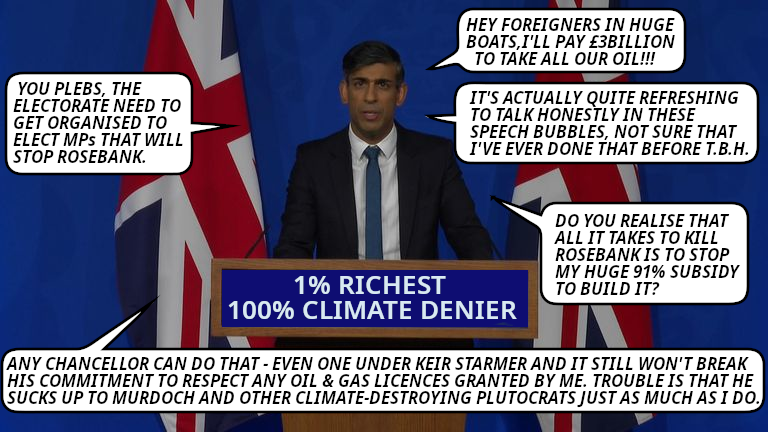
Rishi Sunak on stopping Rosebank says that any chancellor can stop his huge 91% subsidy to build Rosebank, that Keir Starmer is as bad as him for sucking up to Murdoch and other plutocrats and that we (the plebs) need to get organised to elect MPs that will stop Rosebank.
Prime Minister Rishi Sunak. Credit: Associated Press / Alamy
“Outrageous” findings show that the Conservative Party “is clearly in bed with the fossil fuel lobby”, say MPs and campaigners.
The Conservative Party has received £8.4 million since December 2019 from oil and gas interests, highly polluting industries, and individuals who have expressed or supported climate science denial, DeSmog can reveal.
This comes as climate action is increasingly being used as a “wedge” issue to divide voters ahead of the next election, which is due to be held on 4 July.
Over the last year, the governing Conservative Party has watered down its support for the UK’s flagship 2050 net zero emissions target, and has enacted policies to increase fossil fuel extraction. In July, Prime Minister Rishi Sunak confirmed that his government plans to issue hundreds of new oil and gas licences, as well as introducing annual licensing rounds, claiming that he intends to “max out” the UK’s fossil fuel reserves.
Sunak launched the election campaign by claiming that he had “prioritised energy security and your family finances over environmental dogma”.
DeSmog reviewed the donations to every major Westminster party since 12 December 2019 and found that the Conservative Party and its MPs had received 80 times more polluting cash than the Liberal Democrats (£132,600), and 160 times more than Labour (£41,600). The anti-net zero party Reform UK has received more than £2 million in polluting donations since December 2019, accounting for more than 90 percent of its funding.
Since the December 2019 election, the Conservatives have received £2.35 million from fossil fuel interests, £5.7 million from highly polluting industries, and £404,000 from supporters of climate science denial.
“No political party should be taking any money from fossil fuel interests whatsoever,” Caroline Lucas, the Green Party MP for Brighton Pavilion, told DeSmog.
“To have the Conservative party of government in their pocket to the tune of £8.4 million is simply outrageous and unacceptable. Is it any wonder they’ve adopted so many reactionary and dangerous policies to prop up planet-wrecking fossil fuels? He who pays the piper, calls the tune.”
The Conservative Party did not respond to DeSmog’s request for comment.
Fossil Fuel Donations
Since the 2019 general election, the Conservative Party has received more than £2 million from fossil fuel companies, their executives, and those with a financial interest in oil and gas.
These donations have come from some of the party’s highest-ranking figures.
Tory peer Lord Michael Spencer is a former party treasurer who sits on the board of its endowment fund, the Conservative Party Foundation. In a personal capacity and through his family office, IPGL, Spencer has given £548,500 to the party since December 2019.
Spencer currently holds an 18.8 percent (£4.5 million) stake in the oil and gas exploration company Deltic Energy, which has been awarded multiple North Sea licences by the government.
He previously told DeSmog that he believes “it is totally in the best interest of the UK to replace imported oil and gas by energy extracted from our own North Sea.”
He added in a new comment that “using our own oil and gas clearly is a huge benefit to UK balance of payments” – with reference to the amount that the UK exports versus the amount that it imports.
Spencer has a number of oil and gas interests. His House of Lords register of interests shows that he has a stake in Pantheon Resources, a UK company exploring for oil in Alaska, and previously had a stake in Cluff Energy Africa, which is described as an “early stage oil prospecting company seeking licences in Africa (Angola and Sierra Leone)”.
Tory peer Lord Michael Farmer has also donated £317,000 to the party since the last election. Until April 2024, Farmer held shares in the fossil fuel giants Shell and BP, each worth more than £100,000. Farmer still holds shares in BHP Group, which has mining and oil assets. In 2022, BHP’s petroleum business merged with the energy company Woodside, with the new firm being 48 percent owned by BHP shareholders, creating a “global top 10 independent energy company”.
The Conservative Party has also received £75,900 from Amjad Bseisu, the CEO of EnQuest – a company that has been awarded North Sea oil and gas licences, as well as licences to explore CO2 storage under the North Sea. EnQuest declined to comment.
Alasdair Locke, who chairs the UK’s largest independent petrol station operator Motor Fuel Group, has given £280,000 to the Tories since December 2019. Locke is also the non-executive chair of Well-Safe Solutions, a firm that decommissions oil and gas wells, and is the founder and former executive chairman of Abbot Group, a major North Sea oil and gas services company.
Balmoral Holdings, an engineering firm heavily involved in the North Sea industry, has given £335,000 to the party, while more than £100,000 has been donated by Matthew Ferrey, a former senior partner at oil trading firm Vitol.
Donations worth £63,000 have also been given by Nova Venture Holdings, a firm owned by Jacques Tohme, who describes himself as an “energy investor” on LinkedIn and says that he is the co-founder and former director of Tailwind Energy, an oil and gas company.
In 2023, Serica Energy bought Tailwind, reportedly making Serica one of the 10 largest North Sea oil and gas producers.
“This investigation is yet more evidence of the stranglehold the oil and gas industry has on our politics,” Georgia Whitaker, Greenpeace UK’s climate campaigner, told DeSmog. “And it’s bill payers and the climate that will continue to suffer because of it.
“The governing party we’ve had for the last 14 years is clearly in bed with the fossil fuel lobby. We’ve seen rowback after row back on climate policy, as well as highly damaging rhetoric from political leaders. It’s clear that the Conservatives can’t be trusted to make the right decisions about energy policy.
“We already have the solutions to cut bills, increase energy security and cut emissions, but the government has ignored them in favour of pandering to vested interests at the expense of the rest of us. Dirty money from fossil fuels, highly polluting industries, or climate deniers should have no place in our politics.”
Carbon-Intensive Industry
The largest polluting donation to the Conservatives came from Amit Lohia, a petrochemicals executive whose business interests include a Russian textiles plant, as previously revealed by DeSmog. Lohia donated £2 million to the party in March 2023.
The Conservative Party also received more than £1.7 million during this period from the construction giant JCB and its proprietors the Bamford family. JCB sells its products in 150 countries and specialises in heavy machinery. The company, chaired by Tory peer Lord Anthony Bamford, also sells diesel-powered generators.
According to the government’s Environmental Audit Committee, the UK’s built environment is responsible for 25 percent of the UK’s greenhouse gas emissions. The construction industry is responsible for 18 percent of large particle pollution in the UK, a figure that rises to 30 percent in London, according to a report by Impact on Urban Health, and the Centre for Low Emission Construction.
Aviation entrepreneur Christopher Harborne has given more than £1.6 million to the party since the last election. Harborne is the owner of AML Global, an aviation fuel supplier operating in 1,200 locations across the globe with a distribution network that includes “main and regional oil companies”, according to its website. Harborne is also the CEO of Sheriff Global Group, which trades in private jets.
In addition to his Conservative Party donations, since December 2019 Harborne has given £465,000 to Reform UK, the country’s most overtly anti-net zero political party.
Aviation emissions accounted for eight percent of the UK’s annual greenhouse gas emissions before the pandemic, according to the government’s Climate Change Committee (CCC).
In response to DeSmog’s request for comment, Harborne posted a lengthy statement on the AML Global website. He said: “I am not a climate science denier and … I do not seek to influence any government through donations or lobbying regarding their policies on climate change or in favour of corporate interests.”
Harborne added that “there is overwhelming scientific evidence that human activity and in particular the use of hydrocarbons as an energy source is accelerating climate warming due to the greenhouse effect.”
He noted that he supports “aviation industry initiatives to improve fuel efficiency and the use of sustainable aviation fuel” and that he is “financing a business that is creating ambitious and innovative new designs for next generation aircraft that will have a radically lower carbon footprint.”
Climate-Denier Donors
Climate science denial is a growing feature of mainstream British politics. Its proponents dispute the settled consensus around human-caused climate change and the need to reach net zero emissions by 2050, displacing informed debate with divisive conversations that mislead the public.
The Climate Action Against Disinformation global coalition has observed that “climate has become co-opted into the culture wars”, which has widened the potential scope of mis- and disinformation around both the causes of and best solutions to global heating.
Since the 2019 election, the Conservative Party has received hundreds of thousands of pounds from individuals who have funded and promoted climate science denial.
Hedge fund manager Lord Michael Hintze has donated £294,000 to the Tories and a number of its MPs, including energy security and net zero secretary Claire Coutinho in January 2024.
Hintze, a Conservative peer, was one of the early funders of the Global Warming Policy Foundation (GWPF), the UK’s leading climate science denial group, which has claimed that carbon dioxide has been mis-characterised as pollution, when it is a “benefit to the planet”.
Hintze has said that he believes “there is climate change” caused “in part due to human activity over the past century”. However, he has said that “all sides must be heard” on climate change “to reach the right conclusion for society as a whole“.
A number of climate consensus studies conducted between 2004 and 2015 found that between 90 percent and 100 percent of experts agree that humans are responsible for climate change. A study published in 2021, which reviewed over 3,000 scientific papers, found that over 99 percent of climate science literature says that global warming is caused by human activity.
The UN’s Intergovernmental Panel on Climate Change (IPCC), the world’s foremost climate science body, has stated it is “unequivocal that human influence has warmed the atmosphere, ocean and land”.
The party has also received £90,000 from First Corporate Consultants, a firm owned by Terence Mordaunt, a director and former chair of the GWPF. Mordaunt told openDemocracy in 2019 that “no one has proved yet that CO2 is the culprit” of climate change.
The IPCC has stated that carbon dioxide “is responsible for most of global warming” since the late 19th century, which has increased the “severity and frequency of weather and climate extremes, like heat waves, heavy rains, and drought”.
Jolyon Maugham, director of the Good Law Project, told DeSmog: “No one who has seen how the Conservative Party chose Big Oil over families during the cost of living crisis will be surprised by these numbers. But that shouldn’t dull our sense of quite how grim all of this is.”
Other Parties
Last year First Corporate Consultants also donated £200,000 to Tory rivals, the right-wing party Reform UK, which has been the second largest recipient of donations from polluting sources since December 2019.
Of the £2.5 million that Reform UK has received in donations since the 2019 election, around 92 percent (£2.3 million) of that income has been given by fossil fuel interests, polluting industries, or climate science deniers.
Reform UK has received £515,000 from former Tory donor Jeremy Hosking, whose investment firm had more than $134 million (around £108 million) invested in the energy sector at the close of 2021, two thirds of which was in the oil industry, along with millions in coal and gas.
Hosking, who also donated £50,000 to the Conservatives during this period, previously told DeSmog: “I do not have millions in fossil fuels; it is the clients of Hosking Partners who are the beneficiaries of these investments.” He declined to comment further for this article.
Hosking told The Guardian in May that he had ended his donations to Reform UK and is now channelling his political donations to Reclaim, a radical right-wing party led by actor Laurence Fox.
Since December 2019, Reform UK has also received more than £1.1 million from businesses run by its leader Richard Tice, who is a prominent climate science denier. Tice has claimed that “there is no climate crisis”, and has also expressed the view that “CO2 isn’t a poison. It’s plant food”. Reform UK campaigns on an overtly anti-climate platform. It has called for the UK’s 2050 climate target to be scrapped, and has proposed holding a “referendum on net zero”.
Reform UK has also received more than 50 loans collectively worth around £1.4 million from a company called Tisun Investments, which is owned by Tice, since the start of 2020.
A Reform UK spokesman said: “Climate change is real, Reform UK believes we must adapt, rather than foolishly think you can stop it. We are proud to be the only party to understand that economic growth depends on cheap domestic energy and we are proud that we are the only party that are climate science realists, realising you can not stop the power of the sun, volcanoes or sea level oscillation.
“The deniers are those who continually gaslight the public into thinking you can stop these powerful natural forces. We must use the energy under our feet, rather than send our money and jobs abroad.”
The Liberal Democrats and Labour have received much smaller sums from fossil fuel interests, polluters, and climate science deniers since December 2019. DeSmog’s analysis found that the Lib Dems have received £132,600, including £10,000 from energy investor Hosking, and £110,600 from Christopher D. Leach, who runs a private plane chartering and management business.
The Labour Party has received £41,600, including £9,600 from the aviation firm Airbus, and £12,000 from biomass company Drax, which is the UK’s largest single source of carbon emissions. Labour has also received sizeable donations from green technology entrepreneurs, including eco-campaigner Dale Vince.
The Scottish National Party (SNP) did not receive any Westminster donations from fossil fuel interests, polluters, or climate science deniers, according to DeSmog’s research.
Labour and the Liberal Democrats did not respond to DeSmog’s request for comment.
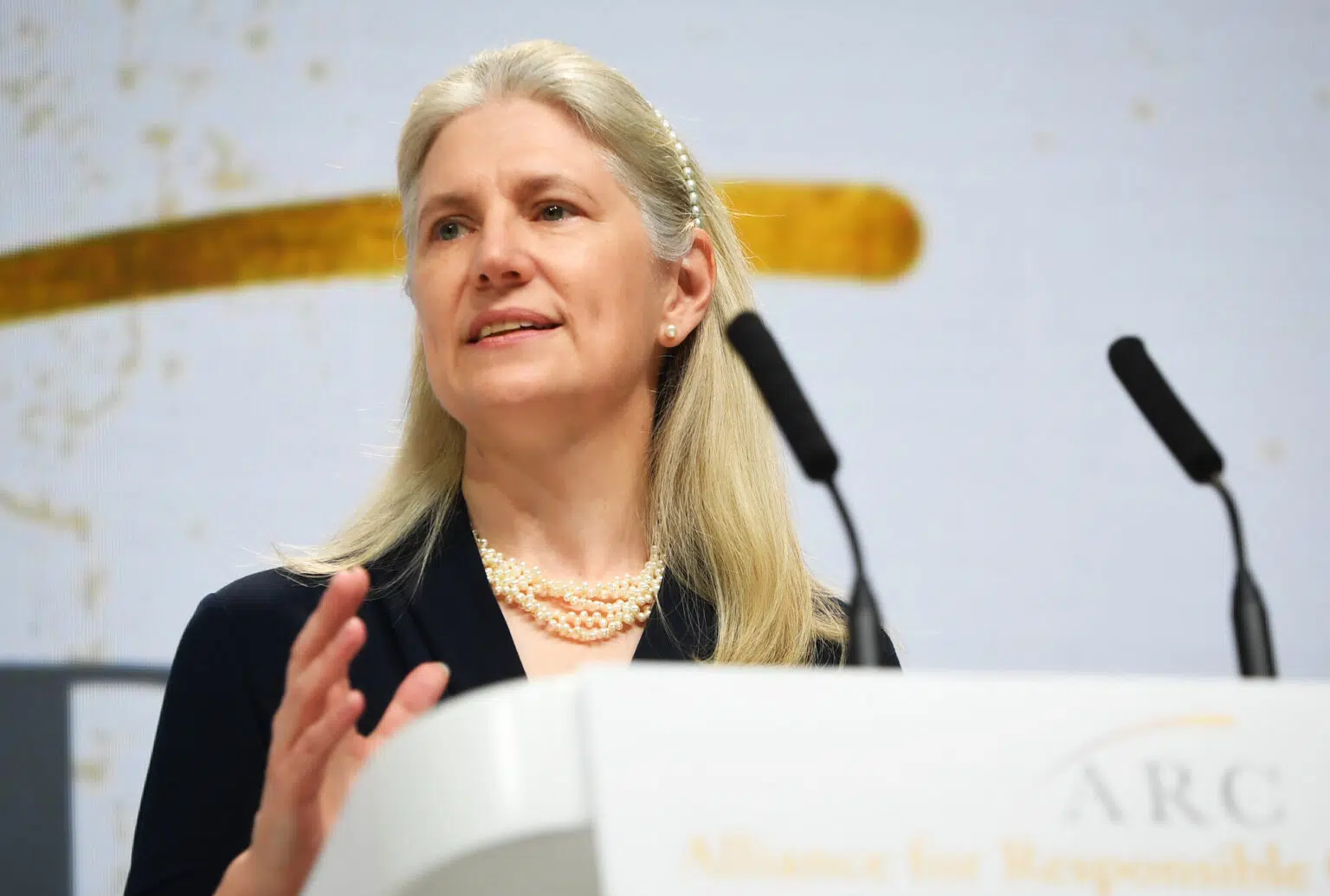
Philippa Stroud, chair of the government’s Low Pay Commission, and CEO of the Alliance for Responsible Citizenship. Credit: ARC(CC0 1.0 DEED)
Tory peer Philippa Stroud, who has close ties to the funders of GB News, has been elevated to a senior advisory role by the government.
A new government advisor on the minimum wage is the head of an international network of climate crisis deniers funded by the owners of GB News, DeSmog can reveal.
Philippa Stroud was appointed chair of the Low Pay Commission, a body reporting to Kemi Badenoch’s Department of Business and Trade, on 30 January. The government-appointed role pays £530 per day for three days of work per month (£19,114 per year).
The Conservative peer is the CEO of the Alliance for Responsible Citizenship (ARC), a new pressure group that shares its funders with GB News and is linked to some of the world’s most prominent climate crisis deniers, including psychologist Jordan Peterson. Stroud has been described by The Telegraph as “the most powerful right-winger you’ve never heard of”.
The appointment comes as senior Conservative Party figures continue to embrace anti-climate politics. On 6 February, former prime minister Liz Truss attacked “net zero zealots” at the launch of her new Popular Conservatism faction.
Last month, Energy Security and Net Zero Secretary Clare Coutinho met with and praised fuel pricing lobbyist Howard Cox, a Reform UK candidate who wants to “scrap net zero” and claims that “man is not responsible for global warming”.
The government is also pushing ahead with legislation that would require the awarding of annual North Sea oil and gas licences. The Climate Change Committee, the independent body that advises the government on its net zero policies, warned on 30 January that mixed messages, including new fossil fuel projects, have damaged the UK’s international climate standing.
Last year was the first on record to see consistent global warming of 1.5C, according to the EU’s Copernicus Climate Change Service.
DeSmog has previously revealed that the Conservative Party received £3.5 million in donations from fossil fuel interests and climate science deniers in 2022.
Stroud’s appointment also cements the relationship between the Conservative Party and GB News. On Monday, Prime Minister Rishi Sunak took part in an hour-long town hall event on GB News, following the example of several Conservative MPs who are regular guests and presenters on the right-wing broadcaster.
Stroud’s ARC project is run by hedge fund manager Paul Marshall and the UAE-based Legatum Group, GB News’s principal backers. The Legatum Institute, a think tank funded by the Legatum Group, gave £50,000 to a faction of the Conservative Party in December. Before taking up her post at ARC, Stroud was CEO of the Legatum Institute.
“Anti-science climate change denialism has become the secret handshake that ushers in the faithful and bars the door to unbelievers,” Jolyon Maugham, executive director of the Good Law Project, told DeSmog. “This is an appalling betrayal of the principles of sound government – and of our children who need us to be led by science and not by the financial interests of wealthy Tory donors.”
ARC, Stroud, the Legatum Group, and the Low Pay Commission were approached for comment.
ARC and Legatum
Philippa Stroud was made a life peer by then prime minister David Cameron (now foreign secretary) in 2015, after failing to win a parliamentary seat in 2010.
The Legatum Group, which has employed Stroud both directly and indirectly since 2016, is one of the largest shareholders in GB News, which frequently attacks climate science and policies. A DeSmog investigation found that one in three GB News hosts spread climate denial on air in 2022.
GB News’s other major owner is British billionaire Paul Marshall, chairman and chief investment officer of the hedge fund Marshall Wace. DeSmog revealed that, as of June 2023, Marshall Wace owned shares worth $2.2 billion (£1.8 billion) in fossil fuel firms. This included a $213 million (£175.6 million) shareholding in the oil and gas supermajor Chevron, as well as stakes in Shell, Equinor, and 109 other fossil fuel companies.
In her statement announcing the launch of ARC, Stroud took aim at climate policies, writing that “we risk driving policy interventions to address environmental concerns without having an honest conversation about the trade-offs for the poor at home or in developing and emerging nations”.
Poor and indigenous groups in developing countries will be hit hardest by the impacts of climate change, while those suffering from poverty at home have seen their energy bills soar as successive governments have failed to implement green reforms.
ARC is fronted by Canadian author Jordan Peterson, who regularly posts about “climate apocalypse insanity” and “eco fascists” to his millions of online followers. Peterson has promoted fringe climate crisis deniers on his YouTube channel and, as revealed by DeSmog, plans to open a new online school also featuring several climate crisis deniers.
ARC’s advisory board includes writers Bjorn Lomborg and Michael Shellenberger, both of whom have written books downplaying the threats posed by climate change, as well as Tony Abbott, the former prime minister of Australia and a director of the Global Warming Policy Foundation (GWPF), the UK’s principal climate science denial group.
Late last year, speaking on the outskirts of ARC’s launch conference in London, Abbott claimed climate change has “nothing to do with mankind’s emissions”. ARC advisor Vivek Ramaswamy, who also spoke at the conference, has called climate change a “hoax” and has said that “real emergency isn’t climate change, it’s the man-made disaster of climate change policies that threaten US prosperity.”
The UN’s Intergovernmental Panel on Climate Change (IPCC), the world’s leading climate science body, states it is “unequivocal” that human influence has caused “unprecedented” global warming.
Kemi Badenoch, whose department appointed Stroud to her new advisory role, also spoke at the ARC conference alongside Levelling Up Secretary Michael Gove. The pair were joined by a number of Conservative MPs.
Stroud’s appointment to the government’s Low Pay Commission was first trailed by The Telegraph in December. A “Whitehall source” told the paper that Stroud was selected for the three-year post to block a possible left-wing appointment by a Labour government.
Carla Denyer, Green Party co-leader and its parliamentary candidate for Bristol Central said that Stroud’s appointment was “hardly the most appropriate” and that “the Conservatives seem set on placing their people across the quango world before the general election.”
Rishi Sunak on stopping Rosebank says that any chancellor can stop his huge 91% subsidy to build Rosebank, that Keir Starmer is as bad as him for sucking up to Murdoch and other plutocrats and that we (the plebs) need to get organised to elect MPs that will stop Rosebank.
The group, which reportedly has UAE state backing, is leading the race to buy the British newspaper.
The Daily Telegraph front page. Credit: Steven May / Alamy
The investment fund that has reportedly reached an agreement to buy the Telegraph Media Group has stakes in several oil and gas companies, DeSmog can report.
U.S.-based RedBird Capital has entered into a joint venture to take control of The Telegraph alongside International Media Investments (IMI) of Abu Dhabi in the United Arab Emirates (UAE).
The two groups have reportedly agreed to provide loans to The Telegraph’s existing owners, the Barclay family, to allow them to pay off their £1.16 billion debt to Lloyds Banking Group. The family lost control of The Telegraph and the Spectator magazine, which is also part of the media group, earlier this year due to this outstanding debt.
News reports suggest that the deal is being backed by Sheikh Mansour bin Zayed Al Nahyan, who serves as the deputy prime minister of the UAE, the head of its state-owned investment company, and the owner of Manchester City football club.
Conservative MPs have voiced concerns over the potential purchase and the danger of foreign influence, asking the UK government to use national security laws to investigate the agreement. Culture Secretary Lucy Frazer has echoed these concerns, warning that the deal could undermine “free expression of opinion” and prevent the “accurate presentation of the news”.
The UAE is a petrostate that has the world’s largest oil expansion plans. The state-owned energy company, the Abu Dhabi National Oil Company (Adnoc), intends to increase its oil production by more than any other fossil fuel firm in the world, according to data from the Global Oil and Gas Exit List (Gogel). Adnoc said that Gogel’s data and assumptions were “incorrect and misleading” but has not provided its own figures.
RedBird-IMI has said that, under its proposal, The Telegraph and Spectator will be managed by RedBird Capital “alone” and IMI would be a “passive investor”.
RedBird Capital trades in a number of core investment sectors, including energy. The firm’s website states that it holds investments in at least six fossil fuel firms: Aethon United, CapturePoint, FireBird Energy, Four Corners Petroleum, Lambda Energy Resources, and Tally Energy Services.
All of these companies are based in the U.S., with a majority operating in Texas.
Aethon United was listed by Enverus Intelligence Research as one of the most prolific private oil and gas producers in the U.S. in 2023. It was reported in 2022 that the firm was considering a public listing that would value it at more than $10 billion.
CapturePoint specialises in carbon capture, utilisation and storage (CCUS), a favoured technology of the fossil fuel industry that it claims will help to limit global warming. The RedBird website claims that CapturePoint is “building out a carbon capture network on the Gulf Coast and in the Midwest”.
There is limited evidence of the efficacy of CCUS at scale. DeSmog recently analysed 12 large-scale CCUS projects around the world and found countless missed carbon capture targets, as well as cost overruns, with taxpayers picking up the tab via billions of dollars in subsidies. Meanwhile, captured carbon is often merely used to extract more oil.
“If this deal goes through, it will pollute our press and the UK’s fight against climate breakdown,” Alexander Kirk, fossil fuels campaigner at Global Witness, told DeSmog.
RedBird Capital also holds an investment in Majority Strategies, a political strategy firm that claims to have worked for every official Republican presidential nominee since 2000. Majority Strategies received more than $27 million during the 2022 election cycle, including $9.2 million from the Republican Senate Leadership Fund.
Responding to media speculation about The Telegraph’s future ownership, the paper’s editor Chris Evans sent an internal memo earlier this week. Seen by Politico Playbook, the memo read: “You’ve been asking me how we can be confident that editorial independence would be protected. At the moment I know no more than you will have read.”
Polly Truscott, a foreign policy adviser at Amnesty International UK, told The Times that: “Any Emirati state ownership of the Telegraph may have serious implications for press freedom in the UK and should be carefully scrutinised by the government. In the UAE, anyone who dares to speak out against the Emirati authorities is likely to be at serious risk.”
The UAE ranks 145 out of 180 in the 2023 Press Freedom Index produced by Reporters Without Borders.
Other sources claim that the bidding process for The Telegraph and the Spectator is still ongoing and that no deal has been finalised. Paul Marshall, the co-owner of GB News, is also reportedly interested in buying the titles. DeSmog revealed in October that Marshall’s hedge fund has $2 billion in fossil fuel investments.
RedBird Capital and the Telegraph Media Group did not respond to our request for comment.
Climate Attacks
A new DeSmog analysis has found that eight in 10 opinion pieces from The Telegraph on environmental issues downplay the climate crisis.
Our analysis, for the six months ending 16 October, found that of the 171 articles covering environmental issues, 85 percent were identified as “anti-green” – attacking climate policy, downplaying climate science and ridiculing environmental groups.
Of the 1,930 opinion pieces published by the paper during this period, nearly one in five (17.6 percent) featured an attack on climate science, policy or environmental groups. Ten writers linked to the Global Warming Policy Foundation, the UK’s leading climate science denial group, wrote a total of 144 opinion pieces for The Telegraph during the period.
The Telegraph’s print circulation at the end of 2019, when it last released the data, was over 300,000. It had an online audience of 13.5 million in September this year.
World leaders next week gather in Dubai, UAE, to negotiate how to reduce emissions and limit global warming. The COP28 summit is being led by Sultan Al Jaber, the chief executive of Adnoc, which is the world’s 11th largest oil and gas producer. Al Jaber has claimed that fossil fuels should “continue to play a role in the foreseeable future” – a statement labelled as “very dangerous” by former UN climate chief Christiana Figueres.
The UAE has also attempted to emphasise the importance of CCUS in capturing emissions. However, according to an analysis by Global Witness, based on Adnoc’s carbon capture plans, it would take 343 years for the firm to capture all the CO2 emissions it will produce in just the next six years. This week, the Kick Big Polluters Out coalition also revealed that at least 7,200 fossil fuel lobbyists have attended UN-led climate over the last 20 years.
Total trade between the UK and UAE exceeded £25 billion in the year ending Q2 2023, an increase of 47.3 percent compared to the year before. The Gulf state has also pledged to invest £10 billion in “priority” UK industries.
In the year following Russia’s February 2022 invasion of Ukraine, the UK imported £2.5 billion in fossil fuels from the UAE. The average monthly value of fossil fuel imports from the UAE increased from £84.4 million in the year to February 2022, to £195 million the year after.
In total, UK fossil fuel imports from authoritarian petrostates surged to £19.3 billion in the year following the invasion – an increase of more than 60 percent.