Top Tory Think Tank’s North Sea Oil and Gas ‘Vested Interests’

Spread the love

Original article republished from DeSmog.

‘Shocking’ findings show how board members at the Tufton Street think tank are tied to fossil fuel firms.
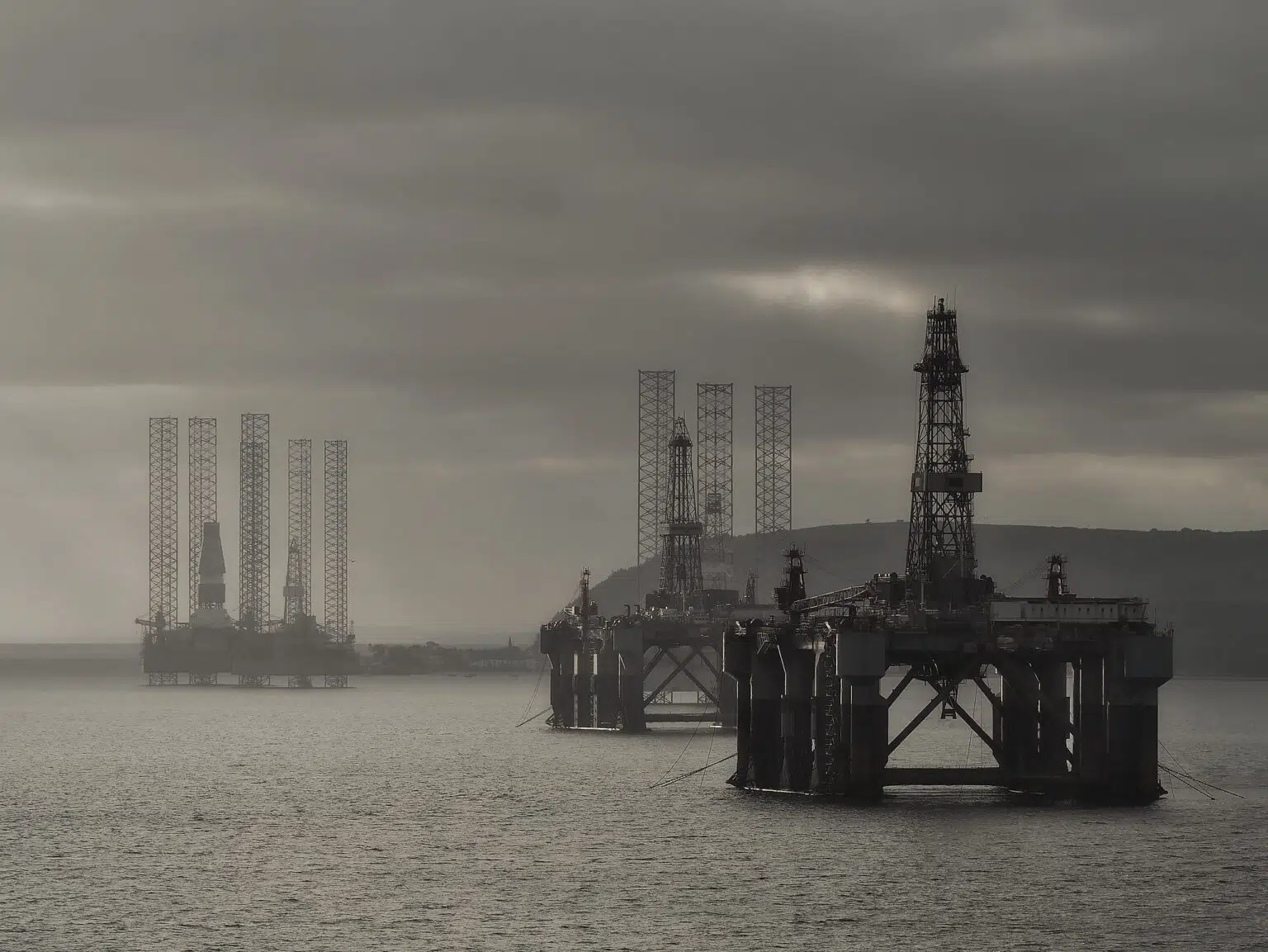
North Sea oil rigs in Cromarty Firth, Scotland. Credit: joiseyshowaa (CC BY-SA 2.0)
North Sea oil rigs in Cromarty Firth, Scotland. Credit: joiseyshowaa (CC BY-SA 2.0)

The influential Conservative-linked Centre for Policy Studies (CPS) has been pushing for further North Sea oil and gas drilling while several of its board members hold financial interests in the industry, a DeSmog investigation has found.

The news follows the government’s approval of the major Rosebank oilfield and the issuing of new North Sea licences, which the government intends to turn into a mandatory annual process, as announced in this week’s King’s Speech.

Five of the think tank’s board have financial interests in North Sea oil and gas, including its chair Lord Spencer, a major Conservative Party donor whose exploration company is bidding for licences in the current round.

The think tank, which is based at 57 Tufton Street in Westminster, meets regularly with ministers. It has called for new oil and gas projects to be accelerated, labelled the windfall tax on energy companies a “terrible idea”, and argued for a more generous fiscal environment for the UK’s fossil fuel producers.

Prime Minister Rishi Sunak is quoted on the organisation’s website as saying that “Lots of exciting ideas are being generated at the CPS… many of which are finding their way into government.”

Tessa Khan, executive director of climate group Uplift, said the findings were an example of how some think tanks have “long been little more than lobbying vehicles for private interests, including oil and gas”. The CPS denies that it is a lobbying group.

Khan added that organisations like the CPS “amplify the voices” of the oil and gas industry.

“This maybe goes some way to explaining why this government is set on subsidising new oil and gas fields when they represent such a bad deal for the public, in that they won’t lower bills, won’t increase energy security but will make the climate crisis worse,” she said.

Nature broadcaster Chris Packham, who is threatening to take the government to court over its recent watering down of climate measures, said: “Just weeks after we learn that not a single new offshore wind project will be going ahead this year due to the government’s intransigence – and as Rishi Sunak tears up vital climate policies – these findings are shocking.

“They provide further evidence that Number 10’s fossil fuel agenda is far from accidental. There are powerful vested interests at work and the Centre for Policy Studies seems to be at the heart of it. The government’s plan to hand out more than a hundred new North Sea drilling licences in the coming months is looking grubbier than ever.”

DeSmog previously revealed that the Conservative Party received £3.5 million from fossil fuel interests in 2022, including from the North Sea industry. This week, DeSmog also revealed that the government watered down its windfall tax on the excess profits of energy firms after a lobbying blitz by the oil and gas industry.

When asked about its board members’ business interests, a CPS spokesperson said that the think tank is “grateful for all our supporters, especially the support of our board members, but the investments of other boards on which they sit have no bearing on their relationship with the CPS”.

They claimed that DeSmog was “cherry-picking in order to manufacture an incorrect picture of the CPS’s position” and that it was “misleading and below journalistic standards.”

They added that “the Centre for Policy Studies has been one of the most prominent champions of free-market environmentalism, with a dedicated workstream on net zero” and that “Where our work is sponsored, this is made clear in the report acknowledgments, in press releases, and in event invitations.”

The North Sea Transition Authority (NSTA), the regulator in charge of issuing drilling licences, said that oil and gas were “forecast to play an important role in the energy mix for decades to come”. A spokesperson said the NSTA was “pleased” with the number of applications received in the current oil and gas licensing round and that the process of assessing them was “progressing well”.

The Department for Energy Security and Net Zero declined to add any further comment.

At the end of September, the International Energy Agency, of which the UK is a member, released a report reiterating the need for a phaseout of fossil fuels if climate goals are to be met. 

Lord Deben, the recently retired chair of the UK’s Climate Change Committee, which advises the government, argued in August that the government should stop approving North Sea licences.

Deltic Energy

Lord Spencer, who has chaired the CPS since the start of 2020, is the largest shareholder of Deltic Energy, which holds stakes in 18 North Sea areas, known as blocks, according to NSTA data.

A former Conservative Party treasurer, Spencer was given a life peerage by Boris Johnson. Official data shows that he has donated more than £7.5 million to the Conservative Party, individual Tory politicians and officially affiliated groups since 2015. He also sits on the board of the party’s multi-million-pound endowment fund. DeSmog revealed earlier this year that many of its directors have significant fossil fuel interests.

Through his holding company, IPGL, Spencer owns a £17.5 million stake in Deltic, according to Refinitiv data – nearly a fifth of the firm. He has held a significant shareholding since at least 2018, and bought more shares in 2019 from its founder Algy Cluff, a pioneer of the original North Sea oil boom in the 1970s who himself later joined the CPS board.

Responding to an enquiry from DeSmog, Cluff said that although the value of the company “may have increased in the view of management”, the stock market is “unimpressed and very much aware of the risks associated with any oil investments nowadays”. He described the “small number” of options he holds in the company as “presently worthless”.

Cluff has nevertheless spoken of the North Sea’s “second coming”, claiming that there is “a lot more oil to be found” and a “huge amount of gas”.

Deltic has made significant discoveries in recent years, touting its “enviable reputation as proven hydrocarbon finders” on its website, and has seen its market value rise in tandem.

It won blocks in North Sea licensing rounds in both 2018 and 2020, with the former is said to represent an area the “size of Bedfordshire”.

In its latest annual report, for the 2022 calendar year, Deltic criticises the government’s windfall tax but praises its accompanying investment allowance, which provides North Sea companies with tax breaks to encourage investment.

A presentation it gave investors in March describes its strategy as “Identify. Explore. Monetise. Repeat.” It says the investment allowance “significantly enhances economics from investment in Deltic exploration”, touts controversial gas-derived “blue hydrogen” as environmentally friendly, and highlights “established export infrastructure” and “regular licensing rounds” as attractive features of the North Sea.

Deltic is chaired by Mark Lappin, a former technical director of fracking company Cuadrilla who has publicly called for more oil and gas production, criticising opposition to new drilling.

Lord Spencer’s Conservative donations, made either personally or through IPGL and ICAP, include £25,000 gifts to the 2022 leadership campaigns of Sunak, Liz Truss, and Penny Mordaunt.

Spencer made £20,000 donations to Johnson, Jeremy Hunt, Michael Gove and Sajid Javid in 2019, and has made smaller donations to numerous other leading figures within the party in recent years, including Kwasi Kwarteng, Dominic Raab, Theresa May, Brandon Lewis, and Andrew Griffith.

Spencer has also funded “Blue Collar Conservatism”, a large caucus of Conservative MPs working to “champion working people”, with donations totalling £25,000 in 2019 and 2020. The group has campaigned against fuel duty rises.

Spencer’s Other Fossil Fuel Interests

Lord Spencer has also publicly talked up the fossil fuel industry, telling LBC’s Nick Ferrari last September that the UK “sadly has opposed further investment in North Sea oil and gas”. During the interview, he praised then Prime Minister Liz Truss for speaking out against windfall taxes on the sector, calling them “not Tory policy” and “not pro-business”.

He also expressed support for fracking, praised Truss’s “strategy” and “ideology”, and called for investment in renewable energy, but omitted to mention his interests in oil and gas.

In addition to the North Sea, Spencer has various other fossil fuel interests. According to Refinitiv, he holds the second largest stake in Pantheon Resources, a UK company exploring for oil in Alaska that recently hailed a potentially enormous discovery.

His brokerage firm ICAP also includes an oil and gas trading arm. Until December last year, Spencer held shares in Petrofac, an oilfield services firm heavily involved in the North Sea, including the controversial Cambo project.

Spencer’s shareholdings are disclosed to the House of Lords – indicating either a stake worth more than £70,000 or significant control over the company. They include Cluff Energy Africa, described as an “early stage oil prospecting company, seeking licences in Africa (Angola and Sierra Leone)”.

Its founder, Algy Cluff, told DeSmog that they had “wound the company up” because they “found the premium being asked by governments for the right to explore not to be consonant with the rewards”.

Cluff was a director of the CPS between 1995 and 2006, coinciding with the executive directorship of the late Tessa Keswick. Cluff confirmed to DeSmog that Keswick helped him find investors for his North Sea consortium in the 1970s, as has been reported.

Tessa’s husband Henry Keswick, chairman emeritus of the conglomerate Jardine Matheson and a major Tory donor, used to own the influential conservative Spectator magazine and sold it to Cluff in the early 1980s. Cluff was its chairman until 2004, during which Charles Moore, Dominic Lawson, and Boris Johnson were editors.

The magazine was edited in the 1960s by the late Nigel Lawson, who would become Thatcher’s chancellor and in later life promote climate science denial through the Global Warming Policy Foundation, based at 55 Tufton Street.

Cluff’s remaining business interests include Cluff Mineral Resources, an Africa-focused gold and coal exploration company, which was temporarily based at 55 Tufton Street before moving next door to share an address with the CPS.

The Board

Another CPS board member, Lord Strathclyde, is a senior strategic adviser to Hibiscus Petroleum, a Malaysian oil and gas company that has amassed stakes in 11 North Sea blocks in recent years

Ithaca, the firm behind the high-profile Rosebank and Cambo projects, is partnering with Hibiscus on one of the blocks.

Hibiscus is also one of the firms to have been awarded stakes in the latest round of oil and gas licences.

Strathclyde, who was leader of the House of Lords under David Cameron, is an adviser to oil trading giant Trafigura.

Sir Douglas Flint, chair of Abrdn – formerly, Standard Life Aberdeen – also sits on the CPS board. Abrdn has been targeted by protesters for its investments in oil and gas, which climate researchers Urgewald estimate at £2.9 billion. According to the latest figures, they include oil majors like BP, Shell and Exxon, as well as North Sea-focused firms Serica Energy, Harbour Energy, and EnQuest.

The major asset manager was reportedly one of a group of financial institutions recently summoned by the Treasury to increase investment in the North Sea.

Lord Spencer’s entry in the register of interests indicates he also holds a stake worth more than £70,000 in Abrdn.

Other CPS board members include Jon Moulton, chair of FinnCap, a financial advisory firm whose activities include raising finance for North Sea oil and gas companies, and Roger Orf, a partner at Apollo Global Management, a US private equity firm with £349 million of investments in BP and Shell, both major North Sea players.

Two further CPS board members have wider interests in oil and gas: Ian Molson, deputy chair of Central European Petroleum, which is exploring for oil in Germany and Poland; and major Tory donor Lord Bamford, chair of construction giant JCB, a sector still heavily reliant on fossil fuels.

In April 2023, DeSmog revealed that CPS board members had donated more than £600,000 to the Conservatives since Rishi Sunak became prime minister. 

The CPS also leans on its board for funding. According to the group’s latest accounts – for the period up to September 2022 – its directors donated £1 million to the company during the year. Turnover was £650,000 during the year and ‘other operating income’ hit £1.5 million, meaning that the CPS board contributed nearly half (47%) of its income during the period.

North Sea Push

The Centre for Policy Studies has strongly supported new North Sea oil and gas drilling in recent years.

In a March 2022 economic bulletin, it recommended that the government “look at accelerating regulatory approval for upcoming oil and gas projects such as Rosebank [Phase 1], Clair South, Glengorm, Cambo and Bentley [Phase 2]”. 

The bulletin added that introducing a windfall tax on profits would be a “terrible idea” and “completely self-defeating”. It welcomed “reports” suggesting the government was planning to launch another licensing round for fossil fuel projects.

A month later, the CPS welcomed the government’s “energy security strategy”, calling the return of annual North Sea licensing rounds “overdue”. A 33rd licensing round was launched in October.

In September 2022, an economic bulletin from the think tank called for “improved tax incentives for firms operating in the North Sea”.

In February this year, one of the CPS’s senior researchers criticised the “punishment beatings inflicted on the North Sea oil and gas industry from George Osborne onwards” – despite the sector having enjoyed one of the most generous tax regimes in the world until the recent windfall tax.

Other articles published on CapX, a commentary website run by the CPS, have labelled the Labour Party’s policy of no new North Sea licences “more than a little nuts” and the SNP’s similar position a “dangerous gambit”.

Andy Mayer, chief operations officer at the BP-funded Institute of Economic Affairs, writes regularly for CapX. He has used the platform to describe opposition to the Rosebank project as “shrill hysteria”, Shell’s bumper profits this year as “brilliant stuff”, and North Sea companies being fined for gas flaring as a “dotty investment message to send”. Following the announcement of the latest North Sea licences, Mayer wrote a story for CapX headlined “Hurrah for new North Sea oil licences!”

CPS Influence

The CPS has significant political access, having conducted private, one-to-one meetings with ministers on 27 occasions since 2014 and attended many other larger ministerial meetings, according to data compiled by Transparency International from government disclosures.

A number of the think tank’s former employees are now working as government advisers and its homepage carries supportive quotes from former prime ministers Liz Truss and Boris Johnson. 

Rishi Sunak spoke at a CPS event at the Conservative Party conference in 2019 and wrote a report for the organisation in 2016 backing the roll-out of freeports, which have since been introduced.

The think tank, which was co-founded by Margaret Thatcher, hosted a “dedicated space” at this year’s party conference, with speakers including Jeremy Hunt, Michael Gove, and Grant Shapps.

The chair of Times Newspapers, which publishes The Times and Sunday Times, and the editor of The Spectator, both sit on the CPS board. All of the titles editorially support new North Sea oil and gas.

Richard Sharp, who was forced to resign as chairman of the BBC earlier this year over his connection to a secret £800,000 loan to Boris Johnson, sat on the CPS board for 19 years before joining the BBC in 2021.

The CPS, which does not disclose its funding, has offices on Tufton Street in Westminster, alongside several other “free market” pressure groups and think tanks, including the climate science denying Global Warming Policy Foundation.

Other board members include Rachel Wolf, a co-author alongside CPS Director Robert Colvile of the 2019 Conservative manifesto, which said the “North Sea oil and gas industry has a long future ahead” and supported a deal with the sector that allows for new drilling projects.

Original article republished from DeSmog.
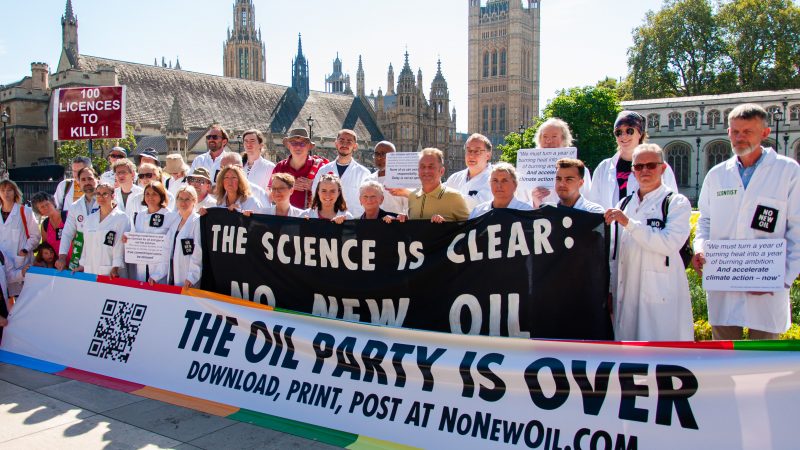
Scientists protest at UK Parliament 5 September 2023.
Continue ReadingTop Tory Think Tank’s North Sea Oil and Gas ‘Vested Interests’

GB News Owner’s Hedge Fund Has $2.2 Billion Fossil Fuel Investments

Spread the love

Original article by Sam Bright and Joey Grostern republished from DeSmog.

One of the owners of GB News runs a hedge fund that has a major financial stake in more than 100 oil and gas firms, DeSmog can reveal. 

This news comes after former prime minister Boris Johnson was announced as a new presenter on the television broadcaster on Friday.

An investigation by DeSmog in May found that one in three GB News presenters had spread climate science denial on air in 2022, while more than half had attacked climate action. GB News presenters have used their platforms to urge the UK to “drill, baby, drill” for more coal, oil and gas.

Paul Marshall is the chairman and chief investment officer of Marshall Wace, a London-based hedge fund that he co-founded in 1997.

Marshall Wace is now one of the world’s largest hedge funds – an investment vehicle that bets on rising and falling share prices – with around $63 billion (£51.9 billion) in assets under management.

According to DeSmog’s analysis of Marshall Wace’s filings with the US financial regulator, the Securities and Exchange Commission (SEC), his fund owns shares worth $2.2 billion (£1.8 billion) in fossil fuel firms. This includes companies that specialise in extracting, refining, transporting and distributing fossil fuels.

In its latest SEC filing, for the quarter ending 30 June 2023, Marshall Wace reports a $213 million (£175.6 million) shareholding in the oil and gas supermajor Chevron, as well as stakes in Shell, Equinor, and 109 other fossil fuel companies. 

The value of Marshall Wace’s stake in Chevron, the world’s eighth largest fossil fuel company, has more than doubled from $105 million (£86.6 million) to $213 million (£175.6 million) in two years, even though its total number of shares and equity options has increased over that period by just 35 percent. 

The hedge fund’s stake in Chevron appears to be one of its top 50 most valuable investments, among the thousands of companies in which it currently holds shares.

This reflects the soaring value of fossil fuel companies following Russia’s 2022 invasion of Ukraine, which pushed up the price of fossil fuels and therefore the profits of suppliers. At the end of June 2021, Chevron’s share price stood at $107.30 (£88.27), rising to $157.35 (£129.45) by June 2023.

Marshall Wace held shares in 112 fossil fuel companies as of June 2023. Two years earlier, in June 2021, the hedge fund held shares in 50 of these firms. The value of the stakes in these 50 firms almost trebled over the period, from $565.4 million (£466.1 million) to $1.4 billion (£1.15 billion). 

“I’ve always wondered why anyone would invest in comically inept, loss-making GB News,” said John Nicolson MP, a member of Parliament’s influential Digital, Culture, Media and Sport (DCMS) Committee. “Step forward one major investor who makes bundles of cash from fossil fuels. Meanwhile, a disturbing number of GB News presenters question climate science. I’m beginning to see a connection.”

Marshall Wace has 22 partners and its latest company accounts, for the period ending February 2022, show that they shared bumper profits of more than £720 million as the firm’s annual turnover jumped 62 percent to more than £1.5 billion. The average salary at Marshall Wace is £561,000 a year.

Paul Marshall, who is one of these partners, is also a lead investor in the startup broadcaster GB News, holding a 45 percent stake. Marshall, estimated to be worth £800 million, reportedly invested £10 million in GB News when it first launched two years ago. In August 2022, he joined the Dubai-based investment firm Legatum Group in a £60 million capital injection and buyout of GB News’s other major investor, Discovery. 

On the announcement of the buyout, Marshall said: “This is more than a financial investment. As investors we’re proud of what GB News [sic] doing for media plurality in the UK, bringing fresh perspectives to the national conversation on issues that matter to real Britain.”

Marshall also owns UnHerd, a publication founded in 2017 that claims to give a platform to marginalised views. UnHerd has published multiple articles and videos critical of climate action, including an interview in July with Bjorn Lomborg about “how global warming will save lives”.

Marshall is involved in other projects that are linked to key opponents of climate action. He is one of the directors of the Alliance for Responsible Citizenship (ARC), a new group established by the backers of GB News. The ARC advisory board features a host of individuals who have denied climate science, downplayed the extent of the climate crisis, and attacked net zero policies. A number of these advisers are speaking at a conference hosted by ARC in London this week, alongside Cabinet ministers Michael Gove and Kemi Badenoch.

It has been reported that Marshall is preparing to expand his media investments and is “readying a bid” for the right-wing Telegraph newspaper and Spectator magazine, with both expected to be put up for sale in the coming weeks.

The Conservative Party has also received funds from Marshall, who donated £500,000 in 2019. 

GB News lost more than £30 million during its first year on air and has been hit by multiple scandals over its use of Conservative MPs as presenters, its alleged lack of impartiality, and its habit of platforming of conspiracy theories

The broadcast regulator Ofcom ruled in March that Mark Steyn had broken its rules on harmful content by claiming on GB News that the third Covid vaccine was causing higher infection, hospitalisation and deaths. Steyn’s claims were “potentially harmful and materially misleading,” Ofcom ruled. Steyn, who has also questioned the existence of climate change, resigned from the channel in February after GB News reportedly demanded he personally pay the fines issued if found in breach of the broadcasting code.

Ofcom currently has 12 open investigations into GB News. Its TV output reached 2.87 million viewers in December, while its website had a UK audience of 5.7 million in April. 

Paul Marshall’s investments in GB News and UnHerd have been made in a personal capacity and there is no evidence that Marshall Wace’s investments have influenced the editorial output of either outlet. 

Marshall Wace claims on its website that “sustainable investing is an organisational focus” and that the firm is “committed to achieving positive social and environmental impact”.

GB News and UnHerd did not respond to DeSmog’s request for comment. Marshall Wace declined to comment.

‘State Control Over Your Life’

Since it launched in June 2021, GB News has been a prominent mouthpiece for individuals who support more fossil fuel extraction and oppose the UK’s target to reduce emissions to net zero by 2050.

The UK’s 2050 net zero target is legally binding and is backed by the world’s top climate scientists. They agree that rapidly cutting carbon emissions is necessary to limit global warming to 1.5C above pre-industrial levels in order to avoid the worst impacts of climate change, including drought, famine, and ill health.

On 5 November last year, GB News host Neil Oliver used his show to attack “net zero [and] the green agenda”, which he claimed was part of “a hellish potpourri of policies guaranteed to condemn hundreds of millions to death by poverty, death by starvation”. 

Host Nigel Farage – who has a long record of opposing climate action – used his GB News platform to launch a campaign for a Brexit-style referendum on net zero. 

GB News host and Conservative MP Philip Davies was one of five MPs to vote against the Climate Change Act in 2008. Fellow presenters and Tory MPs Jacob Rees Mogg, Lee Anderson and Esther McVey are all supporters of the anti-climate action Net Zero Scrutiny Group of backbench Conservative MPs. 

This opposition to net zero is often tied to a denial of established climate science, which has been expressed repeatedly by GB News presenters. 

During last summer’s record UK heatwave, on 16 July 2022, then GB News host Calvin Robinson accused the Met Office of “alarmism”, adding: “Man-made climate change, I don’t buy it, because how much of an impact do we really make if we’re talking about carbon levels?”

Five days later, presenter Beverley Turner called summer heat warnings “fear mongering” in order to “facilitate state control over your life”.

The IPCC has warned that false and misleading information “undermines climate science and disregards risk and urgency” of cutting emissions.

Several GB News hosts have also been vocal about their support for policies that would maintain and even extend the UK’s reliance on oil and gas. 

Flagship presenter Dan Wootton argued on 10 March 2022 that the war in Ukraine meant “for now the rush to net zero must die”. He urged the government to “frack, frack, frack” for shale gas. Wootton has recently been suspended by the channel.

In a 9 December show, host Mark Dolan praised plans to open a new coal mine in Cumbria. He said the UK should “drill, baby, drill” for coal, oil and gas,  adding: “I think the push for net zero here is another element of liberal progressivism which is infecting the West.”

The International Energy Agency (IEA) has said that any new fossil fuel projects would be incompatible with limiting warming to 1.5C.

‘Genuinely Independent Thinking’

Marshall has defended GB News’s output on the basis that “in a world of too much groupthink”, the broadcaster provides a “space for genuinely independent thinking”. 

However, Marshall appears to share the opposition to net zero, and support for more fossil fuel extraction, expressed by a number of GB News presenters.

In July, Marshall shared a post on X (formerly Twitter) from Reform UK Leader Richard Tice, on the subject of Norway’s approval of new oil and gas projects worth $18 million. Tice’s post claimed that these fossil fuel resources are “essential to Europe’s energy security” and that the UK “could have these jobs and prosperity. But selfish wallies in Westminster want to make us poorer and colder with net zero”.

Tice has recently been hired by GB News.

A month later, Marshall claimed in a post that “The public are still being shamefully ill informed by the BBC about differing views on climate change policy”. This post linked to an article by Charles Moore, which argued that “Voters can see the disparity between the highly speculative and distant achievement of global net zero and the concrete and imminent prospect of becoming colder and poorer”. 

In fact, the UK government’s failure to implement green reforms has added an estimated £2.5 billion to domestic energy bills due to the rising costs of fossil fuels and poor energy efficiency in homes. A reliance on gas has also cost the UK an additional £50-60 billion since Russia’s invasion of Ukraine in February 2022, equivalent to around £1,000 for every adult.

Original article by Sam Bright and Joey Grostern republished from DeSmog.

Continue ReadingGB News Owner’s Hedge Fund Has $2.2 Billion Fossil Fuel Investments

Green Groups Slam Biden Admin for Awarding $1 Billion to ‘Unproven’ Carbon Capture Projects

Spread the love

Original article by JULIA CONLEY republished from Common Dreams under Creative Commons (CC BY-NC-ND 3.0).

“Fossil fuel interests see a clear benefit in promoting direct air capture as a means to preserve the dominance of dirty fossil fuels,” said one advocate.

Campaigners demand far-reaching climate action at a rally.  (Photo: michael_swan/flickr/cc)

Climate action groups on Friday said the U.S. Department of Energy’s newly announced $1.2 billion in grants for two carbon capture projects are far from the climate action that scientists and advocates have demanded for years—despite the Biden administration’s claim that the “next-generation technologies” must be used alongside renewable energy sources to draw down carbon emissions.

The department said it will invest $1.2 billion to build the nation’s first commercial plants that will conduct “direct air capture,” in which “giant vacuums… can suck decades of old carbon pollution straight out of the sky,” as Energy Secretary Jennifer Granholm told reporters on Thursday.

The unproven technology has been a key focus of oil and gas lobbyists, who argue that fossil fuel companies can continue their planet-heating extraction activities if plants are built to remove the pollution they cause.

Advocacy group Food & Water Watch noted that one oil company, Occidental, stands to benefit directly from the grants because its wholly owned subsidiary, 1Point5, was selected by the Energy Department as one of the recipients.

“Direct air capture is expensive, unproven, and will ultimately make almost no difference in reducing climate pollution… Capturing just a quarter of our annual carbon emissions would require all of the power currently generated in the country.”

“Fossil fuel interests see a clear benefit in promoting direct air capture as a means to preserve the dominance of dirty fossil fuels,” said Jim Walsh, the group’s policy director. “The federal government is handing them hundreds of millions of dollars in subsidies, when it should be pursuing policies to end the era of fossil fuels.”

Occidental plans to build one of the plants in Kleberg County, Texas, while nonprofit research firm Battelle will build another in Calcasieu Parish, Louisiana—one of the state’s air pollution hotspots, according to New Orleans Public Radio.

“Frontline communities that have borne the brunt of environmental racism and climate change for generations say, ‘Enough!'” said Marion Gee, co-executive director of the national grassroots coalition Climate Justice Alliance. “In an effort to move quickly and carelessly to balance a ‘carbon budget,’ the backyards that he’s talking about building in won’t be [White House Deputy Chief of Staff John] Podesta’s, President [Joe] Biden’s, or their neighbors. It’ll be Black folks, Indigenous communities, and poor BIPOC neighbors—sacrificed, yet again, in the name of protecting corporate interests.”

Critics note that carbon capture is expensive and requires a huge amount of energy to run the “capturing” mechanisms, increasing the very emissions companies aim to remove from the atmosphere.

Former Vice President Al Gore said in a TED Talk last month that turning to carbon capture—as the Biden administration did when it included $3.5 billion to fund a total of four direct air capture plants in the 2021 bipartisan infrastructure law—is a “moral hazard” that will give fossil fuel giants “an excuse for not ever stopping oil.”

“That gives them a license to continue producing more and more oil and gas,” he said.

Basav Sen, climate justice policy director at the Institute of Policy Studies, accused the Biden administration of playing “cynical political game of squandering public funds on unproven, expensive, and potentially dangerous schemes such as direct air capture, purportedly to gain credibility for backing climate solutions, while doubling down on expanding fossil fuels.”

The grants were announced days after President Joe Biden angered campaigners by claiming that “practically speaking,” he has already declared a climate emergency, despite his approval earlier this year of a massive oil drilling project in Alaska and his recent proposal to update rules for—but not end—fossil fuel leasing on public lands.

As Common Dreams reported in May, Food & Water Watch recently unveiled an interactive online website titled Carbon Capture Scam to expose the “false narratives” being pushed by the fossil fuel industry and lawmakers to promote a “dangerous distraction from the pressing need to move off oil and gas.”

“Direct air capture is expensive, unproven, and will ultimately make almost no difference in reducing climate pollution,” said Walsh on Friday. “Capturing just a quarter of our annual carbon emissions would require all of the power currently generated in the country.”

“Even if the technology was effective, there are still serious questions about whether there is a safe and effective way to store the captured carbon dioxide,” he added. “A more practical and effective approach would be to invest money in wind and solar energy—which would be far more effective in actually reducing climate pollution.”

Original article by JULIA CONLEY republished from Common Dreams under Creative Commons (CC BY-NC-ND 3.0).

Continue ReadingGreen Groups Slam Biden Admin for Awarding $1 Billion to ‘Unproven’ Carbon Capture Projects